This morning when I checked Facebook I saw this:

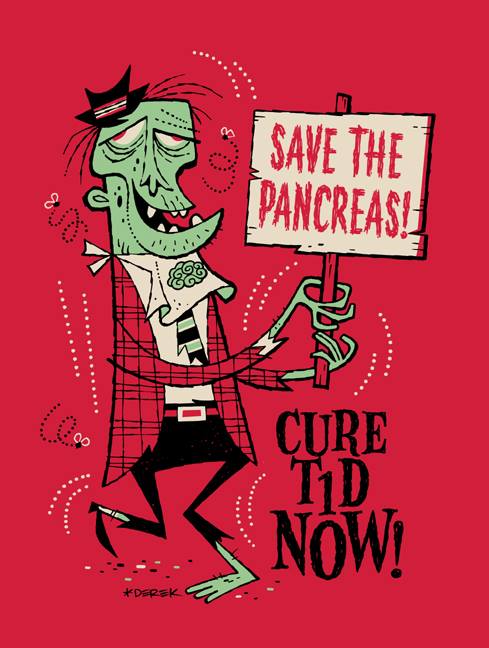
Yaniger save the pancreas


Derek Yaniger is one of my favourite artists. The walls in our living room are covered in his quirky work. I’ve no idea what his connection to diabetes is or why he painted this. I am going to write to him and hope to find out. And I am going to try to get myself a copy of this and hang it somewhere

In related news, I walked into my office today and found this:

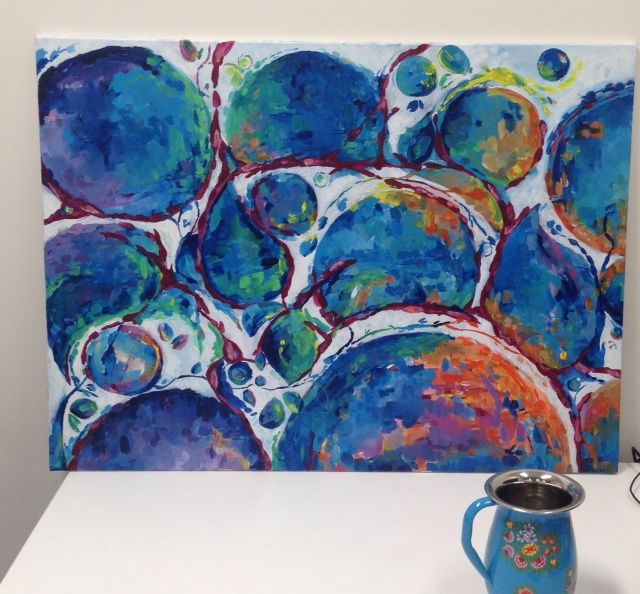
Julia painting

My very talented team-mate Julia painted this beautiful and calming piece for me to hang on the far-too white wall in my office. I am so lucky I’ll be looking at this every day I am at work.

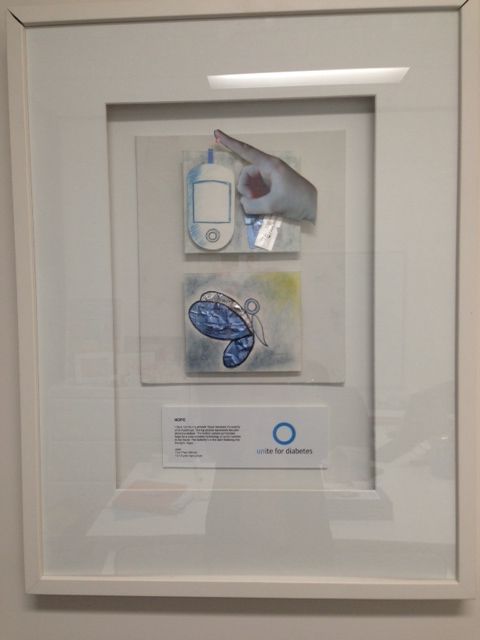
Also in my office is this gorgeous work that won a competition we held a few years ago. It was done by a young girl with diabetes and I love how clever she has been incorporating ‘diabetes waste’ into the piece.

Hope artwork

And finally, next week, I’m in Vienna and at some point, in between the conferencing and meetings and strudel-eating and schnitzel-eating, I will find my way to the Belveder museum to see Klimt’s The Kiss.

klimt_kiss

Diabetes Art Day may not be until February, but between now and then there are lots of opportunities to look at beautiful works of art – diabetes-related and not.

It’s Friday. Of course, Billy Joel’s Vienna was the only choice for today.


Look! Uniforms for the Diabetes Online Community!

IMG_0466.JPG

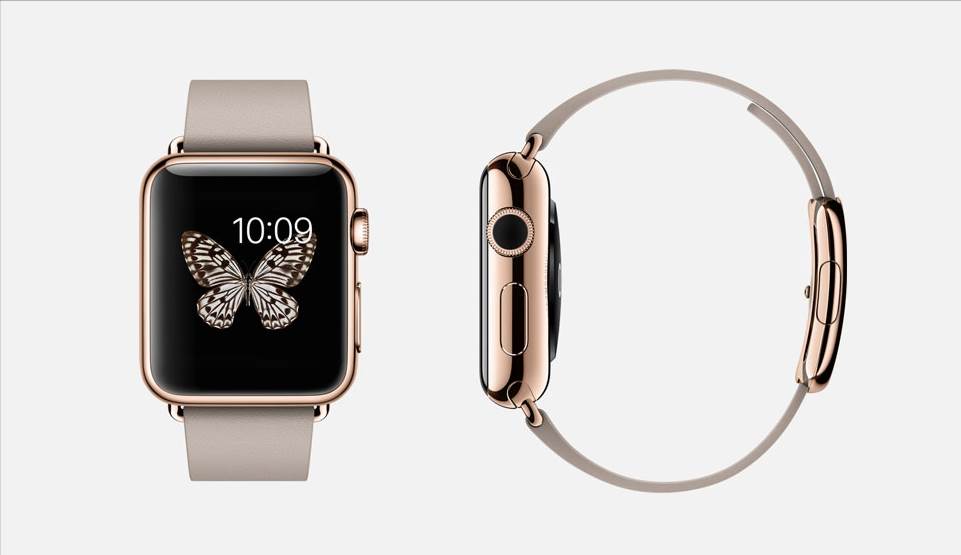
Aussies woke this morning to the news that Apple has launched a smart watch. And I’m a little excited.

iWant

iWant

Waking nice and early so I could read all the buzz about Apple’s latest launch and find out if the rumours about the new iPhone were true, I logged on to my iDevice and started reading. All the hype (I just typed hypo there….), all the photos, all the information.

I skimmed over the details of the new iPhone 6 and iPhone 6 Plus (which I will not under any circumstances be referring to as a Phablet), reading about the snazzy new camera and the high-tech, bigger and thinner features. But that wasn’t what I was really interested in. There was something else I was hoping to see. And there it was. The ‘one more thing’. The Apple watch.

Firstly, let me get my shallowness out of the way and admit that the initial thing I wanted to know was how it looked. Would it be something that I wanted to wear on my wrist? The answer is abso-freaking-lutely! And with seemingly a billion ways to customise, there is sure to be something that suits everyone. (Obviously, I’m hoping for a stripy band.)

The thing that is of particular interest to me is how I will be able to use the watch to help manage my diabetes. At this stage, I’m not sure that it is particularly revolutionary here.

This is Apple’s first venture into the smart watch market and as a first generation device, it won’t do everything that I would truly love a smart watch to do. As a health tracker, it will currently monitor blood pressure, heart rate and, through whichever app you choose, can be used as an activity tracker.

The dream device, of course, would incorporate some sort of non-invasive, real-time glucose sensor. We’re not there yet. But in a couple of years, I certainly hope that this will be part of the smart watch suite of applications. (Of course, with a cure a mere five years away, this technology will never be needed.)

Call it a gimmick if you’d like, or get on the Apple-bashing bandwagon (there are heaps of people on there already!). But wearable technology like this is going to be how we track, collate and communicate our medical information. People with diabetes are already used to wearing our tech – many of us have insulin pumps hanging from our bodies, tucked away, and glucose sensors taped to our skin. This is already how we roll. Some of us currently use apps on our phones to track our BGLs and keep records.

This is the next step in streamlining our information and data gathering. It’s exciting. It has the potential now (and future generations even more so) to make our lives with diabetes easier. This is all good news.

Plus…it comes in rose gold!

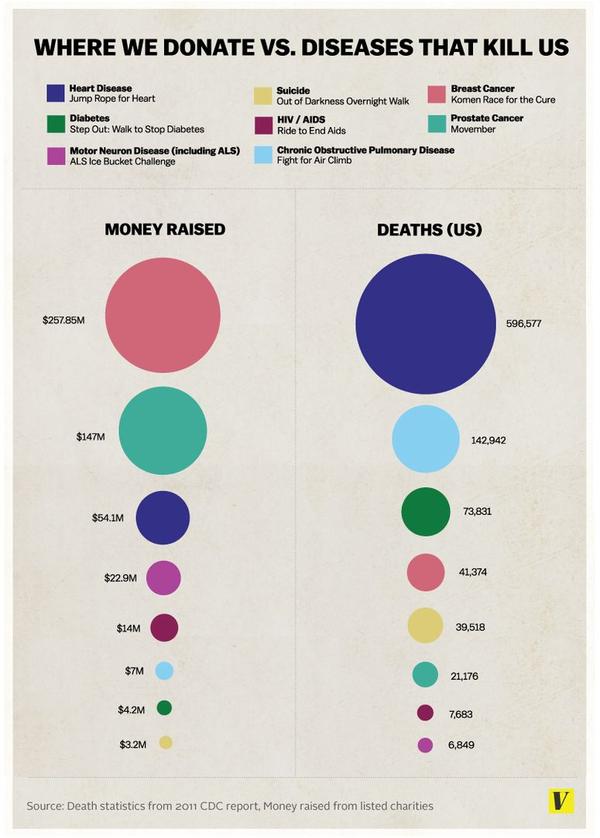
Last week, there was a very interesting infographic doing the rounds on social media sites about where people donate as compared with the diseases that kill us.

It looks like this:

Where we donate

As you can see, diabetes is credited with causing the third most deaths, yet it accounts for relatively little money raised.

Firstly, this isn’t a game of ‘my health condition is worse than yours’. As someone most eloquently wrote on a Facebook status the other day: ‘all diseases suck’. Equally, every single condition is worthy of people’s donations. There simply isn’t enough money to go around to do the research, run the programs and assist people dealing with whatever health condition they have.

But I think unpacking why some conditions attract more donations than others is worthwhile.

Despite being responsible for many, many deaths and affecting millions of people both here in Australia and around the world, diabetes just doesn’t seem to be the ‘disease of choice’ when people reach into their wallets to make a donation.

Why is this? Why is diabetes not at the top of people’s minds when they want to do some good?

I’m just going to say this.

Diabetes isn’t sexy. It’s really not. It’s chronic; there’s no cure; and while there is the cute factor when we’re talking about little kids with type 1 diabetes, they grow up. And then it’s just boring adults with boring diabetes.

But there’s more than that.

The media does a great job of stigmatising this condition. Plus, there’s the ‘you did this to yourself’ misconception that means it’s okay to blame people for developing (type 2) diabetes in the first place and ‘…why the hell should I donate to you. Get off the couch and go for a walk’. Helpful. Really, really helpful.

Diabetes needs a makeover. Plain and simple. We need people in the general community to change the way that they currently think about diabetes so when it’s time for a little generosity, they consider making a donation to diabetes research or consumer organisations.

The neat little packages we seem to have about diabetes are misleading. Tying up type 1 with kids means that adults with type 1 have no voice at all. Blaming all people with type 2 diabetes for ‘doing this to themselves’ completely forgets the facts that genes play a significant role in developing type 2 diabetes. Calling diabetes ‘a touch of sugar’ ignores the seriousness of everyday life with diabetes. In fact, the very idea that this is all about eating sugar results in such misunderstanding about diabetes that people think the solution is as simple as not eating cake. The misconception that insulin is a cure ignores the multitude of factors that are involved with the daily management of this condition. And by thinking it is just about sticking needles into our bodies negates the distress and anxiety life with diabetes can bring.

I don’t know what the answer is. But I do know that what we’re doing at the moment isn’t working. Our messaging is wrong.  How do we get it right?

On Saturday, I head to Vienna for this year’s EASD conference. Yesterday, my aunt asked me if I was packed and ready to go. ‘Ha!’ I laughed. ‘Of course not! I’ll do that an hour before I need to leave for the airport. I don’t even know where we have a suitcase at home.’  I am not an organised traveller by any stretch of the imagination, and generally have the philosophy that if I forget something, I’ll buy it when I get there. (Actually, I secretly hope I’ve forgotten things like shoes and bags so I NEED to buy them when I get there….)

This ad hoc attitude generally works. Except, of course, when it comes to all the diabetes things.

I feel like I’ve got everything under control. Until I list all the little things I need to do, need to buy, need to find, need to organise. It’s nothing major; nothing big. No; it’s the little things. And they add up!

I need:

    • Insulin…(do I even have a current prescription? Call the pharmacy and check);
    • pump lines and reservoirs;
    • BGL strips;
    • to organise my loan pump;
    • to order sensors;
    • to check my travel insurance;
    • to locate a spare meter. Surely I can find a working one (without a flat battery) in the myriad spares at home or in my desk;
    • to find my letter from my endo;
    • to locate (and wear!) my medic-alert bracelet;
    • to buy hypo supplies for the plane;
    • my Frio pack…(just realised I’ve not seen it since we moved at the end of last year);
    • spare batteries for my pump…(especially urgent after getting a battery alarm this morning);
    • syringes;
    • back-up long-acting insulin…(do I have any in-date long-acting insulin in the fridge?)
    • to get a manicure and pedicure. (Okay, not strictly diabetes related, but I’ll be using this as my check list. If it’s on here, it has to be done!)

The clothes and shoes and everything else that those with functioning beta cells need to pack can indeed wait for an hour before the taxi arrives. But all the diabetes things need to be organised and sorted and planned. Five days; that’s heaps of time. And I just booked in my manicure for Friday. Organised! 


As always, the internet is a trove of …well, cat pictures, naked photos of celebrities and silly cures for diabetes. But there is also some other stuff. You’ve just gotta look.

A Case for Action

As mentioned, I was in Canberra on Wednesday for the launch of a new Diabetes Australia report on insulin pump therapy.  You can read Insulin Pump Therapy; A Case for Action here.

ADEA Video wrap-up

The people from online magazine Diabetes Educators Update have put together a short video wrap up of last week’s ADS-ADEA conference. It was nice to be asked about whether HCPs need to consider the consumer perspective.

Try to overlook the questionable language – (diabetes sufferers’???) – I’ll be sending them a copy of the DA Language Position Statement soon.

Use words wisely

While we’re talking language, this tweet from Kim at www.txtingmypancreas.com really resonated:

Language tweet

It’s why I don’t say I’m ‘battling’ diabetes. I’m living with it. We co-exist (not always happily). There is no fighting; there is just learning to get along.

On yer bike!

Have you been following Team BG doing the mHealth Grand Tour? They have been making their way from Barcelona to Vienna. On bikes. Because they’re slightly crazy. The photos are gorgeous and I have to admit I’m a little in awe of their sportiness. Go team! I’ll see you in Vienna.

Let it go ON!

We need to talk about Frozen because pretty much everyone else on the DOC has been. This week in the US, a documentary about the making of Frozen was screened. As it turns out executive producer John Lasseter based much of the character of Queen Elsa on his kid with type 1 diabetes. I love this character for so many reasons and now, I have another one. I’m not sure that we’ve had many ‘Let it Go’ free days in our house since we first saw the film, and now I don’t care if it’s played every single day for the rest of my life! Here’s what John Lassiter had to say:

Not our turn

‘We need an ice bucket challenge for diabetes’. I’ve heard this said so many times over the last few weeks from people affected by diabetes. It’s not a sentiment I share, because this particular social media-driven stunt doesn’t belong to us.  Moira McCarthy has a daughter with type 1 diabetes and wrote this incredibly eloquent piece about how the diabetes community should be able to celebrate this for the ALS/MND community.

Moira wrote in the piece that her daughter with type 1 asked this question: “Why can’t our community be thankful another community is having success? Why isn’t that enough?”

Our turn will come. But for now, I think we should step back, support this community and this campaign however we see fit and be pleased for their success. (For the record, you can just donate – you don’t need to pour ice over your head; it’s bloody freezing still in Melbourne!).

MedX

The Medicine X (MedX) Conference for 2014 has kicked off at Stanford University. This conference is all about the future of medicine and healthcare and there is considerable consumer (patient) involvement. There are some familiar faces in the speakers’ gallery. Follow along on Twitter here.

Noodle

We have a new puppy. And she is the cutest thing ever!

Noodle

Happy Friday! It’s Fathers’ Day on Sunday. This is for the three men for whom I get to celebrate this day.


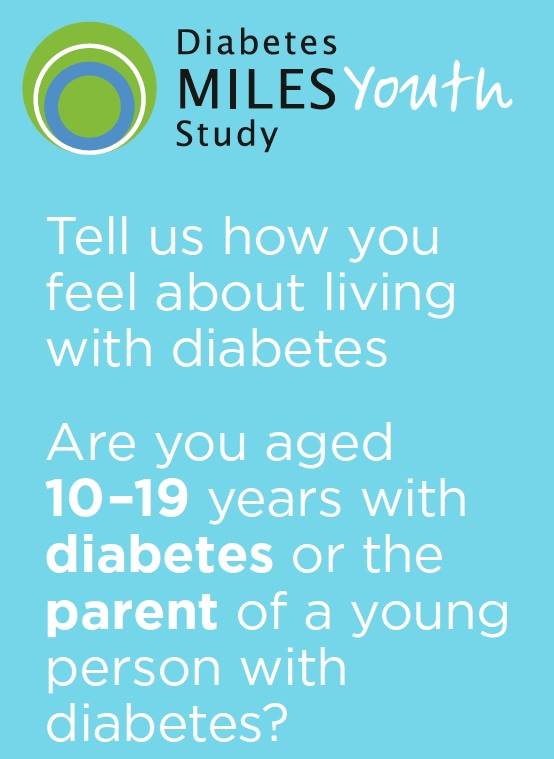
Diabetes MILES Youth

Are you the parent of a child (aged 10 – 19 years) with diabetes? Then we need YOU! And your child with diabetes too.

You may remember that a few years ago now, the Diabetes MILES survey was conducted. Diabetes MILES looked at the psychological health of people living with diabetes, and the survey results continue to be collated and presented.

Now, a new study – Diabetes MILES Youth – is being conducted asking young people about what it’s like to live with diabetes, and how diabetes affects their wellbeing.

And because we all know that diabetes is a ‘family sport’, parents of kids with diabetes are also being asked to complete the survey.

The survey is only open until the end of September, so please take the time (about thirty minutes) to respond. (I know that you would get involved anyway, but as an added incentive, there’s an iPad to be won!)

Diabetes MILES and now Diabetes MILES Youth will actually show just how diabetes affects our lives on a day-to-day basis.  The more we can talk about the psychosocial side of diabetes – the more evidence there is to show that diabetes affects our wellbeing – the more that diabetes stops being just a numbers game. (Although, in this case the number of people completing the survey is important, so get clicking!)

Youth MILES

DISCLAIMER

Diabetes MILES Youth is part of the NDSS-funded Young People with Diabetes National Development Project of which I am the Project Manager. I’m writing about it here because I think it’s really important for as many people as possible to take part in this survey and have their voice heard.

The survey is being conducted by the Australian Centre for Behavioural Research in Diabetes.

I’m in Canberra today, at Parliament House, for a lunch event focussing on diabetes technology. As usual, I’m surrounded by a group of smart people such as Professor Jane Speight and Professor Alicia Jenkins. Me, in my role as a non-professor, is to provide the consumer perspective about why freedom and choice when it comes to reportdiabetes technology is something that should be supported by government.

Today, Diabetes Australia is launching an important new report about insulin pump therapy in Australia. It provides recommendations and the case for action, and gives a snapshot of the current situation – not only of pump therapy, but other technologies such as continuous glucose monitors. Pleasingly, and with a nod to the future, emerging technologies such as the ‘bionic pancreas’ are also mentioned.

The report highlights the inequality of current pathways to access pump therapy. If you are unable to afford private health insurance, or not under 18 years of age and meet the eligibility criteria of the Government funded Insulin Pump Program, you are left to self-fund the purchase of a pump. At around $9000 that’s a lot of loose change to have lying around under the sofa cushions.

Sensor technology is not funded at all, leaving people with diabetes to find the dollars themselves. For me – and many others – being able to use a sensor-augmented pump gives incredible peace of mind, and reduces diabetes distress. It is not fair that this technology is out of reach for most people.

I’m really honoured to have been asked to tell my story to the group of MPs who will be at the lunch. In my time doing this job, it has become more and more apparent that having people hear and understand how living with diabetes impacts us on a day to day basis helps to bring the message home about life with a chronic health condition.

Living with diabetes cannot be tied up neatly in a box – it is complex, changes all the time and is different for everyone. Being able to manage our condition should be a matter of choice – not finances. Hopefully today the group of politicians hearing us will understand that a little bit more and start working towards developing an approach to pump therapy (and related technologies) for all Australians with diabetes.

DISCLAIMER

I work for Diabetes Australia – Vic and have been involved in the development of the resource being launched today.


I’ve learnt many things at the diabetes conferences around the world I’ve been lucky enough to attend. One of those things is that Conference Hypo Syndrome (CHS) will get me every single time! (There may be no documented evidence that this is a real thing. But believe me. IT’S.REAL.)

The Melbourne Convention and Exhibition Centre is a huge venue – just like most similar conference facilities around the globe. As I rush between presentations, meetings, finding the speakers’ room and catching up with people for coffee, I inevitably run (okay, walk) what feels like the equivalent of a half-marathon. In heels.

Over the weekend, I went through some old photos from other conferences I’d attended. At just about each and every one of them, there is at least one photo of me downing juice, eating glucose tabs or throwing down jelly beans.

Last week at the ADS-ADEA conference I smugly thought I had it all worked out. On day one, I got up and straight away lowered my basal rate a little, as I anticipated a crazy day activity ahead. I had it spot on! Not a hypo to be seen for the whole day.

I even knowingly explained CHS to a colleague attending her first conference who was shocked at just how many times she’d gone low that day. ‘Of course!’ I told her. ‘You’ve been running around all day in between sessions.’ The next day, she lowered her basal rates which resulted in a much nicer day of BGLs.

On day two, I was presenting as part of a symposium at the rude time of 8.30am. I had it all planned. I would get up nice and early, alter my basal rates (this time with some consideration to the fact that I’d be running on adrenalin in the morning as I prepped for my talk) and then would re-adjust it after my talk. ‘I’ve got this CHS thing sorted’. I thought to myself.

Stupid, stupid, STUPID girl.

Actually, it probably would have all been clever and worked out perfectly had I not had a crashing hypo at 3am. Or the nosebleedingly-high rebound that woke me at 6am. By the time I got to the conference centre, my basal rate had indeed been adjusted – but to help with the post-hypo high to avoid me doing my presentation with what would feel like a pair of grubby sports socks in my mouth, and the need to run to the loo every two minutes.

With my presentation done, I was back in range. I thought about the day ahead – more running around the cavernous centre – and adjusted my basal rate accordingly.

I spent the next hour or so catching up with people; popping in to hear grabs of different sessions; traipsing around the Expo hall to check out the exhibitors and being interviewed by a news crew from Diabetes Educators Update.

After my interview, I realised I had hardly any recollection of what I said. I was assured by the interviewer that I had answered everything appropriately and confidently, but when someone asked me what I’d spoken about, I couldn’t really remember details. I checked my BGL and realised that CHS had struck again.

I spent the day catching hypo- and rebound-tails until I got home and managed to get things smoothed out.  I slept through the night, woke in range and set my basal rate for the day ahead. And was pretty much fine for the final day of the conference.

I’m presenting at another conference next week back at the Melbourne Convention Centre.  Fingers crossed that I wake on the day of my presentation after a restful night’s sleep, with an in-target BGL and can put my CHS cure into plan. Because I know that if diabetes behaves itself (ha!) then it works. It’s just when diabetes is being a little shit that it all goes rather pear-shaped!

 

Last week, I spent three days attending and giving presentations at the annual Australian Diabetes Society-Australian Diabetes Educators Association (ADS-ADEA) Scientific Meeting, here in sunny Melbourne. It was a huge week with record attendance and the conference ‘felt’ big.  I’m being a little lazy here, but I think that the best way to capture everything I want to share is to use dot points. Here goes:

  • Congratulations to the ACBRD team for their symposium on day 1 – Diabetes Distress and Depression – Facing Challenges, Bringing Solutions. Special shouts out to Professor Jane Speight and Dr Christel Hendrieckx who were able to really focus on the ‘solutions’ part of this session.
  • Overall, it was really pleasing to see an increased focus on mental health and behavioural research at the conference. Finally, the message that diabetes is absolutely not just about numbers seems to be getting through.
  • And for that reason, it’s terrific to see presenters giving really practical advice about how to address mental health issues. Huge, huge points to Christel (again), Jane (again) and Dr Carol Silberberg for not only stating what the issues are, but actually providing take-home tips for clinicians to actually use. Mental health can be a tough topic to broach – especially if HCPs feel they don’t have the tools to deal with it – but thanks to presentations by these three, there was some really hands-on advice that has the potential to help HCPs change their practise.
  • I called it when it was launched, and I’ll say it again: The Enhancing Your Consulting Skills resource developed by ADS is going to change the face of educating HCPs (endocrinology trainees) about diabetes. The ADS Symposium on the Thursday morning highlighted again just how valuable this resource will be. I was honoured to be invited to present at this session, and once again would like to thank the team responsible for considering the ‘consumer perspective’ throughout the development of the resource, and continuing to do so.
  • Further to that, I hope I wasn’t too rude to the GP who informed the panel that we had forgotten ‘the most important person in the team – the GP’. I was trying to be respectful when I reminded him that actually that title goes to the person with diabetes. I may have failed.
  • We need to talk about Dr Silberberg’s slides about clinicians not liking their patients. It was so, so interesting and gave such an insight into the clinicians’ minds. But that’s a whole other blog post! (Stay tuned…..)Emma - salt n pepa
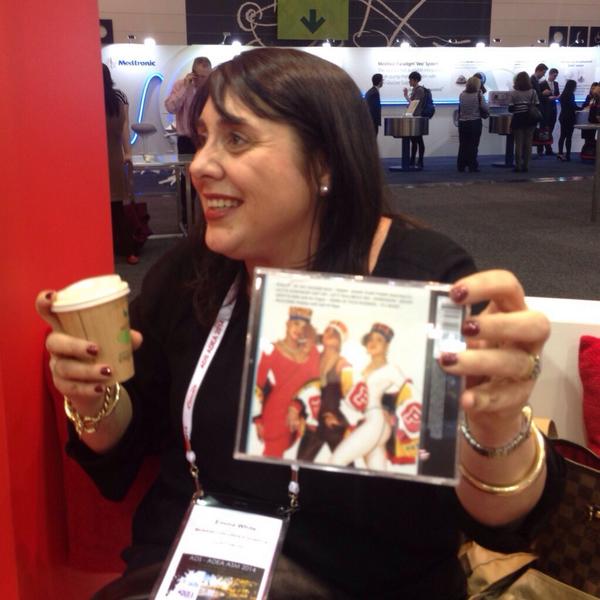
  • Great presentation from Emma White and Jesuina Noronha from Monash Children’s about some research they’ve conducted on sexual health knowledge, attitudes and beliefs in adolescents and young adults with type 1 diabetes. Some very interesting findings were presented. And Emma finished off with a bit of Salt n Pepa’s Let’s Talk About Sex. That girl rocks.
  • I was a little disappointed that at the Technology 101 session on the final day, there was not a single consumer presenting. I understand the importance of discussing how HCPs use technology in their practice and applications for e-health. But many consumers are way ahead of the curve here and could have provided some very interesting insights about how technology can be used to connect (with other PWD as well as our HCPs), communicate, and gather, collate and share information.
  • Even though the Consumer Outreach day was held on the final day of the conference, this is really the first time that I have felt that there has been a real consumer presence for the entire conference.
  • While we’re on this topic, a special shout out to OzDOC guru Kim Henshaw for her outstanding tweeting throughout the conference. I was unable to get to nearly as many sessions as I would have liked due to meetings, but following her tweets gave me a pretty good insight into what was going on in the sessions I missed.
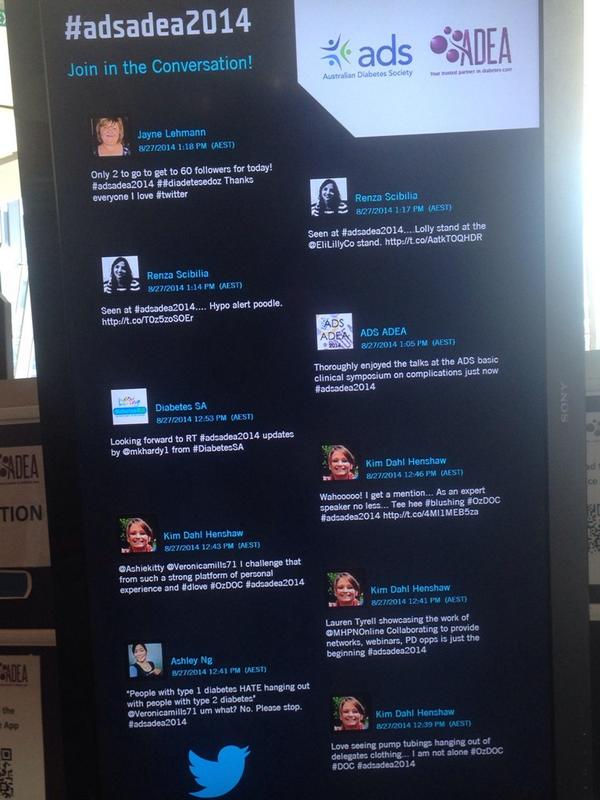
  • Congrats to the organising team for stepping up this year with social media exposure. It was great that in the lead up to the event, there was a section on the website about using SoMe at the conference, a dedicated hashtag that was promoted throughout and twitter walls around the conference facilities (usually showing the faces of the consumer advocates in attendance who were busy tweeting).Twitter wall
  • It would, however, be great to see more HCPs tweeting. Most came from consumer advocates and the ACBRD team. Perhaps a couple of ‘tweeting 101’ sessions over lunchtime would work to get some more people on board?
  • Why is this important? Because the reality is, if it wasn’t for the few of us tweeting at the conference, most people would not have a clue about the sessions. How many people with diabetes have time in their appointment to ask if their HCP attended the conference – and what they learnt?
  • A tiny suggestion to the organising team that they look at programming. Frequently, there were two or three sessions on at the same time that I would have loved to attend, and then sessions where there was nothing of particular interest. I heard this complaint from quite a few people (so it’s not just me!!). Perhaps some more consideration about spacing of sessions and spreading out the topics of interest to attendees.Lolly stand
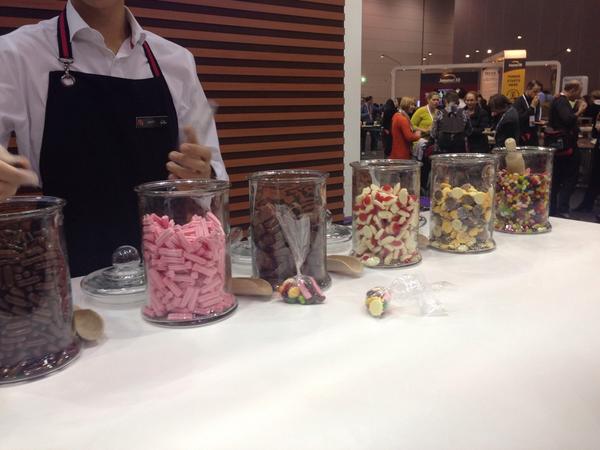
  • The Exhibition Hall at conferences is always a treat. This year, the battle for most enticing exhibit (in my books, anyway) went to the Lilly team who not only had the best (free) coffee, but also a sweets stand where they were dishing out little cups of lollies to attendees who stopped by. Very useful for those of us experiencing Conference Hypo Syndrome.
  • Also seen in the Expo hall were people handing out nuts . They got angry at me when I said I wouldn’t write about their product. ‘But they’re just nuts’, one of their reps said to me. Indeed they were. Gabrielle
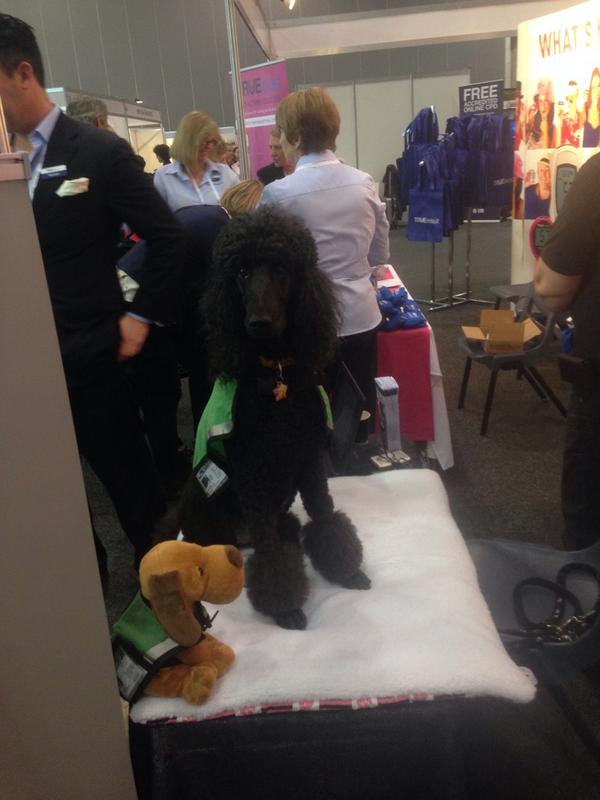
  • But the bestest thing of all in that hall was not the free coffee or free lollies. No. It was a French poodle called Gabrielle who was there with the Paws for Diabetics team. More on that to come too.
  • Weirdly, on the first day I found myself in the wrong Expo hall looking at tractors. Not relevant at all; just weird.

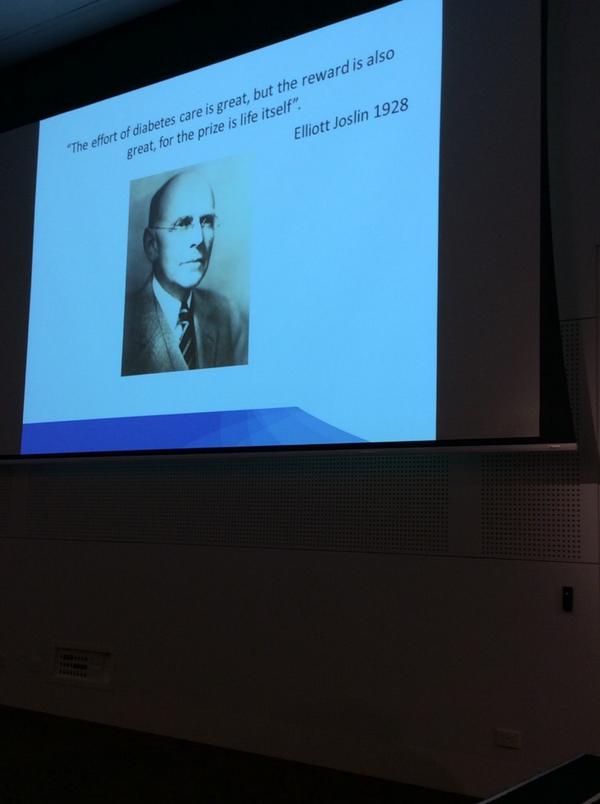
Well. that’s ADS-ADEA for another year. I’m going to finish up with this slide that Dr Jennifer Conn used in her presentation during the Type 1 Diabetes Consulting Skills symposium where she used this perfect quote from Elliot Joslin.Joslin qiote

If you jump on Twitter and search #ADSADEA2014 you’ll find all the tweets from the conference. GO!


Follow Diabetogenic on WordPress.com

Enter your email address to follow this blog and receive notifications of new posts by email.

Read about Renza

Archives