
You are currently browsing the category archive for the ‘Real life’ category.
Grief is an emotion that is, at times, quite toxic. It is all consuming and can be irrational. I’ve written before about grieving for my pre-diabetes life and how once given permission to do so, I was able to put in perspective where diabetes belongs in my make-up.
But the grief I have been experiencing for the last month has been like nothing I have ever known. It has moved in, made itself at home and is now ordering me around and making me angry.
It may come as a surprise, but I am actually quite pragmatic about the miscarriage. It happens. I knew the stats. At our first ‘Oh-my-god-we’re-pregnant’ appointment with the obstetrician, he calmly, but firmly, told us the stats. Thirty per cent chance of miscarriage at my age. I took it in, smiled weakly and added ‘plus, I’m not good at being pregnant….’ and let my voice trail off.
I refused to get too hopeful and every visit to the bathroom for the next few weeks, I expected to see the tell-tale signs of the pregnancy ending. Throughout our holiday, as I counted another week down, I got a bit more confident, a bit more hopeful. And even though I thought as I ticked of the 12 week and then 13 week mark that I was getting close to feeling sure the pregnancy had ‘stuck’ the stats were always in my mind.
When I miscarried, I was prepared for sadness, although not the all-encompassing grief that engulfed me and took over. But even that was understandable. I was grieving the loss of a baby and the addition to our family.
What I wasn’t prepared for was the anger. It started two days before we were due to get on a plane and head home. I woke up, and there in the pit of my stomach, I felt a heavy stillness that at times threatened to overtake me. At first, I was able to aim the anger at diabetes and to a degree, I still do. I cursed by body. MY stupid fucking diabetes made this happen. The rational side of my brain – which, in all honesty hasn’t had much of a look in lately – reminded me that an A1c sitting in the 6s would not have in any way contributed to the end of the pregnancy. The side that had been overtaken by anger simply disregards common sense. It does it well.
But diabetes – and me – were not the only targets for my anger. As is often the case, the people closest to me bore the brunt of my fury. Aaron was in the direct firing line and there was nothing he could do to avoid – or understand – where this was coming from.
As it became apparent that I’d need further treatment for the miscarriage – another D&C the week we returned home because the one in the US hadn’t been completely successful – I pulled away more. He was compassionate and concerned and I pushed him away. As we sat in the hospital waiting for my name to be called to go into surgery, he tried to hold my hand and I pulled it away.
I was short with my parents – especially my mother. I withdrew from them too and became silent and sullen. And angry.
I realise now though, that it wasn’t really anger towards them that I felt. It was just easier to yell or dish out the silent treatment or be nasty. Because the truth is that the anger was really directed at myself. I couldn’t tell my family that I felt that I’d failed them because I knew that they would tell me that it wasn’t the truth. I didn’t tell them that I was blaming myself for the miscarriage because they would try to make me see that it wasn’t my fault. I couldn’t tell them how much I was hurting or how sad I was because there were no words that expressed those emotions.
It’s been four weeks now. I still feel emotionally wrecked and my heart is heavy with sadness. There are moments when I feel my eyes fill with tears for no real reason – just because. But I can now look at myself in the mirror and not feel hopeless because my stomach has returned to its completely flat state. I can look at photos from our trip and smile at the memories rather than just focus on the fact that I was pregnant then. And now, I’m not. I’m healing and I’m breathing again and that is a victory.
I know that this is a stage on my way to acceptance. I just wish that there were a way that I could take loved ones along for the ride rather than attack them and alienate them.
This is the last time I’ll be writing about my miscarriage here. Diabetogenic is about real life with diabetes and despite trying with all my might, I can’t blame the miscarriage on diabetes. Thank you to everyone who has read, commented and sent their love through this time. It’s greatly appreciated.
‘Why do you use a pump?’ someone asked me the other day. I’ve been pumping for so long now that I’m not sure I can really answer that anymore. I use a pump because I have type 1 diabetes and I need insulin. I know that there are other ways to administer insulin, but at this stage of the game, I’m not even willing to contemplate them. Been there; done that. So I suppose the answer is I use a pump because I need insulin and this is the way I choose to administer it.
It got me thinking about the other tools I use for my diabetes management. I use a CGM because it gives me information about changes to my blood sugar and (frequently, but certainly not always) allows me to act before I end up really high or really low. It’s how I choose to try to keep myself in range.
And I use a BGL meter because I like the ability to know my real-time blood sugar. I also use it as a way to confirm what my CGM is telling me. I check my BGL a certain number of times a day – a number that changes and a number upon which I decide – because that number of times gives me a good snapshot into what’s going on. I choose to check with this regularity because it gives me the information I need.
Together, these things work for me and for my diabetes. Would these things work for you? Maybe. But I’m not the person to say. I’m not you and I don’t know your life and I don’t know what you expect from your diabetes management devices and tools. I’m pretty clear about my expectations – I want things that are as simple to use as possible; give me the information I need when I want it and allow me to react in as-close-to-real-time as possible so as to prevent high and/or low blood sugars.
There is no one size fits all when it comes to diabetes and anyone who has any idea of life with this condition knows that. We don’t need people telling us what the best thing to do is because that ‘best thing’ may, quite possibly, be the ‘worst thing’ for you.
Also what works today may certainly not be right tomorrow. There will be times in our lives that we need more from our diabetes tools. There will be times that we want to keep an especially close eye on what’s going on and other times that we can take a small step back and just get the basic information. There will be times in our life that we really can’t deal with any more than simple, uncomplicated, straightforward data because we are too overwhelmed or just plain over it.
Working out what’s right for you may take time and effort. There could be trial and error and starting on one thing and finding it’s terrific or deciding it’s not right and ending up exactly where you started. And that’s okay. Take the time; think about what you want and what you need; see how you can go about getting it. And then choose. Choose what’s right for you.
There are some days that I just wish I didn’t open the newspaper. This is one of them. On the front page of one of the sections of today’s The Age in Melbourne I was greeted with The Diabetes Time Bomb. Making sure that I wasn’t in fact ticking, or that I didn’t need to call in the Bomb Squad to evacuate the building as they worked out whether to cut the red or blue wire, I continued reading the article.
So glad I did. ‘Going blind. Getting your leg cut off. Kidneys packing up. Dying of a heart attack. The implications of being diagnosed with diabetes are shocking.’
They were the first words in this article. I nearly stopped right there. But, I kept reading, lured by the topic of diabetes. The thing is, the remainder of the article is really well written. It draws readers’ attention to the fact that there are increasing numbers of people being diagnosed with type 2 diabetes and it is being diagnosed in younger and younger people. It’s factual; it includes quotes from several experts using evidence-based information and there is an excellent case study.
But starting an article about diabetes with a shopping list of scary complications is alarmist and pointless. There is no context offered, no explanation of what they mean, no statistics and no concern shown for those of us living with diabetes every day. It’s damaging, inconsiderate and irresponsible reporting.
The Diabetes MILES study showed that 33 per cent of people with diabetes worry about the future and the possibility of serious complications. The authors tell me it is consistently the foremost concern of people with diabetes. Reading an article like this does nothing to reduce that distress and everything to accentuate it. Nor does it provide truthful and balanced information about diabetes complications. They are not inevitable. A 30 year old with type 1 diabetes has an 88% chance of still having good vision at age 60, and with newer treatments, chances are even better.
And for people without diabetes, why would they want to keep reading? There is nothing positive in a list that includes threats of blindness, amputation, dialysis and death. Head. Sand. La la la, not listening!
I am not saying sugar-coat it (pardon the pun!), I’m really not. Diabetes is serious, the statistics are scary, the costs are prohibitive – and we do need to address these problems now. We need strategies in place to prevent type 2 diabetes in those at high risk and, for people already diagnosed with all types of diabetes, to reduce the risk of developing diabetes complications. We need the Government (whoever that might be in 6 weeks’ time!) to adopt a coordinated national diabetes strategy and fund programs to address the issues.
And we need the media to highlight these issues. We need their reach.
But can it be done by focusing on the facts and what needs to be done? Keep interviewing the professional experts and the real-life case studies. Use evidence and talk about strategies that can help. And please, leave out the melodrama and the scare tactics.
Thank you to Professor Jane Speight, Director of The Australian Centre for Behavioural Research in Diabetes (Diabetes Australia – Vic and Deakin University) for her assistance with this post. As is often the case, I speak with Jane for a balanced, thoughtful and sensible response to my ranty, unbalanced, often ridiculous thoughts.
Support comes in many shapes and sizes. When it comes to life with diabetes, I have always been lucky to have a support network village that consists of family, friends, a brilliant healthcare team and Nutella.
In the last few weeks as I have been dealing with more than just diabetes I have realised just how wide my support system really is and it’s surprised – and humbled – me.
Obviously, publishing an incredibly raw and honest piece on a news forum that gets over a million hits per month means that there are a lot of people out there who now know what I am living through. But then, I’m an oversharer, so ‘puttin’ it out there’ has never been something I’ve shied away from.
When it comes to diabetes, having that network to lift you up in times of frustration can mean the difference between sinking into a period of serious burnout and feeling like you have ways to cope. Knowing that there are people there to help you out – no matter the time of day – can be the difference between feeling isolated and feeling that you have someone’s shoulder to lean on. (I will once again send out a message to the DOC who has been that difference on more occasions than I could mention.)
One thing that I have learnt in my years having diabetes and when faced with particularly challenging times is that having someone say ‘Are you okay?’ or ‘I know this must be a hard time for you. I am here for you.’ helps more than words can say. Just knowing that people care and are thinking of you gives incredible solace.
We don’t always know what to say and we sometimes worry that our words may unintentionally hurt. So we say nothing. We think that it’s the better option. And perhaps we worry that if we ask someone how they are going, the chance of them dissolving into uncontrollable tears is something we just don’t want to risk. But personally, I’m always ready to take that risk, because I want people to know that they are being thought of and cared for.
Not everyone is comfortable talking about their life and not everyone is happy to ask for support. Sometimes we try to be stoic and strong for ourselves and those around us and sometimes we just want to pretend the crap stuff isn’t happening. Often, we don’t like to let people know we’re not coping or dealing with something particularly difficult. And in the time of Facebook when we only put forward our very best self (‘look! I’m on holidays/at a cool new café/eating Nutella’) we hide the tough stuff.
But when we do talk about it, it’s so wonderful and reassuring to have people reach out – it makes us feel safe. Right now, I feel so very safe and protected thanks to the many people who have reached out. And I want to say thanks.
Half and Half in iced coffee. God bless America!
After an absence from writing here and an absence from Australia, I’m back! Seven weeks away which involved attending a couple of fantastic conferences, visiting favourite cities and discovering new places, hanging out with old friends from the diabetes online community and making new friends, and spending quality time with my family. I was also introduced to the horror wonder that is American Girl much to the excitement of the eight year-old kiddo and the shock of her parents. I ate lots of yummy food and am in rehab for my Half and Half addiction.

Red velvet cupcakes make these girls happy!
Now I’m back and as I try to acclimatise to the weather (it was 40°C the day we left NYC and 7°C the day after we returned to Melbourne) and dealing with stupid jet lag, I am also coming to terms with a lot of other things. While we were away I had a miscarriage.
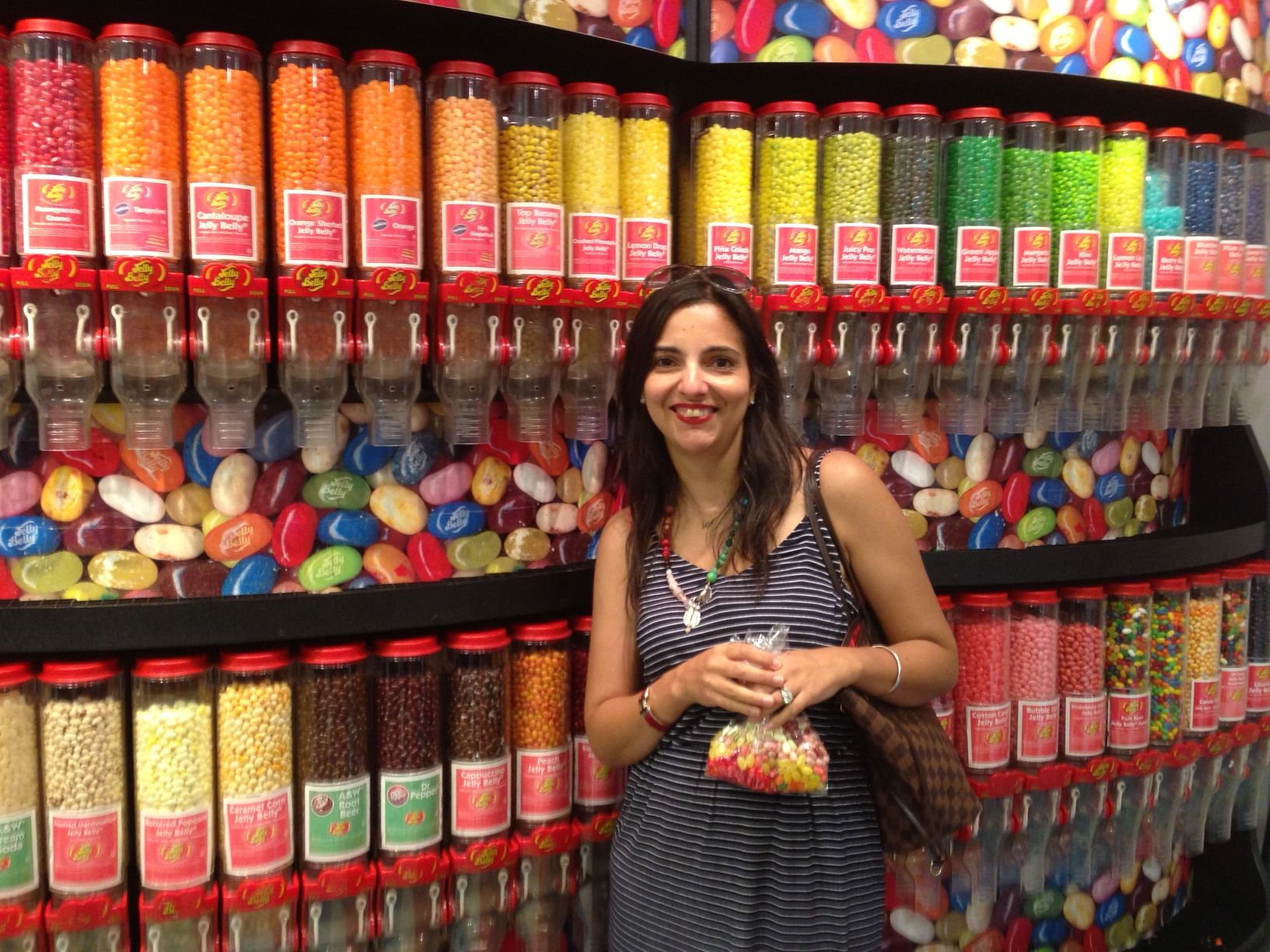
The Great Wall of Jelly Beans at Dylan’s Candy Bar in NYC.
I left Melbourne for Paris feeling hopeful – I was in the early days of a pregnancy, and Aaron and I were quietly excited about the much-longed for addition to our family. And until four days before we were due to come home, we got ever more hopeful and confident that we would be returning home with some extra special excess baggage and exciting news to share with our friends and family. It wasn’t to be. I miscarried just over 13 weeks into the pregnancy.

Hanging out in Washington Square Park
I am recovering slowly but surely. I know that time allows for healing. I also know that sharing stories and talking about things helps the recovery process. Yesterday, a piece about my miscarriage was published at Mamamia. You can read about it here. It is raw and emotional and I wrote it to try to explain to myself and others the conflicting emotions with which I was dealing at the particular moment when I had to let go of my hopes.
I’ll be back writing at Diabetogenic next week – sharing some of the things about my holiday and the conferences and talking about real-life with diabetes. And about how making my own Half and Half turned out.
Let’s go Yankees!
 Today, for the first time in my ‘diabetes-life’, I am wearing a medical-alert bracelet. After a hypo last night that resulted in paramedics, IV dextrose and at-home hourly BGLs (just so I could avoid going to A&E), I pulled out of the draw the bracelet I bought a couple of years ago and put it on.
I have resisted wearing medical-alert jewellery for 15 years and I’m not really sure why. I have never been backwards in coming forwards about the fact I have diabetes and I am certainly not in any way ashamed of living with this condition.
But for some reason, in my weird and twisted mind, the wearing of a piece of jewellery that brands me as ‘type 1 diabetes/insulin pump’ (as the inscription on the back of the tag says) was just too much for me to deal with. I have always associated it with the idea that I would not be able to deal with my diabetes myself; that I’d need someone else to help me and that there would be emergency situations. I’ve pretty much avoided these circumstances so far. Until last night.
So today, I located the bracelet and linked it around my wrist. It’s quite pretty to look at, provided all I can see is the bracelet part and not the tag . But each time I catch a glimpse of it – as I am typing at my computer; as I sat in a café drinking my morning coffee; lifting my arm to push hair out of my eyes – I feel defeated and somewhat branded.
I’ve always wondered about people who get tattoos which proudly declare they have diabetes and I’ve never understood why anyone would do that. I just don’t understand why someone would want to have their health status permanently tattooed to their skin. I’ve always thought if I was to do that, I’d need to add all the other ways I want people to think of me. And having ‘Harry Potter tragic’ or ‘Delusions of Nigella Lawson’ scrawled up and down my arms would just be silly! Again, it’s not because I’m ashamed of having diabetes. Perhaps it has more to do with the fact that I defiantly go against what everyone else is doing and I quite like being the only ‘un-inked’ person in the room. Of course, this is merely my own opinion and I absolutely don’t think any less of people who choose to have a diabetes tattoo. Maybe if braver, I’d do it too.
I’m heading overseas in a couple of weeks for a long trip and for the first few days, I’ll be alone, without my family. It’s probably a smart idea to have something on me that says I have diabetes – just in case something happens. Maybe it will give me some peace of mind, as I’m sure it will my family.
But for today, I’m feeling fragile and not particularly happy. Not happy that now I feel unsafe and feel the need to have something that (in my mind, and I’m sure my mind alone) screams ‘TYPE 1 DIABETES’. I feel that it’s a victory to diabetes. And I hate losing.
Lauren’s Hope jewellery has some gorgeous designs. My bracelet has five strands of black Swarovski crystals holding together the medical-alert tag. It’s quite beautiful, really!

It’s Diabetes Blog Week thanks to Bitter~Sweet Diabetes. This week, over 150 diabetes bloggers from all over the world are taking part and sharing stories about their lives with diabetes. This is the second year I’ve participated and I can’t wait to read what everyone else is up to. So, here we go with Thursday‘s topic……
It’s very easy when we’re talking about our accomplishments with diabetes to think only of the ‘big stuff’. Yesterday, I wrote about the day my daughter was born and when it comes to diabetes achievements, that day and the nine months leading up to it get a huge tick.
But I think that for me the greatest achievement has been learning to live side-by-side with this condition. It took me a while to understand where diabetes fit into my life and it wasn’t until after I’d actually accepted that I needed to grieve for the life that was that I realised that I could live, live well and be happy despite diabetes.
I am really pleased that I can honestly say that diabetes hasn’t stopped me from doing anything. I have never used it as an excuse (okay – those times I pushed in line at a cupcake shop don’t count, right?) and I have never felt that I should be pitied for having diabetes. It’s part of my lot in life and as crap as it can be at times, it’s become part of the fabric of my life.
I never thought that I’d be able to see diabetes as ‘just there’ rather than a big, scary thing that needed to be controlled. Perhaps it was when I gave up the need to micro-manage every aspect of living with a chronic health condition that I worked out how to co-exist with it. This absolutely doesn’t mean that I don’t hate it at times and wish it wasn’t there – of course I do. Accepting that it’s here forever was tough and made me angry for a while. And of course, I get frustrated and pissed off when it rears its stupid head when I just don’t have time for it, but that’s the nature of diabetes.
I can’t change the fact that my beta cells took a permanent holiday without me. I can’t change the fact that for the rest of my life I will be living with diabetes. I can’t change what’s around the corner – even though I can do what I can do try to minimise risks. I can’t change that there are no guarantees.
But I have accepted that it’s here. And I feel pretty proud of the life I am living because of and despite diabetes.
Follow Diabetes Blog Week on Twitter by searching the #DBlogWeek tag.
It’s Diabetes Blog Week thanks to Bitter~Sweet Diabetes. This week, over 150 diabetes bloggers from all over the world are taking part and sharing stories about their lives with diabetes. This is the second year I’ve participated and I can’t wait to read what everyone else is up to. So, here we go with Wednesday‘s topic……
They may be few and far between, but there have been days where I feel that I have conquered diabetes and none more so than the day my daughter was born. Even though it was eight-and-a-half years ago, I can still remember every detail of her delivery and first day in my arms so clearly.
Even though the day was all about meeting her, diabetes was prominent. It was because of diabetes that she was delivered at just under 38 weeks. It was because of diabetes that I decided to have a caesarean delivery. It was because of diabetes that the operating theatre was full of medics including a paediatrician. It was because of diabetes that the moment she was lifted from my body and briefly held up for me to see, she was whisked off to have her heal pricked to check her BGL. It was because of diabetes that she was later taken to the Special Care Nursery because her BGLs had dropped.
But despite diabetes – despite all the things I’d been warned about and the things I read – I had a beautiful healthy baby girl. She is my greatest achievement and these memories are my most precious. Despite diabetes, I was up by the afternoon visiting her in the nursery and breastfeeding her as I muddled my way through my own low blood sugars.
I wonder if I will ever forget the details of the day. The way Aaron and I looked at each and gasped when we heard her voice for the first sound; the way I tore away at her swaddling so I could feel her skin against mine when I first held her in the minutes after she was delivered; the way her hands opened and closed around my finger; the way that Aaron looked as he held her when I was wheeled back into my room after recovery. Everything seemed right – our much wanted baby was with us and she was healthy.
I don’t think of this day as a ‘diabetes day’. It’s the day of my daughter’s birth. But as with all my days, diabetes is there. This particular day makes me so proud because of the way I was able to manage my diabetes; deal with it in a way that worked and then get on with the important things. The most important thing ever – meeting my daughter.
Follow Diabetes Blog Week on Twitter by searching the #DBlogWeek tag.
It’s Diabetes Blog Week thanks to the very clever Karen Graffeo at Bitter~Sweet Diabetes. This week, over 130 diabetes bloggers from all over the world are taking part and sharing stories about their lives with diabetes. This is the second year I’ve participated and I can’t wait to read what everyone else is up to. I’m in for a lot of very late nights! So, here we go with the topic of Monday……
Often our health care team only sees us for about 15 minutes several times a year, and they might not have a sense of what our lives are really like. Today, let’s pretend our medical team is reading our blogs. What do you wish they could see about your daily life with diabetes? On the other hand, what do you hope they don’t see?
I have frequently commented on how lucky I am to have a health care team that consists of some pretty amazing people. My endo actually does read my blog and recommends it to not only other people with diabetes, but also to endos-in-training. I completely understand how unusual this is, but it makes me realise just how fortunate I am to have a HCP who has some insight into my real-life with diabetes. Or at least, the things I’m prepared to share!
So, because of that, I’m going to concentrate on the second part of today’s topic – the things we don’t want them to see.
And the truth is, there’s nothing I don’t want them to see. I could say that I’d prefer they didn’t know about the days where my meter doesn’t see the light of day as it languishes around the bottom of my bag; or the days where my CGM graph looks like a mountain range; then there are the days where I know I should do a line change, but can’t be bothered and just deal with the higher BGLs and the angrier and redder cannula site; oh, and the culinary delightful days where my total nutritional intake consists of three coffees, a jam doughnut and a piece of toast with Nutella.
But I believe that this may be called life. And it’s important that they know these days are kind of typical! I am not perfect in any aspect of my life, so why should I pretend to be when it comes to my diabetes? And why should my HCPs be presented with only the stuff I do ‘right’?
I want my HCPs to see real-life with diabetes; which is basically real life. With diabetes sprinkled on top! We all have so much more going on. Diabetes? Of course it’s a part of me, but it needs to fit in with the rest of my life. And for me, that’s one of the most difficult things about life with diabetes. How do I manage to do the things I’d like to do to feel healthy, strong and well but keep things in perspective?
Actually, perhaps that’s one of things I’d like HCPs to see and know – I’m trying. Each and every day I’m trying. And that is more than enough!
Follow Diabetes Blog Week on Twitter by searching the #DBlogWeek tag.
Diabetes is the natural enemy of the frock. Yes, it is! There are countless discussions on Facebook and other diabetes forums that could all pretty much be headed ‘where the fruitcake do I put my pump?’ I know of pockets sewn into dresses, invisible hooks added to wedding gowns and incredibly-difficult-need-instructions-to-use contraptions whose only purpose is to keep the pump hidden, yet accessible.
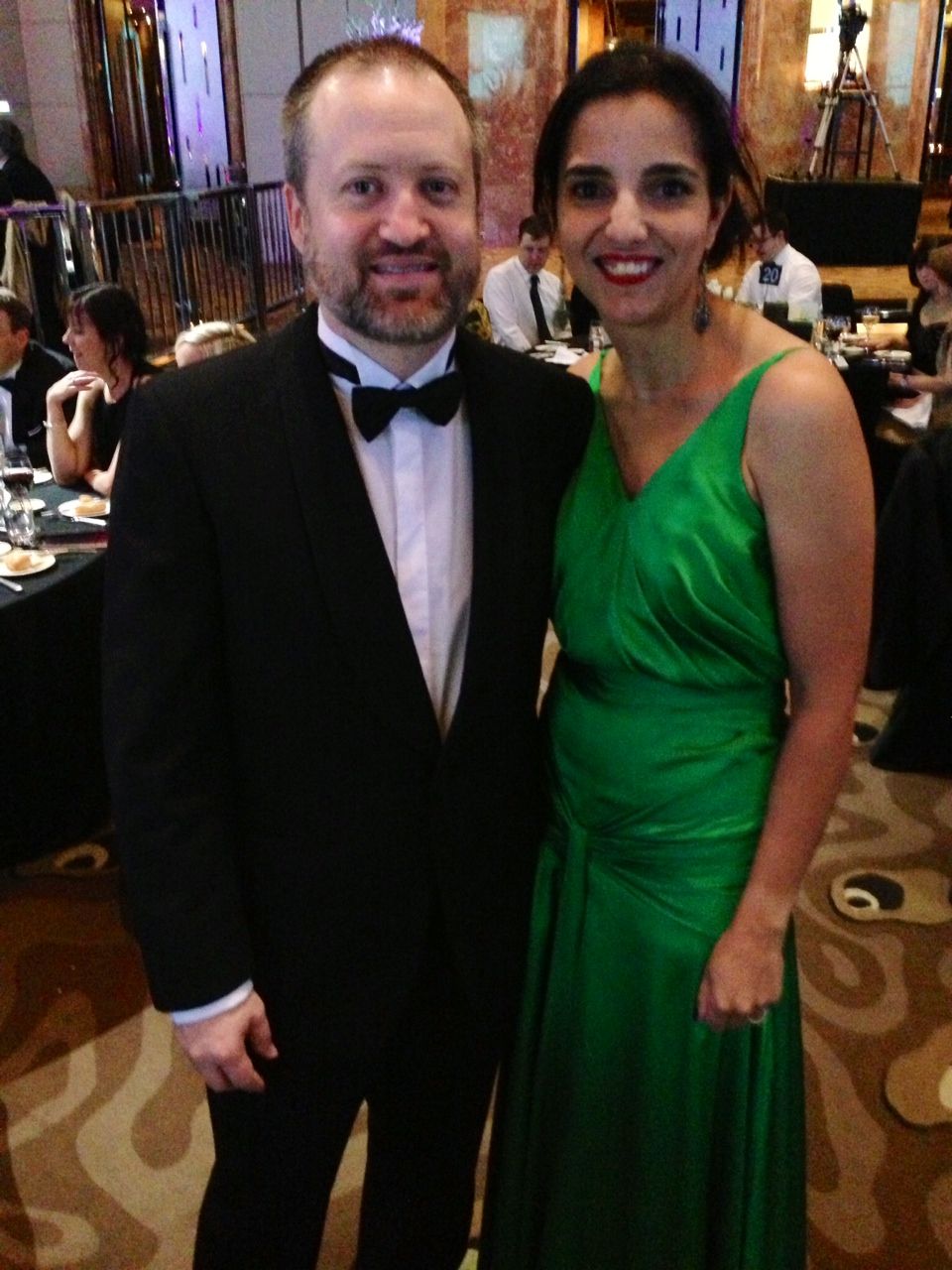
This is the dilemma I was faced with the other night as I frocked up for the gala dinner celebrating Diabetes Australia – Vic’s 60th anniversary. Alas, where to put the pump. Due to a very low cut back, the dress had in-built supports as a bra couldn’t be worn. (I could now go into a discussion about how I’ll need therapy for the Hollywood tape I was required to wear, but let’s stay on topic.)
I toyed with the idea of leaving my pump home and using pens for the night, but the thought of calculating basal insulin, then blousing made my head explode a little bit. I thought about not worrying about dealing with basal insulin and doing tiny corrections every hour or so, but I knew that I’d remember for the first hour and then completely forget about it for the rest of the night – or, at least, until I realised I was spending a lot of time running to the loo and chasing down waiters to fill my water glass.
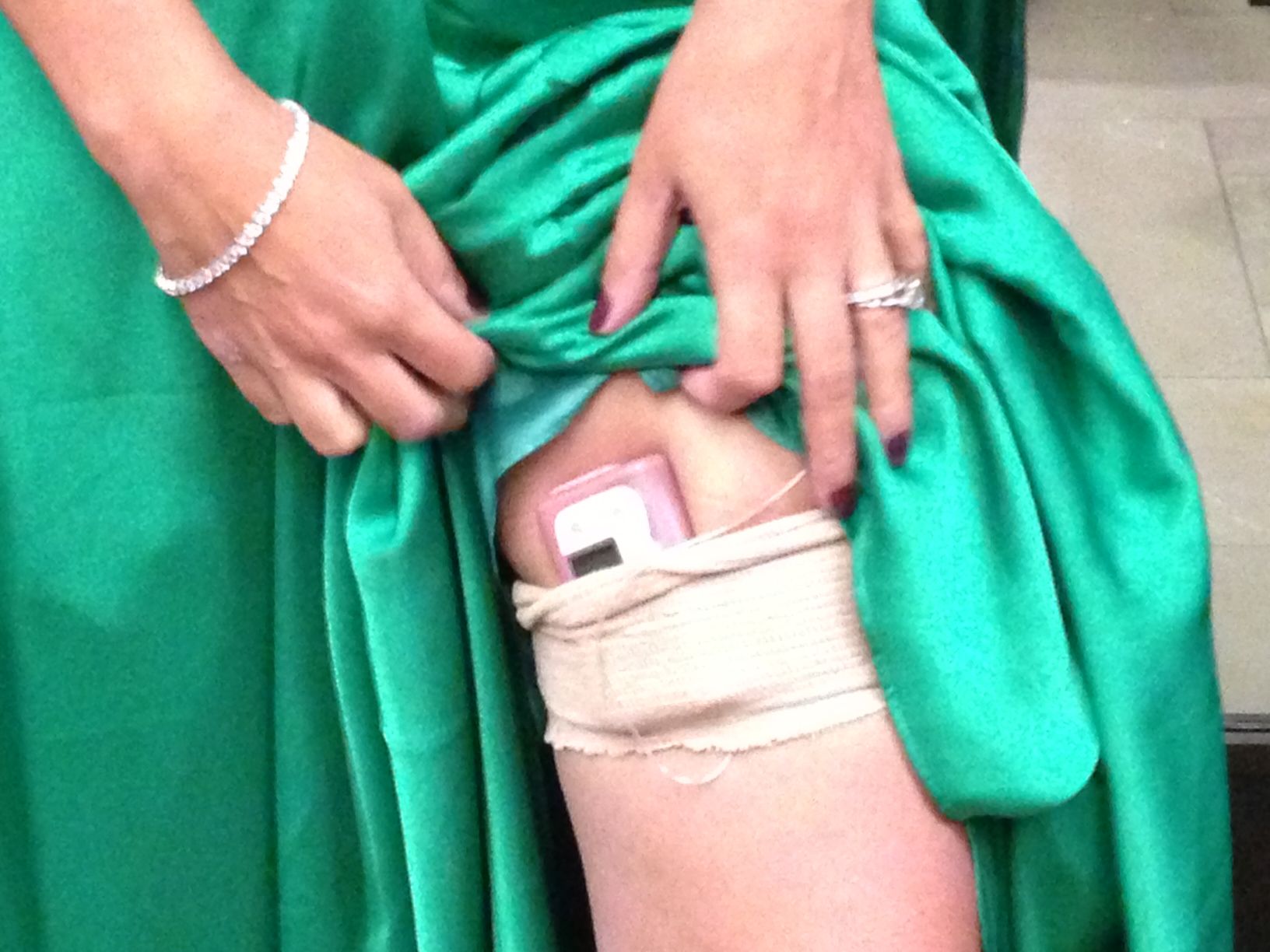
So, I started thinking about a holster for the pump. I used to have one made of stretchy material that was held in place with a Velcro catch. There was a little pouch for the pump and the whole thing was meant to sit snugly on the thigh. And it did…until it started to slide down the leg and I was left doing some sort of weird two-step, trying not to trip over the pump tubing while attempting to reconnect the whole thing. Please, just picture the elegance, if you will.
Despite my husband kinda liking the idea of me wearing a holster, the thigh thing was a failure.
A woman I work with – who for the purposes of this will be known as Brilliant Sue (because she is brilliant and her name is Sue) suggested Tubigrip which is a stretchy, tubular bandage.
It worked a treat. The pump stayed exactly where I wanted it (inner thigh, so no tell-tale ‘pump bump’ showing through the dress, and was easy to access when I needed to bolus or check my CGM.
Unfortunately, the flesh coloured stretchy fabric didn’t look too hot, but given that the only two people who saw it were me and Aaron, it did the trick.
So while to everyone else there, I looked like this…..
…..all I could think about was how diabetes manages to take the glamour of dressing up down a notch, thanks to this:
But despite the delightful flesh-coloured bandage, I had a great time. And if truth be told, the most traumatic part of the night was the Hollywood tape. Now that is the stuff nightmares are made of!





