
You are currently browsing the category archive for the ‘Real life’ category.
I have one sister. She is younger than me and much, much smarter. She also is able to wear yellow shoes and look elegant and stylish – something that I am yet to manage without looking like Donald Duck.
Actually, her style is something that is enviable. Earlier this year, she moved back into her newly renovated home. This may sound unremarkable, but the way she managed to pull together everything in a timely and on budget way is testament to her super organisation skills. Now, she has a home that is perfect for her in every way because she’s considered how all aspects of its design need to work with her. It’s light, bright and airy and a perfect showcase for the beautiful things she’s collected in her travel to over 48 countries. Everything has a place and every bit of space has been used perfectly.
I guess that now she’s moved in she’ll never be leaving!
That’s part of the appeal of doing something exactly the way you want. She designed the extension and renovation to work with her life. Her house and garden are low maintenance and easy to live in. There are open spaces and a kitchen with wide benches for the meals she makes for friends and families (and birthday cakes she makes for her ridiculously fortunate niece!). Everything works because she was able to plan it from the beginning, keep an eye on it throughout the build and then put the finishing touches on it herself once she moved in. When things didn’t go to plan or there was a problem, she worked through it with her builder and changed the plans to suit. But she never lost sight of what it was that she wanted and what she needed. It has her name stamped all over it!
I’m really trying that philosophy with my diabetes at the moment. I’ve set some goals that are right for me and, I believe, achievable. I’m keeping an eye on things and using the results I’m getting to make plans and make changes. When I’m thrown a curve ball (AKA three overnight hypos in a row) I make changes – but I keep the goals I’m working towards at the back of my mind. I’m doing things the way that work for me, fit in with my at-the-moment-crazy life and don’t get stressed if I need to make a slight change to things.
So far, things are working okay (albeit the three nights in a row hypos). I’m relaxed because I’m looking big picture, not at tiny results. A lousy day of numbers is but a lousy day – not a long term indication. Stopping, regrouping and taking stock regularly help.
So while the end game for me is not a beautiful house it is diabetes managed in a way that makes it easy for me to breathe. And that’s a good thing.

Sisters
World Diabetes Day is drawing to a close across the world. The clock is about to turn over into 15 November but it seems that blue lights will burn brightly for some time to come.

Melbourne’s iconic GPO gets its blue on for WDD13
My WDD started on its eve with an important event for diabetes research. The 2014 Diabetes Australia Research Trust awards presentation gave 22 Victorian researches grants. Many people aren’t aware of the commitment Diabetes Australia makes to research each and every year. This year alone over $3million dollars was given, including the $150,000 Type 1 Millennium Award which is specifically for research into type 1 diabetes.
After the awards, I found myself in the Melbourne drizzle wandering down to the GPO. As I approached, I saw it lit in blue. It looked splendid! Staff from Diabetes Australia – Vic and some of the Diabetes Australia Young Leaders donned blue ponchos and held all manner of lit-up blue things (I got a wand!! I’m just like Hermione!!) and stood in the glow of the GPO. This is part of the IDF’s global light up a monument campaign. You can read here for other iconic buildings and monuments that have been washed with blue. It was some fun for an important awareness-raising activity. And now, I have a blue wand!
On WDD proper, I found myself up just after 4am and on a 6am flight to Sydney to answer some questions about diabetes on a new breakfast television show. Studio 10 ended its morning with a discussion about World Diabetes Day and I was asked about life with type 1 diabetes. It was an opportunity to bust some myths which I’m up for pretty much any time! You can see the interview here.
What I wish I knew…..
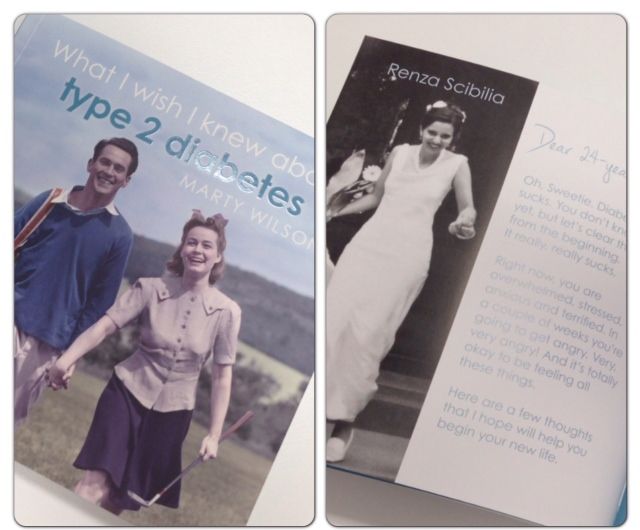
Next up was the launch of a new book called What I wish I knew about type 2 diabetes which is a collection of stories of people living with diabetes (all types – not just type 2 despite its title) and health professionals working with PWD. This gorgeous little book by Marty Wilson tells wonderful tales of people who have lived with diabetes for many years. It also includes one of my previous blogs. Look out for the book – it’s definitely worth a read.
World Diabetes Day is an important day for the diabetes community. It is our day to talk about diabetes and have others thinking and talking about it too. Whether it be international organisations like the IDF who yesterday released new global diabetes statistics in their Diabetes Atlas, or local and national diabetes organisations like Diabetes Tasmania who attended Government House for an event with some of their Young Leaders, or community events and activities like the global 24-hour diabetes Twitter chat, it’s a day where diabetes is front and centre. My Facebook and Twitter streams were full of blue and family and friends commented on my posts and even posted on their own pages about diabetes. (A shout-out to my sister who got TOTALLY in the WDD-spirit by wearing blue circle earrings and plastering her Facebook wall with WDD messages. Thanks, Toots!) I even pinned blue circles onto our real estate agents’ very suave suits as they came to do an open for inspection for our house sale last night. Everywhere I looked I saw blue.
Diabetes may not be understood by everyone. But yesterday was a day where we could talk about it and hopefully give people a little more understanding about what life with diabetes means.
Of course, it doesn’t end here. The WDC is in just two weeks. Let’s keep the conversation going. And don’t forget the OzDOC get together on 3 December as part of WDC!
This is the story of Hypo Boy who, when not being a superhero, is the fabulous Spike Beecroft. I’ve known Spike for quite some time, and his incredibly amusing anecdotes about his life with diabetes never fail to have me in fits of laughter. This is a classic Hypo Boy tale that has been shared many times before. Recently, it appeared again on my Facebook page, and I asked Spike to guest blog and write about it here so you could all enjoy. Take it away, Hypo Boy…
People with diabetes are super human in lots of ways. We do the little bit extra that others just can’t do. Sure it’s not flying or shooting laser beams but it is a little extraordinary, and when you’re in hypo zone, that ‘super-ness’ can overwhelm your brain and give you powers you didn’t know you had; in fact it can give you powers you don’t actually have but you become convinced they’re there. My inner and very confused superhero is Hypo-Boy.
There are a number of things we all have to do in life that are stressful. Some we can manage to avoid with very little effort, like speaking in public or getting married. One stressful occasion that is difficult to avoid is moving house. Even if you opt to stay with your parents for your life at some point they will move to avoid you.
Stress does strange things to PWD and stressful situations confuse your finely-tuned spider sense of what’s going on with your finely-tuned and gym-trained body. If you’re hypo unaware and under massive stress and your gym routine consists of only riding a bike (you’ve seen those guys – they’re all legs and bits of string from their shoulders instead of arms) then moving house is a disaster waiting to happen.
The fateful day had arrived and I’d started the long and very strenuous task of packing up the house into boxes, loading said boxes into the truck and then transporting them to their next destination. Being an engineer and a logical person with type 1, I decided to start working from the back of the house and move forward. It was a clear and concise plan that involved the placement of items in the truck with regard given to weight, size, ease of load and unload. It was a perfect plan.
Then I started moving stuff.
It was going well – I was ahead of my predetermined plan, boxes where moving, I had a rhythm, I didn’t have time to test, I stumbled occasionally due to the weight/size of the stuff I was moving, the sweat on my brow was what they talked about in VB ads. I was THE MAN.
Hypo Boy knows one thing and he knows it well – Hypo boy knows when he’s low and everyone else are retards of the highest order. In retrospect the stumbling was due to being low and not being super co-ordinated; the sweat was from being low. But I was on schedule and I do like the odd VB.
The last item to be moved from the room was a big white couch. It’s a three person couch – one of those things that’s not super heavy, but is awkward to manoeuvre. It’s really a two-person job, but Hypo Boy can convince you (and himself) of many things including that he is THE MAN and that physics and ergonomics are fantasies. And also that the fuzzy vision and misjudging the size of items is just from the stinging of man-sweat.
Hypo Boy decided that the most efficient way to manoeuvre the couch out of the room was to tip it vertically and slide it on one end through the doorway. Lifting couch vertically and sliding couch on the fabric side across floorboards couldn’t be easier. Hypo Boy’s brain knows its stuff. This was going to work. Perfectly! Or until it’s halfway through the door and perfectly jammed in the door jamb.
Whilst a couch on its side does slide nicely across a polished timber floor, a vertically arranged couch with its back facing you, jammed in a doorframe provides almost nothing to grip on and use to push either forwards or to pull back on to reverse the operation.
After a few tries at various methods to move the couch, the sudden and very real feeling of weakness that comes from realising that you’re low hit. , And I realised I was not just low, but orange-box-NOW kind of low. Hypo boy had deserted me; taking with him his strength and mental clarity and leaving me stuck in a room with no hope of escape because I’d successfully stuck a couch in the only exit.
A real feeling of fear as I desperately tried to un-jam the couch and get to the hypo fix. But when you’re really low the ability to open a Mars Bar can escape you let alone trying to move a couch! And logically working out how to move the thing is way beyond what I capable off. It was looking grim. I could see the news headlines –MAN FOUND DEAD TRAPPED IN OWN ROOM. POLICE BAFFLED.
Fortunately for all of Hypo Boy’s fans an alternative plan hatched. Maybe – just maybe – Hypo Boy’s last vestiges of power would help. Exit the room via the window! And so I did. Then the next challenge: the locked back door. Again Hypo Boy’s brilliance came through: crawl through the dog door. Hypo boy looks good in lycra, but could afford to lose a few kilos. Doggie door needed some minor attention after its use by an animal several sizes larger than the designers ever considered.
Finally the kitchen! Hypo boy could save himself!! Why Hypo Boy had packed the jelly beans first was a question for later. There were slightly stale and not so crisp Ginger nut biscuits that would have to do! Well done Hypo Boy. Well done.
Later forensic investigation would reveal that:
a) the couch was pretty well jammed in
b) trying to grab the couch on the other corner would have made the couch twist nicely and popped it out of the door allowing the move to continue, Hypo Boy is obviously VERY, VERY focused on the right side of the world.
Thank you Spike for guest posting today. Please come back again and share more of your stories!
It’s been one of those days – a nothing day. The roller-coaster BGLs started overnight and haven’t stopped. Nausea hit around 11am only to be replaced with numb lips at 3.30pm just in time for an afternoon hypo.
I hate diabetes on days like today. It makes doing just the most simple, boring tasks difficult and right now after my BGLs have lurched between 2.8 and 22.4 I feel like my head is filled with molasses and my limbs are heavy with lead. I can’t see straight and I can’t think straight.
This is when I want diabetes to bugger off. If I could pack its bag and ship it to a farm, I would. It’s days like today that the silver lining is really hard to find and I am unable to think of anything remotely useful or decent to come out of having been diagnosed with diabetes. It’s days like today that I wish I was ignorant of diabetes and had never heard of it.
This isn’t burnout. This isn’t diabetes distress. I’m generally doing fine with my diabetes at the moment – regular checks, counting carbs, remembering to bolus, paying attention to CGM alarms etc. This isn’t where I do the I’m-so-over-it-I-can’t-deal-with-this-anymore-so-I’ll-pretend-I-don’t-have-diabetes dance which is frequently followed by the head-in-the-sand tango. No, this is just a nothing day where I want to pick up my diabetes, scrunch it in a ball and throw it a long, long, long way away.
It’s for these days that the term ‘invisible illness’ was coined. I’m at work, doing all the things that are expected on a Tuesday. No one is the wiser. Except me. The days that make me feel alone and tired because I can’t hold something up and say ‘look at this – it’s why I feel crap’. These are the days – the nothing days – that it feels like diabetes wins.
Myths to do with diabetes frustrate me as much as the next person. I want people to get it right when they are talking about diabetes; I want the media to report diabetes correctly and I want facts presented in a clear, non-threatening, easy-to-understand way. Of course, this is relevant to all types of diabetes.
What annoys me is people who are furious about one myth, but more than happy to perpetuate others.
Some people in the type 1 diabetes community are outraged if they are lumped in with people with type 2 diabetes. Campaigns and petitions have been developed to change the name of type 1 diabetes to avoid confusion between the two conditions. The thought of being thrown in with people who ‘brought this on themselves’ (that, by the way, would be another myth and completely unhelpful) results in Facebook posts, Tweets and blog after blog after blog.
Me – I couldn’t really care less. I have type 1 diabetes, I know it and I’m happy to educate anyone who has no idea about autoimmune diabetes. I’m also too tired and just plain over this discussion, so I try to avoid it. I do acknowledge that if it wasn’t for the significant number of people with type 2 diabetes, I’m pretty sure that the 120,000 of us with type 1 in Australia would get lost when it comes to funding and media attention.
But, for some it is a real issue and they get angry and do anything they can to make sure that they are seen as different from the majority of people with diabetes in Australia – the type 2 diabetes community. And that’s fine. If that’s what your thing to get angry about is, knock yourself out. (My thing changes every day. Today it was that I didn’t get a cup of coffee in me until after 11.30am.)
There are many other myths about diabetes and they annoy me more. Here are just a selection that I’ve come across in the last couple of days:
- If you use an insulin pump you have diabetes ‘really bad’ (wrong and rotten grammar!)
- If you have diabetes, you can’t eat sugar
- If you weren’t so lazy you wouldn’t have type 2 diabetes (genes anyone)
- Diabetes isn’t really serious
- Cinnamon cures diabetes (okay – it was me banging on about that, but I was just trying to justify in my own head eating an apple cinnamon muffin.)
- You can catch diabetes.
- You grow out of type 1 diabetes (blood. starts. boiling.)
I immensely admire and respect the work done by the Juvenile Diabetes Research Foundation, but using the term ‘juvenile diabetes’ just fuels the myth that this is a condition that only affects kids. Focusing on children who have diabetes is incredibly important, but those kids are going to grow up and hopefully live long, healthy, happy lives. Where is the awareness and focus on adults with diabetes? The reason the term juvenile diabetes isn’t used anymore is because it doesn’t accurately represent the broader type 1 diabetes population.
Of course I’m being somewhat self-serving. I was diagnosed as an adult and my experience of life with diabetes is through the eyes of someone who has lived with it since my mid-twenties. But during that time, I’ve needed information and services and programs that just weren’t there. Information about pregnancy, body image, parenthood, work life balance – things that are relevant to me at this stage of my life – was quite thin on the ground!
I completely agree and believe that there needs to be programs and activities developed specifically for kids with diabetes. Diabetes in day care and school settings is a critical issue to be addressed; camps for kids with diabetes are brilliant. But this is an ages and stages condition. Why is there not as much of a focus on other periods? Whilst some attention is being given to transition from adolescent to adult health care, what about for men and women with diabetes in their thirties and forties? Where is consideration of women going through menopause or for people at retirement age? Why is no organisation focusing on older adults with diabetes in aged care?
If people want to make sure that the world understands that type 1 diabetes is different to type 2 diabetes, then surely they also want to break down other myths about type 1 diabetes. This is not a condition that only affects children. Half of those diagnosed with type 1 are diagnosed as adults. The majority of people in Australia living with type 1 diabetes are adults.
Break down the myths. Educate people about what type 1 is all about. Just don’t do it at the expense of all the facts.
Is there a myth about diabetes that annoys you?
 Today, things got a bit fancy with a visit to Government House for the annual Kellion Victory Medal Award Ceremony. The Kellion Medal celebrates people who have lived with diabetes for 50 plus years with awards given at 50 years, 60 years, 70 years and even 75 years. This year in Victoria, twenty-one people received 50 year medals and an additional fourteen were given their 60 year award.
I have written before that this is my favourite day of my work year and it really is! I am so honoured and privileged to be able to sit in a room with this remarkable group of people and hear their stories of long, full lives despite diabetes.
When it comes to diabetes, I am a mere teenager. With only 15 years under the hood, my Kellion medal is a long way off. But I love this day so much because I leave feeling positive and hopeful and encouraged.
If you’re looking for inspiration, this is the place to come. Interspersed with tales of boiling glass syringes and sharpening needles are the attitudes and the approaches that have seen these people not only live, but live well with diabetes.
Here are just some of the things I heard today.
Marjorie (50 year recipient) has given herself over 50,000 injections in her lifetime.
Judy (50 year recipient) says ‘I don’t feel sorry for myself, but it makes me happier if I can say sometimes that it’s crap to have diabetes’.
Kevin (60 year recipient) says he’s ‘led a good normal life’ but is frustrated there is not yet a cure.
Plus some great tips such as the one from Guy who received his 60 year medal today. ‘Never give up your sense of humour!’
Garth (60 year recipient) believes that ‘Common sense and a positive attitude are invaluable tools. The best way to treat diabetes is to lead a normal life.’
And the fabulous Peg, who is a DA-Vic Board Member and has run a support group for people with diabetes for many years says, ‘Join a local support group so you can meet others with diabetes, to exchange ideas and experiences. Never let diabetes stop you from experiencing life!’
I also learnt that even though there has been amazing progress when it comes to diabetes management tools and technology, some things never change. At diagnosis 60 years ago, Kevin was told there would be a cure in 5 years’ time. That old chestnut seems to have been around for a long, long, long time!
A bit fancy? Maybe. But if anyone deserves a special morning tea and a bit of ceremony it is people who have lived with diabetes for so long. It is people like this who we should be celebrating and throwing ticker tape parades for (and I say this not only because in 35 years I’m expecting ticker tape!). We should be looking to these people and acknowledging that surviving diabetes for such a long period does deserve awards, tributes and accolades. I want to be just like them when I grow up!
On Saturday, we hosted our latest Type 1 in the City event which covered one of the almost-taboo topics of diabetes – complications. As a diabetes organisation, we seem to at times be scared of speaking about this issue and when we do it’s in hushed tones. Despite being one of the most requested topics on our event feedback forms, we’re reluctant to put it on our ever-growing calendar of events.
As a person living with diabetes, I don’t like talking complications. In a stupidly superstitious way, I feel that if I do I’ll make them come true. (Yep – me and logic. Best friends!) But after 15 years of living with diabetes, I am, for the first time, having to face complications head on. The cataracts that have been threatening to cause vision problems are now at the point where I can no longer ignore them. At my six-monthly ophthalmologist check-up last week, I decided it was time to bite the bullet and schedule the surgery to have them removed.
I’m not okay with this and it’s more than just being a complete and utter wuss when it comes to eye things. Although it’s likely that I was going to develop cataracts, my diabetes is probably the reason why they first appeared when I was 28 year old and that I will be having surgery for them at 40.
I believe that at Diabetes Australia – Vic (where I manage Community Programs) we have a responsibility to put discussions about diabetes-related complications on the table. We should be talking about them. As soon as a topic becomes taboo, there is shame and stigma associated with it. And that shouldn’t be the case. For many living with diabetes, complications are a reality. We should be providing not only information about how to reduce the risk of developing complications, but also information about continuing to live well if complications do eventuate. And we should be doing this in a safe way that doesn’t cause shame or feelings of failure.
Maybe we need to start to rethink the way we speak about complications. Time and time again we hear that if we ‘take care of ourselves’ we won’t get complications. But we know that is not the case. It suggests failure on our part if we do get complications. Sometimes people do their very best with what they have access to, and complications still happen. If we reframe the discussion and make sure we consider the role luck or genetics may play, will that mean that people are less inclined to ‘do the right things’ because they think the result is pre-determined? Or will people actually feel better knowing that, if they do develop complications, they feel confident they’ve done the best they can with the tools available to them and the capacity they have.
My dear friend who does live with some diabetes complications is my go-to person when I want to ask questions about living with such challenges. She has some really strong and valid views about how we should be discussing diabetes complications. She says, ‘Discussions about complications shouldn’t be used as a threat. We don’t need to be showing the horror stories, but we do need to have available real, factual information about complications for those who would like to find it.
‘Also we need to make people aware that complications are not the end of the world. There are lots of people walking around with complications, living their lives. I work with others with diabetes and I don’t want to be the constant, visual reminder of what ‘can happen’. But I hope that they see that even with complications life can go on.’
One of the things that my friend mentions is that at times she doesn’t feel connected to the diabetes blogs she reads.
‘Sometimes when I read blogs like yours I think that you are doing it easy. It seems like you are doing really well with it. I don’t mean that with any disrespect, but my experiences are really different to yours. I’ve never read any blogs about people with diabetes who have had the same experiences as me.’
So what do we need when we are talking to people who have complications?
‘We need peer support – whether in a group situation or one on one or on the phone or online. While having treatment for complications, I was not given any offer of support like this and I think perhaps it would have been good for me.’
I feel incredibly lucky to have this particular friend in my life. I know that she worries that hearing about her diabetes life may scare me, it does the exact opposite. I know diabetes complications may occur – they were shown to me in all their gory detail the very day I was told I had type 1 diabetes and I was terrified. But speaking to her, watching her live a rich, full life (despite being a Collingwood supporter) doesn’t terrify me. It reassures me. It helps me understand that if complications are part of my diabetes future, they don’t signal the end. And that has given me hope. She’s pretty damn amazing!
I’ve been baking up a storm lately. It’s what I do when it’s cold outside. I love sweets but figure if I’m going to set my pump into overdrive, then whatever I am eating had better be bolus worthy!
I don’t ever use sweetener – it’s the real deal all the way for me! I’ve worked out that in most cases, the quantity of sugar listed in the ingredients list can be halved and the end product will still taste great. This is one of the fun things about baking and cooking in general. As you get more confident and learn how things work together, you can play with the ingredients to get the taste just as you like it!
If you feel like joining in, here are a few of my recent sweet treats and links to the recipes.
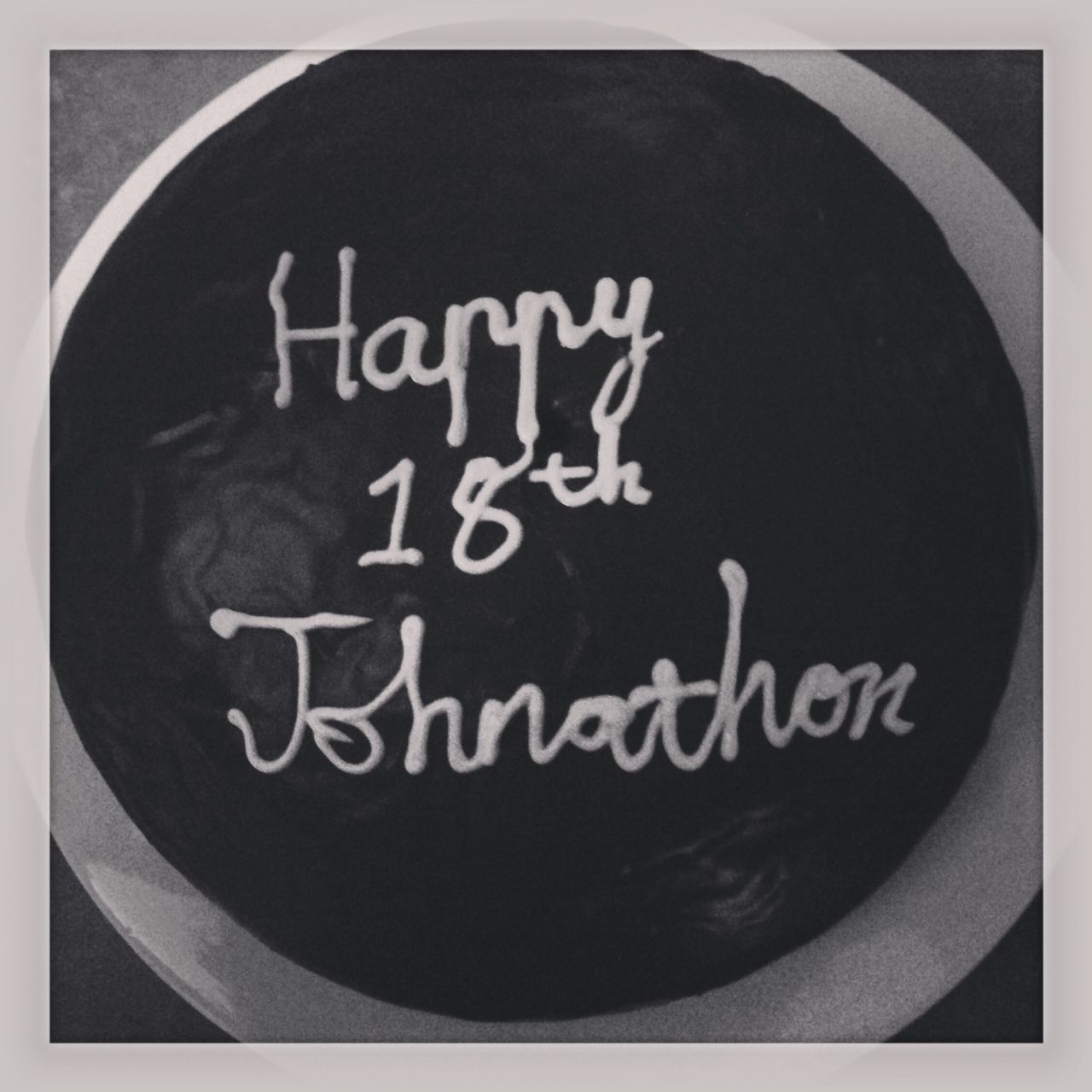
Does anything beat a homemade chocolate cake? This is one of the easiest, no-fail recipes you’ll find and it always results in a beautiful cake. Extra-special points for the fancy writing on top!

I always double the lemon quantity given in cake or slice recipes because I think it’s a crime if I don’t get a real hit of zesty-ness when I take that first bite! This recipe is brilliant and it’s no bake! The eight year-old kiddo made this pretty much on her own, so it’s a great one if you’re looking at getting kids cooking. I always feel like I’m getting my CWA on when I make this slice!
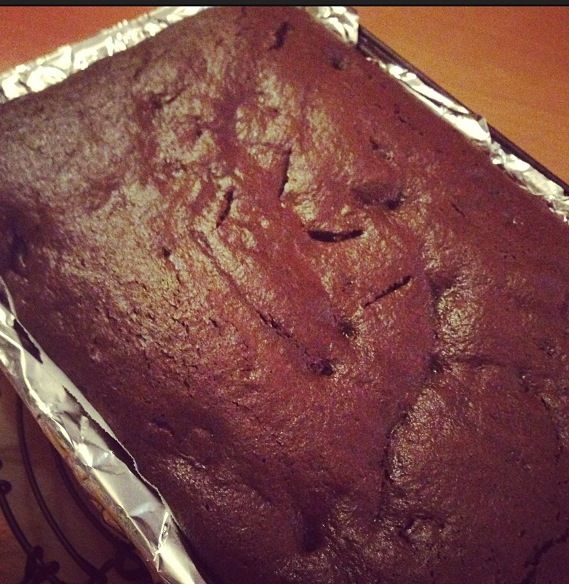
Bacon. Chocolate. Brownie. Were there ever three words that sounded better in a row? My baking hero, Nigella Lawson, came up with this recipe which includes a fudge-y brownie with salty, crispy bacon delights strewn throughout. The main problem with this recipe is stopping yourself from eating the candied bacon before you stir it through the brownie mix.
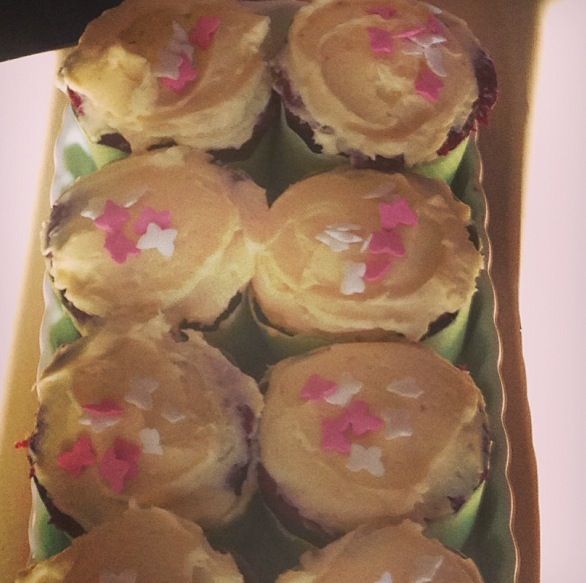
I have eaten more red velvet cupcakes than I care to admit. It’s my favourite cupcake flavour and I love tearing open the cake to reveal the seductive red colour. When we were in NYC over Winter, many afternoons were spent in Magnolia Bakery escaping the cold, enjoying a red velvet afternoon tea. Here’s their recipe. I’m warning you – they are addictive!
So, get baking! Then, put the kettle on and enjoy…Just don’t forget to bolus.

Feeling calm after having my senses blasted! A Sunday afternoon spent with family at a beachside pub, eating good food, listening to good music followed by a windswept walk on the beach.
Calm and at peace. A perfect Sunday.
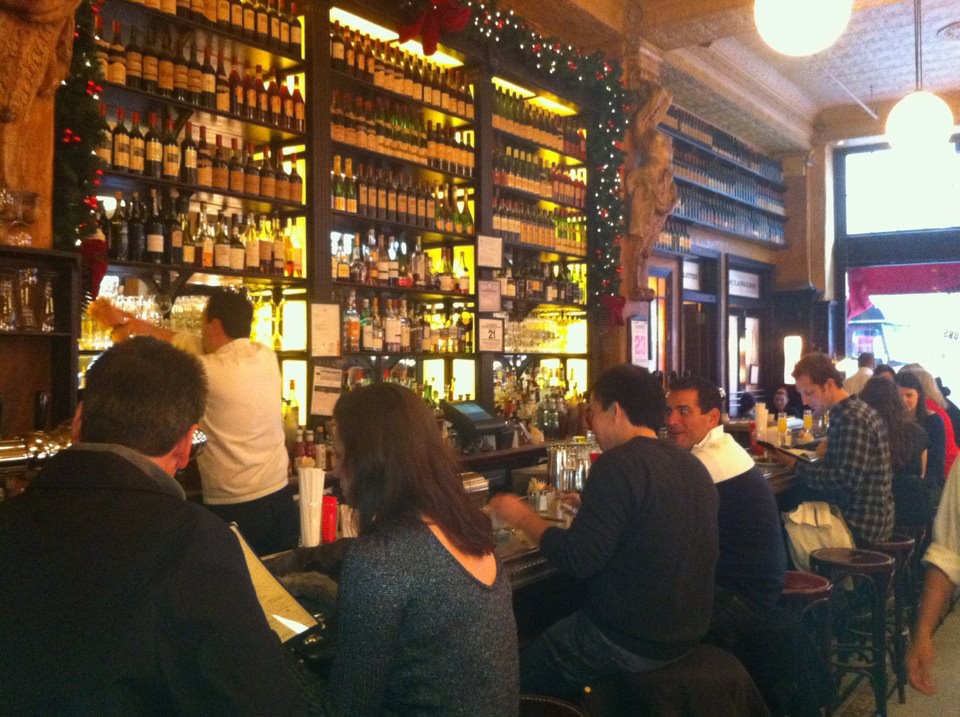
The bar at Balthazar NYC
There is a restaurant in New York called Balthazar. It’s quite well-known and has been a favourite of ours when we’re in the Big Apple. Each trip has seen us eat a few meals there, pop by for a coffees and pastries, and visit with friends. We love it because the food is great, the staff are attentive and, with its dark timber-panelled and mirrored walls, it makes us feel like we’re in an old Parisian brasserie. And because there are playing cards on the ceiling.
Scattered across the ornate plaster work, are a dozen or so cards. Some are face up, others face down. We noticed them on our first visit there and tried to work out how they got there. The second time we ate there, we asked our waitress for the story behind the cards. ‘We had a party here quite a few years ago and a magician did a trick. And they stuck to the ceiling,’ she told us. Now we knew how they got there, but we weren’t too sure how they stayed there. We knew the result, just not the secret to their sticking power.
There are days that diabetes just works. Numbers stay in target, boluses give exactly the right amount of insulin for consumed carbs and no alarms squeal warning of falling or rising BGLs. Most times, I can’t work out why that happens; it just does. And I love it!
I’ve decided that on those days, I don’t try to analyse it. I sit back and watch the pretty flat line on my CGM and smile at yet another BGL check beginning with the number 6. I just accept the fact that I feel good and energetic and that coping with diabetes seems easy for a day or so.
The longer I’ve lived with diabetes the more I’ve come to realise that there are times that what we put in may not necessarily correlate with the results we’re getting. Sometimes, I need to throw my hands in the air and accept the day has gone to diabetes. Other days, I claim victory for doing nothing special. It’s the nature of the beast. Coming to accept that has been quite refreshing. Accept the result but know that sometimes I just can’t work out why.
This last weekend, the family went to a little French café in Fitzroy. We were enjoying our meals in the timber-lined room, with shelves filled with French wine and Champagne. All of a sudden, Aaron pointed to the ceiling. ‘Look!’ he said. There on the ceiling was a solitary playing card. We looked at each other in surprise and as soon as our waitress walked by asked her about it. ‘We had a party here a while ago’, she began. ‘And a magician did a trick. It’s been there for years.’ I knew that would be the answer she gave, but it still didn’t explain the magic. Sometimes, the method doesn’t matter. But the result is delightful.
Do you know the secret for getting playing cards to stick to the ceiling? I’m kinda torn between wanting to know and keeping the secret alive…..