
You are currently browsing the category archive for the ‘Real life’ category.
I hate to jump on any bandwagon, but I’m jumping on this one – boots and all! Some of you may have seen the petition that is going around at the moment about changing the name of diabetes, or rather revising the names of type 1 and type 2 diabetes to better reflect the nature of the conditions.
Yesterday, I read a most thoughtful and well-considered commentary on the issue by Queen of Diabetes Art Lee Ann Thill. (I don’t know Lee Ann personally, but I adore the work she does around Diabetes Art Day and her brilliant project the VIAL Project.)
Lee Ann suggests that changing the name of type 1 diabetes to better distinguish it from type 2 diabetes is not going to do anything when it comes to public understanding of diabetes. She’s right. Stop for a minute and think back (if you can) to a time where diabetes wasn’t part of your life. How much did you truly know about the condition? Did you even know there were different types of diabetes? Could you identify the myriad ways type 1 diabetes is treated?
Did you know that there are four types of multiple sclerosis? No, neither did I until I asked Dr Google. (Although, I did know that there was one called relapsing-remitting MS because that’s what Jed Bartlet had in The West Wing, so naturally, I’m an expert on that!) And is it really important that as a person who has no connection to anyone living with MS that I have an in-depth knowledge about it? Or understand how it impacts on the life of a person with MS? Should I be expected to understand that primary-progressive MS is different to progressive-relapsing MS? My tiny little brain is already pretty full of information I need (location to closest decent coffee shop) and useless info (being able to quote Marx Bros films), so I’m not sure that I have room for minute details about living with MS or any other health condition other than the one I have to deal with daily.
I understand how frustrating it is to have people tell me that they can cure my diabetes if only I’d stand on my left foot under the full moon on a Tuesday in November and lots of other things. But I don’t think that changing the name of diabetes is going to stop people offering these gems.
What we really want to fix are the people who are being stupid and insensitive. And I’m afraid that’s just not going to happen.
Diabetes sucks – I think that’s one thing upon which we can all agree. And there are some really significant and important issues that people living with this condition face on a day-to-day basis. Such as access to healthcare and to technology; inadequate healthcare; kids being safe while at school; discrimination in the workplace; emotional wellbeing;
None of these issues will be solved or made better for people with diabetes by changing the name of the condition. More funding is needed to improve access to technology and increase the number of HCPs (especially in rural and remote areas); better education and training is needed to improve HCPs’ knowledge about diabetes and real-life with diabetes; more training – compulsory training – is needed by the people who are charged with looking after kids in school and out of school hours care; tougher penalties may stop discrimination in the workplace; regular screening is needed to identify the emotional health of people with diabetes.
Surely, but surely we should be directing our energies towards these issues. I have accepted that when it comes to diabetes I am going to spend the rest of my life dealing with ignorant, stupid and insensitive comments from people who could be described using similar adjectives. Changing the names of type 1 and type 2 diabetes won’t magically make people stop being so ignorant. It would simply add another layer to the confusion.
I’ve lost a bit of weight over the last three or four months. Not intentionally, just because stuff has been happening and I forgot to eat. The truth is a lot more boring and not relevant to this blog at all, but the easiest way to explain it is that November last year was crazy-busy, stressful and little food was consumed. Whatever.
Apparently, it’s okay to comment on people when they’ve lost weight. And with it comes a lot of praise – as if it’s something of which I should be proud. But I know that the tough few months I’ve had is the reason I look this way, so when I stand in front of the mirror, I don’t see someone who looks good in what she’s wearing, I see someone who is looking tired and a little defeated.
It is another example of just looking at what is in front of us and not trying to work out what is going on behind the scenes.
My HbA1c is sitting in the low 7s at the moment which of course, would have every health professional alive patting me on the head and calling me a ‘good diabetic’. Well, thank you. But the reason for it is a combination of erratic highs and lows, and not eating much which does wonders for keeping a steady line on the CGM.
The truth behind results – whatever those results – can be more than a little deceptive. And being the person I am, I want people to know the truth. Well sort of. I want people to know that I haven’t been trying to lose weight out of vanity. It metaphorically has fallen off me because I’ve been stressed and busy and barely eating. So the numbers on the scales (if I bothered to weigh myself) wouldn’t be a reflection of effort at all. Equally, my A1c isn’t because of hard work; it’s because the limited food has helped, and the highs and lows have averaged out. I’d feel like a fraud if anyone thought anything else.
It’s all too easy to take what we see at face value and assume that what we see is what is real. But the two are completely different things. I’m never sure how much I should pry into what is really going on in others’ lives and I certainly don’t want a million questions thrown at me. Is a ‘you look good’ comment all that’s warranted when discussing weight loss? And should an in-target HbA1c be taken as an absolute that needs no further investigation? Honestly, I don’t think so.
The devil is in the detail, I guess. But making assumptions and not delving deeper will never get the truth. It will only tell half the story.
A self-awareness exercise I came across recently had me facing some interesting facts. The idea is to list things that you regret having done or not having done and then seeing how you could address each regret. And also, to think about why you did or didn’t do the thing you regret doing. Or not doing. (Okay, those last sentences made way more sense in my head that it does on paper, but hopefully you get the idea.)
The regrets have to be things over which you have some control. So saying ‘I regret I’m not taller’ doesn’t count. Unless you deliberately made yourself shorter by sleeping in a shoebox. Or something.
So, I sat down, got honest and wrote down the things that I do regret and here are some of them:
- I regret not having lived overseas
- I regret giving up playing the flute completely
- I regret not having another child
- I regret not buying those red shoes I saw at Bloomingdales the first time I went to New York City
- I regret waiting until I was 36 before visiting New York City for the first time
- I regret getting a perm when I was in secondary school. What was I thinking?
- I regret the times I ignored my instincts – they were always, but always spot on!
- I regret not being able to speak Italian. (But I will continue to say that all it would take is six months in Venice for me turn my high-school skills into fluent Italian. And I have the hand movements down perfectly!)
- I regret not telling my family that I love them more
- I regret wearing white jeans. Ever
- I regret not having seen Frank Sinatra sing live
- I regret spending my teens, twenties and now thinking I was (am) fat and trying to hide my body when it is perfectly fine
You get the idea. I then tried to do the same exercise, but based on how I feel about my diabetes. Did I have any real regrets? My list looks like this:
- I regret waiting three years before starting on a pump
- I regret not finding my endo from the beginning of my diagnosis
- I regret any and all of the guilt and shame I have felt about having diabetes
- I regret not speaking with someone about diabetes sooner and understanding that it’s okay to grieve
- I regret feeling the need to be stoic all the time and understand that sometimes it’s okay to say ‘this really sucks’.
I actually am quite proud of my diabetes list of regrets. So much of diabetes is out of our control. Whether we’re talking about our diagnosis or complications which we may or may not develop – sometimes despite our best (and worst) efforts – we sometimes still get dealt something that we hoped would not happen.
I guess for me, I don’t want to look back and say ‘I regret not having seen my ophthalmologist frequently’ or ‘I regret not having my kidney check done each year’, because if something happens, I don’t want to think that I could have prevented it.
Let me be clear. This is not a blame game. I know people who could make a list that would have no regrets at all because never did they miss a screening check, never did they see an HbA1c result above 7.0% and still have developed complications. I just want to be able to say I did everything I could to help. It’s as much control I can claim over this condition. A condition that really doesn’t understand what control is.
So, what are your diabetes regrets?
Oh VicRoads, are you trying to destroy me? Really?
With all that has been going on with the issues surrounding the new driving and diabetes guidelines; with all the inconvenience you are causing for people who are living with diabetes each and every day – all the hoops you are making us jump through; all the bureaucracy you have built in for us to simply hold a drivers’ licence, wouldn’t it be nice that just for once you could be a little – just a little – accommodating?
And yet, when I jump through each and every hoop and call you to ask you for an extension on getting my eye review form in I am told no. An extension will not be granted because my medical review form (different to the eye review form) was one day late.
I am unsure as to why I have to submit an eye medical review – I’ve never had to do that before. My eyes have been stable for years. This was clearly documented on my medical review form.
The woman I spoke with at VicRoads told me that if they did not receive my report on time, I would be issued a letter the following day telling me my licence was suspended. However, according to her, I have a two week grace period in which I can still drive. So why not simply give me an extra week so that I can get the form in on time? I have made an appointment to see my ophthalmologist, but of course, could not get a time until the day after the report is due. (He’s away at the moment as is half of Australia ‘cause it’s – you know – Summer holidays).
My driving record speaks for itself as does my diabetes record. I know more about how safe it is for me to get behind the wheel of a car than most people. I check my BGL, I make sure I travel with food in case I go low, I wear a CGMS that alarms not only if I am low, but if my BGL is dropping too quickly so I can prevent a hypo.
And never before have I been late with a review.
So – here’s some advice for everyone after the trials and tribulations I have dealt with in the last few months with Vic Roads:
- Regardless of when you have an appointment with your health professional to fill in your medical review form, call VicRoads the second you receive your letter requesting a review and tell them that you need an extension. There are dozens of reasons that this may actually occur – appointment is cancelled, doctor takes extra time to send the report, you don’t make it to the post office on time etc etc.
- If you do not get the report in by the due date, you will receive a letter from VicRoads warning you of the suspension which will take effect in two weeks. You cannot ask for an extension at this time; it’s too late. If you think you’ll need extra time, call BEFORE the due date of the original letter (usually 8 weeks from the date of the letter) and ask for the extension.
- Remember that it takes time for the medical review team to process your review. So even if you do get it in on time, there could be a delay in you getting the ‘all clear’. Obviously, this isn’t a problem if you get it in way before the due date, but if you’re just sneaking it in on time, it could result in your licence being suspended. I actually took my last review form into VicRoads and asked to speak with someone from the medical review team and pretty much demanded that they approve it that day.
- Off the top of your head, do you know the date your driver’s licence expires? No cheating – do you know? I had no idea and found out the hard way one morning when a police car pulled me over as I was driving to work. After they did a random number plate check and discovered my licence had expired I was fined $359. Great way to start the day! I had absolutely no idea my licence had expired and was 100 per cent certain I had not received a reminder letter from VicRoads (actually, being paranoid every time I get a letter from them, I was more than 100 per cent sure). I went straight down to VicRoads to renew my licence and asked if they had my correct details because I had not received a reminder about my licence. I was right – they had not issued a reminder because my licence had been suspended. Since November 2010. I nearly fainted. Long story short: apparently it was a clerical error with some smarty-pants at VicRoads indicating that I had not submitted my last review. Despite the fact that I had in my hand a letter saying it had been received and I was good to drive for two years before the next review. As I found out, reminders are not issued if your licence is suspended. (The fine was overturned, but it took a lot of time, letter writing, and sitting on the phone for this to happen!)
Having a licence is essential for many – most – of us, and whilst a pain, I completely understand why I need to have a medical review form filled in every couple of years.
But making things difficult for us only makes us angry at the process and the inconvenience of it all. Anecdotally, I’ve heard of people who simply don’t tell the licensing authorities about their diabetes to avoid the rigmarole involved in having a conditional licence. This is far more dangerous, in my opinion and puts these people at significant risk because of insurance and legal implications.
And this brings us back to the whole driving and diabetes issue and the development of the new guidelines. How is it possible for licensing authorities to have any idea of the actual process and how it impacts on people living with the condition if we are not consulted? Had Diabetes Australia been given a seat at the table when the new guidelines were being developed, this would have been considered. Had consumer reps been invited to take part, this would have been raised as a concern. It’s not good enough. Because this isn’t a simply list of guidelines on a page of a website. This is about our lives.
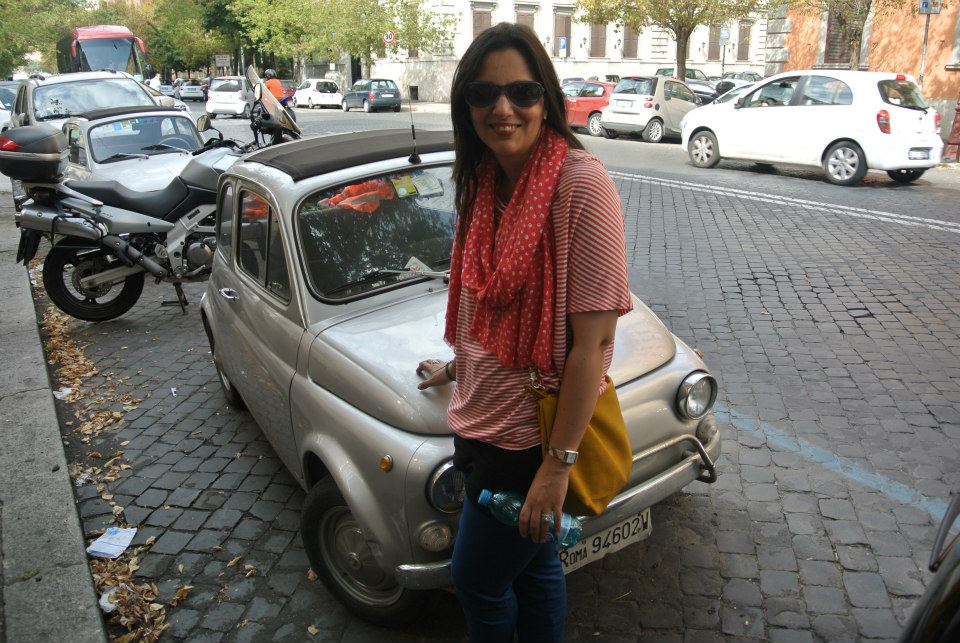
Obligatory photo of FIAT 500 that accompanies any driving posts. I may be a little obsessed. #dreamcar
It’s early evening and a light breeze is coming in through the open window in our study making the sheer curtain flap gently. The occasional car drives by, birds are chirping (plotting against me) and I can hear kids playing in the streets. And there goes the gelati van that does its round about this time each night.
Yep – it’s holidays. I still have a couple of weeks before I return to work. This has always been my favourite time of the year when I’m not working. The craziness of Christmas and New Year is over; the streets are pretty empty as a lot of people are still away. The weather is gorgeous and I have nothing – absolutely nothing – on my calendar. I can’t remember the last time I was spending early January like this. We are often overseas at this time and miss out on the January shutdown. Or I return to work as soon as the New Year’s fireworks are finished.
My holiday is going to get exciting tomorrow when I start on a new pump and CGMS system. I am taking part in a trial of the new-to-Australia Animas Vibe/Dexcom system. I’m more than a little excited because, as mentioned before, I love new gadgets. Also, I had a lot of opportunities to speak with people using this system when I was in Berlin at the European Diabetes Bloggers Summit. Many from the Italian contingent were using it and had very positive things to say.
Apparently, a change is as good as a holiday. Given that I am on holidays I guess this means the next two weeks will be extra holiday-y (totally not even close to a real word). Having the time to actually get to know how the new system works, its quirks and tricks is a real luxury and I’m looking forward to seeing how different it is to the terrific system I’m already using. Also, it means another player on the Australian market, which means more choice for people with diabetes. This is a huge win for consumers as far as I’m concerned.
For those of you on holidays – enjoy and make the most of it. I know that I certainly am!
DISCLAIMER
The trial is funded by AMSL – distributors of the Animas pump and the Dexcom CGMS in Australia. The pump and CGM are being loaned to me whist on the trial and I am being provided with some consumables for the pump and 2 months of consumables for the Dexcom. I am not receiving any payment for taking part in the trial. There is no arrangement for me to write about my experiences using this system, although I probably will. ‘Cause it’s how I roll.
I get annoyed when articles about diabetes get it all wrong. I would have thought that fact-checking is a pretty standard practise by journalists, but I’m finding that in many cases, this isn’t the case. Where it’s less clear is when someone is writing the facts correctly, but the overall sentiment doesn’t sit right. I guess that it is going to be up to the individual as to how they interpret the writing, but there are many occasions where most of the facts are right, but I feel it’s still all wrong.
On Sunday, the Age in Melbourne (and SMH in Sydney) ran a piece by national affairs writer Tony Wright. I generally like his writing and always try to read his pieces. So I was more than excited to see that he had written a piece about type 1 diabetes following JDRF’s Kids in the House (KITH) event at Parliament House.
I loved his introduction which set the scene of 100 kids sitting down to lunch with carbs listed; his description of the process of checking BGLs, guesstimating carb content of foods, insulin calculations and delivery was beautifully accurate. But there was some stuff in there that made me prickle. And I feel guilty and a little dirty for responding in this way. But I want to pull apart some of the comments I questioned and say how I would prefer they were reported.
Tony writes: ….daily reality for the 122,300 people in Australia diagnosed with diabetes type 1, also known as juvenile diabetes. Another six, most of them children, are diagnosed every day.
Renza says: Actually, type 1 diabetes is not also known as juvenile diabetes anymore and hasn’t been for some time. Just as it’s not known as insulin-dependent diabetes anymore. Why? Because type 1 diabetes can be diagnosed at any age. Also, we grow up! And using the term ‘juvenile’ means that people think it only affects kids and no one thinks about the support, information and healthcare needs of adults living with type 1 diabete
Tony writes:…..Type 1 really ought to have another name, for it is a more terrifying beast than the much more common diabetes type 2….
Renza says: Perhaps having different names for the condition is a good idea, although I’m far too tired to fight this battle and am sure that there are better battles to expend my energy on. However, it is perpetuating a myth by saying that type 1 is a harder condition to deal with. I don’t know about living with type 2 diabetes, but I would find it pretty terrifying if I was treated with diet or exercise or oral meds and my BGL meter gave me a reading of 22.1mmol/l and I didn’t have insulin to treat it and make me feel better . Which is my protocol as a person living with type 1 diabetes.
Playing the ‘mine-is-worse-than-yours’ game does nothing for anyone. And as Tony quoted in the previous paragraph, there are just over 120,000 with type 1 in Australia. How much attention do you think we’d get if sometimes we couldn’t ride on the coat-tails of the 900,000 people with type 2 diabetes? We’d get completely lost in an underfunded system and lose significant research dollars.
Tony writes:….Virtually all these people will come to conceal a secret: they fear going to sleep, afraid they will not wake up. Sometimes they do not.
Renza says: One person dying from a hypo from which they do not wake up is a tragedy and absolutely one too many. It is a terrifying and scary thought. But in all honesty, I wonder how many of us actually think ‘I hope I wake up in the morning’. I’ve spoken with several friends with diabetes who were diagnosed as kids and they say that this was never discussed when they were growing up. Today I see newspaper report after newspaper report with parents saying they are scared their kids will die overnight. Whilst in no way diminishing this fear, I wonder just what this constant reminder is doing for the kids. Do we want to instil such fear into them that as they lay themselves down to sleep they may not awake in the morning?
Kids in the House is a really important and valuable exercise to remind politicians about type 1 diabetes. Thrilled as we may be that Tony Abbott promised $35 million, we’ll need to see if he does in fact put his money where his far-too-big mouth is if a Coalition government is elected in 2013.
My only concern with any activity like this is that it packages up type 1 diabetes a little too neatly. It focuses solely on children and doesn’t address the support, information and education they will need as they grow older and become healthy adults; the focus is too cure-centric – of course that is the ultimate goal, but all our eggs in one basket will lead to so much disappointment.
But mostly, it allows our political leaders to say ‘we’ve done type 1 diabetes – we had KITH’. This cannot be a once a year, feel-good activity that ticks the type 1 diabetes box. The pressure needs to be maintained 12 months of the year.
With the craziness that was World Diabetes Day and its associated activities over, this morning I’m chilling out in the relative calmness of the RACV Club, Melbourne. It’s the Kellion Medal presentation and I’m about to meet people who have lived with diabetes for fifty or more years. I wrote about last year’s Kellion celebrations and thought I’d revisit the post today.
Today is my favourite day of the work year. It’s the Kellion Victory Medal award celebrations where we acknowledge people who have lived with diabetes for 50, 60 and even 70 years. Just stop for a minute and think about that. Seventy years with type 1 diabetes. Now think about what diabetes was like back in 1940: urine was boiled, needles were sharpened. Home blood glucose testing was still about forty years away, modern insulins hadn’t been considered. Insulin pumps, of course, were things of the future. read more….

Back in March of this year, Austroads and the National Transport Commission released their updated Assessing Fitness to Drive; medical standards for licensing and clinical management guidelines. This document refers to commercial and private vehicle drivers, so the information is relevant to people living with diabetes that hold (or are planning to hold) a drivers’ licence.
I live in Victoria, so our licensing body – VicRoads – requires that I complete a medical review form every two years. This is done in consultation with my doctor, and the form asks about hypos, changes in eyesight and other issues that may impact on my ability to drive safely.
Because I’ve had few changes in my diabetes that have affected my driving, filling in and returning this form is a pretty straight-forward matter. As long as the completed form is returned to VicRoads by the due date, I’m given a ‘conditional licence’ and I’m good to drive for another two years.
So I was expecting that the new Assessing Fitness to Drive guidelines would not really need much consideration. The guidelines cover some important things about diabetes and driving. There’s information about hypoglycaemia and impaired hypo awareness and a rather confusing flowchart to explain the processes to getting a conditional licence.
But then, in the section titled Medical Standards for Licensing we come to section 3.3.2 Satisfactory control of diabetes which states:
When assessing whether the criteria for a conditional license are met, ‘satisfactory control’ of diabetes will generally be defined as a glycated haemoglobin (HbA1c) of less than 9.0% measured within the preceding three months, as against a general goal of less than 7.0% in people with diabetes.
Whoa! What? Does this mean that if for any reason an individual’s HbA1c is above 9%, their treating doctor may refuse to complete the review? Well, apparently yes. I have been contacted by several people with diabetes who have had their licence suspended because their treating doctor refused to fill in the review based only on their above 9.0% HbA1c.
Where is the evidence suggesting that an elevated A1c will negatively impact on driving ability? I have searched and simply cannot find anything. Some people may experience blurry vision with elevated BGLs, but that is usually short-term, and ‘fixes itself’ once BGLs lower.
I can find a lot of journal articles about the danger of driving for those experiencing impaired hypo awareness. But nothing, nada, not a thing about driving with an A1c of 9.0%.
I’d like to know where that magic number came from. How is 9.0% deemed unsatisfactory control of diabetes, but not 8.8%? It appears to be an arbitrary number value that is having considerable impact on people with diabetes holding a drivers’ licence.
Disappointingly, there was no consultation in the development of these guidelines. Yes, the diabetes chapter of the guidelines were reviewed by the Australian Diabetes Society Driving and Diabetes Working Party. There was absolutely no engagement with any Diabetes Australia body across Australia. Which meant that there was no one considering the consumer side of things. All input has come from clinicians who, at times, have little understanding of ‘real life’.
Diabetes Australia is seeking clarification of these guidelines and I’ll keep you posted with what I find out. But in the meantime, if you have been unable to get your licence renewed because of these new guidelines, let your local Diabetes Australia office know.
Have you been affected by the new Assessing Fitness to Drive regulations? I would be interested to hear from anyone who has.
It’s National Diabetes Week here in Australia. It’s an important week for diabetes awareness, and any time diabetes is front and centre in the media’s mind, I’m happy. The campaign this year is calling for the federal government to fund a national type 2 diabetes prevention campaign. This is incredibly important – in around 60 per cent of cases, type 2 diabetes CAN be prevented and targeted campaigns which address those at high risk will make a difference.
And yet, I do struggle with this week. As a person who is living with diabetes, the ship has sailed for me – as it has for the 1 million plus people registered on the NDSS. And for people with type 1 diabetes, there is no chance of prevention. There is nothing that we could have done to stop our pancreases taking a very, very long smoko and basically walking off the job for good.
The frustration felt by people with type 1 diabetes is clear – and I am actually quite proud to be part of the movement that is so loud and proud about not only our condition but also, why we have it. We will and do snap at people who say the wrong things about type 1 diabetes and we strive to make sure that our condition is correctly and accurately reported.
There should be no shame or guilt associated with diabetes. Full stop. It doesn’t matter what type of diabetes we have, the most important thing to remember is that we are living with a chronic health condition that impacts on our lives. Sometimes more significantly than at other times. And if it can be prevented – as is often the case with type 2 diabetes, we should be doing all we can to support initiatives to do just that. The ‘diabetes wars’ of ‘mine is worse than yours’ helps no one. The finger pointing from within the broader diabetes community doesn’t do anyone any good.
So, this week I do call on you to participate in the type 2 prevention campaign. Go to the website and ‘vote’. Have a read of the materials and understand what it is that it’s trying to do.
And at the same time, make sure that people remember those of us who are already living with this condition. Remind them that we too need support and education. We need funding for research and we need programs that help us live well with diabetes.
Follow #NDW12 on Twitter to keep up to date with what’s going on during National Diabetes Week.
I was trying to think of something to write about and was getting a big, blank nothing. Not. A. Thing.
So, I do what all clever writers do when we get the good ol’ block. I turned to Twitter. Currently trending is the following hashtag: #100thingsaboutme
Now, I’m not committed enough to write 100 things about me. Hell, I don’t even think there are 100 things about me that I’d want to share! But here are a few things:
- I have watched the West Wing series about 5 times. I love it. It’s my favourite drama of all time. The acting, the humour, the rapid-fire dialogue. Love. It.
- Collecting collective nouns is one of my favourite nerd behaviours (of which I have many). Some of my favourites includean exaltation of larks, a rhumba of rattlesnakes and a prickle of porcupines. But the most beautiful and my overall favourite – a blessing of unicorns (very apt for the DOC).
- I am terrified of birds. Seriously. This has arisen from more incidents than I care to share where birds have flown directly at me, terrifying me, drawing blood and making me scream like a baby. In public. They are evil, evil creatures and I believe that there is a conspiracy in the avian world to hurt me. And hurt me good.
- Despite the last sentence, I am a total and complete word-nerd. Today, I’ve used the words cacophony, whimsical, serendipitous and exaltation in casual conversation. And I swoon when people like Stephen Fry speak because the way they use words is beautiful, clever, structured and sexy.
- Coffee. I love it.
- On my iPod right now – Keith Jarrett, the Koln Concert.
- I’m reading Finn Family Moomintroll to my daughter, which makes me feel warm and safe. I remember the first time my mum read it to me.
- Ideal Saturday night in – good book, good wine, good food. I’m old and boring in real life.
- I want to move to New York City for a couple of years.
- I believe that most people are good and honest. I need to believe that to feel that the world will be OK.
- When I was in year 12, I missed most of my religion classes because I was either sitting in the laundrette near school pretending I was a Beat poet or at a nearby park playing on the swings with my best friend.
- I’m starting to feel old. I’m 38 and as I get older I feel less and less connected with younger people. I have no idea what 20 year olds like or want anymore. I don’t think they understand me either.
- Family is more important to me each and every day. And that family includes my wonderful close friends as well as my real family.
- My sister is one of the smartest, funniest, most beautiful people I’ve ever known. I hope she knows that I feel that way, but I don’t think she does.
- I have diabetes. It’s not the most important thing about me. It’s only one of the #100thingsaboutme you should know.
What do you want people to know about you? And where does diabetes feature in that list? Does it feature at all?