
You are currently browsing the category archive for the ‘Real life’ category.
‘We had diary today,’ said the kidlet. We were all sitting at the table having dinner. This, I have come to understand, is one of the times we learn most about what the kidlet is thinking and what she is up to.
At the beginning of the year, all the kids were given diaries. Each night they are meant to fill details of the the book they are reading and the page numbers they have read for the day. I get why this is important. It allows the teachers to see just how much the kids are reading and the sorts of books on their reading lists. It teaches discipline and it provides a record.
Now, we have a reader. She is one of those kids who reads under the covers with a torch after lights out. When I call out to her and she doesn’t answer, it’s because she is most likely sitting somewhere outside, puppy at her feet with her nose in a book, so engrossed that she doesn’t hear my increasingly-annoyed voice calling her name.
For the first week, the kidlet was a little obsessive about her diary. Every night when Aaron and I went in to tell her to turn the light out, she would say she had to fill in the details. So, she would climb out of bed to find her diary and dutifully write in it.
I started to get annoyed. It was messing with our hard-worked-for bedtime routine with a kid who is the master of delay-tactics. She just had another thing added to her arsenal to delay going to sleep. And this time it was school-sanctioned!
The diligence lasted a couple of weeks. And then, it stopped. I completely forgot about it, so didn’t ask her.
So when she told us that she had ‘diary’ today, I realised that I’d not seen her filling it in much recently.
‘Do you still complete that every day? I’ve not seen it at home.’
‘Nope,’ she said. ‘I fill it in at the last minute while I’m sitting in class. I write down the books I’ve been reading and guess the number of pages. I know that I’ve been reading; I read every day. Heaps! Why do I need to write it down in a diary? That doesn’t show how good my reading is, does it?’ She said this without a hint of sheepishness.
I smothered a smile.
I knew I should tell her that she needs to do what she is asked to do by her teacher. I knew I should say to her that there is a reason for keeping the diary. I knew I should mention to her that it is something all kids are required to do and that she is no different from the other kids.
I knew that.
But I also knew how hypocritical it would be for me to tell her that. If she asked me what was being achieved by filling in the diary each day – how it would improve her reading or learning skills – I couldn’t give her an answer.
There is no way I would fill in a log book of my BGL levels just as a matter of course. If there was a reason for it – checking basal rates, trying to deal with pesky lows (or highs) – sure, I can see why.
But if the reason is just ‘its’s-what-we-get-all-people-with-diabetes-to-do-just-because-we-do’, I’s refuse. I can’t see the point.
Later on, I suggested that the kidlet have a conversation with her teacher about the diary and to talk about ways that she could use it that are meaningful to her – such as listing all the books that she finishes reading, or listing books she would like to read. She considered my ideas and said she’d think about it. (Possibly ten year-old speak for ‘If I say okay, will you stop talking about it, mum?’)
I thought about her sitting there in class just before she was to show her diary to her teacher. I thought about her frantically writing down the books and guesstimating page numbers. I wondered if she was using different coloured pens, so it looked like she had filled it in each day rather that in one hit. And I smiled. Because that’s exactly what I would do. That’s exactly what I did do.
Like mother, like daughter. And then I stopped smiling. Those teenage years are gonna be a nightmare!
Cookies!
I’ve just had a wonderful long weekend where pretty much every moment we were home, the oven was on with cakes, biscuits and pies filling the house with beautiful smells.
I spent the time out of the house doing the things that build me up – playing in the park and soaking up the sun, visiting bookshops, going to galleries, drinking coffee. We added artwork to our SHAG collection and I added a couple of new bracelets to my Kate Spade arsenal. I danced to Taylor Swift in the kitchen with my girl and watched Better Call Saul with my boy. Family dropped in, cups of tea were drunk, neighbours were visited. I took a Twitter break. We chased the moon. International Women’s Day was marked.
It was a good weekend – a great weekend.

Now showing on the wall in our living room.
And yet.
I start the week with a ball in the pit of my stomach and am incredibly distracted. I have an appointment tomorrow with my endo. And I am terrified.
It’s been too long since I last saw her. And if truth be told, I really don’t want to see her. I don’t want to sit there and discuss diabetes – my diabetes – and talk about how I have really dropped the ball. (Understatement.)
I don’t want to talk about the burnout that has overwhelmed me for so long and even though I feel myself emerging – there are glimpses of brightness – I don’t want to admit just how much it has affected my diabetes self-care.
I don’t want to discuss complications screenings. I don’t want to talk about them. I don’t want to know. I don’t want to face things.
I don’t want to sit in her office and cry, which I know is exactly what I will do the moment I sit down and she asks me how I have been in her incredibly non-judgemental, beautiful, concerned and caring way.

New jangly bracelets.
Throughout the last few days, in the middle of all the lovely stuff, I have paused and taken stock and thought of my upcoming appointment. I have thought about how it will play out. I have considered how, after the tears and admissions of feelings of guilt, I will leave feeling stronger and more determined – I always do after seeing my endo. But I am still scared and anxious about it all. I know that the truth of what has been going on scares me and the possibility of what has been going wrong. All of this terrifies me beyond belief.
I needed the long weekend to build me up and help with my resilience stores and I feel that it certainly did that. My support network is strong and I have people around me who are so gentle in the way the support and encourage me to live well with diabetes.
So with this in mind, I am focusing on getting through the next couple of days. And what happens after my appointment.

An expensive trip to Readings
A full biscuit tin, an armful of noisy bangles, a library of new books and a gorgeous new Josh Agle artwork on the wall are all helping and keeping me grounded. All things I need as I face a tough week.
It’s #DBlogCheck day. Read about it here and go and give some love to – and leave a comment on – some of the diabetes blogs out there that help make up this wonderful community.
I am on a 7am flight to Adelaide for a day-long meeting. This is just plain rude and given that I’m on about 5 hours sleep (self-inflicted), I am coffee-d up to my eyeballs just so I can stay awake.
So, on the flight, sitting in seat 15B, I have had a little snooze, (maintaining my ‘only ever been awake for take off twice’ record by being sound asleep as we taxied and took off), and am now staring, zombie-like, at my iPad trying to make sense of the words I am typing. (Good luck to the nosey woman in seat 15C who is totally not surreptitiously reading what I am typing.)
And I’m yawning. A lot.
Recently, I have noticed a new hypo symptom. When low – having dropped slowly, I get very yawn-y. It happens completely out of the blue – a sudden onset of lazy, gaping oscitancy.
The first time this happened, I was with friends and all of a sudden, it started. I couldn’t stop yawning. One after another after another. I kept apologising, saying that the last few late nights must be catching up with me.
Shortly after, I checked my BGL and I was low – not staggeringly so, but low nonetheless. As soon as I treated and my BGLs rose, the yawning stopped and I felt fine.
It happened a few more times before I put two and two together. Sudden yawns = slowly decreasing BGLs.
When it happens, there are absolutely no other symptoms. The shaky, sweaty adrenaline rush hypos that come from either a rapid drop, or waking up suddenly overnight are completely absent. Instead, it’s a listless, snail-like feeling of sluggishness and a realisation that I am yawning. A lot.
This new low symptom is manageable and now that I have worked it out, I can use it quite effectively. As soon as I notice the yawns have started, I treat.
As someone who at times has impaired hypo awareness – love it when a BGL check shows a 2.5mmol/l and I am feeling perfectly fine – I’ll take any symptoms at all. And for me those hypos that sneak up on me are particularly symptom-less. So this is quite a welcome new development.
Of course, on days like today – when my day started on an early morning flight after a night of minimal sleep – it gets confusing. I’m yet to work out how to differentiate if a yawn is a hint I’m low. Or a silent scream for coffee.
Have a look at pretty much any diabetes website, and the instructions for treating a low blood sugar will look something like this:
Eat six jelly beans OR 100ml of lemonade (not diet) OR three teaspoons of sugar. Wait 10 minutes, recheck your BGL and if still low, treat again.
That is lovely and pretty and neat and sensible.
Hypos are not lovely and pretty and neat and sensible.
And hypo-brain cannot compute anything, much less how to measure out 100ml of liquid. Or how to count to six.
Also, waiting 10 minutes when you are pretty sure that you are about to die unless you mainline sugar is not gonna happen.
The reality of treating a hypo is messy, disorganised and agitated. It might look a little like this:
Eat six jelly beans. Then another six. Then another six. Oh, what the hell, eat all the jelly beans in the house.
Find lemonade. Try to open bottle. Cannot open bottle because cannot work out which end is the top and which end is the bottom of bottle. Eventually work that out and with superior hypo-strength, open bottle easily. Because you have been shaking bottle (trying to work out which end is up), lemonade explodes and splashes everywhere. Skull whatever is left in the bottle. Lick counter top of all lemonade. Look at the floor and consider licking the floor, but realise the dog beat you to it.
Open fridge and see that there is a juice popper in there. Unable to work out how to use the straw, so grab a sharp knife (possibly stabbing yourself in the process) and pierce a hole in the top of the box. Throw head back and squeeze contents of juice box into your mouth, and down your face and down your top (all the while convincing yourself that of course you look like a sexy swimsuit model in a soft-drink commercial!).
See a jar of Nutella on the countertop. Open it. Grab a spoon. Look at spoon. Realise spoon is superfluous. Use fingers and scoop chocolate-hazelnut goodness directly into your mouth. And around your mouth. And probably in your hair. And up your nose.
Decide it might be the time to check your BGL now. Meter shows result of 34.5mmol/l. You realise the blood on the strip is mixed with Nutella, lemonade, juice and jelly bean residue and therefore probably not accurate. Wash hands; wipe on legs. Re-check. 2.9mmol/l.
Clearly you are still about to die.
Open pantry door and curse yourself for all the healthy food in there. Grab a bowl of cereal, grab milk from fridge and pour over cereal, and force it down your throat, wishing that you had Crunchy Nut Cornflakes or Coco Pops instead of stupid, healthy high-fibre crap that tastes like cardboard, but you have convinced the kidlet is delicious and the best possible start to the day.
See half-empty packet of dried apricots. Cannot ever remember buying a packet of dried apricots. Cannot focus eyes to see use-by date on packet of dried apricots, but assume they do not ever go off. Eat three of them before realising that dried apricots should probably be orange in colour, not grey. Throw remainder of packet back in cupboard. For use when next time low.
Notice a jar of honey. Open, throw head back, squeeze jar, emptying about 100ml down the back of your throat. Choke slightly.
Eat five nectarines. Swallow stones of two of them.
Pull flower off stem of gladioli in middle of kitchen table. Start to eat. Just because.
Look at sponge on sink and wonder if there would be any glucose stored in there that could help get this effing low over and done with. Consider eating it.
Start spooning sugar directly from sugar bowl into mouth. Lose count at spoon number 15.
Check BGL. 3.4mmol/l. Looking good! Decide to make toast just to be sure.
Eat toast spread 1 inch thick with jam. Also eat a dozen spoonfuls of jam straight from the jar. For good measure.
Collapse on nearest chair, realising you have just eaten your body weight in glucose. But still wonder if you have beaten this low.
THAT is the reality of treating a hypo: the frantic, adrenalin-fuelled grab for anything and everything in sight. There is no concept of having to deal with the aftermath – because we believe that if we don’t eat and eat and eat there will be no aftermath. With our heart thumping, our blood rushing and all our senses on heightened alert, we eat until we either cannot eat another thing, or feel confident that we have eaten enough to bring our BGL back up to a safe level.
To feel safe. That’s all we want. Desperately want. To feel safe.
Last Friday evening, I checked my BGL. As the result flashed on the screen, I stopped for a minute, thinking.
I scrolled back through the results for the last two days. And found there were not many at all: I had four results from Thursday morning; nothing after that on Thursday; one on Friday morning (just before driving my daughter to school); and the one I had just done.
It had been a difficult couple of days. I was distracted, which had resulted in diabetes falling to the wayside.
I took a deep breath. This wasn’t something to worry about. It had been a relatively simple day, diabetes-wise. I hadn’t had any nasty hypos or felt myself going high. I’d barely eaten, which actually would have helped keep my BGLs steady. Nothing terrible had happened.
All in all, I wasn’t worried about the 36 hours of minimal self-care.
But I was worried at how easily I had slipped back into it.
I’ve been working really hard at getting my diabetes management back to a level that makes me feel content. I THINK about my diabetes more; I’ve given it more focus.
And because I truly believe that numbers are nothing more than a snapshot of what is going on at that exact moment in time, the actual results are not the aim of the game for me. The aim is to increase the number of checks and then to respond accordingly.
Out-of-target numbers don’t get me upset or angry. I just deal with them, pleased that I actually know what is going on!
This is progress. And it’s good.
What is not good is the ease in which I just stopped. Or at least, cut back and stopped thinking about diabetes. My mind was overly occupied with other things. Amongst all the background noise, diabetes slipped.
I have come to understand that the continuum of diabetes burnout does not start and end at the point where self-care slips or stops and then starts again. There is a slide towards burnout and coming out of it takes time. And if the burnout has been going on for a while – as in my case – habits need to be broken, or new ones need to be made.
The habits I had formed of minimal self-care come back very easily if I am distracted. Losing focus of diabetes happens effortlessly.
Managing diabetes is about so much more than the numbers and the checking and the self-care. It is about perspective and focus. The positive in this is that I quickly realised I’d started to lose focus. And even more positive is that I wanted to rein it back in.
‘Oh and I need to keep a food diary this weekend for my homework. Everything I eat today, tomorrow and Sunday,’ announced the kidlet in her rundown of what she had been up to on her second day back at school last Friday. We were walking to our local café for a Friday afternoon treat and to meet up with one of her friends and her friend’s mum.
What? Fuck? Why? The words ‘food diary’ hit me like a brick. Immediately, I wanted to charge at her. ‘Who is going to look at it? What are you doing it for? You know that there is no need to keep a record of what you eat – we eat a really healthy balanced mix of great food.’
I took a deep breath and didn’t say any of that.
While I may not, at times, have a particularly healthy relationship with my body (stupid, broken, scarred, unable to do the things that it should etc. etc.), I do have a very healthy relationship with food. But I know that a lot of other people don’t and I am frequently concerned about how food is discussed.
Food shaming is real and can be damaging. People’s understanding of food and nutrition varies widely and when we start using words like ‘clean’ or ‘good’ and ‘bad’ to describe what we are eating, food suddenly goes from being a source of joy to a source of judgement.
I stepped back for a moment as the kidlet continued her random commentary of her school day and, half paying attention to what she was saying (I knew there would be a quiz about it later!), I thought about how to approach the food diary thing without projecting my issues onto her.
‘So,’ I started casually. ‘What are you doing in class that relates to keeping a food diary?’
‘We are talking about healthy lunchboxes.’ She was wrangling the lead of her puppy as we were walking and pulled Sooty closer to slow her down. ‘You don’t like this idea, do you mum?’
Damn kid and her astuteness. I thought I was playing it so cool.
‘Um…well…I…Why do you say that?’
‘Because I know that you get annoyed when people talk about food in negative ways and say that some foods are bad. And I know that you think things like I Quit Sugar, and that other guy you keep saying is nuts, are really terrible because you love food and think that it should be enjoyed. Not something that is judged. Right?’
We arrived at the café and the conversation was (thankfully) cut short. She ran off to play with her friend.
The next day, we were in the car together, heading home to awaiting homework, and the kidlet said ‘One more thing. We need to say what the word ‘diet’ means to us.’
Again, I (internally) shuddered. What an ugly word. Why are they teaching kids to diet? Or even talking about diets? What is going on? I slowed down my thinking.
‘Okay’, I said. ‘How would you define that word?’
‘I would say it is the variety of foods we eat. And I would say that we have a diet that is made up of lots of different foods including fruit, meat, vegetables, bread, dairy, sometimes we have cakes and biscuits… And that we mostly have homemade food, but eat out too sometimes.’
She paused.
‘Oh darling,’ I wanted to say. ‘You are so on message.’ Instead, I reached over and squeezed her knee. For a brief moment, it flashed through my mind that just maybe we were doing something right in raising this gorgeous kid.
I glanced over at her and smiled, about to tell her that I thought it was a perfect way to define the word diet. But before I could she added, ‘Oh – and Nutella. We eat Nutella too.’ She was looking sideways at me with a cheeky grin on her face.
Bang! On message. That’s our girl.
Things I know to be true:
- It’s February already.
- Melbourne seems to have misplaced its Summer.
- As much as I loved being in New York and had the best holiday ever, it’s always swell to come home.
- And having Melbourne coffee running through my veins is making me a happy chicken.
- Being at work is not the worst thing, especially when there is a year of really exciting things on the horizon.
- I am confused that my computer does not recognise the word Nutella and wants to correct it to Nigella. Which is equally awesome and sexy.
Also – the internet never disappoints.
Frocking brilliant
Sometimes it’s tough for a dame to find a place for her insulin pump. Bra? Good in theory, but what if you’re not wearing a bra? Or your bra is being uncooperative? Thigh strap? Again, great idea, but not great if the thigh strap comes loose and starts rolling down your leg and you end up in the Ministry of Silly Walks. Also, it can look like you are packing heat. Or you end up using ugly (although effective) Tubigrip. Pocket? Usually produces an unsightly bulge that may have people searching for a matching Adam’s apple.
What’s the solution?
Read here about some clever folk who have come up with a rather dashing frock with a secret little place to hide a pump.
And who doesn’t love a LBD? Can’t wait to get my hands on – and body into – one of them! Available soon – keep an eye out here.
Two spreads in one
There are many tough decisions in life. Lennon or McCartney? Coffee or tea? Jaffas or Malteasers? (Both, obviously.)
And the most difficult: peanut butter or Nutella? Can’t decide? Then have both! In domestic goddess mode on Sunday (full skirt, frilly apron, high heels and tiara) I made these.
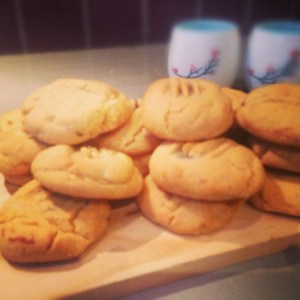
And they are were good. And totally bolus worthy!
Here’s the recipe. (And here’s a tip. When freezing the Nutella before making the biscuits, do half on one baking sheet and half on another. Take out one baking sheet, make half the biscuits. THEN take our the second baking sheet and make the second half. Otherwise the Nutella starts to melt and ends up all messy and all over your fingers and you have to lick it off your fingers and then freeze more.)
Oh, and while we’re talking Nutella, let me introduce you to my happy place:

Support DA-Vic and enjoy the Melbourne Food and Wine Festival (WIN WIN!!)
This year, Diabetes Australia – Vic (disclaimer: my place of employment, but I am writing about this because I want to, not because I was asked. Also it is about food. And wine. So there’s that too.) is the charity partner for the Melbourne Food and Wine Festival. Some people may think that this is an odd partnership, but actually, the messages of both DA-Vic and MFWF are strongly aligned. It’s all about people taking an active role in managing their health – regardless of if they are living with diabetes or not. And having a good understanding of the food we choose to eat is part of this.
It’s also a great opportunity to raise awareness of diabetes, reaching people we may otherwise not reach.
Now, everyone knows that I am not really an exercise fan. However, I can definitely get on board this. It’s literally a moveable – well moving – feast where participants take a walk around the Tan, stopping at stations for a delicious five course brekkie. And better yet, 5 per cent of ticket/registration fees will be donated to DA-Vic.
Noteworthy connections
Many of you may not know that in a former life I was a classically-trained musician. That ship sailed a long time ago and I no longer play music. However, my husband is a musician and music is a huge part of my family’s life.
I have always been interested in the link between music and health. The Greek God, Apollo, was God of both healing and music, so the connection has been around for a long time!
Music has been used as therapy in a variety of medical conditions from Parkinson’s Disease to recovery from stroke. I am not going to say the healing powers of music can cure diabetes (although I’m pretty sure some fool will tell you that). But, music can be a stress reliever. And for me, reduced stress means less erratic BGLs.
There are also strong links between music having positive effects on mental health as discussed in this information sheet from ReachOut.
I love this so much
I’ve shared this blog before here, but this post from Annabel over at The Understudy Pancreas is one of the most beautiful pieces of writing. Full stop.
I can’t begin to imagine what parenting a child with diabetes would be like, but Annie does such a wonderful job of explaining how her family do it.
The thing that I probably admire most is how Annie never, ever makes her daughter’s (Pumplette) diabetes about herself. She supports her daughter in the best ways possible, encouraging her independence, and being there for her – with what Pumplette needs. Great parenting advice all ‘round, really.
I wish I could reach into my computer and give you a huge hug, Annie. Your darling girl is so great.
Radio Deluxe
When we were in New York, we spent a very pleasant evening at Birdland listening to John Pizzarelli and Jessica Molaskey perform. It was a gorgeous gig, made even more wonderful when they dedicated a song to the ‘family from Australia’.
Each week, John and Jessica have a syndicated radio show (they claim it is ‘live from high above Lexington Avenue in the Deluxe Living Room’, and while I suspect it is actually recorded in a studio, I like to think of them in their living room at home, gazing out over the New York skyline, casually chatting into a couple of vintage microphones) and it is an absolute treat to listen to.
Check it out here. It makes a great soundtrack to the workday!
What do ‘patients’ really think? (Maybe stop using the word ‘patient’ to begin with…..)
British medical journal The BMJ has started a fascinating new series called Do you know what your patient is thinking? This is part of their patient partnership strategy and will hopefully help HCPs better understand all aspects of life with a chronic health condition – not just what …..
The first in the series, Why there’s no point telling me to lose weight, can be read here. New submissions will be published monthly.
Living Vertical
Steve Richert has lived with diabetes for 17 years. A couple of years ago, Steve wanted to show that diabetes hasn’t stopped him from doing what he wants, so he and his wife, Stefanie, travelled across North America and climbed for 365 consecutive days. Just like with diabetes, there were no days off.
I absolutely love the catalyst for this project. This is what Steve writes on the Glu website:
‘In 2011, I had lived for almost 13 years with type 1 diabetes, and despite the normal ups and downs, seasoned with occasional close calls, it had never stopped me from being me. In fact, it made me who I was. When I was on a trip to visit friends, Stefanie and I drove past a billboard aimed at fundraising for diabetes research. It made my blood boil.
It was a smattering of grim statistics and stock imagery geared to promote the idea that life with diabetes was no life at all—that we are weak and helpless victims of this condition. Before this point it hadn’t ever occurred to me that the message of being empowered had any place in diabetes. I didn’t know anyone else with type 1 diabetes and I assumed everyone just came to terms with it as I did. Seeing this billboard made me aware for the first time of how we are portrayed—and how that can impact someone.’
A film has been made of Steve and Stefanie’s adventure. You can read about and watch Living Vertical: Project 365 here.
Save a child…..
Thinking about Valentine’s Day? Don’t forget to Spare a Rose, Save a Child.
No four words sum up this campaign better than this ‘Flowers die. Children shouldn’t’.
Please donate. Remember the equation: One rose = insulin for one month. Multiply as many times as you can.
That’s all for now, folks. Happy Tuesday.
Click
The sound the applicator of my CGM made as the introducer needle pierced the sensor through my skin made me wince. It’s an involuntary response and not because of pain. The little pinch I feel as the needle shoots in is so insignificant it doesn’t really warrant a response.
My last sensor fell out in bed on one of the first nights of our holiday. The next morning as I removed the spent sensor from the transmitter, I decided that I wouldn’t put in another sensor straight away. And then after a few days of enjoying having one fewer device stuck to my skin, I decided that because I was spending so little time alone, I really didn’t need the safety net of a CGM. Plus I had no plans to try to tighten up basal rates or make any other adjustments.
More than five weeks and no CGM.
But the afternoon after we returned from New York, as Aaron was getting ready to go to a gig, I realised that jet lag would possibly be sending me to sleep before he got home. And I’d been chasing hypos all day – continually going low just as I thought I had managed to get on top of things.
I knew that it was time to get hooked up again to my CGM. I needed my safety net back.
So, I pulled out a fresh sensor, swabbed the back of the transmitter and with a click, the new sensor was attached firmly to me.
The clicking sound hit me with a force that surprised me. I actually felt it in the pit of my stomach – a sinking feeling. I felt my breathing quicken. What’s going on? I thought. I checked the site where the sensor had gone in and where I had fastened the transmitter. It looked fine. There was no pain.
I stood in the mirror, my top tucked under my chin and there, staring back at me, was the reason for this sudden unease. Two medical devices. My cannula on my right side, the pump tubing snaking its way up my chest to the middle of my bra where my pump was neatly tucked away, and my CGM sensor and transmitter just to the left side of my belly button.
I could suddenly feel the numbers, I could feel the data, I could sense the information that would soon be available to me. I could feel the vibrating of the alarms.
And the feeling of burnout – that darkness that lives at the pit of of my stomach – sprang to life after having lived quite dormant for a few weeks.
I felt overwhelmed and my sensor wasn’t even transmitting data yet! In fact, I hadn’t even hit the ‘start sensor’ button on my pump yet.
I sat on the bed and breathed deeply before grabbing a piece of paper and pen. I started to make a list of reasons to not get overwhelmed and distressed about reconnecting to my CGM.

I re-read the list and started to feel calmer. But I was surprised at just how sudden and intense the reaction was. I couldn’t really make sense of it either. I love this technology. I love the information it gives. I use a device that is incredibly accurate and reliable. I do feel safer when I have a sensor attached. And I know that, given the cost of running a CGM, I am very fortunate to be able to use it.
So why was I feeling dread instead of reassurance?
I’m not sure; I’m really not.
Later that night, I crawled into bed. It was still light outside – jet lag had indeed hit me! The kidlet was reading in her room getting ready to sleep. Aaron wasn’t home yet and still wouldn’t be for a while.
I started to read and before long, my eyes felt heavy and just as I was about to put my book down, my pump, lying loose in the bed beside me started to vibrate. I looked and saw the two arrows pointing down. I wasn’t low, but would be in about 30 minutes. I reached over and pulled two jelly snakes from the jar on the side table.
As I started to doze, I felt calm and relaxed, looking forward to a good night’s sleep, and woke on Australia Day feeling refreshed. I located my pump amid tangled sheets, and saw the CMG’s straight line. My hand moved to touch my CGM, sitting comfortably on my stomach. Doing its job. Nothing more. Nothing less.
Four weeks into a family holiday, away from the mundanity of every day, away from schedules, away from stresses, and I can see just how much better I feel – emotionally as well as diabetes-wise.
After writing an extremely raw account of the diabetes burnout I have been experiencing for some time, I have spent time wondering just how I was going to get diabetes back to a place that would stop causing me so much concern and guilt and stress and anxiety. Because that’s the thing with the way I do diabetes burnout – I don’t just burnout, I then focus on the burnout. Which makes me more burnt out. And then I focus on how much bigger the burnout is getting. You get the picture.
But here, in New York, surrounded by my family and visits from friends, I am feeling that things are slowly, but surely, balancing out again.
Diabetes management has gently snaked it’s way back into my life – just as a regular part of my routine. I’ve found myself checking my BGLs with more frequency – and less frustration – than had been the norm at the end of recent times.
I don’t get to the end of the day and find a pressing feeling on my chest because I have been suppressing the guilt of not checking my BGLs. I don’t ignore high BGLs that I know to be the result of a pump line that really needs to be changed. Diabetes tasks like these just happen; far more effortlessly.
But I am taking things slowly and easily. Baby steps.
I decided not to reconnect my CGM after the sensor fell out during the first week here. I’m spending most of the time with my family, so not feeling I need it as my safety net as I do when either travelling alone or at home at night while Aaron is out doing gigs.
I know that this isn’t reality – as much as I wish it really were – but I am absolutely savouring this time. This somewhat alternate existence is such a privilege – I feel lucky. I feel happy, actually. For the first time in a very, very long time, I feel truly content.
And of course, that makes the overall shitty-ness of diabetes a little easier to manage. But (make no mistake) it doesn’t make it less shitty overall…
I came to this realisation the other day as I was pushing in a new infusion set. I packed away the waste and tucked the freshly-primed pump into my bra, thinking about how much I really dislike diabetes tasks. Because I do. I don’t want to check my BGL or shove a sharp introducer needle into my side to re-site my cannula. But I just do it.
When I am burnt out, one of the reasons I don’t want to do these things is because I hate them. But even when I am just getting on with things and all is ticking along okay, I still don’t enjoy these tasks.
And you know what – that’s perfectly okay!
Perhaps for me what comes after burnout isn’t just getting back on track. Perhaps every episode of burnout – however long or debilitating – ends with a realisation that diabetes is still a shit. There’s just a little more acceptance.
And a tangible sigh of relief to find myself seeing some light for the first time in a very, very long time.
This week, I wrote a personal piece about an extended bout of diabetes burnout. (Whoa – that’s a lot of words with ‘…out’ in them….)
I have been overwhelmed by love and support from the diabetes online community, and people outside the community as well. Seriously, completely and breathtakingly overwhelmed – and wish I could reach out to every single one of you who has reached out to me to thank you and give you a Nutella cupcake.
I wrote about this for one simple reason – it is my real life with diabetes, and that is what this blog is meant to be all about. Sugar-coating (ha ha – whatever) life with diabetes does no one any good and there is no point pretending it is all fun and games.
Talking about the times things are going well is really easy. Being humorous and looking at the bright side is easy too – and as a person who really does usually see her (champagne) glass/coffee cup as being half full, it is easy for me to seem positive about things all the time.
But the problem with that is that we don’t talk enough about the tough things. And that leads to feelings of shame, which, in turn contributes to stigma.
One of the reason I am such a huge supporter of the Australian Centre for Behavioural Research in Diabetes (ACBRD) is because, apart from being a bunch of fabulous, smart, funny and lovely people, their work means we are talking about the emotional wellbeing side of diabetes. Thanks to the immense body of work they are doing, diabetes is being seen as far more than a numbers game. The quality of life implications of living with this chronic condition are being considered and we are getting a better understanding of distress, anxiety and depression that is related to diabetes. Even more importantly, we are talking about it. And even more importantly, there are strategies being developed to address these things.
I’ve been writing about mental health and diabetes – and wellbeing and diabetes – for some time now because we need to be able to discuss it freely, free from judgement, devoid of stigma.
It’s the same reason that I have written so openly about my miscarriages. I don’t do it because I want people to feel sorry for me or pity me. I do it because it is part of my story. And I do it so that others can see that it is a perfectly normal thing to happen and that there is no shame in it. After I had my second miscarriage, my mothers’ group met. We were sitting around in someone’s living room with our young kids toddling around, playing quietly. It had been a while since we’d caught up and we were going around saying what we’d been up to.
‘Oh, things are their usual crazy self,’ I said. ‘But I had a miscarriage last month, so have been dealing with that too.’ It was the first time I had told anyone, apart from my immediate family and very close friends.
One of the other mums looked up sharply. ‘What? Why didn’t you say something? Why didn’t you let us know? I had a miscarriage three weeks ago. I don’t know anyone else who’s had one. I really need to talk about it, but didn’t know who to turn to. I really wish I had known.’ And she burst into tears, coming over to give me a hug. We sat there and discussed our experiences and how we were feeling and how we were dealing with things. We both felt guilt and shame. We both felt we had somehow failed ourselves and our partners and our families. We both felt the same way – yet were telling each other that we were wrong to feel that way.
It was at that point, I decided that I would no longer hide my story. Because hiding it – when I am usually such an open person – suggests it is something to be ashamed about. Because that’s what happens when issues go underground, we feel shame. I don’t want any woman to feel ashamed because she has had trouble carrying a baby. I don’t want any person to feel ashamed because they are feeling overwhelmed or depressed or in distress because of their diabetes.
There is no ‘fault’. And there should be no guilt. So when we open up and talk about the not-so-good things, we see and accept that this is part of life. It normalises things. It allows for open and easier discussion. And it helps us connect with others who are sharing the same experiences.
Because I can promise you, my story of burnout is not unique. Absolutely not.
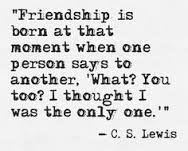
I’ve decided that my two favourite words in the world are not ‘coffee, please’ or ‘shoe sale’. No. They are ‘me too’.
Apparently, it’s snowing in New York! So the Brian Setzer Orchestra, live at the Rockefeller Centre with ‘Winter Wonderland‘ seems more than a little appropriate today!





