
You are currently browsing the category archive for the ‘Real life’ category.
Today, diabetes can bite me. I changed out a perfectly good – and working perfectly – cannula this morning because it had been in for four days and I sometimes follow some diabetes rules.
Fresh out of the shower, I stabbed in my line and knew straight away something wasn’t right. I am more than used to (and expect) the little sting that comes with the introducer needle piercing my skin. But this one really hurt. And then when I primed one unit of insulin into the empty cannula it hurt. Really hurt.
So, I ripped it out. Which was a good idea! I present exhibit A:
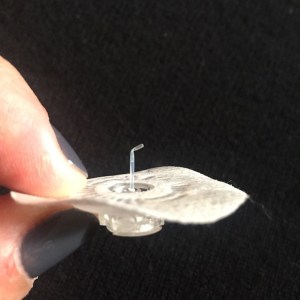
This resulted in swear words galore because I am classy and a lady. I pulled another infusion set from the cupboard, ripped it open and shoved it in my skin. And again – ouch! I didn’t even bother to prime it – I just ripped it from my skin. Which again, proved a good idea. I present exhibit B:
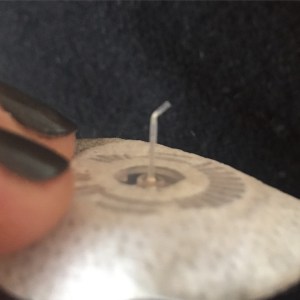
Ripping this one out was fun. It bled. Down my leg and onto the floor. So I swore again (more classy, more lady) and cursed the diabetes gods and possibly stamped my foot. Actually, I definitely stamped my foot. And threw the useless thing across the room at which point the puppy thought it had a new play toy.
The next cannula went it without a hitch and is behaving itself. Third time lucky.
So, what did I learn from today’s exercise? Not much. Probably that I shouldn’t follow diabetes rules and should have left the four-day-old-slightly-manky-but-working-perfectly cannula in. Because nothing good comes from following rules. Yep. That’s what I’m taking away from this. Also, I need a cupcake.
Go away. There is nothing to see here today.
Instead, enter #IWishPeopleKnewThatDiabetes into your search engine and spend the day reading about the things we all want everyone to know about diabetes.
This is the initiative of Kelly Kunik from Diabetesaliciousness. But don’t read her blog today either. You can do that tomorrow.
Today it’s all about this hashtag: #IWishPeopleKnewThatDiabetes
Go!

I could never ever work in advertising. A combination of cynicism and disbelief at anything I ever see in an ad would make me a difficult employee!
There is a very real gap between the truth of diabetes and what we see in advertisements for diabetes products. I frequently find myself shaking my head in disbelief at the way diabetes is portrayed.
This is what a stomach using an insulin pump looks like. That is my stomach (apologies if you are eating, drinking or just looking). Those dots are the ghosts of infusion sets past in various stages of healing. There is also probably some tape residue stubbornly stuck to my skin. Pretty (gross), isn’t it?

#NoFilter. Obviously
This is what a stomach in a pump ad looks like. Magically, any hint of previous infusion sites have disappeared.

This morning, here is what my meter announced my BGL to be. (Hashtag: fuckoff)
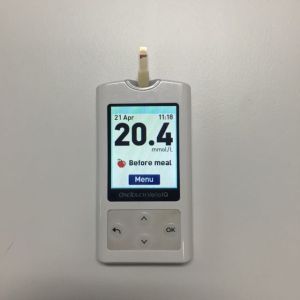
This is what the reading on pretty much every box and poster of BGL meters looks like. (Hashtag: bullshit)
 CGM graphs in real life look like the trajectory of rollercoasters with mountainous highs and cavernous lows, while the slick promotional materials show straight lines, nicely fitting in between the upper and lower alarm limits.
People in advertisements for diabetes paraphernalia are always outdoors, happy and rolling down hills, big smiles plastered on their faces. They wake up looking well-rested.
Real people with diabetes may spend time smiling and happy (I love rolling down hills – especially at this time of the year and getting all covered in Autumn leaves), but I’m putting it out there and saying that their glee is not because they have just done a BGL check. Unless the result is 5.5mmol/l. Each and every time. (See about meter photo. There was no smiling at that!)
I get it. No one wants to see my stomach on an ad for insulin pump therapy – that’s not selling units of product! But surely there needs to be a middle ground somewhere. I would like there to be an occasional BGL reading of over 15mmol/l on a poster for a meter. Because it happens. It’s not the end of the world and it doesn’t mean the meter is crap. And a stomach with a few pock marks from old infusion sets doesn’t reflect the quality of the infusion set. It reflects reality.
Diabetes isn’t pretty. It’s an ugly, scary and pretty un-fun thing to live with a lot of the time. That doesn’t mean that I spend most of my time in a ‘pity me’ funk, but I do admit – quite honestly – that it is shit at times. How about we aim for a bit of honesty and truth in diabetes advertising? Telling it like it is doesn’t mean we are weak or showing defeat. It’s just being authentic.
‘You bake a lot for someone with diabetes.’ These words came out of the mouth of someone not all that bright who may read this blog, but has clearly not taken on board anything I’ve ever written.
It wasn’t the first time that I have had people express surprise at my love of baking and baked goods considering that I have diabetes. I’ve even had other people with diabetes say they were told baking was an absolute no-no for the pancreatically-challenged when they were diagnosed and, as such, have never baked anything in their lives.
I do bake a lot – regardless of my diabetes state! I bake several times a week. On days when I don’t bake, I read cookbooks and plan what I’ll bake next. I bake when I am happy, sad, anxious, excited, content, angry. And I bake a lot when I am stressed because I find it to be calming, peaceful and satisfying.
My neighbours know when I am feeling particularly stressed because those periods involve baking EVERY SINGLE day which equals home-deliveries around 7pm of whatever is still warm out of the oven. I think the neighbours sneakily like it when I am stressed.
I love baking because it is reliable, predictable and practical. Mix the right quantities of the right ingredients for the right amount of time at the right temperature and you will, inevitably, end up with something beautiful and delicious. And as you get better and know how certain ingredients work with other ingredients, you can mix things up and be creative.

In other news – I need an apron.
Plus, baking gives me an excuse to make a mess.
Baking is reliable. Except for the rare complete balls-up, the results are exactly what you expect. The end product almost always looks more or less like the picture. If you start out making a cake, you will end up with a cake at the end of the process.
Baking is the exact opposite of diabetes! Diabetes is unpredictable and unreliable and most of the time, you have no idea how you ended up with whatever it is you ended up with. (Case in point: lunch of poached chicken salad containing zero carbs and a dressing of nothing more than olive oil and lemon juice, pre-prandial BGL – 7.8mmol/l; 2 hour post-prandial BGL – 18.9mmol/l.)
The unpredictability of baking only ever comes to the fore when bolusing for whatever it is that I’ve baked. Sometimes I get it right. Other times I don’t. It can be a little hit and miss. Correction boluses were invented for this exact thing! If you don’t like baking, that’s fine. But don’t let diabetes be the reason you don’t bake.
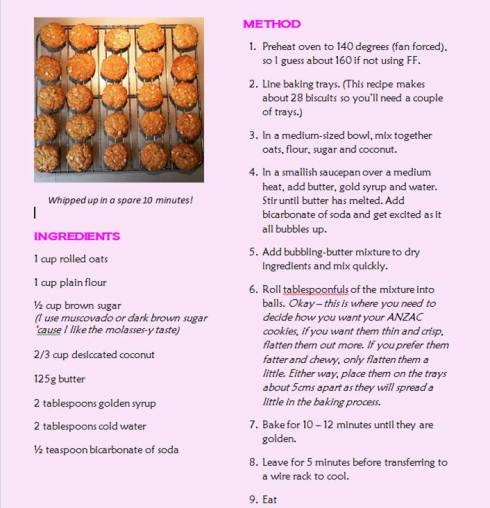
It’s ANZAC day this Saturday and I did a trial run the other day of my tried and true ANZAC biscuit recipe that I scribbled out in my recipe notebook a number of years ago. This is a fail-safe recipe and takes no more than ten minutes to throw together and then only a short time to bake. For those of you who don’t know what an ANZAC biscuit is, have a go! They are absolutely delicious and because they have oats in them, you can fool yourself into thinking they are a health food. Each biscuit (cookie) for those in the US has about 12 grams of carbs.
Today, I (literally) rolled up my sleeves and put my money where my mouth is.
It’s fluvax day at work and with most of my colleagues, I lined up to get a free lollypop. And my annual flu vaccination. With all my banging on about how important it is for us to be vaccinated, it would be pretty hypocritical of me to not get my flu jab each year.
Here’s how it played out:
Step 1 – look of great suspicion from me because no one but no one can give a needle like I can.

Step 2– Squeeeeeze! And waiting for the sting.

Step 3 – Here. Let me help you! (AKA – I’m really not good at letting other people jab me with needles.)

Step 4 – I’ll take it from here.

Step 5 – Nope – didn’t hurt.

Step 6 – Worth it!

Okay, so here’s the deal. People living with chronic health conditions – such as diabetes – are more susceptible to catching (and experiencing complications from) the flu. The flu is not a little sniffle that has you deciding to take the day off so you can sit on the couch, eat left over Easter eggs and binge-watch Netflix. The flu is terribly debilitating. Approximately 3,000 Australians die every year because of the seasonal flu, or complications due to the flu or pneumonia. Yes – it’s serious.
This terrific information sheet offers lots of information about the flu, and this year’s vaccination program. It’s been developed by the Australian Government’s Department of Health, so if you are an anti-vax twit, now is your time to start talking about conspiracy theories and how the Government is in the pocket of Big Pharma. (Please do it away from me. I’m not interested.)
Also useful is this piece that appeared last month on The Conversation.
The flu is incredibly contagious and spreads easily through infected droplets in the air and by hands. Vaccination is the best way to prevent and stop the spread of the flu. I don’t know about you, but I do as much as I can to live a healthy life. Getting my annual flu vax is a really simple, relatively painless and safe way to help me on my way.
Recently, I had a period where for three days, I dealt with BGLs that would not drop below 15mmol/l. Most of the time, they were above 20mmol/l, which is revolting and even more so when considered in the US-measure: 360mg/dl. (I’m not sure why, but for those few days, I kept converting my high numbers to US numbers. For anyone playing at home, I hit 461mg/dl. Don’t play at home. Really. Don’t. And file under: #StupidThingsIDoWhenHigh and also, I am good at multiplying by 18.)
Anyway, it was crap. I felt crap. And I wanted to cry. A couple of times my stupid meter simply said ‘hi’ which is not so much friendly as a declaration of giving up. It doesn’t know where to go above about 33mmol/l, so it just stops working, instead throwing out random greetings. My CGM graph was off the charts.
Why was I high (hi)? I’ve no idea. Seriously. No idea. I wasn’t eating cupcakes for breakfast, lunch and dinner. I went through the usual checklist of ‘things that could possible make my BGL high’ which includes:
- Eating cupcakes for breakfast, lunch and dinner
- Forgetting to bolus
- Not bolusing enough
- Bent cannula
- Dodgy insulin
- Stress
- Impending virus
- Period
- Exercising when already high (ha, as if!)
- Eating ridiculously large quantities of ridiculously high carb foods
- Eating a whole jar of Nutella in one sitting
- Infection at cannula site
- Pump not delivering properly
- Following a paleo diet/I Quit Sugar diet and pretending I’d cured myself of diabetes and didn’t require insulin anymore
- Anything and everything else ever and ever and ever and ever
I wasn’t forgetting to bolus – I actually was correcting every couple of hours. I (as it turned out, unnecessarily) ripped out three cannulas – and starting looking at the fourth one very suspiciously, wishing I had see-through skin so I could identify any bent-cannula hiding under the skin. And then thinking about how creepy having see-through skin would be and then vomiting a bit in my mouth.
Nope. No reason at all.
I stopped eating anything carb-containing, instead eating a salad of greens and chicken for lunch and chicken soup with (non-carb containing) vegies for dinner. I rage-bolused for the milky coffee that I really needed at 3pm –the only carbs I consumed for the whole day.
And still, every time I checked, I was sitting close to 20mmol/l. Any reading of 15mmol/l, which ordinarily would result in me throwing a mini-tantrum, seemed a victory. But it was fleeting and before long, I would be heading upwards again.
By day three, I felt that I had an aura of exhaustion surrounding me. My limbs were heavy and climbing the stairs to my office was draining. I countered my exhaustion with ridiculous quantities of coffee, replacing my usual latte for a short macchiato to minimise the milk I was drinking.
I had a lunch of sashimi (my favourite no-carb lunch) and got on with my afternoon at work.
At about 2pm, I checked my BGL, expecting to see another high number. But instead, I had my first number under 10mmol/l for three days: 9.8mmol/l said my meter.
Over the next couple of hours, I kept a close eye on things. I had quite a bit of insulin on board (yes, I know I shouldn’t, but of course I rage bolus when numbers won’t come down and I am frustrated) and I didn’t want to crash and burn with a nasty hypo.
I kept a fruit box of pineapple juice next to me and took a sip every now and then and managed to not dip below 4mmol/l.
By the next day, I was back on a far-more level playing field. My numbers were in-range and there were no more surprises.
I reviewed my BGL readings and pump activity for the previous days and in all honesty can’t say what I would have done differently. There really was absolutely no discernible reason for the crazy-high numbers – at least none that I could see.
Although my BGLs remained stable for a few days afterwards, it took me some time to get over the sludgy feeling that follows an extended period of high numbers. I was tired and achy and my legs continued to feel heavy.
All in all, it was about six days of feeling below par – first from the high numbers and then its aftermath. And, of course, the emotional frustration that comes with not being able to pin point the reason for feeling crap – and then being able to fix it.
When people ask what living with diabetes is like, I don’t know how to put into words these sorts of experiences in a way that makes any sense. I can explain the number of times I have to jab my finger to check my BGL. I can talk about how I wear a little box shoved in my bra and press a few buttons for it to deliver me some life-saving medication. I can count out the number of hours I spend with healthcare professionals each year.
But how to explain and quantify the frustration? How do I explain the sense of helplessness when I can’t work out what is going wrong? How do I explain that sometimes there are simply no answers and we just have to ride it out until things (hopefully) get back on track?
I’ve no idea. But for me, this is the essence of diabetes. The frustration and helplessness. And it remains for a long time after numbers get back in range.
It takes me somewhere between 12 and 25 minutes to drive to work in the mornings. I drive down a terribly busy road which carries trams, cars, trucks and bikes. People dash across the road whenever they can. It is hectic!
Yesterday morning, I was sitting in traffic, mentally counting down how long it would be before I got to my morning café for my take away coffee.
I yawned. ‘Need coffee,’ I thought. I yawned again. And again. ‘Oh, shit,’ I thought. Even though I felt fine, the incessant yawning gave it away. I was low.
I reached into my handbag and pulled out the pink and red Marimekko purse and, taking advantage of the banked up traffic, pushed a strip into the bottom of the meter, pricked my finger and wiped the drop of blood across the strip.
2.8mmol/l.
I swore. Loudly. So loudly that the woman in the car next to me looked over at me. We both had our windows closed.
The road is a clearway in the mornings; I couldn’t pull over. I put on my indicator, silently begging the traffic to move so I could turn left into the street ahead.
I grabbed a handful of jellybeans from my bag, and shoved them down my throat, chewing furiously as the cars in front of me inched forward.
Finally I could turn left. I pulled into the side street and parked. Turning off the engine, I sat there chewing and gulping.
How had this happened? I scrolled back through my meter and saw that less than 20 minutes earlier, just before I left the house to drop the kidlet at school, my BGL was 5.9mmol/l.
My eyes filled with tears at this point – typical response when I think about how diabetes impacts on those I love. I swiped my hand across my eyes, cursing (again) as I saw my mascara had run.
Involuntarily, my hand moved to my stomach where my CGM was fastened. As I was rushing around getting ready that morning, my pump pulsed and squealed, telling me that the sensor was dead after having been in for seven days. I knew I just needed to reset it – it was still reading beautifully.
But I didn’t. I didn’t restart it. I just shoved my pump away, thinking that I’d maybe, maybe, not sure, perhaps start it later in the day. If I felt like it.
I swore again – this time at myself.
I need this. At the moment, I need this. I am already feeling so lousy at diabetes – second guessing everything – I need whatever help I can to help me.
I looked at myself in the rear-view mirror. ‘I need this,’ I told myself, tears welling again.
After about ten minutes, I rechecked my BGL and it was back up over five. I was good to drive and make my way to work.
I went to start the car and stopped. I pulled my pump out from my bra and scrolled through the menu until I found what I was looking for. ‘Start CGM Sensor Session’.
I pressed start.

Last night, I rather smugly put this picture up on my Instagram:
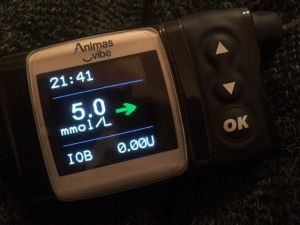
‘Look at me,’ the picture screams. ‘I am winning at diabetes!’
And then, this morning, after eight hours of uninterrupted sleep, this was how my pump screen looked:

W.I.N.N.I.N.G.
So, riddle me this, why did I wake – after eight hours of uninterrupted sleep – feeling so completely and utterly exhausted? I wasn’t up overnight to go to the loo or let the dog out or deal with a low blood sugar. I just slept. Peacefully.
There was no explanation.
Until I looked at this:
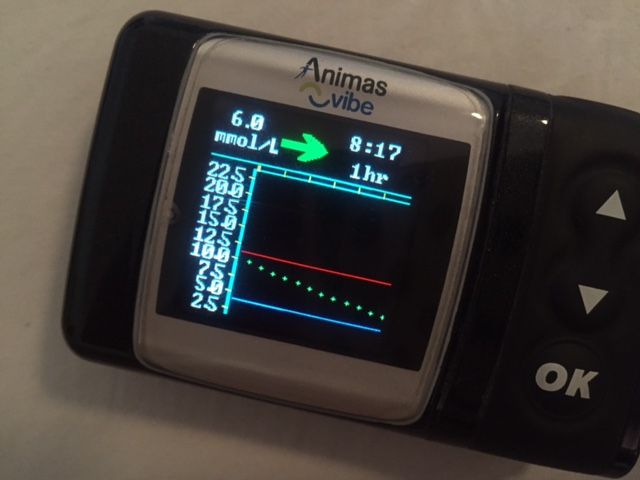
And this:
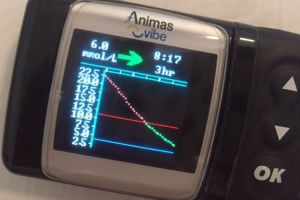
And this:

And then it all made sense. Except it didn’t. How had that happened? Had I sleep-walked into the kitchen, sleep-baked a pavlova and sleep-eaten it? Had I reached over in my sleep and eaten some of the jelly snakes on my bedside table?
The answer is no. All I had done in those eight hours was sleep.
Without my CGM on, I would have had that pre-bed BGL and the morning BGL as the only pieces of information. And it would have looked damn pretty. I would have spent all day thinking about how lovely and pretty and stable by BGLs had been overnight.
But with my CGM on, I know a lot more.
Which is great, except I’m not sure that I want to know. Because now I feel like I have to do something about it and quite frankly, I am still not in the headspace to be analysing glucose levels and making basal changes and being all diabetes-smart.
My CGM is on this week as a security measure. I really didn’t feel like putting it in, but I knew that I needed to. I am counting down until I can rip it out on Friday morning, which is a far cry from trying to get as many days as possible out of each sensor as a cost-saving measure.
I now know why I am not feeling particularly rested, but I feel even less rested with all this information at hand. THIS is when data is paralyising – when we just don’t have the ability – for whatever reason – to do anything with it and all it does is overwhelm us. Ever more.
Emergency!!!
I was a little excited to learn the other day that my iPhone 6 could do this:
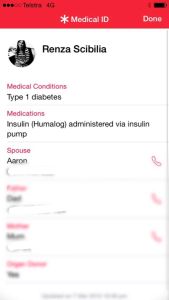
My medical ID can be accessed from the lock screen (i.e. no password required). The details can be customised (as such, I have chosen to NOT include my weight here!) and ICE contact details can be added.
How much will paramedics and other emergency services staff use it? I’ve no idea. But it gives me another excuse to lull myself into a false sense of security believing that I don’t need to wear a medical alert bracelet. (Okay, okay; I’ll get on to that!)
What’s the latest from MySugr?
This! Congratulations guys – so thrilled to see that you are continuing to go from strength to strength. It’s what happens when people with diabetes are creating things for people with diabetes.
My Sugr – helping diabetes suck less.
Dexcom. Like a pancake.
The new lower profile Dexcom has been launched in Australia. Which is good because the first G4 sticks out this much:
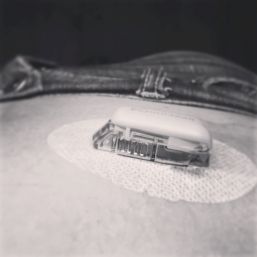
And when wearing a dress that is this tight, it’s pretty bloody unforgiving!

Doctors 2.0 tweetchat
I know that it seems pointless talking about this after it happened, but this morning I took part in a terrific tweet chat from the wonderful Denise Silber (I love that I get to refer to her as an American in Paris – ‘cause that’s what she is!) and the team at Doctors 2.0 and You. Read the transcript if you can (hashtag: #doctors20) – it was a great discussion about fostering the consumer (patient) HCP relationship using SoMe.
Munchausen by Internet
This probably warrants a blog post of its own, but in the meantime, have you been keeping an eye out on the Belle Gibson story? The short of it is that Belle, who has built a social media empire sharing her story of beating cancer using only diet and positive thinking, has not been entirely honest.
Not only does it seem that Belle is not who she says she is (she is not even the age she has said she is!), but there is mounting evidence that she never even had cancer. Add to this some questionable online fundraising activities, and you can understand why this story has captured the media’s attention.
While the whole story is reprehensible, it has left a lot of people asking why someone would fake having cancer (or any other medical condition). As it turns out, this is a thing. And it’s called Munchausen by Internet.
I first read something about Munchausen by Internet years ago in the Good Weekend. (You can find the article here.) And once I became part of the DOC, I remember a couple of times where people who have claimed to have diabetes have been exposed as fakes. (Here’s a post from Your Diabetes May Vary.)
There’s lots about Belle Gibson’s case online at the moment. Start here. And here.
Kudos to D-UK
Last week was the Diabetes UK Professional Conference in London. It was great to see so much twitter activity from the conference with a significant contingent of consumer (patient) bloggers and social media folk at the event and tweeting from some of the sessions.
Well done to D-UK for remembering that even though the event may not be for PWD, we have an interest in what is happening there. And who better to share that information than others living with diabetes?!
Bugger off Pete Evans
It’s never nice to take delight in someone’s misfortune, but let me tell you that I have been doing A LOT of fist pumping with all the articles exposing Pete Evans and his latest ridiculous efforts to provide nutritional information for babies. Yes. Babies.
As a foodie and someone who has a ridiculously large cookbook and cooking magazine collection, I am always on the lookout for new recipe books. Because they are a good source of…recipes. The people writing these books are chefs or cooks who are good at….cooking.
But the second that someone moves from cook/chef/someone who can show me how to incorporate Nutella into another recipe, to pretend healthcare professional, they are no longer welcome on my bookshelf.
I don’t care that Evans claims to be working with a ‘nutritionist’, he is a chef. His area of expertise is mixing ingredients together, cooking them at the right temperature for the right length of time to produce something yummy.
He’s not done any meaningful study that gives him any credibility at all to provide information about nutrition. At all. So why he thinks he should be playing in this space is completely and utterly beyond me.
Recipes!
I made these. And they were delicious. I adapted the recipe slightly and half of the biscuits ended up with Nutella AND peanut butter in the filling. Which made them even better.

Driving
After I wrote this piece, I’ve had a lot of people mention to me that they have been asked to provide an eye report for no apparent reason.
This seems to be a particular issue in Victoria.
Remember – if you’ve not been asked to provide an eye report before and at no time has it been indicated on your medical report (filled in my your GP or endo) that you have diabetes-related eye problems, you are not required to (as a matter of course) submit an eye report.
Again – Nowhere in the regulations does it state that it is mandatory for people with insulin-treated diabetes to arbitrarily provide an eye report.
The best way to address it if this has happened to you is to start by calling the number of Medical Review at VicRoads and query the request.
If you are not satisfied with the response (i.e. you are still being asked to fill in the eye report and are told that the regulations call for this) call the Advocacy team at Diabetes Australia – Vic.
Cartoons
New Yorker cartoons are possibly the best things ever and the medical ones have me giggling all the time. Like this one.

Don’t blame me once you click on this and then don’t get another thing done today!
Happy St Pat’s Day!
When the kidlet was about two weeks from being born, Aaron and I went to see The Chieftains play at The Palais. For two hours of jigs and reels, the little munchkin kicked and danced around, only stopping when the music stopped.





