
You are currently browsing the category archive for the ‘Real life’ category.
This is the second year running that I have missed Mother’s Day. Last year, I was in London en route to the HypoRESOLVE kickoff meeting, and this year, I’m in Florence for a DOCLab Advisory Group (DISCLOSURE: flight to Florence from Amsterdam covered by Lilly) meeting following on from the HypoRESOLVE AGM (DISCLOSURE: flight to Amsterdam from Melbourne covered by HypoRESOLVE). Both years, we’ve celebrated a week early to make sure that we mark the day. Because it is an important day. Our kid wants to spend the day spoiling me (which is just so gorgeous!), and I want to acknowledge just how essential my own mother has been throughout my forty-five years.
So, here is something I wrote about my own Mum and just how she has shaped so much of how I live with diabetes.
It’s Mother’s Day. In recent years, as I have found aspects of the day challenging, I’ve really channelled my energy on Mother’s Day into what my own mother has given me.
I am willing to admit my bias, but I think my mother is the best Mum in the world. She’s very cool, and when I was growing up all my friends thought she was awesome. She was in her early 20s when she had me, and has always been a young Mum. That’s not to say that she always knows what the cool kids are talking about. We have many stories of absolutely hysterical things she has said and done in the belief that she was being oh-so-hip. My sister and I never stop making fun of her, which she mostly takes with good grace. Mostly…
When I was growing up, there was nothing that I felt I couldn’t talk to Mum about. She was very open and no subject was taboo. I felt comfortable speaking with her about pretty much everything, and when I had my own daughter, I knew that I wanted to have the same sort of relationship with her.
Mum instilled in me a love of food and cooking – something for which I am so grateful. Yet as great as the cakes are that I pull out of the oven, or the plates I serve up for dinner, nothing is as good as her food.
She showed me that chicken soup is truly all it takes some days to lift my spirits and fortify me for what comes next. I’ve not managed to always have a stash in the freezer for quick thawing, but I am always welcome to let myself into my parents’ house and help myself to whatever is in my freezer. And when I am under the weather – physically or emotionally – a text message of ‘I’m sending dad over with some chicken soup for you’ is an inevitability.
When I was diagnosed with diabetes, she was there, alongside me: a pillar of strength on the outside when, I knew, she would have been falling apart inside.
She taught me how to live with a chronic health condition. I have watched Mum deal with her own health conditions for over thirty years. She has done so with incredible grace, determination and resolve. Every time something new has been thrown at her, she’s rolled up her sleeves and taken it on. A couple of years ago she had a double knee replacement and the speed and intensity of her recovery was a marvel. She pushed and pushed through rehab, recovering far sooner than expected.
There may not be an instruction book for diabetes, but thanks to watching Mum live with lupus, rheumatoid arthritis and Sjögren’s syndrome meant I did sort of have a real-life manual for how to get on with life even with my new health challenge. I looked at her attitude and took it on as my own.
She’s shown me that even through the pain and fatigue and frustrations that seem to go hand-in-hand with life-long health conditions, laughing and carrying on in a silly way is absolutely okay.
But equally, she also taught me that it’s okay to cry and feel overwhelmed.
She helped me understand that even though there are times that the thought of another appointment with another doctor for another thing was just too much to deal with, it is okay to complain about it, but I just had to do it.
She taught me that self-care days that involved sitting on the couch under a quilt watching reruns of British cop shows is absolutely okay. But the next day, you get up and get back into it.
She taught me that even though there were times I didn’t want to, I had to show up – show up to my own care, to doctors’ appointments, to blood draws, to work. She might say ‘Diabetes is shit today,’ (she’s a trade unionist; my potty mouth came from her!), ‘But you have to keep going.’ She tells me all the time that life with chronic health issues is boring. And it is. It really is!
Every day, she’s made me see that even though something may look easy, living with a chronic health condition is simply not. She wears the invisibility of her health condition the way I do mine. We smile through the sadness of what could have been had we not had so many health challenges to manage.
She made me understand that not everyone is as fortunate as we are when it comes to health care accessibility and affordability. And that helping those less fortunate is a responsibility I must never shirk.
The unconditional love, support and pride she has demonstrated in spades is, of course, much appreciated. Having a prototype right there for the type of mother I want to be has been a blessing. But I appreciate so much more than that. Our health issues may be different, but it is my Mum who taught me how to thrive with diabetes. I would not be living the way I am now without her having gone ahead of me. Or without having her stand beside me, and hold me up when I’ve needed.
Happy Mother’s Day, Mum. Thanks for the chicken soup. And everything else.
‘I like your phone case.’
I looked up from my laptop and over at the woman sitting next to me in the crowded Qantas Business Lounge.
‘Oh. Thank you!’ I said to her. We were sitting at one of the high desks, both charging different devices before our flights.
‘I could do with one of those,’ she said to me. ‘I don’t like the word non-compliant, but to be deliberately compliant sounds like a lot of fun. Where did you get the case?’
‘A friend designed it for me and started to sell it on his online shop after I spoke at a conference for healthcare professionals. I’m with you on not liking the word. I’m a diabetes advocate and to me, non-compliant is a dirty word.’
I saw the woman sit up a little straighter. ‘You have diabetes?’ she asked.
‘Yep. I’ve had type 1 for twenty-one years.’
‘My daughter was diagnosed three years ago. She’s eighteen now. She just started at Uni this year. She’s doing really well.’
I smiled. ‘That’s great to hear. What is she studying?’
‘Music. She’s a singer.’ There was undeniable pride in her voice. Now it was my turn to sit up a little straighter.
‘Really? I did too. I was a classically trained flute player in a former life, studying at Melbourne Uni. I don’t play anymore, but I certainly loved it at the time. I thought it was going to be my forever ‘thing’. Then I kind of got side-tracked!’
We sat there and chatted more about music and having daughters and watching them grow up. We talked about raising strong and challenging girls, reminding each other that it was good that they were like that, even though we wished they would challenge others more than their own mothers! She told me about her job which takes her all over the world and we compared notes on coping with too much long-haul travel and far too much time away from our families. We complained about coffee in airports and on planes and how ridiculous our first world problems are. She asked me a little about my job and how long I had been doing it. Our conversation was peppered with expletives and laughter.
I heard my flight being called and started gathering all my things, tucking them back into my overstuffed bag.
‘Lovely to chat with you,’ I said as I stood up to leave. ‘Good luck to your daughter with her music studies.’ I began to walk away, but quickly turned back. ‘Oh, and her diabetes, too.’
‘I can’t wait to tell her that I met someone who has diabetes and studied music.’ She paused for a second. ‘I think she’ll be happier when I tell her that we hardly spoke about diabetes though. She hates it when that is all people ask about her.’
‘She is so much more than diabetes. We all are. And there are far more interesting things about those of us with messed up beta cells. She sounds like an absolute gem, ready to take on the world.’
I walked to the gate and as I was boarding my flight, I noticed the woman in front of me had a Libre sensor stuck to her arm. And that she was wearing the most fabulous red, high-heeled boots. I smiled to myself. So much more than diabetes.

Twenty-one years of diabetes feels like forever sometimes, and I feel as though nothing surprises me anymore – it’s just same, same, day in, day out. And most days really are like that. But then there are moments that jolt me.
I had a moment this weekend that did just that. It felt familiar, because it happens occasionally. But it passes and I forget. I think that before this weekend, I’ve never really tried to work out just what it was that I was feeling.
But this time…this time I did.
Perhaps it was because I had four glorious days of long weekend and time to think, or maybe it was because diabetes was far more dominant than I’ve come to expect, thanks to thirty-six hours without Loop (which is a story for another time).
This feeling is like being in the ocean and being pushed under by an unexpected wave. I feel overcome and I feel that every single part of me is being caught up and I can’t escape. It hits me out of nowhere and as I’m being pulled under, it takes over.
It lasts no more than a heartbeat or two, and usually I just shake it off and get on with whatever I was doing.
But this weekend, I stopped and along with feeling swept up, I felt an overwhelming and complete sense of sadness descend upon me. I know I have diabetes. I have accepted it. I feel it living in me. But this sadness is matched with a realisation that this is it – I don’t get a chance to be without this ever again.
I’m doing a lousy job trying to explain this, and I don’t want to sound like I am in the midst of some sort of crisis, or about to sink into the depths of a period of burnout. I’m not there – or even staring it down.
This is just that fleeting moment of remembering that diabetes will always be present, and each day, it will rob me of some of my time, my mind, my headspace. It makes me feel sad when I think of this.
I was reminded that we do so much to just settle ourselves around all that diabetes demands of us. Some of that is physical rearrangement as we accommodate the devices and scars and paraphernalia that accompany this condition. But so much of it is how we think and feel. In the past I have not given this feeling a name, or allowed it to be any more than a passing flash – barely a blip on my consciousness. Maybe this time I permitted more because I could handle it and was ready and able to give it a place.
My body and mind are taken up so much by diabetes – I don’t want to give it any more attention. But this weekend, for more than just a minute – although not too much more – I gave name to this sadness that I feel. It passed and on I went. But it lives there now – or rather it always has.
This is honestly what I thought life had in store for me following my diabetes diagnosis twenty-one years (and two days) ago:

(Click for source)
The reality is, of course, very different. The reality is that I am healthy and absolutely not abstaining from things that bring me joy (see: Nutella). I’m still working on the long life part, and have every intention of making that a reality too.
If you are newly diagnosed (or know someone who is), find people who are doing this for real, not text book tales of a diabetes life. There is a lot of joy still to be had. I promise.
I have some illuminating discussions with healthcare professionals. After I’ve had an in-depth conversation, I find myself going over things they have told me and discover that I have always learnt something new about what it means to work in a system that is, in many ways, broken. I learn how their approach to healthcare changes year by year as they try to do their best for the people they see each day. And I realise that I never, ever could do their job.
Other times, I shake my head a little because I wonder how their understanding of the day-to-day challenges of living with a chronic health condition is so far removed from reality. In these cases it’s almost as though we are speaking different languages.
Recently I spoke to a group of HCPs about those differences. I focused on how we manage to fit diabetes into our busy lives in ways that HCPs never can imagine and how the neat text book description of life with diabetes is very different from the mess that we are trying to tame each day. I spoke about how what they say can be read in a multitude of different ways by those of us on the other side of the consultation, and to think about words carefully. And I spoke about how although some education of HCPs about diabetes suggests that there is a one size that somehow fits us all, the truth is that we require our education to take into consideration every size and shape possible and for it to be delivered accordingly.
A doctor came up to me afterwards and thanked me for my talk. ‘Thanks for making me think differently about some things,’ she said. I loved that she said that, and I told her so. ‘Actually, that’s always one thing that I hope to get when I hear someone speak about diabetes – a new perspective or way of thinking about something that I think I have all worked out.’
We chatted a little about what she’d heard that had surprised her and would she would now be thinking about in other ways. I may have high fived her when she said that she would now be taking a lot more care with the language that she uses. ‘I had no idea that what I was saying had such stigma attached. I honestly thought I was saying the right things. I never meant for people to feel blamed, but I can see now how I could have come across that way.’
That’s been one of the challenges of the #LanguageMatters movement in diabetes. As we’ve tried to bring HCPs along for the ride, we’ve had to do it in a way that doesn’t make it sound like we are berating them. I do and will continue to call out language that impacts on PWD negatively because it does matter. Language has the power to make us feel like we can take on diabetes or be defeated by it; it can make us feel like we are doing all we can and that is enough, or that we are failing and will never do enough. Again, for those down the back – language does matter. But I truly have never believed that HCPs use language with any malice or intent of harm. It’s often just because they repeat the words and phrases that have always been used.
I explained this to the doctor and we spoke about how to get the message across in a way that highlights and promotes collaboration. After we’d been speaking for about 10 minutes, she said ‘I have a question for you,’ I nodded, eager to hear what she wanted to ask. ‘What’s the best kept secret in diabetes?’
I was startled. What an interesting – and frankly brilliant – question. I’d never been asked that before and I wanted to think about it a lot. Poor woman – I’m sure that she just wanted some sort of quippy response and to be done with it so we could go home and eat dinner.
‘Wow!’ I started, excitedly. ‘I love this. Are there any secrets to diabetes?’ I started a checklist, going through some ideas. ‘Is it peer support? For some reason, a lot of people don’t know just how widely available this is. Or maybe it’s how people can drive their own healthcare by setting the agenda. I frequently have people tell me that they just do what their doctor tells them (or rather, say they will) because they didn’t realise that healthcare could be an open and joint dialogue. In diabetes, maybe it’s all the clandestine DIY stuff that is going on which is so apparent to those of us who play on Facebook and Twitter, but maybe not to those who are not online as much. I know it’s NOT cinnamon. Actually – maybe it’s the whole thing about how when living with diabetes, or other chronic condition, our mental health is rarely taken into account, so perhaps understanding that and being referred to relevant services is the secret. It happens to so few of us…’
I stopped, because I could sense that there was so much I wanted to say, but I truly didn’t have an answer. ‘I don’t really know,’ I sighed. ‘I wish I did. I wish there was one…’
We said our good byes and I started to walk away before the doctor called after me: ‘You know what the best kept secret in diabetes is?’
I spun around. ‘What?’ I asked. I admit that I was hoping for a key that was going to unlock the mysteries of diabetes and suddenly make it a lot easier to live with.
‘You,’ she said. ‘And others like you. If only doctors like me took the time to listen to you all we would know a lot more and probably do a much better job.’
I smiled at her. ‘We’re not really a secret,’ I said. ‘We’re actually quite out there. You’re just not looking in the right places. Or asking the right questions.’
I gave her a little wave and left the room.

Dear Pancreas
For the last twenty-one years, part of you has been living rent free in my body doing…well…doing bloody nothing.
If I could performance manage you out of there, I would. Alas, I cannot. But here is the performance review I would give and the things I would like to say (with illustrations from Effin’ Birds).
As it stands, it’s been a while since the whole functioning beta cell thing happened.
In fact:

And…

Just an idea, but…

I’d really like to know…

And was wondering if you could perhaps…

But…if the last twenty-one years is anything to go by, I’m guessing that not much is going to change any time soon.
So, we’ll just keep going with this?
Yep?
Here’s the thing: the last twenty-one years have been pretty rough at times. But I’ve managed. I have no idea what I am doing most of the time, and spend a lot of time with a confused look on my face, or saying…

But that’s okay. Because along with the understanding and acceptance that I may never, ever truly be good at diabetes, it turns out that I am managing.
So, dear pancreas. As you were.
And on I’ll go. As I have been. Just like this…

Effin’ Birds is the sweary joy you need in your life. After I found them last year, I wrote this piece because, I found that there is a picture for pretty much every diabetes moment imaginable.
Follow them on Insta here and Twitter here. (Obviously, this is not for people who are offended by obscene language. I am not one of those people. Neither is my kid who takes great delight in bringing out our set of Effin’ Birds playing cards whenever she has friends over. I apologise unreservedly to those friends’ parents.)
Look! A t-shirt that explains what I am made up of:

Insulin and coffee: that pretty much sums it up.
Some days it makes sense to wear diabetes on my sleeve (and chest…). You can get your own by clicking on the image and going to the The Diabetic Survivor‘s e-shop. Lots of fun stuff to check out, including tees, bags, phone cases and more. I’m a bit taken by the ‘Dead Pancreas Gang’ merch.
I bought this shirt myself because it’s cute and I like to support folks in the diabetes community.
7am alarm.
Alarm off.
Out of bed.
Check pump site – looks a bit red so rip it out.
Into the shower.
Remove glue residue from old pump site.
Dry off.
Moisturiser.
Refill pump.
New cannula in.
Prime pump.
Apple watch on.
Check Loop app is working on watch.
Get dressed.
Tuck pump away in my bra.
Tuck RileyLink away in bra, too.
Dexcom app alarm sounds.
Calibrate CGM.
Make up on.
Run fingers through hair – that will do.
Check handbag for low supplies.
Loop low battery notification.
Get battery and coin out of spares bag.
Change battery in pump.
Double check supplies in spares bag.
Add another battery.
Throw Riley Link charging cable in handbag.
Say good bye to family.
And dogs.
Red lipstick.
Dexcom sensor expiring warning.
Clear alarm – restart will be later in the day.
Walk out door.
Get in car.
Check Loop on watch. Green and steady.
Drive to work.
Sing loudly in car.
Get to work.
Open laptop.
Grab coffee cup.
Bolus for coffee.
Walk to café.
8.14am Coffee.
Diabetes like you mean it.
This post marks one thousand posts here on Diabetogenic*. That’s a lot of senseless rambling, ragey-moments, times celebrating and despairing about diabetes, and links to brilliant ideas and post… or to things that have either amused, frustrated, delighted or annoyed me.
A thousand posts in and diabetes is still a constant in my life (damn it). And I remain not good at diabetes…and I have many of those thousand posts to prove it.
There are clearly some recurring themes that I write about. I say that I am a one trick pony, but perhaps that’s not completely true. I seem to have a few tricks up my sleeve, really. And now I’m confused, because ponies don’t usually have sleeves and my metaphors are very, very mixed.
Here are the things that seem to have taken up a lot of writing time and words over these thousand posts…
 Most of the time, I am pretty positive about living with diabetes. Let me be clear: that doesn’t mean I love it, or even like it. But I feel that generally, I know where it belongs in my life and it seems to fit in that place as well and happily (begrudgingly) as it can.
I know that one of the reasons that I feel this way is people in the diabetes world I am lucky enough to call friends and peers. Online friends, in real life friends and those who cross both boundaries are a critical part of my living-well-with-diabetes strategy. Knowing that there are only a very few places around the world where I couldn’t find someone from this community to have a coffee/tea/prosecco/mojito with gives me an incredible sense of comfort. (And reassurance in case of diabetes emergency…)
I say that my peers with diabetes help me make sense of my own diabetes and that’s true. Knowing people who understand innately what it is like to share a body with diabetes means that I never feel alone. Diabetes is so isolating at times – even for those of us surrounded by great people who support and encourage us. As much as I need those people and am grateful for them, it is others living with diabetes that help me realise that I am never, ever alone in dealing with the ‘diabetes things’.
The diabetes online community is made up of lots of people and not all have diabetes. We each bring our own experience and perspective to it. I’ve learnt so much from those living arounddiabetes and how they incorporate it into life, because it comes with its own set of challenges and victories. That is why the community is so valuable – its diversity and range of experiences and perspectives.
I regularly talk about the value of community and diabetes peers and finding our tribe. It can take time to settle into just who and what that looks like, and it changes because there are always new people around. But it is so worth it. My tribe? I love them so hard.
 I am not the tattooing type but if I was, I think that I would have this phrase inked on my body somewhere (or maybe I’d be really pretentious, and have it written in Latin: Nihil de nobis sine nobis, according to Google translate.) It remains a frustration of mine that this isn’t the starting point for pretty much anything and everything to do with diabetes care. The fact that we still need to fight for a seat at the table – or a ticket to a diabetes conference – is, quite simply, not good enough. Having others speak for us, on our behalf thinking they know what we need, is offensive. It should never be the case that non-PWD voices speak for us or over us. Ever. Our stories are powerful, but they are ours and we should have the platform to tell them in our own way; in our own voice. Tokenism is rife and sometimes, that frustrates me even more than when we are completely excluded. The delusion of inclusion is, I think, worse. Whilst there may have been some strides made to true co-design and inclusion, we have not come far enough and until we get this write, I’ll have a lot of content fodder for this blog.
I like food. I write about it a lot. And I want to be Nigella. That’s really all I have to say about it right now…
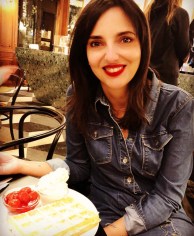
Waffles in Brussels. Both were excellent.
 Apparently, stating the obvious is still necessary in diabetes. We are more than numbers; our A1c does not define us; our worth is not wrapped up in our glucose levels. We have been saying these things for years…decades…and yet there are still times that this is what we are reduced to.
New treatments, devices, drugs, education programs are measured in reduction of A1c. Perhaps this is because it can be measured, but talk about only getting part of the story. I can’t help but think that if PWD were part of establishing research protocols, there may be far more than numbers to assess the success of a treatment or therapy. (See also: nothing about us without us…)
 In recent years I’ve written about the issues specific to women, health, sex and diabetes a number of times because there is so little out there about it. And it seems it resonated with a number of women who wrote to tell me (and the HCP who saw me in the fresh produce section at my local Woolies and yelled how she loved my idea of giving lube in diabetes event bags).
Anyway…talking about the stuff that may not be the easiest is important. It’s the only way we get remove stigma and encourage people to share their stories. Which helps others. That’s why I have openly written and spoken about miscarriages and infertility. And eating disorders. (I know – not an exclusively women’s health issue.) There is nothing shameful or embarrassing about these topics. Other than we don’t speak about them enough.
Learning from and supporting others
 The Interweb Jumbles I write are my favourite (and cheat’s) way of pulling together all the things I’ve seen that have interested me and leaving them in future place for (my) future reference. Plus, I love sharing what others in the diabetes community and world are doing.
I have always benefited from the generosity of others in this community who have shared my work and I pay that back whenever and wherever I can. Supporting each other is critical.
There’s so much going on in the diabetes world all the time and I highlight the things that resonate because I think that if they mean something to me, they may mean something to someone else, too.
 From pseudo-science rubbish, to ridiculous made-up diabetes cures to anti-vax delusions. How much writing material have they provided!
I live in hope that one day – and may that day be soon – we won’t still have to read about these charlatans trying to convince us that all that ails us can be cured with fairy dust and positive thought, or that vaccines are evil and cause diabetes, or that ‘wellness warriors’ are the true experts and professionals when it comes to diabetes.
While a lot of what I write is spent mocking these fools, there is an underlying seriousness to it all. Who can forget little Aiden Fenton who died after his parents stopped giving him insulin, instead leaving him to be treated by a ‘slap therapist’?
Anyone who is sprouting any treatment that is not based in science when it comes to diabetes or perpetuating anti-vax rubbish is as barbaric as the man who was charged with Aiden’s death.
 Diabetes happens because of something not working properly with our pancreas. But it affects every single part of us – something that astoundingly still seems to surprise some people.
Considering our mental health and emotional wellbeing is critical when assessing just how diabetes impacts on our every day. For some, diabetes seeps into every single part of us and for others, we keep it at bay and manage around us. For most of us, there is an ebb and flow of just how that works.
And while we’re talking about the whole person, diabetes-related complications may be specific to a particular body part, but those body parts remain connected to the rest of us.
For so long, we get metaphorically chopped up with as only bits of us get attention and focus. But nothing in diabetes is ever in isolation. That’s just not how it works.
 The trick this (however-many-trick) pony is most known for is #LangaugeMatters and you know what, I’m happy to wear that. I really am. If I was to stop this blog today (thought about it…1,000 has a nice rounding off feel to it), and never spoke about diabetes ever again (oh, if only), I would not be disappointed if this was what people thought of when they thought of me and this blog.
Language matters. It does and I refuse to, for a moment, believe that it doesn’t. I am certainly not the only person playing in this space and I am so grateful to have a tribe of language matters peers and colleagues can rise above the small details to understand just why this issue does really matter.
___________
Thanks to everyone who has read one or more of these thousand posts. Thanks especially to the people who keep coming back. I can’t promise that there are going to be a thousand more posts. And I can’t promise that I will learn any new tricks other than the ones that I seem to have on repeat at times. These issues remain important to me and perhaps to you too.
* At EASD, my mate Bastian Hauck gave me a head’s up that I was getting close to publishing the 1,000 post on this blog. I’d not have had a clue otherwise. Thanks, Bastian!
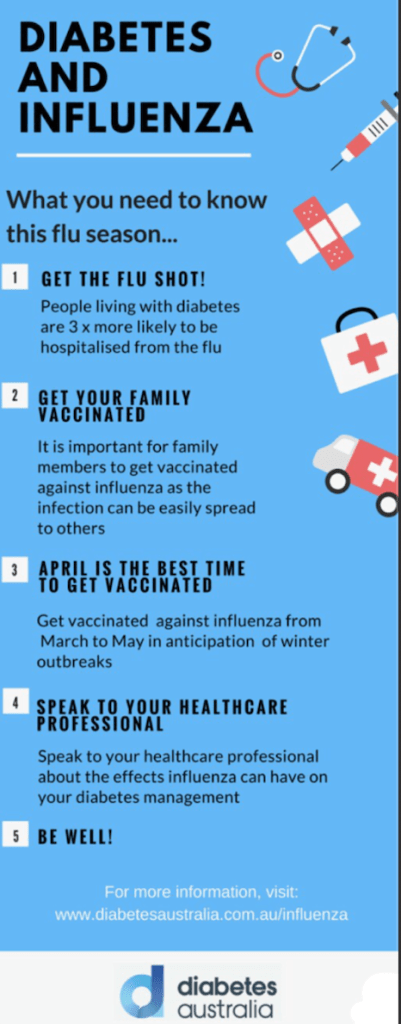
It’s that time of year in Australia. The weather is cooling down, leaves are turning, daylight saving ends over the weekend, and we are reminded that soon it will be time for our annual flu-vax.
This has coincided with a significant number of different pieces in the media about vaccines. Some of them are well written and well informed pieces focusing on the science behind why vaccines work. Some of them are not. (Cheat sheet: science-based pro-vaxx stories good / crazy no-science anti-vax stories bad.)
There often seems to be a groundswell after some celebrity chef, wellness blogger, person famous for being famous or, (as we’ve seen recently) WAG comes out and explains why vaccines are the devil and we should all rely on ionised water, sunshine and pixies rather than evidence and science.
So, today, I thought I’d share some of the things I’ve seen recently which support the vaccination message.
No platform for anti-vaxxers
I’m going to start with this. Meet Zubin Damania, MD – or as he’s known on YouTube, ZDoggMD. I know – I cringed, too. But he speaks sense and the first time I watched this video, I was nodding in agreement. ZDogg (cringe again) has decided that he is not going to in any way entertain any discussions with anti-vaxxers anymore. He’s not going to enter debate, he’s not going to try to show them the science or the facts and debate them. Instead, he’s going not allowing them a platform on any discussion he is involved in. Where he has previously permitted anti-vaxxers to share their views, he won’t be doing that anymore.
I like this approach. Previously when I have written about this topic, people disagree and put forward their ridiculous hippy-dippy delusions about the dangers behind vaccines. Not any more. I will be deleting any anti-vaxx comments on this blog from now on. This is a pro-vaccine place only. I believe the science. So science we shall speak.
What’s it going to take to stop anti-vaxxers?
According to this piece from the New York Times there is no stopping the anti-vaxx brigade because they are not willing to listen. Instead, they believe in conspiracy theories and their own ‘alternative’ facts with no foundation in science.
When a doctor advises against childhood vaccines…
This piece from Melbourne writer, Van Badham, is heartbreaking. Her mother had been advised by their family GP to not give Van the measles vaccine. Van caught measles at 17 and almost died.
Can I just add here, if your doctor is sympathetic to anti-vaxx views, find a new doctor (or nurse or any other HCP for that matter).
Measles in Europe
A recent piece in BMJ explains how measles cases have tripled from 2017 to 2018. That’s one year. More than 80,000 people in 47 European countries had measles in 2018.
A fall in type 1 diabetes and the rotavirus vaccine
A new study by Melbourne Researchers says that the drop in the number of children aged 0 – 4 years diagnosed with type 1 diabetes could be associated with the introduction of the rotavirus vaccine of Aussie infants. It’s the first time we’ve seen a fall in diagnosis rates since the 1980s.
Record-breaking measles cases in NSW (this is not something to be proud of)
Just this week, this article appeared in the Sydney Morning Herald telling of two babies contracting measles. They were too young to be vaccinated. There have been 29 cases of measles in Sydney since xmas and NSW is looking to have the highest rates of measles in five years. Measles – a vaccine-preventable disease.
Show this article next time you hear an anti-vaxxer selfishly claim their children are ‘perfectly healthy & don’t need to be poisoned by toxic vaccines’.
Ten year study shows that MMR vaccinated children LESS likely to develop autism
From Denmark: a ten year study which examined data on over 650,000 children showed that not only is there no link between MMR and autism, but children who were vaccinated were seven per cent less likely to be diagnosed with autism than children who were not vaccinated.
You think flu is not serious?
Dr Jen Gunter wrote this great piece where she shares her own experience of ‘flu as well as those from others who commented on twitter. The ‘flu is not a cold. It is not a little inconvenience. It can and does kill.
Smart kids; foolish parents
But perhaps my favourite story about vaccines lately is this one which tells of rebellious children defying their anti-vaxx parents by getting vaccinated. Let’s just remember that most of those parents preventing their children from being vaccinated probably didn’t have foolish parents and are, in fact, vaccinated themselves. But they think nothing of exposing their children to vaccine-preventable diseases, and putting others in the community at risk.
These teens are amazing and good on them for believing the science and fixing what their parents didn’t. Maybe there is hope…
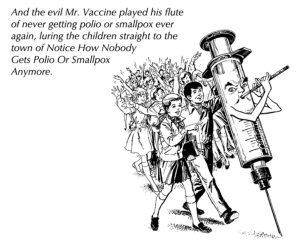
Evil Mr Vaccine…
Diabetes and the flu-vaccine. It’s time.
I hate that almost every week scientists have to come out and debunk the latest claims made by some completely hopeless anti-vaxxer: some footballer’s wife is running workshops highlighting the (made up) dangers of vaccines and is telling anyone and everyone who’ll listen that she will not be vaccinating her unborn child; a former swimmer says that people should weigh up both sides and make up their own mind; a celebrity chef endorses anti-vaxx campaigners, (while at the same time advises against using sunscreen).
And every time something like this happens, scientists have to stop doing their important science work, and go on breakfast radio and TV to explain patiently why these comments from these village idiots are rubbish, and then defend their own work and the work of their colleagues.
There are very few people in our community who for medical reasons cannot be vaccinated, and the rest of us need to be to protect them, and other vulnerable populations. Herd immunity works. And so do vaccines. Just vaccinate. There is no debate.





 Diabetogenic