
You are currently browsing the category archive for the ‘Real life’ category.
The other night, I cancelled going to a party – a cousin’s kid’s 18th– at the last minute. I seriously never do this. And I absolutely hated doing it.
But I’d had a couple of hypos during the day (Fiasp is absolutely kicking my arse) and I was feeling exhausted. These hypos weren’t what I’ve become used to dealing with (i.e. Loop hypos for me generally look like an alert telling me I’m going to head low, me ignoring it, alert saying I am really about to be low – but not really low because Loop is doing its thing, me having a couple of fruit pastilles, and that’s it). These were the types of hypos that spin me around, turn me upside down and resettle me feeling completely discombobulated. It had been a while.
After the second one, I was so knocked out that I lay down for a bit and ended up getting an hour’s sleep. It was mid-afternoon and when I woke up, I felt no more refreshed.
I contemplated going to the party – I had a shower and started to put on some make up. I looked fine – no different to how I usually look. If I’d gone, no one would have known any different.
Earlier in the day, after I’d already had the first hypo, Aaron had posted a photo of me online. The next day, when I mentioned to someone that I had cancelled plans the evening before thanks to a lousy diabetes day, said ‘Oh. I saw a photo of you online in the morning and you looked great.’
They didn’t mean this in a nasty way, or that they thought I had just cancelled because I couldn’t be bothered going out. It was just a comment. And they were right – I looked exactly the way I would look any other weekend morning when I was having breakfast with family and friends
The next day I was messaging a friend with diabetes and mentioned I’d cancelled my plans at the last minute the night before. ‘Oh babe,’ she said. ‘How’s the hypo hangover?’ and then she detailed all the things that are the inevitable fallout of nasty (and nasty-ish) lows; the things I’d not mentioned to others who’d asked after me.
I told her she had nailed exactly how I was feeling. I told her what had happened, and I didn’t hold back, and I didn’t minimise it. I knew she wouldn’t worry or be unnecessarily concerned or wonder if it was anything more than what it was. I knew she would know – because those feelings are wound into the DNA of diabetes and the people living with it.
Plus, she would know just how I felt about the last-minute cancellation, and feeling that I’d let people down.
‘So, I bet you’re feeling even more crap about cancelling that about the hypos now, right?’ she said.
I laughed. ‘You know it!’ I said to her
‘Don’t you sometimes wish that when you were having a shitty diabetes day it couldn’t be covered up so easily with lipstick and a smile?’ she said, hitting me right in the guts with that comment.
Because she was so right. Lipstick and a smile. That’s every diabetes day. It’s there when I’m feeling great and all is going well; when diabetes is behaving and not impacting on me much at all. And it’s there when I’m feeling crap and diabetes is casting far too large a shadow over my existence for that day. But for most people, they couldn’t tell the difference.

Managing this hypo with iced coffee…and lipstick and a smile.
Diabetes is a big deal. Most people living with diabetes can talk to that. But are there ways that we can reduce its impact in small ways that may just add up to something meaningful?
I was thinking about this when I saw Dana Lewis tweet an update from her most recent travels. She does this often – a photo and a comment as she has breezed through security, and I love that she does. Dispelling myths that travel with diabetes has to be a logistical nightmare involving routine strip searches and confiscation of devices is only a good thing, and hopefully will show that diabetes shouldn’t be a reason to delay a trip somewhere.
I’ve made it no big deal by never declaring that I have diabetes or that I am carrying diabetes kit, because why the hell draw attention to something unless necessary? If, for any reason, an alarm sounds, or I get asked about what I’m wearing or carrying, I have a clear, polite, stock standard response that usually does the trick.
That doesn’t mean that travel is never going to involve diabetes-related questions, but there are certainly ways that can minimise just how much of an issue it all is – or even stop it starting to begin with! Dozens and dozens of flights, more security check points than I care to think about … and the times there was an issue can be counted on one hand. No big deal.
The longer you live with diabetes, the better you are at finding shortcuts to make life easier. And reducing just how big a deal every day occurrences are is one way to do just that.
For example, being weighed at diabetes consultations (in fact, most consultations) is a no-no for me. I’ve made it clear to my endo why I don’t want to be, the circumstances under which I will agree to it, and why I find it difficult.
By the way – I know that being weighed is actually a big deal for a lot of people, me included. There’s a lot tied up in stepping on scales. I’m certainly not trying to minimise the minefield that is weight and being weighed. I am just trying to explain how I have been able to remove a lot of the angst just by doing something simple and being clear about my wishes.
Apart from a few times where I have had to repeat my position more than once, it’s never been a problem. It’s actually interesting how HCPs respond when you ask why they need to do something. ‘We need it for our records,’ is never a good enough reason for anything as far as I’m concerned – certainly not how much I weigh.
I get the position of privilege I am coming from here, by the way. I know that I am assertive enough to state what I want and expect, back it up if necessary, and having that confidence means I find it easier to navigate the often treacherous waters of diabetes and getting what I want. I am comfortable saying no and holding my ground, and I can’t remember the last time that wasn’t the case.
Diabetes is a huge deal, so working out ways to make things a little less big makes sense to me. I don’t have the time, inclination or energy to waste on things that really can be minimised. What is important and a big deal (or what isn’t) for me, will be different for others, but I do wonder if sometimes we make more out of things that we really don’t need to. Because, really, sometimes it’s good to shrug our shoulders and just think ‘no big deal’.

#TravelWithDiabetes – no big deal
If there is one trait that drives me absolutely batty, it’s passive aggressiveness. I suspect part of that is to do with my directness – I am very good at being clear about how I am feeling and what I need. Skirting around an issue or saying things indirectly and being obtuse in the hope that others will understand what is going on just annoys me. Why make people guess when I can just tell them?
And of course, social media provides the most perfect platform to excel at passive aggressive behaviours: ‘vague booking’ and ‘sub-tweeting’ are the habits de jour of those who employ passive aggressive behaviours. I just swear too much and pointedly say pretty much everything that is going on in my head. Without a filter. Have I mentioned recently that I’m a delight?
So, naturally, I have the most passive aggressive of all health conditions possible; the health condition that appears one way, when really there is so much more going on. This is the health condition that likes to leave pathetic little hints as to what is going on, but rarely decides to be direct about anything.
Let me introduce you to diabetes where the passive aggressive comes in different forms.
We see this at diagnosis. Sometimes, there’s shitloads of stuff going on behind the scenes, but nothing outward (hello all the people walking around with undiagnosed type 2 diabetes), or it does give little suggestions, but those symptoms could also be another million other things (hello to all the people who were told their type 1 diabetes was just a cold/UTI/tummy virus etc etc.).
There are rarely super, super visible, really obvious and unmistakeable signs that scream loudly ‘THIS IS DIABETES’, which would be really useful because we know that early diagnosis and treatment means better outcomes.
Also, there’s impaired hypo awareness. For those of us living with this particularly fun type of hypoglycaemia, we have our lows, but diabetes has found a way to hide the symptoms away. That’s right, don’t actually let us know that we’re low (even though previously there were lots of symptoms), just go about letting us believe that everything is okay.
Or those times when we are convinced that we are low and are exhibiting all the classic signs, only to realise that actually, no, right now I am either sitting right in that sweet spot; or high as a freaking kite and downing that juice would really not have been a great idea. At all.
Diabetes complications can give the silent treatment for years, and conversely, there are weird symptoms that mimic the onset of a complications, setting us up for sleepless nights of worry, only to find out that actually, there is nothing sinister there.
But perhaps the most frustrating and maddening way that diabetes exhibits is passive aggressiveness is the way it makes us appear to others. Mostly, we look perfectly fine and good and that all is well I the world, when really, it is doing all it can in the background to make it so that we are not.
Living with a health condition that doesn’t communicate effectively (and deliberately in a wishy-washy manner at times) really is one of the things I like least about it. It’s no wonder that often we don’t realise that there is something wrong, because everything seems okay, or the message we’re getting is that nothing has changed. Being blamed for this is unfair, and yet that’s the way the cards fall.
I don’t really know how to overcome this particular trait of diabetes, but I have been known to silently scream ‘Tell me what you mean’when it seems to be deliberately confusing and not responding the way I would expect. Really, that’s all I’m asking for: clarity, no ambiguity, directness. And a health condition that isn’t trying to drive me to despair by not just telling me what I need to do and responding accordingly. It’s not too much to ask.

Passive aggressiveness is never the answer. However, I do love this cartoon. Because Poe puns are hilarious! (Click for artist details.)
My favourite answer to give when someone asks me how I went at any diabetes-related medical appointment is ‘Nothing to report.’ I love being able to say that things are boring. If there is ever a time in my life that I want to be unexceptional and routine, it is when I am hearing or sharing news about my diabetes.
For as long as I live with diabetes, I want to forever be told ‘It’s nothing,’ or ‘There’s nothing.’ I want there to be nothing there when my eyes are screened; nothing to report when I have my kidney function checked; nothing new, nothing scary, nothing to worry about.
The thing is: to get to nothing, we put in a lot of effort. We push ourselves and do things over and over and over and over. Because we’re told if we do all the things, all the time, nothing will happen.
But sometimes, despite all that effort, it’s not nothing; it’s something.
We have done everything possible – everything we possibly can – and we walk in and expect to hear another nothing. But instead, this time we’re told there’s something and we can’t help but wonder why we didn’t do more.
That’s just how diabetes works. There is no rhyme or reason. There is nothing fair about it. But we keep doing it – whatever we can manage at that particular moment.
And we ask and hope for nothing – absolutely nothing – in return. Except our health.
Which, as it turns out, is absolutely everything.

Hoping for nothing.
Ten years ago, we stumbled across a little out of the way restaurant in a small backstreet of Florence. It was run by a couple and the food was sublime – beautiful Italian dishes served without fanfare, just simple flavours that let the freshness of the food shine through.
So, last month, returning to Florence for meetings, I made sure that one night was spent there and was pleased to find that the food was once again perfect. Mains done and plates cleared away, the waiter came to take our dessert orders and followed up asking if anyone wanted coffee.
All had been going so well. Until this…
‘I’ll have a latte please,’ said someone at the table. It was an innocent enough request, but I knew where this was going.
The waiter looked horrified. ‘No!’ he said indignantly. I’d ordered an espresso, knowing there would be no response other than a nod. But the idea of a caffè latte at this time of night, after a meal, was not getting past him.
Clearly, our waiter felt that it was part of his job to enforce the Italian gastronomic rule of no milky coffees after 10.30am. This was an abomination, as far as he was concerned, and he was having none of this flouting the rules business in his restaurant. I suspect that if someone had asked for a sprinkle of Parmigiano-Reggiano over their spaghetti con vongole his response would have been the same.
Perhaps his response would usually have had the customer slinking back in their chair and ordering an accepted coffee-based post-dinner drink. But this was a table of people with diabetes and telling us that we can’t break the rules never goes down well. Because breaking rules is how we survive. And jeez, we get defiant when people tell us that we can’t. Rule books states that injections should never been given through clothes? Watch how easily this needle goes right through my jeans. Rule books claims the only place that CGM sensors must be worn is on the stomach? I’ll just roll up my sleeve and put it there, thanks. Rule book instructs single use of all diabetes consumables? Let’s see just how many times this insulin pump cartridge can be refilled before getting stuck.
We learn the rules and then turn them upside down and inside out to work for us to help our endless search to make diabetes that tiny bit more manageable and forget expecting us to say sorry for doing it our own way. We make no apologies for taking what some may consider short cuts, instead sharing them with our diabetes peers because everyone deserves a break with this condition if there is a way! And sometimes we just do things in a different way because we like it better.
The waiter in our restaurant looked to me to back him up. I think he assumed that my decent Italian accent that he’d heard when I ordered meant that I was across Italian food rules and that he had an ally. I wasn’t surprised at his response – I do know the food rules – but I treat them in equal measure with respect and contempt, just as I do diabetes rules. I understand why they are there, and sometimes I’ll abide by them. But if I want a milky coffee after my meal because that’s what I feel like, you bet I’m going to order it.
I shrugged my shoulders at the waiter, I’m sure disappointing him that I wasn’t going to back him up. ‘Un latte?’ he asked disbelievingly. ‘Si,’ I confirmed, and then clarified. ‘Con caffè.’ The last thing I wanted was the delivery of nothing more than a glass of warm milk to the table and all that was going to ensue following that.
All our lives we are told there are rules and some of them are just stupid: blue and green should never be seen, unless there’s a colour in between. Never wear pink and red together. Others don’t allow for personal choice: don’t order a steak well done… (or a milky coffee after dinner). And some forget that those rules are connected with something that is boring, tedious, unpleasant, frightening and sometimes downright horrible: every single diabetes rule.
Sure, sometimes rules are there for safety, and we all want to be safe. Living with diabetes doesn’t suddenly make us reckless and not interested in being healthy and safe.
There are some rules that we know are just non-negotiable and we will begrudgingly follow those. But the ones that we think are ridiculous, or we have found a work around to? Those are the ones we’ll do whatever we can to shake up or lose.
Our tiramisu desserts were delivered to us, and so were our coffees, including the caffè latte, which the waiter placed down while shaking his head and making ‘tsk tsk’ sounds. Thirty seconds later, he reappeared and placed down a shot of grappa, making some comment about this being needed to cancel out the coffee.
I smiled up at him, because that’s how Italians do it. (I know – I’ve spent 45 years doing things the opposite to how my Italian father thinks I should do them!) They’ll let you know they’re not happy with you, and absolutely don’t approve of your obviously wrong decision making. And they’ll remind you at every chance that they have.
And then? Then they’ll somehow offer a final fuck-you-and-fuck-your-bad-choices. And, really, there is nothing better than some oesophagus-destroying hard liquor to get that point across!
Viva Italia!
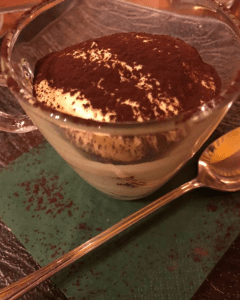
Perfect tiramisu.
DISLCOSURE
I was in Florence for DOCLab Advisory meetings. My flight to Florence from Amsterdam and two nights’ accommodation were covered by Lilly. The attitude during this meal was all courtesy of the rather cheeky waiter.
Wandering the streets of SoHo, there is a shop with windows covered in neon signs.
And look! One that is a perfect mantra for diabetes.
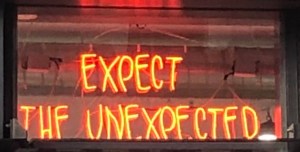
Diabetes is all about the unexpected. And the moment we think we have it all worked out, and know just what to expect, something completely, utterly, totally unexpected happens.
That’s one thing we can expect.
The longest queue in the exhibition hall at ADA was not people waiting to see an exciting new therapy breakthrough in diabetes. It was not interest in the latest shiny and bright new device. It was not even a line for free coffee.
 No. The longest queue was for on the spot A1c checks. Two booths were doing them – Abbott and A1cNow Systems. Abbott had run out after a couple of days, but the A1cNow folks managed to keep up with the demand at their booth.
A couple of my mates with diabetes and I had commented at the never-ending line of HCPs so eager to know their A1c. Why was this the attraction of the exhibition hall?
On the final day the exhibition hall was open, I was doing a last wander around. End of conference fatigue was clearly settling in – the reps on the stands were a little less enthusiastic about approaching people walking by, and conference delegates had lost the pep in their step and seemed to be drifting a little aimlessly. Or maybe people just needed more coffee. But despite the reduced buzz, I saw that yet again (or maybe still) there was still a queue snaking its way around the A1cNow stand.
‘I need to try to understand why they are doing this,’ I said to the friend I was wandering around with. ‘Let’s go and ask them.’
So, we introduced ourselves to a few of the people standing in line. They were health professionals and were happy to chat.
‘So,’ I started. ‘I guess I’m trying to understand just why you are wanting to get your A1c checked. Do any of you have diabetes?’
They all shook their heads. Their responses ranged from ‘I’m just curious’ to ‘It’s free and I many as well have it done.’ One person said, ‘I have a family history of diabetes.’
One of them asked me why I was asking. ‘I’m really understand to know why there seems to be such a keen desire to know what your A1c is when it kind of doesn’t really matter. I generally avoid getting mine done and I am meant to have it checked every three months. I know people with diabetes who have gone years not having theirs checked. For us there is a lot tied up in it. We feel judged by it. It’s often presented as a way to measure our success as a person with diabetes. We are told we are ‘good’ or ‘bad’ depending on that number. I don’t know too many people with diabetes who would voluntarily line up to get it done really.’
Back home, and I was talking about this with my gorgeous neighbour.‘It was the longest queue at the conference. More people wanted their A1c than to get a coffee!’ (Admittedly, this could have something to do with the state of coffee in the US, but maybe not.)
My neighbour rolled her eyes. ‘It’s like at parties when someone sees you do a blood sugar check and wants theirs done. You know – they get all excited and hold out their hands ‘Do me. Do me!’and then you do and it’s four or five and then you do it again and it’s still four or five, and they’re all excited and ask, ‘That’s good, right.’ And then yell out to everyone about how ‘good’ their number is and then they see the 14 on the meter when you do yours and shake their heads and tell everyone how crap that is.’
She’s right. That’s EXACTLY how it happens!
But returning to ADA… I thanked the HCPs waiting patiently in line and walked away, sighing. I wasn’t getting my A1c checked, there was no need for me to be there. Because getting that done takes the right mindset, and a strength that I just wasn’t feeling at that point. I hadn’t psyched myself up and given myself the pep talk I need before having that measurement handed to me.
And then, it all circled around to another example of ‘doing diabetes’ at different conferences, and my similar annoyance at the long lines for hypo simulators. Or my outright displeasure at people whacking diabetes devices on their bodies to learn what living with diabetes is all about.
Setting aside the very high likelihood that I am turning into a grouchy old woman, I really think that these sorts of exercises are problematic for PWD. No one in that A1c queue was feeling any anxiety about the number the machine was going to spit out. I asked if they were worried and they all shook their heads. It was just a thing to do at a diabetes conference for them. Most likely, they were going to come out with an in range number that they would forget as soon as they walked to the next stand.
Hypo simulators make people feel a little wonky for about five minutes after they get out of them and then they are back on solid ground, not thinking about what is really going on with their glucose levels and how they will affect them for the remainder of the day.
And after wearing a pump or a CGM for a week, it can be returned and never thought of again.
I have been criticised when I have said that it is only people with diabetes who truly understand the impact of diabetes on our lives. I’m willing to wear and own the comments I make. I say this without malice or by trying to limit or minimise the experiences of those living around us. I just don’t understand why there is this idea that by ‘doing diabetes’ or rather doing some of things we have to do as part of our diabetes is really useful.
I would love it that if of HCPs lining up to have a pointless A1c check done, they had sessions in the booth given by PWD where we had a chance to speak about why some of us are so anxious when it comes time to having ours checked. We could offer suggestions about how to talk about results in a way that makes us not feel measured or judged.
And instead of hypo simulators, how about a panel of people with diabetes explaining just how we feel about hypos and how they affect us. When I did this at HypoRESOLVE, the researchers and clinicians were astounded and surprised at what I had to say.
There are a lot of ways that people not living with diabetes, but living around it, or working in it can get a better understanding of how we truly feel about having diabetes in our lives. I just don’t think that a one minute, five minute or even weeklong exercise is the right way to get that insight. The best way is to listen to us.
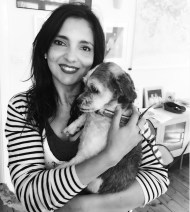 Our household is very sad today because last night we had to say good bye to our beautiful Jasper pup. Jasper came to live with us as a puppy almost sixteen years ago. We already had a little white dog called Lucy who had very much been Aaron’s and my fur baby. But we were planning for a human baby and felt that Lucy needed another four legged friend for when our attention was drawn to a new baby. As it turns out, Jasper came home to us just after my first miscarriage and his gorgeous puppy antics were a welcome distraction from the pain I was feeling.
Jasper was one of those dogs that had to be in everything. Until he went deaf about three years ago, he had this innate ability to hear even the smallest piece of food being accidentally dropped on the floor. If I uttered the word ‘Oops’ while in the kitchen, he would be at my side in a flash cleaning up whatever I’d knocked to the floor. He was social, funny, and an absolute delight to have around.
In recent years, we had noticed that he was really getting old. He had become a bit of a grumpy old man, only wanting to be around his family, and not really interested in the other pups or cat we have running our family. He was happy to sit at our feet and just be there. In the last few months, he had become less mobile, and yesterday, he finally couldn’t walk at all. We knew it was time.
It is never easy saying good bye to a family pet. Jasper had been a constant companion for a long time. We used to tell the kid that we had a last in first out policy, and Jasper had been there longer than she had. He was very, very loved by us all, and today, our home is a little quieter and our hearts are a lot heavier.
So, today I’m revisiting an old post of when our gorgeous little pup accidentally became a diabetes alert dog, waking me when I was low. This wasn’t a one off – he did it again a few weeks after I wrote this piece (and I shared that here). I’m sad to say that Jasper’s hypo detecting abilities were not especially reliable, but I still do think that he was a wonderdog in his own special way.
We love you, Jasper. Thank you for bringing so much joy to our family. We are going to miss you very, very much.
We have two dogs and one cat. (Ed – actually, that number grew to three dogs and one cat because clearly we are soft touches when it comes to tiny puppies…) They are fluffy, cute and very much part of our family. And while I like to think that they are wonder animals, they’re really not. Bella, the Maltese/poodle cross used to sleep under the coffee table and every time she woke up, hit her head. She did this for three years. Until we got rid of the coffee table. Jasper, who is getting old now, has only one thing on his mind – food. He’ll eat anything, including the green leaves at the top of a strawberry and watermelon rind. Cherry the cat is, as most cats, quite brilliant, and manages her staff (the three humans of the house) in typical cat aloofness with a side of purring cuddles thrown in so we remember how much we love her.
Gorgeous? Yes. Smart? Not so much.
For years of I’ve heard stories of dogs and cats that can sense if their owners’ BGL is dropping. Clever hypo alert dogs are being used by people with impaired hypo awareness to notify them of undetected lows. I’d read these stories. And then think of our little pets whose skills don’t go much beyond sleeping, eating and looking cute. I was resigned to the fact that none of our pets would save me in a sticky situation. Except, I think that the other night, Jasper may have done just that.
Until recently, Jasper slept at the end of the bed. A new, higher mattress and his old age have meant that jumping up was becoming harder and harder. Instead of effortlessly leaping up, he would run from side to side of the bed, front paws on the mattress, his boofy head popping up, looking a little like a meerkat as he waited for one of the humans to lift him up. After getting sick and tired of this routine, we bought him a bed and he now sleeps in a corner of the room.
The other night, I put myself to bed early and promptly fell asleep. After about an hour, I stirred because Jasper was doing his meerkat impersonation, but only on my side of the bed. Suddenly I felt him gently tapping at me. I told him to leave me alone and go back to his bed. But he refused. Dozing in and out of sleep, I could feel his paw on my arm and then he stared whining.
Finally, wide awake and annoyed at being woken, I started to get out of bed, thinking he needed to be let out or wanted his water bowl filled. As soon as I stood up, it hit me. I was low. Really low. I slumped back on the bed and grabbed the lolly jar from the bedside table and threw down a handful of jelly snakes. Jasper sat down at my feet, watching me earnestly. As I started to feel a little less woozy and could sense my BGLs coming up, Jasper padded back over to his bed, got himself comfortable and fell back asleep.
I ate a couple more jelly snakes and checked my BGL. It was back in range. I could hear him snoring gently in his corner and ten minutes later, as I started falling back asleep, I thought that maybe he is a wonderdog after all.

Jasper the Wonderdog
The day before ADA kicked off, I managed to catch a glimpse – my only glimpse this visit to San Francisco – of the Golden Gate Bridge from the back of an Uber on the way to the Diabetes Mine Summer DData Exchange (#DData19).
This is the third DData I’ve attended, and it always delivers. The speakers are brilliant and the topics on the agenda push some of the boundaries we’re used to seeing as part of the ADA conference that runs alongside. Amy Tenderich expertly emceed the day, and Mike Hoskins’ rapid fire tweeting made sure that those not in attendance had a birds eye view of the event.
This year, there was one session that really stood out for me and it was a panel session moderated by Adam Browne from diaTribe and included JDRF International CEO, Aaron Kowalksi and Alain Silk from the FDA.
For some time now, there have been efforts to move away from the idea of HbA1c being the be all and end when it comes to assessing the outcomes of diabetes management.
This doesn’t only mean in terms of the way we measure our own personal diabetes management, or the success or effectiveness of the devices, drugs or treatments on offer, it also is directed to researchers, clinicians and regulators who continue to use A1c as THE measure to determine the value of whatever they are talking about.
The push has been towards time in range (TIR) because with tools such as CGM and Flash glucose monitoring, this is something that can be easily measured and demonstrated.
The A1c is flawed – we all know that. Anyone with diabetes will have tales of A1cs going down, despite their diabetes management being more erratic, or conversely, their A1c increasing despite having fewer roller-coaster episodes. As a one-off number, it tells very little.
But while TIR is certainly one different way of having a look at just how we are tracking, with so few people actually using CGM or Flash (due to access and affordibilty), we can’t throw out other options. The A1c is not dead yet (just ask the queues of HCPs in the Exhibition hall at ADA waiting to get theirs done. Another blog post for another time…)
Also, TIR cannot be the only other measure we look towards as a substitute for A1c, and this session at DData explored more than the idea of a simple like for like between the two.
Aaron Kowalski highlighted how one of the first things people speak about when using an automated insulin delivery device is how their sleep improves. It was indeed the first thing that I noticed, and it was life changing for me. I noted that I slept like I did before diabetes!
Yet, this is not considered as part of regulatory decisions. Neither is how our diabetes experiences can be transformed. Aaron told the story of a young woman who rarely attended to diabetes tasks when around friends because she didn’t want to pull out her pump to check her CGM trace, or bolus insulin. She didn’t want to draw attention to herself or her diabetes. But being able to do those tasks by simply looking at her phone, or her smart watch meant that she felt so much better – and she did what she needed to do when she needed to do it. How are those improved experiences being documented and considered as part of why something is valuable?
In his earlier talk, Alain Silk from the FDA noted that one of the challenges when it comes to technology regulation is too much regulatory and contractual burden and not enough innovative devices getting into the hands of people with diabetes. The DIY movement manages to sidestep that first part and that means that we do have get to have those devices – those transformative devices – in our hands a lot sooner. Our experiences – which all seem to be positive – and our diabetes outcomes – which all seem to report improvements – really should count for something.
Surely one of the goals we are all seeking (and when I say all, I mean everyone involved in any aspect of diabetes) is to increase the time we DO NOT spend on diabetes anymore. At DData last year, DIY-er Justin Walker said that he believes he has gained back an hour a day since using an automated system. That’s seven hours a week. Over a year, that’s more than a total of fifteen days we get back from diabetes. Add that up over a lifetime of diabetes. It’s significant.
Aaron said that one of his goals as CEO of JDRF is to ‘…take diabetes out of our lives as much as is humanly possible.’ When devices allow us to do that – even if it’s just one little bit – that should be assessed as meaningful.
I have been thinking about this session a lot. In fact, anyone who has asked me about ADA has received a lecture on it. My poor boss got an earful when I returned to work on Monday. I’m pretty sure he regretted asking how I’d gone in San Francisco after I launched into a tirade about how we are simply not listening enough to people with diabetes when it comes to just what we are measuring as being valuable to us.
The problem with adding TIR to A1c as a way to assess devices, drugs or other therapies is that we still are focusing on nothing more than numbers. Sure TIR may be more robust and not simply a snapshot average, but it still attributes our success to a number.
When I talk about why Loop has been so transformative to me, I do mention TIR. But the biggest bangs for my buck – the things that really ring true – is not how much time I spend between two number goal posts.
No.
It’s about how much better I feel about my diabetes. It’s about how much less time, less worry, less stress I am forced to dedicate to diabetes. It’s about how the hypos I have these days take three minutes to deal with rather than three hours. It’s about how less stubborn, and how less frequent those highs are. It’s about the much lighter shadow diabetes casts over my family. It’s about sleep – oh dear god, it’s about sleep! It’s about how easy it is to carry out those required tasks and how little they interfere with my day. And it’s about the time I have been able to claim back as my own.
The footprint of diabetes is so far smaller these days than ever before. THAT is what is meaningful. THAT is what I measure. THAT is what it means to truly go beyond A1c.

DISLCOSURES
I attended ADA as part of my role at Diabetes Australia. My economy flights and accommodation have been covered by the organisation.
Thanks to the team at Diabetes Mine, who kindly provide diabetes advocates with the opportunity to attend their DData Exchange at a significantly reduce cost.
Spending time surrounded by diabetes can be overwhelming and that is never more so than at a conference like ADA. It is huge – there are thousands and thousands of people, an exhibition hall with stands from device and pharma companies that messages about diabetes that are all tied up in statistics and words (and not really about people), and for every talk that shares hope and promise, others that focus on despair.
But it’s easy to step away from that – even if just for a moment – and turn to a member of your tribe. Because then…
…not once did I feel despair.
…not once did anyone pass judgement about another’s diabetes.
…not once did anyone make me feel afraid.
…not once did anyone attribute blame or shame.
…not once was anyone expected to explain themselves.
…not once did I feel stigma.
…not once were the words spoken anything other than real and authentic.
…not once did someone ask another person about their glucose level or A1c.
…not once did someone suggest that anything to do with diabetes was someone’s fault.
…not once did I feel overwhelmed or overcome.
…not once did someone make me feel that I was not enough.
…not once did someone look at another PWD to suggest that they were failing.
…not once was fear used as a motivator.
…not once were we made to feel sorry for ourselves.
…not once did my life feel like it should be measured in nothing more than numbers.
…not once did we call each other inspirational for just living with diabetes.
…not once did anyone do anything other than cheer another’s efforts.
…not once did anyone overreact if they noticed another PWD was low.
…not one did I feel that I was a burden.
…not once did I feel that I had to be a superhero.
…not once did I feel alone.
…not once did anyone demand that their way of doing diabetes was the better way.
…not once was diabetes the overall focus.
There are times that diabetes does its best to make me feel a burden, or that I am simply not enough. But not once – not ever – when I am around people like this do I feel anything other than whole.

Find your tribe
Find your tribe…





 Diabetogenic