
You are currently browsing the category archive for the ‘Community’ category.
So, this is 2020? How are you going? I returned from overseas to a country literally burning and choked in smoke; a government that is refusing to accept that climate change is real; and a news organisation making up the narrative to suit themselves (arsonists are everywhere, apparently).
Bet you didn’t expect me to get so political before midday on a Monday!
Today is my first day back at work after three weeks of holidays in New York with my family. We spent the time basically relocating our Melbourne life to New York: finding a favourite café that served decent coffee, drinking great quantities of said coffee, wandering the streets, playing with (other people’s) dogs, warming up in bookstores and catching up with friends. It was the perfect way to farewell 2019 and welcome 2020.
As I have mentioned a million times before, I don’t do resolutions. You may not know this, but I live with diabetes, and that in itself gives me enough reasons to not reach goals and targets. I don’t need to add another list of things of which to fall short.
For the last three years, I’ve chosen a word that I’ve hoped would oversee and direct my way of thinking and acting for the year. As it turns out, that was a load of rubbish. Because each time, as I searched for the word that I wanted to guide me, the one I settled on went against the very grain of who I am.
The words were pause, focus and reset – and behind them was the idea that I would respond in ways that were really out of character; words that would silence or calm my natural responses.
But that’s not me. I walk towards things (usually at pace), I’m impulsive, I’m reactive. Sure, these may not necessarily be the best traits for a mindful, calm existence, and they can be exhausting, but welcome to my life: Hi, I’m Renza.
This year, I’m ditching the word idea, and using a phrase that better suits me, and that phrase is Stand Up.
We are living in a world that does not need people to be silent. Manners are all very important, but it is very possible to have manners and be polite, but still challenge things that we see as not right. We don’t need to be told how to think, how to feel, how to respond to something that upsets us. We don’t need to tone police ourselves – or others. We don’t need to accept what we are given.
And in the diabetes space, we don’t need people to be meek and mild. We need people who are disrupters and who speak their minds and who call out the bullshit. We definitely need to make sure that the voice of PWD is the loudest in the room, and that anyone who tries, even for a second on any platform, to tell us to pipe down is called out for it.
We do not need people to go quietly, and I am somewhat horrified that I did just that at the end of last year when I was feeling intimidated and vulnerable online. If I’m honest, I don’t recognise the person who switched her Twitter to private and wrote this thread to explain it to the people who were asking why.
Being angry is okay because there is a lot to get angry about in diabetes care. Not standing up means that we accept the situation for how it is. We can do it in a way that is nice and friendly, but sometimes it takes more than that. And that is okay.
I have never cared about being popular in the DOC or being considered one of the cool kids. I have never worried about follower numbers. I searched for this community because I needed support and I needed to feel part of something amongst people who were just life me. Other people with diabetes.
When I re-read my twitter thread from before Xmas, my heart broke NOT at what had happened; but at how I felt that the only way for me to stop feeling so unsafe was to turn away from the community – MY community. It was this tweet that set my tears running again:
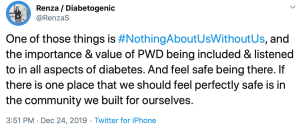
I thought that if I had wandered into the DOC for the first time instead of the welcoming place it was, I saw PWD being challenged, I would have run away. THAT was what broke my heart – the very idea that I would not have discovered people like Kerri, Georgie, Cherise, Melissa, Mike, Dana, Grumps, David, Manny, Jeff, Mel, Frank, Alanna, Kelly, Ashleigh, Scott, Annie, Alecia, Bastian, Daniela and so, so many others. I don’t know how I would have navigated the murky waters of life with diabetes without those people: MY people for whom diabetes actually invades our DNA and the DNA of our loved ones. People there for the right reasons – not for the accolades, not for increasing follower counts. They are community-minded, open to opposing ideas and thoughts, and don’t consider themselves superheroes.
If I had have gone quietly, I would never have learnt from them; never had the support of people who understand; never had people like that at my back when I do stand up.
So, I don’t go quietly ever again. I stand up as I always have. I accept that doing that will send me into periods of advocacy burnout; I’ll deal with that when it happens, surrounded my friends and peers who get it.
So yes, this is 2020. I’m back. It’s really nice to see you here.

A few weeks ago, I saw this tweet:

(click to be taken to original tweet)
Clinical psychologist, Dr Rose Stewart, was giving a presentation where she highlighted that the power imbalance we experience between HCPs and PWD carries through to online spaces. (Thanks to Mark Guyers for live tweeting Rose’s talk.)
The diabetes online community (DOC) was a space created by people with diabetes for people with diabetes. It’s been around for many years. Australian-based site, Reality Check, had an active online forum back in the 1990s. Diabetes blogs led by DOC pioneers such as Kerri Sparling and Scott Johnson (and others) were around in the early 2000s. I wrote a weekly pregnancy blog for a diabetes peer site when I was expecting our kid in 2004 (which I republished a number of years later on Diabetogenic here).
Twitter chats (starting with #DSMA) followed. The chatter of the community goes where the community congregates; different groups use different forums to meet and chat. Kerri wrote this brilliant report on the history of the DOC. It’s a great read to learn from those who were instrumental in bringing together the community online.
I agree with Rose: Our community is better because it includes stakeholders from all corners of the diabetes community including HCPs and researchers. Jane Speight and the ACBRD team; Deb Greenwood, Hope Warsaw and other shining stars from the AADE; and clinicians and researchers from projects such as HypoRESOLVE contribute to DOC discussions and make them far richer and more rounded. That’s just the way it is when we hear the perspectives of all people living with, affected by, working in, and researching diabetes.
Some of the great outputs of these collaborative efforts include research projects, conference presentations and, of course, the development and production of this wonderful #LanguageMatters video.
Our community is not better when PWDs’ personal experiences or feelings are challenged, and unfortunately, that seems to be the default of some non-PWD and HCPs in the community. I’m not for a moment suggesting that PWD don’t challenge each other’s ideas and opinions. (Yes, I’ve read Bernstein. I’m just not that into him, but you do you.) But it is undeniable that there is a difference when it is PWD challenging each other as compared with when HCPs challenge us. There is power at play in the latter. And that is important to remember.
The spectrum of this is from the downright abusive (such as a doctor’s now-deleted response to this twitter thread I shared), to defensive: what I call the ‘Yes, but…’ response. In some ways, it is this particular reaction that is more difficult to deal with.
I find it really problematic when someone speaks about a horrible situation only to be challenged by HCPs. Responses such as ‘Yes, but we’re trying,’ or ‘Yes, but things are better than they used to be,’ or ‘Yes, but we’re not all like that,’ are defensive and don’t acknowledge or respect the experience being shared by the PWD.
When HPCs make these sorts of comments in response to someone sharing their less than ideal experience, it shifts the discussion from the PWD (and that experience) to broader interactions between HCPs and PWD. At its very worst, the discussion moves to how HPCs are challenged by ‘misbehaving PWD’. Live tweeting from the sex and diabetes session at the IDF Congress got messy when it skidded into commentary about how difficult ‘patients’ were and that if only they did what they were told, HCPs would have a much easier job. It was clear from the online commentary that HCPs’ agendas are more important than PWD, and sure, sex and sexual health is one of the things that isn’t addressed, but what of it? HCPs are already too busy doing other things (things, incidentally, that they have deemed important).
So, what happened? Well, in this instance at IDF2019, I shut down and stopped engaging, as did other PWDs. We shouldn’t need to argue and fight to defend what we think is important in diabetes care. And we shouldn’t be made to feel that our thoughts and feelings about diabetes need justifying. Or that we are the problem in a health system at breaking point.
The power imbalance – and yes, that is very, very real, even for bolshy advocates like me – comes to the fore when this sort of thing happens. It can feel as though we are being reprimanded or told off or tone policed for the way we are telling our own story or for daring to suggest that we have experienced troubles and distress in healthcare.
I have recently taken a couple of breaks from SoMe because of this sort of stuff. I don’t feel that I should ever need to rationalise my own experiences or how I feel as a person with diabetes. And yet, there have been numerous times where HCPs have made me feel that I do, or that my thoughts are not as valid or significant as theirs. I’m getting far better dealing with these situations. I’ve started using the unfollow and mute buttons in a way that is constructive and results in a far gentler Twitter feed!
So, back to Rose Stewart’s presentation. She is certainly right. That power imbalance does travel from the clinic environment to the online space and it can be damaging to PWD. HCPs are part of the fabric of the DOC and their contributions are important. But not ever at the expense of the comfort and safety of PWD.
P.S. No, I am not saying PWD get free rein to say and do whatever we want just because the DOC is by and for us. Basic manners don’t get thrown out the window just because it is our space. Being rude, nasty, aggressive, dismissive or impolite to anyone online is not okay. Being angry when we write about crappy situations is not being rude, and it is a perfectly understandable and acceptable response to what we have all faced at one time of another living with diabetes. (And that’s got nothing to do with #LanguageMatters – that’s just basic courtesy that we should all know and understand!)
The IDF Congress proved once again that the power of peer support should never, ever be underestimated. From spending time with the considerable number of diabetes advocates floating around the conference centre, to hearing about their work, to seeing them present their sessions, to speaking with the enthusiastic IDF Young Leaders, there were constant reminders of just how much we value and need contact with those who know diabetes.
Our peers are not only those whose beta cell production is on strike. It’s also the people who cheer and champion us. While I will always shout about how I need to be around others with diabetes – those who intrinsically ‘get it’ – my tribe also includes people affected by diabetes in other ways. Having friends and colleagues Taryn Black and Jane Speight at the Congress was wonderful because they were able to showcase the amazing work they do that champions people with diabetes. (They may not want to be friends anymore after they see this picture…)

When we asked for topic submissions for IDF2019, peer support rang out strongly as a topic for which there was much interest. This has been consistent with all the IDF Congresses I’ve attended. But we wanted to make sure we were considering it lots of different ways and at different stages of a person with diabetes’ life. What were the benefits for younger people with diabetes through their own eyes? We don’t get to hear from them all that frequently. And what about for older people who have lived with diabetes for many years, or who are newly diagnosed with diabetes? And what about people whose diabetes doesn’t neatly fit into the pigeonholes we so like to use in the diabetes landscape?
And so, the program managed to highlights these different aspects of peer support, showing that there are just as many ways we find a way to connect as there are people with diabetes!
So, here are some snapshots from different folks at the Congress to give you an understanding of just how much peer support was all around!
Lydia Parkhurst spoke about how important it was to have met other young people with diabetes as she moved from adolescent to young adulthood. She said: ‘It’s great having the support from my friends and family, but unless you have diabetes yourself, you never truly know.’

Georgie Peters looked at not only the positive aspects of peer support, but also how it may enable damaging behaviours – in this case, referencing recovery from a diabetes-related eating disorder.
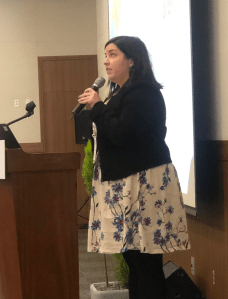
Jane Speight spoke about how peer support may help reduce diabetes distress, and in my N=1 example, I can say that is certainly true.

Bastian Hauck acknowledged the input of peers in the #WeAreNotWaiting movement, explaining how the online support is the best 24 hour customer service hotline imaginable!
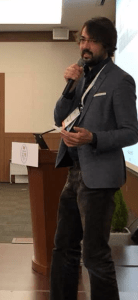
Cheryl Steele echoed Bastian’s comments about the DIYAPS online world in her talk that touched on support as she discussed the ages and stages of type 1 diabetes.

At the Ascensia Social Media Summit, in his opening remarks Joe from Ascensia made the point: ‘Peer support is a really important aspect of living with diabetes.’Ascensia’s commitment to this in their regular summits, as well as their online campaigns is brilliant. At this summit, there were 171 years of diabetes lived experience in the room, and a lot of camaraderie. There were a lot of buzz at this event, with people who had only known each other online suddenly becoming IRL friends.

Friend and fabulous diabetes advocate Phylissa Deroze spoke that not all peer support is right for all people. Finding space when living with type 2 diabetes can be challenging.

And peer support researcher and staunch supporter, Ed Fisher amended his well known ‘Four Key Functions of Peer Support’ by adding a fifth: ‘Being there and shared experience’. How wonderful is it that recognition of that ‘we get it’ aspect of peer support is being acknowledged by researchers?!

Off the program, it was impossible to ignore the power of that shared experience. We heard stories that resonated because they mirror our own. And then we heard those that were not anything like ours, but we wanted to learn more and understand just how they impacted our brothers and sisters with diabetes. When I heard Sana from Pakistan explaining the discrimination and stigma associated with diabetes means that women don’t tell their husbands they are living with diabetes, hiding away the day to day tasks required (if doing them at all), her advocacy efforts became even more remarkable. And when one of the young leaders echoed this story, and went on to share how she wore her pump prominently at an extended family gathering, despite warnings from her parents that it wasn’t a good idea, we couldn’t help but applaud. Feminism and diabetes activism is really tough going, and these were just two women being the change and storming the way through for others.
And, then…then there was Manny.

Manny Hernandez gave the award lecture for the Living with Diabetes Stream. When we were choosing who to acknowledge for this award, Manny stood out for his work in the diabetes community.
Manny was asked to choose his own topic for his talk, and came up with ‘The Importance of Community for People with Diabetes’. He couldn’t have chosen a better subject matter! Manny started by sharing his own story, and how it wasn’t until he met others with diabetes that he felt connected to a community. ‘I learned more in one hour with peers than in the previous four years,’ he commented. And then: ‘There are amazing endocrinologists out there but they can’t know what it’s like to live with diabetes, what the nuances of high and low blood sugar feels like, because they don’t live it.
Manny being Manny didn’t just leave it there. He wanted others to have what he had found, and so he created Tu Diabetes, followed by Es Tu Diabetes and The Diabetes Hands Foundation (DHF). For so many people with diabetes, this was a first foray into peer support. I know that it was a hugely valuable source of information and support for me. And it introduced me to people who have become very, very dear friends. (Massive shout out to Melissa Lee who was interim CEO of DHF after Manny left. I can’t even begin to explain how much I appreciate her warmth, wisdom and wit. And friendship.)
Manny’s award lecture was a love letter to and for all of us who have found that support which makes our lives with diabetes easier, better and more hopeful; for finding out tribes, loving them hard.

It’s no wonder that #PeerSupport was one of the most used hashtags at the Congress. It was recognised by speakers in different sessions as a cornerstone of diabetes management, just as important as other aspects involved in our care.
And so, I guess that this blog isn’t anytime soon going to stop or slow down extolling the benefits and value of peer support. Thanks to all those wonderful peers – friends – at #IDF2019 for making the experience such a rich and supportive one.
DISCLOSURE
I was the Chair of the Living with Diabetes Stream at the IDF Congress in Busan. My flights to Busan were covered by Ascensia Global (in order for me to get to Busan in time to co-facilitate their Social Media Summit). Flights home and accommodation were covered by the IDF.
Busan is a very different city today than it was last week. There won’t be warmly dressed people hurrying into BEXCO with IDF2019 lanyards around their necks, eager to learn about diabetes. The word ‘diabetes’ won’t be uttered in almost every language of the globe. There won’t be Melbourne diabetes people loudly lamenting that Starbucks seems to be the coffee of choice in the city.
And you won’t see groups of people from all around the world standing together talking about what it’s like to live with diabetes. Most of us have gone home to our respective corners of the world, back to our families, back to our jobs, back to our real lives. But we will always have Busan and the incredible week of the IDF Congress.
By the time I arrived in Busan on Monday, the IDF was already a different beast. There was a new President and Board in place and some of the concerns that we’d had about the handover had melted away to nothing. This paved the way for what we really there for: a week of learning, networking, hearing different perspectives and truly uniting for diabetes.
We did that.
Was it a perfect conference? Of course not; they never are. There were hiccoughs and AV fun. There were controversies that played out online very differently to the way they actually happened in real life. There were sessions – critically important and brilliant sessions from all streams– with disappointing turnouts.
But these are all minor concerns that are the reality of every conference I have ever attended. There will be a time for post-mortems and evaluations and planning for improvements to future conferences. That time, however, is not now. Now is the time to celebrate.
IDF 2019 was a brilliant showcase of diabetes from around the globe. As expected, I only attended sessions from the Living with Diabetes stream and every single story was beautifully presented, and enhanced by the professional expertise of the HCPs who shared the stage. Amongst the incredible tales were moments of discomfort. It’s challenging to hear of the struggles many of my sisters and brothers with diabetes face in their day to day lives. I was forced to confront my privilege in a way that demands more than just acknowledging it there.
Also, difficult to accept is realising that sometimes the chasm between what people living with diabetes want and need and what HCPs and researchers think we want is gulf-like. For every HCP who ‘gets us’ and understands the value of lived experience in the healthcare space dialogue, there are many others who just don’t accept it, and, despairingly, don’t want to listen.
But more on that another day. Because for now, I’m focused on the people who did such a stellar job. So here are just some of them!
Two hours after touching down in Busan, and we kicked off the sixth Ascensia Social Media Summit with these gems.
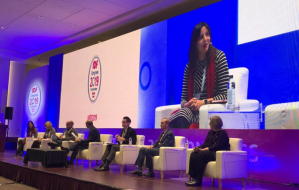
Bright and early on day 1 of IDF2019, and the auditorium was packed to hear about diabetes and tech.
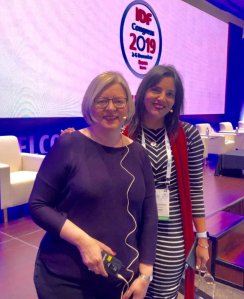
Always, ALWAYS, pleased to share the stage with Jane. Here we are just before the panel session.

Georgie excited to TALK ABOUT HYPOS! (We couldn’t understand why there was an explanation mark at the end of that sentence.)
Manny Hernandez gave the LWD Stream Award Lecture and there is no one more qualified to talk about the importance of diabetes community. How honoured I was to introduce him!

Celebrating Manny! (Photo courtesy of Boudewijn Bertsch)
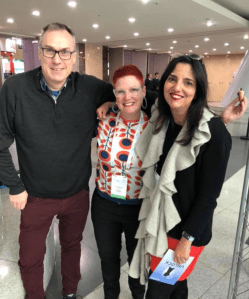
From Melbourne to Busan. Neighbours at IDF2019. Jo was speaking about living with a rare type of diabetes and Andy was there for support (and photos from rooftops).

This woman! Sana, deputy lead of the LWD Stream and a bright, fierce force.
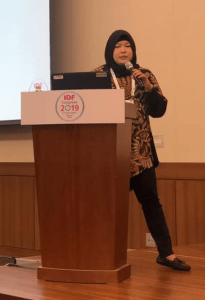
Anita eloquently explaining the challenges of living with diabetes-related complications in Indonesia.
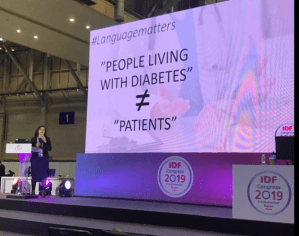
Apoorva highlighting #LanguageMatters in her talk.

Some of the most dynamic young people I have ever met at the Young Leaders in Diabetes Training Summit.

Cherise can always be relied upon to ask thoughtful questions.

I’ve lost count of the cities we’ve done our #DiabetesOnTour this year, but these blokes have made all my travel so much better! Thanks Bastian and Grumps.

My favourite people at IDF2019? The two baristas running this uber-hipster coffee van.

We were all surprised to see the room packed full at 8.30am on the last day of the Congress. Sex sells. Or people just want to talk about it…
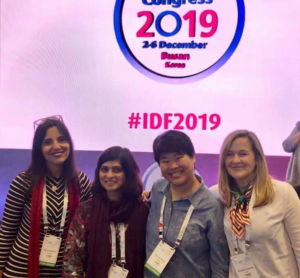
One of the best pieces of advice I was ever give was this: surround yourself with smart women. This is the LWD stream from IDF2019. I truly was surrounded by the smartest of women! Thank you Sana, Pei Yan and Elizabeth.
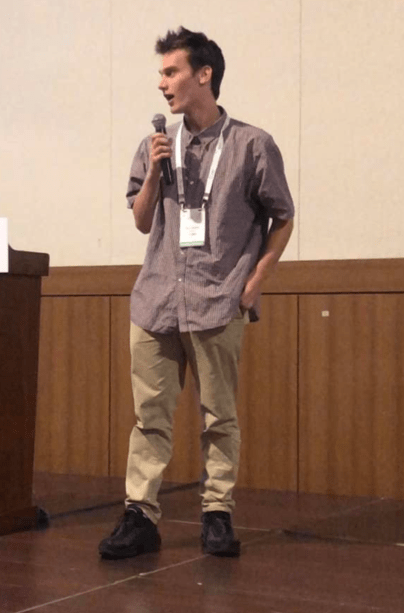
The final session in the LWD and my highlight of the whole congress was my neighbour, Sol, talking about living with MODY 3. We could not have scripted a closing remark better than his: ‘Being at this conference has made me feel part of something and with people that understand.’ Welcome to the world of diabetes peer support, Sol. You are so, so very welcome here.
DISCLOSURE
I was the Chair of the Living with Diabetes Stream at the IDF Congress in Busan. My flights to Busan were covered by Ascensia Global (in order for me to get to Busan in time to co-facilitate their Social Media Summit). Flights home and accommodation were covered by the IDF.
Happy Diabetes Awareness Month! We don’t really celebrate it in Australia, reserving our energies and efforts and enthusiasm for World Diabetes Day. I always thought it was a US thing (where it’s called National Diabetes Awareness month or #NDAM), but it seems that more and more countries around the world are celebrating, and who am I to not jump on a bandwagon? Plus, as I write this, I’m in a café in SoHo New York, so joining the NDAM party makes perfect sense to me!
The concept of awareness raising of health conditions is a really interesting one and has puzzled me a little for some time. Plus, it can be fraught with a lot of potential landmines. When it comes to the huge issue of diabetes, we get into criticisms of awareness initiatives being too niche and ‘exclusive’ (such as this one and this one) or too broad.
In my role at Diabetes Australia, we do awareness raising all the time. Our main efforts are around National Diabetes week, and perhaps the campaign of which I’m most proud is the three-year drive highlighting the importance of diagnosing diabetes early for both T1 and T2 diabetes. I like that our campaigns have calls to action – they’re not airy-fairy ‘tell the world about how hard my life is with diabetes’, but campaigns that have meat on their bones, with a strong ‘why’ behind them.
Why do I think that is important? Because I honestly don’t think that there is appetite from people outside the diabetes world to truly understand the intricacies of day-to-day diabetes. I don’t have a clue what the day of a person living with a chronic condition such as MS or Parkinson’s is like. And I don’t think it is all that necessary for people not living with diabetes to understand what it feels like when my glucose levels are 25mmol/l.
With the month all of a few hours old, social media pages are already awash in blue. The enthusiasm on day one is a powerful force. But I wonder how far outside the diabetes echo chamber that force extends. Are we reaching people who don’t know anything about diabetes? And will it compel them to find out more? Or do they scroll by and not even really clock what they have seen, because perhaps the topic is not really all that relevant?
I am sure that this blog is primarily read by people who are in some way connected to diabetes, and I would expect more skewed towards people affected by type 1 diabetes. I guess that makes sense – when I read diabetes blogs, I want to hear and read about people whose experiences mirror my own.
I would never, ever regard what I am doing as awareness raising. I’m telling my story to people whose awareness of diabetes is already incredibly heightened.
So, it surprises me when events, activities and campaigns generally consumed by people already affected by diabetes are seen as awareness raising. How aware do we need to be? If you’re at an event where the people on stage are all people with diabetes telling their life story, I think you can be pretty sure that most, if not all, of the people in the audience with you either also have diabetes, have a loved one with diabetes or are a healthcare professional working in diabetes.
Diabetes tweetchat contributors are always people affected by diabetes; webinar viewers are too. Sure, participants may learn something new, but has the cause of diabetes been elevated to new people?
I am all for events and activities that celebrate people with diabetes and give us a platform to share our stories. But I think we have to be sensible when we think of what they are actually achieving. I listen to diabetes podcasts and read diabetes blogs. I see all of this as a form of peer support – a way to connect with my tribe. It makes sense to me to use the limited time and mental bandwidth I have to enhance my own diabetes.
I think that awareness raising initiatives – whether it be awareness months or weeks or days, or smaller events – usually serve the community that they are speaking about. There is nothing wrong with that. In fact, there are huge benefits. Learning from others as they offer up wisdom of their tips and tricks for navigating the difficult, mundane or even amusing aspects of diabetes is brilliant. It can be validating (‘Oh, I’m not the only one who does <enter non-compliant behaviour>’) and it can help us remember that we don’t walk this diabetes path alone.
This is how I have come to see these sorts of social-based activities. Awareness raising – to those unaware of diabetes? Maybe not. But I still believe that any opportunity to hear the voice of people living with diabetes is a good one. And any change to connect with our tribe, to feel like something bigger than our own diabetes world, is great.
So, this November, as my socials continued to be flooded in blue, I’ll be thinking of it as diabetes connections month and am looking forward to seeing how my diabetes tribe around the globe is talking about their own diabetes. We’re already diabetes aware enough!
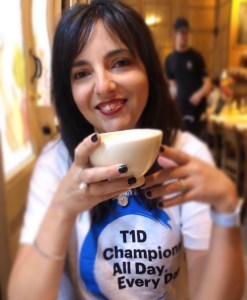
More than happy just raising a cup of coffee!
One of the many highlights for me at last week’s EASD meeting was the satellite event about DIYAPS. It was a Hacking Health event, co-organised by the OPEN Project consortium and promised to highlight the perspective of the #WeAreNotWaiting movement through the eyes of people with diabetes, researchers and clinicians.
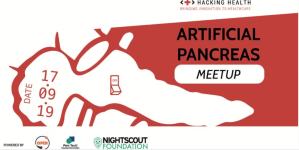
It was standing room only, with the event having sold out a few days earlier. I was a little late (I had to present at an event involving early researchers and PWD) so unfortunately missed the always brilliant Dana Lewis kick off the event.
If you ever need someone to warm up an audience and set the scene about the DIYAPS movement, Dana is your person! I have seen her present a number of times now, and always pity anyone who shares the stage with her. Her presentations are always enthusiastic, articulate and engaging, and leave the audience wanting more.
I followed her talk on Twitter as I was in the cab from the EASD conference centre to the Centre Cívic Sagrada Família (bonus of offsite events is actually seeing some of the tourist attractions the city has to offer!) and could see that the audience was enchanted and galvanised with her talk.
The program was packed – and provided a balanced view of not only people using the tech (because honestly, sometimes it can sound like we have all drunk the Kool-Aid!), but also about DIYAPS in clinical practice, and research settings, as well as a session on medical ethics.
There were many stand out moments for me, but perhaps the one that stands out the most was from paediatric endo, and fellow Looper, Katarina Braune where she was able to distil DIYAPS into this single sentence (as tweeted by another Looper, Andrea Limbourg):
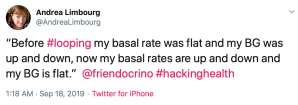
Perfect, perfect summary of looping!
We also heard from Roman Hovorka who presented on the experience of developing the Cambridge closed loop system (CamAPS). Anyone who has been following artificial pancreas technologies and research would know of Roman. I’ve heard him speak a number of times at conferences around the world and have always been grateful for his passion and dedication to advancing technologies to benefit people living with diabetes. So, it was a little surprising that I found his talk a little challenging.
One of the things that I have always admired about the DIYAPS movement is that there is a strong sense that our chosen DIY path sits neatly alongside commercial systems and regulatory bodies. While we may not choose or want to use a commercial system (and, of course, are not waiting for them), that doesn’t mean that there is disdain or derision of other options. In fact, there is admiration and gratitude for industry working to provide this technology to a broader audience. We know that not everyone wants to build their own system, and many ARE happy to wait for a system that will be in warranty, and comes straight out of a box, rather than cobbled together.
I say this knowing that same courtesy is not always afforded to the DIY world from industry, and I can point to every single time someone from a company developing a commercial automated system claims their systems are safe – implying that those of us in the #WeAreNotWaiting world are all cowboys not concerned with safety.
I would so have loved to have heard Roman really highlight all that his system has to offer, and what sets it apart from DIY systems, and how it is one more choice that will be available to PWD, rather than put down the DIY movement. I am all – ALL – about choice and love the idea that with this choice comes a better chance for us to find the tech that works best for our personal circumstances.
We don’t need to be defensive about ‘the other’ in diabetes technology. We need to acknowledge that there is no one right, perfect choice. DIY is certainly one of those choices, and as we heard sprinkled throughout the day, has been life changing for many people. But it is not the only option out there, and few people in the DIYAPS world would even suggest that it is. I guess perhaps that is what challenged me about Roman’s talk – he did seem to throw DIYAPS under the bus a little when it would have been far better to suggest it was just another bus route people may like to take.
So how could this event have been better? Well, I wish it had been part of the official EASD program. There is a lot of opportunity for HCPs to learn from the user-led tech community, and this extends to technologies and treatment options beyond DIYAPS. Reinforcing what is an overarching fact of life with diabetes – that all diabetes is DIY – is important for all working in diabetes to remember.
While DIYAPS technology may be at a far spectrum of the whole DIY diabetes idea, having HCPs and researchers listen to just how diabetes impacts on daily life, and the decisions we need to make is critical in their approach working with us.

Panel session to finish the day.
DISCLOSURES
My airfare and part of my accommodation to attend EASD was covered by Lilly Diabetes so that I could participate in the DOCLab advisory group meeting which took place all of Monday. Another night’s accommodation was covered by Novo Nordisk as I attended their advocate meeting on Digital Health Technologies.
I am part of the OPEN Project Consortium. I did not receive payment for my involvement in the Hacking Health event.
While my travel and some of my accommodation costs have been covered, my words remain all my own and I have not been asked to write or speak about any of the activities I attended, or anything I have seen at the conference. As ever, profanities are also all mine.
The other day, I was standing in a noisy café, waiting for my take away coffee to be ready, not really paying attention to anything, other than a tree I could see that had what must have been Melbourne’s first promise-of-spring blossoms. Suddenly, a loud noise dragged me from thoughts of warmer weather and not needing to wear fifty layers of black to leave the house. The man standing next to me turned his head and I caught him looking at my phone.
‘Your Dexcom is wailing,’ he said to me.
‘Indeed it is, needy little shit,’ I replied, after I got over my surprise at his comment. Usually people just look annoyed at the disturbance.
‘So…you’re one of us?’ I asked him, pointing to the pump I’d just noticed on his waist band.
‘Yep. Hi! I’ve never, ever just come across another person with diabetes in a café or just out and about,’ he said. ‘Have you?’
‘Ridiculously regularly in the last few of months,’ I replied, and told him about the mum of a young woman with diabetes at the airport lounge, the security guard at the airport in Amsterdam who referred to me and my travelling companions as a ‘diabetes club’, the woman talking about Libre in my favourite local café, and now him in this café near work.
‘Maybe stay away from airports and cafes. That seems to be where PWD congregate,’ he helpfully suggested.
At that exact moment, my pump beeped its on-the-hour alert that it was sitting on a temp basal rate.
My diabetes-in-the-wild mate looked at me, his eyes narrowing. ‘Now your pump is beeping. Oh – are you looping?’
I was more than a little startled at that one. The noise my ancient Medtronic makes on the hour is not loud at all – three little beeps to gently remind me that a temp basal rate has been activated by Loop. ‘Wow,’ I said. ‘Your hearing is next level. And yes. I am.’
We did the usual diabetes stat check: length of time with diabetes; age of diagnosis; things that drive us nuts; inventory of our diabetes devices; a couple of amusing diabetes anecdotes. ‘I pulled my pump line out on the door handle of my office today,’ he said. ‘Have you ever done that?’ I laughed. ‘No – don’t be ridiculous! I am a smart and clever and always paying attention person with diabetes. Of course I’ve never done that… And by never, I mean once every couple of months for the eighteen and a half years I’ve been pumping.’
My Dexcom fall rate alert wailed again. ‘I’m ignoring it. Hoping it will go away,’ I sighed. ‘Yeah,’ he said. ‘I’ve been doing that with diabetes for the last 32 years.’
We looked at each other and mirrored in his face was the same expression I knew I was wearing – slight defeat, but also defiance. It’s the default expression that so many of us living with diabetes wear when we are feeling a little over it all.
The barista handed me my coffee, and juggling my phone and coffee and umbrella, I turned back to friend. ‘Lovely to chat,’ I said to him. ‘Always nice meeting one of my tribe.’
‘Tribe? Is that what you said?’ he asked.
‘Yep,’ I said, a familiar feeling washing over me: The ease and comfort of talking with someone who absolutely understands. In the place of making our own insulin, we make connections. And I was reminded, once again, how these chance encounters, along with the time I get to spend with my friends who have diabetes, sustain me.
‘Find your tribe. Love them hard,’ he said. ‘Isn’t that how it goes?’
I nodded and took a deep breath, raising my coffee up to him as I started to leave the café.
‘Yes. That’s exactly how it goes.’

Blossom…
One thing that is somewhat of a consolation while dealing with jet lag, is that while I’m not sleeping in the middle of the night, Twitter is right there keeping me company! There is always someone from the DOC up and ready for a chat. And if I don’t feel like chatting (because honestly, at 3am when I’ve not had enough sleep, stringing words together is a challenge), there are always things to read.
And that is great.
Also great is when people jump on board to support each other, or cheer when others are involved in an exciting initiative. (Seeing people in the DOC welcome and embrace the amazing young advocates from the Philippines as they have launched their online activities is one such example.) There is comfort in the reliability of the way people respond in those situations.
But then there is frustration in the reliability of how people react and complain about being left out when it seems some folks in the DOC are doing something. It may be an event, a conference, or people just doing stuff like starting peer support campaigns. It could be people giving talks, writing pieces or coming together on advisory committees.
I wrote a whole thing about this at 3am. Words were strung together, and I started getting strung out, so I deleted it after wise counsel from a Twitter friend who reminded me that sometimes just writing stuff down is therapy enough. (Thank you to that wise person.)
She is right.
What is also right is that there is an Effin’ Birds moment for everything in life. Even when you don’t think there is and you put a call out, the nice folk at Effin’ Birds direct you and then deliver. And it’s perfect.

Spending time surrounded by diabetes can be overwhelming and that is never more so than at a conference like ADA. It is huge – there are thousands and thousands of people, an exhibition hall with stands from device and pharma companies that messages about diabetes that are all tied up in statistics and words (and not really about people), and for every talk that shares hope and promise, others that focus on despair.
But it’s easy to step away from that – even if just for a moment – and turn to a member of your tribe. Because then…
…not once did I feel despair.
…not once did anyone pass judgement about another’s diabetes.
…not once did anyone make me feel afraid.
…not once did anyone attribute blame or shame.
…not once was anyone expected to explain themselves.
…not once did I feel stigma.
…not once were the words spoken anything other than real and authentic.
…not once did someone ask another person about their glucose level or A1c.
…not once did someone suggest that anything to do with diabetes was someone’s fault.
…not once did I feel overwhelmed or overcome.
…not once did someone make me feel that I was not enough.
…not once did someone look at another PWD to suggest that they were failing.
…not once was fear used as a motivator.
…not once were we made to feel sorry for ourselves.
…not once did my life feel like it should be measured in nothing more than numbers.
…not once did we call each other inspirational for just living with diabetes.
…not once did anyone do anything other than cheer another’s efforts.
…not once did anyone overreact if they noticed another PWD was low.
…not one did I feel that I was a burden.
…not once did I feel that I had to be a superhero.
…not once did I feel alone.
…not once did anyone demand that their way of doing diabetes was the better way.
…not once was diabetes the overall focus.
There are times that diabetes does its best to make me feel a burden, or that I am simply not enough. But not once – not ever – when I am around people like this do I feel anything other than whole.

Find your tribe
Find your tribe…





 Diabetogenic