
You are currently browsing the category archive for the ‘Awareness’ category.
Without fail, the first thing I put into my schedule when I am attending either ADA or EASD is the update from Life for a Child (LFAC). It’s usually held on the first day of the conference, bright and early in the morning and, for me, it sets the scene for the conference. It anchors me, so that throughout the remainder of the meeting, while I am wandering around a fancy exhibition hall, or listening to talks about the latest in technology (usually what I am drawn to), I must never forget that for some, access to insulin, diabetes supplies, education and support is incredibly difficult.
At ADA this year, there was no update session. Instead, the LFAC team gathered some of the advocates who were there so we could meet to discuss how we could continue to work together, through initiatives such as Spare a Rose, to raise funds for, and awareness of, the program.
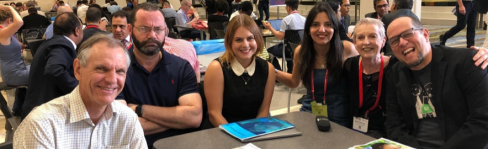
L-R Dr Graham Ogle (General Manager LFAC), Grumps, Emma Klatman (Health System Reform Specialist LFAC), me, Angie Middlehurst (Deputy Manager & Education Director LFAC) and Manny Hernandez.
When I am writing and talking about LFAC, I usually do it in the context of asking – urging – people to consider making a donation. Around Valentine’s Day, the one rose = one month of insulin equation is repeated over and over again to highlight just how little it takes to make a difference to a young person with diabetes in a developing country.
But I’m not sure that everyone knows just how far reaching and important the work carried out by LFAC actually is, or how donations are used. Recently, they released their annual report, highlighting just some of their successes, and I thought I’d share some of them here.
To start with, last year LFAC helped over 18,500 young people from 40 countries.

Support offered by LFAC goes beyond just providing life-saving insulin for young people with type 1 diabetes. Other diabetes consumables, such as syringes and blood glucose monitoring kit is available. A1c checks are provided, providing baselines and ongoing data for centres in developing countries. Services such as education, workshop and resources are developed, translated and distributed, and support for healthcare professionals is offered.
In Haiti last year, 51 children attended a camp for children with diabetes – the first of its kind ever held in that country. (As someone who frequently speaks about the benefit of peer support, I know how amazing this would have been for the children who attended. Meeting other kids who instinctively ‘get it’ would be the same as the feeling I get when I meet and speak with others who are living with diabetes.)
LFAC also has an active research focus which is critically important in highlights aspects of diabetes, (including incidence, prevalence and mortality; cost of, and access to care; success of intervention and care-giving approaches; psychological impacts of diabetes), in young people in less-resourced countries. This research is vital in informing future programs, activities and services. LFAC research can be accessed here.
Life for a Child does all this and more, working towards their vision of a world where no child should die of diabetes. The fact that this should be their (or any organisation’s) vision – 97 years after the discovery of insulin – is heartbreaking.

Being a part of the extended Life for a Child family is one of the most important things in which I am involved. Writing blog posts and talking about the program sometimes seems like such a small thing to do, but I am committed to raising awareness of the issues faced by the young people the program helps, and raising funds so they can do more.
I have only touched on their important work, and despite the great achievements I’ve mentioned here and the number of young people benefiting from the program, there is still a waiting list for support.
I’m a little late to the whole Black Mirror thing. Aaron has watched through all four series and has repeatedly told me that I should get onto it, but I’ve just not been in the right mood to start and work through a new sci-fi series. (For anyone equally behind the times, Black Mirror is a Netflix series.)
However, there was one episode in particular that Aaron, and a couple of other people, suggested I watch. It is called Arkangel. The Netflix description for this episode is:
Worried about her daughter’s safety, Marie signs up for a cutting-edge device that will monitor the girl’s whereabouts – and much more.
The device (called Arkangel), an implantable chip, allows Marie to see her three year old daughter, Sara’s, location and vitals – blood pressure, heart rate, cortisol levels etc. – in real time. But more than that, the chip allows Marie to actually see exactly what Sara is seeing – not to watch her child as if there were CCTV cameras everywhere, but to see the world precisely as her daughter is seeing the world. There are parental controls that allow Marie to change what her daughter sees, effectively, blocking out (by pixilating) anything not PG-rated. The device was completely controlled via an iPad-type device and would alert if Sara was in any distress.
Arkangel was sold as a way for parents to know that their children were safe at all times. And what could possibly be wrong with that? It’s what all parents want. Right?

About ten minutes into the episode, I looked over at Aaron. ‘This is making me really uncomfortable,’ I said to him. Watching Marie getting on with her life, with the Arkangel tablet device next to her for easy access to what her daughter is experiencing at that moment, made me feel very uneasy. Every single thing her little daughter saw was replicated on the tablet.
As the episode progressed, Sara got older and Marie continued to monitor her daughter’s every move. But by the time she gets to about ten years old, Sara starts to question her mother’s use of Arkangel. Sara has come to realise that the parental controls mean she had never seen, and therefore could not understand – a lot of things her friends were talking about. Marie decided it was time to put Arkangel away. The tablet was switched off and stored in the attic, and Marie and Sara got on with their lives.
Until Sara hit teenage-hood…!
One night, after discovering Sara lied about her whereabouts, Marie reactivated the Arkangel tablet to locate her daughter, and see what Sara was up to.
My neighbour, Jo, was one of the people who urged me to watch this episode. She knew that I would see what she had seen when she watched the episode. And I did, immediately recognising the parallels between sharing of CGM data and Arkangel. And the issue of consent, or rather, the absence of it.
At the Roche Diabetes MeetUp at ATTD this year, I joined in a very robust conversation about the whole idea of sharing CGM data. There were adults with diabetes and parents of children with diabetes in the discussion, each with their own idea about the value of the technology.
A number of adults were appalled at the idea of sharing data, claiming it was simply a way for others to spy on them.
Personally, I am very apprehensive about sharing my data. Of course, this is a highly personal way to feel about the technology and there are other adults who absolutely love the idea that there is someone else keeping an eye on what’s going on with their glucose levels, and able to make sure they are okay if there is a problem. It makes them feel safer and more confident – and if that’s what people get from the technology, it’s only a good thing. But I am not sure just how comfortable I am at having someone see every high or low.
But we are adults – fully formed and grown and making decisions about ourselves and our diabetes, forourselves and our diabetes.
I also completely understand that as a tool, CGM sharing is one of, if not THE, most valuable and essential tool for parents to feel confident that their children with diabetes are safe at school, or other places, when they cannot be with their child. I know that CGMs with share capabilities have, in many cases, completely changed family dynamics for the better.
So when I question the technology and what it can do, I’m not in any way searching for answers about the value of the tech – that is indisputable in my mind. But I am questioning the issue of consent.
While it may make perfect sense for an infant in day care, or a primary school-aged child to have data share activated, what happens when the child starts high school. Or begins university? Or moves out of home? At what age does the idea of having the ability to remotely monitor someone’s CGM data become the decision of the person whose data it is?
I don’t think we have had these discussions, or thought through the long-term implications of CGM data sharing. And I worry that we still seem to not be having those conversations.
When the episode of Black Mirror ended, I felt unsettled. I actually noticed that my heart rate was elevated. I was rattled and had trouble sleeping that night, and I couldn’t help but see Arkangel as a cautionary tale.
Where are the conversations about consent? Where is the line in the sand when it comes to who makes the decision about data sharing? Obviously it will be different for every family, but where are the guidelines or conversation starters to equip people to make those decisions? If this is not being discussed at the time that children and adolescents are commencing CGM, why not?
These are not easy conversations to have – and, quite frankly, as an adult with diabetes, one diagnosed as an adult and not the parent of a child with diabetes, I am not sure that I am the right person to be even talking about it. Some might (and undoubtedly will) say that I should pull my head back in because I don’t understand the situation at all, and simply stop talk about it.
But someone does need to. And I think that it needs to start happening right now.
I’m back from a very busy week in London and Copenhagen. I arrived back in the door at home exactly two minutes after Harry and Meghan got hitched, so I missed the whole happy occasion. If only we had some sort of magical way to see photos and videos and relive beautiful experiences like that. Oh well, never mind.
The main reason for my trip was for the kick-off meeting for Hypo-RESOLVE, a new four-year project focusing on better understanding hypoglycaemia. I’m there as part of the Patient Advisory Committee (PAC), which is made up of advocates from across Europe. Obviously, it is now legislated that an Australian also be included in any European diabetes advocate activities. I believe it’s called the Eurovision Law.
The project is made up of eight work packages, each led and staffed by leading European diabetes researchers and clinicians, and after seeing just who was going to be in the room, I suddenly was struck down by the worst case of Imposter Syndrome I have ever experienced. This didn’t get any better when I was told that the presentation I had been asked to give was not only for the PAC. No – it would be in front of all eighty project participants. I looked at the list of who I would be standing up and speaking to, and cursed the meme- and photo-filled presentation I had prepared, wondering if I could pretend to understand statistics and graphs, and add some to my slide deck to at least try to sound smart.
I decided to stick with what I knew (memes, cartoons, photos of weird hypo tales), and left the slide deck as it was, hoping against all hope that I would manage to keep myself nice, and sound as though I understood what I was speaking about.
I was asked to give a talk about the real life experiences of hypoglycaemia. Fortunately I have kept a pretty good record of the literal lows of my diabetes (which, incidentally, was the title of my talk). Thanks to the search function on Diabetogenic, I was able to easily pull together a number of stories about the lows I’ve had. This proved to be more useful than I realised because these days, lows are few and far between. Since I started Looping, I’ve not had the sort of low that has made me want to write about it and try to analyse what it all means in my diabetes life. In fact, I’ve not had any lows that have required anything more than a mouthful of juice or a couple of fruit pastilles to treat.
Reading back through my blog posts was actually really quite confronting, and I found myself getting emotional as I read details of terribly scary lows and how they had impacted on me – in the moment, and in the days following. As I read, I remembered the anxieties I felt about something happening while low that would seriously affect my family.
I’ve not asked them, but I wonder if the fact that I have so few hypos these days makes Aaron and the kidlet feel calmer about my diabetes. They still see me sucking on a juice box every now and then, but it is done without urgency, and without the look in my eyes that betrays the calm I used to try (and fail) to convey.
In my talk, I really tried to express just how significant hypos have been in my life with diabetes. I tried to explain that even once a low is ‘fixed’ there are often residual effects – effects far beyond just trying to work out what my glucose levels would do after playing the how-low-can-you-go-hypo-limbo.
I spoke about how the emotional fallout after a nasty hypo can be crippling, leading me to second guess every diabetes decision I made, wondering what I had done to cause the low in the first place – because that is the ongoing narrative of diabetes….we did something wrong to cause the hypo (or the complication, or the high, or the technology failure). And I really tried to explain how sometimes there are no answers, no matter how hard we look, or how desperate we are to find something to blame.
Of course I spoke about the language of lows and how the words we use impact on the way that hypos are considered. There is no doubt that ‘severe’ hypos are serious and need urgent attention and investigation, but so-called ‘mild’ hypos can be just as burdensome.
Obviously, everyone’s hypo stories will be different and I took great pains to clarify that I was speaking of my own experiences only. In the past, hypos have terrified, paralysed and alarmed me. I was afraid to sleep, I was afraid of lows when awake. I was scared I would have a particularly nasty low around my daughter and scare her. I am fortunate that my deliberate non-compliance has resulted in almost no lows, and feeling safer that I have ever felt before. My fear of hypoglycaemia is manageable these days, yet I don’t take for granted that it will always be like this. I still carry hypo food around with me – there is no point tempting the hypo gods by not being prepared!
I’ll be writing more about Hypo-RESOLVE in coming days. I’m so pleased to be involved in such an exciting and interesting project; I’m honoured to have been selected for the PAC. I’m beyond thrilled that PWD are included in the DNA of the project – right from the kick-off, not brought in at the last minute for comment when all the decisions have been made. And mostly, I am grateful that hypoglycaemia is being given the attention it deserves. I honesty hope that one day no one ever needs to feel the panic and fear that so many of us have come to know.
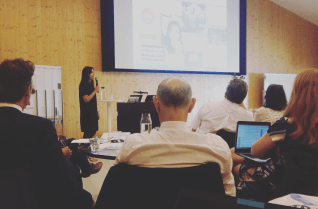
Kicking off the kick-off meeting (Click for source)
You can read all about Hypo-RESOLVE in the Innovative Medicines Initiative media release from last week announcing the launch of the project. My flights and accommodation to attend the Hypo-RESOLVE kick off meetings were funded from within the project. PAC members are volunteers on this project.
I had a great conversation the other day with someone who was interested to talk about diabetes and language with me. ‘I’m trying to get a better grasp of why it’s something so important to you, because, quite frankly, I couldn’t care less what people say about diabetes.’
This isn’t the first time people have asked me this. And it’s certainly not the first time I’ve been asked why I spend so much time speaking about diabetes language matters.
I know the reasons, but to be perfectly honest, I’m not sure that I have them especially well mapped out when I need to explain them. So, let me try here.
There is a tangled and complicated link between the words used when talking about diabetes, and how we feel about it and how diabetes is perceived by others. That link then goes off on all sorts of LA-freeway-like tangents to include diabetes and stigma, and discrimination.
The effects of how we frame diabetes can be felt by us individually. But they can also be far reaching and affect how others feel about diabetes.
We know that language has the potential to make people with diabetes feel judged and stigmatised. In fact, most PWD I know have at some time or another faced someone speaking to them using Judgey McJudgeface words. Of course, we all respond differently to this. For some people, it’s water off a duck’s back. They couldn’t care less what people say and just ignore it. For others, it’s almost a challenge – they use it as motivation to prove that they ‘won’t be beaten’.
But that’s not the case for everyone. For some people, it can be absolutely paralysing.
Fear of being judged and shamed may lead to some PWD to not wanting to attend HCP appointments and, as a consequence, falling behind on complication screening. Some PWD may not even tell their loved ones they have diabetes for fear of being judged. I have met PWD who made the decision to keep their diabetes a secret and for years, not telling another person. This can add to feelings of terrible isolation.
When diabetes is spoken about in stigmatising and demeaning ways, this leads to the spreading of misinformation. And this can have far reaching consequences.
We know that kids with diabetes may be teased by their schoolmates. Their teachers may not respond appropriately to diabetes because of the way diabetes is framed in the media or by others. We can’t really blame teachers. If diabetes is punchline fodder for every B-grade comedian, or an excuse to point fingers at those living with it by every tabloid news outlet, how can we expect anyone to take it seriously?
(And if right now you are thinking ‘This is why we need to change the name of type 1 diabetes’, stop it! People with type 1 diabetes shouldn’t be teased or mocked or judged, but neither should people with type 2 diabetes. This isn’t about people understanding the differences between type 1 and type 2 – this about understanding diabetes.)
The language we use when talking about prevention in diabetes – whether it be preventing type 2 diabetes or preventing diabetes-related complications – means that there is an underlying idea that developing type 2, or complications must be the fault of the individual. ‘If you can prevent it and haven’t, it’s your fault. You obviously lived an unhealthy lifestyle/are lazy/didn’t listen to your doctor/failed to follow instructions/refused to do what you were told etc.’.Can you imagine hearing that, or feeling that is what people think about you – all the time? This is the language – these are the words – used to talk about diabetes.
A couple of weeks ago in the UK, it was Prevent Diabetes Week. I saw countless tweets from people urging, begging, pleading with others to remember that type 1 diabetes can’t be prevented and the week refers only to type 2 diabetes. I wonder if those tweeting realised that comments such as these actually contribute to the stigma associated with type 2 diabetes? Of course type 1 diabetes can’t be prevented. But in many cases, neither can type 2 diabetes. There are so many non-modifiable factors associated with a type 2 diagnosis – factors beyond the control of the individual.
But let’s look beyond individuals, the health system and the education system for a moment. What else happens in other settings when diabetes is spoken about in stigmatising ways?
Health organisations, including diabetes organisations, frequently seek donations from the public to continue the important work they do. There is only so much money in the donation pie, and yet there are more and more competing organisations representing people with different health conditions wanting a piece of that pie.
Donations are harder to come by from the general community when there is the idea – the wrong idea – that diabetes is a largely preventable lifestyle condition that is the fault of those diagnosed. There is not the idea that people who have developed cancer brought it on themselves, even though we know that some of the risk factors associated with a breast cancer diagnosis are the same as for type 2 diabetes.
Research dollars for diabetes are far less than for other health conditions. We see that every year when successful NHMRC grants are announced. Diabetes is the poor cousin to cancer research and CVD research.
Diabetes is just as serious as any other condition that is worthy of research dollars and fundraising dollars. Yet because of the way we speak about it and the way diabetes as a condition has been framed, there is a perception that perhaps it isn’t.
Words matter. Language matters.
So, what I want to say to people who think that talking about language and words is a first world problem that only occupies the minds of the privileged is this: I acknowledge my privilege. But this isn’t simply about words. It’s about perception.
Until diabetes is considered the same way as other conditions that are taken seriously and thought of as blameless, the trickle-down effect is people with diabetes will continue to feel stigma. Diabetes will continue to be the poor cousin of other health conditions and diseases because there is the misconception it is not as serious. People will not as readily make donations towards fundraising initiatives. Research dollars will continue to fall short, instead going towards ‘more worthy’ conditions.
That’s why I care so much about diabetes language. Because, language matters… so much.

I really love a good list. And twenty is such a lovely round number. Plus, I’m going to milk the twentieth diaversary thing for as long as I can. Or at least until I bore everyone. And myself.
On the day I was diagnosed, I was given a meter. It came in a padded navy bag and had a cream-coloured lancet device. The meter looked quite similar to a basic BGL meter today. And it took twenty seconds once the drop of blood was placed on the strip to countdown to give me my reading. I know, twenty seconds! Barbaric!
There have been a lot of advances in DTech in the last twenty years. Some of it has been incredible (CGM, Flash, advances in pumps, better insulins); some…not so much (hello GlucoWatch!). But either way, I’ve always been interested in the latest technologies and have wanted to get my hands on it as soon as possible. It’s not all been great. But I’ve always learnt something when I’ve tried something new.
So, here are twenty things I’ve learnt about diabetes technology.
- There is no one way to do diabetes technology. This fits into the My Diabetes, My Rules thing again.
- Diabetes technology does not only refer to the latest and greatest! It includes your BGL meter (even if you are using one from a few years ago!), your insulin pen, the app you use to track your glucose levels and food intake…
- And MedAngel!
- You don’t need to use the latest and greatest if you don’t want. If you are happy with using a BGL meter and MDI, keep going. AKA: If it ain’t broke, don’t fix it. Unless you want to. And then knock yourself out.
- An insulin pump is just a way to deliver insulin. That’s all it is! It’s a fancy way to do it, but it’s just an insulin delivery device. There are other ways to deliver insulin, so if you don’t want to pump, that’s perfectly okay.
- But if you do want a pump, learn to use it properly. I spent the first three years pumping not having a clue with what I was doing because I was trained by a rep from the pump company who just wanted to get in and out as quickly as possible. I learnt what the buttons did, but had no idea about anything else. I learnt nothing about carb counting, or how to make adjustments. My basal rates were wrong, but I couldn’t fix them because I’d never understood how to.
- That actually goes for any sort of technology. You won’t get the most out of anything if you don’t know how it works.
- So…find HCPs who know DTech, will support whatever you want to use, are up to date with the latest technology and are okay with you customising your devices to suit your needs.
- Once you find those awesome HCPs, listen to them. Learn the rules for your Dtech devices. And then break them to suit you. Being deliberately non-compliant only works if you know what you’re being deliberately non-compliant about!
- And further to that, after listening to your HCPs and reading all the official information and documentation, find out the truth about diabetes technology! Turn to your peers and learn how to use it in real life. I can honestly say that every single tip and trick I have learnt when it comes to DTech came from other people with diabetes. Peer support for the win!
- Worrying about how and where you will site wearable technology is not a frivolous thing to worry about. It makes perfect sense and it’s okay if that is something you are concerned about or if it’s the reason you’re wary about getting a pump, CGM or Flash glucose monitor. (But do ask around for tips in online groups to hear about how others manage – you’ll get some great ideas!)
- Just because you have decided to try something doesn’t mean you have to use it forever. If you decide that tech isn’t for you, put it away in a drawer, or pass it onto someone who wants to use it, and go back to what you were doing before. Or switch between the two. DTech is not like a puppy – it can actually be just for Xmas!
- Dtech may not necessarily make your diabetes easier to manage. Sometimes, it can feel like (and may be) more work – especially at first. Those of us who have been using different devices for some time can forget that.
- Just because one brand is the market leader and has the flashiest flyers, or your HPC wants you to use it, doesn’t mean that’s the one to go with. Look at all on offer and work out which one works best for you.
- And if colour is important (or anything else about the way it looks), and you’re using that as a factor when making a decision with which device to choose, that is perfectly fine!
- Diabetes technology is not a luxury item and don’t let anyone tell you otherwise. I once had a politician ask me when I was giving a presentation at Parliament House why it should be up to the Government to fund my ‘Mercedes Benz DTech’ when there was a perfectly suitable Hyundai option available. We had such a fun conversation after that…?!
- The playing field is not even. Some diabetes technology is expensive to use and out of reach of a lot of people. This is unfair. And sometimes, it’s really hard to talk about DTech access when people can’t access insulin.
- Going old school and analogue is perfectly fine if that’s what works for you. Sure, there are brilliant tracking apps (hello mySugr!), but if you really want to use a record book and pen, knock yourself out.
- DTech can be overwhelming at times. There can be a lot of data available all of a sudden and it is perfectly understandable if you find that it’s a little bit too much to manage.
- Don’t compare your glucose graphs to someone else’s. Their diabetes is not your diabetes.
Extra tip for good luck:
Just as you don’t need to use the latest in DTech, you don’t need to know all about everything new or emerging. But it makes sense to keep an eye out if you can. Find a trusted source that gives sensible information that is up to date. Some great places to start include diaTribe, Diabetes Mine and A SweetLife.

Little did I know that on 15 April 1998 my life would change forever.
Little did I know that I would learn just how strong I could be at the times I have felt most vulnerable.
Little did I know that as my beta cells were being destroyed, a fire was stirring up as I readied myself for a career in advocacy.
Little did I know the power of insulin.
Little did I know that what would save me was my peers walking the same path, before me and with me.
Little did I know that I would be able to escape into my head as I tried to make sense of diabetes, and from there I would start to share my story.
Little did I know that while I felt the health I took for granted be swept out from under me, that I would actually become the healthiest I ever could.
Little did I know that my focus would move from music education to information provision about living well with diabetes
Little did I know that the love and support of strangers would see me through some of my darkest times.
Little did I know how much my family would rally around me, hold me up and get me through.
Little did I know that use-by dates on boxes of lancets are a waste of time!
Little did I know that sometimes, laughter, while not necessarily being the best medicine (insulin gets that award!), it is certainly what helps to make a situation manageable.
Little did I know that my then-boyfriend, now-husband, would be the greatest quiet advocate I could ever hope for.
Little did I know just how fortunate I am to have been diagnosed with diabetes living in Australia, or how uneven the diabetes landscape is for those in some parts of the world.
Little did I understand privilege.
Little did I know that I would learn to wear the badge of deliberately non-compliant defiantly, proudly, loudly.
Little did I know that the combined challenges of diabetes combined pregnancy would almost break me, the reward would be a daughter who has, every day, repaired the hurt, heartache and pain. In spades.
Little did I know that advocating for those of us affected by diabetes to be given the first seat at the table, and a microphone at a conference would be the underlying message of all my work.
Little did I know that the voices that matter are often the ones that don’t get to be heard.
Little did I know that my body would be permanently connected to technology that allows me to do the very best I can.
Little did I know that someone nodding and agreeing that my health condition sucks big time is actually all I need to hear when things are so tough.
Little did I know that while there were times the health system and the healthcare professionals within it seemed to be trying to work against whatever it as that I was achieve, once I found the ones who would listen to me and work alongside me, I have felt nothing but supported.
Little did I know that food was such a source of political angst, or something that others felt they have the right to force upon others.
Little did I know that there are so many cures for diabetes; none of which work.
Little did I know the power that words have – the power they have to build me up and to cut me down, often at the same time.
Little did I know that Twitter and Facebook would be platforms I use to share, to learn, to engage.
Little did I know that the anchors of love, support and friendship I have found in the diabetes world are just as important, if not the most important, aspect to my diabetes care.
…I know all that now. And so much more. My diabetes turns twenty this weekend, and with it, I feel a sense of achievement, relief, triumph. And deep-seated sadness, too.
I feel diabetes has taken a lot from me, but it has also given me some gifts that have shaped me into the person I am today. I feel now that I can stop feeling like a newbie in the diabetes world and perhaps stake some claim to being part of, if not the old school, the middle school.
When I was diagnosed, the idea of living with diabetes for twenty years seemed like a life sentence and I guess in some ways, it kind of is. I still fear what is around the corner; there is so much unknown about diabetes. But I feel I can look back with some pride and complete understanding of how fortunate I am. I managed to get through the first twenty years relatively unscathed – mostly through luck and circumstance.
I can’t say I’m necessary looking forward to the next twenty years of diabetes. But I’m doing all I can to be ready for it.

Things I did know: my mother’s Xmas zippoli will always – ALWAYS – be part of my eating plan!
More diaversary writing:
I recently read an excerpt from a book that I knew would absolutely hook me. Invisible: How Young Women with Serious Health Issues Navigate Work, Relationships, and the Pressure to Seem Just Fine by Michele Lent Hirsch was published just last month and I can’t wait to get my hands on a copy and cover to cover. I really hope that somewhere in there will be the story of a young woman living with diabetes. Because our condition – so invisible to so many – is anything but to those of us living with it.
I have often grappled with the idea that diabetes is invisible, because sometimes I feel that I may as well be walking around with sandwich board advertising to everyone that I have a body that is broken and doesn’t do what it is meant to do. And this confusion was clear from the beginning when I couldn’t believe that my pain and hurt and confusion about my diagnosis couldn’t be seen by everyone.
As I struggled to learn to come to terms with a body that apparently had decided that the right thing to do was destroy perfectly fine bits of itself, I had to learn how to cohabitate with all the paraphernalia that came with it. The silver lining? To this day, I just keep buying handbags and justify the need for them to be designer with cries of ‘MY BODY BROKE MY PANCREAS’. (Also: master of justification!)
I certainly know that I’ve had it easy in some ways. I was diagnosed at twenty-four while in a relationship with the man I married later that same year. He learnt diabetes alongside me. I never needed to try to hide from him, or introduce to him the parts of diabetes that in day-to-day life may be hard to see, only becoming clear when the covers literally and figuratively come off.
He saw needle sights occasionally bleed, then the bruises and lumps that popped up almost immediately. He could see the clusters of tiny black marks on my fingers from the dozens, soon to be hundreds and then thousands, of finger-prick checks I was doing. His first night of there being an insulin pump in the bed was my first night, and the leftover residue from changed sites, recovering scars, and slightly grotty tape never needed to be explained, because we discovered them at the same time.
But even without needing to navigate diabetes while dating, I still go to great pains to hide diabetes at times. I think about the almost-torture-like contraptions I’ve worn to disguise the pump infusing insulin into me, and the alarms I’ve silenced, pretending it was my mobile phone or the subjects changed to divert from questions about my health.
I wear clothes that I know can conceal evidence of my diabetes. It took a lot of mental coaxing for me to wear the bikini I bought at the beginning of Summer because I didn’t want people to notice the scars from healing sites all over my stomach, or the infusion set stuck firmly to my upper hip.
I’ve worked out the fact that most people think the bright patch on my arm is a nicotine patch means I get asked about it a lot less than I expected, but I spend most of the warmer weather in tops with sleeves that cover up my Dexcom and the Rocktape holding it place.
Of course, it’s not just the physical aspects I try to conceal. I go to great pains to hide the pain, the frustration, the fear, the sadness. Out of sight, may not mean out of my mind. But it may mean it’s out of others’ minds, and really, they’re the ones I want to hide my diabetes from; to shield from my (physical and emotional) pain.
Undoubtedly as women, we need to work harder, be smarter, be faster, jump higher to prove ourselves. And those of us who have a chronic health condition along for the ride have to push even harder: I’m okay! I’m fine! I’ll be perfectly well enough to do this! You can count on me! No, there is nothing wrong at all! (Or in diabetes terms: I’m okay! I’m fine! I’ve no problems dealing with this hypo and still taking the meeting! I’ll just silence that alarm – it’s nothing!)
And while Michele Lent Hirsch’s book may be about young women, (and that ship has sailed for me), the issues are, I believe, the same for women in their 40s. I have the same anxieties and the same frustrations of diabetes I had 20 years ago when I was diagnosed. I still struggle with my brokenness. And I still do all I can to conceal it so everyone thinks I am, indeed, just fine.

Click to be taken to Amazon to purchase a copy.
Step right this way for some diabetes snapshots, information, and inspiration.
URGENT REQUEST TO PEOPLE IN AUSTRALIA FROM INSULIN FOR LIFE
Insulin for Life Australia is in urgent need of Lantus insulin. If you have any no longer needed Lantus (or any other insulin, but Lantus is the priority right now), please consider sending it to Insulin for Life, Australia. More information available here. (If you are not in Australia, please use the same link and request information about where you may be able to send your donated insulin.)
Women’s work
International Women’s Day may have been a couple of weeks ago, but I loved this piece from the Diabetes Mine team paying tribute to women in diabetes.
Researching DIYPS
While we’re talking women in diabetes, this wonderful profile of Dana Lewis showcases not only her trailblazing work in DIYPS, but also how she has moved into researching the technology.
Diabetes devices overview
KQED Science ran this great overview of diabetes devices, including a well-balanced summary of current sensor-based glucose monitors. The piece features another legendary woman in diabetes, Melissa Lee.
Diabetes UK Conference wrap up
Last week, Diabetes UK held their diabetes professional conference in London. They extended the conference by as day to host the Diabetes UK Insider event for people with diabetes which provided a summary of some of the sessions from earlier in the week. (You can catch up on twitter by checking out #DUKPC and #DUKPCInsider tags.)
There was some stellar tweeting from both events from a few twitter stars and the blog posts are trickling through now.
You can read this one from Ros at Type 1 Adventures.
And Ascensia smartly engaged Grumpy Pumper once again to write updates for them, and you can find them here.
Four years
Kim Hislop is a pretty cool woman and recently she wrote a beautiful piece about the last sixth months, which she says have been some of the most difficult times of her life. Four years ago, Kim received a kidney transplant from her mother-in-law and, unfortunately, in September last year, the transplanted kidney was rejected.
Read Kim’s story, including how she is feeling about starting dialysis and what she hopes for her future. She is a truly wonderful person and has been such a wonderful advocate for sharing stories about living with diabetes complications. I really hope she keeps writing.
Please, if you are not already an organ donor, please consider becoming one. Information about becoming an organ and tissue donor in Australia is available here.
Pre-pregnancy planning study
Are you a woman with either type 1 or 2 diabetes aged between 18 and 40 years of age living in Australia? Then Helen Edwards wants to hear from you!
As part of her PhD research, Helen is developing a tool to determine how prepared women with diabetes are for pregnancy. The idea is for the tool to be used by diabetes HCPs working with women with diabetes contemplating pregnancy.
If you are interested in participating, please get in touch with Helen at helen.edwards@adelaide.edu.au.
Just Talking
 Last month, I sat down with Christopher Snider and had a chat for his Just Talking podcast. By ‘sit down’, I mean that I was at home in Australia and it was the weekend and I was drinking coffee because it was crazy early, and he was at home in the US and it was … well, who knows when it was – I’m not got at time zones.
We chatted about weird accents (I think we were referring to mine), the Hemsworths and Nicole Kidman, #LanguageMatters (because it does) and other diabetes stuff too.
#GBDOC
I’ve been given the keys to the GBDOC tweetchat bus for this week. I’m talking about including people with diabetes in … well … everything to do with diabetes. I suspect the #NothingAboutUsWithoutUs hashtag might get a bit of a run alongside the #GBDOC tag. Please join me at (UK time) Wednesday at 9pm (which is Thursday at 8am AEDT, because we are the future).
Aims for the chat: don’t use too much Australian slang; limit swearing. I should be right about not using slang…
Spare a Rose wrap up
In case you missed it, the final tally for this year’s Spare a Rose, Save a Child campaign is in!

Thanks to everyone who donated and shared information about the campaign.
The three most important women in my life are forces of nature: My mother, president of union, has instilled in me a desire to do work that helps others. My sister, the fiercest, feistiest, smartest person I know, who constantly challenges me to think outside my comfort zone. And my daughter – my amazing, miracle kid, (and kids like her) – is why I feel that the world is actually going to be okay.
The supporting cast of close family – mother-in-law who just happens to be an Australian aviation pioneer, my sister-in-law, aunts, cousins – and friends means that I am constantly surrounded by brilliant women doing brilliant things. I am astounded, daily, at the challenges they overcome, their triumphs, the lives they change, the impact they are making.
And in my diabetes life it is women – the incredible women – who keep me going and keep me motivated. My diabetes healthcare team is made up exclusively of women who truly breathe the whole person-centred care belief system, building me up and then supporting me as I do the best I can with diabetes. The women I have worked with, and continue to work with, in diabetes organisations who champion those who would otherwise be forgotten have become friends, mentors and daily cheerleaders.
It is people like Cherise Shockley, founder of DSMA; Dana Lewis, creator of Open APS; Susan Alberti, philanthropist; Jane Speight, diabetes language forerunner; Taryn Black, Diabetes Australia policy director and champion for having the voice of PWD heard; Riva Greenburg, journalist, changing the way we see people living with diabetes; Annie Astle, advocate and speaker, and the person I am most grateful to have come to know because of diabetes; Monique Hanley, cycling legend; Christel Marchand Aprigliano, advocate leader; Cheryl Steele, CDE extraordinaire and leader in diabetes technology education; Kerri Sparling, author, blogger and incredible advocate; Anna Norton, Sarah Mart and Karen Graffeo, the women behind Diabetes Sisters; Melissa Lee, incredible communicator, singer, former leader of DHF and now at Bigfoot Biomedical; Kelly Close, founder of diaTribe and Close Concerns; Georgie Peters, speaker, blogger, diabetes and eating disorders advocate…
And you know what? I haven’t even scratched the surface. The diabetes world is shaped by women, built by women, sustained by women. Advocacy efforts are often the brainchild and then led through the blood sweat and tears of women. And how lucky the world is!
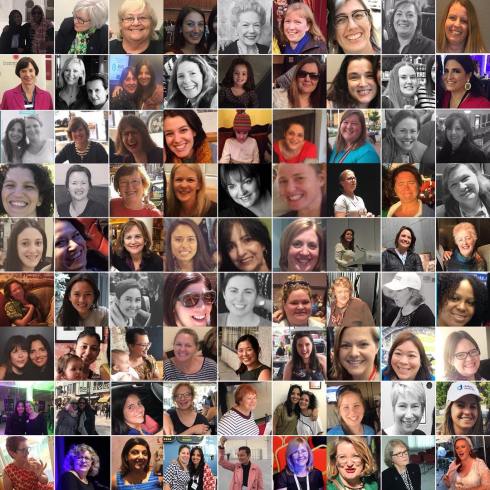
I celebrate these women today and every day!
More writing about women and diabetes, and women’s health.
This is what Diabetes Privilege Looks Like
One Foot in Front of the Other
Since my talk last at ADATS year about my journey to Loop, I have had many HCPs want to talk to me about my experience using a DIY system. When I was ATTD two weeks ago, several Aussie HCPs also at the conference cornered me, and, in almost hushed tones, asked if they could pick my brains about the whole DIY thing.
I have to keep reminding people that all I can talk about is my own experience – I’m certainly not an expert, my involvement has been following the brilliantly clear step-by-step how to guides developed by a brains trusts of brains far, far smarter than mine could ever hope to be. But I am always happy to talk about my own decision to try Loop, and experiences since.
DIY is not going anywhere and I’m pleased to say that over the next few month I’m giving a number of talks at HCP conferences where I have been asked to speak about how my diabetes management – and attitude to diabetes – has changed since I started Looping. It great to see this on the agenda of diabetes HCP meetings (including the ADEA Victorian Branch conference later this month and the ADS ADEA ASM – or whatever it’s being called now – in August this year. I hope that ADATS will give it more airtime when that come around in October.)
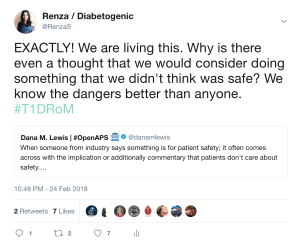
Naturally, and I suppose somewhat reassuringly, the first part of any conversation about Loop is about how safe it is, or rather, questions including varieties of: ‘But the safety! There’s no regulation! There are no RCTs! Where’s the evidence?’ These are often the same things held up by device companies when talking about their products: ‘We are ALL about safety! We have jumped through all the regulatory hoops and come out the other end with flying colours! Here are our RCTs! Here is the evidence!’
When I began reading up about Loop, the thing that would make me close my computer, shake my head and pack all thoughts of it away, was not that I didn’t think it safe. It was that I didn’t think I had the technical aptitude to make it happen.
From the very first reading of the documents and listening to others speaking about it, I realised that this was something that had been built from the foundations of safety. Unlike the health condition that moved in almost 20 years ago.
Type 1 diabetes is not no-risk. At the point of diagnosis, we are handed a supply of a potentially lethal drug. I know I don’t like to think of it in those terms– insulin is my lifeline – but anyone who has even an ounce of knowledge about the treatment of type 1 diabetes knows how potent insulin is.
We know that too much insulin – even a tiny bit too much – can be problematic. And that problem spectrum can be from ‘Shit, I need jelly beans’ to … well, to death. We are faced with this reality every day. I have enough insulin in my pump at any time for it to be extraordinarily problematic if overdosed.
With this knowledge on board – alongside that theoretically lethal drug on board – we mitigate risks with every single thing we do. We over treat lows; we err on the side of caution when we bolus – under dosing for fear of overdosing.
We live safety, we breathe safety – all the time – because if we don’t the risks are high. All too terrifyingly high.
I say this without an ounce of disrespect, but when a device company or HCP implies – intentionally or otherwise – that those of us using a DIY system are being reckless and being unsafe, I find it insulting, and a little disingenuous, because any conceivable hazard is highest to those of us who have the devices stuck to our bodies, and using an algorithm that decides how much insulin to push into our bodies.
I feel much safer Looping that I did pre-Loop. Scary hypos are a thing of the past. My glucose levels sit in a straight, tight line for most of the day instead of the rollercoaster I was used to that would send my mind into a permanent state of fuzziness. I am not running low overnight, only finding out for just how long when I finally wake in the morning and see my Dex trace below the red line for hours and hours and hours without my knowledge. My A1c is in the range that means (allegedly) I am least at risk for developing diabetes complications.
I honestly don’t know how I can be any safer while living with a health condition that throws so many unsafe things at me!




 Diabetogenic