
You are currently browsing the category archive for the ‘Awareness’ category.
I have spent a lot of time listening to presentations about diabetes. It’s one of the perks of the job – hearing from leading clinicians, researchers and advocates is a privilege I never take for granted.
Often, I am mesmerised as the speaker holds court, sharing details of a new study, intervention, clinical program or anything else that they are working on.
Usually, I sit there interested, listening to what is being said, live tweeting content and wondering what this means for the average diabetes punter in their day-to-day diabetes life. Occasionally I am completely and utterly blown away by something – even if it just a small comment in the overall talk – and that is what happened last Monday.
I had been asked to sit on a panel at the Roche Media event, which is a morning for health journalists. The program was jam-packed and the panel session tied together the presentations from earlier in the day. I was coming from another meeting, so unfortunately, I wasn’t there for the whole morning, but I arrived just in time to hear Professor Stephan Jacob, a diabetologist from Germany.
The theme for the whole day was ‘Connecting the Dots’, with Roche continuing to promote their development of a connected eco-system with PWD in the centre, linked with HCPs, health systems, policy makers, industry, data and more.
I have become pretty good at getting a read on the way HCP and researcher presenters regard PWD. A lot of this is in the language they use (i.e. use the word non-compliant, and it’s not looking good…). Immediately, it was clear from the way Stephan was speaking that he understood the whole self-management nature of diabetes, the burden that a chronic and demanding condition such as diabetes places on the lives of those living with it and those around us, and who is responsible for the day-to-day management of diabetes. It was also clear that he understood the barriers that we face to optimising our own care.
The moment in his talk last week that had lightbulbs going off in every direction was when he made a comment about diabetes messaging, which went something like this:
‘If someone comes into a clinician’s office and has elevated blood pressure, we take note straight away. We consider the right medication and what needs to be done, and then we usually see them again a week later, maybe less. But diabetes? When someone come in with out of range glucose levels, we may make a few tweaks; we may tell them to go for a walk after dinner; we may change some of their medications. And then we tell them to come back in three months. Three months. What does that say about urgency or seriousness? It tells that we don’t really need to do anything urgently; that it’s not important.’
I gasped when he said this, because it is so true. There is no urgency in diabetes. People newly diagnosed with type 2 diabetes may still be told that they have just ‘a touch of sugar’, which sounds like something a recipe may suggest be sprinkled on top of a freshly baked streusel cake!
We have visits every three, six and often twelve months which may be fine if everything is ticking along nicely and we just need a tune up or to check in. But what about if it’s not?
And what happens when something does occur? When we have a hypo that sends us crashing, wind up in DKA after a day or two of elevated glucose levels, or are diagnosed with complications? We are blamed for not acting swiftly enough. But why would we?
Perhaps part of the issue is that we remain so reliant on A1c checks as a measure of how we are doing, and traditionally, we do these every 3 months. But the limitations of A1c should mean that we don’t rely on that and that alone.
I was thinking to a time where diabetes has felt truly urgent for me, and really, the only time I think it did was while I was pregnant. Sudden changes to patterns in glucose levels were addressed immediately. Instead, changes to therapy were swift and aggressive, and I understood that at that moment how I needed to be diligent about keeping an eye on things, reporting issues and expecting action. And my HCPs knew it too. I had far more regular appointments and at no point during planning for or during pregnancy was I sent away with an indecisive ‘We’ll just wait and see what happens and talk about it when you are in here at your next visit.’
I also know that it was exhausting and draining and that maintaining that level of care is not sustainable in the long term. Burning out is a reality of that sort of scrutiny and constant focus.
But surely there is a middle ground in there where we all understand that while needing to live life alongside a condition and have it fit in with our daily lives, there is also no space for ambivalence or messaging that it doesn’t matter if we just trek along, happy with the status quo, for a few months.
I had a conversation with Stephan later, thanking him for his talk and telling him how that moment of his presentation really rang true. We spoke about how many people with diabetes would be feeling really unwell during periods where they were waiting for something to be done – changes to therapy made, introduction of new drugs… Were they just accepted to feel that way until they were helped to work out how to improve the situation?
Mostly, this resonated as another example of terrible messaging in diabetes; more missed opportunities to optimise care; another time that highlights how people with diabetes actual feel is ignored as we are forced to fit into a system that is not purpose-built for our condition.
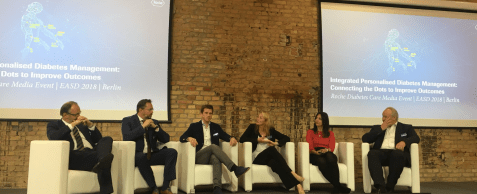
Panel discussion at the Roche Diabetes Care Media event. Professor Stephan Jacob is far left. I’m the one who forgot the ‘white shirt/black jacket’ dress code. (Click for photo source.)
DISCLOSURE
Roche Diabetes Care (Global) covered my (economy) travel and accommodation costs to attend their #DiabetesMeetup Blogger event at #EASD2018 and present at their media event the day before EASD. Roche Diabetes Care also assisted with providing me press registration to attend all areas of the EASD meeting. As always, my agreement to attend their blogger day and participate in their media event does not include any commitment from me, or expectation from them, to write about the company, the events or their products.
Before travelling to Adelaide for the Australasian Diabetes Congress, I had a couple of days in Sydney, and on one of those days, Grumps and I had two meetings that I’ve not been able to stop thinking about, because in both cases, they were about people with diabetes who we rarely get to hear from.
The first meeting was with some of the team at Life for a Child (LFAC). It was great to catch up LFAC General Manager, and meet Rachel who is the program’s Marketing Coordinator.
We then jumped in a cab and headed to Canterbury Hospital and met with a diabetes educator who spoke about some of the challenges she faces working in the diabetes clinic.
Since these meetings, I’ve been thinking a lot about the people with diabetes involved in these programs. For LFAC, it is young people unable to afford insulin and other life-saving diabetes supplies, living in developing countries. And at Canterbury Hospital, it is adults with type 2 diabetes from lower socio-economic and CALD backgrounds.
I want to know more about these people and I want to hear their stories. But I don’t want them told by, or from, the perspective of a supporter or a healthcare professional. In the case of LFAC, the story shouldn’t be about someone who supports the program or what they have discovered now they’ve read about it, worked with the staff, or even met with, and perhaps worked with the people supported by the program.
I do understand that there may be a place for hearing from those with a understanding of a program or service. Dr Fran Kaufman’s article after her travels to Ethiopia was enlightening. But honestly, I now want to hear directly from some of the 3,500 children with diabetes in Ethiopia who receive their supplies from LFAC.
And while hearing about the challenges Marita and her team face at Canterbury Hospital has provided me with some level of understanding about the how the hospital systems and structures impact on her ability to work as well as she can with the people with diabetes who use the service, I really want to hear from those people to truly understand their lives with diabetes and how those challenges affect them.
It is too easy for those of us who are comfortable and confident and already have a voice to tell the stories of others. Or, even worse, to eclipse their stories. That’s not okay because they are not our stories to tell. Our words are not their words. And their stories are the ones that matter here.
If we are in a position to support (financially or otherwise) services and charities, that is great, and it’s necessary in many cases for them to exist and carry on their important work. But if then all we are speaking about is how that contribution or involvement is affecting us, how has the person with diabetes – the one utilising the service/charity – truly been heard?
I got to thinking about this because Rachel from LFAC has been doing a wonderful job making sure that the people who have received insulin and other supplies from the program do have a voice. Their stories are the ones mostly seen on the social pages of LFAC.
And then, I mentioned how I was feeling and they used the term ‘charity (or poverty) porn’ to describe the way supporters speak about their involvement in different causes. They told me that often, the people being supported are presented as ‘needing saving’, and those donating are presented as ‘saviours’.
This sat a little uncomfortably with me, because I am pretty sure that I am guilty of having written about LFAC in those terms before. I am sure I have focused my involvement in LFAC on what I can do and have done to support it; what I have learnt about the people benefiting from the program; how I feel that because I live in a country that provides access to healthcare and I can afford what the system doesn’t provide me, I therefore feel obligated to fundraise and donate.
But when I do that, I make the story about me. And the voice being heard mine. I already have a platform to speak about my own diabetes. But the diabetes here isn’t mine; the stories are not mine; the words people hear should not be mine.
And so, here is Amita’s story:
To make a donation to support children just like Amita, go here.
Last week, I spent a busy week at Australasian Diabetes Congress. I spent a lot of time with work colleagues, health professionals, the event organisers and researchers.
And I was fortunate because most of the time, I was around at least one of my peers. Between the #DAPeoplesVoice team, (Mel, Frank and David), other diabetes friends from home, (Ash, Kim, Gordon and Cheryl), and away (Grumps), there was always someone nearby who I could rely on to ‘get’ diabetes. (This is important always, but conferences have their own special challenges where diabetes mates are certainly appreciated to help keep some perspective!)
I have written countless times before about the power of peer support. I have also written that my peers have been the ones to have truly helped me through some of the most difficult diabetes situations I’ve faced – not necessarily with advice, but simply a knowing look, a nod of the head, or the words ‘me too’. Our peers help us make sense of what we are dealing with, provide us with endless support and help make us feel connected to others. And that’s important with a condition such as diabetes, because it is all too easy to feel that we are on our own.
Which is why I was so pleased to learn about ConnecT1ons, a new initiative from Diabetes Vic, which is looking to provide that support to another group within the diabetes world – parents of kids with diabetes.

It is undeniable that parents of children living with diabetes have their own brand of challenges. This was brought home to me again last week during the Diabetes and Schools Forum when parent of three children with type 1 diabetes, Shannon Macpherson, spoke about some of the difficulties she and her family have faced with her children in the school setting.
And again this morning, when I was speaking with a parent who is having a very tough time with her young, kindergarten-aged child. ‘Renza,’ she said to me, as she explained what was going on. ‘You have no idea. Having a child with diabetes is impossible because we cannot be with them when they probably need us the most.’ She’s right – I have no idea.
But other parents of children with diabetes would and do understand. And as they shared their empathy, they would also probably share some of the things they’ve done to help them through similar tricky situations.
Diabetes Victoria is looking to bring parents like this together for an event where they can meet other parents of children with diabetes. Plus, it’s a few days of respite from looking after their child with diabetes, while knowing their kid is safe (and having an absolute ball) at diabetes camp. What a brilliant idea all ‘round!
You can watch a video explaining the project here, and hear from Jade, the mum of a young boy with diabetes share some of her experiences – and how parents just like her will benefit from ConnecT1ions.
As is always the case, finding funds for initiatives like this is a struggle, so today, Diabetes Victoria launched a crown funding campaign and is seeking to raise $15,000 to run ConnecT1ons. If more is raised, they can run additional events. The crowd funding is only open for a week, so please do consider making a donation – and doing it now! Click here to be taken to the Pozible page.
Congratulations to Diabetes Victoria for acknowledging that parents of kids with diabetes are a specific group that need support amongst their own peers. Extra huge congrats to Kim Henshaw who has spearheaded this project as part of her role as Children and Families Coordinator.
Please do donate. I returned home last week after spending time with my peers feeling refreshed, energised and connected. Parents of kids with diabetes deserve to feel the same by spending time with each other.

Not a functioning beta cell amongst us.
Disclosure
None! I was sent information about ConnecT1ons from the Communications Manager at Diabetes Victoria last week, but she did not ask me to write about it. I don’t work for Diabetes Victoria (I left there back in Jan 2016) and have had nothing to do with this new initiative. But you have to admit it’s a good one. Hence, this post.
I still believe everything I wrote in this post from three years ago. And with the Australasian Diabetes Congress due to kick off next week, I thought it a good time to revisit.
People with diabetes have a place at diabetes conferences – even those designed for healthcare professionals. I truly believe that #NothingAboutUsWithoutUs needs to be the overarching philosophy when it comes to all diabetes activities, services and resources. Until we get to that place, I – and many others who feel the same way – will continue to plead our case for inclusion.
Put us on the program, on planning committees and at the front of your minds.
_________________________________________________
Following the announcement at the end of last week from Diabetes UK that a new CEO had been appointed, there was much chatter online about whether or not the best person had been selected for the role. I have no opinion on this. I do not necessarily agree that you need a person with diabetes to be the CEO of a diabetes organisation – there are many other ways that meaningful engagement can take place ensuring that the organisation is representing the needs of people with diabetes.
What I was far more interested in was the direction the discussion took – specifically about the inclusion – or, as was being discussed, not – of consumers/patients/PWD/whatever you want to call us at professional conferences.
I watched on in silence as healthcare professionals, PWD and consumer groups all weighed in on the subject.
I am rarely a fence sitter, and on this issue, my position is very clear. Very, very clear.
I have yet heard a good argument as to why PWD should not attend diabetes conferences. In Australia, just as in the UK, we have the same limitations about people with diabetes having access to drug-branded information. This is archaic because, well, the internet. But whatever. (Read more here.)
Notwithstanding these code regulations, there is no reason that a PWD should not be welcome at a professional meeting about diabetes, hearing about diabetesresearch, learning about diabetes medications and technology and talking with the healthcare professionals working with people with diabetes. And if it is deemed that we are not fit to see the brand names of drugs, then keep us out of the exhibition spaces, but allow us to attend information and networking sessions. (For the record, I don’t support that idea either, but if that is what is necessary for us to be able to attend the sessions, then so be it.)
I would go one step further. PWD should be involved in the planning of these meetings. Why? Because surely if HCPs working with PWD are hoping to improve their knowledge and understanding of diabetes, a big part of that is gaining a better understanding of people with diabetes. And there is no one who gets that more than those of us living with diabetes.
I absolutely do not subscribe to the ‘why can’t we have a professional conference for health care professionals’ viewpoint. Well, of course you can. But there is no reason that PWD should not be involved in this and attend alongside healthcare professionals.
I’ve been more than a little vocal on this in the past. Search ‘consumer involvement’ or ‘PWD at diabetes conferences’ on this blog and you might just come up with a few things. I’ve given talks both here in Australia and overseas about it. I constantly expound the value of the consumer voice and consumer participation and consumer involvement.
The thing that interested me in the discussion I was following was just how hostile it was at times. With 140 characters or fewer at our disposal, we can’t always be as tactful as we might be in person. Sometimes, being direct is the only way. And knowing a few of the people involved in the discussion, tact is perhaps not a characteristic that they generally employ. I say that without any snippiness at all – it is part of the way they get their point across. I get it – I am often accused as being like that and I wear it as a badge of honour. As far as I am concerned, the involvement of PWD is non-negotiable and if I sound pissed about it, I probably am!
But being hostile and aggressive is not likely to result in a favourable resolution.
Working for a diabetes organisation puts me in a unique position. As part of my work, I get to attend the very conferences from which other PWD are excluded. Plus I am frequently invited to speak and this privilege is due to a combination of my diabetes org work and also my work as a blogger and diabetes activist that I do outside of paid employment. It’s a sticky situation that I manage as best as possible. There are disclaimers everywhere and even the whiff of a conflict of interest is declared.
However, there is one thing that I have learnt from ‘being on the inside’ and that is working collaboratively is highly likely to produce results more than being combative. There is a lot of negotiating required at times and an understanding that things take time. Sometimes lots of it. It’s taken me a lot of time to understand that!
Call me – and those who are trying for a more collaborative approach – political or bureaucrats. You can think we’re sell-outs. We’re not. At all. We actually have a seat at the table and are working for people with diabetes. And you want us sitting at that table! Come join us.
So, think you want to get involved, but not sure how? There are myriad ways that you can try to work with organisations. If paid employment is not what you are looking for, there are many volunteering opportunities including Boards (some may be paid positions), advisory panels, expert reference groups or simply, pick up the phone and pitch your idea!

I have a very scientific way of collecting info to share in these Internet Jumbles. I make weird notes on my phone that absolutely make sense when I note them down, and then make absolutely no sense when I revisit them to put together the latest edition. (Case in point: ‘DMK mine’ had me stumped for a few hours until I realised that was shorthand for the HypoRESOLVE piece on Diabetes Mine. The DMK is because the meeting was in Copenhagen. Of course it makes sense. Perfect sense.)
Half the time, even after trying to work it out, I still can’t understand my notes, so there is a shedload of stuff I wanted to share that is still a mystery trapped in my iPhone.
But! Here are the ones I was able to decipher. Buckle up…it’s a long one.
Ask patients? That’s novel
Results of a review of international literature examining patient involvement in the design of healthcare services showed that patient engagement can inform education (peer and HCP) and policies and improve delivery and governance.
I am always interested to read these sorts of articles, but must say, my response is often an eye roll and the words ‘No shit, Sherlock’ muttered under my breath.
Research and people with health conditions
What is the role of people with health conditions when it comes to research? This editorial from BMJ suggests that full partnership is the best way.
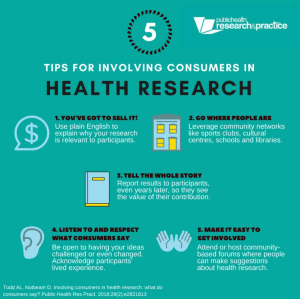
And this infographic from Public Health Research and Practice about how to involve consumers in health research is also useful.
Thanks for listening
It’s so nice when people actually take home some tips and tricks from presentations I’ve been involved in. This tweet over the weekend from diabetes educator Belinda Moore (referring to a symposium at last year’s ADS ADEA meeting in Perth in which I was fortunate enough to be involved) was gratifying.

Peer support remains an absolute cornerstone of how I manage my diabetes as effectively as I possibly can. It is those others walking the same road who help me make sense of a health condition which takes delight in confusing the hell out of me!
The driver’s seat
This post from Melinda Seed underlines why she believes that the idea of diabetes being a ‘team sport’ is not especially accurate.
Complications and language
The awesome PLAID Journal (which you really should bookmark and read) published a piece just as ADA kicked off about why we need to change the way we speak about diabetes complications.
The piece was written by me and Chris Aldred (AKA The Grumpy Pumper), bringing together Grumps’ #TalkAboutComplications initiative and my constant banging on about language. (I first wrote about needing to reframe the way we talk about complications five years ago in this piece. Every word still holds true.)
You can reads the PLAID Journal piece here. And please share. This is a message that we need to get out.

Wellness is not the same as medicine
My huge crush on OB/GYN Dr Jen Gunter only increased after she published this piece in the NY Times last week.
I have written before about how damaging the ‘wellness industry’ can be in diabetes, including this piece on the language of wellness.
Diabetes Voice reboot
The IDF’s magazine has had a reboot and is not delivered in a digital format. Check it out here.
Well, that’s candid…
This photo of Cherise and me snapped at Diabetes Mine’s DData Exchange is hilarious in itself, but Amy Tenderich’s caption is gold!

(Click for source)
Right device, right person, right time
Dr Kath Barnard’s piece in Diabetes Medicine Matters reiterates her message from the 2017 ATTD meeting (I wrote about it here) about the importance of matching the right device at the right time for the right person.
What are the barriers to preconception care ?
This piece was just published in Diabetes Research and Clinical Practice looking at the reason women with diabetes may or may not attend pre-pregnancy care. (I was a co-author on this piece.)
‘If only there was a….online community for people with diabetes’
That comment came from a HCP at a diabetes conference a few years ago – just after someone (maybe me? I can’t remember…?) had literally just given a talk about the diabetes online community.
The DOC is not new – it’s been around for some time – and this great piece from Kerri Sparling gives a history of the DOC.
HypoRESOLVE on Diabetes mine
I was interviewed by Dan Fleshler from Diabetes Mine about HypoRESOLVE. You can read his piece here – it gives a great overview of the project.
On a break
I’m going to be taking a little Diabetogenic break for the next couple of weeks. The rest of the year is shaping up to be super busy, so I thought I’d use the next fortnight to get myself organised.
I’ll be sharing some old posts from the Diabetogenic archives and expect to be back just in time for the Australasian Diabetes Congress which kicks off in Adelaide on 22 August.
In the meantime, be well and be kind to yourself.
The Monday after National Diabetes Week is a chance to take stock, take a deep breath and take a moment to look back over the busy days.
This year’s campaign was terrific in that the messaging was strong and it got a lot of attention. It was great to see the same information being rolled out across the country, and shared internationally, too. I certainly believe the campaign’s main theme of needing to detect and treat all types of diabetes sooner resonated with people across the globe.
So, there are some of my highlights from last week:
Frank Sita can certainly claim best on ground for his relentless support of the campaign. He blogged, vlogged and SoMe’d the hell out of the campaign and was also interviewed in a great piece for The West Australian newspaper. (Plus, he nailed the #LanguageMatters talk with the journalist.) Nice work, Frank!
Diabetes NSW & ACT held their Diabetes Australia Research Program Awards on Thursday night, using NDW as an opportunity to underline the importance of research, and recognise just some of the wonderful researchers working to unwrap the secrets of diabetes.
There are far too many stories of missed type 1 diabetes diagnosis, and many were featured last week. You can see these stories on the Diabetes Australia Facebook page. It’s simply not good enough that people have to become really, really sick before they are correctly diagnosed. Everyone must know the 4Ts.
There was a most welcome announcement with Health Minister Greg Hunt launching Australia’s first national diabetes eye screening program to reduce vision loss and blindness in people with diabetes. this is a great example of Government, and industry (Specsavers will also be contributing to the program) working together and with health groups to support people with diabetes.
Bill Shorten’s Friday evening call to the Government to broaden CGM funding was beautifully timed and was a great way to end the week, providing an awesome bookmark to the previous week’s piece on The Project.
Theresa May would have no idea that she provided an outstanding opportunity for us to get in a little #NDW2018 last-minute advocacy and awareness across the national press, just by wearing her Libre sensor.
And so, it’s a wrap. Except, of course it isn’t. We still need to remind people of the signs and symptoms of diabetes. We need better detection programs. We need more awareness. This campaign doesn’t get boxed up and archived, never to be thought of again. We must keep talking about it.
Of course, National Diabetes Week may be over, but for those of us living with it, every week is diabetes week. And so on we go: ‘doing’, ‘living’ and ‘being’ diabetes.

Yesterday an article was published across Australia detailing a new report showing that Australians with diabetes are missing out on the recommended levels of diabetes care. Most of these people receive their diabetes care in general practise.
A couple of things before I go on:
- The article was behind a paywall, but Diabetes Australia shared an image of a portion of the it, and that can be accessed here. If you have access to a News Ltd. account, you can read the article here.)
- I want to say that in writing this post today I do not want to be seen to be doctor-bashing. I don’t believe that is constructive in any way whatsoever. However, I do think that there needs to be acknowledgement that the level of diabetes care in general practise is not ideal for a lot of people.
- The language of the article was atrocious. It appeared first under the heading ‘How diabetes sufferers are dicing with death’ Seriously, journos, ready the freaking Diabetes Australia Language Position Statement.
Onwards…
There was some discussion online after the article was shared, with a few doctors believing the article wasn’t all that helpful and feeling that it was unfairly unfavourable towards GPs. Someone also commented on the language used. (I’m not sure if they meant on Twitter or in the article. The language in the article was strong and very critical of GPs.)
The report is damning, and it shows that the results for people with diabetes are not good at all with only one in three people diagnosed with diabetes receiving expected standards of diabetes care. Only half had their A1c checked, and of those, only half again were in range.
This is despite there being a documented diabetes annual cycle of care (for which GPs receive funding). If completed fully, the annual cycle of care includes: annual A1c, cholesterol, and kidney checks, weight and blood pressure checks, as well as two-yearly eye and foot checks.
For me, it shows yet again how stacked the decks are against so many people with diabetes. We don’t receive the level of care recommended and then, when we don’t meet expected outcomes, or develop diabetes-related complications, we get blamed.
If we want to talk about things that are unhelpful and not constructive, let’s begin with that.
We seem to forget that most people don’t innately know what is required to manage diabetes, or what screening checks are required – especially people newly diagnosed with the condition. A lot of people rely on their healthcare professional – in the case of diabetes, usually their GP – for this.
I’ve written before that in my case, my GP is not in any way involved in my diabetes care. This is a deliberate decision on my part. I understand it is also a privileged decision – I have easy access to my endocrinologist, and other diabetes specialists for all my diabetes healthcare needs.
But that’s not the case for everyone, and a lot of people are reliant on their GP for all their diabetes clinical care.
People with diabetes are being let down.
Even though pointing fingers and appropriating blame is not necessarily helpful, it’s what we seem to do. We can blame the system. We can blame a lack of funding. We can blame a lack of continuity of care. We can blame the fact that there are no coordinated screening programs. We can blame the need for more specialist care. We can blame a lousy and ineffective electronic records system.
But what we can’t do is blame people with diabetes. No one asks to get diabetes. No one asks to get diabetes-related complications. So how is it possible that in a system that is letting us down, we are the ones blamed when it happens?
Also, this week, we have heard story after story of missed type 1 diabetes diagnoses with people reporting that despite seeing their GP (often repeatedly) about their symptoms, they were not checked for type 1 diabetes.
It is undeniable that some GPs simply do not know enough about diabetes to diagnose it in the first place, and then to treat it in an ongoing and effective way, and this is leading to those of us living with it not receiving an adequate level of care to live as well as possible with diabetes.
While there may be some hard truths in the report, hopefully the result will be better care for people with diabetes. Because, surely, that is all that matters.

As National Diabetes Week activities began, I kept a close eye on the Twittersphere to see just how the week was being received. Pleasingly, there were a lot of mentions of the #ItsAboutTime campaign, and I set about retweeting and sharing activities by others involved in the week.
One tweet, from Edwin Pascoe, caught my attention:

Edwin Pascoe is a registered nurse and credentialled diabetes educator in Victoria. He is currently undertaking a qualitative study as part of a PhD at Victoria University into the lives of gay men and type 2 diabetes in the Australian context. Data is collected but analysis is underway.
I read Edwin’s tweet a few times and realised that he is absolutely right. I can’t think of ever seeing anything to do with any diabetes campaign that addresses the specific issues faced by LGBTI people with diabetes. So, I reached out to Edwin and asked if he would like to write something for Diabetogenic. I’m so pleased he did.
One of the criticisms of diabetes representation in the media is that it lacks diversity. I completely agree with that sentiment. Because while we certainly may share stories, we also need more voices and more perspectives, and come to understand that there are different, unique and varied experiences and issues faced by different groups.
I’m thrilled to feature Edwin’s post today, and am so grateful that he took the time to write it.
__________________________________________________

CDE, Edwin Pascoe
Diabetes is a chronic condition that is managed in the context of people’s lives and this fact has been increasingly recognised by peak bodies in diabetes within Australia such as Diabetes Australia, Australian Diabetes Society, Endocrinology Society of Australia and The Australian Diabetes Educators Association.
Diabetes education has therefore become not just about defining diabetes and treatment for people but exploring how people with diabetes manage these things in context. Creating the freedom and space for people to speak their truth will allow health practitioners to explore appropriate solutions that are congruent with the person with diabetes needs.
The following will cover some of this context and how sexual orientation may influence diabetes.
Context is everything
The context of lesbian, gay, bisexual, transgender and intersex (LGBTI) persons has not been recognised formally by these same peak bodies in diabetes specifically. Arguments shared informally have suggested that what people do in bed does not affect diabetes and considering we have full equality under the law why would it matter. Further to this health care professionals (HCPs) have suggested none of this worries them as all people are treated the same, but herein lies the problem as:
- Not all people are the same.
- LGBTI people are still not fully recognised under the law in Australia despite the recent success in Marriage Equality. For example religious health care services and schools are permitted under law to fire or expel anyone that does not follow their doctrines. In some states gay conversion (reparative therapy) is still legal despite the practice having been shown to cause significant psychological harm. It is also important to note that it was only quite recently that the last state Tasmania decriminalised homosexuality in 1997 so this is in living memory.
- The law is not the only determinant of social acceptability but is entrenched in culture (we know this from numerous surveys that have seen the up to 30% believe that homosexuality as immoral (Roy Morgan Research Ltd, 2016)). Law changes have only meant that in part hostilities have gone underground.
- The focus on sex or what people do in bed fails to see people as whole and often lead to false claims of promiscuity in LGBTI people. There are also assumptions in relation to what people do in bed for example anal sex is one of these stigmatised practices. In reality not all gay men practice this and a significant percentage of heterosexual people do engage in anal sex.
Reports from the Centre for Disease Control and Prevention in the USA identified that 44% heterosexual men and 36% of heterosexual women have engaged in anal sex (Chandra, 2011). Mild displays of affection such as holding hands and leaning into each other engaged routinely by heterosexual couples are heavily criticized when observed in same sex attracted people causing LGBTI people to self-monitor their behaviour. If they choose to engage in this behaviour it is often considered and calculated rather than conducted freely.
The result of this is that there is a lot of awkwardness around the topic of sexual orientation for both the HCP and LGBTI person, something not talked about in polite company. This means that rather than talking about their health condition in context there is tendency to talk in general terms if they are recognised as LGBTI, or they are assumed heterosexual until the person outs themselves during the consultation.
However outing oneself can be an extremely stressful experience as, despite good intentions by HPCs, LGBTI people may still be fearful and remain silent to the point of even creating a false context (a white lie to keep themselves safe). It has been a known practice among some LGBTI people that some engage in the practice of ‘straightening up’ the house if they know HPCs or biological family members are coming to their homes, to again keep themselves safe. This is not to say that all situations are this bleak but that for some at least it is. Does this prevent people from seeking help in the first place when required?
Studies on rates
In the USA Nurses’ Health Study, it was noted that the rates of diabetes in lesbian and bisexual women was 27% higher (Corliss et al., 2018). Anderson et al. (2015)examined electronic records for 9,948 people from hospitals, clinics and doctors’ offices in all 50 states (USA). Data collected included vital signs, prescription medications and reported ailments, categorised according to the International Classification of Diseases diagnostic codes (ICDs). They found that having any diagnosis of sexual and gender identity disorders increased the risk for type 2 diabetes by roughly 130 percent which carried the same risk as hypertension. Wallace, Cochran, Durazo, and Ford (2011), Beach, Elasy, and Gonzales (2018)also looked at sexual orientation in the USA and found similar results.
However one must consider the country in which this data was collected as acceptability of diverse sexualities and differences in health care systems do make a difference. In a study within Britain the risk for type 2 diabetes was found to be lower than the national level (Guasp, 2013). In Australia the rates of diabetes in a national survey came out as 3.9% in gay men in 2011 (Leonard et al., 2012)and this was the same as data collected by Australian Bureau of Statistics (2013)for that year (they did not differentiate between types).
Life style factors
Life style factors such as exercise and food consumption are important to consider as these are tools used to manage diabetes. Studies have found significant level of homophobia in Australian sport that prevents participation(Erik Denison, 2015; Gough, 2007)and that there are elevated levels of eating disorders including binge eating disorder in LGBTI people (Cohn, Murray, Walen, & Wooldridge, 2016; Feldman & Meyer, 2007).
Qualitatively, a study was conducted in the UK/USA by Jowett, Peel, and Shaw (2012)exploring sex and diabetes, and in this study one theme noted was that equipment such as an insulin pumps put participants in a position to have to explain and the fear they were being accused of having HIV.
Stories
The following two stories may help give context to how sexual orientation has influenced these two people’s lives.
The first story is regarding a gentleman who came to see me for diabetes education for the first time who had lived the majority of his life hiding his sexual orientation due to it being illegal. During the consultation I was trying to explore ways to increase his activity levels in order to improve blood glucose levels, strength and mental health. He advised he didn’t like going for walks even if it was during the day in a built-up area as it was dangerous. When asked to explain this he said he feared being attacked due to his sexuality as he felt he looked obviously gay, but I didn’t see that.
A second story later on was from an elderly lesbian woman who was showing me her blood glucose levels. I noted her levels were higher on Mother’s Day, so I obviously asked what was going on there. She bought out a picture of her granddaughter from her purse which immediately bought a tear to her eye. She said her daughter had a problem with her sexual orientation and so stopped her from seeing her granddaughter, and that it had been two years since she had seen her.
It’s only the start
It is important to note that each letter of the LGBTI acronym has their own unique issues with regard to diabetes. I have mainly talked about gay men here as this is what my study covers but there are studies on transgender people (P. Kapsner, 2017), increased rates of diabetes in people with HIV (Hove-Skovsgaard et al., 2017)and of course many others. In Australia we don’t routinely record sexual orientation, only in areas of mental health and sexually transmitted diseases, and as such data is lacking in this area. It’s time to be counted and there is a need to learn new ways to improve engagement for LGBTI people with diabetes.
References
Anderson, A. E., Kerr, W. T., Thames, A., Li, T., Xiao, J., & Cohen, M. S. (2015). Electronic health record phenotyping improves detection and screening of type 2 diabetes in the general United States population: A cross-sectional, unselected, retrospective study.
Australian Bureau of Statistics. (2013). Australian Health Survey: Updated Results, 2011-12. from http://www.abs.gov.au/ausstats/abs@.nsf/Lookup/by%20Subject/4338.0~2011-13~Main%20Features~Diabetes~10004
Beach, L. B., Elasy, T. A., & Gonzales, G. (2018). Prevalence of Self-Reported Diabetes by Sexual Orientation: Results from the 2014 Behavioral Risk Factor Surveillance System. LGBT Health, 5(2), 121-130. doi: 10.1089/lgbt.2017.0091
Chandra, A. (2011). Sexual behavior, sexual attraction, and sexual identity in the United States [electronic resource] : data from the 2006-2008 National Survey of Family Growth / by Anjani Chandra … [et al.]: [Hyattsville, Md.] : U.S. Dept. of Health and Human Services, Centers for Disease Control and Prevention, National Center for Health Statistics, [2011].
Cohn, L., Murray, S. B., Walen, A., & Wooldridge, T. (2016). Including the excluded: Males and gender minorities in eating disorder prevention. Eating Disorders, 24(1), 114-120. doi: 10.1080/10640266.2015.1118958
Corliss, H., VanKim, N., Jun, H., Austin, S., Hong, B., Wang, M., & Hu, F. (2018). Risk of Type 2 Diabetes Among Lesbian, Bisexual, and Heterosexual Women: Findings From the Nurses’ Health Study II. Diabetes care, 41(7). doi: https://doi.org/10.2337/dc17-2656
Erik Denison, A. K. (2015). Out on the fields.
Feldman, M. B., & Meyer, I. H. (2007). Eating disorders in diverse lesbian, gay, and bisexual populations. International Journal of Eating Disorders, 40(3), 218-226. doi: 10.1002/eat.20360
Gough, B. (2007). Coming Out in the Heterosexist World of Sport: A Qualitative Analysis of Web Postings by Gay Athletes. Journal of Gay & Lesbian Psychotherapy, 11(1/2), 153.
Guasp, A. (2013). 2013Gay and Bisexual Men’s Health Survey. Retrieved 09/07/2018, 2018, from https://www.stonewall.org.uk/sites/default/files/Gay_and_Bisexual_Men_s_Health_Survey__2013_.pdf
Hove-Skovsgaard, M., Gaardbo, J. C., Kolte, L., Winding, K., Seljeflot, I., Svardal, A., . . . Nielsen, S. D. (2017). HIV-infected persons with type 2 diabetes show evidence of endothelial dysfunction and increased inflammation. BMC Infectious Diseases, 17(1), 234-234. doi: 10.1186/s12879-017-2334-8
Jowett, A., Peel, E., & Shaw, R. L. (2012). Sex and diabetes: A thematic analysis of gay and bisexual men’s accounts. Journal of Health Psychology, 17(3), 409-418. doi: 10.1177/1359105311412838
Leonard, W., Pitts, M., Mitchell, A., Lyons, A., Smith, A., Patel, S., . . . Barrett, A. (2012). Private Lives 2: The second national survey of the health and wellbeing of gay, lesbian, bisexual and transgender (GLBT) Australians.
- Kapsner, S. B., J. Conklin, N. Sharon, L. Colip; . (2017). Care of transgender patients with diabetes. Paper presented at the European Association for the Study of Diabetes, Lisbon Portugal http://www.abstractsonline.com/pp8/#!/4294/presentation/4612
Roy Morgan Research Ltd. (2016). “Homosexuality is immoral,” say almost 3 in 10 Coalition voters [Press release]
Wallace, S. P., Cochran, S. D., Durazo, E. M., & Ford, C. L. (2011). The Health of Aging Lesbian, Gay and Bisexual Adults in California. Policy brief (UCLA Center for Health Policy Research)(0), 1-8.
Kellion medal day – it remains the most hopeful day of the year. And yesterday, I was lucky enough to attend what I fondly refer to as ‘The Most Hopeful Day of the Year’.
As is typical at these events, once the formalities are over, I find myself gravitating to those in the room who have been awarded their medal for living an extraordinary number of years with diabetes. It’s almost as though I want to stand close enough to them to learn everything they know. Just being in their presence is awe-inspiring, even though they would say that all they re doing is living their lives – lives impacted every single day by diabetes. But to me, these people somehow seem magical and I want to understand how to be too.
A diabetes diagnosis fifty years ago (or sixty, seventy, eighty years ago) was very different to one today. Or event twenty years ago for that matter. The devices, education and information that is available today was very, very different. To see people who not only survived with diabetes, but lived their very best lives with it, in times of the most basic of treatment options, is remarkable.
The people in this photo are my peers. They have walked the path I am walking ahead of me and are more than happy to tell their stories. I listen to every word, hoping to unlock some of the secrets to how they have managed for so long with diabetes. My pitiful twenty years of type 1 simply affords me ‘still a newbie’ status; I have nothing remotely useful to share – I can offer nothing. So I listen. I ask questions. I watch.
It is an honour to attend the Kellion Victory Medal Award Ceremony each year. And to stand amongst the medalists is a privilege I will never, ever take for granted.
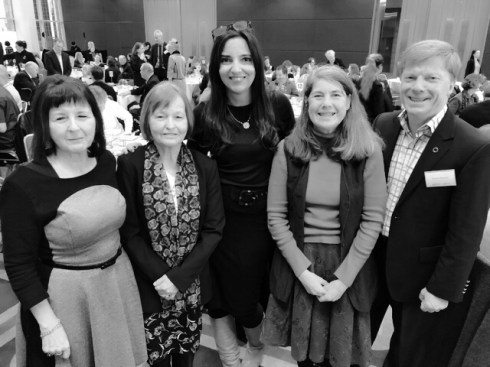
‘That’s a lot of diabetes’. (L-R: 60 years, 70 years, 20 years, 51 years, 42 years of living with type 1.)
I am certain that almost all the people who read this blog are in some way affected by diabetes. (Because, really, if you are not, why would you be reading?) It makes sense that the people who want to hear about my real life with diabetes have their own real lives with diabetes.
Most of the blogs I read are to do with diabetes. Most of my interactions online are to do with diabetes (with the occasional detour down avenues of language, Nutella recipes, Effin’ Birds, and idolising Nigella).
It makes sense and there is nothing inherently wrong with focusing on things that we understand, or that is interesting to us personally. Of course we feel a connection when reading stories by others going through similar experiences, and that makes us feel safe and less alone.
This week, however, I am hoping that a lot of what we are talking about is received by people outside the diabetes world. Because #ItsAboutTime that others know and understand the importance of early diagnosis and treatment of diabetes.
It’s National Diabetes Week (#NDW2018) and Diabetes Australia’s campaign this year is building on the 2017 campaign of raising awareness of the signs and symptoms of type 1 diabetes, and the fact that there are 500,000 Australians with undiagnosed type 2 diabetes. (Disclosure: I work for Diabetes Australia. I am writing about this because it is an important issue, not because I have been asked to.)
These days, my loved ones and I know all about the symptoms of diabetes. And somehow, I knew them just over 20 years ago when I walked into my GPs office and said ‘I’m thirsty all the time, I can’t stop peeing, I’ve lost weight and I’m exhausted. I think I have type 1 diabetes.’
My GP told me that she thought I was being a hypochondriac, so I’m actually not sure if she would have sent me off to pathology for a fasting glucose check as quickly as she did had I not prompted her with my (as it turns out correct) self-diagnosis. (In hindsight, getting me to pee on a stick would have been an even better idea, but I didn’t know that at the time…)
The rest of the story is that a few days later, I was told I had type 1 diabetes. That’s my whole story. It’s utterly, completely, totally uneventful and, quite frankly, I love that it is.
But that’s not the way it is for a lot of people. In fact, each year 640 Australians end up in hospital because the signs of type 1 diabetes have been missed. In many cases, these people have already been to see their GP one, two or more times because they , or their families, have known that there was something not quite right, and they were not checked for type 1 diabetes.
Is that your story?
Here’s the thing: if you have diabetes, or someone you are close to has been diagnosed type 1 diabetes, you know the signs. You may not have known them beforehand – in fact, you may have your own diagnosis story that mirrors those that we are sharing throughout NDW – but you know them now. You are not the target audience for this campaign.
The target audience is people in the community without a connection to diabetes. It’s GPs who are not routinely asking people to pee on a stick so they can quickly and easily check if a person has glucose in their urine.
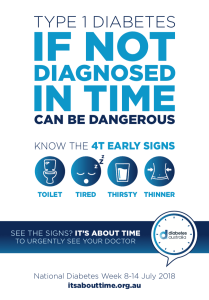
We need to tell those people. Because we can talk all about this amongst each other all we want, but then all we are doing is adding to the noise in the echo chamber. We need to step outside of the diabetes world and shout from the rooftops 4Ts of type 1 diabetes:

These symptoms need to trigger people – everyone – to automatically think type 1 diabetes.
Share the poster. And ask everyone you know to share it too – including people not affected by diabetes. #ItsAboutTime we ALL knew the 4Ts so that we can diagnose and treat type 1 diabetes sooner.





 Diabetogenic