Jump over to the Diabetes Victoria blog where today, I have written about how ‘Choosing Wisely Australia’ got diabetes wrong with its diabetes recommendation.

But while you’re here, check out these headlines from the Daily Express. So, so many ways to beat diabetes! Who knew?

headlines

I spend a lot of time dealing with the consequences of my actions when it comes to diabetes. Here are three examples:

Action 1: forget to bolus

Consequence: stupid high BGL

Action 2: Bolus too much

Consequence: stupid low BGL

Action 3: eat Nutella straight from the jar

Consequence: much happiness. (Although if I forget to bolus for it, see Action 1.)

Sometimes, my actions are deliberate (see: Nutella). Other times, they are not (see: forgetting things).

There needs to be a little more consideration when talking about consequences because a lot of time, I see discussions about diabetes consequences that are very unkind. Just because you know what will happen when you do something, doesn’t necessarily mean you deserve for it to happen. And a lot of the time, we don’t know – there is no controlling the outcome of our actions anyway.

But the thing that I am really conscious of is that even if we know what happens – even if we know that the consequence may not be pleasant – we rarely wish for the consequence to happen.

This is particularly the case when talking about the diagnosis of diabetes. No one at any time of their life thinks they would like to be diagnosed with diabetes. At least, I’ve not met anyone who feels that way. I know of no one who has been thrilled and excited at the prospect of a life forever affected by a chronic health condition. There is no high fiving someone who has just told you that you have diabetes. There may be tears and anger and distress. Rarely would there be joy though.

The same goes when considering people diagnosed with diabetes complications. Whatever they do; whatever they don’t do. However they have managed their diabetes. Or not managed their diabetes. No one chooses complications.

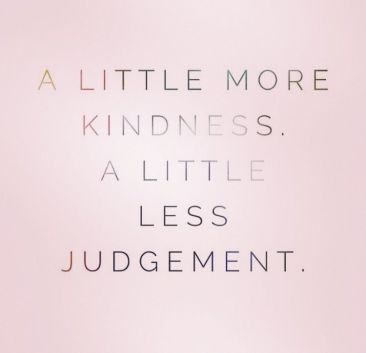
I think that we need to remember this. We need to remember that anytime we say words suggesting people ‘deserve’ what happens to them, we are being unkind and we are being judgemental. And these are both things that have no place in diabetes.

More kindness less judgement

I wrote these words a while ago, and thought that it was a good day to post them.

My heart today is with the families of Myuran Sukumaran and Andrew Chan. These were young men who ten years ago did something stupid, stupid, stupid. No one is saying they are angels and no one is saying that they should not have been punished for their crimes. But the consequence of those stupid actions is not proportionate. They did something stupid. They did not deserve to die for it. #IStandForMercy

istandformercy

Today, diabetes can bite me. I changed out a perfectly good – and working perfectly – cannula this morning because it had been in for four days and I sometimes follow some diabetes rules.

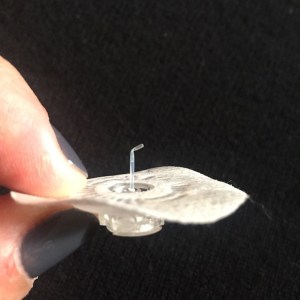
Fresh out of the shower, I stabbed in my line and knew straight away something wasn’t right. I am more than used to (and expect) the little sting that comes with the introducer needle piercing my skin. But this one really hurt. And then when I primed one unit of insulin into the empty cannula it hurt. Really hurt.

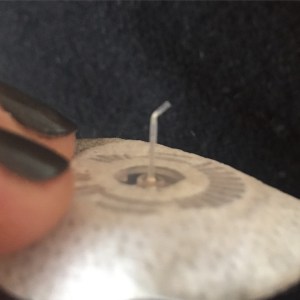
So, I ripped it out. Which was a good idea! I present exhibit A:

Canula 1

This resulted in swear words galore because I am classy and a lady. I pulled another infusion set from the cupboard, ripped it open and shoved it in my skin. And again – ouch! I didn’t even bother to prime it – I just ripped it from my skin. Which again, proved a good idea. I present exhibit B:

Canula 2

Ripping this one out was fun. It bled. Down my leg and onto the floor. So I swore again (more classy, more lady) and cursed the diabetes gods and possibly stamped my foot. Actually, I definitely stamped my foot. And threw the useless thing across the room at which point the puppy thought it had a new play toy.

The next cannula went it without a hitch and is behaving itself. Third time lucky.

So, what did I learn from today’s exercise? Not much. Probably that I shouldn’t follow diabetes rules and should have left the four-day-old-slightly-manky-but-working-perfectly cannula in. Because nothing good comes from following rules. Yep. That’s what I’m taking away from this. Also, I need a cupcake.

IWishPeopleKnewThatDiabetes

If you have anything to do with diabetes and glanced at Twitter this week, it’s unlikely that you could have missed the juggernaut that was #IWishPeopleKnewThatDiabetes.

Wednesday 22 April was designated the day that the Diabetes Online Community would come together and share what we wish people knew about diabetes. We kicked it off with great force here in Australia and it took off like a runaway train from there! Late on our Wednesday night, I watched the US wake up and Twitter explode with the #IWishPeopleKnewThatDiabetes hashtag. I had to force myself to turn off my devices and go to sleep because I could quite easily have stayed up all night following.

I was amazed at the diversity of the things people were sharing. I found myself laughing out loud and wiping away tears at some of the things I read, and a lot of the time, nodding in agreement.

Critics of these sorts of activities say that they are a waste of time – that we are preaching to the converted and that it is a self-indulgent pity party. I say that’s rubbish!

Firstly, even if the majority of people who read the tweets are others with diabetes, why is that a bad thing? Building our community – coming together, supporting each other, listening to others’ stories – is how and why we become stronger. I had several people reply to my tweets telling me that they felt the same way. I did the same thing several times.

And there is absolutely nothing wrong with fist pumping and patting ourselves on the back for living with diabetes. Or saying it is tough. Diabetes does suck sometimes; it is difficult to live with; it is a shit. Acknowledging that doesn’t make us weak or pathetic. It doesn’t mean that we have given up or that we think that we have it worse than anyone else in the world. It is just saying how we feel.

I didn’t read all the #IWishPeopleKnewThatDiabetes tweets (there are over six and a half thousand of them!) but I did read a lot of them. I read tweets from people I know well and those I’ve never come across. I connected with new people and retweeted and retweeted and retweeted until I thought I was going to be sent to Twitter purgatory for a while and told to settle down!

Well done to Kelly Kunik who kicked this off last week. I don’t know that Kelly has had much sleep over the last few days. She seemed to be tweeting and retweeting pretty much around the clock!  Kelly is a bit of a force of nature. I caught up with her and another DOC friend, Stacey, when I was in NY and the three of us spoke so much we forgot to eat. Seriously. We remembered to drink coffee, but somehow we didn’t remember to order lunch! Hope you’re getting some rest now, Kelly!

I couldn’t even begin to say what my favourite tweets were. Perhaps the ones that focussed on advocacy issues and dispelling myths. But every single one did resonate in some way – even if the experience was not the same as mine. I feel that I have a better insight into how diabetes affects people’s lives. I hope – and am sure – that others have walked away feeling the same way.

(To see the reach of the #IWishPeopleKnewThatDiabetes hashtag, click on this link. At the time this blog was published, it was up to almost 14,000,000 impressions.)

We added another SHAG print to our collection the other night after attending an exhibition opening at the fabulous Outré Gallery. We now have two huge artist proofs that are based on the fabulous Peter Seller’s film The Party. Dance your way into the weekend with the soundtrack here!


Most days, I write on this here blog about my life with diabetes. Sometimes it is light and fluffy and frivolous. Other days, I lay myself bare and write about things that affect my very core. I have written about things that have left me feeling quite vulnerable but they are part of living with diabetes – the serious side, the scary side, the sad side.

Everything you read here is honest. It is what is happening to me. It is how I see my life with diabetes. My interpretation may be completely different to someone else’s, but I write genuinely and as openly as I possibly can.

Yesterday, as confirmation of what I already knew to be true flooded social media platforms, I found myself incredibly angry.

I already knew that Belle Gibson was a fraud. I knew that her story of curing her cancer by eating well and using natural remedies was a load of rubbish. The same way that every other charlatan promising to cure you of whatever health condition you’re living with is complete and utter bullshit. Anyone who tells you that eating an organic/plant-based/paleo/carb-free/high carb/high fat/low fat/only kale diet can treat or cure you of cancer (or diabetes or anything else) is lying. That is all there is to it.

I’m not selling anything here at Diabetogenic. There are no cookbooks being flogged, no eight week program for you to sign up to, no magic ‘teatox’ I want you to buy to fix whatever is not working in your body. I’m not promising you anything other than a way to spend five minutes while you have a cup of coffee.

Yet I have benefitted from this blog. I have been asked to speak at conferences here and overseas. I have been invited to bloggers summits and to sit on expert panels as a consumer representative.  I take these things very seriously. I have been afforded opportunities because what I write is considered to be of value to others either living with diabetes or working with people with diabetes. People take what I say here and believe it to be true.

And it is. But Belle Gibson has tainted the writings of every health blogger.

This goes beyond Belle Gibson. Every other wellness expert – all of them – should be held to account right now. I am talking about Sarah Wilson, Pete Evans, Vani Hari, Ashy Bines, and anyone else making health claims that cannot be substantiated by real evidence. THESE PEOPLE ARE DANGEROUS. Frequently, mixed up in their lies about their miracle cures are more lies about vaccinations and medications. They prey on people who are vulnerable and scared and desperate.

Today, I am furious. I am horrified that some people will lump me – and the people I know and love who write incredibly honest and worthwhile blogs about their daily lives with diabetes – in the same basket as Belle Gibson. I fear I will be tarred with the same dirty, lying, fraudulent brush. I feel the need to justify my writings and the very existence of this blog.

But I am not Belle Gibson. I am not lying to you. I am not trying to sell you anything. I just want to connect with other people who are living with diabetes. I just want to be part of a community of people who I can turn to for support and help.

Go away. There is nothing to see here today.

Instead, enter #IWishPeopleKnewThatDiabetes into your search engine and spend the day reading about the things we all want everyone to know about diabetes.

This is the initiative of Kelly Kunik from Diabetesaliciousness. But don’t read her blog today either. You can do that tomorrow.

Today it’s all about this hashtag: #IWishPeopleKnewThatDiabetes

Go!


IWishPeopleKnewThatDiabetes

I could never ever work in advertising. A combination of cynicism and disbelief at anything I ever see in an ad would make me a difficult employee!

There is a very real gap between the truth of diabetes and what we see in advertisements for diabetes products. I frequently find myself shaking my head in disbelief at the way diabetes is portrayed.

This is what a stomach using an insulin pump looks like. That is my stomach (apologies if you are eating, drinking or just looking). Those dots are the ghosts of infusion sets past in various stages of healing. There is also probably some tape residue stubbornly stuck to my skin. Pretty (gross), isn’t it?

Stomach real

#NoFilter. Obviously

This is what a stomach in a pump ad looks like. Magically, any hint of previous infusion sites have disappeared.

ad stomach

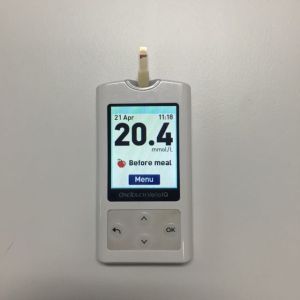
This morning, here is what my meter announced my BGL to be. (Hashtag: fuckoff)

BGL real

This is what the reading on pretty much every box and poster of BGL meters looks like. (Hashtag: bullshit)

meter adCGM graphs in real life look like the trajectory of rollercoasters with mountainous highs and cavernous lows, while the slick promotional materials show straight lines, nicely fitting in between the upper and lower alarm limits.

People in advertisements for diabetes paraphernalia are always outdoors, happy and rolling down hills, big smiles plastered on their faces. They wake up looking well-rested.

Real people with diabetes may spend time smiling and happy (I love rolling down hills – especially at this time of the year and getting all covered in Autumn leaves), but I’m putting it out there and saying that their glee is not because they have just done a BGL check. Unless the result is 5.5mmol/l. Each and every time. (See about meter photo. There was no smiling at that!)

I get it. No one wants to see my stomach on an ad for insulin pump therapy – that’s not selling units of product! But surely there needs to be a middle ground somewhere. I would like there to be an occasional BGL reading of over 15mmol/l on a poster for a meter. Because it happens. It’s not the end of the world and it doesn’t mean the meter is crap. And a stomach with a few pock marks from old infusion sets doesn’t reflect the quality of the infusion set. It reflects reality.

Diabetes isn’t pretty. It’s an ugly, scary and pretty un-fun thing to live with a lot of the time. That doesn’t mean that I spend most of my time in a ‘pity me’ funk, but I do admit – quite honestly – that it is shit at times. How about we aim for a bit of honesty and truth in diabetes advertising? Telling it like it is doesn’t mean we are weak or showing defeat. It’s just being authentic.


‘You bake a lot for someone with diabetes.’ These words came out of the mouth of someone not all that bright who may read this blog, but has clearly not taken on board anything I’ve ever written.

It wasn’t the first time that I have had people express surprise at my love of baking and baked goods considering that I have diabetes. I’ve even had other people with diabetes say they were told baking was an absolute no-no for the pancreatically-challenged when they were diagnosed and, as such, have never baked anything in their lives.

I do bake a lot – regardless of my diabetes state! I bake several times a week. On days when I don’t bake, I read cookbooks and plan what I’ll bake next.  I bake when I am happy, sad, anxious, excited, content, angry. And I bake a lot when I am stressed because I find it to be calming, peaceful and satisfying.

My neighbours know when I am feeling particularly stressed because those periods involve baking EVERY SINGLE day which equals home-deliveries around 7pm of whatever is still warm out of the oven. I think the neighbours sneakily like it when I am stressed.

I love baking because it is reliable, predictable and practical. Mix the right quantities of the right ingredients for the right amount of time at the right temperature and you will, inevitably, end up with something beautiful and delicious. And as you get better and know how certain ingredients work with other ingredients, you can mix things up and be creative.

In other news - I need an apron.

In other news – I need an apron.

Plus, baking gives me an excuse to make a mess.

Baking is reliable. Except for the rare complete balls-up, the results are exactly what you expect. The end product almost always looks more or less like the picture. If you start out making a cake, you will end up with a cake at the end of the process.

Baking is the exact opposite of diabetes! Diabetes is unpredictable and unreliable and most of the time, you have no idea how you ended up with whatever it is you ended up with. (Case in point: lunch of poached chicken salad containing zero carbs and a dressing of nothing more than olive oil and lemon juice, pre-prandial BGL – 7.8mmol/l; 2 hour post-prandial BGL – 18.9mmol/l.)

The unpredictability of baking only ever comes to the fore when bolusing for whatever it is that I’ve baked. Sometimes I get it right. Other times I don’t. It can be a little hit and miss. Correction boluses were invented for this exact thing! If you don’t like baking, that’s fine. But don’t let diabetes be the reason you don’t bake.

It’s ANZAC day this Saturday and I did a trial run the other day of my tried and true ANZAC biscuit recipe that I scribbled out in my recipe notebook a number of years ago. This is a fail-safe recipe and takes no more than ten minutes to throw together and then only a short time to bake. For those of you who don’t know what an ANZAC biscuit is, have a go! They are absolutely delicious and because they have oats in them, you can fool yourself into thinking they are a health food. Each biscuit (cookie) for those in the US has about 12 grams of carbs.

ANZAC recipe


Earlier this week, The Conversation ran a great article about the value of GPs providing nutrition education and information.

It’s a discussion worth having. For many people, their main HCP contact is a GP, so in the broader scheme of things, having GPs able to provide general health and wellbeing information (which includes nutrition information) is a sound idea.

Whilst most people I know with type 1 diabetes have a network of diabetes healthcare professionals – often including a dietitian – this isn’t the case for everyone. And for many people with type 2 diabetes their GP is the only HCP they see about their diabetes.

This discussion, however, is far broader than people with diabetes. Information about how to eat well and make food choices to enhance our health is a great idea and would be great if it were available to all.

But for this to work, we need to have confidence that our HCPs are equipped with up-to-date and sound information. As well as being across evidence-based nutrition guidelines, they need to be able to respond to queries about fad diets and ‘teatoxes’. (It’s a thing. Really.)

I can still remember the first dietitian I saw. It was within days of my diabetes diagnosis and it wasn’t a good experience at all. In fact, I walked out and vowed never to see another dietitian because, in the hour-long consultation, all I could envision was angst and stress about food thanks to diabetes. I didn’t want that at all. I certainly didn’t want the healthy way I looked at food to be compromised by someone who was extolling the idea of ‘bad foods’ and ‘good foods’, and expecting me to live with a diet that included the same things every single day.

So I never went back and spent the first three years with diabetes muddling along as best I could, adapting what I needed to and trying to keep enjoying food the way I always had.

When I started to consider using a pump, I decided to find another dietitian – one more in line with my attitudes to food. I didn’t have an understanding of carb counting (that wasn’t explained to me because it wasn’t the nutrition ‘in-thing’ in April 1998). Once again, I was disappointed to discover that the restrictive and dictatorial advice she was delivering wasn’t in line with my food philosophy which, I thought then (and still do now) to be quite sensible.

These two experiences have somewhat clouded my opinion of dietitians, despite having met with some amazingly balanced and well-informed dietitians since – including one I saw a few times who was just brilliant and never made me feel guilty because I like Nutella, but really am not a fan of lentils.

Nutrition advice needs to be about a lot more than what the best choices look like for breakfast foods.

There needs to be some acknowledgement of people’s relationship to food – how we view food in our overall life; where it fits in our family; if we enjoy preparing and knowing about food or if we just care about food as fuel; if we have any issues with certain foods. Plus there needs to be the ability to address the different levels of knowledge people have (and want to have) when it comes to food.  Not everyone wants to prepare food from scratch, make fresh pasta each week or mill their own flour. And that’s perfectly okay.

And there needs to be openness about the choices – a willingness to understand that some people may want to try something slightly (or very!) outside the guidelines. For example, the low carb movement at the moment is of great interest to a lot of people with insulin-requiring diabetes. I have heard some people say that when they have raised this as a discussion point with their HCP, the topic has been dismissed as irresponsible, not in line with the recommended guidelines and not something people with diabetes should be considering.

And yet, many people with diabetes do manage to eat a lower-than-recommended carb diet and are far happier with the results they see – whether those results be numbers on a meter or how they feel.

With the huge array of food and nutrition and health advice available to people now – frequently by people less than qualified to be providing it – having a respected healthcare professional help cut through definitely, in theory, sounds like a valuable plan.

But because of the very nature of discussions about food, whoever is charged with providing information and assistance – whether that be a GP or a dietitian, or any other HCP – needs to check their judgement at the door, be well informed, sensitive, and open to ensuring that the person they are working with is comfortable with the discussion and feels open to choice.

I remember the first time I ever heard Cassandra Wilson. I was blown away by her beautiful voice and have loved her ever since. She has a gorgeous new album – a tribute to Billie Holiday – which we’ve been listening to this week. But today’s Friday song is from the first album of hers that I listened to, New Moon Daughter.  This is Solomon Sang.

Yesterday was #dayofdiabetes, an initiative from Chris from A Consequence of Hypoglycaemia. You can read about it here!

I didn’t really get involved yesterday. I was feeling pretty blah about my diaversary and I didn’t want to live tweet just how blah I was feeling. But that doesn’t mean I didn’t follow along.

Here is what I learnt when I was scrolling through the #dayofdiabetes tweets last night as I was wide awake, hypo:

Diabetes is freaking boring! No seriously.

Like, really, REALLY boring.

Now this shouldn’t really come as a surprise to me. I live this thing. All the time. I know the drill. I know what it takes. I get it. (Or THIS, as @Diabetes Heroes most eloquently tweeted!)

The aim of the day is absolutely not to get people feeling sorry for us or thinking that we have things so, so tough. It’s a day where we try to live tweet our life with diabetes and take a moment or two to actually document each and every detail of life with diabetes.

You may think that we do that already. That between the blog posts and the Facebook pages and the Twitter chats that there is a lot of diabetes documentation already happening.

But what the #dayofdiabetes social media flood shows is just how much we DON’T say about our lives with diabetes.

We may talk about hypos (see my tweet at exactly 12.58am last night) and being burnt out; we may talk about campaigns and programs and experiences with healthcare professionals; we live tweet from conferences and participate in tweet chats. And we have our special brand of diabetes humour that we share too.

However, these things in no way give indication of the minutiae of diabetes. Those minute-by-minute things we do, the decisions we make, the mindless and almost-reflex-like way we reach for devices to push, press, inject, click – all to help us manage our condition.

If you don’t have diabetes, Google ‘#dayofdiabetes’ and have a look through some of the things people have posted. It may give you some insight into just what the daily grind is all about.

And if you do have diabetes? There’s lots there for us as well. For me, I find exercises like this so comforting.  Knowing that others feel the same frustrations about doing the same things, or that the thoughts that pass through their heads at certain points mimic mine makes me feel connected.

This is awareness-raising at its simplest and best. I wish that healthcare professionals and those responsible for developing diabetes policies could read the feed from yesterday. Perhaps this could be submitted as part of the consultation process for the development of the new Australian National Diabetes Strategy! I can’t think of a better way to provide a glimpse into a day in the life of someone with diabetes and what we need!

Follow Diabetogenic on WordPress.com

Enter your email address to follow this blog and receive notifications of new posts by email.

Read about Renza

Archives