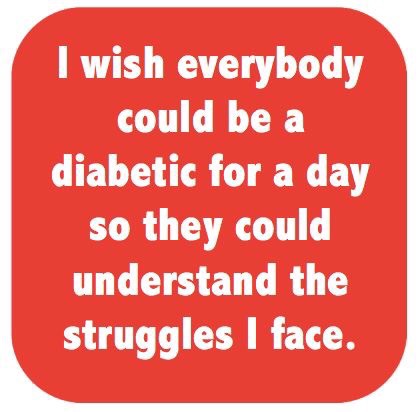
Over the last couple of days, this meme has found its way across my social media feeds several times:
  
Each time I’ve scrolled past it, I have felt uncomfortable. For a number of reasons. 

Firstly, I wouldn’t wish diabetes on anyone – even for a day. 

But mostly, because for this to be true and fair, then surely it could be said of each and every health condition. Surely if people with diabetes expect others to walk a day in our shoes pumps (see what I did there?), then those with every other condition would expect the same. 

‘Really?’

How many times have I heard that response when people find out I have diabetes. An upwards inflection, a little surprise, a lot of confusion. I know that it is an involuntary response – perhaps because people weren’t expecting that to be the explanation to their question about the pager-like device I have just pulled from under my clothes, or the little beeping machine on my lap, or why I am guzzling jelly beans like a woman possessed.

We know that it is because diabetes is an invisible condition. Unless you look for the signs, who can tell that my beta cells stopped working over 17 years ago? And even if you did look for the signs, what exactly would you be looking for?

We talk a lot about how frustrating it is to have a condition with limited visible signs. It means that people say things that annoy and frustrate us, or that people have limited knowledge and understanding of just how much work goes into living with a condition that has such limited visible signs.

But sometimes, I am grateful for the invisibility. Sometimes, it is nice to be able to package up all the diabetes things and keep them hidden away – to tuck my pump more securely in my bra and make sure that there is no tubing poking out and to hide away my BGL meter and jelly beans and glucose tabs. It’s nice to not give people a reason to ask.

I know how exhausting it can be answering the myriad questions people have about diabetes. Of course, a lot of the time they are downright rude, but most of the time, they are borne from nothing more than human curiosity. Sometimes it’s great to try to explain what living with diabetes is about to someone who genuinely wants to know, or to share my diabetes story.

How we each deal with our diabetes is highly personal. We can shout about it from the rooftops, we can whisper about it amongst only those we choose or we can remain silent and not share with anyone. And it’s all okay – it’s okay to change how we want to speak about it.

This last week, a lot of people have asked me about the green band around my wrist. I explain that it is from a conference I attended for people with diabetes.

‘You have diabetes? Really?’

I nod. And sometimes I sigh. Or smile. But I answer their questions. I gently point them to kind ways to talk about diabetes. I highlight how there is no one way that people with diabetes look. I bust some myths and ask them questions about their diabetes knowledge.

And frequently, I hear them say, ‘I had no idea about that. I had no idea that there was so much involved in diabetes management.’

I look at them and take it in. ‘Really?’ I ask. Because I wonder how they could NOT know.

This time last week, I was sitting on a plane, flying back from Friends for Life. As we’d booked this trip at the last possible moment, I was not travelling the long LA – Melbourne leg with Aaron and the kidlet. We hadn’t managed to all get on the same flight and my trip (booked though work) and theirs didn’t coincide.

So I had a lot of thinking time and kept trying to put into words what the Friends for Life (FFL) experience was for me. I found myself tearing up quite a bit, and kept touching the green bracelet that was wound around my right wrist. It’s still there, and I find myself glancing at it when I am sitting in meetings, or as my fingers fly across the keyboard typing these words.

I had an idea of what I was going to experience at FFL. I have spent enough time with FFL alumni and read a lot about it to have formed an impression about what the week would hold.

I knew what to expect.

Excect I absolutely didn’t. I had no idea.

I expected it to be all touchy-feely. I expected lots of hugs. I expected a quiet understanding – of all and from all who were there. I expected to feel included and part of something and welcomed.

And those expectations were all met. Ten fold.

But what I didn’t expect was the sheer, overwhelming emotion of the conference.

And I didn’t expect the science.

Make no mistake. Friends for Life is a diabetes conference in the truest sense of the word. It is not a support group meeting – of course there is support, but it is much more than that – it is a scientific meeting with the focus very clearly on providing up-to-date, evidence-based, important information to people living with diabetes. It’s not dumbed-down – absolutely not! The information presented at FFL would not be out of place at the ADA scientific meeting I’d attended the month prior, or ADS-ADEA conference I am attending next month.

I didn’t expect an exhibition hall that was bigger than what I know I’ll see at the annual ADS-ADEA conference.

I didn’t expect that there would be announcements like the one Ed Damiano made about his work on the (brilliantly named, iLET) bionic pancreas. And when it was made, I didn’t expect the outpouring of emotion, of gratitude, of understanding, of hope.

And running alongside it – as part of it – are the sessions where you sit, and breathe and cry and nod and share your story. Or say nothing and just fill up.

This is not a cult-like gathering of the pancreatically-challenged and our support people. There is no sitting around feeling sorry for ourselves. Equally, it’s not a pep rally where we marched to the beat of the same drum, patting ourselves in the back. Every person at that conference has their own story and while there certainly are similarities, there are also differences.

Friends for Life challenged me. It made me feel uncomfortable at times. The discussions were not all easy and self-affirming. There were topics that I don’t regularly talk about, instead hiding them away in a chamber of my mind that I manage to keep locked away most of the time. I sat quietly in talks about how diabetes affects those around me. I struggled to share my story at times. But I did, often with hesitation, because talking about how diabetes impacts on Aaron and our beautiful girl hurts me in ways that make me feel like I am falling to pieces inside.

I didn’t walk out of all of those challenging sessions feeling great. But I felt validated and I felt less alone. And I understood better that it was okay to speak about those confronting issues, even if what I am feeling isn’t wonderful. I took away from those sessions the ideas and strategies other use and I feel better equipped to manage some of the more difficult aspects of living with diabetes in the family.

I attended FFL as a guest of Children with Diabetes (CWD). For years, I have been begging CWD President, Jeff Hitchcock to bring this event to Australia and while I did that with the idea that it would be great for people affected by diabetes to have the experience, I had no idea just what that experience would mean. I still am not fully cognisant of what the experience has given me.

My expectations weren’t met at Friends for Life. They were exceeded. And I hope that we can find a way to bring it to Australia so that as many people as possible can become part of the FFL family.

A huge thank you to Jeff Hitchcock and the CWD Board for covering my costs to attend Friends for Life 2015.

280adaySome dot point facts:

  • It’s National Diabetes Week here in the wonderful land of Oz.
  • It’s about all types of diabetes. Every. Single. Last. Type.
  • 280 people are diagnosed with diabetes each and every single day in Australia.
  • All types of diabetes sucks.
  • No one asks to get diabetes.

And now some dot point observations:

  • There is no merit in changing the name of the different types of diabetes. None at all.
  • I am yet to hear a decent argument about why we should change the name of type 1 diabetes to something else.
  • Having said that, if you can incorporate the word ‘unicorn’ into a new name for type 1 diabetes, I might get on board. Although probably not. I just want a unicorn.
  • Many health conditions have ‘types’ and ‘sub-types’. There are five different types of lupus. Can you name them? Can you tell me how they are different? If someone said they have lupus, would you be able to engage in a meaningful discussion about their ‘type’ of lupus? I know I certainly couldn’t – and my mum has lupus.
  • Quite frankly, I don’t care what type of diabetes the 280 people diagnosed each day have. It is all diabetes and it is all a condition that is significantly underfunded, a condition which carries horrendous stigma and a condition which is crap to live with.
  • What I do care about is that there is increased awareness about all types of diabetes. I care that more research dollars are thrown at diabetes. I care that more healthcare professionals know about diabetes and about diagnosing ALL types, quickly. I care that people living with all types of diabetes have access to healthcare and devices and medications and support.
  • The whinging and whining and bitching and moaning that is coming from some circles is tedious. Especially considering the whinging and whining and bitching and moaning is being done mostly amongst like-minded people so nothing is actually being achieved.

And finally, a comment:

Last week, I sat in on MasterLab, a two day advocacy workshop run by the wonderful Diabetes Hands Foundation. In the room were some of the most successful, vocal, passionate, smart diabetes advocates in the world. These are people who take their cause to government and make changes for people living with diabetes, who raise awareness about living with diabetes and raise funds to help support people living with diabetes. They do it without fanfare and without accolades. They just do it.

How many times do you think there was a discussion about the different types of diabetes? How many times do you think parents of kids with diabetes in the room tried to say how much tougher they have it than others with diabetes? Or people with type 1 diabetes complaining that no one understands why it is more difficult than type 2? How many times do you think that type 2 diabetes was demonised?

Not once.

Because those smart people in the room – the people who are respected and listened to in the wider diabetes space – know that there is no point in working against each other.

But you know what? I’ve been saying this for some time and there are people far more eloquent than I on the same page.

This is from (US-based) Diabetes Patient Advocacy Coalition (DPAC):

How will you share a unified patient voice for a disease as diverse as diabetes? (Type 1 vs. type 2, parent vs. child, etc.?)

DPAC has committed to the idea that diabetes doesn’t discriminate. We have no interest in promoting cross-type discord. There are benefits of numbers, passion, and reach in various parts of the diabetes community. We all benefit from all those skills. If an individual has an interest in raising their voice to help people with diabetes get access to safe and quality products and services in the United States, then we welcome them with open arms.

Divided we can be ignored. Together we make a difference. 

And in her wrap-up of last week’s MasterLab, my friend Alanna wrote this brilliant blog post. And this closing paragraph:

We as a community need to stop putting our walls up. Nobody, not you, not me, not the president of the USA can advocate for change in diabetes care and treatment until we educate effectively. Defending your “type” and throwing the other under the bus is unacceptable behaviour, and is counter productive to creating positive change and a world without the financial, physical and emotional burden of diabetes.

I am calling on all of my readers, old and new to commit to never trying to defend your type, and only defending the human beings who are living with mal-functioning pancreases so we can really get to work.

Another friend, Kerri Sparling wrote this last year, speaking about the wonderful Walk with D initiative.

The diseases are different in their origin but so similar in how they map out physically, and more importantly, emotionally, and I wish I had known that earlier.  I wish I had been more supportive of my type 2 peers.  I wish I had known how they felt.

I have lost friends because of my stand on this issue. I have had arguments with people who think that I should be using this blog and my voice to advocate for changing the name of type 1 diabetes or rallying against people not understanding the differences between the types of diabetes. I have had people challenge me and ask me what I stand for – what my diabetes advocacy is all about.

The answer is simple. I am against diabetes stigma. I am against building up one type of diabetes at the expense of another. I am for access to healthcare and devices and medications for all people with diabetes. I am for a unified community. I am for the wonderful #OzDOC community which is a beacon in Australia of unity within the diabetes world, and congratulate Kim Henshaw in promoting an inclusive, supportive and downright fun platform for all people with diabetes to connect.

It doesn’t mean we have to agree on everything or all be focusing on the same issues. It just means that we work together and are kind to each other. #TypeAll

Gorgeous new James Taylor CD made its way into our home yesterday. Angels of Fenway is a favourite given that I was there just a few weeks ago.

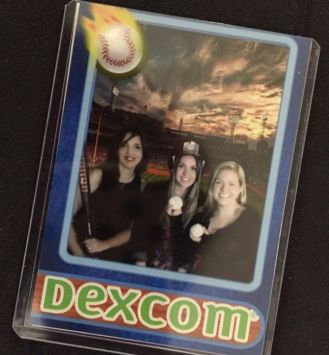
Collector card


National Diabetes Week is an important week for people living with diabetes in Australia. It is an opportunity to have all types of diabetes given attention and focus in the media and to talk about the significant health issue it is – for people living with diabetes, their families, and health systems.

And sometimes, messed up in the campaigns and the social media onslaught, we get sidelined by arguments and heated discussions, and we start to forget one of the real reasons this week is important: how diabetes affects those of us actually living with the condition.

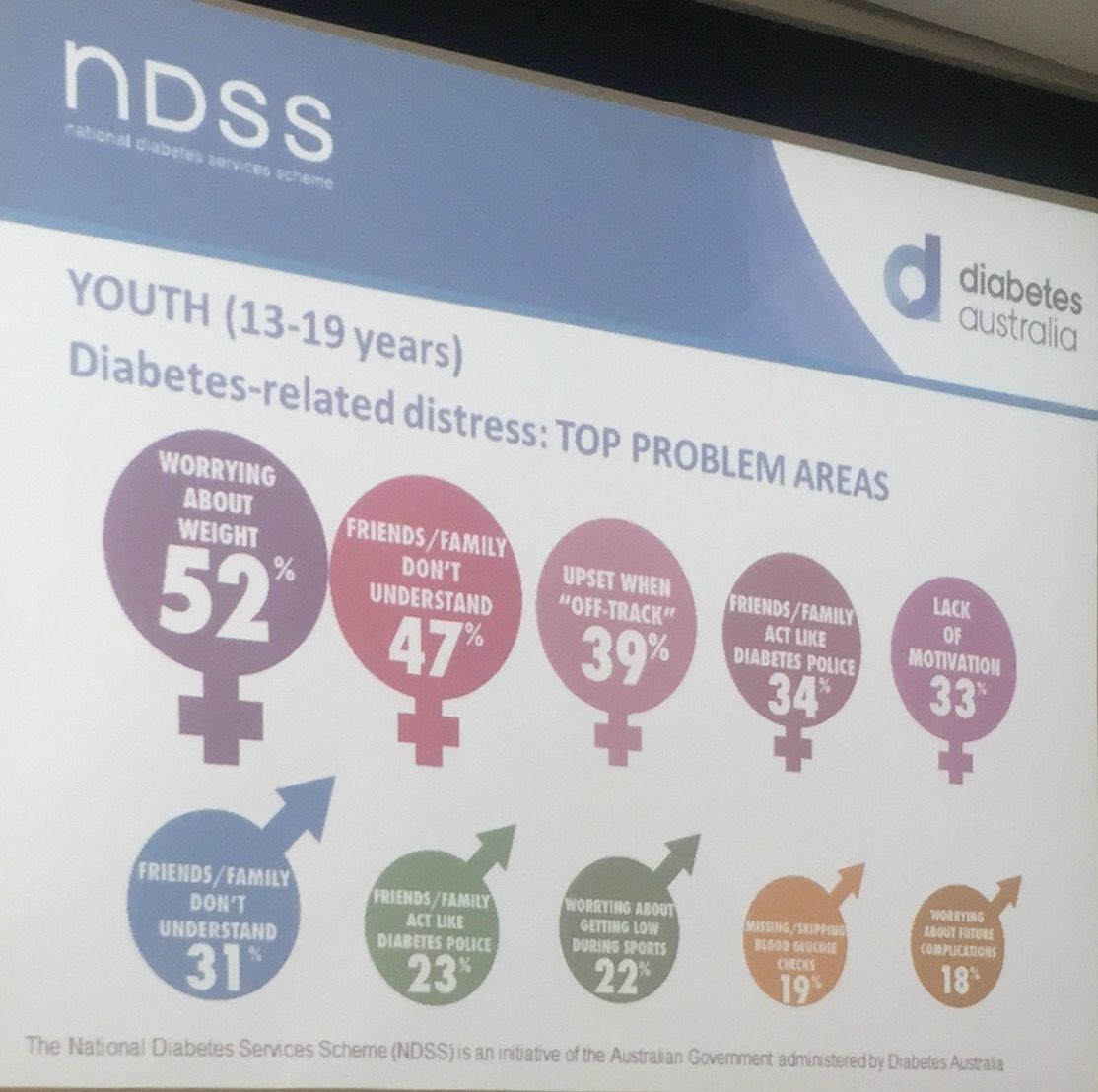
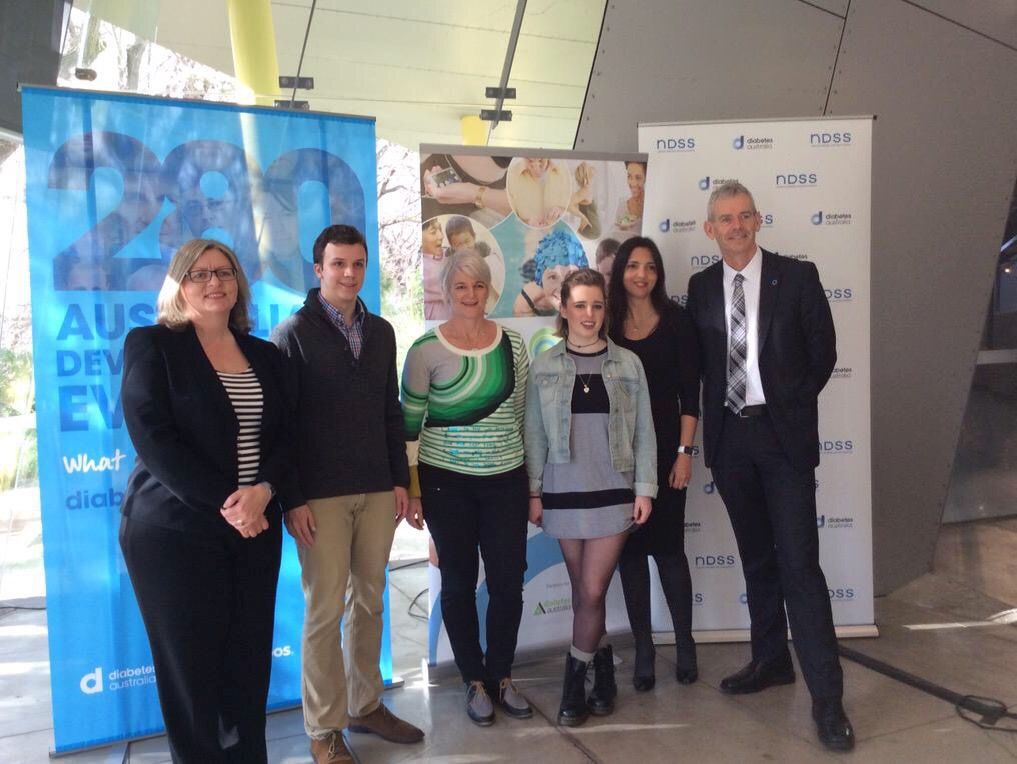
Today, I helped launch a new report. The Diabetes MILES Youth survey was conducted last year and the results have now been published. The survey aimed to examine the impact of diabetes on young people living with diabetes and their families.

The report (which can be found here) shows that a quarter of young people living with type 1 diabetes experience moderate to severe depressive or anxiety symptoms.  This image shows the top problem areas for girls and boys.

MILESYouth

Today’s launch was incredibly powerful. Of course, we heard the statistics and heard how significant the problem is (a third of parents of children with diabetes reported impaired emotional well-being). And we heard about why this sort of work is important. But for me, and I suspect most people in attendance this morning, the most powerful moments were when we heard from Ryan Lange and Freya Wickenden, two young people living with diabetes.  Both spoke beautifully about the role diabetes plays in their lives. Freya’s mum, Dallas, also spoke and shared some insights into parenting a child with diabetes.

MILESYouth2

As I said in my presentation at the launch – I can speak about this for hours and hours. I am a passionate advocate for all people with diabetes, but the vulnerability we see so often in young people with diabetes has meant that this has become a focus area of my work.  But my words are insignificant and unimportant. It’s the words from young people living with diabetes that are central to understand what they are facing. Here is just some of what they told us.


The Diabetes MILES Youth report – was funded by the National Diabetes Services Scheme, and initiative of the Australian Government administered by Diabetes Australia. The study was conducted in collaboration with Australia Centre for Behavioural Research in Diabetes. The Diabetes MILES Youth project is part of the Young People with Diabetes National Diabetes Program for which I am Program Manager.


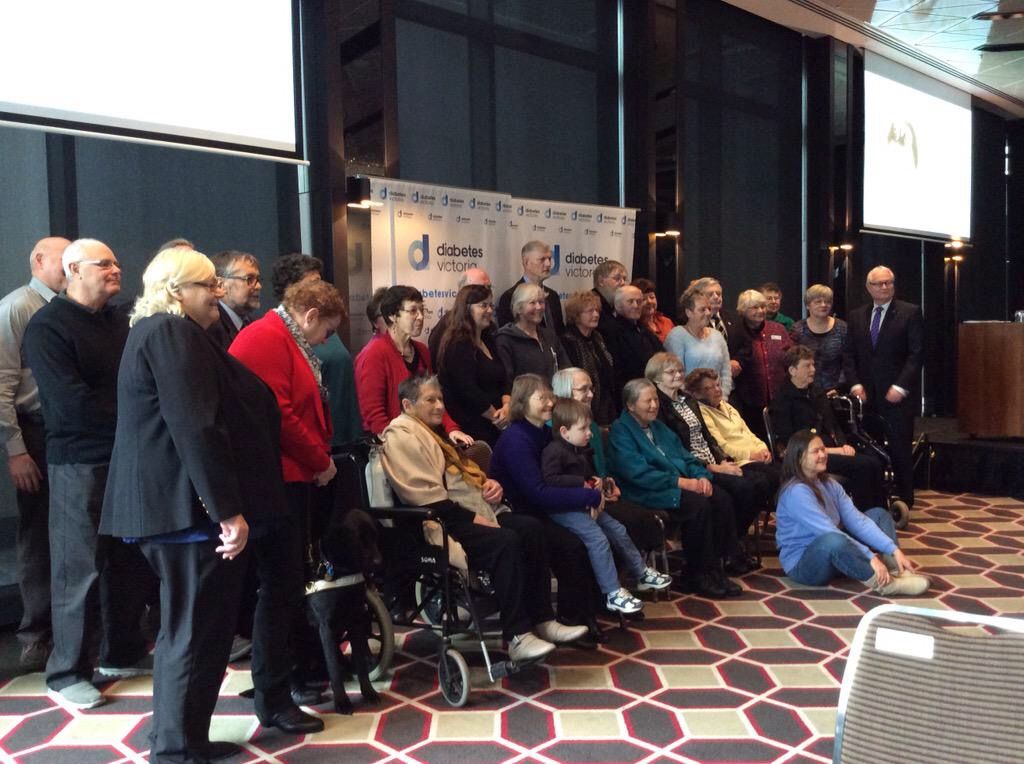
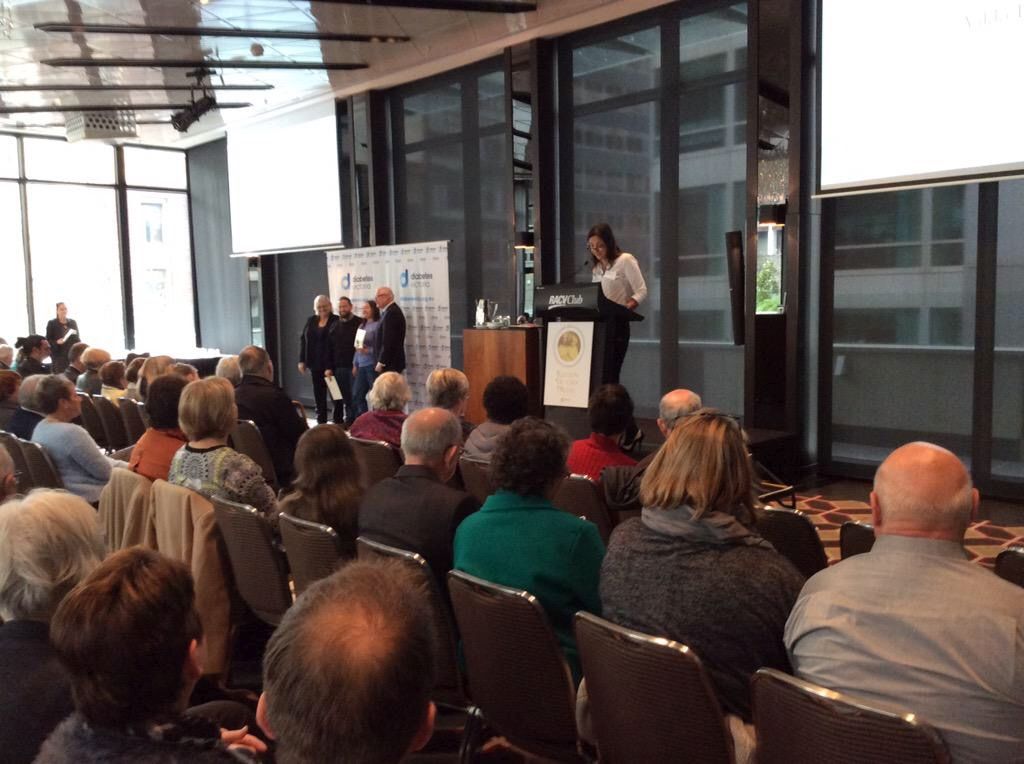
Work today involved celebrating 45 Victorians who have lived with diabetes for 50 or more years. There are no words to say how humbled and inspired I am by this group.

Congratulations to this year's Kellion Victory Medal recipients.

Congratulations to this year’s Kellion Victory Medal recipients.

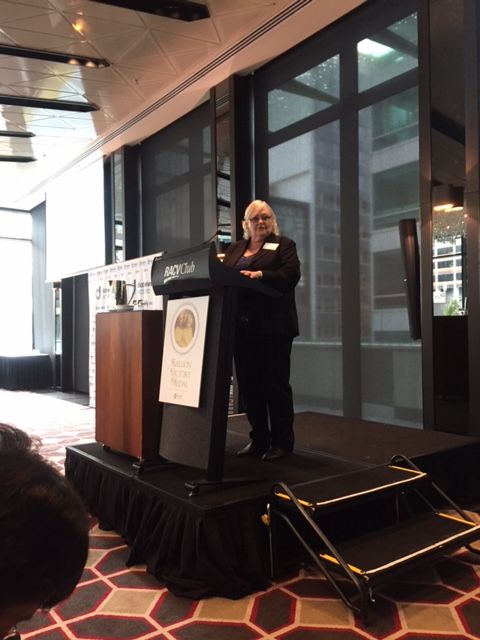
The keynote at this year’s Awards was presented by one of my favourite diabetes people, Cheryl Steele who I (and many others) most fondly refer to as ‘Aunty Cheryl’.

Cheryl giving her wonderful keynote address.

Cheryl giving her wonderful keynote address.

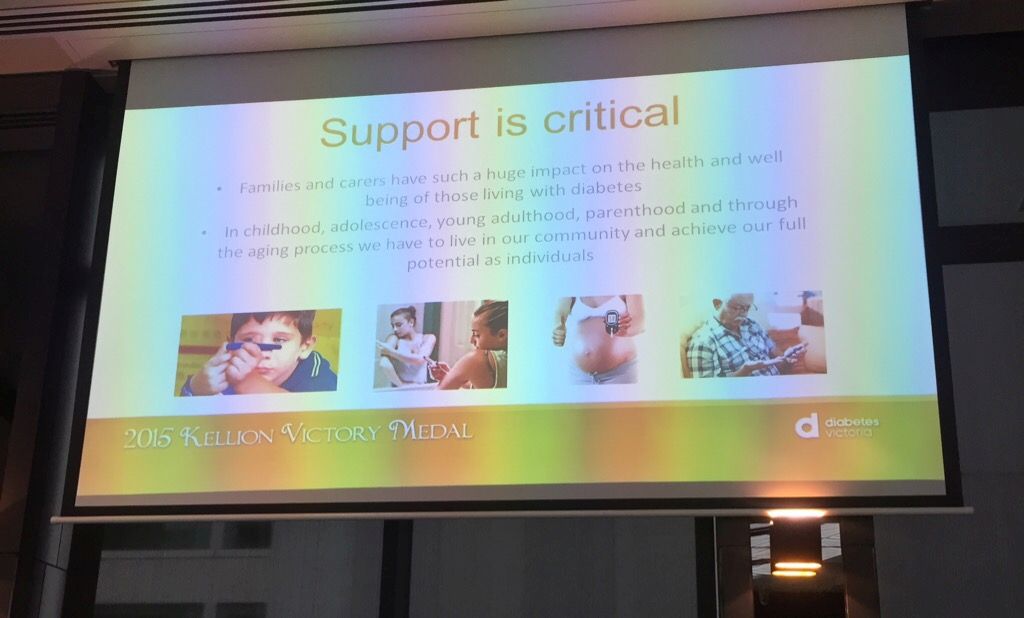
The Kellion awards celebrate not only the person living with diabetes, but also their support network – something Cheryl pointed to in her keynote address.

Kellion2

I have attended about 15 of these ceremonies. They never get old or stale. Today was an absolute career highlight for me; emceeing the awards was an honour and privilege.

kellion4

The stories I read out today fill me up with hope and I am inspired to keep going.

There were many quote-worthy moments from today’s ceremony, but my favourite came from 50 year recipient, Vikki Donovan who gave the following advice:

‘Don’t let diabetes impede on who you are and what you can be. Life is for living, diabetes is for managing.’

I’m a long way off getting my Kellion medal. But I will get there one day.

I accidentally bought an Apple Watch last week.

It was the day before we left for Friends for Life and we were in the Apple Store so Aaron could buy one and then I tried one on and thought about how awesome the Dexcom Share thing is (even if we don’t have it in Australia yet) and convinced myself that the watch was pretty much a medical device and got a little indignant that I couldn’t claim it on my health insurance and justified the purchase by considering the tax I could claim back before heading to Orlando. And then I breathed. (Need help justifying a purchase? Just ask me!)

The Apple Genius pointed out all the features to us and kept focusing on the health apps. I smiled and nodded and stopped listening, because: exercise. I just kept thinking about how cool it would be to take calls on my watch. Like Inspector Gadget.

I set up my watch to do the things that I thought I would use, and decided that I would also set up the activity and health tracker stuff. Gender, weight, height, activity level (low) etc. etc.

Monday was the first day that I actually bothered to check the data. By midday, I was surprised to see that I had done almost 10,000 steps. Somewhere in a part of my mind that is rarely accessed, I remember that we should aim for 10,000 steps a day. I was nearly there! By the end of the day, I had completed nearly 20,000 steps.

I need to admit at this point, that Monday was a travel recovery day for us and we spent it at Disney’s Animal Kingdom, wandering the park and being terrified on roller coaster rides. There was a lot of walking. A. Lot.

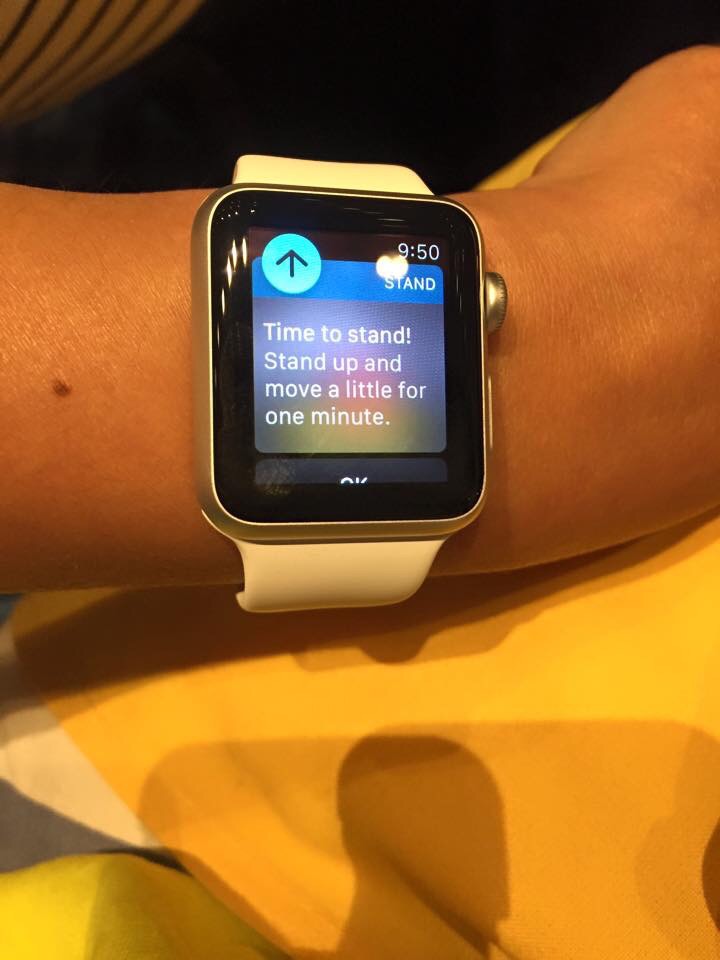
The next day, MasterLab kicked off and I spent most of the day sitting in a conference room, walking the long halls to refuel on coffee. My watch started reminding me to move. Every so often, I would feel a gentle pulse on my wrist and this message would flash up:

‘Great,’ I thought. ‘Now my watch is judging me.’

I got to the end of the day and found myself disappointed to see a total of only 9,000 steps – nowhere near the previous day’s activity.

The rest of the week in Orlando saw me regularly checking my steps and doing all I could to make sure that I hit at least 10,000 steps a day; a goal, I am pleased to say, I smashed.

I certainly didn’t get an Apple Watch with the intention of using it as an activity tracker (I have a Fit Bit lying unopened in a cupboard somewhere at home which I could have used had I wanted to do that), but it is a feature that I probably will use sporadically.

But the feature is a good way to check in and see just what I am doing.  I’ll be interested to see what my activity is when I get back home and return to normal programming.

And in the meantime, I am waiting, waiting, waiting for Share to be launched in Australia.  Because that is a tracking app I am ALL over.

*It’s Thursday in Australia, but Wednesday where we are.

image

We got here. Thirty-two hours, four plane legs (thanks to an unexpected stop in Tampa due to thunderstorms closing Orlando airport), a kid who vomited her way through pretty much all thirty-two hours of the four plane legs, and hour and hours of low blood sugar somewhere over the ocean.

And now on my wrist is a bright green band. I’ve reconnected with friends I’ve known for years here and made new ones. And there are strangers by the pool with matching green bands and matching pumps hanging from their bathers.  

IMG_6951

My family are getting to know the Friends for Life family, being welcomed as warmly as I was when I first met everyone.

‘They look like diabetes people,’ said Aaron as we were walking around the lake the other evening.

‘How do you know?’ I asked him, wondering if he had developed a diabetes-detecting superpower.

‘She has a pump attached to her pocket,’ he said, nonchalantly.

And she was. I hadn’t even noticed.

It’s going to be a big, big week!

Follow ow along at home:

The Diabetes Hands Foundation MasterLab Summit – “A More Effective Summit’ is using #MasterLab and Friends for Life is at #CWDFFL15

Putting together a presentation a couple of weeks ago, I came across this and was so excited I actually squealed:

period table of social media

(Click image for source)

File it away under #RenzaIsAGeekGirl (#AndProudOfIt)

Have a great weekend! My family and I are travelling to Orlando for Friends for Life on Sunday. I’ll be popping in now and then next week.

Here is a little bit of Tom Lehrer. Please indulge me! (And for Harry Potter fans, here you go.)

Follow Diabetogenic on WordPress.com

Enter your email address to follow this blog and receive notifications of new posts by email.

Read about Renza

Archives