Last week, my body said ‘Stop’. Not in a friendly, ‘Hey, let’s sit down for a minute and maybe close our eyes and have a little nap’ way. No. This was a ‘You, you’re done. No more.’

There was no negotiating. No cajoling. My body just refused to body.

On Monday and Tuesday last week, I came into work and was back home by midday. (Staying home all day, both days would have been smarter.) My head felt like it was full of paraffin wax and I could barely concentrate. I had to stop on the landing halfway up the stairs up to my office to catch my breath. And when I finally made it to the top, I felt as though I had run a marathon. I dosed up on cold and flu meds to help with the low-grade fever and achy muscles. I felt pathetic. And frustrated and annoyed. And grumpy.

My BGLs were all over the place – high mostly, with the occasional crashing low after I rage-bolused because I was sick of the week being brought to me by the number 15.

On top of it all, I was trying to work with the kidlet to plan her birthday party which was last Saturday. In a moment of weakness (she knows how to pick it!) we agreed to a sleepover party and sent out invitations inviting the little munchkins to head over on Saturday afternoon and settle in for the night. And then, after sending out the invitations, did nothing until the day before the party. We started planning at 5.30 on Friday evening, exactly 24 hours before a drove of excited tweens would be descending on our house.

This is November exhaustion. It happens every year and every year I forget about it until I am in the middle of it. Most years, my body throws a tanty similar to the one it threw last week. Inevitably, there is a day or two where I just have to stop, take stock and recover. And more than that, I need to refocus on the health choices I am making and try to make better ones.

Because when I started to feel exhausted and poorly, I stopped making sensible diabetes decisions. Not enough BGL checks to really know what they hell was going on with the mild infection my body was trying to fight off; too lazy to reconnect a sensor after I ripped one out squeezing into my dress for the Research Australia Awards Dinner on Wednesday night; lousy food choices because I just wanted to grab whatever was easy and nearby, rather than planning and cooking foods that would nourish me while I was feeling below par; and not spending every spare minute asleep or resting, instead trying to catch up on all the things that had slipped while we were in the midst of World Diabetes Day festivities.

The thing is that what I perceive to be the easy way out ends up meaning that it takes longer for me to feel better.  So, a week later, I am still feeling significantly worse than 100%.

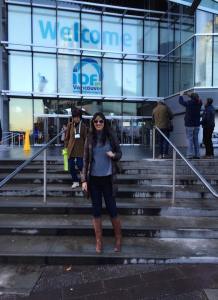
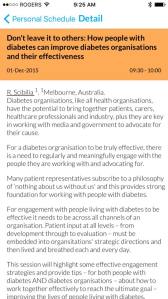
This morning, I took stock. I am getting on a plane to Vancouver next Saturday for a very busy week of the World Diabetes Congress and realised that I really need to be better by then. I set alarms for regular BGL checks, I’ll put in a new sensor tonight when I get home and I’ve planned meals for the week. I hate that it takes a downward slide before I am jolted into doing what is best for me. But it just goes to show – yet again – that when the going gets tough, my health is the first thing to take a backseat. Until it can’t any longer.

I am a truly wonderful friend. You really want me around because I never make you do things that will in any way cause your body pain. With me, it’s all about sitting back, relaxing and being around food and drink.

The value of my friendship was once again proven last night when I was chatting with one of my nearest and dearest friends, Kath. We’ve known each other for nearly thirty years; we have a shared history of six years of Catholic school that bonds us in ways that only those taught by nuns will understand; we have lived through (and come out the other end of) bad haircuts and school formal dresses of the early 1990s.

Over the past few months Kath has had some issues with her hip and has had to see a few different health professionals to sort things out. Now, I always considered ‘hip problems’ to be in the same category as ‘cataracts’– things that happen to people waaaaaay older than us. But my eyes sport brand-new-non-cloudy lenses, and her hip causes her pain, so perhaps I need to reconsider my thinking. Or admit that we are not the same pre-teens we were when we met.

Anyway, Kath was telling me about the latest in her hip saga – and the good news is that she doesn’t need surgery as previously thought. We celebrated with Pimms!

The cause of her hip pain is, of course, exercise. Kath is a runner and plays golf and rows and does other things that make me twitch internally and run stroll screaming to a patisserie. She catches up with friends (who are not me) for a run around a park or a swim or some sort of non-sitting-in-a-café activity. She is super fit and I suppose that is admirable. And I expect her cardiovascular health is excellent. So, perhaps there are some benefits to this exercise thing she has going. Except, of course, she has a very sore hip.

See,’ I said to her. ‘This is why you need me as a friend. Nothing I do with you makes you hurt. Nothing I do aggravates your hip injury. In fact, nothing we do together has caused your hip injury. All we do is drink coffee, eat doughnuts, drink Pimms and have dinner at Marios. All of these are positive things. The Pimms probably numbs the pain, so really, our friendship CURES your problems.’

And then I remembered something.

‘Oh! When we did try to do something healthy, it ended badly. You had to call an ambulance and I was unconscious. And I am still worried that the incident has traumatised you for life. No good comes from exercising.’ I was referring to the short-lived thing we did, where we walked around Princes Park a few nights a week. Which was fun until a hypo knocked me out (and possibly made Kath question whether our friendship was worth the drama). After that, we went back to exercising our right to drink as much coffee as we wanted. And that was pretty much it.

See? This is why you want me around. I can’t promise to make you get fit. I can’t promise to help you beat your personal best in a half-marathon. But I can promise marathon chatting sessions and justifying anytime you want to eat a doughnut. That’s just the kind of friend I am. (And here’s some Randy Newman.)

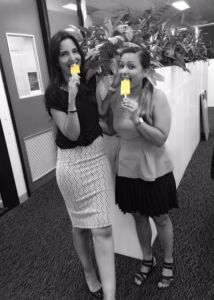
Kath and Renz

Last night, I was lucky enough to attend the 2015 Research Australia Awards Dinner and celebrate the best in Australian health and medical research, and advocacy

The reason I was there was to tweet. Actually, that’s not the truth, but I thought I should mention it considering that both emcee, (ABC’s national health reporter) Sophie Scott, and Diabetes Australia CEO, Greg Johnson made particular reference to it when addressing the audience.

The real reason I was there was because Diabetes Australia was awarding its annual Outstanding Award for Diabetes Research.

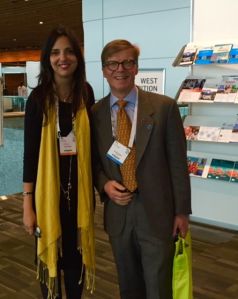
This year’s winner of the award is the inimitable Professor Peter Colman from the Royal Melbourne Hospital.

I could spend words and words and words explaining why Peter is a worthy recipient (read here for just some of his wonderful work). Anyone who knows him – or knows of him – would understand why he was a most deserved winner. His acceptance speech was, as expected, humble and appreciative. And he offered an insightful perspective of diabetes research.

The other highlight for me was the Advocacy award which this year went to brother and sister team Connie and Samuel Johnson who are responsible for Love Your Sister. Connie is living with terminal breast cancer and together with her brother has been raising awareness about the importance of young women being ‘breast aware’ and raising money for breast cancer research at the Garvan Institute.

Connie gave an impassioned speech about why medical research is critical to cancer. She implored that we need to stop the misconception that thinking positive cures cancer. ‘The real fact of the matter is that medicine cures cancer,’ she said. ‘Not postive thinking; not prayers.’

Obviously, Connie was speaking to a room full of researches; she was preaching to the converted. But she is absolutely right. Advances in medicine and improved outcomes – whether in cancer, diabetes or other health conditions – are due to research. They are not due to people being optimistic and cheerful.

I like to think that I am a very positive person, but no amount of positive thinking is going to beat my BGLs into submission or frighten my beta cells back into action.

That doesn’t mean that I am throwing myself a pity party, and I certainly don’t think that is what Connie was suggesting. For me the balance is this: feeling positive or having a positive attitude is all good and well, and it probably does make the day-to-day acceptance of living with diabetes easier. But it is the insulin, the devices and the tools I use that actually treat my condition.

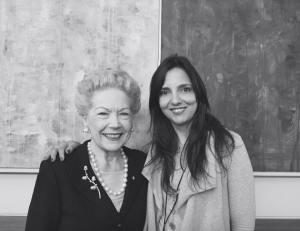
We need more money going into medical research. We need to reward our medical researchers for their work and commitment and dedication. I was honoured to be in a room full of these incredible people last night and so glad that I got to personally thank and congratulate one of my diabetes research heroes.

(All this reminded me of this e-card which is cheeky, but makes me laugh every time I see it!)

image

This. On a t-shirt. (With thanks to my lovely friend, Grainne.)


image

I frequently say that diabetes takes a back seat to other things in my life. Often, they are gorgeous and pleasurable and fun things – like birthdays and holidays and hanging-out-with-the-people-I-love-days.

Other times it’s because I am too busy and running around, life, work and everything else means that diabetes gets attended to when and where I can manage it.

And, of course, other times it is because I just can’t – my headspace will barely allow it.

But with World Diabetes Day, we are pretty much guaranteed that diabetes – our own and on a larger scale – will be attended to. There will be focus, there will be fuss, there will be attention.

Not this year. This year, for terrible and horrible and heartbreaking reasons, diabetes took a back seat. Because it had to. My heart bleeds, not only for Paris – a city that means so much to me and my family, a city Aaron and I visited only last month, a city where we have spent some of our happiest days – but also for the world where this happens all too regularly.

I have no more words about World Diabetes Day this year. Other than to say, it is over and felt that way, almost before it started.

Jean Julien's 'Peace for Paris' sketch gets the WDD treatment.

Jean Julien’s ‘Peace for Paris’ sketch gets the WDD treatment.

Today, Australia has a new National Diabetes Strategy. I would be lying to you if I said that I had read every single word of the document (but, hey, knock yourself out and have a read here). I have had a skim. Now, every part of this Strategy is important – of course it is – but today I want to highlight type 1 diabetes in the document.

A lot of the Strategy crosses the boundaries of all types of diabetes, for example in the priority groups such as ATSI peoples, CALD communities, and those living in rural and remote areas. Attention to complications screening, recommending mental health screening at diagnosis as well as including regular monitoring in the Annual Cycle of Care, including diabetes-specific education and training to hospital staff. Services for women with pre-existing (types 1 and 2) diabetes planning and during pregnancy are considered with particular emphasis on pre-pregnancy planning and access to expert education.

While this is understandable – and there are many similarities in the way that these issues are addressed – there does need to be attention to the complexities type 1 diabetes brings. (Equally, the complexities of type 2 need to be tackled!)

But how is type 1 addressed?

Firstly, yay for a concise and accurate definition of type 1 diabetes. In fact, these 50 or so words could be used by any media outlet next time they need to define the condition! Also, well done to Sussan Ley (and her advisors) at this morning’s media briefing for giving such an articulate and well-informed summary of the diabetes situation in Australia.

12246825_10153722947215789_6667088770494981066_nVery pleasingly, early diagnosis of diabetes is one of the key goals (Goal 2), and type 1 diabetes is given its own treatment, including potential areas for action and measures of this progress. The Strategy acknowledges that 20 % of people newly diagnosed with type 1 diabetes present to hospital in DKA. This needs to change. Better awareness and recognition of type 1 symptoms to improve early detection are flagged as potential action areas.

Type 1 diabetes in the school setting is mentioned, specifically looking at better supporting families, and children to participate fully and safely at school.

In the piece about transition from adolescent to adult healthcare settings, access to psychological services is emphasised.

Could there be more? Well, of course there could. Diabetes is such a huge issue; there can always be more. So, what would I like to see that hasn’t made the cut?

Well, I would have loved there to be something about diabetes technology, specifically around pathways for approval and access of emerging technologies, as well as sorting out issues with access to currently-available tech.

I would have loved for the early diagnosis topic to be broken down a little more. It’s an issue at all stages, but poses a particularly significant challenge for adults with type 1 who are often misdiagnosed based on their age. It can take a lot of time – and a long period of poor health – before they are correctly diagnosed and treated as necessary.

More attention to structured education programs (such as DAFNE and DESMOND) and their value. And how new programs, such as the valuable POSH program (addressing impaired hypo awareness), could be funded.

Breaking down the section on healthcare access for Australians in rural and remote areas and focus on particular problems faced by those with type 1 in those areas. Specialist diabetes care in these areas is minimal; type 1 specialist care is even harder to find

The same could be said when addressing the management and treatment of type 1 in hospital and aged care setting. Type 1-specific education is essential so we stop hearing people getting lousy treatment.

Of course, this is a high level document and the detail is simply not in there. No dollars have been allocated to the strategy. The devil is in the detail – and we just have to see how that plays out.

Finally, I’m not surprised to say that already the naysayers are out complaining about the Strategy. It’s the usual thing with the usual suspects complaining amongst each other and not offering any suggestions or looking at the positives. I wonder how many of the people complaining actively participated in the consultation stages of the development of the Strategy. I am just stating this here because really, it’s tiresome hearing the same complaints about the same issues. I have some concerns too but I am also willing to acknowledge this as a progress and a step in the right direction.

Happy World Diabetes Day to everyone for tomorrow. Shine a (blue) light on diabetes.

Panel at MedTech

Panel at MedTech

I’m in Sydney today for the MedTech conference (follow along at home #MedTech2015) and also swamped with the usual World Diabetes Day happenings. Which I love, because it is a chance to speak about diabetes more than usual.

On my flight up here today, I re-read some of the things I’ve previously written about World Diabetes Day – and, more broadly, Diabetes Awareness Month – and thought I’d revisit some of them today.

Like this from the first year of writing Diabetogenic. (Contains lightsabers.)

And this, where I admit to wearing blue mascara, but thankfully the photographic evidence is poor!

This post tells of a crazy 2 days which kicked off with research awards, moved on to a very early morning flight to Sydney so I could do some diabetes myth-busting on a morning television show and ended with me participating in a 24 hour tweet chat. With lots more in between!

With so many different World <insert cause here> Days, explaining why we need one for diabetes (or anything else) can be tough. But here, I justified the need, sharing my own story of a hypo that wouldn’t quit and the advocacy that came after it.

And one of the proudest mum moments I’ve had is in this post when I wrote about how our daughter became my favourite diabetes advocate with her impromptu awareness raising activities at school on World Diabetes Day.

It’s always a busy, blue-tinged time.

image

I speak a lot about the challenges of living with diabetes. Sometimes, the challenges don’t directly relate to me, but I can still see and understand that the diabetes experience is different to anyone and one person’s easy-peasy-lemon-squeezy is another person’s anxiety- and stress-inducing concern.

One of the things that perplexes and annoys me is people who are unable to see diabetes outside of their own bubble. Frequently these people fail to see that just because they don’t need information about <insert topic here> that doesn’t mean everyone has access to or an understanding of it.

Sometimes, when we are running an activity or speaking about a topic at one of our events, people say that they have never had any problems with that, so why would we speak about it – completely ignoring the fact that we have surveyed lots of people living with diabetes and this is one issue that is of concern to many others.

I ‘work in diabetes’ (which sounds ridiculous, but you know what I mean) and the last person’s diabetes that gets considered when I am at work and we are developing programs is my own. If I thought, for one minute, that my experience of living with diabetes mirrors most others, then I’d be utterly naïve and not doing my job. That’s why working and engaging with, and listening to as wide a range of people affected by diabetes as possible is critical to delivering services that are of use.

(Because, let’s be honest, if it really were all about me, I’d spend lots of time and effort working with the leather crafters at Hermes to help me design a perfect diabetes bag. Because: shallow. And lots of stuff.)

And you know if you just rolled your eyes at that last comment because you have found (or designed) the perfect bag and think it is waste of time to speak about it because it doesn’t affect you, then a) stop it and b) can you tell me where to get one? Thanks.

With World Diabetes Day this week, it’s a great time to think about how others deal with diabetes, what they know, what they don’t, what their concerns may be.

If I only cared about what was going on in my diabetes bubble, I wouldn’t write so much about campaigns like #Insulin4All. You can read all about the campaign here, and my post about it during the lead up to last year’s WDD. And watch this video!

I have never had trouble accessing insulin. But that doesn’t mean that I don’t care about those who do.

Insulin4All2015

It’s beginning to look a lot like World Diabetes Day. Facebook pages are being turned blue, people are asking is to wear blue and blue circles are appearing everywhere. How November 14 has come around again is beyond me.

So with lots happening this week, here is a quick look at a few things I’ve been seeing in the diabetes interwebs.

The bit where I am ashamed to be an Australian

Yesterday, I read a piece in The Guardian that made my heart break and my brain explode in equal measure.

A woman with diabetes being held in a detention centre on Narau is currently 40 weeks pregnant. Doctors on the island have urged that she be moved to the mainland to receive the care that is required of what is considered a high-risk pregnancy however the ‘medical officials’ (whoever they are) are refusing to do so.

Pregnancy with diabetes can cause problems for both the mother and baby if specialist care is not given. Babies frequently need to spend some time in the special care nursery as they are born with (or develop shortly after birth) low blood glucose which requires monitoring. Mothers often require extra care at the end of the pregnancy, with healthcare professionals keeping a very close eye on the placenta.

Our immigration minister, Peter Dutton, calls this a ‘racket’ and is refusing the doctors’ calls to move her. My heart breaks for the mother and baby. And for Australia. What sort of country am I living in?

Rolling my eyes at concerned healthcare professionals

On page two of today’s Endocrinology Specialist Update with a story about has come out with a story about hacking diabetes devices. Of course, the article highlights how ‘… some doctors and health experts are cautious about the idea of patients taking matters into their own hands’, a comment that made my morning coffee spurt out of my nose.

The president of the RACGP believes that the dangers of such practises would outweigh the ‘perceived’ benefits. He also encourages that ’ … It is important for patients to have a conversation with their GP about any patient-led monitoring system or treatments they use’.  

Not sure about any of you, but my GP – and remember, he’s a good one who understands diabetes – would have the first clue about what CGM is all about, let along how it can be hacked to share my information with friends and family.

Great work RACGP and other HCPs in catching up on this. Nightscout (CGM in the Cloud) has been around for a while now, so this really isn’t new information. Its (closed group) Facebook page has almost 15,000 members. This is just another example of healthcare professionals being clearly out of touch with PWD and what we are doing to live as best we can with this stupid condition.  Also, #WeAreNotWaiting for device companies or healthcare professionals to do this for us. Because if we did, it would never happen.

Melissa Lee uses words that make sense

Every word of this brilliant piece by Melissa Lee is important where she writes about diabetes being a punchline. This is such a balanced post (published on diabetes magazine, A Sweet Life) and I urge you to read it and forward it on.

From now on, along with sending copies of the Diabetes Australia Language Position Statement to anyone who writes something careless about diabetes, I think I’ll link this too. Thanks, Mel. (The only thing that could make this better is if you were to sing it. Could you do that?)

You want some hope?

Here you go. Read this update from Kerri Sparling about the iLet Bionic Pancreas.

In Melbourne? Want to do something for World Diabetes Day?

Come to this on Saturday and celebrate WDD with other people with type 1 diabetes.

Wear Blue

I was reminded of this fun little video that Cherise Shockley made a few years ago. So get your blue on and raise some awareness about diabetes this week and for the rest of the month.

IMG_0220

I’ve spent the day in our nation’s capital for a meeting. And here are two things.

This one made me smile. Because whether it be designing seats on planes or health services, consumer engagement is key.

image

And then this. Which made me cringe.

IMG_1268

Why, Canberra, why?

Have a great weekend!

Follow Diabetogenic on WordPress.com

Enter your email address to follow this blog and receive notifications of new posts by email.

Read about Renza

Archives