Dr Jen Gunter* is a brilliant OB/GYN in the US, and she seems to have to spend a lot of time dispelling myths created by looney wellness gurus and Gwyneth Paltrow about things that help women’s health – most of which seem to involve shoving things up one’s vagina. Their non-science approach has included suggestions of inserting jade eggs, glitter and (most recently) garlic cloves in the vagina for all sorts of weird and not-so-wonderful purposes.

So, the good doctor writes blog posts and Twitter threads about why sticking ground up wasp nests (I’m serious) inside our vagina is a very, very bad idea. (I know – that should be self-explanatory. Alas, for some in this world, it is not.)

We get to do this in the diabetes world too. While I’m yet to see anyone suggesting inserting household items, bulbs or crushed up stinging insect homes into our orifices as a potential cure, there certainly are other myths that seem to regularly come our way and have people wondering if maybe, just maybe, they would work better than insulin.

They will not.

Cinnamon will not cure diabetes. I even have a little n=1 study to prove this. I ate nothing but cinnamon buns for two weeks while in Copenhagen and Stockholm and my diabetes did not disappear.

Okra water may have improved the glucose levels of pregnant rats (in one study), but it will not work as a substitute for insulin, so don’t load your pump up with it.

And while I can honestly say I have no interest whatsoever in any of the klusterfuck of Kardashians (I just created that collective noun for them), as soon as one of them trespasses into my diabetes world, you bet they become fair game and on my radar. This little gem from Khloe gets a regular show in diabetes presentations I give:

Myths and misconceptions everywhere! We may laugh about them, and share silly memes, but sometimes, they do more than just cause us to roll our eyes. Sometimes they can be a little more damaging.

Hello Easter, and hello myth that low A1c guarantees zero complications.

The reason this was getting a run was because Easter for many means chocolate, and chocolate is like kryptonite for some low-carbers. Out came their claims that carbs are a one-way street to Complicationsville.

Diabetes-related complications don’t work in a logical, or especially fair, way. There is no formula that you can go to that works it out for you and is accurate every single time. Much like there is no pie for low-carbers, there is no Pi for diabetes.

It would be great if there was. I would love something that worked like this all the time:

A1c <5% = 0 complications ever, ever, ever.

Alas, it doesn’t work that way.

Diabetes-related complications are fucked up for many reasons. Before we even get them, they can be terrifying. We live with this fear hanging over our heads and for some of us, that terror can be horrid.

They come with all sorts of blame and shame and judgement and finger pointing, plus a good measure of guilt. Isn’t that fun?

There are other factors at play that contribute to the development of diabetes-related complications. And we don’t know what they all are. That’s why we see examples of two people running the same A1c for the same number of years yet one has complications and the other doesn’t.

And then, if we are diagnosed with them, we need to readjust our lives to work around this new reality that can be debilitating. And that’s just the physical side of it – the psychological side adds a whole other level.

There is evidence to show that an in-range A1c lowers the risk of developing diabetes-related complications. We have that information and it is regularly and repeatedly banged into our heads. One of the first acronyms I learnt when diagnosed with diabetes (literally day 1) was DCCT!

I know that the idea of developing diabetes-related complications after ‘doing everything right’ and living with a super low A1c doesn’t seem fair. I also know that people are terrified about what diabetes may hold, so gripping onto a promise that the bad stuff won’t happen can be reassuring. We all want reassurance. We all want hope.

But a reduced risk does not equal no risk. Diabetes doesn’t work in absolutes. And people who think that it does are, quite simply, wrong. I really wish they would stop spreading myths about it. (That goes for you too, Khloe.)

*Dr Jen Gunter has written a book and it’s due out later this year. I’ve pre-ordered and you can too here. It’s called The Vagina Bible, or as it has become known in our place thanks to the fourteen-year-old kidlet’s wordplay: ‘The Vible’).

Twenty-one years of diabetes feels like forever sometimes, and I feel as though nothing surprises me anymore – it’s just same, same, day in, day out. And most days really are like that. But then there are moments that jolt me.

I had a moment this weekend that did just that. It felt familiar, because it happens occasionally. But it passes and I forget. I think that before this weekend, I’ve never really tried to work out just what it was that I was feeling.

But this time…this time I did.

Perhaps it was because I had four glorious days of long weekend and time to think, or maybe it was because diabetes was far more dominant than I’ve come to expect, thanks to thirty-six hours without Loop (which is a story for another time).

This feeling is like being in the ocean and being pushed under by an unexpected wave. I feel overcome and I feel that every single part of me is being caught up and I can’t escape. It hits me out of nowhere and as I’m being pulled under, it takes over.

It lasts no more than a heartbeat or two, and usually I just shake it off and get on with whatever I was doing.

But this weekend, I stopped and along with feeling swept up, I felt an overwhelming and complete sense of sadness descend upon me. I know I have diabetes. I have accepted it. I feel it living in me. But this sadness is matched with a realisation that this is it – I don’t get a chance to be without this ever again.

I’m doing a lousy job trying to explain this, and I don’t want to sound like I am in the midst of some sort of crisis, or about to sink into the depths of a period of burnout. I’m not there – or even staring it down.

This is just that fleeting moment of remembering that diabetes will always be present, and each day, it will rob me of some of my time, my mind, my headspace. It makes me feel sad when I think of this.

I was reminded that we do so much to just settle ourselves around all that diabetes demands of us. Some of that is physical rearrangement as we accommodate the devices and scars and paraphernalia that accompany this condition. But so much of it is how we think and feel. In the past I have not given this feeling a name, or allowed it to be any more than a passing flash – barely a blip on my consciousness. Maybe this time I permitted more because I could handle it and was ready and able to give it a place.

My body and mind are taken up so much by diabetes – I don’t want to give it any more attention. But this weekend, for more than just a minute – although not too much more – I gave name to this sadness that I feel. It passed and on I went. But it lives there now – or rather it always has.

If I see another article about ‘guilt free’ Easter meal ideas, or read about how people will ‘be naughty’ and eat chocolate eggs, I am going to throw myself into a vat of Lindt Bunnies and not emerge until next Tuesday. It’s everywhere – and even more prevalent on diabetes-related sites.

Is it any wonder that so many of us with diabetes have a fraught relationship with food? With so many judgement-laden words associated with the foods we eat, our diets, and eating during festive periods, it can seem impossible to not feel that everything we put in our mouths comes with some sort of grading.

I don’t know how many times or in how many different ways I can say that food doesn’t have a moral compass. There are no good or bad foods. There is no one eating plan that works for all people.

And more than everything – it is not okay to tell a person with diabetes that they should feel guilty for eating a chocolate Easter egg (or anything else for that matter).

Being diagnosed with diabetes does not mean that you are now open for business for comments, criticism, advice or condemnation about the foods you choose or choose not to eat. Your eating choices are not for public scrutiny. No one has buy-in on your food choices unless you ask their opinion.

We are programmed from when we are young to think of foods as a way to measure our virtue. Unlearning all that messaging is really, really tough.

And diabetes makes it so much harder because we see the impact of what we eat and how our food choices affect our glucose levels. CGM may provide countless benefits, but it also lays bare what we have eaten. But, just as our food choices are no one else’s business, neither is what that food is doing to our CGM trace (or reading on our glucose meter).

My hope for all my diabetes tribe this weekend is this: may you find some chocolate of choice (or not, if your choice is no chocolate). And may no one pass judgement on what you are eating, pass comment on your glucose level, ask you what you ate, tell you to eat only half a hot cross bun, or belligerently ask you if you have bolused for it.

So yes, let’s have a guilt-free Easter. But I don’t mean that in terms of cutting out what we want to eat, or being made to feel bad about it. I certainly don’t mean it in reference to being made to feel guilty because we have a higher glucose number than we would like to see. I mean let’s just free ourselves completely from any guilt associated with food, or the numbers following eating that food. That’s actually one thing I am in favour of completely restricting.

Easter baking plans…

This is honestly what I thought life had in store for me following my diabetes diagnosis twenty-one years (and two days) ago:

(Click for source)

The reality is, of course, very different. The reality is that I am healthy and absolutely not abstaining from things that bring me joy (see: Nutella). I’m still working on the long life part, and have every intention of making that a reality too.

If you are newly diagnosed (or know someone who is), find people who are doing this for real, not text book tales of a diabetes life. There is a lot of joy still to be had. I promise.

I have some illuminating discussions with healthcare professionals. After I’ve had an in-depth conversation, I find myself going over things they have told me and discover that I have always learnt something new about what it means to work in a system that is, in many ways, broken. I learn how their approach to healthcare changes year by year as they try to do their best for the people they see each day. And I realise that I never, ever could do their job.

Other times, I shake my head a little because I wonder how their understanding of the day-to-day challenges of living with a chronic health condition is so far removed from reality. In these cases it’s almost as though we are speaking different languages.

Recently I spoke to a group of HCPs about those differences. I focused on how we manage to fit diabetes into our busy lives in ways that HCPs never can imagine and how the neat text book description of life with diabetes is very different from the mess that we are trying to tame each day. I spoke about how what they say can be read in a multitude of different ways by those of us on the other side of the consultation, and to think about words carefully. And I spoke about how although some education of HCPs about diabetes suggests that there is a one size that somehow fits us all, the truth is that we require our education to take into consideration every size and shape possible and for it to be delivered accordingly.

A doctor came up to me afterwards and thanked me for my talk. ‘Thanks for making me think differently about some things,’ she said. I loved that she said that, and I told her so. ‘Actually, that’s always one thing that I hope to get when I hear someone speak about diabetes – a new perspective or way of thinking about something that I think I have all worked out.’

We chatted a little about what she’d heard that had surprised her and would she would now be thinking about in other ways. I may have high fived her when she said that she would now be taking a lot more care with the language that she uses. ‘I had no idea that what I was saying had such stigma attached. I honestly thought I was saying the right things. I never meant for people to feel blamed, but I can see now how I could have come across that way.’

That’s been one of the challenges of the #LanguageMatters movement in diabetes. As we’ve tried to bring HCPs along for the ride, we’ve had to do it in a way that doesn’t make it sound like we are berating them. I do and will continue to call out language that impacts on PWD negatively because it does matter. Language has the power to make us feel like we can take on diabetes or be defeated by it; it can make us feel like we are doing all we can and that is enough, or that we are failing and will never do enough. Again, for those down the back – language does matter. But I truly have never believed that HCPs use language with any malice or intent of harm. It’s often just because they repeat the words and phrases that have always been used.

I explained this to the doctor and we spoke about how to get the message across in a way that highlights and promotes collaboration. After we’d been speaking for about 10 minutes, she said ‘I have a question for you,’ I nodded, eager to hear what she wanted to ask. ‘What’s the best kept secret in diabetes?’

I was startled. What an interesting – and frankly brilliant – question. I’d never been asked that before and I wanted to think about it a lot. Poor woman – I’m sure that she just wanted some sort of quippy response and to be done with it so we could go home and eat dinner.

‘Wow!’ I started, excitedly. ‘I love this. Are there any secrets to diabetes?’ I started a checklist, going through some ideas.  ‘Is it peer support? For some reason, a lot of people don’t know just how widely available this is. Or maybe it’s how people can drive their own healthcare by setting the agenda. I frequently have people tell me that they just do what their doctor tells them (or rather, say they will) because they didn’t realise that healthcare could be an open and joint dialogue. In diabetes, maybe it’s all the clandestine DIY stuff that is going on which is so apparent to those of us who play on Facebook and Twitter, but maybe not to those who are not online as much. I know it’s NOT cinnamon. Actually – maybe it’s the whole thing about how when living with diabetes, or other chronic condition, our mental health is rarely taken into account, so perhaps understanding that and being referred to relevant services is the secret. It happens to so few of us…’

I stopped, because I could sense that there was so much I wanted to say, but I truly didn’t have an answer. ‘I don’t really know,’ I sighed. ‘I wish I did. I wish there was one…’

We said our good byes and I started to walk away before the doctor called after me: ‘You know what the best kept secret in diabetes is?’

I spun around. ‘What?’ I asked. I admit that I was hoping for a key that was going to unlock the mysteries of diabetes and suddenly make it a lot easier to live with.

‘You,’ she said. ‘And others like you. If only doctors like me took the time to listen to you all we would know a lot more and probably do a much better job.’

I smiled at her. ‘We’re not really a secret,’ I said. ‘We’re actually quite out there. You’re just not looking in the right places. Or asking the right questions.’

I gave her a little wave and left the room.

Dear Pancreas

For the last twenty-one years, part of you has been living rent free in my body doing…well…doing bloody nothing.

If I could performance manage you out of there, I would. Alas, I cannot. But here is the performance review I would give and the things I would like to say (with illustrations from Effin’ Birds).

As it stands, it’s been a while since the whole functioning beta cell thing happened.

In fact:

And…

Just an idea, but…

I’d really like to know…

And was wondering if you could perhaps…

But…if the last twenty-one years is anything to go by, I’m guessing that not much is going to change any time soon.

So, we’ll just keep going with this?

Yep?

Here’s the thing: the last twenty-one years have been pretty rough at times. But I’ve managed. I have no idea what I am doing most of the time, and spend a lot of time with a confused look on my face, or saying…

But that’s okay. Because along with the understanding and acceptance that I may never, ever truly be good at diabetes, it turns out that I am managing.

So, dear pancreas. As you were.

And on I’ll go. As I have been. Just like this…

Effin’ Birds is the sweary joy you need in your life. After I found them last year, I wrote this piece because, I found that there is a picture for pretty much every diabetes moment imaginable. 

Follow them on Insta here and Twitter here. (Obviously, this is not for people who are offended by obscene language. I am not one of those people. Neither is my kid who takes great delight in bringing out our set of Effin’ Birds playing cards whenever she has friends over. I apologise unreservedly to those friends’ parents.)

Look! A t-shirt that explains what I am made up of:

Insulin and coffee: that pretty much sums it up.

Some days it makes sense to wear diabetes on my sleeve (and chest…). You can get your own by clicking on the image and going to the The Diabetic Survivor‘s e-shop. Lots of fun stuff to check out, including tees, bags, phone cases and more. I’m a bit taken by the ‘Dead Pancreas Gang’ merch.

I bought this shirt myself because it’s cute and I like to support folks in the diabetes community. 

I regularly say that I wish I had an assistant to take care of all the diabetes admin. I’d like to be able to hand over all the scheduling, paperwork and the general keeping track if it all that takes time, brain power and forces us to find room that those not living with diabetes can dedicate to making sure they remember if there is milk in the fridge or when the new season of The Good Place starts.

It would be a thankless job, and I doubt that anyone would be interested in doing it, but I can dream.

A couple of weeks ago, Diabetes Australia officially launched KeepSight, the first ever national eye screening program for people living with diabetes. It’s actually a super easy concept: PWD register to be part of KeepSight and then receive reminders when it is time to have an eye check. No more needing to remember the last time you had a check-up.

This is similar to the cervical screen program that has been around for a number of years now. I have relied on reminders from that program to alert me when it is time to make an appointment for a screening check. KeepSight will help us keep track of our eye checks.

I could give stats about the number of people who are missing out on regular eye checks, and even more stats about rates of diabetes-related eye complications. But I won’t. Because that is not what is getting me excited about this program.

I’m excited because this is one of those simple ideas that goes towards making our lives with diabetes easier. And, quite frankly, there’s not enough of that happening!

Click on the link below; it takes literally two minutes to register.

Now, if we could just find a way for insulin scripts to never run out, diabetes supplies to be endlessly replenished when running low and all our other appointments sorted, we’d be halfway to making this condition just a tiny but easier to manage.

Disclosure

I work for Diabetes Australia, but I am not writing about this because I have been asked to. I am doing it because I genuinely think this is a program that goes towards helping those of us living with diabetes and I will always share anything that does that.

But you do need to be aware of who pays my salary each week and consider my bias when I share things by my employer. You have a right to know that, which is why I will always make sure that it’s clear – each and every time I write about anything in which I am involved. Transparency is important.

7am alarm.

Alarm off.

Out of bed.

Check pump site – looks a bit red so rip it out.

Into the shower.

Remove glue residue from old pump site.

Dry off.

Moisturiser.

Refill pump.

New cannula in.

Prime pump.

Apple watch on.

Check Loop app is working on watch.

Get dressed.

Tuck pump away in my bra.

Tuck RileyLink away in bra, too.

Dexcom app alarm sounds.

Calibrate CGM.

Make up on.

Run fingers through hair – that will do.

Check handbag for low supplies.

Loop low battery notification.

Get battery and coin out of spares bag.

Change battery in pump.

Double check supplies in spares bag.

Add another battery.

Throw Riley Link charging cable in handbag.

Say good bye to family.

And dogs.

Red lipstick.

Dexcom sensor expiring warning.

Clear alarm – restart will be later in the day.

Walk out door.

Get in car.

Check Loop on watch. Green and steady.

Drive to work.

Sing loudly in car.

Get to work.

Open laptop.

Grab coffee cup.

Bolus for coffee.

Walk to café.

8.14am Coffee.

Diabetes like you mean it.

This post marks one thousand posts here on Diabetogenic*. That’s a lot of senseless rambling, ragey-moments, times celebrating and despairing about diabetes, and links to brilliant ideas and post… or to things that have either amused, frustrated, delighted or annoyed me.

A thousand posts in and diabetes is still a constant in my life (damn it). And I remain not good at diabetes…and I have many of those thousand posts to prove it.

There are clearly some recurring themes that I write about. I say that I am a one trick pony, but perhaps that’s not completely true. I seem to have a few tricks up my sleeve, really. And now I’m confused, because ponies don’t usually have sleeves and my metaphors are very, very mixed.

Here are the things that seem to have taken up a lot of writing time and words over these thousand posts…


Peer support

Most of the time, I am pretty positive about living with diabetes. Let me be clear: that doesn’t mean I love it, or even like it. But I feel that generally, I know where it belongs in my life and it seems to fit in that place as well and happily (begrudgingly) as it can.

I know that one of the reasons that I feel this way is people in the diabetes world I am lucky enough to call friends and peers. Online friends, in real life friends and those who cross both boundaries are a critical part of my living-well-with-diabetes strategy. Knowing that there are only a very few places around the world where I couldn’t find someone from this community to have a coffee/tea/prosecco/mojito with gives me an incredible sense of comfort. (And reassurance in case of diabetes emergency…)

I say that my peers with diabetes help me make sense of my own diabetes and that’s true. Knowing people who understand innately what it is like to share a body with diabetes means that I never feel alone. Diabetes is so isolating at times – even for those of us surrounded by great people who support and encourage us. As much as I need those people and am grateful for them, it is others living with diabetes that help me realise that I am never, ever alone in dealing with the ‘diabetes things’.

The diabetes online community is made up of lots of people and not all have diabetes. We each bring our own experience and perspective to it. I’ve learnt so much from those living arounddiabetes and how they incorporate it into life, because it comes with its own set of challenges and victories. That is why the community is so valuable – its diversity and range of experiences and perspectives.

I regularly talk about the value of community and diabetes peers and finding our tribe. It can take time to settle into just who and what that looks like, and it changes because there are always new people around. But it is so worth it. My tribe? I love them so hard.

Nothing about us without us

I am not the tattooing type but if I was, I think that I would have this phrase inked on my body somewhere (or maybe I’d be really pretentious, and have it written in Latin: Nihil de nobis sine nobis, according to Google translate.) It remains a frustration of mine that this isn’t the starting point for pretty much anything and everything to do with diabetes care. The fact that we still need to fight for a seat at the table – or a ticket to a diabetes conference – is, quite simply, not good enough. Having others speak for us, on our behalf thinking they know what we need, is offensive.  It should never be the case that non-PWD voices speak for us or over us. Ever. Our stories are powerful, but they are ours and we should have the platform to tell them in our own way; in our own voice.  Tokenism is rife and sometimes, that frustrates me even more than when we are completely excluded. The delusion of inclusion is, I think, worse.  Whilst there may have been some strides made to true co-design and inclusion, we have not come far enough and until we get this write, I’ll have a lot of content fodder for this blog.

Food

I like food. I write about it a lot. And I want to be Nigella. That’s really all I have to say about it right now…

Waffles in Brussels. Both were excellent.

More than numbers

Apparently, stating the obvious is still necessary in diabetes. We are more than numbers; our A1c does not define us; our worth is not wrapped up in our glucose levels. We have been saying these things for years…decades…and yet there are still times that this is what we are reduced to.

New treatments, devices, drugs, education programs are measured in reduction of A1c. Perhaps this is because it can be measured, but talk about only getting part of the story. I can’t help but think that if PWD were part of establishing research protocols, there may be far more than numbers to assess the success of a treatment or therapy. (See also: nothing about us without us…)

Women’s health

In recent years I’ve written about the issues specific to women, health, sex and diabetes a number of times because there is so little out there about it. And it seems it resonated with a number of women who wrote to tell me (and the HCP who saw me in the fresh produce section at my local Woolies and yelled how she loved my idea of giving lube in diabetes event bags).

Anyway…talking about the stuff that may not be the easiest is important. It’s the only way we get remove stigma and encourage people to share their stories. Which helps others. That’s why I have openly written and spoken about miscarriages and infertility. And eating disorders. (I know – not an exclusively women’s health issue.) There is nothing shameful or embarrassing about these topics. Other than we don’t speak about them enough.

Learning from and supporting others

The Interweb Jumbles I write are my favourite (and cheat’s) way of pulling together all the things I’ve seen that have interested me and leaving them in future place for (my) future reference. Plus, I love sharing what others in the diabetes community and world are doing.

I have always benefited from the generosity of others in this community who have shared my work and I pay that back whenever and wherever I can. Supporting each other is critical.

There’s so much going on in the diabetes world all the time and I highlight the things that resonate because I think that if they mean something to me, they may mean something to someone else, too.

Science. Science. Science

From pseudo-science rubbish, to ridiculous made-up diabetes cures to anti-vax delusions. How much writing material have they provided!

I live in hope that one day – and may that day be soon – we won’t still have to read about these charlatans trying to convince us that all that ails us can be cured with fairy dust and positive thought, or that vaccines are evil and cause diabetes, or that ‘wellness warriors’ are the true experts and professionals when it comes to diabetes.

While a lot of what I write is spent mocking these fools, there is an underlying seriousness to it all. Who can forget little Aiden Fenton who died after his parents stopped giving him insulin, instead leaving him to be treated by a ‘slap therapist’?

Anyone who is sprouting any treatment that is not based in science when it comes to diabetes or perpetuating anti-vax rubbish is as barbaric as the man who was charged with Aiden’s death.

The whole person

Diabetes happens because of something not working properly with our pancreas. But it affects every single part of us – something that astoundingly still seems to surprise some people.

Considering our mental health and emotional wellbeing is critical when assessing just how diabetes impacts on our every day. For some, diabetes seeps into every single part of us and for others, we keep it at bay and manage around us. For most of us, there is an ebb and flow of just how that works.

And while we’re talking about the whole person, diabetes-related complications may be specific to a particular body part, but those body parts remain connected to the rest of us.

For so long, we get metaphorically chopped up with as only bits of us get attention and focus. But nothing in diabetes is ever in isolation. That’s just not how it works.

And finally, language

The trick this (however-many-trick) pony is most known for is #LangaugeMatters and you know what, I’m happy to wear that. I really am. If I was to stop this blog today (thought about it…1,000 has a nice rounding off feel to it), and never spoke about diabetes ever again (oh, if only), I would not be disappointed if this was what people thought of when they thought of me and this blog.

Language matters. It does and I refuse to, for a moment, believe that it doesn’t. I am certainly not the only person playing in this space and I am so grateful to have a tribe of language matters peers and colleagues can rise above the small details to understand just why this issue does really matter.

___________

Thanks to everyone who has read one or more of these thousand posts. Thanks especially to the people who keep coming back. I can’t promise that there are going to be a thousand more posts. And I can’t promise that I will learn any new tricks other than the ones that I seem to have on repeat at times. These issues remain important to me and perhaps to you too.

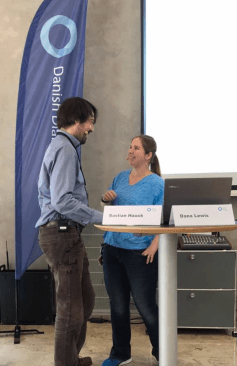
* At EASD, my mate Bastian Hauck gave me a head’s up that I was getting close to publishing the 1,000 post on this blog. I’d not have had a clue otherwise. Thanks, Bastian!

Follow Diabetogenic on WordPress.com

Enter your email address to follow this blog and receive notifications of new posts by email.

Read about Renza

Archives