hershey

Chocolate kisses. Is there a better way to treat a low?

Support comes in many shapes and sizes. When it comes to life with diabetes, I have always been lucky to have a support network village that consists of family, friends, a brilliant healthcare team and Nutella.

In the last few weeks as I have been dealing with more than just diabetes I have realised just how wide my support system really is and it’s surprised – and humbled – me.

Obviously, publishing an incredibly raw and honest piece on a news forum that gets over a million hits per month means that there are a lot of people out there who now know what I am living through. But then, I’m an oversharer, so ‘puttin’ it out there’ has never been something I’ve shied away from.

When it comes to diabetes, having that network to lift you up in times of frustration can mean the difference between sinking into a period of serious burnout and feeling like you have ways to cope. Knowing that there are people there to help you out – no matter the time of day – can be the difference between feeling isolated and feeling that you have someone’s shoulder to lean on. (I will once again send out a message to the DOC who has been that difference on more occasions than I could mention.)

One thing that I have learnt in my years having diabetes and when faced with particularly challenging times is that having someone say ‘Are you okay?’ or ‘I know this must be a hard time for you. I am here for you.’ helps more than words can say. Just knowing that people care and are thinking of you gives incredible solace.

We don’t always know what to say and we sometimes worry that our words may unintentionally hurt. So we say nothing. We think that it’s the better option. And perhaps we worry that if we ask someone how they are going, the chance of them dissolving into uncontrollable tears is something we just don’t want to risk. But personally, I’m always ready to take that risk, because I want people to know that they are being thought of and cared for.

Not everyone is comfortable talking about their life and not everyone is happy to ask for support. Sometimes we try to be stoic and strong for ourselves and those around us and sometimes we just want to pretend the crap stuff isn’t happening. Often, we don’t like to let people know we’re not coping or dealing with something particularly difficult. And in the time of Facebook when we only put forward our very best self (‘look! I’m on holidays/at a cool new café/eating Nutella’) we hide the tough stuff.

But when we do talk about it, it’s so wonderful and reassuring to have people reach out – it makes us feel safe. Right now, I feel so very safe and protected thanks to the many people who have reached out. And I want to say thanks.

thank you

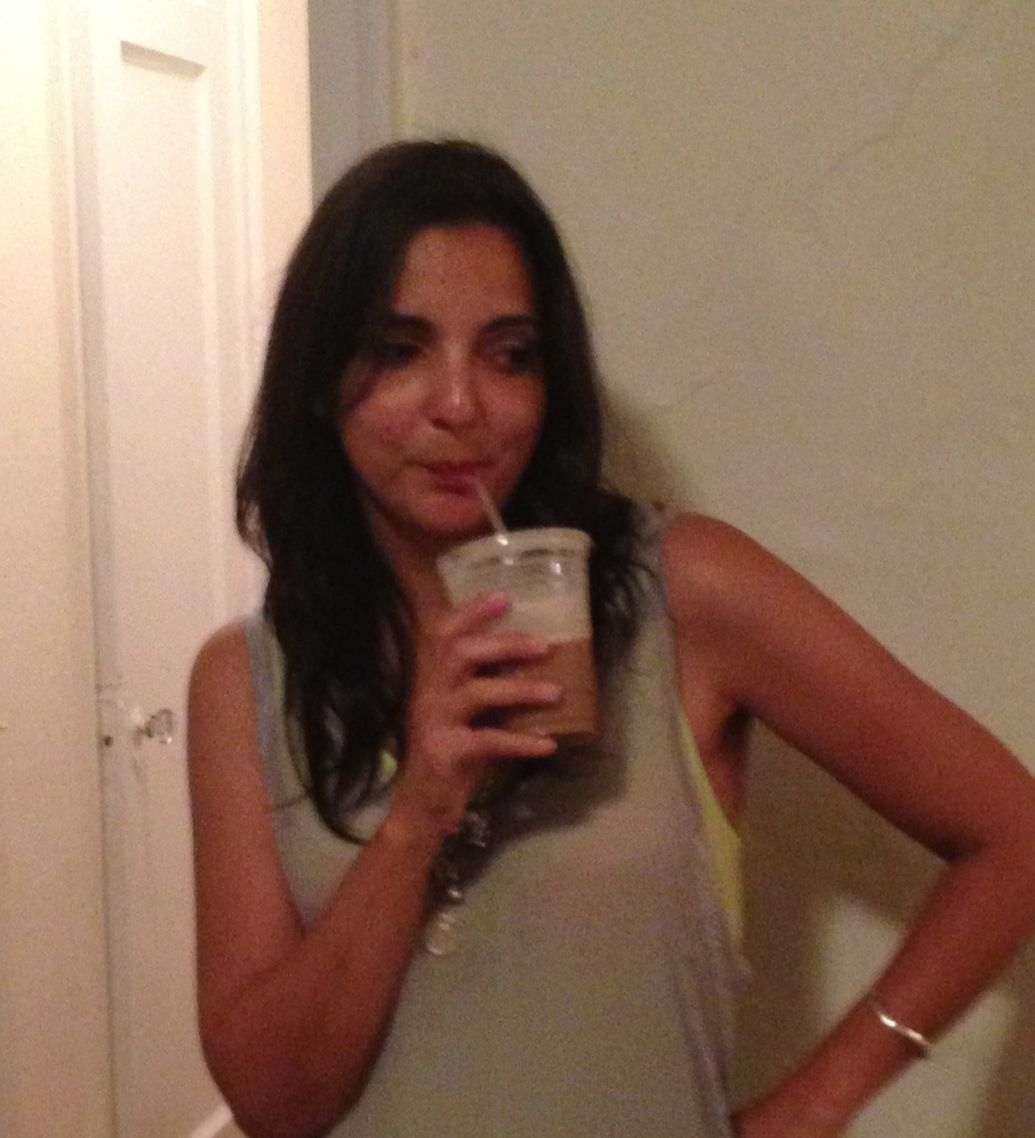
NYC Half and Half and Iced Coffee.gif

Half and Half in iced coffee. God bless America!

After an absence from writing here and an absence from Australia, I’m back! Seven weeks away which involved attending a couple of fantastic conferences, visiting favourite cities and discovering new places, hanging out with old friends from the diabetes online community and making new friends, and spending quality time with my family. I was also introduced to the horror wonder that is American Girl much to the excitement of the eight year-old kiddo and the shock of her parents. I ate lots of yummy food and am in rehab for my Half and Half addiction.

NYC cupcakes

Red velvet cupcakes make these girls happy!

Now I’m back and as I try to acclimatise to the weather (it was 40°C the day we left NYC and 7°C the day after we returned to Melbourne) and dealing with stupid jet lag, I am also coming to terms with a lot of other things. While we were away I had a miscarriage.

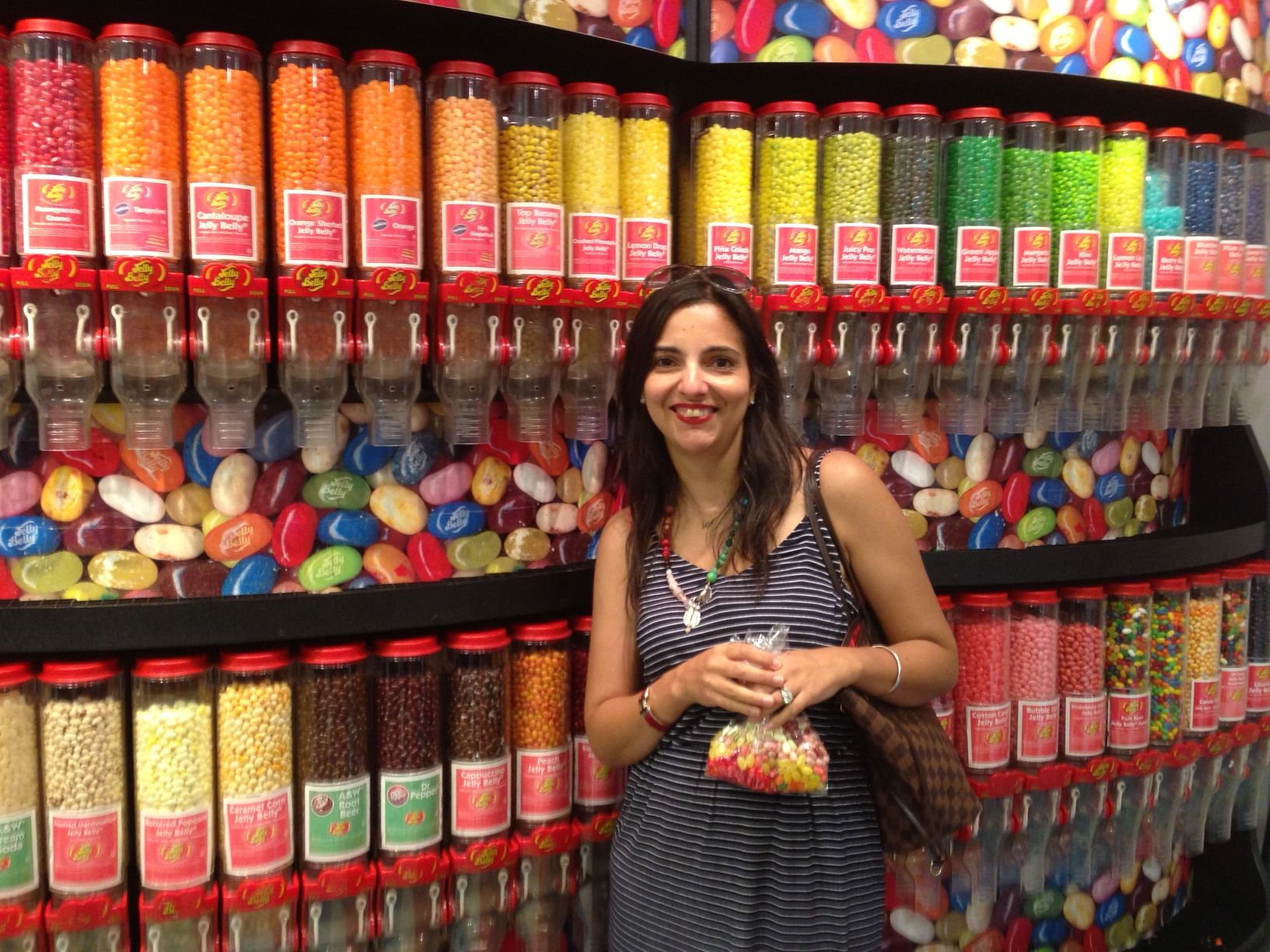
NYC Great wall of jelly beans.gif

The Great Wall of Jelly Beans at Dylan’s Candy Bar in NYC.

I left Melbourne for Paris feeling hopeful – I was in the early days of a pregnancy, and Aaron and I were quietly excited about the much-longed for addition to our family. And until four days before we were due to come home, we got ever more hopeful and confident that we would be returning home with some extra special excess baggage and exciting news to share with our friends and family. It wasn’t to be. I miscarried just over 13 weeks into the pregnancy.

NYC - Washington Square Park

Hanging out in Washington Square Park

I am recovering slowly but surely. I know that time allows for healing. I also know that sharing stories and talking about things helps the recovery process. Yesterday, a piece about my miscarriage was published at Mamamia. You can read about it here. It is raw and emotional and I wrote it to try to explain to myself and others the conflicting emotions with which I was dealing at the particular moment when I had to let go of my hopes.

I’ll be back writing at Diabetogenic next week – sharing some of the things about my holiday and the conferences and talking about real-life with diabetes. And about how making my own Half and Half turned out.

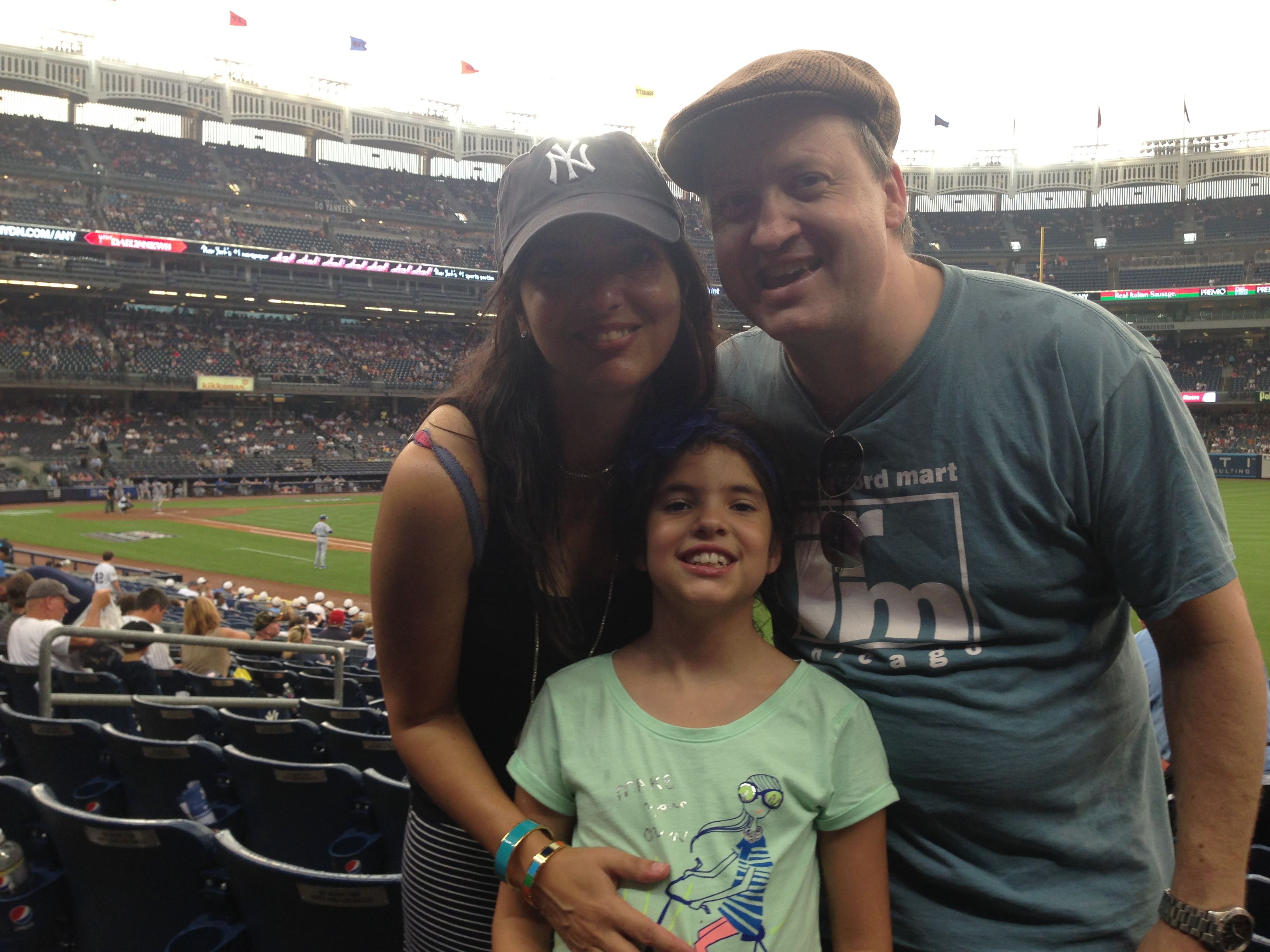
NYC Yankees

Let’s go Yankees!

hope braceletToday, for the first time in my ‘diabetes-life’, I am wearing a medical-alert bracelet. After a hypo last night that resulted in paramedics, IV dextrose and at-home hourly BGLs (just so I could avoid going to A&E), I pulled out of the draw the bracelet I bought a couple of years ago and put it on.

I have resisted wearing medical-alert jewellery for 15 years and I’m not really sure why. I have never been backwards in coming forwards about the fact I have diabetes and I am certainly not in any way ashamed of living with this condition.

But for some reason, in my weird and twisted mind, the wearing of a piece of jewellery that brands me as ‘type 1 diabetes/insulin pump’ (as the inscription on the back of the tag says) was just too much for me to deal with. I have always associated it with the idea that I would not  be able to deal with my diabetes myself; that I’d need someone else to help me and that there would be emergency situations. I’ve pretty much avoided these circumstances so far. Until last night.

So today, I located the bracelet and linked it around my wrist. It’s quite pretty to look at, provided all I can see is the bracelet part and not the tag . But each time I catch a glimpse of it – as I am typing at my computer; as I sat in a café drinking my morning coffee; lifting my arm to push hair out of my eyes – I feel defeated and somewhat branded.

I’ve always wondered about people who get tattoos which proudly declare they have diabetes and I’ve never understood why anyone would do that.  I just don’t understand why someone would want to have their health status permanently tattooed to their skin. I’ve always thought if I was to do that, I’d need to add all the other ways I want people to think of me. And having ‘Harry Potter tragic’ or ‘Delusions of Nigella Lawson’ scrawled up and down my arms would just be silly! Again, it’s not because I’m ashamed of having diabetes. Perhaps it has more to do with the fact that I defiantly go against what everyone else is doing and I quite like being the only ‘un-inked’ person in the room.  Of course, this is merely my own opinion and I absolutely don’t think any less of people who choose to have a diabetes tattoo. Maybe if braver, I’d do it too.

I’m heading overseas in a couple of weeks for a long trip and for the first few days, I’ll be alone, without my family. It’s probably a smart idea to have something on me that says I have diabetes – just in case something happens. Maybe it will give me some peace of mind, as I’m sure it will my family.

But for today, I’m feeling fragile and not particularly happy. Not happy that now I feel unsafe and feel the need to have something that (in my mind, and I’m sure my mind alone) screams ‘TYPE 1 DIABETES’. I feel that it’s a victory to diabetes. And I hate losing.

Lauren’s Hope jewellery has some gorgeous designs. My bracelet has five strands of black Swarovski crystals holding together the medical-alert tag. It’s quite beautiful, really!

Blog week #4

It’s Diabetes Blog Week thanks to Bitter~Sweet Diabetes. This week, over 150 diabetes bloggers from all over the world are taking part and sharing stories about their lives with diabetes. This is the second year I’ve participated and I can’t wait to read what everyone else is up to. So, here we go with Friday‘s topic……

I’m afraid that I have no desire to swap type 1 diabetes for another chronic health condition. I’m not interested in starting all over again and becoming an expert in something I had no real desire to learn about in the first place. ‘At least it’s not cancer,’ I’ve had people tell me in an excellent example of apple/orange comparison. I’m sorry, but I don’t like the idea that one condition is a consolation prize. Diabetes certainly may be a manageable condition but, unless a transplant is involved, there is no opportunity for remission. It’s also a condition that doesn’t understand the concept of taking a break or letting up on the care required to look after it as best I can.

For me, the silver lining in this whole diabetes palaver has always been the people I’ve met.

The DOC has been an amazing source of support– there is never a time of day when I can’t log onto something and find another PWD up and ready to shout out a word of encouragement. There have been many times a middle-of-the-night low has been accompanied by someone from the other side of the world chatting away and then checking in on me. Feeling alone when you join the DOC family is impossible.

One recurring theme in the DOC is annoyance aimed at people who don’t get what we’re going through and those who say stupid things. I see this again and again and it is one of the reasons that I am a lot more careful about what I say to people I know, or meet for the first time who are living with a different medical condition to mine. I have no idea what someone living with a condition like Parkinson’s or cystic fibrosis goes through, so it would be ignorant of me to think I could understand and start offering advice on how they could better manage. I like to think that I am far more sensitive to the sensibilities of living with a chronic health condition and while I will never say ‘I know what you’re going through’, I can appreciate the frustration of having to consider your health at times when you would rather just be enjoying a cupcake.

I do wonder if my approach to other people with health conditions is because of my personal experiences or just plain common sense and good manners. The things people say are sometimes insensitive, thoughtless and plain stupid. But you know, you can’t cure stupid; which is certainly one chronic condition that I wouldn’t trade diabetes for.

Follow Diabetes Blog Week on Twitter by searching the #DBlogWeek tag.

Blog week #4

It’s Diabetes Blog Week thanks to Bitter~Sweet Diabetes. This week, over 150 diabetes bloggers from all over the world are taking part and sharing stories about their lives with diabetes. This is the second year I’ve participated and I can’t wait to read what everyone else is up to. So, here we go with Thursday‘s topic……

It’s very easy when we’re talking about our accomplishments with diabetes to think only of the ‘big stuff’. Yesterday, I wrote about the day my daughter was born and when it comes to diabetes achievements, that day and the nine months leading up to it get a huge tick.

But I think that for me the greatest achievement has been learning to live side-by-side with this condition. It took me a while to understand where diabetes fit into my life and it wasn’t until after I’d actually accepted that I needed to grieve for the life that was that I realised that I could live, live well and be happy despite diabetes.

I am really pleased that I can honestly say that diabetes hasn’t stopped me from doing anything. I have never used it as an excuse (okay – those times I pushed in line at a cupcake shop don’t count, right?) and I have never felt that I should be pitied for having diabetes. It’s part of my lot in life and as crap as it can be at times, it’s become part of the fabric of my life.

I never thought that I’d be able to see diabetes as ‘just there’ rather than a big, scary thing that needed to be controlled. Perhaps it was when I gave up the need to micro-manage every aspect of living with a chronic health condition that I worked out how to co-exist with it. This absolutely doesn’t mean that I don’t hate it at times and wish it wasn’t there – of course I do. Accepting that it’s here forever was tough and made me angry for a while. And of course, I get frustrated and pissed off when it rears its stupid head when I just don’t have time for it, but that’s the nature of diabetes.

I can’t change the fact that my beta cells took a permanent holiday without me. I can’t change the fact that for the rest of my life I will be living with diabetes. I can’t change what’s around the corner – even though I can do what I can do try to minimise risks. I can’t change that there are no guarantees.

But I have accepted that it’s here. And I feel pretty proud of the life I am living because of and despite diabetes.

Follow Diabetes Blog Week on Twitter by searching the #DBlogWeek tag.

Blog week #4

It’s Diabetes Blog Week thanks to Bitter~Sweet Diabetes. This week, over 150 diabetes bloggers from all over the world are taking part and sharing stories about their lives with diabetes. This is the second year I’ve participated and I can’t wait to read what everyone else is up to. So, here we go with Wednesday‘s topic……

They may be few and far between, but there have been days where I feel that I have conquered diabetes and none more so than the day my daughter was born. Even though it was eight-and-a-half years ago, I can still remember every detail of her delivery and first day in my arms so clearly.

Even though the day was all about meeting her, diabetes was prominent. It was because of diabetes that she was delivered at just under 38 weeks. It was because of diabetes that I decided to have a caesarean delivery. It was because of diabetes that the operating theatre was full of medics including a paediatrician. It was because of diabetes that the moment she was lifted from my body and briefly held up for me to see, she was whisked off to have her heal pricked to check her BGL. It was because of diabetes that she was later taken to the Special Care Nursery because her BGLs had dropped.

But despite diabetes – despite all the things I’d been warned about and the things I read – I had a beautiful healthy baby girl. She is my greatest achievement and these memories are my most precious. Despite diabetes, I was up by the afternoon visiting her in the nursery and breastfeeding her as I muddled my way through my own low blood sugars.

I wonder if I will ever forget the details of the day. The way Aaron and I looked at each and gasped when we heard her voice for the first sound; the way I tore away at her swaddling so I could feel her skin against mine when I first held her in the minutes after she was delivered; the way her hands opened and closed around my finger; the way that Aaron looked as he held her when I was wheeled back into my room after recovery. Everything seemed right – our much wanted baby was with us and she was healthy.

I don’t think of this day as a ‘diabetes day’. It’s the day of my daughter’s birth. But as with all my days, diabetes is there. This particular day makes me so proud because of the way I was able to manage my diabetes; deal with it in a way that worked and then get on with the important things. The most important thing ever – meeting my daughter.

Follow Diabetes Blog Week on Twitter by searching the #DBlogWeek tag.

It’s Diabetes Blog Week and this is my Tuesday post which was first published at the Diabetes Australia – Vic blog.

Blog week #4

It’s Diabetes Blog Week thanks to the very clever Karen Graffeo at Bitter~Sweet Diabetes. This week, over 130 diabetes bloggers from all over the world are taking part and sharing stories about their lives with diabetes. This is the second year I’ve participated and I can’t wait to read what everyone else is up to. I’m in for a lot of very late nights! So, here we go with the topic of Monday……

Often our health care team only sees us for about 15 minutes several times a year, and they might not have a sense of what our lives are really like. Today, let’s pretend our medical team is reading our blogs. What do you wish they could see about your daily life with diabetes? On the other hand, what do you hope they don’t see?

I have frequently commented on how lucky I am to have a health care team that consists of some pretty amazing people. My endo actually does read my blog and recommends it to not only other people with diabetes, but also to endos-in-training. I completely understand how unusual this is, but it makes me realise just how fortunate I am to have a HCP who has some insight into my real-life with diabetes. Or at least, the things I’m prepared to share!

So, because of that, I’m going to concentrate on the second part of today’s topic – the things we don’t want them to see.

And the truth is, there’s nothing I don’t want them to see. I could say that I’d prefer they didn’t know about the days where my meter doesn’t see the light of day as it languishes around the bottom of my bag; or the days where my CGM graph looks like a mountain range; then there are the days where I know I should do a line change, but can’t be bothered and just deal with the higher BGLs and the angrier and redder cannula site; oh, and the culinary delightful days where my total nutritional intake consists of three coffees, a jam doughnut and a piece of toast with Nutella.

But I believe that this may be called life. And it’s important that they know these days are kind of typical! I am not perfect in any aspect of my life, so why should I pretend to be when it comes to my diabetes? And why should my HCPs be presented with only the stuff I do ‘right’?

I want my HCPs to see real-life with diabetes; which is basically real life. With diabetes sprinkled on top! We all have so much more going on. Diabetes? Of course it’s a part of me, but it needs to fit in with the rest of my life. And for me, that’s one of the most difficult things about life with diabetes. How do I manage to do the things I’d like to do to feel healthy, strong and well but keep things in perspective?

Actually, perhaps that’s one of things I’d like HCPs to see and know – I’m trying. Each and every day I’m trying. And that is more than enough!

Follow Diabetes Blog Week on Twitter by searching the #DBlogWeek tag.

I am lucky when it comes to my diabetes support network. I know this and I will say it several times in this post. I also know that I am likely to come off as being ungrateful which is not the case at all. Today, I want to explore the idea of how these support people are identified, either by themselves or by people living with diabetes. Specifically, I want to talk about the term carer.

The Oxford Online Dictionary defines carer as:

a family member or paid helper who regularly looks after a child or a sick, elderly, or disabled person.

I don’t have a carer. I am the person responsible for living with my diabetes, but I do not have a disability and I certainly don’t consider myself sick. And, although I’m pushing a ‘significant age’ I am not yet elderly.

I understand and completely believe that there are people who are really and truly carers. There are people who are responsible for feeding, toileting, bathing, communicating for another who is unable to do it themselves. I am not referring to instances like this. I am referring to, I guess, diabetes.  

I don’t consider my husband, who is involved in my life with diabetes to be my carer. He’s my husband, my partner.

Living with diabetes is not a solo game for most and this is a truly wonderful thing. We get support and help from people and I for one feel very fortunate to know that I have people (family, friends, healthcare professionals), I can rely on if I need them.

But I don’t consider any of them my carer. I would refer to them as my support network. In the case of my HCPs, they’re paid to help me with the things I need.

My husband would never say that ‘we’ are a family with diabetes. He would say that I (his wife) have diabetes. Not for one moment would he consider himself to be living with this condition even though he regularly is part of it. But as far as ‘ownership’ goes, it’s mine. He will step up as much or as little as I ask and in the few times it’s been necessary, he’s taken over, done what’s needed to be done and then, when safe, stepped back.

My independence and confidence in my ability to self-manage comes from being given the space from those around me to do what it is I need to do. I know there have been times when Aaron would like to sit me down and force feed me glucose because he can see that I am low. As I stand at the open fridge and in my hypo-fog state try to calculate the carbs in a cucumber (yes, I know!) he has had to just step back and let me work it out myself, stepping in if asked.

I see this like watching my daughter do something in a way that is frustrating to me. I would love to jump in, show her how to do it far more effectively (or do it myself) and then move on. But her self-confidence and her ability to trust her decision making process needs to be encouraged, not overshadowed by a parent who insists on taking over all the time which suggests that she cannot do anything herself.

To me, the term carer implies helplessness. I get that diabetes is a lifelong condition and that there are stages in a person’s life when they may need extra care. For example, children with diabetes are reliant on their parents for the day-to-day management tasks. But is that being a carer or is that called parenting albeit with an incredibly extra degree of difficulty? Or what about an adult with diabetes who is having a period of hypo unawareness and their partner is required to, at times, inject them with glucagon? Is this being a carer or is this just doing what partners do – look after each other at a time of illness or need?

What about when I am lying in bed, unable to move because my BGL is high, I have mild ketones and am vomiting? As I decide whether or not I need to take myself off to A&E, my husband is holding a bucket in one hand and my hair in the other.  I don’t consider him to be my carer, any more than I considered myself to be his carer when he hurt his back and I was warming up a heat pack and giving him pain killers every four hours.

I don’t in any way want to undermine the importance, help or value of the support I receive. I don’t for a minute want to say that I don’t need it or resent it. But equally, I don’t want to be considered as being helpless. The relationships I have with people where diabetes is sometimes considered are based on incredible respect – from both parties. They respect that I am the one who is living with this and dealing with it and I respect the way they allow me to do that.

Okay, over to you. Do you consider the people in your life to be your carers when it comes to diabetes, or do you consider yourself to be the carer of someone with diabetes? Is there another term that you use or prefer?

Follow Diabetogenic on WordPress.com

Enter your email address to follow this blog and receive notifications of new posts by email.

Read about Renza

Archives