You are currently browsing the category archive for the ‘Social media’ category.
I want to try something new and I need your help. I am trying to work out just how different it is around the world when it comes to paying for a vial of insulin. Here in Australia, a 10ml vial of Humolog costs me just under eight Aussie dollars. What about you?
So, I’m asking for you to post a photo of yourself, with whichever insulin you use (penfill or vial) and tell me how much your out of pocket cost is in whichever currency you use. For some, it will be nothing. For others, a lot more.
Post your photo on the Diabetogenic Facebook page, or tweet it using the hashtag #InsulinPlayingField. And on World Diabetes Day, I’ll share the results.
So go! And share this around. Let’s see how far we can get this going and how different the playing field is across the globe.

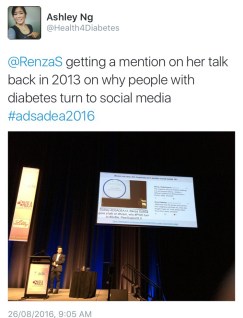
I’d already returned home to Melbourne on Friday morning when Dr Kevin Lee gave his talk on on healthcare social media. I wrote about his planning for the talk here after Kevin engaged OzDOC for some advice on important topics to cover. I’m really sorry I wasn’t there to hear his presentation, although felt there in spirit after I saw this! (Thanks, Ash!)
I reckon that this is the fourth or fifth year the ADS ADEA have spoken about social media and how healthcare professionals can use it safely. I remember seeing diabetes educator Natalie Wischer give a great talk back in 2012 highlighting the different social media platforms available and how they are being used in diabetes. This was just after we launched the weekly #OzDOC tweetchats and I stood up and gave a plug for our weekly online get-together, urging the HCPs in the room to have a look – to lurk – and see what we were so excited about.
I gave a talk the next year (that’s the photo Dr Kevin Lee used in his talk), encouraging HCPs to engage with the online community. And last year at the Roche Educators Day, I ran two practical workshops about how HCPs could use SoMe to connect, enhance and support diabetes care.
It has been on the agenda for a few years, and now it is time to stop talking about it and actually do it.
As mentioned last week, Symplur highlighted just who was talking online at the conference. As usual, the ACBRD team was doing a stellar job live tweeting sessions and promoting their excellent work. And, of course, advocates on the ground were doing their (our?) best to share and engage. There were over 2.7 million impressions on Twitter for the duration of the conference, which is certainly an increase from previous years.
I would really love the ADS and ADEA to be proactive about encouraging social media. I would love for them to look at what happened a couple of weeks ago at the American Association of Diabetes Educators conference and see how meaningful social media interaction between people with diabetes and healthcare professionals can and does happen. Safely. The real engagement and collaboration between the organising professional body and advocates saw impressions on Twitter of over 17.5 million, and over 860 people engaging online.
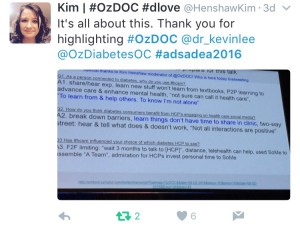
So, how do we go here in Australia about increasing online presence and discussion? In the room for Dr Kevin Lee’s talk were two of Australia’s most prolific and well-known patient advocates – both high-level users of HCSM. I’m referring to Kim Henshaw and Ashley Ng. I wasn’t in the room, yet was actively participating, re-tweeting and engaging – as were many others during sessions that I was sitting in earlier in the week. Having more consumers in sessions provides that connection with PWD not at the conference to hear and see what is going on.
I also think there was, perhaps, a missed opportunity at the session speaking about social media use. Having an advocate on the panel or chairing the session (and remember: Kim and Ashley were in the room!) would have added significant value to the discussion. Dr Kevin Lee went straight to the source when he was putting together his talk. Think about how great it could have been had one or two of those who helped him pull together his information were on the stage elaborating on their comments. Perhaps next year.
I’m back home after three days on the Gold Coast for part of this year’s Australia Diabetes Society – Australian Diabetes Educators Association conference. More to come next week, when I’ll try to pull together my very messy notes.
For today, here are some pictures!

As I took the stage to chair one of two sessions at the Roche Educators Day in Tuesday, I realised I had already been up for seven hours. It was only 11am. Sentences were difficult until my fourth coffee of the day kicked in!

On the job. Professor Steven Boyages’ talk: A connected ecosystem for healthcare professionals & their patients’ was full of practical tips about using technology to support people with diabetes.
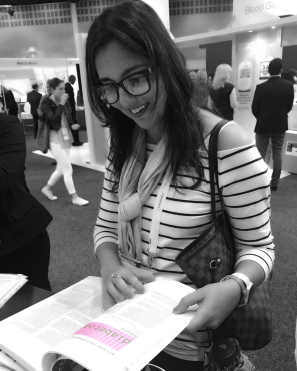
This was the moment I opened the new NDSS Diabetes and Emotional Health Handbook (for health professionals supporting people with diabetes) and I saw Diabetogenic on page 24! Thanks for capturing, Professor Jane Speight!
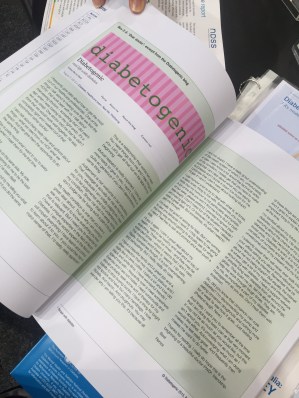
Proud moment!
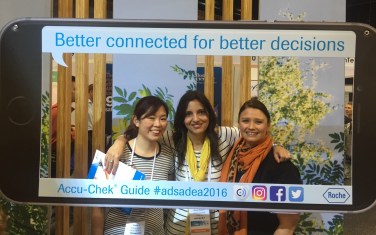
Advocates running amok. We actually behaved ourselves quite well. Mostly.

Although, we were mighty busy! Three of the top four influencers at the conference happen to be consumer advocates, sharing information from the conference specifically with the intention of reaching other PWD who could not be in the room.
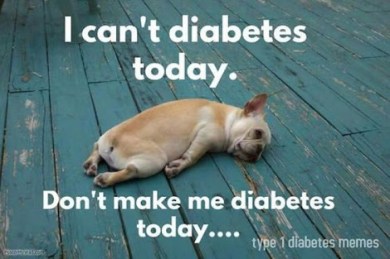
Martha Funnell used this in her talk on day one. Sums up many, many days!
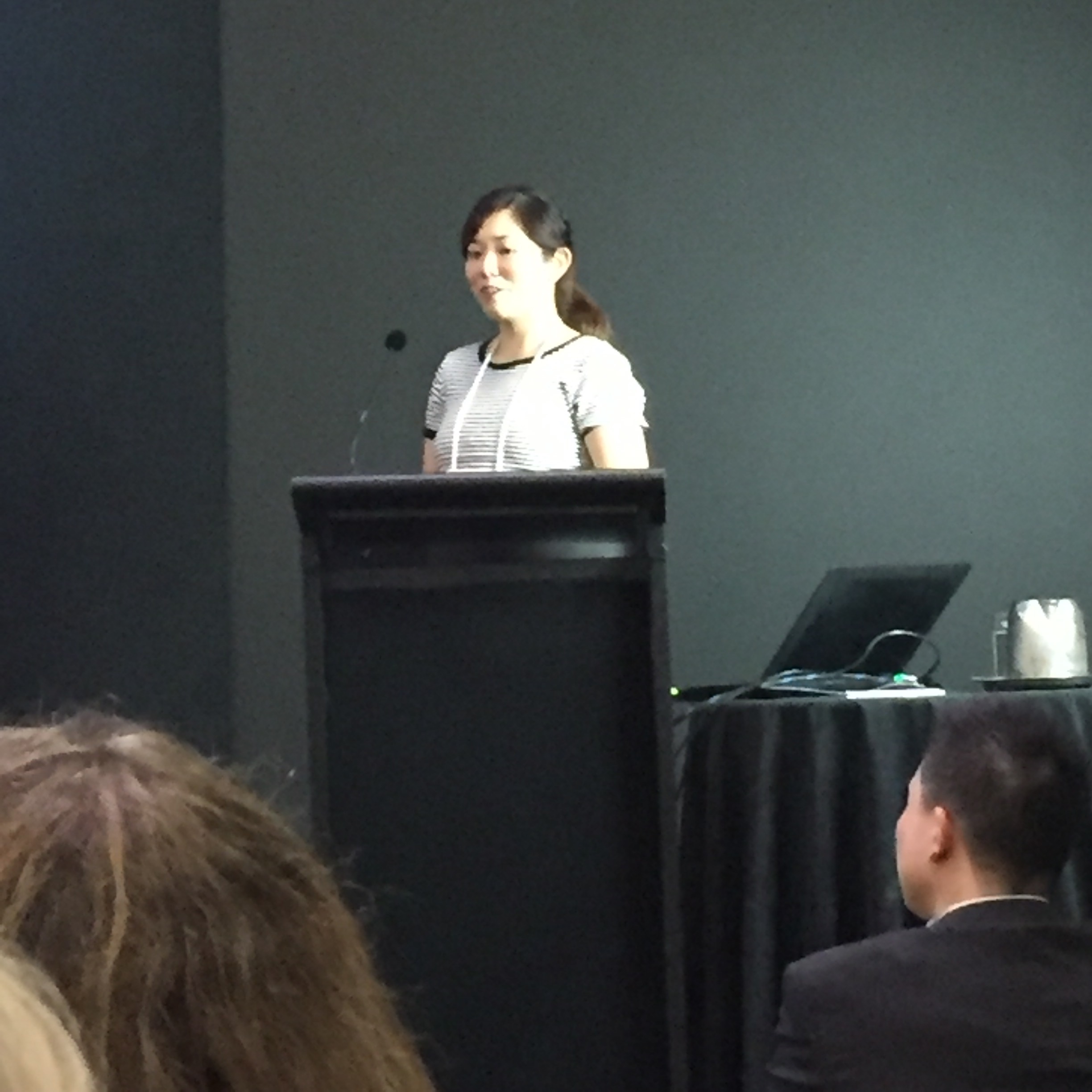
Rather proud of this special young lass. Here’s Ashley presenting on her work focussing on the needs of young people with type 1 diabetes.
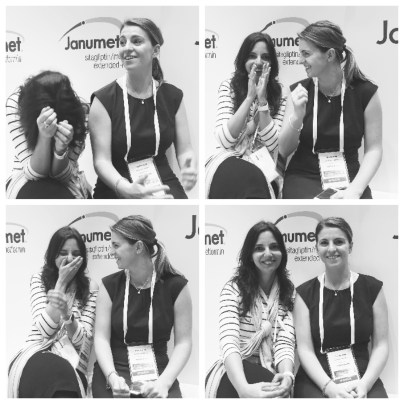
This is a combination of jet lag and exhaustion. (Jet lag belonged to Harriet.)

The NDSS stand looked very bright thanks to these beautiful resources from the Young People with Diabetes Program.
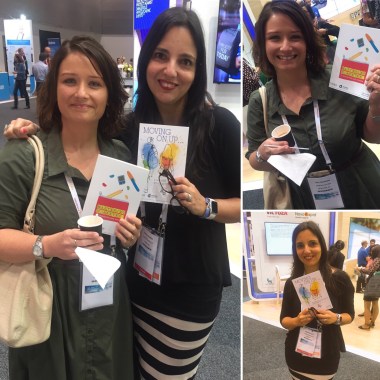
And another proud moment. Kim’s outstanding work on the national roll out of Mastering Diabetes means this resource is in the hands of those who need it most: children with type 1 diabetes, their families and schools. Well done, Kim! (And I’m holding Moving on Up which I am equally proud of!)
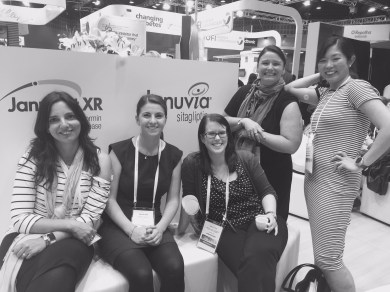
Spot the diabetes devices….

Gold Coast.
Proper wrap up coming next week. Enjoy your weekend. I know I certainly will! (But you can play catch up by checking out all the #ADSADEA2016 tweets.)
I was super late for last night’s #OzDOC tweetchat, coming in for the second half of the lively discussion. The questions were about how HCPs can engage on healthcare social media (HCSM), and the answers were to assist physician Dr Kevin Lee who is presenting this very topic at the ADS-ADEA conference on the Gold Coast later this month.
In recent years, I have given and heard many talks about why HCPs might want to consider using SoMe as a tool to engage with PWD (or, more broadly – people with any health conditions), and also how they may find SoMe useful to engage with other diabetes HCPs.
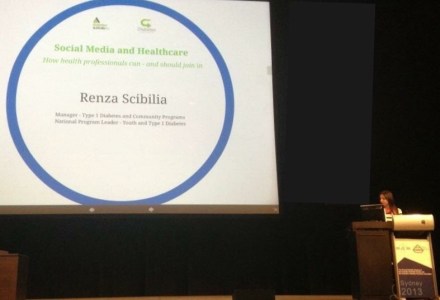
Presenting at the 2013 ADS-ADEA meeting about social media and healthcare.
Maybe it’s just me, but I am bemused that usually these presentations are targeted at such an ‘entry’ level. Social media is not new. Healthcare social media is not new. And yet, the presentations about HCSM at most medical conferences all have a ‘101’ feel to them, as though it is emerging technology and a revolutionary and new way to communicate. It is neither of these!
In fact, communities gathering on social media is just peer support 2.0. (Which is what I wrote here. Three years ago….)
And yet, the anxiety around it is still present.
I suspect that there are several reasons for this nervousness.
Firstly, by its very nature, SoMe is unregulated, and I will fight to the death to say this is a good thing, not something to fear. Its organic, unstructured and unpredictable nature is part of its power.
Even in a facilitated forum, (such as as tweetchat), there is only limited control held by the moderator – and a good moderator knows that their role is sometimes to sit back and watch (and encourage) the flow of, and tangents in, the discussion – that is often where the magic happens!
HCPs considering venturing into the patient-held HCSM space (different from interacting with their peers) need to consider what they plan to do once there. Are they going to be providing advice? Or do they want to engage in discussions? Perhaps they just want to quietly lurk, using it as a learning experience.
Whatever they choose do to, simply stepping in and having a look around will, hopefully, alleviate many of the concerns and fears they have about HCSM – especially once they understand there is no mystery to this way of communicating.
But I really do think that it is not our role as PWD using HCSM to provide a comfortable space for HCPs. And we shouldn’t feel the need to moderate our discussion for fear of who is listening in.
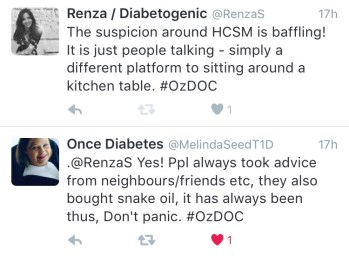
I have always considered social media to simply be a different way for having a conversation. There is no mystery behind it and there is nothing to fear. This thread from last night’s tweetchat sums this up perfectly! (Thanks, @MelindaSeed!)
My head is full of lists:
- Packing list
- Travel checklist
- Work to do list
- Hug-the-kidlet-a-million-times-before-we-leave-her-for-three-weeks list
- Diabetes-supplies-for-three-weeks-away list
And a list of great things I’ve seen online lately…
PLAID
Do you read PLAID – a research journal with a focus on people living with and inspired by diabetes? If not, you should. Why? Because it’s awesome!
Here’s the link to the latest edition. I’m really proud to have contributed to it because it is (as already mentioned) awesome, and this edition is all about the patient perspective. I sit very comfortable in there!
Unspeakably Wonderful
A new movie about Banting and Best and the discovery of insulin is hoping to be made by UK production company AngryMan Pictures. Details for how you can contribute to their crowd funding campaign are here.
Diabetic Living online
The Australian edition of Diabetic Living magazine has relaunched its website with a gorgeous new look. Check it out!
Totally (dia)badass

Take 5 minutes…
…and read these great blog posts that have been recently published:
- Anyone thinking of starting on an insulin pump and wanting a front seat view into what it’s all about should jump on board Type 1 Writes. Frank is a couple of weeks into his pump start and is sharing lots about what he is learning. I’ve been pumping for over 15 years now so have completely forgotten about dealing the challenges and successes of starting pump therapy.
- Lots of posts coming in from people who were at #DXSydney, sharing their experiences of using Libre. This post listed all the people who attended with links to their blogs. Have a read and share your experiences too.
- The Grumpy Pumper is a man of few smiles and, it would appear, few blog posts. Here is his first blog for the year. Pop by and leave a comment suggesting he blog more. Then it won’t just be me nagging him!
- Awesome pics in this blog from Scott from Rolling in the D. He hacked his Dexcom and this is what it looks like on the inside!
- Why do we need online communities? Anna from Glu gives some reasons here. And she’s right on every count!
- Also from Anna, this profoundly moving and brave post about her recent pregnancy loss. These stories need to be told. Thank you, Anna, for sharing yours. I am so, so sorry for your loss.
- This one is not a blog post, but a podcast. Stacey Simms produces some awesome podcasts over at Diabetes Connections. Do check them out!
Finally, if you’re looking for some more diabetes blogs to read, healthcare social media guru, Marie Ennis-O’Connor, has curated this list for you. There are 50 blogs to choose from. Get comfortable. Get reading!
Myths be gone
Team Novo Nordisk are doing awesome things to dispel myths about diabetes and address the issue of stigma. This latest video is terrific. Watch. And share. Share. Share.
Off to NOLA
It’s that time of year again. The American Diabetes Association Annual Meeting kicks off in New Orleans at the end of this week. I’ll be there, frantically tweeting.
I hit the road – well, air – tomorrow, so I’ll be out of touch for a bit as I embark on the nightmare transit. But I’ll be mainlining iced-coffee and beignets to keep awake and get in with it all.
Follow along at #2016ADA for the latest happenings in the world of diabetes.
New Orleans = Dr John. So here you go!
Twitter is a great source of discussion and yesterday this tweet from a diabetes consultant in the UK certainly did start an interesting conversation that had me thinking.
I should point out a couple of things before going any further. The tweet, asking if lack of guidance in social media is a concern, was in response to a tweet from someone else who shared a post from a Facebook page about insulin omission for weight loss. This is a very serious issue – one that I have written about here, (and elsewhere), and worked on a lot in the last decade or so.
Also, the consultant was absolutely not suggesting that social media is a ‘bad’ thing, and he is actually an advocate and user of online platforms, so this is not about the individual. It is about the issue at large.
Obviously, I am a huge fan of social media. Apart from finding online – and more broadly, peer – support an important part of my own personal diabetes management, I have built a significant part of my career extolling the benefits of online connections and the value of sourcing information and support from others living with diabetes.
The changing landscape of diabetes information and support over the last ten or so years has been significant. With more and more available online, and more and more people being online, there has been a real shift from healthcare professionals being the keepers of information and deciding what people with diabetes SHOULD know to a more egalitarian framework from which to source what we need.
While some may believe this to be the end of civilisation as we know it, (dramatic, I know), I consider this change terrific, because instead of having very controlled and conservative information on offer, there is now a veritable smorgasbord of material – and knowledge – from which consumers can pick and choose. Personally – I love being able to do that. Hearing personal experiences and picking up tips and tricks about day-to-day life with diabetes contribute to me making decisions about how to manage my own condition.
One of the suggestions frequently made about how to safely use SoMe is for it to be better moderated. My argument is that the power and value of SoMe platforms is that it is not moderated. Being free to share my ideas and experiences without fear (or perhaps care?) of judgement is not only useful, but also cathartic. And getting feedback from my peers often provides a different lens through which I can view a situation. Much of what I have learnt would not be found in the pages of a textbook, or offered in the office of a HCP. And that’s fine – there are other very valuable and important considerations that are shared in that context.
The idea of moderating online support – or any peer support, actually – is about control. It can be packaged up into a nice parcel of ‘protecting’ the person seeking the information, but that is not only patronising, but also incredibly demeaning. There is enough of that going on in more traditional settings – peer support is where there is freedom from that control – and a freedom to explore different ideas.
For me, peer support has always been about finding my tribe and learning from them. It has been about finding a source of sustenance and care that makes me feel better about my situation. It’s never been about replacing or substituting what I get from my HCPs.
So what is the role of HCPs in our support space? My belief is that it is a place for them to learn. There are times that it may be appropriate – and even encouraged – for HCPs to step in and share. On Facebook, one of Australia’s leading CDEs frequently comments and adds to conversations in closed diabetes groups. Her professional advice is always spot on – never judgemental – and her personal perspective (she has diabetes herself) shows just how it is possible to blend the ‘What-I’m-told-I-should-do’ with the ‘And-this-is-what-works-in-real-life’.
But not everyone who wants to be involved in this space has diabetes, nor should we expect them to. But I think for me, I have a very clear understanding of online and peer support works – and what everyone’s role is. When this works well, it works because it is being led by PWD; they (we!) are the ones driving the discussion and the focus. It’s not dangerous. We don’t need guidance. Because it is our space and we own it.

What peer support means to me,




 Diabetogenic
