
You are currently browsing the category archive for the ‘Real life’ category.
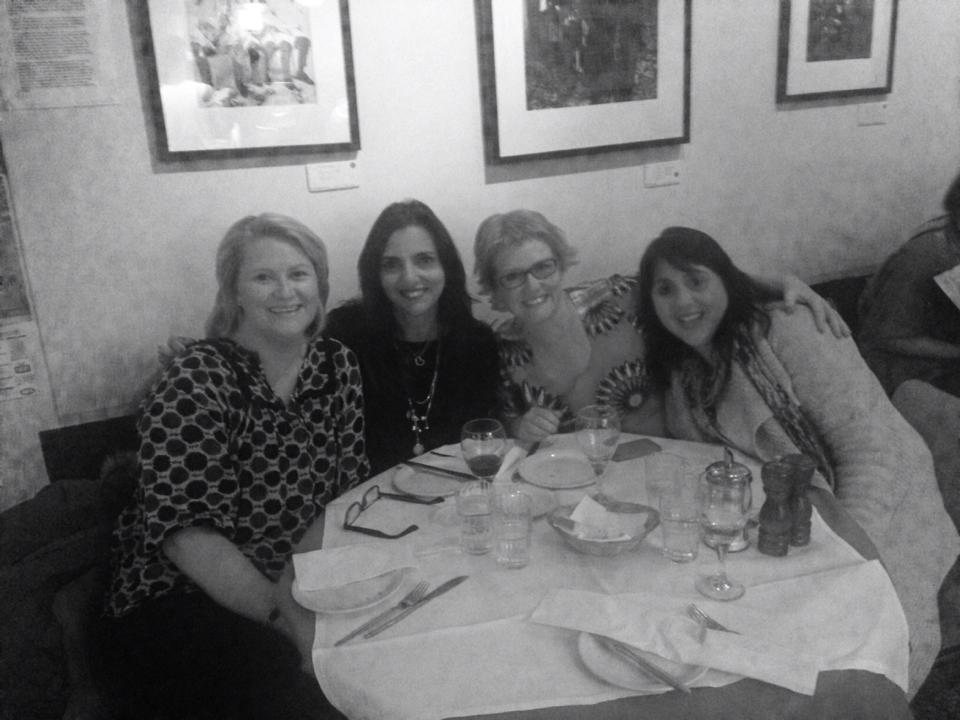
Last night was dinner with the ‘D girls’. These three women are some of my most treasured friends, and we have come together over the years because we have external pancreases. (Pancreata?)
They have been a part of my life for over ten years now. I met them all through my work (another reason to be grateful for this job!) but the reason that we’re friends reaches far beyond diabetes.
A night out with these lovely women generally involves much raucous laughter, a lot of inappropriate comments (we think the people at the next table left the restaurant because they were so disturbed by our conversation at one point) and plotting to fix all that is wrong with the world. We share photos of our gorgeous kids – all born around the same time – and talk about our families and friends and work.
Somewhere in there, we reach into our clothes and pull out insulin pumps, or reach into our bags for BGL meters. Talk of diabetes is scarce, but there may be an occasional comment or question. It certainly doesn’t dominate our conversation though.
As it turns out, some of my nearest and dearest friends do have diabetes. But that is not the reason for the friendship. Whilst it can be acknowledged as why we met in the first place, the reason for our enduring friendship is far more than beta cells that ran out on us. The reason I am friends with these three women is because they are smart, funny, beautiful and incredibly talented. I am honoured to call them friends. I love them to pieces and admire their strength, tenacity and protectiveness.
I see the way they deal with diabetes – the complete and utter ‘eff you’ attitude and acknowledgement that it sucks, but it won’t beat them – and know that I need to be surrounded by people like this.
The commonality that brought us together may be completely and utterly crap at times. But when we’re sitting at Marios catching up, laughing, supporting each other, talking a million miles a minute, we don’t care. Because really, it’s just four girls catching up.
It’s Friday; get your weekend started with some New Orleans funk. Here’s Trombone Shorty. (Swoon!)
Albert Einstein is a fraud. He may have worked out that E=mc2 thing and received a Noble Prize in Physics, but he got it all wrong when he defined insanity as doing the same thing over and over again and expecting different results.
Because anyone who has ever had to pretend to be a pancreas, (which, when working, is a magical, perfect organ), will know that the monotony of diabetes, which involves repeating the same things day in, day out, ALWAYS yields different results!
For people with diabetes, insanity is doing the same thing over and over again and expecting the same results. Just doesn’t happen.
This week, I had the same lunch on two consecutive days. Both days, my pre-meal BGL was in the mid 6s, I bolused the same amount of insulin and then sat at my desk for pretty much the next two hours writing and reading. How do you think that turned out?
DAY 1 – 5.6mmol/l (two hours after eating)
DAY 2 – 16.5mmol/l (two hours after eating)
Insanity would have been trying to work out why the hell that happened. Or being surprised at the difference. Sanity is saying ‘that’s diabetes’.
UPDATE
So, within 2 minutes of posting this on Facebook, a deluge of similar posts were listed. Here they are:
Glucolift (makers of the BESTEST glucose tabs in all the lands) have this brilliant infographic (about to be stuck up on my office pinboard)
Kerri at Six Until Me suggests that it’s perhaps diabetes that is the definition of insanity (she might be onto something)
And Sara from Moments of Wonderful wrote this as part of this year’s Diabetes Blog Week.
Great minds think alike?
This week in the UK, it’s Diabetes Week. I’m always interested to see the focus of campaigns for awareness weeks and this has to be one of my favourites!
Having lived first hand through diabetes weeks that have involved ticking time bombs and threats of every single diabetes complication under the sun, I wish I could give a proverbial hug to the team at Diabetes UK who have put together an empowering, positive campaign. In lieu of that, I sent a tweet.
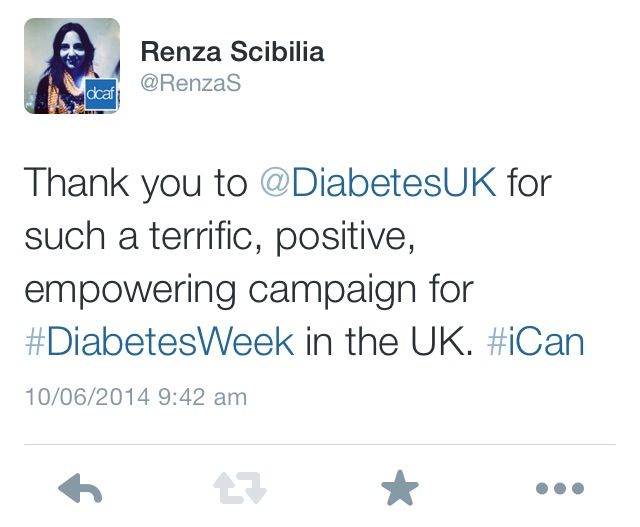
Using the slogan ‘I Can’ the campaign acknowledges the difficulties people with diabetes may experience, but wants to focus on the things that we CAN do. I love this!
I’ll be keeping an eye on this week’s campaign. I’m interested to see and hear the stories of people living with diabetes and how they have managed to face challenges.
I hope that this year’s initiative is a positive one for Diabetes UK and we see more of these kinds of campaigns in the future.
Check out the Diabetes UK Diabetes Week campaign here.
And follow the #iCan tag on Twitter.

I run on a double A battery. Yep, that’s what keeps me alive. My pump uses one single AA battery to deliver insulin throughout the day, receive information from my CGM and then report it back to me. The battery lights my pump, makes it vibrate and alarms when it needs me to look at it.
It doesn’t matter that AA batteries are easy to find, without the right tools, it’s not gonna work.
I learnt this last week when my pump battery was completely dead and I couldn’t for the life of me find a five cent (or ten) cent coin to open the battery cap of my pump, extract the spent battery and insert a new, fully charged battery to start giving me juice again.
I rummaged and searched for the right coin and then tried other things, getting more and more frustrated. (FYI – twenty cent coins don’t work, neither does a knife, my finger nail, a piece of cardboard or a pair of scissors). Nope. No luck. Eventually, at the bottom of my handbag, I found a lonely five cent piece and changed the battery, adding the coin to my ‘diabetes contingency bag’ for next time.

Not the right tool.
I needed the right tool.
I was reminded of this yesterday afternoon when I tried to hammer a fallen picture hook back into the wall with a tiny hammer. Didn’t work. No matter how hard I bashed, there wasn’t enough weight in the hammer head to push the picture hook back in the wall.
Anyone else would have probably worked that out just by looking at it. But not me. Possible because I was being…. a right tool.
Am I the only one singing ‘If I Had a Hammer’ right now?
I’ve written before (here and here) about how the day we award Kellion Victory Medals to people who have lived with type 1 diabetes for 50, 60, 70 and even 75 years is my favourite work day of the entire calendar year.
Today was the first 2014 ceremony, and fifteen people were awarded medals, including three who received their seventy year medal.
The amazingness and brilliance and inspiration of these incredible people was captured in this one perfect tweet from Professor Jane Speight. I’ve nothing more to add:

In a dark jazz club in Melbourne, I had a diabetes ‘moment’ when I least expected it. It was ‘diabetes in the wild’, a term Kerri Sparling uses that perfectly describes these sorts of incidents.
This is a serious club. There’s a sign at the door that reminds you that talking during performances is frowned upon. Patrons are there to listen to the music, not the inane chatter of the person at the next table. A ringing mobile phone could result in public stoning. Well, not quite, but when someone’s phone did ring at this gig, the musician stopped playing until it was silenced.
I was sitting at the bar, watching and enjoying the music. Thanks to a pump line that really (really, really) should have been changed that morning, my BGL was a little high. I knew that I needed to do a correction bolus, so I pulled my pump from my top, pressed a few buttons and waited until I saw the insulin had been delivered.
Out of the corner of my eye, I caught the woman to my right surreptitiously staring at me and then looking at the pump in my hand. She looked away and leant towards her friend and, (breaking the rules of the club), whispered something. Her friend, just as stealthily, looked around her at the moment I was returning the pump to its place in my bra and then whispered something too.
What was the interest? Did they think it was a phone or a charger and were about to tell me off for not concentrating on the music? Were they wondering what the hell I was doing reaching into my top and pulling out a weird device the lit up?
I stopped wondering and went back to listening to the music.
About ten minutes later, I saw out of the corner of my eye, the woman take something from her handbag. It was a BGL meter. I swung my head around (clearly I’m not as cool or good at being covert as she was) and looked at her straight in the eye. I suddenly got flustered and looked away again, so thankful the ‘listening policy’ at the club meant I couldn’t do what I wanted to. Which was start a conversation with her (whether she liked it or not) and would have sounded like ‘YOU-HAVE-DIABETES-TOO-OH-MY-GOD-SO-DO-I-HOW-LONG-HAVE-YOU-HAD-IT-FOR-DO-YOU-WANT-TO-HAVE-A-COFFEE-AFTER-WE-FINISH-HERE-AND-TALK-TALK-TALK-TALK-TALK-TALK’. I would have stopped at some point to take a breath. Probably.
The music kept going and I tried to stare straight ahead, and not look over at her again. (Which, of course, I did. Several times.)
At the end of the gig as I collected my things, I turned to her and we looked at each other. I smiled; she smiled back. Diabetes in the club. I collected my bag and we walked out into the cool Melbourne night.
UPDATE
(My friend Kelly who writes at Diabetesaliciousness (read it – it’s great!) just sent me this wonderful diabetes encounter story. Contains cupcakes so it makes it even more awesome!)
The Melbourne International Jazz Festival is on now. Here’s the program – there are some great local and international acts playing.
This morning, I watched our cat, Cherry, spend twenty minutes playing with a rogue BGL strip. She pounced, pumped, threw it in the air, patted it with her paws and meowed for a good 3 minutes, getting louder and louder until I released it from under the bed, where she’d pushed it.
Walking back from getting a coffee, there on the ground was an Optium test strip wrapper, its blue foil glistening in the sunlight.
I pull open a drawer at work and hidden amongst the messy jumble of pens and paperclips are two Unite for Diabetes rubber bracelets. I look further back and find the mushroom-liked infusion inserter for my pump lines. 
I took from my cupboard a handbag that hadn’t been used for years. There, in the bottom, for who knows how long, was an old meter. The battery was flat, the strips out of date.
I open a box from when we moved house and amongst the paperwork and toys and a couple of odd socks, I find three unopened boxes of strips for my current meter, and these ones still in date. And two pump infusion sets.
On my dressing table, jumbled in with my jewellery are several blue circle lapel pins.
I reach into the pocket of a jacket I’d not worn since being at a conference in Barcelona last year and find an information brochure for a pump not released in Australia.
 I get in my car and there are spent strips, a spare meter and, in the glove box, a tin of jelly beans.
I open my diary on my desk to write a note and there is a tiny smudge of blood on the page.
The debris of diabetes appears in every aspect of my life.
But it’s not all bad.
My screen saver scrolls through photo after photo after photo and there, amongst pictures of my family, are friends with diabetes. Just in case I ever need some silver lining – there it is!
Friday dancing time! Here’s Stevie Wonder.
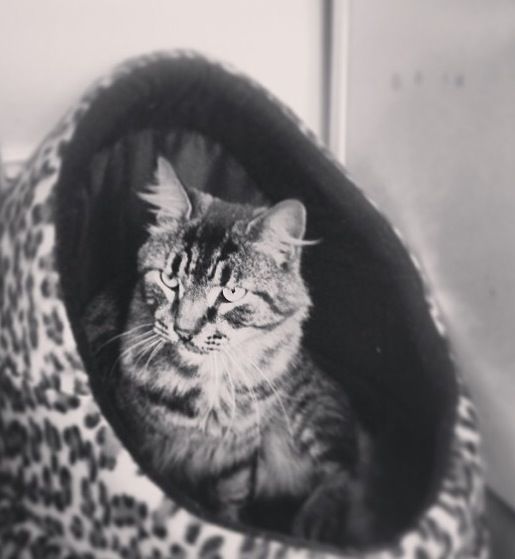
Also, this is Cherry the cat. (Photo credit – the nine year old kidlet.)
I was recently sent an article from Medscape that was written by Svetlana Katsnelson MD, endocrinology fellow at Stony Brook University Medical Center in New York.
The gist of the piece is that for a week as part of her endocrine fellowship training, Dr Katsnelson wore an insulin pump and checked her BGLs, and now believes she knows about living with diabetes. She also considers herself non-compliant because she didn’t bolus for an apple.
This may be oversimplifying the article a little and I honestly do believe that the intention here is good. But a little perspective is needed, I think. It was this comment that really upset me:
‘The experience provided me with a better understanding of how to use the devices that many of our patients use every day, but it gave me much more than that. I truly began to understand how difficult it is to live with diabetes.’
No, Dr Katsnelson, no. You do not truly understand how difficult it is to live with diabetes.
What you have is an idea of what it is like to walk around with a device delivering non-life saving saline into your system. You also have an idea of how it sometimes hurts when a sharp object pierces the skin on your finger. You probably could have deduced that anyway because, you know, sharp object, skin, nerve endings etc. You know how the buttons of these devices feel under your fingers and the weight of the devices in your hands.
You may have an idea of how tricky it can be to accommodate a pager-like device if you are wearing a pretty, flowing dress to work (if that is your want). You may now understand how annoying it is to have to stop what you are doing because it’s time to do a BGL check.
But what you don’t understand is that diabetes is about so very much more than that.
Here is what you don’t have any idea about.
You don’t understand the feeling of ‘this is forever’ or ‘I never get a holiday from this crap’. I know that this was acknowledged in the article, but really, you don’t know how it feels to never be able to escape diabetes.
You have no concept of the boredom of living with a chronic health condition, or the monotony of doing the same tasks each and every day over and over and over again!
You don’t understand the fear that overtakes your whole being as you imagine all the terrible complications that have been threatened and promised as result of diabetes.
You have no notion of the frustration of living with a condition that doesn’t have a rule book – and in fact changes the rules all the time!
You haven’t any perception of the fear I sometimes feel that I’ve passed my faulty genetic matter onto my beautiful daughter; or that I am a burden to my family and friends.
You will never feel the judgement from healthcare professionals because numbers are too high or too low – or that there are not enough of them.
You will never be called non-compliant by a doctor or made to feel guilty because you are eating a cupcake – all because your beta cells decided to go AWOL.
While I really do commend the notion of HCPs trying the ‘day in the life’ (or ‘week in the life’) idea, I think that being realistic about what this experience provides is important. It does not give any insight into the emotional aspects of living with a chronic health condition. It doesn’t explain the dark place we sometimes go when we are feeling particularly vulnerable or ‘over it’.
I have to say that all in all, this article left a sour taste in my mouth and I don’t like to feel that way because it sounds like I am being Grouchy McGrouch. I’m not. And as I said, I think that the intention here is good.
I just don’t want Dr Katsnelson to think that she now knows what is going on in my head when I wake up at 4am and every terrible scenario plays out leaves me feeling a pressure on my chest and a blackness in my mind that threatens to overtake me.
But I also want Dr Katsnelson to know that I really don’t expect healthcare professionals to know and understand all of these things. I expect them to treat me with respect and dignity. If this exercise has helped that, then great, but please, call it for what it is.
The article discussed in this post (Svetlana Katsnelson. Becoming the Patient: Not as Easy as It Looks. Medscape. May 12, 2014.) can be accessed here by first creating a free login.
It’s Autumn!

A perfect time to find a quiet place under a tree with a good book.

Cockatoos are everywhere, screeching noisily.

Angels hide around corners.

Trees stand tall, with leaves that are golden and red and glowingly magical.

You never know who (or what) you may find.
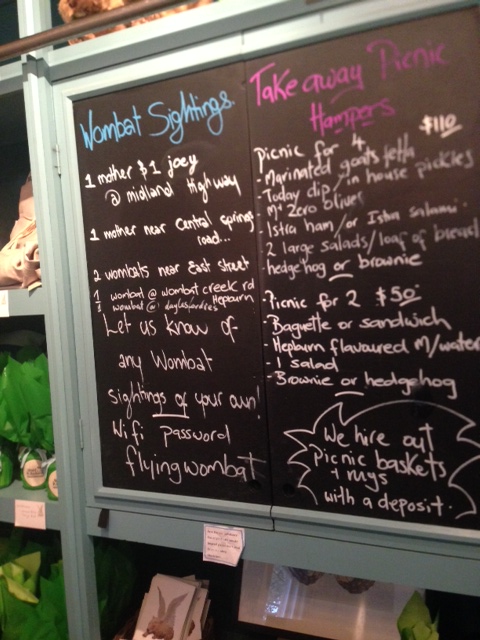
And bolus-worthy desserts are crowned with Persian fairy floss.

Last Friday I attended a couple of sessions of the Health Professional Symposium coordinated by Diabetes Australia – Vic and Baker IDI. The packed program covered a variety of topics including cognitive function in children with type 1 diabetes,musculoskeletal complications of diabetes and a panel discussion about whether lifestyle interventions are an effective approach in diabetes management.
The two sessions of particular interest to me were around diabetes in the hospital setting. The first, from DNE Sue Wyatt (Alfred Hospital), focussed on improving diabetes management in hospitals (including discussions about outcomes, policies and procedures) and the second was from dietitian Anita Wilton who discussed food services in hospitals.
To me, both sessions highlighted the problems faced by many people with diabetes when we are admitted to hospital – whether it be for a planned stay or emergency visit. The outlined policies and procedures do not take into account that people with diabetes have different levels of understanding, knowledge and self-management, and the ‘one-size-fits-all’ approach is, I believe, actually detrimental to diabetes care (indeed, diabetes self-care), emphasising the artificial environment experienced when in a hospital setting.
There needs to be a balance between what we as people living with diabetes need when we are in hospital and how we fit into the ‘rules’ and regulations enforced in hospital.
And one issue of particular concern is what happens to our insulin (and other medications), delivery devices and other management tools (BGL meters etc.). At the Alfred Hospital, insulin and delivery devices are taken from the patient. Obviously, this isn’t the case with pumps, but pens and syringes are removed from the person with diabetes and locked away. This is the policy and according to Sue Wyatt, in only one case has this been challenged to the point where the patient was allowed to hold on to their medications.
Unsurprisingly, this doesn’t sit well with me at all.
I raised my hand during question time to ask about how we manage the different needs of the person living with diabetes and hospital policies and procedures that, in this case, go against everything I believe in when it comes to patient empowerment. The answer I received was all about protecting the nurses in the hospital setting and whilst I completely understand and respect the need for that, where was the discussion about protecting the rights of the patient? At no point, when I am a patient, do I give up those rights. I understand that there will be times that people with diabetes are unable to administer their own insulin, but for many, that is not the case. As they are recovering from surgery or sitting in A&E dealing with whatever they are dealing with, managing their own medication is not only possible, but frequently the best option.
In my case, I have never been an inpatient and unable to administer insulin (after calculating doses and entering the correct information into my pump). Being able to address high BGLs and correct accordingly, bolus at the exact time I am eating or treat a low immediately have actually meant smoother management whilst in the hospital setting rather than relying on an already-far-too-busy nurse.
Obviously, it is essential that hospitals have policies and procedures in place, but at the same time, the primary concern should be what is best for the patient. If the talk around patient-centred care is to be taken seriously (and not just perfunctory jargon to make people believe they are talking the politically correct language and saying the right things) then we need to make sure that the patient and their best interests are actually being contemplated.
At no time are my best interests being considered if I am asked to hand over all the things that I need to manage my condition, whatever the setting.
I am employed by Diabetes Australia – Vic. I was not involved in the planning or presenting of any sessions at this event.





