
You are currently browsing the category archive for the ‘Real life’ category.
I’m tired.
Today, I woke in a great mood after a good night’s sleep. The weekend had been relaxing and lovely – family, friends, food and gorgeous weather on top of it all. Plus, I bought a new necklace with a pineapple on it. It was a good couple of days!
I was standing at my favourite café near work, waiting for a takeaway coffee and thinking that the barista was a magician as I watched his choreographed movements, filling takeaway cups with perfectly brewed caffeine.
‘This good day is about to get better,’ I naively thought, the taste of that first sip of coffee so close.
And then, I checked my email and ‘bam’. There it was.
A discussion about not distinguishing between type 1 and type 2 diabetes in a setting where it really is not relevant. I sighed.
And realised how tired I am.
Nearly thirteen years ago, I was employed to run a very small and, at the time, somewhat tokenistic type 1 diabetes program for a diabetes organisation. Thanks to a very supportive CEO and me being a pushy little thing, the program grew and grew and now, incorporates a dedicated team doing some incredibly good work for people living with type 1 diabetes.
One of the reasons for the program’s success is that we have been very clear about defining it as a program for people with type 1 diabetes, making sure the information we provide is targeted and relevant to the people we are trying to reach. We acknowledge each and every day that people with type 1 diabetes have specific information requirements and then we go about providing that information in the way people want.
In exactly the same way, a couple of years ago, we realised that the information for people with type 2 diabetes was completely forgetting the changing face of the type 2 diabetes community. There are more and more younger people being diagnosed with type 2 diabetes and the information we had was very much for an older audience. Hence, Generation T2 – a new program for 18 to 39 year olds with type 2 diabetes.
There are times that it is important to distinguish between the diabetes and there is no louder advocate for that than me.
But there are times that it is irrelevant. Yet, people still get angry – even when it really doesn’t matter if the type of diabetes is defined.
I am tired.
I am over this argument and this discussion.
Last week, the government handed down a budget that is going to hit the hip pockets of people with diabetes like never before. All people with diabetes will be affected – regardless of type.
During the World Diabetes Congress we heard of places around the world where the cost of insulin is so prohibitive that there are people dying because they cannot afford to buy the drug they need to stay alive. Slow, painful, horrible deaths because they cannot afford to buy insulin. Just think about that for a moment.
Here in Australia, there are people who cannot afford to use an insulin pump despite desperately wanting to because they cannot afford private health insurance or qualify for the Insulin Pump Program to assist with cost of purchasing the $9,000 (plus) device.
These are the issues that we should be fighting for and getting angry about. These are the issues that are important. Access to healthcare – a basic human right for all people – ALL people with diabetes – is what the topic should be; not whether or not the Channel 10 news forgot to say type 1 (or 2) before the word diabetes.
I am a card carrying member of the diabetes community. I am proud of this community and I am pleased to have a voice within it.
But we need to stop the finger pointing and the name calling and the blaming. How can we expect people outside of our community to get it right if we can’t? Why is it more important for people to understand the how and why we got this condition as compared with the how and why we’re trying to live and manage with it?
I am proud of the Australian diabetes community, but it is here that I hear this attitude more than anywhere else in the world. This discrimination is not helping us – it is harming us. Does it matter if people don’t really understand the different types of diabetes? I get it. It’s annoying, it’s frustrating; it’s constant. But really; does it matter?
This is a first world – a first class – problem.
And I am tired. I am saying it’s time to stop. Enough!

It’s the fifth annual Diabetes Blog Week, with thanks to the lovely Karen Graffeo from Bitter~Sweet Diabetes. Today it’s diabetes in pictures. Come back tomorrow for the last instalment, and in the meantime, check out #DBlogWeek and follow along!
It’s Saturday and this morning, I had to work for a short while at a diabetes event. And when I was done, there was only one way to celebrate the real start of the weekend. With these:
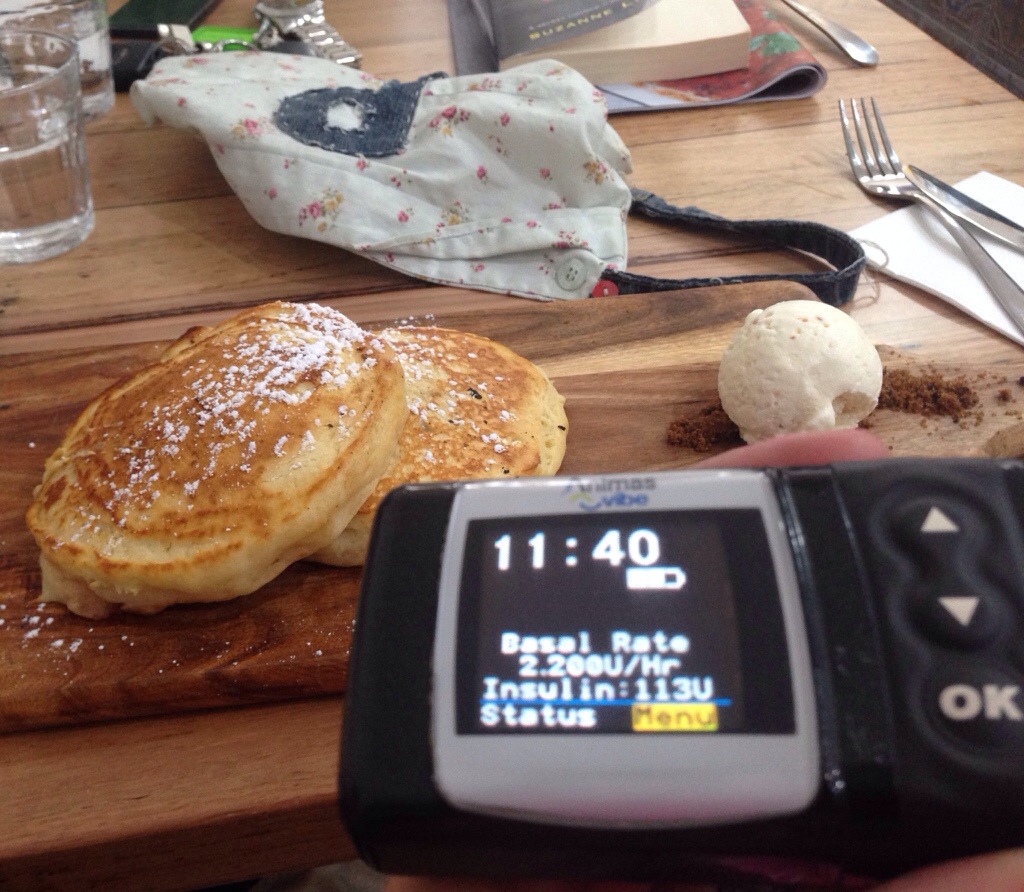
A new cafe has opened up in my ‘hood serving amazingly good coffee and this fabulous dish. Yes – the doughcakes are delicious. They’re fluffy and light and filled with strawberry jam, which oozes out onto the serving board in a most pleasing way. But the most exciting thing? The bacon ice cream. Yes. Bacon. Ice. Cream.
Has there ever been a better nod to the DOC than this very dish? The only way it could be better if it was served up by unicorns.
So yes. I can eat that, and thanks to that nifty little pump thing, insulin takes care of all the carbs.
There seems to be a little bit of a theme to my Saturday Snaps for Diabetes Blog Week. Last time this was the prompt, I wrote (and snapped) about cupcakes. Apparently, when it comes to pictures of diabetes, it’s all about the food for me!
It’s the fifth annual Diabetes Blog Week, with thanks to the lovely Karen Graffeo from Bitter~Sweet Diabetes. Today we’re talking about some of the sneaky things we do to make life with diabetes a little easier. Come back tomorrow for the next instalment, and in the meantime, check out #DBlogWeek and follow along!
Oh diabetes, you are a hard task master! There is much to do, so anything I can that makes life that little bit easier is a blessing!
Some of my ideas are just plain stupid, some of them actually make my life with diabetes run a little smoother. Others, I guess, are just habit now. So here is how I manage some of my day-to-day diabetes tasks.
- Insulin prescriptions are kept in the fridge next to my actual insulin supply. This way, I always know where the next prescription is, can easily check if it’s in date, making it easier when it’s time to fill a new prescription.
- When I open the second to last bottle of insulin, I call my pharmacy and put in an insulin order. I used to do this when I opened the last bottle, but that kinda didn’t work so well for me when I dropped the bottle. And then stepped on it. In a pair of boots. Smashed to smithereens insulin bottle (and insulin) not useful at lowering BGLs.
- Spent pump lines are brilliant for tying up roses!
- Ugly, (but effective) bandages work as a pump holder/holster under sexy dresses (and don’t roll down my leg).
- I keep a box of Golden Circle pineapple juice by my bedside. Easier to drink when it’s at room temperature and great for middle of the night hypos when the thought of eating anything is just beyond me.
- But for when I am happy to eat something, I make sure that the jelly bean jar on the bedside is always full. I hate having to get out of bed to get food to treat a hypo!
- Thanks to diabetes, my handbags are huge! So to make finding my meter easier, it’s always housed in a bright purse.
- An in another nod to the huge handbag, I have my diabetes contingency purse that takes care of pretty much any diabetes emergency: pump out of insulin? No problem! Open vial of insulin at the ready. Ripped our pump line on door? Stupid, but doesn’t matter! I have a spare line. Cartridge in pump jammed? Never happened, but if it did, not a problem. Spare one in purse. Pump completely died and not wanting to work ever again? Shitty, but manageable with syringe and insulin.
- As I walk out of the consulting room for my endo (or other HCP) appointment, I head straight to the receptionist to not only settle the bill, but also make the follow up appointment (or the next couple) and the date is entered straight into my calendar, with a one week out alarm to remind me. That way, no need to call to make an appointment – something that always gets put off!
- Pathology tests that are needed for medical appointments are scheduled in my iPhone calendar for two weeks before the appointment. No point in showing up to discuss results if the tests haven’t been done!
- I have made sure I have never-ending referrals for my endo and ophthalmologist. Just ask your GP and if they won’t do it, find a GP who will!
I’m sure that there are lots of other things and I’ll add them as I think of them. I am really excited about today’s prompt for #DBlogWeek because it’s hearing tips, tricks and life hacks from other people with diabetes that make MY life with diabetes easier. Can’t wait to learn lots of new things.
The ultimate in Friday office dancing – Nancy Sinatra and ‘These Boots Are Made for Walking’.
It’s the fifth annual Diabetes Blog Week, with thanks to the lovely Karen Graffeo from Bitter~Sweet Diabetes. Today’s we’re writing about the emotional side of diabetes. Come back tomorrow for the next instalment, and in the meantime, check out #DBlogWeek and follow along!
There is a dark place in my mind that is locked most of the time. Usually, I manage to keep it closed away and it remains hidden.
And when I am feeling strong and robust and life is moving along at its usual pace without too many problems, I am not tempted to go to the dark place, to open the door and examine what’s hidden.
But when I am feeling vulnerable – for whatever reason – and my defences are down, I peek. Stupidly, I go in, treading carefully, cautiously looking around. To the dark place.
The dark place is the fear that lives inside of me about diabetes. It’s the fear of today, of tomorrow. And of the unknown. It scares me and it scars me. It makes me feel fragile; breakable. And highlights how broken I am.
In the dark, I feel the relentless-ness and the never-ending-ness and the overwhelming-ness of diabetes that I usually simply expect – and accept. Suddenly, the day-to-day and more-than-manageable tasks that I need to do seem impossible, daunting, too big to contemplate.
The dark place is quiet, the only sound is my amplified heartbeat.
I’ve learnt to breathe slowly, see the dark place for what it is, allow myself time to visit, accept what is there and then close the door. I come back and face the light and life and the people I love. I go to work, I see my friends, I bake, I drink coffee, I listen to music. I look like I am living my life – and I am. But when I’ve visited the dark place, I am scared and look over my shoulder. I feel oppressed and fatigued. It takes me a while to fully come back – sometimes only a day or two, sometimes longer.
This is my emotional side of diabetes. This is the dark place. This is the exhaustion of diabetes.

Yesterday’s post about waiting to see my GP for 90 minutes past my scheduled appointment received some interesting comments and feedback both here on the blog and on Facebook and Twitter. Most people seemed to agree that the GP clinic displayed a lack of courtesy in not calling to let me know of the significant delay I was about to experience because my doctor was running so behind schedule. There is a great comment from a doctor providing the ‘other side’ of the story which makes for some interesting reading.
When I eventually was seen by my doctor, he apologised for the wait. He was incredibly sincere and said that it was ‘just one of those days’. I asked him what was the clinic’s policy when doctors were running considerably behind and he said that reception staff should call patients to let them know that there would be a wait, and inform the patient of the time they should show up to avoid sitting in the waiting room for too long.
He was upset – and very apologetic – that this had not happened in my case, and said that, quite simply, it was not good enough to expect people to wait for so long. He followed it up with the reception staff after my visit. And I spoke with the receptionist too as I was settling my bill. She said that they had been calling some doctors’ patients that morning, but not my GP’s. She also apologised.
So the wash up in all of this isn’t really that I had to sit around for 90 minutes. It’s that as a person who, unfortunately, has to spend far more time than I’d like to scheduling and attending doctors’ appointments, I do all I can to streamline the process as much as possible. I also understand the system – just like many other high-users do and try to manage it as best I can.
I was more than satisfied by how my GP dealt with the situation yesterday. There is a great comment on the blog from Rosie Walker who said if ….everyone’s time is considered equally valuable…. there will be acknowledgement, explanation and apology for people who are waiting and effort made to try to address the situation, invite suggestions or comment on how things could be improved. Really, that is all that I am asking for.
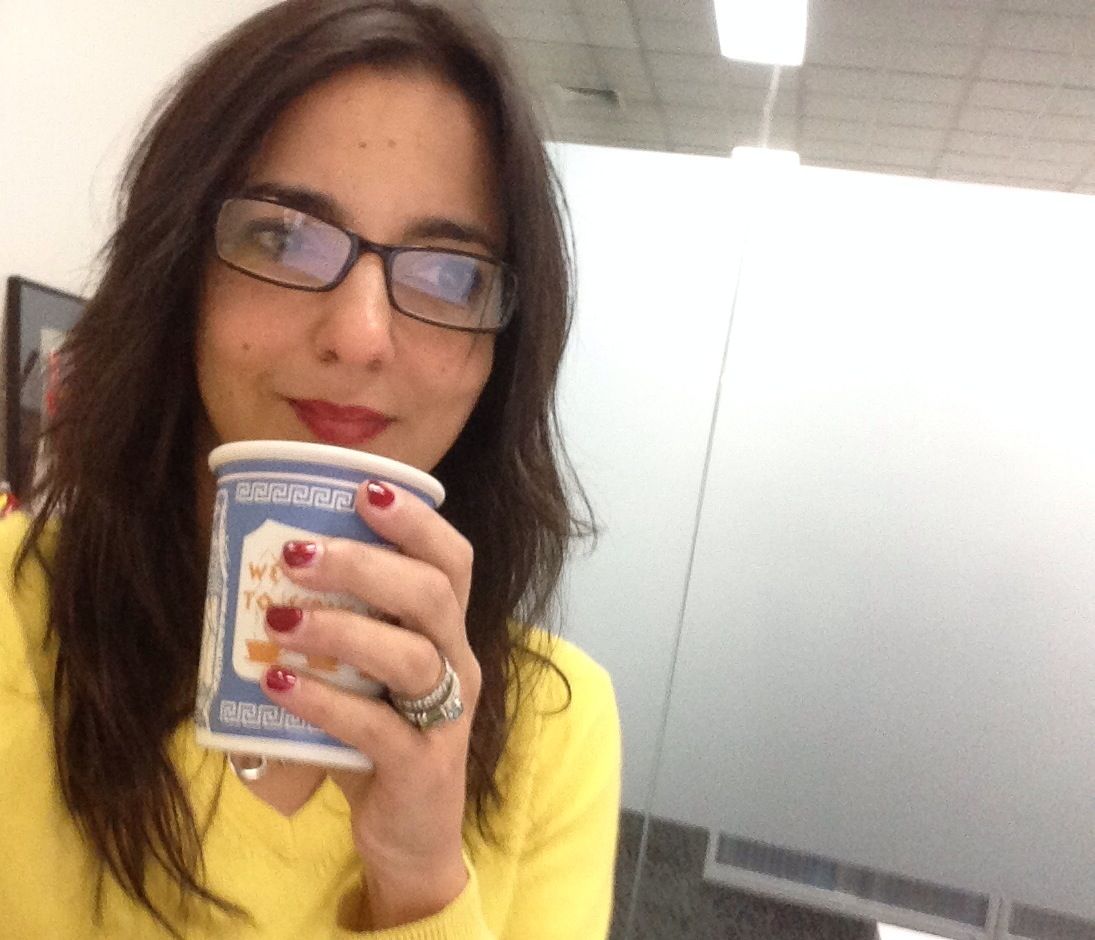
Sophia Loren is said to have once quipped ‘Everything you see, I owe to spaghetti’. Well today, the morning after a hypo that woke me at 3.15am and didn’t let me fall back asleep until after 6am, everything you see, I owe to coffee. I’m on number four.
Have a great weekend! A reminder to check out the Diabetes Stigma Project and consider making a donation.
And for your Friday listening pleasure, here’s some Keith Jarrett with ‘Long As You Know You’re Living Yours’.
I stick needles into my skin, I shove insulin pump infusion sets into my sides, I rocket-launch CGM sensors into my stomach, I jab my fingers, I unflinchingly hold out my arm for blood to be taken and I roll up my sleeves for my annual fluvax without batting an eyelid.
Needles don’t scare me one little bit. I don’t even feel my heart rate speed up when a needle is coming at me, and although I’ve never checked, I’m sure that if wearing a blood pressure monitor while waiting for a needle to break the skin, there wouldn’t be a blip on the graph.
But other pain? Other pain I don’t deal with quite so well.
This morning, I stubbed my toe on the end of the bed. I collapsed onto the mattress, yelling ‘shit, shit, shit’ ‘ouch, ouch, ouch!’ and then grabbed my foot, expecting to see blood, swelling and possibly a bone sticking out of the skin. The pain was excruciating and clearly, I was about to die. Nope. Nothing. Now, four hours later, there is no sign of this injury that caused tears and swear words that made my daughter give me a warning about using the ‘S-H word, mum’!
I don’t ever recall having been scared of needles, so I don’t think that it’s diabetes that has desensitised me to the ‘pain of the prick’ (not a euphemism). But other pain is another thing altogether. Mouth ulcers reduce me to tears; a sore throat can have me whimpering in pain and headaches make me cover my eyes and swear that I have a tumour because of the agony I’m experiencing. I jammed my finger in the car door not long ago and was convinced that I was going to need reconstructive surgery. (Didn’t even bruise.) Whenever I’m asked what I’d rate the pain from something I always say ‘Ten. At LEAST ten. Does the scale go to eleven? ‘Cause then I’m at eleven’.
So with this in mind, you would think that I demonstrate great sympathy for others when hurt or in pain. But I don’t. I have no compassion for people who complain about discomfort, unless I can see a lot of blood, a cast, crutches, or my mum just after she’d had a double knee replacement (although the feelings of sympathy only lasted a couple of days.) Anyone else; no sympathy whatsoever. Once, after tripping and scraping her knee, my daughter looked at me through her tears and said ‘Just once I’d like you to be sympathetic when I fall over, mum’ in response to my ‘Oops; you’re okay. Up you get!’ (Mother of the year award in the post.)
I wonder if living daily with things that cause pain – even if I don’t flinch – has rendered me completely unsympathetic without an ounce of compassion when others complain. And do I feel that I can overreact when something hurts because I don’t complain about the diabetes stuff?
Whatever it is, I don’t know. But I can’t see myself becoming more tolerant of pain and I certainly don’t think I will ever be caring and kind to others in pain. Instead, I’ll keep moaning and complaining about how much a paper cut hurts me all the while telling others to take a spoonful of cement and toughen the f#@k up. I never promised to be consistent.

A montage by photographer and Marios waiter Massimo di Sora.
Today, my all-time favourite café turns 28 years old. Marios café (named for its two owners, Mario Maccarone and Mario De Pasquale, hence no apostrophe) is celebrating its birthday and remains the ultimate in Melbourne café culture. It’s unapologetic (still doesn’t serve skim milk, although did succumb a couple of years ago and started to offer soy) and reliable (never had a bad coffee!).
I’ve been going to Marios for pretty much all of its 28 years – first with my parents and then with friends. Once I left school, meeting up with people at Marios was the epitome of cool! Great jazz on the stereo, a gorgeous changing art display showcasing local talent, and the best coffee in Melbourne. Plus tablecloths on the tables, smartly dressed waiters and breakfast served all day. There have been many times that I’ve ordered scrambled eggs or a blueberry bagel at 10pm!
Back in my uni days, it was the location for many first dates and I could always tell if there would be a second date by whether or not the guy knew of Marios when I suggested we meet there. In any relationship break up in the division of cafes and pubs and places we’d hung out, I always got Marios!
Marios is where I take overseas friends when I want them to have a truly Melbourne café experience. DOC friends from home and abroad have been taken there and just a couple months ago, a group of us got together to catch up. It’s where I meet up with friends who have moved overseas when they come home for a visit. My beautiful friend Shannon who moved from Melbourne to Hong Kong and then the UK over 15 years ago and I have a standing date any time she’s in town so she can get a fix of Marios lasagne! Recently, I caught up with a long-lost friend and there was no doubt about where we would meet.
There have been many memorable visits to Marios including the night before my daughter was born, where I checked my watch every ten minutes, counting down until the time I would meet her, and the day she came home from hospital, where a pit stop was made to show her off to the waiters.
I’ve laughed, cried, and had some of the most serious conversations of my life in Marios. I’ve said goodbye to friends and welcomed them back into my life. I’ve met up with people for difficult, heartbreaking chats because it’s always felt safe.
I can still remember my first trip to Marios after I was diagnosed with diabetes. It was only a week or two later and it was the first time I was eating out. It was where I did my first ‘public injection’ and I can remember my heart racing as I pulled my insulin pen out of my bag and tried to jab my stomach secretly. I was sure everyone was watching me, judging me, waiting to jump on me and tell me to put it away. No one noticed and if they did, said nothing. I searched the menu for food that the ridiculously old-school dietitian I had seen would approve of and I wondered if it would be okay for me have chocolate sprinkled on top of my cappuccino. I fought back tears as I asked the waiter for sugar substitute and then explained why I was asking. My coffee was on the house that day.
Now, I don’t hide away my BGL checks or pulling my pump out from under my clothes when I am out, and it was at Marios that I realised that I had nothing to be ashamed about when it came to ‘public displays of diabetes’. Marios normalised eating out with diabetes – the new reality of my life.
I felt safe there. I knew I would not be questioned. I knew that I would still be the old me there and Marios would never change. It felt like it always did. It felt like home.
Marios Cafe
303 Brunswick Street Fitzroy VIC
(03) 9417 3343
http://www.marioscafe.com.au
I stood in the bathroom this morning as I got out of the shower and stared at myself in the mirror. I don’t like what I see. There is a pump infusion set, probably almost ready for a change due to the slightly turned up edge of the tape holding it in place; a new-ish sensor makes me feel like a cyborg and tiny red and black dots covering my middle.
There are so few days when I get to step in and out of the shower truly unencumbered by some sort of diabetes device being stuck to me. All my planets have to be aligned for a day where I am changing my CGM sensor and pump line at the same time and I get to rip them out before stepping into the shower, spending the time actually aware that there is nothing attached to me. Truly nothing. Ridiculously, it’s the only time I feel truly naked.
Diabetes has left its mark all over me. Fully clothed, I can hide it, but undressed, there is no getting away from what it has done. There are scars all over my abdomen and hips from old infusion sets and Dexcom sensors. There’s a nasty red and black bruise from a failed infusion set change three days ago which resulted in blood spurting everywhere. No matter how much I scrub away the residue from tape, there is usually still some clinging desperately to my skin. My fingers have tiny marks all over them from where I jab in a lancet several times a day.
On days where my BGLs have been higher than I’d like, my skin looks slightly dehydrated. On nights where I have been awakened by hypos there are dark circles under my eyes.
There are scars and marks and bruises there to remind me of how invasive diabetes is in a literal as well as figurative sense.
The only scar I look at with any fondness is the caesarean scar across my lower belly. I trace the line and am taken back to the operating theatre the day my baby was delivered from me. Some scars form the basis of beautiful memories.
While the diabetes scars are many they do disappear. They heal. They vanish. Only to be replaced by more. Many more.





