
You are currently browsing the category archive for the ‘Health’ category.
There is a dance I do with diabetes each and every day. I praise, celebrate and highlight the good; I avoid, shut out and ignore the bad. The things that scare me are pushed away – as deep as they can go. When they threaten to rise to the surface, I do the equivalent of sticking my fingers in my ears and start chanting ‘la, la, la’ so they recede to where they belong. Out of sight. Out of mind.
I’ve done this for as long as I’ve had diabetes. From day one, I pushed away the ugly and scary images of diabetes complications. I conveniently ignored the warnings and threats. Obviously. Because no one wants to be scared or warned or threatened the day they find out they have a life-long chronic health condition. Or ever.
I am scared. Diabetes scares me a lot. It always has, but for some reason, it is more at the moment. I don’t know why. Nothing has changed. There has not been a frightening experience or a noticeable change in anything. But as days and weeks and months and years as a person with diabetes gets crossed off some imaginary calendar, I am suddenly feeling that it is a countdown to where the really difficult things start.
I worry about what each passing hour is doing to my body and to my mind. If I’m being particularly forgetful, I wonder if it is because my head is so full of diabetes considerations that there is no room for a synonym for fear (dread, anxiety, terror, dismay alarm….) or recalling what day my kid has library each week.
But thinking about it more, I think the fear comes from the lies we are sold about our diabetes. I was promised the day I was diagnosed by a lovely, but most likely completely out of touch doctor, that diabetes is a matter of maths and that if you do the equations properly, it can be easily controlled.
Diabetes can’t be controlled, and with each moment of failure – and there are many and they are constant – I have feared the consequences. And I fear diabetes. With each missed calculation or out-of-range number or confusion about how the hell this thing really works, I see failure. And fear.
Diabetes is not a matter of maths, and the idea that I can control it results in a constant state of high alert as I pretend to be a body part that, when working, is pretty damn perfect. I am not perfect. In any way. And neither is the way I manage my diabetes. It’s messed up. And I’m messed up about it.
And now, as always, there are the fears. And they seem bigger and bolder all the time. I fear diabetes-related complications – long- and short-term. I fear losing the ability to take care of myself and care for others. I fear diabetes becoming so intrusive that I am unable to do anything else. And I fear diabetes becoming the first, last and only thing others think about when they see me. Perhaps most of all, I fear diabetes becoming the first, last and only thing I think about when I see me…
I wonder just how differently I would feel about diabetes – the known and unknown – if I was told at diagnosis that I would get this wrong more times than I got it right. And that was perfectly okay, understandable and acceptable. I wonder how much less significant the feelings of failure would be. And how much more in check my fears would be.

9 March, 1998. 37 days before diagnosis.
I’m back home after three days on the Gold Coast for part of this year’s Australia Diabetes Society – Australian Diabetes Educators Association conference. More to come next week, when I’ll try to pull together my very messy notes.
For today, here are some pictures!

As I took the stage to chair one of two sessions at the Roche Educators Day in Tuesday, I realised I had already been up for seven hours. It was only 11am. Sentences were difficult until my fourth coffee of the day kicked in!

On the job. Professor Steven Boyages’ talk: A connected ecosystem for healthcare professionals & their patients’ was full of practical tips about using technology to support people with diabetes.
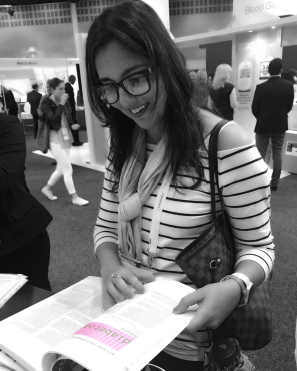
This was the moment I opened the new NDSS Diabetes and Emotional Health Handbook (for health professionals supporting people with diabetes) and I saw Diabetogenic on page 24! Thanks for capturing, Professor Jane Speight!
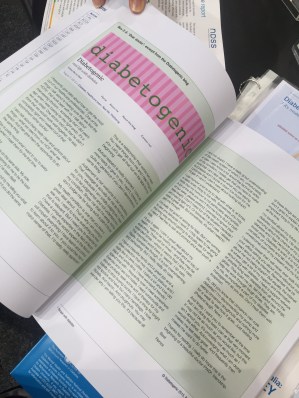
Proud moment!
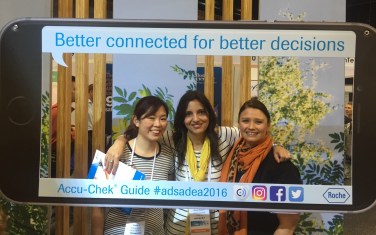
Advocates running amok. We actually behaved ourselves quite well. Mostly.

Although, we were mighty busy! Three of the top four influencers at the conference happen to be consumer advocates, sharing information from the conference specifically with the intention of reaching other PWD who could not be in the room.
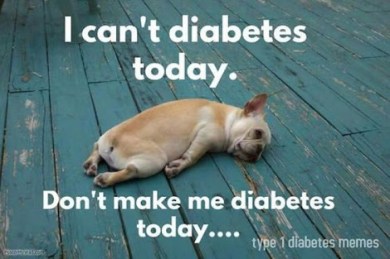
Martha Funnell used this in her talk on day one. Sums up many, many days!
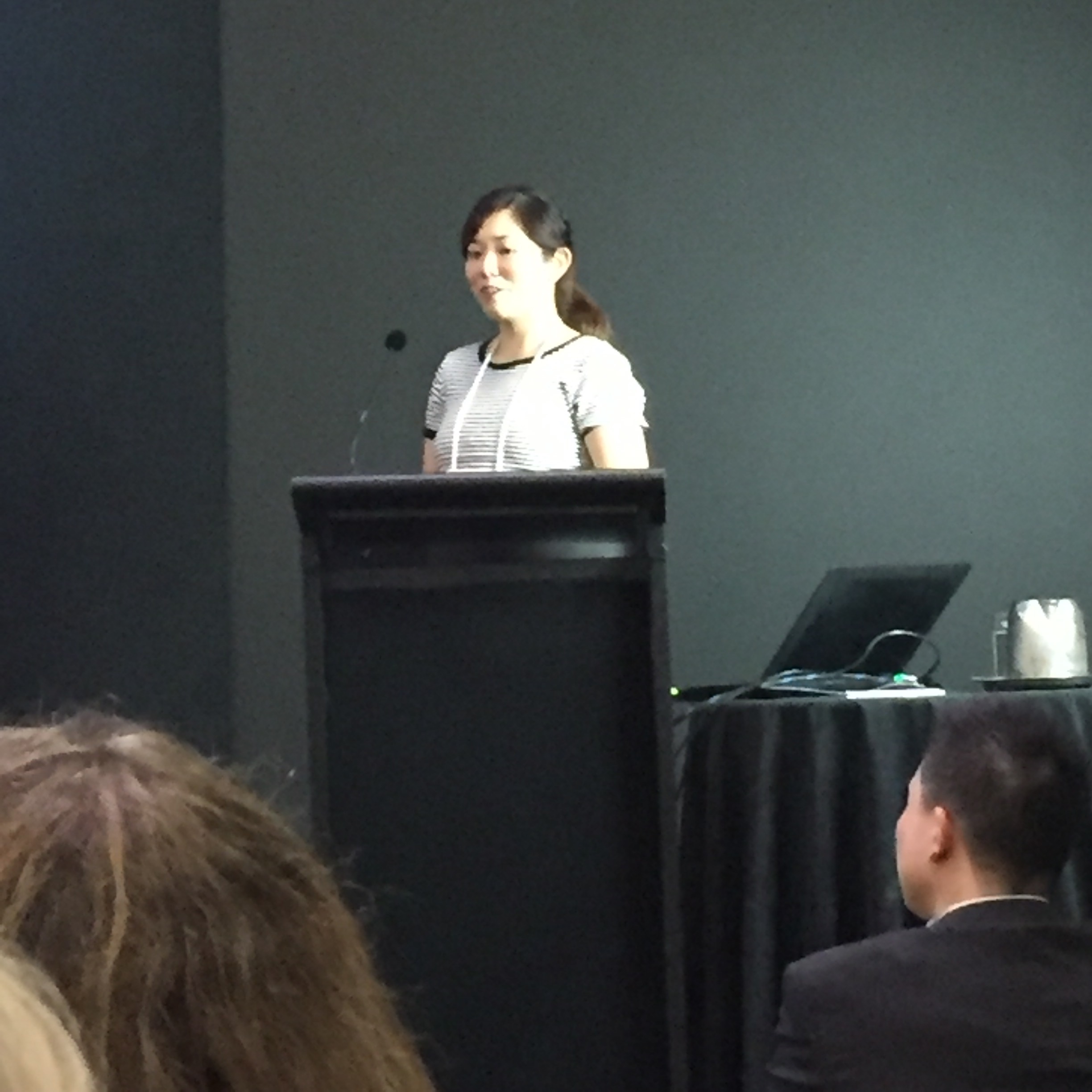
Rather proud of this special young lass. Here’s Ashley presenting on her work focussing on the needs of young people with type 1 diabetes.
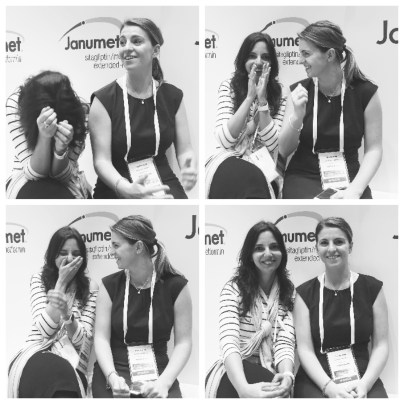
This is a combination of jet lag and exhaustion. (Jet lag belonged to Harriet.)

The NDSS stand looked very bright thanks to these beautiful resources from the Young People with Diabetes Program.
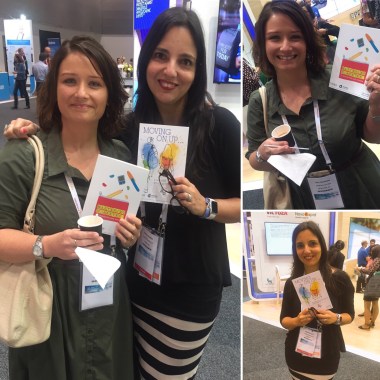
And another proud moment. Kim’s outstanding work on the national roll out of Mastering Diabetes means this resource is in the hands of those who need it most: children with type 1 diabetes, their families and schools. Well done, Kim! (And I’m holding Moving on Up which I am equally proud of!)
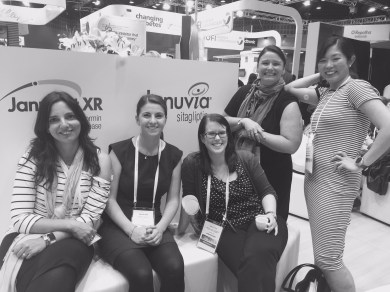
Spot the diabetes devices….

Gold Coast.
Proper wrap up coming next week. Enjoy your weekend. I know I certainly will! (But you can play catch up by checking out all the #ADSADEA2016 tweets.)
So many things on my radar at the moment. Here is just a taste!
Gila Monster and diabetes
Over the weekend, federal health minister, Sussan Ley announced the drug Bydureon would be listed on the PBS from 1 September 2016. Bydureon is a once-weekly injection used in conjunction with oral medications for people with type 2 diabetes.
Fun fact: Bydureon is the brand name for exenatide, which is a synthetic form of a substance found in the saliva of a lizard – the Gila Monster. (Please can we talk about how someone worked out that this would be a good treatment for diabetes?)
News from ACBRD
The team from the Australian Centre for Behavioural Research in Diabetes don’t sleep. At least, I am pretty sure they don’t. My office is on the same floor as them and I can tell you that I’ve never seen any of them asleep at their desk. Instead, they work really hard and produce things like these:
Centre Foundation Director, Professor Jane Speight, is straight talking at the best of times, and her commissioned article published on Monday in the Medical Journal of Australia pulls no punches in putting forward a strong case highlighting the need for behavioural innovation in the treatment of type 2 diabetes.
Dr Jessica Browne from the Centre has been leading work on diabetes and stigma, and this piece published recently in Diabetes Care is about the development of the Type 2 Diabetes Stigma Assessment Scale.
Over-achievers the lot of them. And how grateful I am! (If any of you are reading this, stop it now and get back to work!)
AADE / DSMA / diaTribe / Language
I cannot even begin to express how excited I was last week to see so much focus on and discussion about diabetes and language at last week’s American Association of Diabetes Educators conference.
I sat in my office in Melbourne last Friday morning in tears as on the other side of the world in San Diego (where it was Thursday evening) Cherise Shockley directed a tweet chat about language and diabetes. (And a huge thanks to Cherise for reaching out before the chat!)
In this piece from diaTribe, Kelly Close also wrote about language. Check out this BRILLIANT ‘Diabetes: Starting the Conversation’ infographic. I love this SO much!!

Rachel Soong – Diabetes Infographic @DiaTriibeNews
Molly’s blog
I am always on the lookout for diabetes blogs to read and share and this one is just brilliant! Molly Schreiber’s blog, And Then You’re at Jax, is about living with not only type 1 diabetes, but also rheumatoid arthritis. (Another one of us who collects autoimmune conditions…)
For beautiful, sensitive and honest writing, this is where it’s at! Check it out here.
ADS ADEA next week
Next week is the Australian Diabetes Society – Australian Diabetes Educators Association Annual Scientific Meeting on the Gold Coast. Program is live here.
I’ll be writing and tweeting from there for a couple of days next week. Keep an eye out on the #adsadea2016 hashtag to follow along!
New resources for young people from the NDSS
There is little more satisfying that seeing the end result of something that has taken a lot of effort, time and expertise. I am thrilled to show off these beautiful resources that have been produced out of the NDSS Young People with Diabetes Program that I manage as part of my day job.
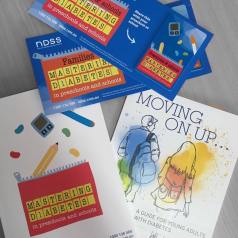
They look beautiful (the graphic designer is an absolute gem!) but even more importantly, they are full of important and useful information
An online version of Mastering Diabetes can be found here.
And an online version of Moving On Up can be found here.
More about the inclusiveness of the DOC…
My post about the DOC from earlier in the week has generated a lot of really interesting and valuable comment, both on this blog, on Twitter and Facebook and with many messages sent to me privately. Thanks to everyone who has contributed and, mostly, thanks to everyone for being so positive and respectful in their comments.
The purpose for writing was to try to encourage a discussion about how and why some people feel more included than others. I know this is not the first time this has come up and I doubt it will be the last.
I have noticed some common themes in how people feel and am trying to write something about that, but keep feeling clumsy and inarticulate. I’ll keep trying and see if I can make sense of anything – mostly in my head!
Banjos, banjos, banjos
Last week I went to two concerts at the stunning Melbourne Recital Centre. Both showcased banjo players and both were brilliant. One of the concerts was TWO banjo players and nothing more. I don’t know who I am anymore…
But I can’t stop listening to this at work.

The Melbourne Recital Centre stage ready for Punch Brothers.
I had a call the other day from one of my favourite diabetes HCPs who is writing about diabetes and female sexual health. I wanted to shout ‘Halle-fucking-luiah!’ but didn’t because I am polite and never swear.
Anyway. The reason I was so excited to hear this is because when it comes to diabetes and sex, women rarely get a look in. Let me reframe that. When it comes to information about diabetes and sexual health, women rarely get a look in. (Hopefully women with diabetes who are wanting sex are getting plenty of looks in…so to speak…Yeah, this is not going to be awkward at all, is it?)
When talking about the complications of diabetes, erectile dysfunction*** frequently is mentioned. It is actually one of the things that often get men to the doctor because, well, because…erectile dysfunction. There is information about it and it is a well acknowledged complication of diabetes in men.
But women also report problems with sexual function, yet there is very little information about it and it is spoken about very, very rarely. Or, when it is, it’s discussed around changes in sexual function relating to menopause, which may be an issue for all women – diabetes or not. I guess the thinking is that ‘this is when it is likely to be a problem, so let’s talk about it now’, which doesn’t really help those who may have concerns with sex and sexual function earlier than menopause.
So today, let’s talk about women’s health and diabetes – all of it, including the sex stuff.
(For the record, there is no kissing and telling in this piece. There will be no personal sharing of sex stories. This is for everyone’s benefit! Plus, I learnt that it is not cool to discuss my sex life in a public forum after I once mentioned in a talk to a group of first year med students that I hypo pretty much every time after sex, and then made some silly comment about it being because my partner was so good in bed. This would have been fine if it all stayed in the room. The next night, when out for dinner, a group of Uni students came up to me and told me that they had been at my talk the day before and it was great. Then they looked at my husband who was innocently eating a plate of pasta and one of them said ‘Well done, mate.’ I was mortified. Anyway, let’s move on…)
So, what is out there now for women who want some information about diabetes and sex? Well, while working at Diabetes Victoria we developed a nifty and gorgeous looking booklet which talks about contraception choices. It’s called Sexual Health and Contraceptive Choices for Young Women with Type 1 Diabetes, and I can’t for the life of me find it online, but if you can get a copy, it’s terrific!
There are also some great Australian resources available on diabetes and pregnancy – both for women with type 1 and type 2 diabetes – which provide information about pre-conception planning as well as what happens after conception, during the pregnancy, during delivery and post-partem.
There is some (limited) information about diabetes and breastfeeding. (So wish there had been more eleven years ago because, seriously, I bumbled my way through for almost 24 months and it was horrid at times, diabetes-wise…)
But where is the stuff about everyday diabetes and women’s health and sex – not necessary tied up with trying to get pregnant. (We’ll ignore the ‘tied up’ comment there, okay?)
On the day I was diagnosed, a lovely diabetes educator told me that sex is exercise. Exercise often causes hypos. Hypos are not fun. Not fun kills the sex stuff. Moral of story – keep jelly beans beside bed. I was terrified that I was going to pass out during sex and that it was going to be unpleasant for everyone involved. (Not that there would be a cast of thousands…)
Yawn – it was boring information and it made me think that in future, sex was going to very unsexy. What I wanted to hear was ‘you absolutely can still have sex and, if you want to, you absolutely should. There are some things you might want to consider such as the possibility of going low… I’m talking about your blood sugar, get your mind out of the gutter, Renza, and wipe that smile off your face… so Nutella body paint is a good idea.’
Now that would have made me smile, think of Nutella as a medical necessity and therefore how diabetes now justified me keeping a jar of Nutella by the bed. And on the kitchen table. In the bathroom… basically anywhere! As an emergency contingency, of course.
No one ever spoke to me about what orgasms may do to my BGL. Nor was I told much (in fact, anything!) about how high BGLs might impact on sexual function.
And then there is the minefield that is body image and diabetes, and thinking about how we feel about ourselves and its impact on how much we want to have sex. Or how it makes us feel when we are actually having sex.
Plus, the visible signs of out so-called invisible illness impact on how we feel about undressing in front of someone. I have scars all over my abdomen and hips from heeling pump sites. There is usually a CGM sensor strapped to my arm and a pump cannula in my tummy or hip. There are dregs of tape from old sensors and sites and sometimes tiny bruises. There are tubes and a little vibrating machine (pump, people…I’m talking about my pump).
All of these things point to the fact that I am not perfect and that my body is not perfect and that I need devices and drugs to keep me ticking along. This makes me feel crap at times, wonder what my partner is thinking and want to hide all the reminders that I am not a perfect woman away. This sucks even in my situation where I am married and have had the same partner since diagnosis. Add to that the idea of exposing and explaining all this to someone new and you bet that will impact on how one feels about one’s body and the very idea of sex.
I remember being warned a million times about how women with diabetes MUST PLAN PREGNANCY. And this is excellent advice. However, it made me so terrified of getting pregnant with a sub-perfect A1c. I learnt that fear is an absolute libido-killer. Even when pregnancy would have been welcomed, I was terrified to fall pregnant before I’d been given the green light by my endo.
…which for a while made me feel like there were more than just the two of us in the room trying to make a baby when we were…well…trying to make a baby.
My diabetes loomed overhead, and every moment, I was petrified of my BGL. I started pondering ridiculous things like ‘If I conceive right now and my BGL is not in range, what will that mean? Is it possible that my baby may not have eyelashes if that happens?’ Way to go being drawn out of the moment and into a weird space of imagining babies without eyelashes and how they would hate me forever and ever, and never be able to wear mascara.
So, who do you talk about if you want to have a chat about diabetes and sex? I have never ever been asked about my sexual health from any of my healthcare professionals. Of course there have been discussions about contraception and pregnancy planning and actually being pregnant. But no one has ever said ‘Does your diabetes in any way impact on how you feel about sex? Or do you think diabetes might impact on actually having sex?’
For the record, (and this is a personal bit), I did find that my attitude to sex changed after I was diagnosed. I am sure that was connected to how I felt about my body, so there was some psychological stuff I needed (and continue) to work through, but there was also a noticeable difference in actual function and how I felt. I couldn’t find any information about it, so naturally, thought it was just me.
Of course, it wasn’t. And as soon as I spoke to a group of women the same age as me who were all experiencing similar things, I felt heaps better. But it took me a long time to find those women and feel comfortable speaking about it (yay for prosecco!).
I don’t really have any answers in this, but I wanted to write to start a discussion. I know of many women who say that they believe diabetes has an impact on their sex life – both physically and emotionally. Also, I have come to understand that if it is an issue for one, it is usually an issue for many. Anything anyone want to share? Feel free to do so – anonymously if easier.
***LANGUAGE DIGRESSION
Erectile DYSFUNCTION? Can we please come up with a different term for this? Dysfunction sounds like failure – or at least like a penis has failed. It has not.
Some people may have seen news reports yesterday about changes to access of blood glucose strips for people with diabetes in Australia. Some reports were a little light on detail (and by ‘light on detail’ I mean ‘incorrect’) and there has been a lot of discussion on SoMe with people trying to get the facts and work out what it means for them.
This information on the Department of Health’s website gives all the details to date.
Following the news piece, quite a few people have been in touch asking me if I can provide some clarification. I have no details other than what has already been announced publicly. When the announcement was made last year, I wrote this piece about it, so for some background of the issue – and my take on it – have a read.
But what does it mean TODAY for people with diabetes in Australia?
- These changes DO NOT affect people with type 1 diabetes or insulin-treated type 2 diabetes.
- No one should be denied access to BGL strips today, tomorrow, next week or next month. While the change in policy took effect from 1 July 2016, an initial six-month supply has been automatically granted to all NDSS registrants with non-insulin treated type 2 diabetes. This means the earliest anyone may be affected by the changes is 1 January 2017.
- Further information will be coming, so keep an eye on the NDSS and Department of Health websites.
- Speak with your HCP about the changes if you are concerned about how this will affect you and your diabetes management.
I know that many of us are feeling a little confused about diabetes supplies at the moment with the recent changes in how we access our consumables, and this seems to just be another change we need to deal with.
And as with all change, there is often a lot of speculation and misinformation being shared around. The sensationalist nature of yesterday’s reports did nothing to allay any of these concerns and only fuelled the fire of uncertainty. And is yet another example of poor reporting of diabetes in the media.
My head is full of lists:
- Packing list
- Travel checklist
- Work to do list
- Hug-the-kidlet-a-million-times-before-we-leave-her-for-three-weeks list
- Diabetes-supplies-for-three-weeks-away list
And a list of great things I’ve seen online lately…
PLAID
Do you read PLAID – a research journal with a focus on people living with and inspired by diabetes? If not, you should. Why? Because it’s awesome!
Here’s the link to the latest edition. I’m really proud to have contributed to it because it is (as already mentioned) awesome, and this edition is all about the patient perspective. I sit very comfortable in there!
Unspeakably Wonderful
A new movie about Banting and Best and the discovery of insulin is hoping to be made by UK production company AngryMan Pictures. Details for how you can contribute to their crowd funding campaign are here.
Diabetic Living online
The Australian edition of Diabetic Living magazine has relaunched its website with a gorgeous new look. Check it out!
Totally (dia)badass

Take 5 minutes…
…and read these great blog posts that have been recently published:
- Anyone thinking of starting on an insulin pump and wanting a front seat view into what it’s all about should jump on board Type 1 Writes. Frank is a couple of weeks into his pump start and is sharing lots about what he is learning. I’ve been pumping for over 15 years now so have completely forgotten about dealing the challenges and successes of starting pump therapy.
- Lots of posts coming in from people who were at #DXSydney, sharing their experiences of using Libre. This post listed all the people who attended with links to their blogs. Have a read and share your experiences too.
- The Grumpy Pumper is a man of few smiles and, it would appear, few blog posts. Here is his first blog for the year. Pop by and leave a comment suggesting he blog more. Then it won’t just be me nagging him!
- Awesome pics in this blog from Scott from Rolling in the D. He hacked his Dexcom and this is what it looks like on the inside!
- Why do we need online communities? Anna from Glu gives some reasons here. And she’s right on every count!
- Also from Anna, this profoundly moving and brave post about her recent pregnancy loss. These stories need to be told. Thank you, Anna, for sharing yours. I am so, so sorry for your loss.
- This one is not a blog post, but a podcast. Stacey Simms produces some awesome podcasts over at Diabetes Connections. Do check them out!
Finally, if you’re looking for some more diabetes blogs to read, healthcare social media guru, Marie Ennis-O’Connor, has curated this list for you. There are 50 blogs to choose from. Get comfortable. Get reading!
Myths be gone
Team Novo Nordisk are doing awesome things to dispel myths about diabetes and address the issue of stigma. This latest video is terrific. Watch. And share. Share. Share.
Off to NOLA
It’s that time of year again. The American Diabetes Association Annual Meeting kicks off in New Orleans at the end of this week. I’ll be there, frantically tweeting.
I hit the road – well, air – tomorrow, so I’ll be out of touch for a bit as I embark on the nightmare transit. But I’ll be mainlining iced-coffee and beignets to keep awake and get in with it all.
Follow along at #2016ADA for the latest happenings in the world of diabetes.
New Orleans = Dr John. So here you go!
‘Do you eat a lot of carbs?’
This was the question that had me stopping and thinking about my diet and how it has changed in recent times.
It is also a little bit of a taboo topic and I feel a little odd writing about it here. I really don’t care about being judged by others when it comes to my diabetes decisions, however for some reason, food attracts so much attention and judgement, I am somewhat reticent to write this post.
Firstly, and most importantly, please do not take this as medical advice. Or nutritional advice. In fact, there is no advice here at all– just some thoughts about what I do that seems to work for me. I am not a healthcare professional of any sort whatsoever. Please keep that in mind while reading.
I should also say that I had no intention to change my diet. It was just one of those things that happened slowly over time.
So what’s different? Well, mostly, it has to do with my carb intake. I eat considerably fewer carbs these days than I have in the past. Why? No idea. As I said, it wasn’t planned. It hasn’t been part of a no or low gluten diet; it certainly hasn’t been part of a weight loss strategy. And it utterly has not been part of an intentional low carb (high fat or otherwise) plan.
Honestly, I get a twitch in my right eye when I hear talk about low carb, because anyone who wants to suggest that I should stop eating doughnuts is, in my opinion, in need of a cup of tea and a lie down.
But even with this aversion to the LC idea, the thing I have found is that, by default, I have adopted a far lower carb diet than is recommended by dietitians and other healthcare professionals.
In my case, where this is has been most obvious is not in the ‘sometimes foods’ I eat. When I want a doughnut, I still eat a doughnut. Because as much as I write about them here, I actually only eat them occasionally. And that hasn’t changed. On the occasions I feel like a doughnut, I eat a doughnut.
The real change has come in the day-to-day foods I eat. Some of these changes include:
- I cook and eat less pasta than I used to and when I do, there is more protein and vegetable-rich sauce dousing the penne or orecchiette or farfalle or macaroni.
- If I make a risotto – again, a rare occurrence – the vegetable and meat component has been significantly increased so that I am getting a lower carb hit.
- I eat breakfast only on the weekends (this has always been the case and always will be and that is all there is to it!) and will only ever eat half or, at the most, one slice of toast that comes with my eggs, bacon and avocado (or whatever I have ordered).
- I don’t snack on carb-y foods – I’m now more likely to grab a handful of nuts than a piece of raisin toast.
- I’ve stopped thinking that a meal is not a meal unless there is a large serve of carbohydrate on my plate. This was tough, because old habits die hard and the very first dietitian I met, the day after I was diagnosed with diabetes, insisted I eat ridiculously huge quantities of carbs with every meal and I stuck to that for a while.
- I prefer sugar to artificial sweetener in my coffee, but instead of two sugars, I’ve cut down to one and sometimes, none.
Am I eating a low carb diet? Well, strictly, no. Is it lower carb? Yes, you bet! The Dietitians Association of Australia website suggests that an ‘average adult’ should eat 310 grams of carbs per day. I can’t think of the last time that I ate that many carbs in a day. (Looking back through my pump boluses for the last couple of days, my total carb intake is well under 100 grams.)
So, how does all this affect my diabetes management? Mostly, it has shown me just how much easier my diabetes is to manage when I eat fewer carbs. Low carb days result in far smoother CGM lines. Fewer carbs mean less insulin, which means less likelihood of lows, which means less likelihood of rebound highs, which means I ride the glucose rollercoaster less frequently. It’s an equation that makes so much sense and, for me, it works because, overall, I feel much better.
Is it right for everyone? Hell no! It’s right for me now, but who knows what I’ll be like in a few weeks time!
So why the hesitancy to write about this? Diet is a highly personal issue. But there is undoubtedly a real sense of reluctance to enter a debate about how a diet that is not necessarily endorsed by dietary guidelines may be beneficial to managing diabetes. I have too frequently heard HCPs shut down conversations about low carb diets – often low carb, high fat – however there are more and more people with diabetes saying this way of eating works for them.
Is this a case of the science needing time to catch up with what people are doing? I think yes. But I am not a scientist or a dietitian and I certainly don’t understand the science behind diet. But I know what works for me. And that is really all that matters in this case!

As it turns out, I made mushroom risotto for dinner. This huge mound of six different kinds of mushrooms was cooked with chorizo and onion before being stirred through a small amount of perfectly cooked arborio rice. A huge bunch of baby spinach leaves were stirred through at the end of freshness and a touch of green.
In one of my #DBlogWeek posts last week, I wrote that for the sake of my own mental health, I have learnt to not compare myself with others.
I was thinking of this the other day when I was involved in a conversation with a woman newly diagnosed with diabetes. She told me that she was really upset at the response from a close family member who, when told about the diagnosis and how distressed she was, responded with ‘It could be worse. At least it’s not cancer.’
I’ve had that said to me. Several times. And it is one of the most offensive things I have heard. I don’t really know how to respond to it, because it’s true, I don’t have cancer. But I do have diabetes and that is pretty bloody horrible sometimes. (For the record, I equally dislike the idea of responding with ‘At least it’s not cancer. There is a chance of remission with cancer; type 1 is for life…’)
I get just as annoyed when it happens in our community. ‘At least it’s not type 1,’ is something I have heard said to people with type 2, diminishing the challenges they may face.
When I was anxious about my impending cataract surgery a few years ago, I was told ‘It’s nothing. At least you don’t have to have laser or have your eyeball injected.” Again, that’s true. But I was still terrified and had every right to be.
When discussing a nasty hypo ‘At least you didn’t lose consciousness and wake up to a roomful of paramedics.’ Sure, I remained conscious throughout the low I had last week. But I needed help to treat it and it happened in front of my kid. She was scared which really upsets me and makes me feel guilty.
When our experiences are belittled or minimised, it means we may stop sharing them. No one wants to be told they are being a drama queen and that it could always be worse. Of course it could be worse, but that doesn’t mean what you are dealing with doesn’t suck.
I have had diabetes for 18 years now. I have not had to deal with debilitating complications. I have not had to spend weeks in hospital because of my diabetes. But does that mean that my fears and concerns and anxieties are any less relevant than someone whose experiences are different?
And that’s why you will never hear me say to someone newly diagnosed ‘At least you have just been diagnosed. Just wait until you have had diabetes as long as me and <this or that> happens,’ because everyone’s experience is different and that newly diagnosed person may have their own concerns at that particular time. Or not. Which is also fine.
I had a healthcare professional once tell me that at least I didn’t have diabetes ‘too terribly’, because I worked, had a child and travelled. It was one of those (incredibly rare) moments where I was stunned into silence. I was torn between wanting to say ‘Well, surely that makes what I’ve achieved all the more incredible‘ and stabbing her with a fork. I said (and did) nothing.
There is no ‘at least...’ when it comes to diabetes. There is no discussion about how it ‘could be worse’. Because the truth is, it could be a whole lot better. I could NOT have diabetes.

‘Your body is not broken.’
I received this message from someone who reads my blog. They were not being aggressive or rude, but there was an element of frustration in their words to me. The messenger was trying to get me to focus on the things that do work, rather than the things that don’t and she reminded me that the odds are strongly in favour of things that function as they were intended!
I am so tied up with how my body behaves and what it doesn’t do that sometimes I do forget what it can do. And I am (to a lesser degree, but still too much) concerned with how my body looks, and attribute the things I don’t like to the ‘broken-ness’ of it. I spend too much time seeing what I don’t like, leaving me unhappy and miserable with not only the malfunctioning inner parts, but also the outer shell.
I thought about this as I was eating dinner the other night – home cooked chicken noodle soup with heaps of veggies. But then I remembered I’d eaten a doughnut and a coffee and not much else for the rest of the day.
I thought of this as I climbed into my car this morning, but made sure I parked a distance from work so I could walk a little bit further than I if I had driven pretty much to the front door and found a space there.
I thought about this as I sat curled up in front of the television, mindlessly watching a movie, but remembered that I had been on my feet all day, rushing around, racing through the airport and on my feet for all but the hour I was strapped into a seat on my flight back home.
I thought about this as I lay awake at 2.30am, working on my iPad, knowing I should be asleep. But I remembered that I’d managed a nap that afternoon so my sleep debt wouldn’t be too horrendous.
I thought about this as I rushed around this morning getting ready for work, late as usual, and pulled on a pair of new and very high boots. There will be a time I’ll need to start wearing sensible shoes. ‘That day is not today,’ I said to myself as I stood up tall in front of the mirror, admiring the heels and buckles and leather.
I thought about this as I had a glass of champagne and then a second to celebrate a night out, reminding myself it was the first drink I’d had all week.
I don’t treat my body as a temple. I don’t do what’s needed to keep it ticking along as best it can. I don’t worry about things such as the number of serves of vegetables I eat each day; the fact that I don’t eat breakfast most days; that I eat bacon on Saturday and Sunday most weeks or how on the rare occasions I eat bread, I slather it an inch thick with real, salted butter.
I know my BG pretty much every minute of the day, but other numbers that contribute to the measure of health – weight, BP, cholesterol – I have no idea about, unless they’re fresh in my mind from a recent blood check.
I wonder if I should feel bad about how I treat my body. But I don’t and I don’t really think that if I did more, the things I consider ‘broken’ would be fixed. I know that if I were to look at the balance sheet, I would certainly be engaging in more healthy than unhealthy behaviours.
I also know that the things that may not necessarily be best for my body (high heeled boots, doughnuts and coffee for breakfast etc.) give me pleasure. My broken body allows for that. In fact, it makes me realise that perhaps it is not so broken after all. And that has to count for something.





 Diabetogenic
