You are currently browsing the category archive for the ‘Devices’ category.
Last week, Australian social and mainstream media was abuzz with exciting news of a diabetes breakthrough. This filtered through to international media.
Labelled as an artificial pancreas, the new device was covered in online and print newspapers, as well as television news bulletins. The reason for the excitement at home was because Australia is the launch market for this new technology.
Exciting stuff!
Well, yes and no.
The device in question was not really an artificial pancreas. Rather, it is the next generation integrated pump/CGM system to be launched globally.
Technology advances are really important and we should get excited about them, and their promise of improving the lives of people with diabetes.
But reporting honestly and correctly is also really important.
Let’s be clear about the device that was launched last week. It is a pump with a CGM. The real advance is that together they have the potential to predict hypos and turn off insulin delivery, thus (hopefully) preventing hypos.
This is, indeed, an advance in technology.
This is not, however, an artificial pancreas.
There are a number of problems when diabetes advancements are not communicated effectively and correctly. Firstly, the way the reports read last week, this technology would eradicate hypos completely. As far as hopes for diabetes go, living hypo-free is surely something we would all dearly love.
But while this tech MAY help in reducing hypos, it’s certainly not going to eradicate them.
There are still problems with sensor accuracy that need to be addressed before we can be comfortable in saying that CGM technology (whether purely as a ‘warning system’ for impending hypos or being combined with a pump that will switch of insulin administration) removes the risk (and associated fear) of low blood sugar.
Whilst this technology is a step in the right direction, it is not an artificial pancreas. It is not the holy grail.
Diabetes still needs attention, still needs research, still needs funding, still needs donations. We are not there yet, and any report that even suggests that is, I believe, detrimental to continued efforts looking to further improve diabetes management.
All of us who are communicating in any way about diabetes have a responsibility to be truthful, honest and, as much as possible, devoid of sensationalism.
Get it right when we are taking about it and hopefully the mainstream media – who, let’s be honest, have an incredibly rudimentary knowledge base when it comes to diabetes – will hopefully follow suit.
I am really excited about the potential of this new pump and GGM combination and I am fully aware that it may be of significant benefit to many people living with diabetes. I know just how beneficial CGM technology is.
But tell it like it is. Report responsibly. And keep the understanding of what living with diabetes – and the technology we use – real.
This is just so beautiful! Enjoy for your Friday and have a great weekend.
Click
The sound the applicator of my CGM made as the introducer needle pierced the sensor through my skin made me wince. It’s an involuntary response and not because of pain. The little pinch I feel as the needle shoots in is so insignificant it doesn’t really warrant a response.
My last sensor fell out in bed on one of the first nights of our holiday. The next morning as I removed the spent sensor from the transmitter, I decided that I wouldn’t put in another sensor straight away. And then after a few days of enjoying having one fewer device stuck to my skin, I decided that because I was spending so little time alone, I really didn’t need the safety net of a CGM. Plus I had no plans to try to tighten up basal rates or make any other adjustments.
More than five weeks and no CGM.
But the afternoon after we returned from New York, as Aaron was getting ready to go to a gig, I realised that jet lag would possibly be sending me to sleep before he got home. And I’d been chasing hypos all day – continually going low just as I thought I had managed to get on top of things.
I knew that it was time to get hooked up again to my CGM. I needed my safety net back.
So, I pulled out a fresh sensor, swabbed the back of the transmitter and with a click, the new sensor was attached firmly to me.
The clicking sound hit me with a force that surprised me. I actually felt it in the pit of my stomach – a sinking feeling. I felt my breathing quicken. What’s going on? I thought. I checked the site where the sensor had gone in and where I had fastened the transmitter. It looked fine. There was no pain.
I stood in the mirror, my top tucked under my chin and there, staring back at me, was the reason for this sudden unease. Two medical devices. My cannula on my right side, the pump tubing snaking its way up my chest to the middle of my bra where my pump was neatly tucked away, and my CGM sensor and transmitter just to the left side of my belly button.
I could suddenly feel the numbers, I could feel the data, I could sense the information that would soon be available to me. I could feel the vibrating of the alarms.
And the feeling of burnout – that darkness that lives at the pit of of my stomach – sprang to life after having lived quite dormant for a few weeks.
I felt overwhelmed and my sensor wasn’t even transmitting data yet! In fact, I hadn’t even hit the ‘start sensor’ button on my pump yet.
I sat on the bed and breathed deeply before grabbing a piece of paper and pen. I started to make a list of reasons to not get overwhelmed and distressed about reconnecting to my CGM.

I re-read the list and started to feel calmer. But I was surprised at just how sudden and intense the reaction was. I couldn’t really make sense of it either. I love this technology. I love the information it gives. I use a device that is incredibly accurate and reliable. I do feel safer when I have a sensor attached. And I know that, given the cost of running a CGM, I am very fortunate to be able to use it.
So why was I feeling dread instead of reassurance?
I’m not sure; I’m really not.
Later that night, I crawled into bed. It was still light outside – jet lag had indeed hit me! The kidlet was reading in her room getting ready to sleep. Aaron wasn’t home yet and still wouldn’t be for a while.
I started to read and before long, my eyes felt heavy and just as I was about to put my book down, my pump, lying loose in the bed beside me started to vibrate. I looked and saw the two arrows pointing down. I wasn’t low, but would be in about 30 minutes. I reached over and pulled two jelly snakes from the jar on the side table.
As I started to doze, I felt calm and relaxed, looking forward to a good night’s sleep, and woke on Australia Day feeling refreshed. I located my pump amid tangled sheets, and saw the CMG’s straight line. My hand moved to touch my CGM, sitting comfortably on my stomach. Doing its job. Nothing more. Nothing less.
‘Excuse me,’ I turned to my left to the man sitting next to me on the 7am flight to Sydney and smiled. ‘Yes?’ People were still boarding around us and I was killing time checking Twitter before being told to switch my iPad to flight mode.
‘Oh. I couldn’t help notice…’ He was looking at my hand which held my pump. I finished pressing a button to silence an alarm and hastily shoved the device back down my top, all the time looking at him. He paused and I waited for the question about what it was I had in my hand, or, perhaps, recognition. He looked flustered.
‘Um. I couldn’t help notice what you were looking up on Twitter. Did you go last night?’
He motioned to the stream I was scrolling through – all images and tweets of the previous night’s Rolling Stones concert at Rod Laver Arena. My smile got wider.
‘Yes!’ I said. ‘Were you there?’
He shook his head. ‘I have tickets for Saturday night at Hanging Rock, but I’m selling them to someone. It’s my best mate’s 40th birthday, so…’ He let his voice trail off. ‘So, how was it?’
I started with ‘AMAZING!’ and went through every superlative I could think of, telling him how incredible the gig was; how amazingly the band played; how energetically Mick Jagger danced.
‘Damn,’ he said. ‘I was hoping you’d tell me that they were past it and it was terrible.’
‘I can lie if you want me to. But really – it was one of the best gigs I’ve ever seen!’ I then thought of something. ‘Did you say you have someone to buy your tickets for Saturday?’
‘I think so. I’ll find out later this morning.’
I reached into my bag and handed him my card. ‘Sorry for being so forward, but if, for some reason, your friend doesn’t want them, please call me. I’ll buy them from you.’
‘Sure,’ he said, tucking my card into his shirt pocket.
I went back to scrolling through the tweets and glanced back. He was still looking at me.
‘Um…’ he started. ‘Well…have a good flight.’
‘Thanks! I’m about to fall asleep. Clearly I don’t have the energy of the Stones – I’m exhausted after the late night.’ I smiled at him again, turned off my iPad and promptly fell asleep before the plane took off, waking just in time to hear the seatbelt sign being turned off. We were in Sydney.
It was the usual craziness as passengers jumped up, grabbed their bags and jostled to get off the plane. As my seat-mate reached up to the overhead locker to pull down his briefcase, I saw it. There, sticking out of his trouser pocket, was a pump line.
He turned in time to see me noticing it. He stopped for a moment before saying, ‘Well…See you later. I’ll be in touch if the tickets don’t sell.’
‘Cool. Good luck. Enjoy your friend’s 40th – it better be worth it!’ And then, before he walked down the passageway, I said, ‘You’ve got my card.’
The highlight at the Stones’ gig was their first encore – You Can’t Always Get What You Want – because the Consort of Melbourne, conducted by one of my mates, provided the choral introduction. And here it is!
‘What’s that?’
I was standing at the basin in the bathrooms of the restaurant that was the location for my cousin’s wedding and spun around to see who was speaking to me. I looked down and saw a little girl – maybe four – pointing at my chest.
I followed the direction of her outstretched finger and noticed that the tubing from my pump was slightly visible over the top of my dress.
‘Oh, that’s just some tubing from a machine I wear that gives me insulin. I have diabetes.’ I looked at the little girl’s mum and smiled, then changed the subject and told the little girl that she looked as though she was having a wonderful time at the party playing with the other kids. She nodded and said yes, then grabbed her mum’s hand and they walked out of the bathroom.
I stood there, looking at myself critically as I tried to tuck the pump line back into my bra. Stubbornly, it kept jumping out until I pulled my pump out and turned it upside down before depositing it roughly back down the top of my dress.
I kept staring at myself and ran my hand across my stomach where I had spied the slight bump from my CGMS sensor. I felt the sensor and turned slightly to the side so I could see just how obvious the lump was.
I sighed.
I’d felt really good when we’d piled into the car in the morning, all dolled up, looking rather lovely. I thought my dress got the ‘fancy frocks’ directive on the invitation just right! But right then, I felt pretty average. I felt uncomfortable. And I wished that I didn’t have robot parts that struggled to remain contained in the beautiful and very fitted dress I was wearing.
Right then and there, my invisible illness didn’t feel invisible at all. In fact, it felt as though I had a huge flashing neon sign above my head announcing to one and all that I had diabetes.
I took a deep breath, made sure my pump was secure and ran my hand over my sensor again, flattening out my dress around it as best I could. I reapplied some bright red lipstick avoiding looking myself in the eye. I turned away, walked out of the bathroom and joined the wedding. It was a beautiful celebration.
I’m in Canberra today, at Parliament House, for a lunch event focussing on diabetes technology. As usual, I’m surrounded by a group of smart people such as Professor Jane Speight and Professor Alicia Jenkins. Me, in my role as a non-professor, is to provide the consumer perspective about why freedom and choice when it comes to  diabetes technology is something that should be supported by government.
Today, Diabetes Australia is launching an important new report about insulin pump therapy in Australia. It provides recommendations and the case for action, and gives a snapshot of the current situation – not only of pump therapy, but other technologies such as continuous glucose monitors. Pleasingly, and with a nod to the future, emerging technologies such as the ‘bionic pancreas’ are also mentioned.
The report highlights the inequality of current pathways to access pump therapy. If you are unable to afford private health insurance, or not under 18 years of age and meet the eligibility criteria of the Government funded Insulin Pump Program, you are left to self-fund the purchase of a pump. At around $9000 that’s a lot of loose change to have lying around under the sofa cushions.
Sensor technology is not funded at all, leaving people with diabetes to find the dollars themselves. For me – and many others – being able to use a sensor-augmented pump gives incredible peace of mind, and reduces diabetes distress. It is not fair that this technology is out of reach for most people.
I’m really honoured to have been asked to tell my story to the group of MPs who will be at the lunch. In my time doing this job, it has become more and more apparent that having people hear and understand how living with diabetes impacts us on a day to day basis helps to bring the message home about life with a chronic health condition.
Living with diabetes cannot be tied up neatly in a box – it is complex, changes all the time and is different for everyone. Being able to manage our condition should be a matter of choice – not finances. Hopefully today the group of politicians hearing us will understand that a little bit more and start working towards developing an approach to pump therapy (and related technologies) for all Australians with diabetes.
DISCLAIMER
I work for Diabetes Australia – Vic and have been involved in the development of the resource being launched today.
The day after I was diagnosed with diabetes, I was sent to see a dietitian. It was over 16 years ago and yet I can still remember so much in such clear detail. ‘You need to eat this amount of carbs,’ she told me, throwing down a rubber food model of what was meant to represent mashed potato, but really looked like a fake vomit toy that you might find in a novelty show bag. ‘In a year?’ I asked her incredulously, calculating that there would have been the equivalent of at least four huge potatoes in the model. ‘No. Each meal.’ She said.
This was pre-DAFNE, pre-Lantus and, for me, pre-pump. But despite understanding that I was going to need to make some changes to the way that I was eating, I was also sensible enough to know that there was no way that I could eat that quantity of anything in one sitting.
‘Well, you have to!’ She said. As you can imagine, I really wasn’t enjoying where this consultation was going. ‘You’re taking insulin and you need to eat that much carbohydrate.’
‘Okay. Perhaps I could take less insulin then so I wouldn’t have to eat as much?’ I asked. She looked at me as though I was stupid.
After three years of living with diabetes – trying to manage force-feeding myself enough carbs to not hypo – I started using a pump. There were many reasons behind this and one of them was that I craved the spontaneity and flexibility that I seemed to have lost since being diagnosed. I was sick of having to eat what seemed the equivalent of a loaf of bread every time I sat down to eat. I was sick of having to eat snacks of carbs in between each meal of carbs. And I was sick of drinking corn-flour milk before bed to avoid a crashing hypo, or waking ridiculously high, which was pretty much all that Protophane could manage.
A week or so into using my pump, I remember feeling slightly weird. ‘What’s that feeling? I must be low.’ Nope – BGL check was fine. I couldn’t work out what it was.
And then I realised. It was hunger. I’d not felt hungry for three years because I had been eating to the clock. My body never had time to actually feel like I wanted or needed to eat.
Today, I eat as many or as few carbs as I want. There are days where barely a carb would pass my lips. And then there are days that end with a late night piece of cheesecake and Italian hot chocolate. I simply bolus (or don’t) as required for whatever I feel like eating.
Many people within the diabetes community are huge advocates for low carb eating believing that such diets provide more stable BGLs. I concur with that – the days that I eat sashimi for lunch and a low carb meal for dinner generally result in a level graph on my CGM with few spikes – and fewer dips too. But I am not committed enough to dedicate myself to a purely low carb existence.
Perhaps it’s because I don’t want to simply replace the inflexibility of needing to eat carbs with the inflexibility of never eating carbs. I love food too much to subscribe to any plan that does not allow me to eat whatever I want. Such as doughnuts! Nutella doughnuts need to feature whenever I feel like it. Buon appetite!

An article appeared in The Conversation last week about how the food industry gets us to buy and eat ‘nutritionally worthless’ foods and drinks. The thing I found most interesting about the piece was when the authors were talking about number of choices we have today when we take a walk down a supermarket aisle as compared with in the 1960s.
Today, supermarkets stock about 30,000 items. That’s a lot of breakfast cereal or yogurt from which to choose. By comparison, anyone doing a weekly shop in the 1960s had between 600 and 800 items on the shelves.
One of the things we complain about in Australia is that we have limited choice when it comes to diabetes devices and management options. This is true when we compare what is available here with the options of those in the USA and Europe. I have seen and held and played with all sorts of devices that I would love to be able to use, but they are not available on our fair shores – and not likely to be launched here either. ‘Market is too small’ is the reason given all the time.
I like choice and as a consumer advocate, I am the first to say that all the options for management of our diabetes should be before us before we make a decision as to what we will use. It frustrates me that I cannot choose to use a T-Slim pump or the OmniPod system.
I’m not sure exactly how many BGL meters are available in Australia, but I know it’s certainly not as many as at any Walmart I’ve popped into when travelling in the US. I’m always astounded at the ‘diabetes aisle’ in these stores.
Do we want that sort of choice when it comes to diabetes management tools? I’m not sure. I guess I like the idea of being able to choose the device best-suited to me. Do I think that we need a choice of two hundred thousand (slight exaggeration) BGL meters that do pretty much the same thing? Maybe not. I actually do think that we have a good selection here from which to choose and don’t really feel we’re missing out.
But it’s a different matter with pumps. There are not really that many pumps on the market to begin with. We have a choice of only four or five here. We don’t have the option of a tubeless pump, which is definitely a point of difference, nor a touch screen pump.
Some may say we shouldn’t complain – that a pump is an insulin delivery device and as long as it does that, everything else is just fancy-pants add-ons that mean nothing.
But surely that same argument can be applied to everything. We don’t need choice in the cars we drive – a car gets us from point A to B – leather seats and auto windscreen wipers are superfluous. Or a phone is a device to call people and chat – cameras, calculators and other applications are unnecessary and bonus extras.
We wouldn’t accept that. We SHOULDN’T accept that.
For me, when it is time to consider a new pump or CGM or BGL meter, the things that are the most important are safety and accuracy. But I do want to be able to line up all the options, look at their particular features and then make an informed decision. It’s my right to choose.
So much going on. So much to do. So much to plan. So many presentations to write.
So….naturally, I’m surfing!
BIONIC
I’m still really excited about the Bionic Pancreas. I know that when we hear of new research it’s often about mice, labs, five years’ time etc. So hearing and reading about the ‘real-life’ applications of this technology has been so very exciting. And hopeful. I interviewed someone who participated in the Melbourne trials (you can read about it in the next edition of Conquest). And for another beautiful, goose bump-inducing read about it, here’s what Kerri wrote at Six Until Me.
BLUE CIRLCE APP
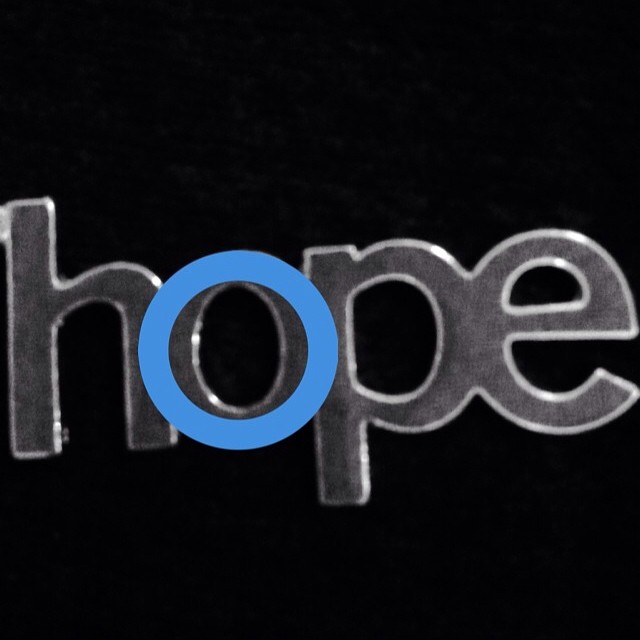
A couple of months ago, the IDF launched a new photo app to help raise awareness of diabetes. You can add a blue circle to any photo and then share on social media. Here’s my latest masterpiece:
ZOE BOWIE SINGS
Earlier this year, I sat on a Google Hangout panel with Jamie Tripp Utitis who recently presented at the Doctors 2.0 and You conference in Paris about her beautiful new book ‘Zoe Bowie Sings, Despite All Sad Things’. Jamie wrote this book for kids with a parent with MS. Jamie writes an awesome blog of her life with MS. You can read it here.
WHERE ARE THE PEOPLE?
I threw a huge tantrum let out a huge sigh of defeat when this appeared in my (virtual and real) inbox today. It’s the promotion of a conference in Melbourne later this year about the future of primary care. One of the focuses is patient outcomes. Looking through the myriad speakers what do I find? Not. A. Single. Patient. In. Sight.
SCRIBBLES
Mike Lawson (who I was lucky enough to meet briefly at year’s ADA conference) recently started ‘Scribbling My Life Away’, a blog of his drawings. It’s not really, diabetes-related (although there is the occasional diabetes reference) but nonetheless very cool. (And, Mike, if you’re reading this, can you please do me a scribble of a jar of Nutella and a big spoon. I’d like to put it up in my office?)
SWEET PRETTY THINGS
Totally, completely and utterly not diabetes-related, but I can’t stop looking at the gorgeous artwork of Aussie Illustrator Kerri Hess. I am trying to work out how I could commission a life-size piece that would fit perfectly on a big blank wall in our bedroom.
MEOW
In other news, a cat café opened in Melbourne this week.
CRAZY BIKE RIDING TYPE 1 PEOPLE HEADING TO VIENNA
Last year a group of mad folk with type 1 diabetes rode from Brussels to Barcelona as part of the mHealth Grand Tour. Not content with this achievement, the group known as Team BG, will be doing it all again, kicking off in Barcelona and heading to the location of this year’s EASD conference, Vienna, where I intend to greet them and call them all crazy. I might then buy them a beer.
HAVE YOU REGISTERED YET?
A reminder that TODAY IS THE LAST DAY to get the early bird rate to attend the first ever ADS-ADEA Consumer Outreach program. Book now!
This morning, I watched our cat, Cherry, spend twenty minutes playing with a rogue BGL strip. She pounced, pumped, threw it in the air, patted it with her paws and meowed for a good 3 minutes, getting louder and louder until I released it from under the bed, where she’d pushed it.
Walking back from getting a coffee, there on the ground was an Optium test strip wrapper, its blue foil glistening in the sunlight.
I pull open a drawer at work and hidden amongst the messy jumble of pens and paperclips are two Unite for Diabetes rubber bracelets. I look further back and find the mushroom-liked infusion inserter for my pump lines. 
I took from my cupboard a handbag that hadn’t been used for years. There, in the bottom, for who knows how long, was an old meter. The battery was flat, the strips out of date.
I open a box from when we moved house and amongst the paperwork and toys and a couple of odd socks, I find three unopened boxes of strips for my current meter, and these ones still in date. And two pump infusion sets.
On my dressing table, jumbled in with my jewellery are several blue circle lapel pins.
I reach into the pocket of a jacket I’d not worn since being at a conference in Barcelona last year and find an information brochure for a pump not released in Australia.
 I get in my car and there are spent strips, a spare meter and, in the glove box, a tin of jelly beans.
I open my diary on my desk to write a note and there is a tiny smudge of blood on the page.
The debris of diabetes appears in every aspect of my life.
But it’s not all bad.
My screen saver scrolls through photo after photo after photo and there, amongst pictures of my family, are friends with diabetes. Just in case I ever need some silver lining – there it is!
Friday dancing time! Here’s Stevie Wonder.
Also, this is Cherry the cat. (Photo credit – the nine year old kidlet.)