You are currently browsing the category archive for the ‘Conferences’ category.

A typical, frantic, ‘I’m so disorganised’ few hours before getting to the airport. But I have insulin. And I have a CGM fastened to my stomach and an insulin pump tucked in my bra. There are pump supplies in my carry on. Anything else I’ve forgotten can be found easily at the other end.
Don’t forget to follow #2015ADA!
Tomorrow, I am flying to Boston to attend the American Diabetes Association 75th Scientific Sessions. (Play along from home by following #2015ADA!)
There will be a strong consumer (reminder to self – use ‘patient’) contingent, which is always terrific. I get to catch up with old friends from the DOC and hear what they have been up to. I learn about new consumer patient-led advocacy efforts that manage to cut through in a way that only people living with diabetes can. I am reminded that conferences ARE the place for people living with the health condition that is being spoken about at that conference.
I attend conferences with my eyes wide open and leave with great excitement. I see new technologies yet to be released here, or still in development. I hear from people on trials of new drugs and devices. And I see the potential and possibilities for making diabetes easier, more streamlined, more user-focused and feel inspired and hopeful. This is good.
But, I am approaching this conference with a slightly different attitude. With some of the recently announced changes to diabetes supplies in Australia (as I wrote about here and here), I really want to speak with some of my US DOC friends about what it means to be reliant on a health system that limits choice. We have never really had that to date.
Whilst we may not have access to every pump or meter on the market, the consumables for the devices that are here have been available to all. Distribution has been overseen by Diabetes Australia (please read the disclaimer in this post!!) – an organisation representing people with diabetes, not big business or shareholders.
Last night, I attended a dinner at Parliament House in Canberra for the Parliamentary Friends of Diabetes Group. It was a grand occasion, attended by many influential politicians. Health Minister, Sussan Ley made this comment:

This is, indeed a noble pursuit.
Diabetes Australia President, Judi Moylan stated:

I would ask that in amidst all of those politically-charged reviews, reports and cost-cutting measures that seem to be the focus of diabetes in Australia at the moment, the human aspect is identified. It is hard to find amongst all the facts and figures.
But it is absolutely critical for our leaders to consider if they want to do best by people living with diabetes. Extraordinary leaders would search for it, find it – and make sure they listen to it. And remember that those extraordinary leaders include people living with diabetes.
I got to Saturday evening and felt like I needed to collapse! I was more than a little diabetes-ed out. The end of last week and the beginning of the weekend were huge – attendance at a health professional event on Friday, the Diabetes Expo on Saturday and, of course, the gift that keeps on giving, the television thing on Thursday.
When diabetes is so front-and-centre, it is really tough to think clearly and about all the information that has been shoved into my itty-bitty mind. Stopping and searching around for some things I have learnt and taken away can be difficult. Which is why Twitter is good!
Here is what I learnt over the last few days.
People want information about diabetes. There is still so much misinformation out there that people living with diabetes sometimes have a hard time cutting through the noise and working out what is valuable info and what is made-up-psuedo-science-crap-from-some-idiot-trying-to-sell-you-magic-beans-to-cureall. So it’s good to have sensible people saying sensible things! (Hashtag – Evidence)

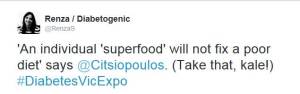 And I also learnt that diabetes is still seen and considered by too many as a clinical condition and there is not enough attention given to the emotional impacts of living with it.
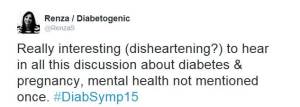
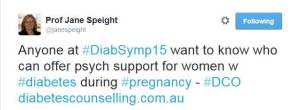
Thankfully though, I was reminded that there are people out there who can help with this!
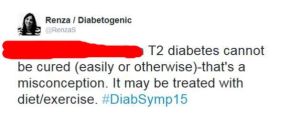
I learnt that Twitter trolls will latch onto hashtags that are getting some attention and try to infiltrate it with their nonsense. These trolls should be ignored. Except, of course, I didn’t. (However, I will not share your Twitter handle here!)
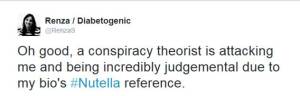
And these nutters will try to discredit you by challenging your Nutella addiction. Fools!
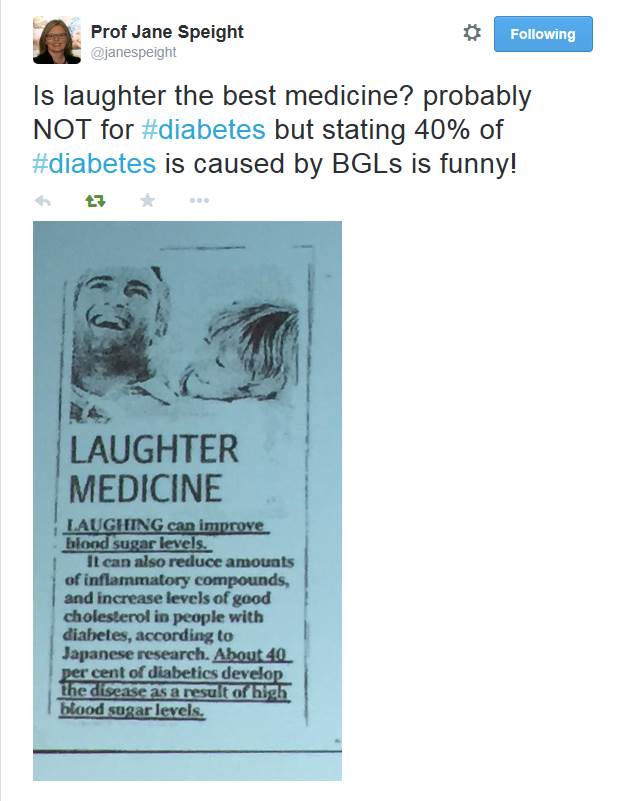
I was reminded why the Herald Sun is not the place to go for credible diabetes information.
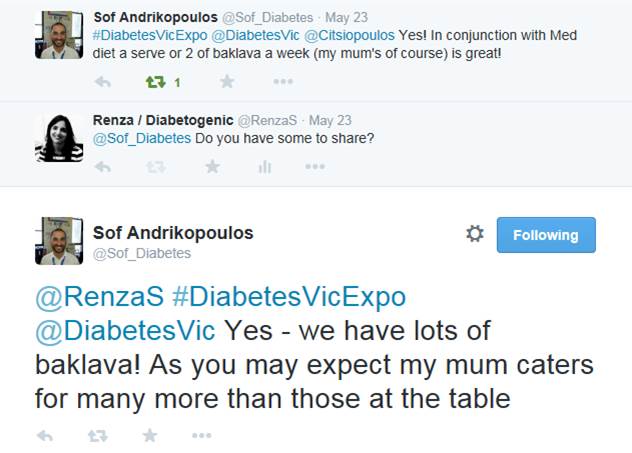
And promised baklava from one of Australia’s leading researchers in diabetes. Thanks Sof!
I learnt that it’s surprising who watches morning magazine television shows. Like the uber-cool waiter at Marios who announced loudly as we walked into the café yesterday, ‘I saw you on TV’!
I remembered that people walk away from these sorts of events feeling positive and rejuvenated and connected. Which makes them worth it in a million different kinds of ways.
And I learnt that after a hugely successful few days of work activities that hanging out with my family, listening to Carol King and drinking coffee in my favourite café and then watching the Eurovision song contest final will make me feel energised and ready to face the new week.
Hello Monday!
I know it’s not Friday, so here is something for your MONDAY listening pleasure!
Today, I am at the Diabetes Victoria and Baker IDI Health Professional Symposium and the first session has me thinking – and sitting down the back of the auditorium banging out this post.
The keynote presenter for the Symposium is Professor Herzel Gerstein talking about hypoglycaemia. He made a wonderful point in the Q and A portion of his presentation, one that I think is frequently overlooked.

The language (yes, I’m talking language AGAIN) we use around hypoglycaemia is misleading at times. Generally, we have severe hypoglycaemia and mild hypoglycaemia.
Severe hypos refer to those we need assistance to treat. It may inolve unconsciousness or seizures. Severe hypos sometimes need paramedics’ assistance, or a trip to the hospital.
Mild hypos are those that we can manage ourselves without too much hassle.
The problem with using these two terms is that it makes it sounds as though mild hypos are nothing. They’re just a part of living with diabetes, deal with it, off you go.
That may be the case in practical terms. A so-called mild hypo may mean grabbing a handful of jelly beans, waiting a few minutes and then off you go. Or it might be slightly more than that and take longer. But whatever it is, it’s termed ‘mild’ because no assistance was required.
But the thing with ‘mild hypos’ is that they do have the potential to weed their way into your psyche and suddenly become very significant.
If those mild hypos mean that you are often running late for things, you start to wonder if others are questioning your reliability. If those mild hypos have you needing to sit things out for a moment, you worry your friends or your kids or your family think you are disengaged, not wanting to participate. If those mild hypos result in you being a little vague for a while in work meetings, you start to fear your boss or colleagues think that you are not paying attention, not interested, don’t understand.
These are not ‘mild’ things. These are really significant and mean worrying and stress and anxiety and anger and sadness and fear and guilt and all the other things that diabetes makes you feel. There is nothing mild about it!
I think this is a really important issue for healthcare professionals to remember. By brushing away mild hypos as just a short-term-complication-everyone-has-them notion, the actual impact on the person living with diabetes is ignored. it’s minimising just how big a deal mild hypos can be and not providing any strategies for coping and managing with the emotional side of these episodes.
A mild hypo may not necessarily be terrifying in the moment, it may be quite manageable at the time, it may not affect anyone else or draw too much, if any, attention to the person having the hypo. And this is good!
But don’t for a minute think that it doesn’t mean a silent feeling of dread (and possibly a silent word of thanks to the hypo gods that it was nothing more!) or feelings of significant distress afterwards.
Who do you write your blog for? The question came after one of my recent presentations about how healthcare professionals can use social media to connect people living with diabetes.
My flippant answer to that question is ‘Oh, me and my mum. And some weird guy in Romania who seems to be really interested in my life…..’
The easy question – which is also frequently asked of me is WHY I started a blog. The answer to that one is simple. I hoped it would help me connect with others sharing my story. Because every single time I told of one of my experiences at least one other person – and usually many more – said ‘oh, me too’.
It was exactly the same as when I heard others with diabetes speaking about their lives. I wanted to jump up and down and yell out to them that it was the same for me. (And if I’m being truthful, I actually did do that a couple of times!) These sorts of connections made me feel less alone.
I considered writing a blog an extension of a lot of the work I was already doing: being the ‘here’s-one-we-prepared-earlier’ case study at meetings and information sessions. This, however, would be writing it down. I did this while I was pregnant with our daughter – I kept a weekly online diary that was published on a diabetes site. It was therapeutic and reassuring for me. An ongoing blog would give me the chance to write about and examine my real life with diabetes, and hopefully connect and share with similar folk around the world.
People tell me they like the candid, raw and honest way I tell my story; they feel they can relate. I try to inject a little humour and sometimes that works, other times it falls flat. I have been told to tone things down (I had to stop telling my ‘I will hunt you and all your family down and hurt you all if you steal my pump’ story because my husband said that with my Italian heritage and (falsely) assumed mafia connections that people would get scared*).
I decided when I started writing my blog that there were certain things I would not write about. I would not share others’ stories and I would never, ever write about things told to me in confidence.
I occasionally write about my family and friends, but it is usually incidental to the real issue I’m writing about – sometimes it helps illustrate the experiences and give context.
But what you see is very much what you get. I am conscious that loved ones and people who actually know me and my family read this and sometimes that makes it difficult to write about the more challenging things I’m facing. I don’t want to worry people, but equally, I don’t want to sugar coat things either.
Everything I write, though, whether it is about a particular experience or my circumstances, it is all honest. Sometimes too honest. There have been times that I’ve written something and then the phone calls have started as friends and family check in with me to make sure I am okay.
So who do I write this blog for? I guess it’s actually the same reason as why I write this blog. Mostly – and selfishly – for myself. To connect and find support. And I’m really lucky, because that has been exactly what’s happened!
*I may have stopped telling the story, but that doesn’t make it any less true!
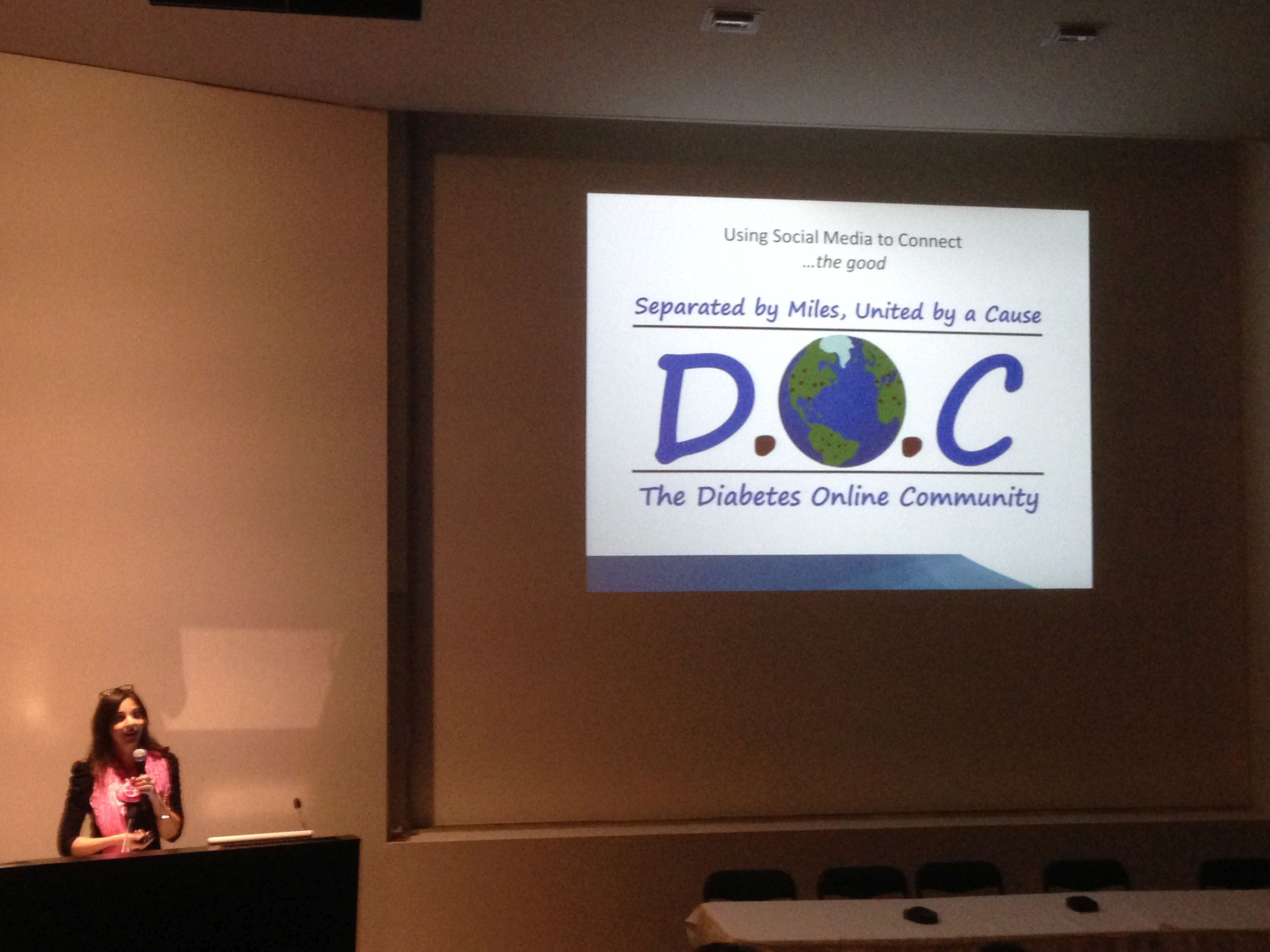
Presenting at yesterday at the Royal Melbourne Hospital’s Grand Rounds.
I’m Paris-dreaming at the moment. The gorgeous Belle du Berry and the rest of Paris Combo are providing the soundtrack. Happy Friday!
When you read about travelling and diabetes, you are told about the practicalities:
Pack twice as many diabetes supplies as you think you’ll need.
Carry a letter from your healthcare professional explaining you have diabetes to give to security personnel.
Don’t forget hypo food.
All of this is great advice and definitely things to consider when packing and planning a trip.
The theory of travelling and diabetes is different for every person and every trip. And every trip I learn something new – and not everything I learn is about diabetes!
Hotel cocktail hours are a great way to wind down from a busy day at a conference, read and respond to work emails and write a blog post of the day’s activities. Hotel cocktails are the work of the devil and their contents cannot be measured ensuring effed up BGLs for the remainder of the evening.
Don’t ever assume that people will know what an insulin pump is. We went through seven security checkpoints (Melbourne, Dubai (x2), Vienna, London (x2), and Amsterdam) and at all bar one I set off alarms and was given a pat down. Each time I asked the security attendant if they had seen an insulin pump before and apart from in Melbourne, the answer was no. (For the record, it was Amsterdam airport that didn’t cause any problems. Perhaps not surprisingly….?)
Don’t try to explain an insulin pump to said security guards who have never before seen such a device. Case in point:
DUBAI
Me: I am wearing a medical device here. It is shaped like a box. I can show it to you.
Security attendant (SA): Yes please.
Me: Here it is. It’s an insulin pump.
SA: Is it a pace-maker?
Me: No. An insulin pump. For diabetes.
SA: Oh – a pace maker. For your heart?
Me: No. It gives me insulin…medicine. For diabetes. Diabetes?
SA: Ah – you have a heart problem.
Me: …..Um. Okay. Yes. Yes.
SA: Thank you. All good. You can go.
The Natural Confectionary Company jelly snakes taste different in London to in Australia. No idea why; they just do.
Jet lag is cruel, evil and soul destroying. I say that as I write this not knowing what day it is; what country I am in, or how to spell my name.
Riding a bike around Amsterdam will cause hypos. Most people who have half a brain and have lived with diabetes for 16 years would know this and therefore make appropriate considerations to the quantity of insulin they give themselves. I am not one of those people.
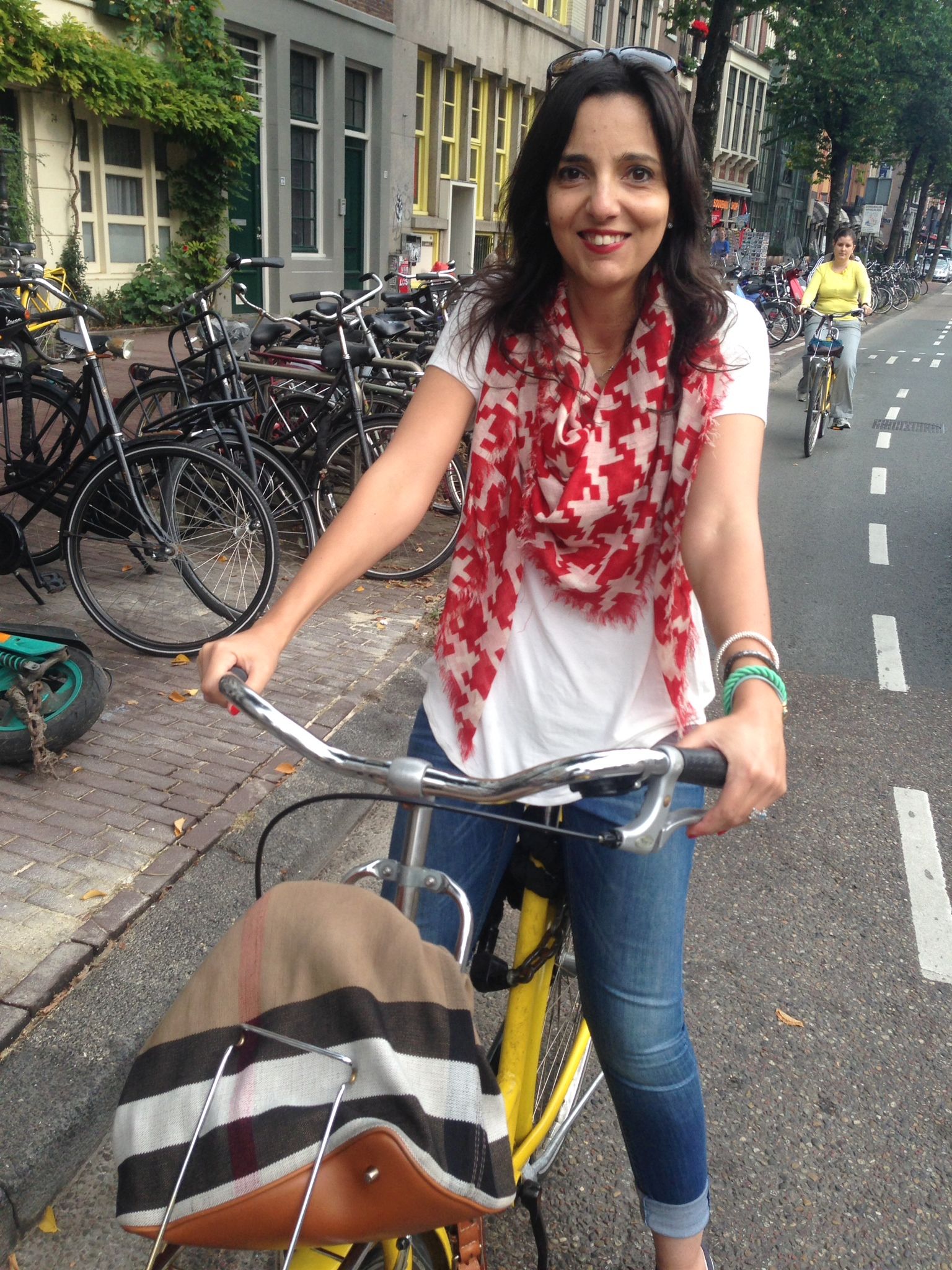
On yer bike.
Walking around cities will cause hypos. See above.
Eating Sacher torte for breakfast may not be nutritionally ideal, but it’s fun and delicious and a lovely way to start the day. And if you have it with whipped cream, you’re getting a serve of dairy. #PracticallyHealthFood #OkayThatWasALie
Being prepared for any contingency is a really good and smart and important idea. But it is a bloody pain to have to carry a whole suitcase (of carry-on luggage) with all the spares only to bring most of them home.
It’s possible that while I will tell everyone that seeing Klimt’s ‘The Kiss’, going to the Rijksmuseum, visiting The Anne Frank House and going to see ‘L’elisir D’amore’ at the Vienna Opera House were all amazing and incredibly culturally enriching, the thing that got me most excited was going on the Harry Potter Tour at Warner Bros. Studio and riding a broomstick.
Travelling is fun; attending conferences about diabetes is eye opening; visiting new places is a privilege; catching up with DOC friends in real life is magical. But. Missing our little girl hurts like nothing else, and being greeted by said little girl late at night as the cab pulled up in front of our house is the sweetest thing ever. Coming home? Nothing ever beats that. Not even riding a broomstick.
Community Service Announcement for those in Australia affected by daylight saving which kicked in yesterday making it even harder for me to have any clue what freaking day it is.
You are welcome!
Stop for a moment and imagine that the cost of buying insulin for a month was financially crippling to you and your family.
 Think about having to make the choice between buying insulin or buying food.
Think about rationing insulin and taking the smallest quantity possible – just so you are taking something, but not what you need.
Think about how terrible you would feel. Think about the thirst and the exhaustion and the fuzziness.
Think.
I don’t do emotive and I don’t do scare campaigns, but this is the reality for many children – and adults – living with insulin-requiring diabetes.
It’s unfair and it’s terrible.
And now think about doing something about it that is actually quite simple.
Many of you will be aware of the ‘Spare a Rose, Save a Child’ campaign that has been run over the last two years around St Valentine’s Day. The basics are – instead of sending a dozen roses to your loved one, send eleven. And with the five bucks you’ve saved, make a donation to the International Diabetes Federation’s Life for a Child Program. That fiver has just provided insulin for a month to a child whose family could otherwise not afford it.
There are many, many reasons to love this campaign; but for me, I adore it because it is simple and tangible. One rose = one month of insulin. Two roses = two months of insulin. I’m a simpleton – this sort of maths works for me!
I know that it’s not Valentine’s Day right now, but it will be in a mere 137 days. Which means that you have 137 days to plan to see how you could possibly contribute to this great initiative.
Contributing doesn’t necessarily mean making a donation – although it is wonderful if you can. You can blog about it, spread the word on Facebook and Twitter, ask your workplace or school to get behind it. You can just TALK to people about it.
Oh – by the way, this was set up by a few do-gooders in the DOC. Yep, that’s right, with nothing but the internet, their contacts and 140 characters or less (and some blogs, Facebook pages and other social media things) they managed to get this up and running. The first year, they raised about $3,000. The second year, they made close to $30,000. (You can use this the next time someone tells you that social media is the work of the devil and nothing good will ever come of it!)
The ‘Spare a Rose, Save a Child’ campaign was discussed at the 2014 Euro Bloggers Summit (disclaimer-y bits on this page). Kerri Sparling spoke about how the campaign came about and how people could get involved. One of the aims of the Summit is to share great work being done by people in the diabetes community. If you have something you would like others to know about, pease feel free to comment below.
The diabetes online community is a truly global network. We see that every week in tweetchats and anytime we log onto social media. We know that connections are made that are life changing and, (as in the case of my dear friend’s ‘Pumpless in Vienna’ story – to be told here soon), life saving.
For the last three years, I have been privileged to attend the European Bloggers Summit, which is a satellite event run alongside the EASD Scientific Meeting. This event is a chance to really look at ways that consumer advocates can work together and support each other to make significant change to living with diabetes.
It was sobering to be reminded several times yesterday that those of us sitting behind our laptops, participating in the dialogue of the community are already very lucky. We looked at programs out there that are providing insulin to people who would not otherwise have access. Again – life saving.
The beauty of these events is that they are not simply a day or two of navel gazing and patting ourselves on the back for the work we do. We challenge ourselves and each other to do more, do better and reach more people. We plan for what we want to achieve and then hold ourselves accountable for what we have said we want to deliver.
The issues that we have in Australia and that I frequently write about right here are so often universal. Hearing friends from Europe say that the language of diabetes is an issue, or access to technology or medicines is prohibitive for some, reminds me that it is worth continuing to be in this space. When I hear about the frustrations experienced by others when it comes to consumer representation, I know that every time I say ‘nothing about me without me’ it is echoed around the world.
There are some amazing things going on, and over the coming weeks I’m going to write about some of the things I learnt about because I not only want to share this work, I also want to encourage others to get involved.

DISCLAIMER
The 2015 European Bloggers Summit was sponsored by Johnson & Johnson. I was invited by Johnson & Johnson to attend the event and did not receive any funds from Johnson & Johnson to cover travel or accommodation costs to Vienna or to attend the EASD conference. These costs were covered by my employer, Diabetes Australia – Vic.
Yesterday, I sat in meetings, listened to talks and attended press briefings. The EASD conference is shaping up to be a very busy one and I am doing my best to get to as many things as I can whilst still making sure I get to catch up with as many online community people as possible.
And thank goodness for those people; for the people I’ve seen in person at the conference and for being able to sit in for a very short while on this week’s OzDOC tweetchat.
These conferences are critically important for a number of reasons. They bring together the biggest and brightest people who are most admirably working to improve the lives of people living with diabetes. These are minds far smarted than mine – they are amazingly brilliant professionals. I admire them on many, many levels.
But too often I get the feeling that people with diabetes are lost in the messaging and completely forgotten. The language being used has us as passive ‘subjects’ (thank you to Professor Richard Holt (@RichardGHolt) for your tweet, by the way!), not involved in what’s going on. It’s kind of like these conferences are a magical land where diabetes is spoken about as a thing on its own, forgetting that it is always attached to actual real people living actual real lives in the actual real world.
One meeting I sat in today listed ‘key stakeholders’ involved in a new ‘patient’ education program. The glaring omission in this esteemed list was people with diabetes.
In another session, the speaker was complaining about the inability to get accurate data from device companies about ‘patient opinion’ of their products. There seemed to be a complete lack of thought that perhaps people using those devices might be able to provide the information being sought.
In both sessions, I thought about standing up and saying something, but you know what? Sometimes I get sick of the sound of my own voice saying the same things over and over.
This is not where I say that people with diabetes need a seat at the table of organising committees and advisory boards. Because I say that all the time.
No.
This is where I remember that it is up to us to cut through the noise, ignore the fanfare and the superfluous crap (of which there is much) and try to find the things that are actually going to make life with diabetes a little – just a little – bit easier. It’s there – it’s being spoken about and there are glossy brochures promoting it.
It’s just that the wrong people are being spoken to.
I got up close and personal with the new Abbott FreeStyle Libre system today, getting to see it in action on a representative from Abbott. Despite begging, pleading and promising to not tell anyone (except, of course, the pretend people who read this blog), I was unable to get any details about an Australian release date. Social media musings, however, suggest that we are looking at early next year. Watch this space!




 Diabetogenic