
You are currently browsing the category archive for the ‘Conferences’ category.
Apparently, I went to Munich. I was away for 6 days, and 60 hours of those days were spent in transit. I believe that, (as I deal with jet lag, hypoglycaemia, and mainlining caffeine), it is fair and accurate to say that I am too old for this shit.
I am also incapable of forming paragraphs. But dot points are fun! Here are some observations and a few silly thoughts from last week. (I’ll write some sensible things when my brain is back in the same country as the rest of me.)
- I am told by people Munich is a lovely city. I will have to take these people’s word for it, ‘cause I saw very little of the city.
- I did not buy a dirndl and for this, I will be eternally sorry. As will my husband.
- The EASD conference itself was, as predicted, very rats and mice-y. I sat in a number of sessions and wished I was a mouse (while wishing my diabetes away). Alas, I am not a mouse. And I still have diabetes. Damn.
- I did not get sick of laughing at the fact that one of the halls at ICM Messe München is called Langerhan Hall. Also, I did not get sick of saying ‘I wonder if my islet cells are in there’ – to everyone within earshot. Even if I didn’t know them.
- Obviously, Grumps was not as amused by this as me.
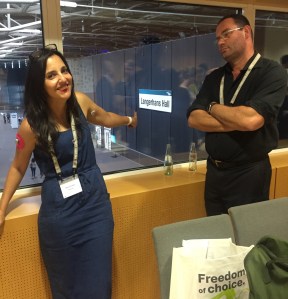
- As was the case at ADA, my arm is more recognisable and famous than me. A barista at one of the exhibition hall stands said, as making me a decent coffee, ‘Oh – I know you. I saw your arm the other day near the station.’ I am a walking billboard for Rockadex! (I am not sponsored by Rockadex and purchase my own patches.)
- Dr Kevin Lee from Queensland is a tweeting machine! In fact, I think the thing I was proudest of at EASD was seeing him tweet! (Actually, probably should say that Professor Mark Cooper’s giving the Claude Bernard Lecture was also a moment of national pride, but Kevin’s tweeting was on another level!)
- One of my favourite talks was about diabetes, cardiac health and exercise (go on, laugh….), but that was mostly because presenter Dr Nikolaus Marx, finished up with a discussion about passive exercise and cardiovascular events during the World Cup. If you were in the room, it was me who cheered when he mentioned the increase of cardiac events after Italy beat Germany. (#VivaItalia!). For clarification, I was cheering at Gli Azzuri’s victory, not the number of Germans having heart attacks. (By the way, this was a real study. Published here.)
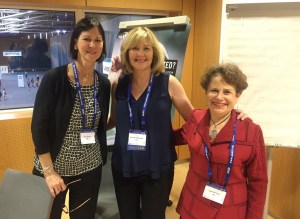
- A HUGE shout out to these three women. AADE presidents elect, past and present, Nancy D’Hondt, Deb Greenwood and Hope Warsaw are absolute advocates for and champions of people with daibetes, and peer support. This is them at the docday blogger and advocate event. This level of commitment by HCPs to consumer engagement is enlightening, and a lot could be learnt from their example here. Thank you. Thank you. Thank you!
- It was wonderful to see quite a lot of discussion about AP. Anytime someone wants to actually get these into market and into the hands of people with diabetes, that would be just great! Thank you.
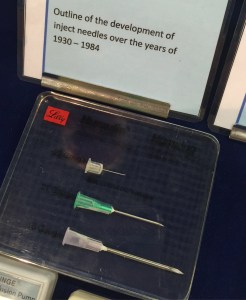
- I may have screamed a little when I wandered through the Association Village to the excellent historical display of diabetes by the German diabetes Association. Terrifying might be the word for these needles. I said a little prayer of thanks to the diabetes angels for modern day tech, and for being diagnosed in 1998.
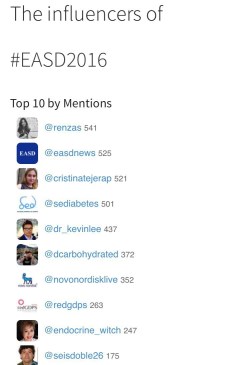
- I need to take a break from twitter. This was the state of play when I said good bye to the conference.
And finally, a word about language, because I am unable to attend a conference and not talk and write about it. (I think it’s actually become a law somewhere.) This probably deserves a post of its own and that may happen, but here we go anyway.
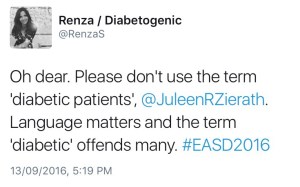
This is the fifth EASD conference I have attended, and going in, I know that it is going to be challenging, language-wise. There often appears to be very little consideration that there could be PWD in the room listening in to how HCPs are speaking of us. In the opening ceremony, I tweeted this at EASD president, Professor Juleen Zierath:
I was a little disappointed at Professor Mark Cooper’s constant use of ‘diabetic’, but it was by no means any more than most of the other speakers. I suppose I just hold Australian speakers to higher account given the work we have been doing here around language and diabetes.
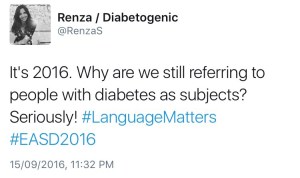
This tweet generated quite a lot of discussion, and came about after I was exhausted and annoyed and mostly frustrated by the way speakers were referring to people with diabetes.
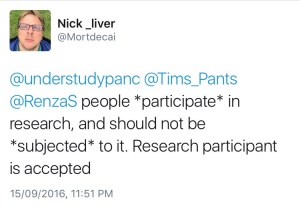
 Perhaps the best response was from Nick Oliver:
Here’s the thing – and it is something I spoke about during my talk at the DOCDAY event. Language DOES matter. We all know that. It’s completely and utterly disingenuous to say it doesn’t. For some people, it doesn’t bother them and that’s terrific. For others, though, it really does. So why would anyone do something that may offend when it is so easy to avoid that?
DISCLOSE DISCLOSE DISCLOSE
My (economy fare) flights and accommodation expenses were covered by AMSL and J&J. I was attending the EASD conference mainly to attend the J&J DOC exchange meeting which I was involved in preparing and presenting. No one ever expects me to write anything. These are my words and observations only. (And seriously, have you seen what I have just written? No one wants to be associated with that!)
We watched the movie Looking for Alibrandi with the kidlet the other night. I remember when the book came out. I’d left school, was in first year at Uni, and still trying to work out who the hell I was. My mum, sister and I all read the book and couldn’t stop talking about it.
That book was one of the most important things I read when I was younger, because it resonated so much. The idea of not understanding where I belonged had shaped a lot of my adolescence, and was continuing to confuse me as a young adult. I know I wasn’t the only one feeling like that – many kids of post-war migrants felt the same way. Not that we really spoke about it, which was why Looking for Alibrandi was so important. It put into words the jumbled thoughts in my head.
My parents moved from Italy to Australia in the late 1940s (my dad) and early 1950s (my mum). They both grew up here – all their schooling was in Australian schools. They speak English perfectly without a hint of an Italian accent.
We didn’t speak Italian at home, and weren’t particularly involved in the Melbourne Italian Community. Most of my parents’ friends were not Italian, and I only had very, very few Italian friends. At secondary school, there were a number of Italian girls whose families would have been similar to mine, and yet they weren’t the girls I hung out with.
I wasn’t really sure where I fit. I didn’t belong with the Italian girls, because their parents were all a lot stricter than my kinda strict parents; they all spoke fluent Italian – often to each other – and were more involved in the Italian community. Equally, I didn’t really feel that I belonged with my ‘Aussie’ friends because they totally didn’t get the overprotective Italian father thing I had going on at home. Or my love of Fiats. (Or that we had Nutella in the cupboard at home!)
I was in this kind of middle ground that left me wondering where I belonged. And it is a position in which I find myself again today in the diabetes world.
I am a person with diabetes. But for the last 15 years (so, for all but 3 of my diabetes life) I have worked for a diabetes organisation. It leaves me in a unique position that brings great opportunities and privilege, but also makes me feel like a complete outsider at times.
HCPs are confused by me and sometimes suspicious of my vocal advocacy on engagement and the power of peer support; others with diabetes are sometimes wary because they wonder just how free I am to be open and honest about my diabetes; within diabetes organisations I am seen as someone who has fingers in many, many pies; global advocates are curious about how I manage to write this blog while still being in paid employment with a diabetes organisation. To avoid confusion (frequently my own), I speak differently depending on the audiences I stand before, and adapt my tone and language and stories slightly to suit HCPs, PWDs, industry reps or government people.
But essentially the stories are all the same and it is my voice telling the stories.
Next week, I’ll be in Munich at the European Association for the Science of Diabetes (EASD) Annual meeting. The EASD conference is an interesting one. It is very ‘rats and mice-y’ – the term I use for conferences where I look confused in most of the sessions because I have pretty much no idea what is being said, however understand enough to know that someone, somewhere has managed to cure diabetes. In mice.
Despite it’s very science-focused content which attracts very science-focused folk, I feel very ‘right’ at this particular conference, because there is a wonderful advocate, blogger and consumer satellite program that means the city is full of ‘my people’. And that is why I am there – for those events.
If I feel as though I don’t belong at EASD, it’s because I am the only Australian advocate there. I have travelled the furthest distance, I am jet lagged for most of the time and people have trouble understanding my accent. But the Italian contingent at the advocate events claim me as one of their own (albeit one of their own who doesn’t speak the language), so at least I feel that I fit somewhere.
So at least for next week, I’ll know my place. And it will be alongside some of the most dynamic, clever, passionate and dedicated people I know. My people. They will teach me a lot as I learn what they’ve all been up to since we last met and I’ll clumsily share what’s been going on here in Australia. That’s where you will find me.
(And you’ll also find me sitting down the back of science-y sessions looking confused. And wishing I was a mouse.)

I’d already returned home to Melbourne on Friday morning when Dr Kevin Lee gave his talk on on healthcare social media. I wrote about his planning for the talk here after Kevin engaged OzDOC for some advice on important topics to cover. I’m really sorry I wasn’t there to hear his presentation, although felt there in spirit after I saw this! (Thanks, Ash!)
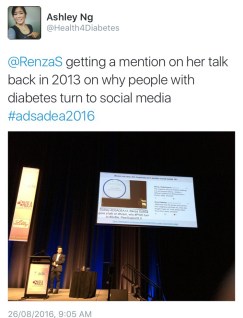
I reckon that this is the fourth or fifth year the ADS ADEA have spoken about social media and how healthcare professionals can use it safely. I remember seeing diabetes educator Natalie Wischer give a great talk back in 2012 highlighting the different social media platforms available and how they are being used in diabetes. This was just after we launched the weekly #OzDOC tweetchats and I stood up and gave a plug for our weekly online get-together, urging the HCPs in the room to have a look – to lurk – and see what we were so excited about.
I gave a talk the next year (that’s the photo Dr Kevin Lee used in his talk), encouraging HCPs to engage with the online community. And last year at the Roche Educators Day, I ran two practical workshops about how HCPs could use SoMe to connect, enhance and support diabetes care.
It has been on the agenda for a few years, and now it is time to stop talking about it and actually do it.
As mentioned last week, Symplur highlighted just who was talking online at the conference. As usual, the ACBRD team was doing a stellar job live tweeting sessions and promoting their excellent work. And, of course, advocates on the ground were doing their (our?) best to share and engage. There were over 2.7 million impressions on Twitter for the duration of the conference, which is certainly an increase from previous years.
I would really love the ADS and ADEA to be proactive about encouraging social media. I would love for them to look at what happened a couple of weeks ago at the American Association of Diabetes Educators conference and see how meaningful social media interaction between people with diabetes and healthcare professionals can and does happen. Safely. The real engagement and collaboration between the organising professional body and advocates saw impressions on Twitter of over 17.5 million, and over 860 people engaging online.
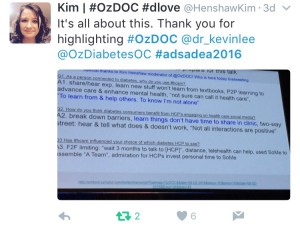
So, how do we go here in Australia about increasing online presence and discussion? In the room for Dr Kevin Lee’s talk were two of Australia’s most prolific and well-known patient advocates – both high-level users of HCSM. I’m referring to Kim Henshaw and Ashley Ng. I wasn’t in the room, yet was actively participating, re-tweeting and engaging – as were many others during sessions that I was sitting in earlier in the week. Having more consumers in sessions provides that connection with PWD not at the conference to hear and see what is going on.
I also think there was, perhaps, a missed opportunity at the session speaking about social media use. Having an advocate on the panel or chairing the session (and remember: Kim and Ashley were in the room!) would have added significant value to the discussion. Dr Kevin Lee went straight to the source when he was putting together his talk. Think about how great it could have been had one or two of those who helped him pull together his information were on the stage elaborating on their comments. Perhaps next year.
I’m back home after three days on the Gold Coast for part of this year’s Australia Diabetes Society – Australian Diabetes Educators Association conference. More to come next week, when I’ll try to pull together my very messy notes.
For today, here are some pictures!

As I took the stage to chair one of two sessions at the Roche Educators Day in Tuesday, I realised I had already been up for seven hours. It was only 11am. Sentences were difficult until my fourth coffee of the day kicked in!

On the job. Professor Steven Boyages’ talk: A connected ecosystem for healthcare professionals & their patients’ was full of practical tips about using technology to support people with diabetes.
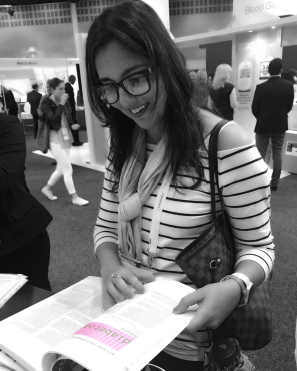
This was the moment I opened the new NDSS Diabetes and Emotional Health Handbook (for health professionals supporting people with diabetes) and I saw Diabetogenic on page 24! Thanks for capturing, Professor Jane Speight!
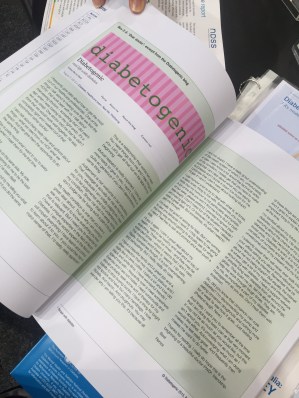
Proud moment!
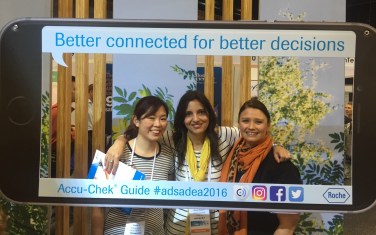
Advocates running amok. We actually behaved ourselves quite well. Mostly.

Although, we were mighty busy! Three of the top four influencers at the conference happen to be consumer advocates, sharing information from the conference specifically with the intention of reaching other PWD who could not be in the room.
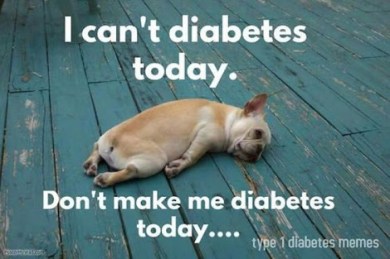
Martha Funnell used this in her talk on day one. Sums up many, many days!
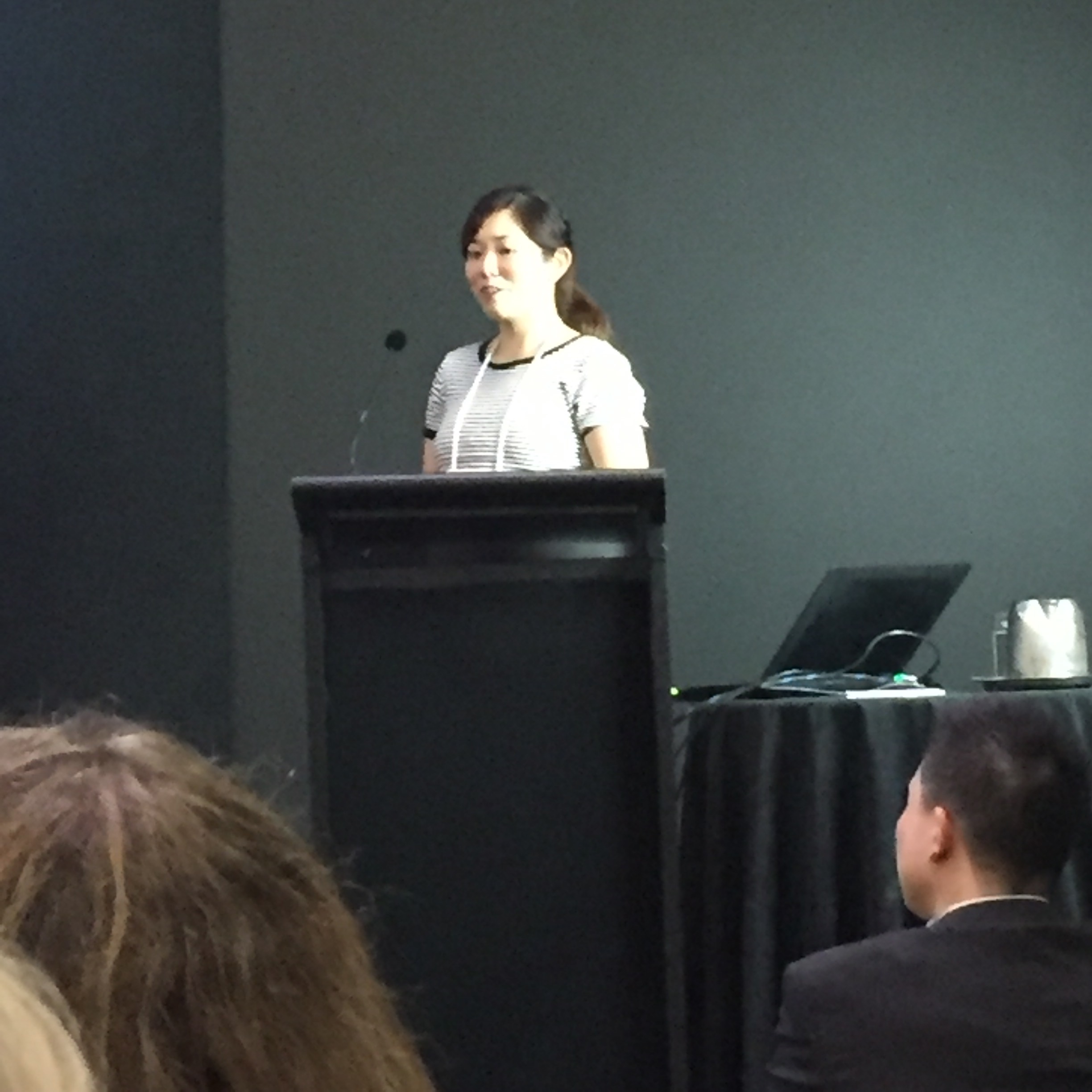
Rather proud of this special young lass. Here’s Ashley presenting on her work focussing on the needs of young people with type 1 diabetes.
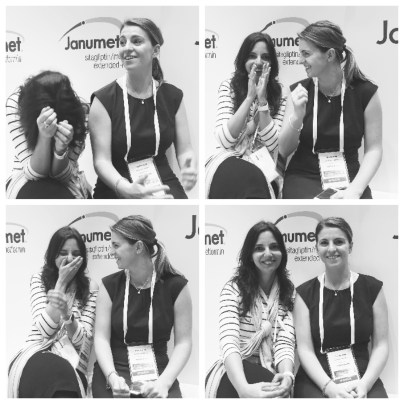
This is a combination of jet lag and exhaustion. (Jet lag belonged to Harriet.)

The NDSS stand looked very bright thanks to these beautiful resources from the Young People with Diabetes Program.
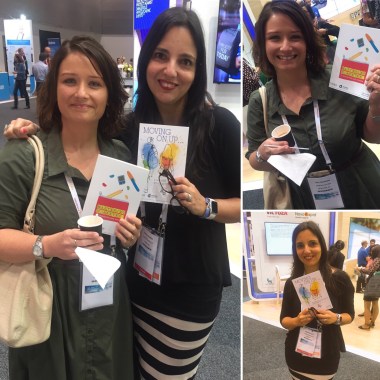
And another proud moment. Kim’s outstanding work on the national roll out of Mastering Diabetes means this resource is in the hands of those who need it most: children with type 1 diabetes, their families and schools. Well done, Kim! (And I’m holding Moving on Up which I am equally proud of!)
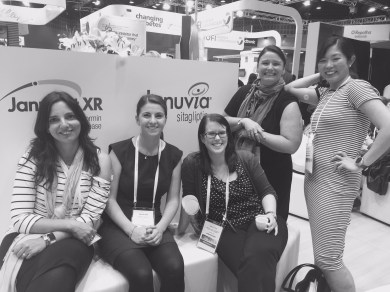
Spot the diabetes devices….

Gold Coast.
Proper wrap up coming next week. Enjoy your weekend. I know I certainly will! (But you can play catch up by checking out all the #ADSADEA2016 tweets.)
Throughout my recent trip, I kept a diary of sorts of some of the diabetes things that happened. Here is a selection of what I noted down.
ON THE KITCHEN BENCH…
…I left all my hypo treatment. Brilliant, Renza. Brilliant. I was reunited with said hypo treatment when Aaron got to NOLA. He took advantage of the situation to snap a pic:

And of course, he captioned it ‘Snakes on a plane.’ Oh, yes, he did.
ENDOS ON TOUR
The Qantas Lounge at Melbourne Airport was swarming with local endos. As was the Admiral’s Lounge once I got to LAX. If there was ever a time to have a diabetes emergency, this was it!
HIGH WHILE HIGH
Try as I might, I am hopeless at not rage blousing when high. There I was, 30,000 feet above the ground, relatively comfortable after an airline upgrade (and spare seat next to me) and high as a freaking kite.
I had a temp basal set – a very aggressive temp basal rate. I had done a correction bolus every thirty minutes. And yet, there are double arrows up on my Dex which was pissing me off beyond belief. I eventually did another correction with a syringe and slowly, but surely watched my glucose levels return to a far happier number. Just in time to get off the flight at LAX…
…AND OF COURSE, THEN I WAS LOW…
…which necessitated this:
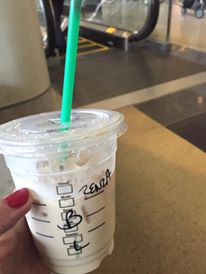
I most eloquently ordered it by saying: ‘Can I please have a small iced latte with Half and Half. Because I’m hot and it’s low. Wait…What?…I mean…I’m low and it’s hot…Oh jeez… Can I just have my coffee with Half and Half. Because: HALF AND HALF. I LOVE YOUR COUNTRY.’ (All class. All. Freaking. Class.)
TSA FUN
‘I can’t go through the full body scanner. I’m wearing a couple of medical devices,’ I said politely to the TSA officer as I queued at LAX security. I was tired, felt grotty and getting over my latte-cured low.
‘Well, the wait will be a while,’ he said a little abruptly. ‘It’s very busy.’
‘That’s fine,’ I said. I understand that the palaver of what comes when avoiding the scanner takes extra time and resources. I didn’t appreciate his tone though. Or the follow up comment.
‘You could be waiting a while. You WILL be waiting a while. You could go through the scanner. Or you’ll have to wait,’ he said.
‘That’s not a problem. I can’t go through the scanner – there is a risk my devices will stop working. And then so will I,’ I smiled at him to show that I really wasn’t going to be upset at the wait.
‘Stand over there out of the way. You know you’ll have to wait, right?’ I’m glad he mentioned it again, in case I had missed it the previous times.
I didn’t ask for this condition and I certainly don’t ask for the extra degrees of difficulty it often attracts. Equally, I don’t demand special attention and am prepared to wait and deal with whatever I need to do to. So I really hate to be made to feel that I am deliberately putting someone out.
As it turned out, I didn’t have to wait too long. A mere three minutes after the call for a ‘female opt out officer’, a lovely TSA official beckoned me to the pat down area and kindly explained the process. I nodded and pointed out where I was wearing my pump and Dex and stood there while she did her thing. And then thanked her and was on my way.
MY ARM KEPT GETTING PAPPED
When you decide to pimp your Dexcom sensor and transmitter in Melbourne while the weather is cold, necessitating long sleeves, you don’t necessarily think about what that will mean once you get to far sunnier climes and are bare armed all the time.
My arm became a mini-celebrity at the conference with complete strangers coming up and commenting and asking if they could take a photo.

(No idea what I’m pointing at…)
Hopefully the lovely folks at RockaDex will see some benefit – I was promoting you guys like you wouldn’t believe! (Yes, they post ANYWHERE!)
THE WAITRESS AT THE DIABETES EVENT
At the end of the fabulous Musings Under the Moonlight event, hosted by diaTribe, a few of us gathered our things and decided that a late night Café du Monde visit was necessary. And as we walked out the door, I was stopped by one of the waitresses. ‘Excuse me, Ma’am,’ she said (because everyone is either Ma’am, Sir or Miss). ‘Can I ask you about the tape around your Dexcom. My daughter has diabetes and is a swimmer. Her Dexcom tape is always coming loose. Maybe this will help it stay on longer.’
I grabbed a pen and wrote down the details of RockaDex and told her how terrific it is. (I am absolutely not on their books, a part owner or even get free supplies. It’s just great stuff!)
‘Can you imagine?’ said Scott. ‘Her mind must have been blown being in that room tonight!’
Always – ALWAYS! – love a bit of diabetes in the wild!
NPH ON CROSBY STREET
Walking back to our hotel on Crosby Street in SoHo, I looked up and saw this pasted to a wall:

And my day was made. (Check out Appleton Artworks for more of their diabetes awareness raising street art.)
‘IT’S FOR THE KID. THE OTHER THINGS ARE FOR YOU…’
One of my favourite diabetes people, gorgeous Alecia, lives in NY and one of my favourite things to do in NY is see her. We met for lunch in Murray Hill at Penelope’s and she handed me a Kate Spade bag.
I peered inside and excitedly pulled out a pink box with familiar writing on it. ‘That’s for the kid,’ I was told in no uncertain terms. She was referring to the American Girl Diabetes Kit and I actually squealed when I opened the box and gently pulled out all the teeny tiny pieces.
Sorry hon – I kept the American Girl diabetes set. The kidlet is still trying to convince me to give her the pencil case and I am desperately resisting. But the candle – that’s on my windowsill at work making me think of you.

AND FINALLY…
If you need to have a hypo in NY, this is probably the best place to do it:
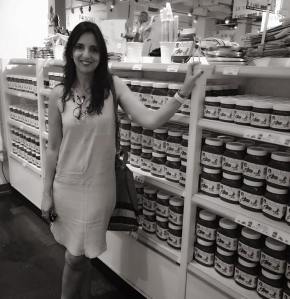
The Nutella Bar at Eataly.
Oh, Melbourne. How lovely it is to see your gorgeous self and drink your exquisite coffee. How miserable it is to be in your ridiculous Winter and to not be walking the streets of New York still, but I’m moving on….
Yep – I’m back home and, today, back at work and the reality of life is setting back in. Words cannot express how thrilled we were to see our kid after three weeks of being neglectful parents (her words), but on our last day in NY, when I checked the weather forecast for Melbourne, I did think about the logistics of sending for her to join us in the sunny Big Apple, rather than return to her here.
Lots and lots and lots to report back – both from the ADA conference in New Orleans, as well as the two weeks on the road, exploring Memphis and Nashville and returning to the familiar streets of New York. Stay tuned!
But for now, I am getting my head around a few new things on the diabetes landscape – mainly the changes for accessing NDSS supplies is different. I did indeed make sure that I had plenty of pump consumables and strips prior to going to the US, so at this stage, I am okay for supplies. But I do need to get in touch with my local pharmacy and have a chat about their processes for accessing what I need when I need it. I am most curious to see how the new program will work.
Of course, we’re in a position of complete and utter uncertainty as to what is going to happen following our federal election on Saturday. With bipartisan support for CGM subsidies, it is good to know that whoever forms government has pledged to make at least one aspect of diabetes a little more affordable to some PWD. Watching the roll out and implementation will be most interesting.
So for today, I am sorting through the debris from the conference and getting back on track for a very busy couple of weeks. It’s nice to be back. And it’s nice to be writing again. Come back and check in again if you get a chance.

Conference debris
This morning, I sat in a restaurant in New Orleans with three of my favourite people and diabetes advocates. If anyone could bottle the tenacity, passion, determination, guts and cheekiness of these three women, they would make a fortune and be able to solve all the problems of the world.
I listened to Anna, Christel and Melissa – who I am lucky enough to call friends – talk about their work and we discussed the US health system which made me shake my head in disbelief and confusion. I don’t understand it; I doubt I ever will. But these three not only navigate the system themselves, they are doing it for others as well as they trying to improve things.
All week I have been around people who are involved in important and life-changing work in diabetes care. From those who are developing smarter devices, using data better, improving access and doing reseach, the dedication and commitment to improving the lives of people with diabetes has been very visibly on show at this conference.
And I have been reminded that at a conference where there are ground breaking announcements made and new and exciting tools launched, it is not the flashy conference centre and the lights of the Exhibit Hall that tell any of the story. It is years and years and years of work, of people plugging away and just doing what needs to be done, until the excitement of telling the world.
This morning, I walked around New Orleans with a delicious, embargoed secret in my head that I was bursting to shout from the rooftops. Some of the exciting work I have been involved in over the last few years has started seeing results and today’s announcement from ALP health spokesperson, Catherine King (no longer under embargo, hence me writing about it….and shouting it from the rooftops) is an example of what happens when people do the hard yards.
Australians now have bipartisan support for CGM funding. The ALP pledge goes further than the Coalition’s, with access under its scheme being based on clinical need – not just age. This mirrors the submission made by Diabetes Australia, JDRF, ADS, ADEA and APEG in our joint proposal. (Disclosure: I worked on the this submission as an employee of (initally Diabetes Victoria and) Diabetes Australia and am acting as spokesperson for Diabetes Australia in any media.)
Today, there will be press and a media launch and lights and excitement as there should be. This is worth celebrating! And as I sit in my hotel room 33 levels above Canal Street in New Orleans, speaking with Australian news radio staff about the announcmenet and I am incredibly proud of what we have managed to achieve in Australia. This is a slow burn. It takes time, it takes commitment and it takes dedication. I love being surrounded by people who have it in spades.
More?
My head is full of lists:
- Packing list
- Travel checklist
- Work to do list
- Hug-the-kidlet-a-million-times-before-we-leave-her-for-three-weeks list
- Diabetes-supplies-for-three-weeks-away list
And a list of great things I’ve seen online lately…
PLAID
Do you read PLAID – a research journal with a focus on people living with and inspired by diabetes? If not, you should. Why? Because it’s awesome!
Here’s the link to the latest edition. I’m really proud to have contributed to it because it is (as already mentioned) awesome, and this edition is all about the patient perspective. I sit very comfortable in there!
Unspeakably Wonderful
A new movie about Banting and Best and the discovery of insulin is hoping to be made by UK production company AngryMan Pictures. Details for how you can contribute to their crowd funding campaign are here.
Diabetic Living online
The Australian edition of Diabetic Living magazine has relaunched its website with a gorgeous new look. Check it out!
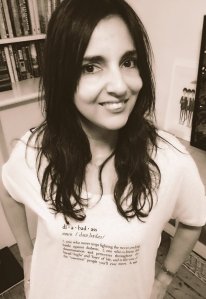
Totally (dia)badass
Take 5 minutes…
…and read these great blog posts that have been recently published:
- Anyone thinking of starting on an insulin pump and wanting a front seat view into what it’s all about should jump on board Type 1 Writes. Frank is a couple of weeks into his pump start and is sharing lots about what he is learning. I’ve been pumping for over 15 years now so have completely forgotten about dealing the challenges and successes of starting pump therapy.
- Lots of posts coming in from people who were at #DXSydney, sharing their experiences of using Libre. This post listed all the people who attended with links to their blogs. Have a read and share your experiences too.
- The Grumpy Pumper is a man of few smiles and, it would appear, few blog posts. Here is his first blog for the year. Pop by and leave a comment suggesting he blog more. Then it won’t just be me nagging him!
- Awesome pics in this blog from Scott from Rolling in the D. He hacked his Dexcom and this is what it looks like on the inside!
- Why do we need online communities? Anna from Glu gives some reasons here. And she’s right on every count!
- Also from Anna, this profoundly moving and brave post about her recent pregnancy loss. These stories need to be told. Thank you, Anna, for sharing yours. I am so, so sorry for your loss.
- This one is not a blog post, but a podcast. Stacey Simms produces some awesome podcasts over at Diabetes Connections. Do check them out!
Finally, if you’re looking for some more diabetes blogs to read, healthcare social media guru, Marie Ennis-O’Connor, has curated this list for you. There are 50 blogs to choose from. Get comfortable. Get reading!
Myths be gone
Team Novo Nordisk are doing awesome things to dispel myths about diabetes and address the issue of stigma. This latest video is terrific. Watch. And share. Share. Share.
Off to NOLA
It’s that time of year again. The American Diabetes Association Annual Meeting kicks off in New Orleans at the end of this week. I’ll be there, frantically tweeting.
I hit the road – well, air – tomorrow, so I’ll be out of touch for a bit as I embark on the nightmare transit. But I’ll be mainlining iced-coffee and beignets to keep awake and get in with it all.
Follow along at #2016ADA for the latest happenings in the world of diabetes.
New Orleans = Dr John. So here you go!
I tried to hide my diabetes from our kid for a long time. I didn’t want her involved in any way; I didn’t want her to know about it and I certainly didn’t want her to see it.
But as her inquisitive little mind grew and she started asking questions – lots and lots of questions – it became harder to hide things from home. I became an expert at deflecting. If she asked ‘What is it like to have diabetes?’ I would suggest we took a walk. When she asked if she would get diabetes, I would struggle to breathe and, instead of answering her question, would offer to read her a story.
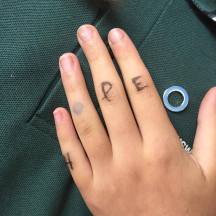
The kidlet went to school the day before WDD this year with her hope in her heart and on her hand, set to do some awareness raising of her own.
These days, I try to shield her from the truly nasty sides of diabetes (even though my nasty is comparatively quite mild) and I certainly still hide from her any fears I have. But as an eleven year old, she has an extraordinarily sensitive understanding of diabetes and she has become quite the little advocate.
All of this was playing on my mind last week as I say down to hear a presentation from Kara Maliszewski whose mum has type 1 diabetes. In the abstract to her talk, Kara says her ‘normal’ was ‘…needles in the kitchen, candies and blood sugar monitoring equipment in the handbag, insulin in the refrigerator, pump infusions in the bathroom and the constant voice in my head “insulin to treat a high, sugar to treat a low”’.
Kara spoke about how from a very young age she was involved in her mum’s diabetes care. She was taught to give her mum a spoonful of jam or a glass of juice. I am not sure what Kara meant by ‘very young age’ but it did appear from her talk that Kara’s involvement was significant from when she was very small. I felt uncomfortable about this, thinking back to my own experience of trying to protect the kidlet from all things diabetes. It is only in the last year or two I have asked her to get me a juice box from the fridge if I am really low. Even though her understanding of diabetes is excellent, I have been resolute about not giving her a part in it. Why? Because I don’t want to concern her.
But Kara said several times that her contribution to her mum’s diabetes care actually lessened the fear rather than added to it. This was at odds to my thinking – I have had the idea that by not showing the kidlet the nasty things that she simply wouldn’t know they were even there – there would be nothing for her to be afraid about.
Clearly the effects of understanding and being part of her mother’s diabetes are significantly more far reaching than just knowing what to do in the case of low blood sugar. In fact, as this tweet from Kelly Close shows, Kara believes that her contribution to her mother’s diabetes care has impacted in other ways.


The kidlet’s thoughts at the #IWishPeopleKnewThat Diabetes stand at FFL this year.
I love this about her. Is it because she is living with a parent who is dealing with a chronic health condition? Is it that AND the work I do that has increased her awareness?
I don’t know. But I do know that I spent a lot of the long flight home thinking about my motives in trying to hide my diabetes from her. Clearly I am not doing it because I feel ashamed. I think, perhaps, the motivation is selfish. I try to alleviate the guilt I feel by bringing diabetes into our family by not sharing it with Aaron and our daughter. I try to own it and hide it and keep it to myself as much as I can, because inevitably there are times I can’t do that and they have to be part of it.
What is becoming more and more apparent as she gets older, (and what was clear in Kara’s talk), is that our kids actually want to be involved – and invited to help – in our diabetes care. These kids are magic in so many ways. How privileged am I to be able to call her my own?
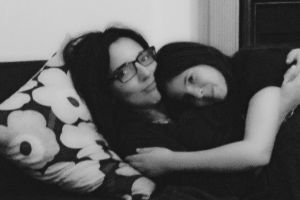
This kid. How lucky are we?





 Diabetogenic
