
You are currently browsing the category archive for the ‘Conferences’ category.
I tried to hide my diabetes from our kid for a long time. I didn’t want her involved in any way; I didn’t want her to know about it and I certainly didn’t want her to see it.
But as her inquisitive little mind grew and she started asking questions – lots and lots of questions – it became harder to hide things from home. I became an expert at deflecting. If she asked ‘What is it like to have diabetes?’ I would suggest we took a walk. When she asked if she would get diabetes, I would struggle to breathe and, instead of answering her question, would offer to read her a story.
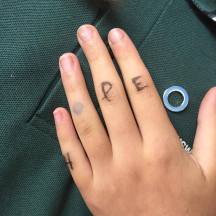
The kidlet went to school the day before WDD this year with her hope in her heart and on her hand, set to do some awareness raising of her own.
These days, I try to shield her from the truly nasty sides of diabetes (even though my nasty is comparatively quite mild) and I certainly still hide from her any fears I have. But as an eleven year old, she has an extraordinarily sensitive understanding of diabetes and she has become quite the little advocate.
All of this was playing on my mind last week as I say down to hear a presentation from Kara Maliszewski whose mum has type 1 diabetes. In the abstract to her talk, Kara says her ‘normal’ was ‘…needles in the kitchen, candies and blood sugar monitoring equipment in the handbag, insulin in the refrigerator, pump infusions in the bathroom and the constant voice in my head “insulin to treat a high, sugar to treat a low”’.
Kara spoke about how from a very young age she was involved in her mum’s diabetes care. She was taught to give her mum a spoonful of jam or a glass of juice. I am not sure what Kara meant by ‘very young age’ but it did appear from her talk that Kara’s involvement was significant from when she was very small. I felt uncomfortable about this, thinking back to my own experience of trying to protect the kidlet from all things diabetes. It is only in the last year or two I have asked her to get me a juice box from the fridge if I am really low. Even though her understanding of diabetes is excellent, I have been resolute about not giving her a part in it. Why? Because I don’t want to concern her.
But Kara said several times that her contribution to her mum’s diabetes care actually lessened the fear rather than added to it. This was at odds to my thinking – I have had the idea that by not showing the kidlet the nasty things that she simply wouldn’t know they were even there – there would be nothing for her to be afraid about.
Clearly the effects of understanding and being part of her mother’s diabetes are significantly more far reaching than just knowing what to do in the case of low blood sugar. In fact, as this tweet from Kelly Close shows, Kara believes that her contribution to her mother’s diabetes care has impacted in other ways.


The kidlet’s thoughts at the #IWishPeopleKnewThat Diabetes stand at FFL this year.
I love this about her. Is it because she is living with a parent who is dealing with a chronic health condition? Is it that AND the work I do that has increased her awareness?
I don’t know. But I do know that I spent a lot of the long flight home thinking about my motives in trying to hide my diabetes from her. Clearly I am not doing it because I feel ashamed. I think, perhaps, the motivation is selfish. I try to alleviate the guilt I feel by bringing diabetes into our family by not sharing it with Aaron and our daughter. I try to own it and hide it and keep it to myself as much as I can, because inevitably there are times I can’t do that and they have to be part of it.
What is becoming more and more apparent as she gets older, (and what was clear in Kara’s talk), is that our kids actually want to be involved – and invited to help – in our diabetes care. These kids are magic in so many ways. How privileged am I to be able to call her my own?

This kid. How lucky are we?
I have written before that the thing I hate most about diabetes is when it becomes the problem of other people, especially my family. I feel enormous guilt that diabetes is part of their lives, even though they are not the ones who were given the diagnosis. They don’t have a choice and yet they are involved and invested in this as I am.
So it was with great interest – and a little trepidation – that I added two sessions to my WDC schedule that were being presented by the partners of women living with type 1 diabetes. I knew that I would find them difficult. And I did.

Riva and Boudewijn
Boudewijn (Bou) Bertsch is the husband of HuffPost writer Riva Greenberg. I’ve read Riva for years and have always been interested in her insights, and so thrilled that she writes about diabetes in such a practical way on a site with such reach.
The take home messages for me from both these talks was that as much as we may want to own our diabetes and keep it to myself, our partners share the load. They have a role to play – and they do help make diabetes easier.
There were little snippets from both men about how they get involved in their wives’ diabetes. At one point, Bou held up a small jar of glucotabs saying ‘This is a way for ME to have some control and feel meaningful to Riva.‘ He carried them around in his pocket at all times. It reminded me of Aaron filling jelly bean jars around the house after we brought the newborn kidlet home from the hospital. The breastfeeding hypos were so debilitating that we had left little jars within reach of anywhere I may sit down to feed.

Asim and Sana
Asim Rasheed, husband of Sana Ajmal (former Vice-President of the YLD Program), shared similar sentiments. He also spoke about how in Pakistan women with diabetes are considered not worth marrying, which is heartbreaking.
But perhaps the most illuminating moment of the sessions given by partners was when Bou said ‘I don’t always need to make it better, or come up with another idea. I just need to be present.’ Those words rang so true. I understand the need our loved ones have to ‘fix’ our diabetes. But there’s no fixing this condition. There are measures of coping and living. And supporting.
Aaron has a way of showing that support and he probably doesn’t even realise it. He can’t fix my diabetes; he can’t talk down the high numbers or force up the low ones. But he has a way of acknowledging the overall crapiness of the situation. Two words – ‘Diabetes sucks’ – is all it takes to feel that I have someone championing me; someone riding along side. And that’s all I need.

Renza and Aaron
I am sure that for him – just as for Bou and Asim – he would think it nothing. But heading out to replenish hypo supplies, leaving glasses of juice on the bedside table in case I wake up low or helping me with particularly nasty overnight lows all relieve me from some of my never-ending responsibility.
I can hide it as much as I would like; I can try to own it alone and not share it; I can claim that I am the fiercely independent woman I truly am. But all those things don’t matter. We do diabetes. We don’t have a choice.
There were many highlights at last week’s World Diabetes Congress, but perhaps most impressive for me was the Living with Diabetes stream which sat proudly and comfortably amongst more traditional streams such as Basic and Clinical Science, Education and Integrated Care, Global Challenges in Health, Public Health and Epidemiology and Diabetes in Indigenous Peoples.
Including a consumer stream can be a tokenistic effort. I have seen that at conferences both here in Australia and overseas. But in Vancouver, the stream was completely embedded into the program and included outstanding consumer representation (from not only people with diabetes, but their loved ones too), as well as input from healthcare professionals, researchers and clinicians.
There were some real high points in the stream and over the next few days I will be exploring some of them in detail, but here is an overview of some of the killer sessions I attended:
- I sat in on two talks given by partners of women with diabetes. These were, in equal measure, beautiful and personally challenging for me to sit through.
- The session given by an adult daughter of a woman with diabetes was also difficult for me, but it looked at diabetes in the family from a very different – and rarely considered – perspective.
- Diabetes and the family dynamic was examined with sessions from parents and carers and two psychologists in a session I chaired that looked at how the age of diagnosis impacts someone with diabetes.
- The sessions on advocacy provided much food for thought as I heard about diabetes in places where things are really tough. (And although I didn’t hear her speak, I did meet with the inspirational Elizabeth Rowley from Type 1 International who is an advocate in every sense of the word. She is one of the IDF Young Leaders and is an example of the potential of this YLD Program. You can read more about Elizabeth in this interview she recently gave over at Six Until Me.)
- The light was shone – quite brightly – on diabetes organisations and how they can – and must – work more closely with people living with diabetes to ensure they are relevant. This was the focus of my talk and I will write about the soon.
- The power of social media and the DOC was given great attention with talks from some heavy weights in the community. Cherise Shockley from DSMA recounted the story of #Simonpalooza to illustrate how the community saves lives and Bastian Hauck from DeDOC spoke about an incredible initiative in Germany on World Diabetes Day and
- Peer support was also a focus with Ed Fisher from Peers for Progress speaking about the importance of peer support being included in national health policies and Jeff Hitchcock discussing the support offered by Children with Diabetes and Friends for Life.
(I’ll be writing lots more about each of these highlights over the next couple of weeks. Lots and lots more! Trying to get my head straight is proving to be a real challenge as it is completely and utterly full!)
The sessions in the Living with Diabetes stream were very well attended, and not just by the consumers at the conference. Several times, session chair, or the speakers themselves would ask for a show of hands to identify who was in the room. Diabetes educators were probably the most visible. It was terrific to have healthcare professional interest in this stream and I think that other conference organising committees could learn from WDC. While some conferences have a very clear remit as being aimed at HCPs, that doesn’t mean that consumers need to be removed from the conference. Teaming HCPs with PWD to illustrate certain issues is not only a great way to engage and involve consumers, but also bring home the ‘real life’, practical aspect of what is often being discussed at a very theoretical level. It makes it real.
Congratulations to Gordon Bunyon, Chair of the Living with Diabetes stream and his committee for pulling together such a fabulous program. I was honoured to be part of it.
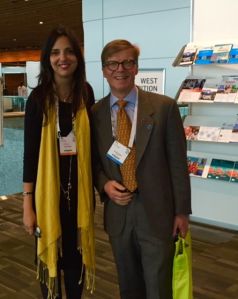
I’m back from one of the busiest and most enjoyable conferences I have ever attended. The International Diabetes Federation’s World Diabetes Congress in Vancouver was a frantic few days, preceded by the Parliamentarians for Diabetes Global Network Forum. Before I get to the nitty gritty of the week, here are some pictures. They tell more than a thousand words and give you an idea of just some of the week. Let your fingers do the scrolling!
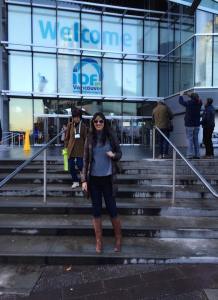
Obligatory ‘Outside the conference centre’ photo. I have quite a collection!
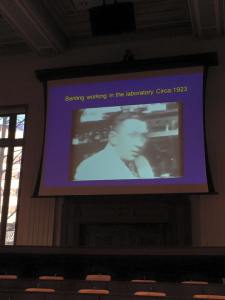
Banting. The man to whom I owe my life.
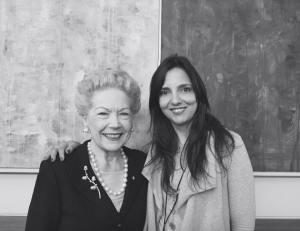
Spending time with inspirational women is one of the perks of this job. Sue Alberti at the joint PDSG and Young Leaders lunch.
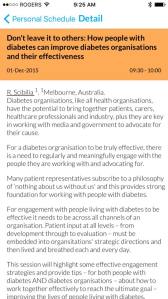
My talk abstract.

And getting ready to take the stage…

And actually on the stage!
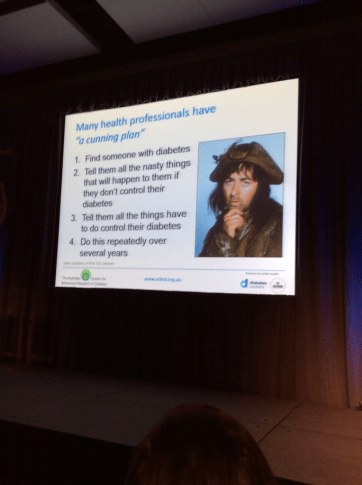
Slightly blurry, unfortunately, but this great slide was from Professor Jane Speight (ACBRD) in one of her excellent presentations about hypoglycaemia.

Because I’m a smart arse. (Also – ridiculous policy!)
I also had the chance to catch up with friends and other diabetes advocates and activists from around the globe.

These girls! Annie (@understudypancreas) and Kerri (@sixuntilme) make being away from my family just that little bit easier.

Outgoing president of the YLD program, Keegan Hall. He’s my partner in sarcasm!
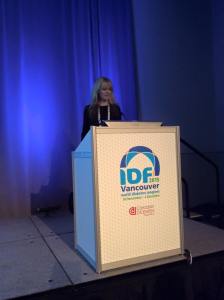
Annie giving an incredibly eloquent and moving presentation about diabetes in her family, sharing her daughter’s story.

Cherise talking about DSMA and the amazing story that is #Simonpalooza. (Google it!)

Fun folks.
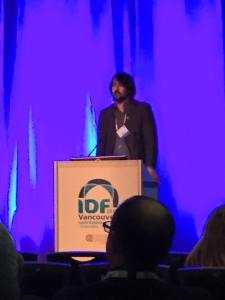
Bastian from #DeDEC speaking about a brilliant initiative he ran in Germany on WDD this year.

Dinner on the last night with Fredrik and Kyle from mySugr, and Bastian from DEDOC
Lots of things to write about in the coming days so stay tuned. It was a terrific conference. But I am so happy to be home!
I arrived in Vancouver at about 2pm on Saturday and by 4pm, I had taken my seat in the Morris J Wosk Centre for Dialogue, surrounded by members of parliaments from all around the globe. It was the second Parliamentary Champions Forum, an initiative of the IDF which involves 155 MPs across 42 countries.
Throughout the three days, we heard about the global diabetes situation. The numbers are terrifying; it is overwhelming. As I sat there, I realised the numbers stopped meaning anything to me. Hearing statistics of the millions of people affected, the billions of dollars being spent just washed over me. I stopped gasping involuntarily when I heard the numbers of people diagnosed with diabetes-related reacting to what I heard.
But I was jolted back to reality when the individual country reports started. Because suddenly, it stopped being about numbers and it became about individuals. Thankfully, this was repeated throughout the three day Forum.
 At the welcome dinner on the first night, the inspirational Dr Susan Alberti from Australia spoke about her personal story. On the second day, over lunch, we heard the stories of some of the IDF Young Leaders in Diabetes. We heard stories of discrimination and stigma and lack of access to necessary medication and healthcare. We heard about how diabetes impacts individuals mental health and affects their wellbeing.
And this is why we need to bring politicians and MPs into the diabetes discussion. Of course we need policy change. Of course we need our elected officials to understand the magnitude of diabetes.
But equally, we need them to understand how it affects individuals. We need them to hear about day-to-day life with diabetes and how their decisions to cut healthcare spending, or not fund medications and technology actually make a difference – a significant difference – to how well we live.
I live tweeted throughout the Forum. Catch up at #IDFPDGN
The last big diabetes conference of the year kicks off next week in Vancouver, and tomorrow, I head over there.
I’ll be popping in and out of here over the week, but Twitter is really where it’s at, so follow along on #WDC2015. I’ll be live tweeting sessions – and everything else that catches my eye! Not on Twitter? You don’t need to be to follow along, but if you want to get involved in the conversations and ask questions, you will need to sign up. (It only takes a few minutes.)
The World Diabetes Comgress always has great consumer representation and you can see from the program – especially the Living with a Diabetes stream – that there are some DOC usual suspects/frequent flyers presenting some great stuff.
As always, it’s a last minute rush to get myself ready, and spend precious time with my precious clan from whom I have been away far too much this year. (And I pledge that once I return from this trip I’ll to do my very best to not see the inside of another aeroplane until February!)

Around $80 bucks. That’s how much it costs for a CGM sensor in Australia. It’s expensive and it is completely out of reach of most people living with type 1 diabetes. There is no subsidy: you want it, you pay for it yourself.
I have been wearing a sensor on and off for the last eight or so years, as long as CGM technology has been available in Australia. In the last two and a half years, it’s been on more than off. And recently, I have found myself feeling completely lost without it.
I know how fortunate I am to be able to afford it, I really do. And yet, after I called the company to make my last order, and read out my credit card details, I heard myself complaining about the cost – to pretty much anyone who would listen.
And there, in my world, seemingly oblivious to anyone living outside it, my indignation at having to fork over well-over $300 to pay for the device that I need/isn’t a privilege/keeps me alive/keeps me out of hospital/is necessary for me to be well/helps my quality of life/reassures me/reassures my family (or whatever lame-ass reason I was sprouting) was being repeated ad nauseam.
But sometimes, this privilege is brought home in ways that make me feel shamed and ashamed.
At ISPAD + APEG last week, I attended the IDF Life for a Child update. I make sure that I go to all the sessions run by the LFAC team at any conference I go to because I want to support the program in any way I can.
Many people will have heard of the Life for a Child program. I’ve written about it before – specifically when promoting the very valuable Spare a Rose, Save a Child campaign.
17,000 children from 47 countries benefit from the program. The focus and vision of LFAC have shifted slightly in recent years. It has moved from keeping children and young adults alive to improving health outcomes and quality of life.
The education and training initiatives developed by LFAC are making sure that there is sustainable impact being made to the lives of people living with type 1 diabetes. Much of this work is done through strengthening existing centres, which means more money going towards actually helping people, rather than the establishment of new institutions.
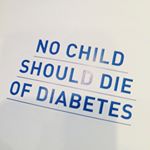 Each time I hear about LFAC, I walk away with a mixture of feelings – most of them associated with guilt.
I feel guilty at what I have, when so many have so little. But more so, I feel bad complaining about what I have. Feeling like a spoiled ‘but-I-want-a-pony’ kid is pretty confronting. And disgusting!
I feel inspired by the kids benefitting from the program. I hear their stories and I can’t help it but feel inspired. And then I hear Stella Young’s word in my head and know that they are not there to inspire me. They are just living. And then I don’t know what to do or how to feel. (And while Stella Young may have been referring to images of people with a disability when she coined the brilliant term ‘inspiration porn’, it works just as well when referring to these kids with diabetes.)
I don’t know how I go about acknowledging my privilege and not feeling guilty about it. I don’t know how to complain about some if the things that piss me off about diabetes without thinking ‘but it could be worse’.
I get mighty peeved when I hear people say ‘At least it’s not cancer’ because it starts to make different health conditions a competition. So is it okay to say ‘stop complaining – at least you don’t live in <insert country name> where you wouldn’t even have insulin and would be dead in a year’?
Diabetes is crap – it is a terrible condition, there is no doubting that. And I think it is fair to say that for some people, it is more difficult and it is more unfair. The things that make it harder for some are so beyond anyone’s control, which probably makes it even more difficult. But is acknowledging that enough?
‘So, how many of you have patients who make treatment decisions based on their CGM?’
This was the question posed by one of the healthcare professionals speaking at this afternoon’s Dexcom symposium at ISPAD.
A few hands were raised. Not many; only a few in the packed room. Two of the hands that shot up the fastest belonged to a colleague and me, both of us referring to ourselves as the ‘patients’ – or perhaps each other.
We looked at each other and half smiled, shaking our heads. We knew the answer – we knew what the truth was. The response in my head was ‘Of course we do. Of course. I treat based on arrows telling me I am heading for a low without checking my BGL – I did it just before walking into the session.’
The question came after the announcement that treatment decisions could be made based on sensor readings from the new (yet to be released in Australia, but launched already in the US and in some European markets) Dexcom G5 CGM.
There has been much excitement from HCPs presenting about this new development in CGM – both at this conference and at EASD. It has huge implications because essentially, it is removing the need to do finger prick BGL checks, apart from the required twice-daily calibrations.
But it has been presented as if people using this technology have never, ever thought before to treat based on what their CGM data is displaying.
I doubt that any person using CGM has found this announcement particularly startling or surprising in any way.
But this is often the case. The release of new evidence or new guidelines or new data heralds a shift in ‘approved’ diabetes management or techniques and suddenly, there it is on all the shiny brochures and in all the shiny presentations.
And the people with diabetes who have been doing this, or have known this or understood it to be true from some time, look at each other slightly puzzled at what all the excitement is about.
I understand the importance of a strong evidence base. And I understand the need to be safe – especially as part of regulatory and approval processes. But sometimes, I can’t help but wonder why it takes so long for the evidence to catch up with what is already known, and match the anecdotal experiences that we hear and share.
It was great to have the speaker acknowledge that the show of hands after her question was probably not accurate of what was really happening.
‘You know your patients are probably doing it and just not telling you, right? They don’t want to be reprimanded for not doing what they are supposed to, but they probably are making treatment decisions based on their CGM data.’
It was probably the most frank thing we heard in that session – the twofold acknowledgement that PWD are already doing something that works but is ‘off label’, but are afraid to tell our HCPs about it, lest we get told off.
This time, when my colleague and I looked at each, we smiled widely. And we nodded. Because we knew it to be true.
Clearly, jet lag, daylight saving and time zone confusions have meant that any creativity left in my pea-sized brain has been zapped to non-existence. As has the ability to order the million things that I have read in the last couple of days.
So, with a slight inability to organise my thoughts clearly, here are some things on my mind today.
Stephanie Rice is not a medical professional (that piece of information is more for her than anyone else)
Yes, another C grade celebrity has been at it again: providing medical advice and pretending to be an expert of everything. Aussie Olympic swimmer, Stephanie Rice, has come under fire for starting a Q&A style section on her Facebook page, where readers could seek medical advice.
Now, part of me wants to say that if you think that asking an Olympic swimmer for anything other than advice about, I don’t know, swimming, you get what you get and you don’t get upset. But this isn’t really about Rice’s readers. This is about the arrogance that she is demonstrating in thinking that she actually has anything to offer here.
I was talking about this yesterday with someone and she looked a little surprised at how annoyed I sounded. ‘But isn’t that kind of what you do on your blog,’ I she asked.
I would like credit here for the incredible restraint I demonstrated in not stabbing her with a (blunt) lancet. I would also like credit for speaking to her with respect as I pointed out that no, this is no what I do here.
What I do here is talk about my experiences (such as my experience of getting annoyed at swimmers who think that you shouldn’t have a medically-prescribed MRI because ‘there is so much radiation’), but never, ever telling people what they should do (such as suggesting that you shouldn’t have a medically-prescribed MRO because ‘there is so much radiation).
Of course, Rice responded with an ‘I’m hurt – I’m only trying to share what I have learnt and how much I now know’ post that is defensive and naïve.
Also, it is where she has it wrong. And it’s where Sarah Wilson and her ‘I-live-with-autoimmune-disease-(as if it is a singular thing)-and-therefore-can-give-medical-advice’ also gets it wrong.
Your advice is worthless. You have no qualifications in medicine, so stop giving medical counsel.
What does have some worth, however, is sharing your story. People connect with that. They hear what you are going through and feel supported. It makes them feel less alone. It is not your job – any more than it is my job – to provide medical information to people.
So stop it. Just stop it.
Live longer
Yesterday, MJA (The Medical Journal of Australia) published an article – Recent advances in type 1 diabetes – authored by some of Australia’s leading clinical experts in type 1 diabetes.
There were some really interesting points mentioned including that, in Australia, the incidence of type 1 diabetes has doubled over the past 20 years.
But for me, the most interesting and hopeful point (which was also the focus of the media release) was the following statement:
Although T1D is still associated with considerable premature mortality, recent findings show that a significant improvement in life expectancy has occurred.
I have always had in the back of my head that my life expectancy will be shortened by fifteen years due to my diagnosis of type 1 diabetes. It’s not all roses and I am not in denial that there will be challenges as my diabetes – and I – get older. But there is some good news in here. And for that, I do have some hope.
Do this survey
Abbott Australia has a series of surveys live at the moment for adults with type 1 and insulin-using type 2 diabetes.
YourSAY (Self-management And You) asks what it is like to live with diabetes each day, specifically looking at the behaviours and attitudes to diabetes self-management and glucose monitoring.
The survey takes about twenty minutes to complete and is open to anyone who meets the following criteria:
- Live in Australia
- Be aged 18-70 years.
- Have been diagnosed with type 1 or type 2 diabetes
- Be currently using insulin injections or an insulin pump
- Not currently be using a continuous glucose monitor (CGM)
Sound like you? Then hop to it by clicking here.
New look
Go check out The Parents’ Voice. Here, you’ll find the new name and new look of The Parents’ Jury. And while you’re there, considering signing up and becoming a member. The Parents’ Voice is all about improving the food and activity environments of Australian children.
#DOCtober
Grab your phone – or, if you’re old school, a camera – and join this month’s #DOCtober photo challenge. Kerri Sparling is documenting the month in photos on Instagram and on her blog and is asking you to join in. The idea is to find something diabetes-related and post it in social media land for all to see.
I’ve been pretty lax…as in have not posted a single thing…but here is my contribution for today. This is my desk at work with all the found objects from EASD.

Things I’m missing about Scandinavia
Cinnamon buns. Recipe found; baking planned. As soon as the weather cools down and I can consider turning on the oven!
Tick tock
As I’ve mentioned before, I often use the stat that we spend approximately six hours a year with HCPs working on managing our diabetes. It works out to about 0.07% of the year.
On his blog, Manny Hernadez has broken it down and wrote this great piece. He reckons that it is even less, with his calculations coming in at 0.007% of the year.
Whichever what you look at it, it’s not much time at all! And, it serves as a reminder of just how much little time we have professional assistance when dealing with diabetes.
So, remind me again who the expert is?
That’s cruel
I wore a green dress yesterday.

I’m back!
Yes – three weeks of conferencing and travelling and walking and eating and doing not much – and yet so much – have come to a jet-lagged conclusion and I find myself back writing, back at work and, most importantly, back with the kidlet. Which means all is wonderful and I am happy.
So, some diabetes highlights/lowlights from my travels.
This at Dubai airport. Double arrows down, a shitload of insulin on board and a grumpy face. Cleary, a lowlight!
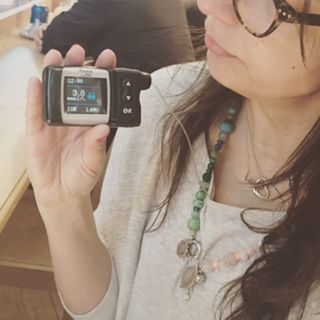
And because I am #NotGoodAtDiabetes, I did it again in Copenhagen:

And in Stockholm.

Stopping in my tracks (and employing the brilliance of Google Translate) after seeing this newspaper on our last night in Stockholm.

Being so grateful for this sight in the press room at EASD in Stockholm…

… because I was low with #ConferenceHypoSyndrome.

Days doing this:

Which meant crazy days of barely needing to bolus as we walked, walked, walked and walked all over cities.
And days of walking meant carb stops of cinnamon buns flecked with cardamom and sprinkled with sugar in Stockholm. And in Copenhagen, no cardamom, but icing drizzled over their tops. And then, once in Paris, flaky, buttery pastries that left tell-tale crumbs down our shirts.

And coffee. Coffee. Coffee. Coffee.

And ice cream because when in Paris, one must Berthillon!

In Paris, I came to an abrupt stop when I saw this:

I went in and spoke to the baker who told me that all the pastries were made using low sugar and low fat recipes. ‘Why?’ I asked him. ‘Why did you start this bakery?’ ‘My father has diabetes. And I do too.‘ He said. ‘And so do I,‘ I told him. We bought a croissant and I was expecting something dry and without the wonderful full flavour of a pastry whose main ingredient is butter and was surprised. It tasted delicious. He knew what he was doing! (Questionable marketing aside!)
There was the crappy night where I realised that my pump was out of insulin and, in my handbag changeover, I had forgotten to throw in my ‘spares bag’, so we needed to leave the jazz gig we had travelled halfway across Copenhagen to hear – before it even began – so that we could get back to the hotel and replenish my insulin stores. A complete #EffingDiabetes moment.
On our way from Copenhagen to Paris, I set off every possible alarm at security and was directed to a security officer. ‘I am wearing a medical device,’ I began, expecting the questions and the confusion and the necessary explanations. ‘An insulin pump? You have diabetes?’ was the reply. My stunned look was met with, ‘My husband wears one.’ And she smiled and sent me on my way.
But then in Dubai, as I was escorted to a sparse, windowless room, my ‘I have diabetes, I am wearing a medical device,’ was met with confusion and questions and the need to find a supervisor and, for the first time ever, a request for the letter from my doctor.
But here’s the thing. When I look back at this time away, it won’t be the hypos or the highs or the diabetes that I remember. It won’t be the times I had to stop to guzzle juice, or check my BGL. It won’t be the numbers or the alarms, warning me to eat something.
It will be the days spent catching up with DOC friends. It will be remembering how, with some of these friends, we made ‘riding the worm’ a thing in Sweden. It will be visiting the ABBA museum, and wandering around cemeteries. It will be afternoons being reacquainted with friends who live half a world away. It will be lounging on the grass at Place des Vosges, and sitting in cafes that we have visited before. It will be thinking about the amazing food – like the incredible beef tartar in Stockholm, and Berthillon’s blood orange sorbet. It will be about the waiter at a local café near our apartment in the Marais who didn’t so much as walk as shimmy and sing our breakfast order back to us. In French.
It will be about all those things. It will never, ever be the diabetes. Ever. And that is just the way it should be.





 Diabetogenic