
You are currently browsing the category archive for the ‘Community’ category.
Diabetes Awareness Month has come to a close and with it the blue that has washed over my social media feeds will dim a little. I had a quiet month, spending most of my time following others rather than sharing my own content. It seems to have been representative of my year in diabetes advocacy, really.
I’ve been quiet. It wasn’t planned, but it has been deliberate. And it hasn’t gone unnoticed. I’ve started and stopped and started and stopped this post for a while to answer the messages from people who have so kindly asked if I am okay. Let’s see if this is the one that sticks…
Earlier this year, I wrote about having a panic attack while on a plane after landing back in Melbourne from ATTD in Madrid. You can sort of read about it here, although I was pretty vague about what actually happened saying little more than that I turned on my phone to a million Twitter notifications about a blog post that some people had assumed was written about me and then subsequent comments. I was surprised, horrified and more than a little confused.
This came hot on the heels of a couple of other tricky situations. There was the run in with the diabetes HCP who told me to tone down (after they completely misrepresented what I had written about). And then there was another HCP rallying troops to call me out (that caused me to lock my twitter for the first time ever at the end of last year).
Anyway…the culmination of all these things resulted in the realisation that this year was going to be a lot different for me. I was going to take a massive step back from much of the work I did that was public facing. I felt that I simply couldn’t take the scrutiny that was coming my way.
Even before the panic attack on the plane incident, I was feeling unsettled. I was unspeakably nervous about the presentation I had been invited to give at the conference in Madrid. This was a completely alien feeling to me. I have been speaking publicly for decades, and for twenty years, comfortably stood on stage playing the flute for anyone who would listen. Standing in front of an audience doesn’t make me nervous. It doesn’t make me sweaty and scared. And yet, here I was wondering whether I should not go to Madrid at all to stand up on that stage. But after some ridiculous bravado as seen in this post, I decided that I had to go.
As I sat on that plane, desperately trying to recover from the panic attack that was making it difficult for me to breathe and hiding my tears from the other passengers, I had a fleeting thought that I probably should have gone with my gut feeling and stayed home!
And so, I felt that there was only one thing I could do. Forget the whole stand up thing and instead step back. I wasn’t necessarily sure what that would look like. I couldn’t stop attending and being part of diabetes meetings and conferences because that is part of my job, but I could turn down speaking engagements or anything that put me in a position where I was sharing my personal, lived experience that others might find challenging, or at odds with their own. I needed to deal with the diabetes burnout that was so, so heavy and weighing me down.
COVID-19 certainly helped with that. As the world got turned upside down, a lot of the things that I was worried about simply didn’t happen. It became easier for me to limit my interactions with people and hide away a bit more.
The feelings of burnout and anxiety about being part of the community didn’t disappear, but they seemed less urgent.
And with that came the realisation that the burnout I was feeling because of diabetes actually was not because of my diabetes at all.
Diabetes burnout has always happened to me when those constant diabetes tasks became too overwhelming; when just the thought of opening up a meter bag, or checking my CGM trace was too much to even contemplate. Burnout meant that every single number became a measure of my value and worth. I’d lose all perspective and lose all confidence of my abilities to actually do what I needed to do.
The burnout I felt now was the effort of being a diabetes advocate IN the diabetes community. It was fearing that I was being seen in ways that actually were completely inaccurate – in fact at complete odds with everything I have ever stood for – and that led me to second guess everything I said, fearing that I would be misunderstood. It was feeling vulnerable and scared and exposed in the community that was meant to support me.
I received an email from someone in the DOC who has been around for many years, and I have known (on Twitter only) who told me that because I am confident in my communication, am comfortable challenging ideas different to mine and share opinions that not everyone agrees with it, I leave myself open to criticism. And that criticism and the dialogue that follows resulted in their corner of the diabetes community being less enjoyable to him and others. All while suggesting that, unlike he, who has never deliberately set out to disagree with anyone – I seem to revel in it.
Interesting take. I don’t seek to disagree with people. But if anyone is saying something that I believe is stigmatising to PWD or minimising our experiences, I will call it out. It’s been my MO for almost twenty years.
I never replied to the person who sent me that email. I cried about it for days, however, and have it filed away and occasionally return to the half-written response that I keep meaning to finish so I can hit send on my reply. I feel it’s quite impolite that I’ve not replied to someone who took the time to write to me… But, truthfully, I am too tired, and that so-called confidence has abandoned me.
Diabetogenic is the least active it’s been since I started it close to ten years ago. That’s not because I have nothing more to write – I still write every single day, I just squirrel things away now, too afraid to share them, sticking to safer topics – research call outs, fundraising initiatives, commenting on things that aren’t controversial or taboo topics.
I started this blog because it was the space for me connect with others – not only people who were walking the same diabetes path as me, but also those who were doing things very differently. Because often, they are the people I learn most from.
It became a place I could write about those issues that were tough – the mental health challenges of diabetes, the frustrations and desperation I felt about the health system, trying to navigate through health professionals who refused to acknowledge that PWD belong everywhere and anywhere diabetes is spoken about. And it was a place that my split-apart heart was able to open up and share the unspeakable sadness that I felt as fertility issues became part of my life. I am so grateful that I was able to do that and receive the support that I so desperately needed from people who understood how the impact of diabetes on those fragile, and so, so hard parts of life shattered me into a million broken pieces. Because it was those people who helped glue me back together.
Wanting and needing that support and connection hasn’t stopped. I still seek it. I’m just a little more cautious about how I go about it these days sticking with friends and others I feel safe with rather than the wider community that doesn’t feel safe. I know where to go to get what I need.
I don’t really know what to do with this blog anymore. Feeling unable to share a lot of what I want to say is alien to me. But for now, this doesn’t seem to be the place to do it. I guess I continue as I have been – hitting publish when I feel I can, and for the next month, anyone popping by will see a lot of pleas to donate to Insulin for Life.
And I guess that will have to be enough for now.

I’m loathe to talk Christmas while still in November. In fact, we have rules in our house that we do not even mention the word until after my daughter’s and my birthdays which both fall in the last week of the month.
However, the other day as I was doing some supermarket shopping, I heard the strains of Silent Night and noticed glittery decorations starting to adorn the streets. Honestly, this year is so all over the shop that I have no idea what month it really is, but if Woolies wants me to believe it’s the festive season, who am I to argue?
And so, let’s talk Christmas…specifically this:

We all know how tough this year has been. We all know that there is no corner of our globe that has not been touched some way by the COVID-19 pandemic. What we should all also know is that even though COVID-19 may be global, there are some people who have been disproportionately affected, and it is always the most vulnerable people in the most vulnerable places that find themselves in that situation. Contrary to the idea that COVID doesn’t discriminate, people already doing it tough are finding things even tougher.
Which, to me, means that for those of us who can, now is as good a time as ever to step up and support anyone finding themselves in that situation.
I’ve been trying to get rid of the tradition Secret Santa or Kris Kringle (or whatever you call it in your family or workplace) for years now, instead directing those funds to a charity that supports people with diabetes living in under-resourced countries . You can read my grinch-like posts about that here and here oh, and here, where I yell that NO ONE WANTS A BATH BOMB!! It’s true. NO.ONE.WANTS.A.BATH.BOMB.
BUT! People with diabetes want insulin, diabetes supplies and education, and by ‘want’ I obviously mean ‘need’. (NO.ONE.NEEDS.A.BATH.BOMB.)
Insulin for Life Global is a charity that helps people with diabetes in need of the things that I (try really hard not to) take for granted. I have spoken and written a lot about Life for a Child (LFAC), mostly in relation to the Spare a Rose campaign. Insulin for Life Global picks up where LFAC ages out. Because, diabetes is for life, not just until you’re 26 years old.
This year, Insulin for Life is launching its new #IFLSecretSanta campaign and is asking the diabetes community to please get on board. I’m totally on board with this Secret Santa campaign because it will be more than just a novelty gift that is likely to end up in landfill.
A donation of $5 (or €5 or £5) will provide a week’s worth of insulin and diabetes supplies to a person with diabetes in one of the countries supported by the charity.
I asked around, and it seems that most office Secret Santa gifts have a limit of $10. That’s two whole weeks of diabetes supplies (including insulin) to an adult with diabetes who might otherwise not have it. If your whole workplace gets on board (or family, or friendship group, or book club…) that suddenly starts to add up to a whole lot of weeks of diabetes supplies!
As with any campaign like this, it works best when people share to help raise awareness of just how easy it is to be a part of it. AS well as making a donation, it would be terrific if as many people in the DOC could share details of the #IFLSecretSanta drive and encourage friends and family to donate.
I promise that no one is going to miss not getting a bath bomb. But people with diabetes, unable to access or afford essential diabetes meds and supplies, will be grateful if the money for that bath bomb was redirected to the charity that helps them.
Okay, DOC, now’s the time to do our thing. We do this and we do this well. While there are lots of people in this community and we certainly do not all agree, or even all like each other, it’s campaigns like this that seem like a good time to put aside differences and come together. Let’s see just what we can do to help Insulin for Life and their first #IFLSecretSanta campaign.
Donate here. (It will take you straight to PayPal to donate, and your donation will go directly to Insulin for Life.)
Hashtag away on your preferred socials: #IFLSecretSanta
Every morning for the last few months, my husband has posted a Facebook update on Victoria’s COVID numbers, along with a cheery message of congrats and motivation for fellow Victorians, in particular Melburnians.
My beautiful city has emerged from a long winter, spent very much not only indoors, but also within a 5km confine of our homes. The lockdown that saw us absolutely smash our second wave of COVID-19 was tough, but clearly necessary to regain control of numbers that were starting to look very, very scary.
I struggled with a lot of what was going on during that time. I am so lucky that the cocoon in which I live felt safe and secure and happy, because there was a lot going on that was not like that.
I had to stop watching the daily pressers from our Premier, not because the numbers were too overwhelming, (although the days we peaked at 700 new cases a day were tough), but rather because the media’s approach to just how present the information became too difficult to watch.
I’d already been stressed with reporting of those of us deemed high risk. That sense that we were disposable and didn’t matter with the dismissive ‘It’s nothing unless you’re old and already sick’, was a recurring theme from the moment the pandemic started.
But now it was more than that. It was the relentless negativity that was being thrown at the Premier and the Chief Health Officer that became unbearable. I realised that once I could recognise the voices and knew the names of the Murdoch hacks that hijacked the daily updates with their attempted gotcha-questions, that those who were meant to be reporting the news had become the news. I’m sure that’s not what journalists are meant to do.
Our whole state was desperately trying to understand just what was going on and how safe or at risk we were, but the loudest corners of the media seemed more focused on trying to bait politicians into admitting that they are the devil.
The same went for the way that opposition politicians who instead of being voices of support for their constituents, hampered, undermined and outright sabotaged the public health efforts that were clearly working.
This constant stream of negativity was impacting my mental health more than any curfew, needing to wear a mask, or limit to being permitted out of the house.
I also had to turn away and stop engaging completely with COVIDIOTS and conspiracy theorists who were outdoing each other with their stupidity. I still am incredulous that ‘anti-maskers’ is a thing. Except I’m not, because most of them are also anti-vaxers, and I’m pretty sure there is a direct correlation between the two. And so, I started using the mute function deliberately. Words, phrases and people that fed my anxieties because of their fear mongering were suddenly silent, and amazingly, I saw how much better I started to feel.
What I realised is that it comes down to this: in times when things are difficult and overwhelming, the fuel that keeps us going is not anger and negativity.
I am an annoyingly positive person by nature. It drives people around me nuts sometimes as I try to find the upbeat spin to pretty much everything. It wasn’t always easy during our long lockdown, but I tried.
Those daily number updates from my husband were really not about the numbers – most mornings I’d fed him the stats because I was the one tuned to Twitter until the DHHS daily update. It was the way he was sharing the news. I turned to him one morning and said ‘You’re like a cheer squad for Victoria. It’s lovely!’ I wasn’t the only one. Many people commented on how they waited for his injection of sunshine to get their day started.
Luckily for Aaron, he wasn’t the only person I was relying on for that positivity. On days where worries about diabetes-ing during a pandemic were creeping into my mind, I turned to friends in the diabetes community – both IRL and online. But again, I got smarter about how I did that. I completely isolated myself from whole corners of the DOC – again using mute – and found that my new curated DOC provided a source of support, entertainment and decent information. It’s amazing how much nicer one’s feed is without the passive aggressiveness and sub-tweeting that is just so common. (And yes, that last sentence could be considered an example of said shitty behaviour!)
The message group of my squad of four diabetes friends in particular lightened the load considerably, and helped talk me down from ledges of feeling scared and overwhelmed, with a mixture of reassuring messages, updates from their parts of the world, goofy animal pictures, sweary-ness and general inappropriateness, and a level of understanding that helped me breathe freely again.
I wonder what I’ll remember in years to come when I think back to 2020. I don’t think it will be the crappy media and sabotaging politicians. I know it probably won’t be diabetes because apart from occasionally heightened anxiety about the intersection of diabetes and COVID-19, my diabetes was manageable.
I suspect it will be the people around me – both physically and virtually – who made this dark time a little brighter. It will be my tightknit bubble of family and friends. It will be those friends who sent ridiculous memes, and made me laugh. The friends who shared pics of what they were cooking or book recommendations or how they cleverly were keeping their kids entertained while distance learning was happening. It will be the people who reached out as soon as Melbourne went into lockdown to ask how we were coping.
And so, now as there is so much more light here in Melbourne (both literally and figuratively) I’m keeping all of this close. Who knows where this pandemic will take us, or if there is a third wave coming? But if there is, perhaps I’ll feel better prepared, and know what to do.

This week, it’s EASD. It’s is the first year since 2012 that I have not been in Europe for the meeting. EASD was the first large diabetes professional meeting I had ever been to, and I remember being struck at that very first one in Berlin by the stark absence of people with diabetes on the program and involved in the actual meeting.
My, how things have changed.
Except, of course, they haven’t. Sure, these days you will see growing numbers of PWD wandering the conference centre and attending sessions, but that really is only because we created opportunities for PWD to attend. And once we found a way to get there, we then made sure that we were visible in different ways such as leading social media charges and holding events open to all attendees.
There has been some very well placed and relevant conversation on twitter about the lack of diversity in the EASD organising committee. Too few women; too many white faces. But when we talk about inclusion, surely, surely we need to look at other groups that are significantly and obviously absent. Where are the advocates on there? Where are the BIPOC with diabetes? Where are people living with both diabetes and disabilities? Where is there representation from the diabetes LBGTIQ community? All of these factors impact on diabetes management, so wanting to see presentations that address them makes sense. And where is the lived experience on the program to underline, and provide real relevance, to the work that is being presented by HCPs, researchers and academics?
You bet there should be more women and more BIPOC on the organising committee for EASD. But if those on the committee, those doing the research, those HCPS seeing PWD truly want to beat the ‘person-centred’ drum, PWD need to be part of the group of people putting the conference together, and then strongly represented on the stage too.
#NothingAboutUsWithoutUs seems to STILL be missing from this whole meeting – from the organisation right through to the actual delivery of information. (I suspect that there may be some PWD on the program who are HCPs. While that is terrific, it is very different from having advocates who are not HCPs up on stage.)
So, this week, if you can, please support initiatives that do highlight the people who are actually living with diabetes. Please check and double check the times. I’ve tried to work out the AEST start time for all of the events, but don’t take my word for it! (Disclosure statement at the end of this article.)
#docday° & #dedoc° voices
This is the eleventh (I think??) #docday° event and I am so proud to say that I have been involved in every single one of these events. The first one was held in the back room of an overheated and overcrowded café in Stockholm five years ago. It feels like yesterday, and a lifetime ago all at once. Organiser, Bastian Hauck, asked me to say a few words, and this is what I wrote in a blog post about the event:
‘I highlighted for me what is the most important thing when we are talking about the DOC: No one owns this community. No one is more important or more relevant or more powerful. Sure, some of us are very fortunate that we get to actually meet IRL and attend conferences, but we do it as part of our jobs – whether it be like me (through my work at a diabetes organisation mixed with my online work) or through independent consulting or other work. But regardless if you are in the room or following along on Twitter, everyone has the same right to be here and to be part of it.’
We have livestreamed #docday° events in recent years, and I have written about most of them, and done all I could to encourage as many people as possible to come along and join in. This year, it will once again be livestreamed from the #dedoc° Facebook page from Tuesday (today) 12pm CET tonight, which is 8pm AEDT.
Also, make sure you keep an eye out for all the terrific advocates who received a scholarship to attend EASD via the #dedoc° voices program. They are sharing what they are seeing at the meeting on a variety of social platforms.

SOLVABLE PROBLEMS IN DIABETES
A few hours later, diaTribe will be continuing the Solvable Problems in Diabetes events which have been regular satellite events at European diabetes meetings in recent years. During COVID times, these events have been kicked off with a community focus event, showcasing diabetes advocates, which is a brilliant (and necessary) addition to the HCP discussion that follows. I’m a huge fan of diaTribe, and have been for a long time, but it has been the addition of Cherise Shockley to their team as Community Manager that has seen a wonderful increase in representation of PWD in their activities. But, of course it has. Cherise is all about community and the way she has been able to weave her magic to make diaTribe even more relevant to PWD – and more representative – is what she does best. You’ll need to register for this event (it’s free) here, and it kicks off at Tuesday 11.30am ET, which is (gulp) Wednesday 1.30am AEDT.

SEPTEMBER SESSIONS
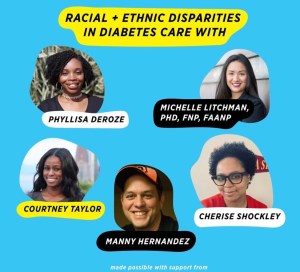
While not part of EASD, Beyond Type 1 is hosting the next in their Summer Sessions and this week it’s focusing on racial and ethnic disparities in diabetes care. There is an absolutely stellar line up in this webinar. Please do follow along if you can – this event will also be via Facebook Live over at Beyond Type 1, and is on Wednesday 8pm ET, which is Thursday 10am AEST.
DISCLOSURES
- I am ad advisor to the #dedoc° voices program. I do not receive any payment for this role.
- I am speaking at the Solvable Problems in Diabetes Community Focus Sessions. I am not receiving any payment for my involvement. I am a regular contributor to diaTribe, and I am paid for commissioned articles.
- I am on the Leadership Council for Beyond Type 1. I do not receive any payment for this role.
For more information (all Australian sites):
Diabetes conferences and scientific meetings in 2020 have looked very different than in previous years. It looked as though we were off to a flying start with a successful ATTD in Spain back in February. But not long after all the attendees returned to their corners of the globe, the world turned upside down and decided that, along with everything else, in-person meetings were done.
Major professional conferences such as those run by ADA, DUK, EASD, ISPAD, ADS & ADEA and IDF have all either happened, or will be happening, virtually, with a Zoom (or other) platform being where we meet, rather than a massive conference centre in a major city.
As ever, I search for a silver lining and if there is one it is this: the pivot to virtual conferences means that some of the main barriers in the way preventing PWD attending diabetes conferences are somewhat reduced. With travel, accommodation and a lot of the other expenses out of the way, it may be easier for advocates who would like to attend to find their way in. Let’s look at that as the disruption we needed to have to get PWD flocking to meetings in droves.
There is still the matter of registration passes, and we know that is not always the easiest thing to overcome. The registration fee is significant, and some conferences only allow HCPs and researchers in. Usually, press passes provide a way to get passed security, but they require letters of assignment (sometimes from diabetes organisations who ask PWD to act as ‘on the ground’ reporters), or other criteria be met. And, of course, there are invitations to attend satellite events extended from device and drug companies to some advocates. While there is often criticism at these methods, they have meant that there are PWD at conferences, many of whom provide information back to the community.
At ATTD, there was a new way in. Advocacy group #dedoc° launched a new program, #dedoc° voices, which you can read all about here. For the pilot of the program in Madrid, the diabetes advocates whose applications were successful had access to all parts of the meeting.
#dedoc° voices is happening again for EASD (coming up next month), and it’s not too late to apply. And as an added bonus, successful applicants will also receive registration to the ISPAD conference in October. ISPAD is the International Society for Pediatric and Adolescent Diabetes, so if you are a parent of a kid with diabetes involved in advocacy and peer support, you may be super keen to attend this one.
To apply, go here. #dedoc° voices is open to PWD now, so if you have always wanted to attend a major diabetes conference, there is nothing stopping you from applying, right now. Any one from anywhere around the world can apply – the only consideration is how you’ll manage time zone horrors if you don’t live in the same zone as the conference. (But please don’t come crying to me about that – I’ve spent the last six months settling in for hour long meetings hosted out of Europe of the US which begin long after sunset and involve perky people just waking up while I yawn and struggle not to fall asleep in my Zoom square!)
What are you waiting for? Apply now and come be a part of one of the biggest diabetes meetings in the world. I promise there will be lots of other PWD there for you to (virtually) meet up, and share ideas with. Come say hi!
Disclosure
I am an advisor to the #dedoc° voices program. I do not receive any payment for this role. 
At the best of times, I’ll celebrate any kind of anniversary, but it seemed even more important to acknowledge my ‘loopiversary’ this year in what can really only be termed as the most fucked of times. Last week, I clicked over three years of looping, a decision that remains the smartest and most sensible I have ever made when it comes to my own diabetes management.
In reflecting just how Loop has affected my diabetes over the last three years, I’ve learnt a few things and here are some of them:
- The words I wrote in this post not long after I’d started looping are still true today: ‘…this technology has revolutionised every aspect of my diabetes, from the way I sleep, eat and live. I finish [the year] far less burdened by diabetes than I was at the beginning of the year.’
- The #WeAreNotWaiting community is but one part of the DOC, but it has provided the way forward for a lot of PWD to be able to manage their diabetes in ways we never thought possible.
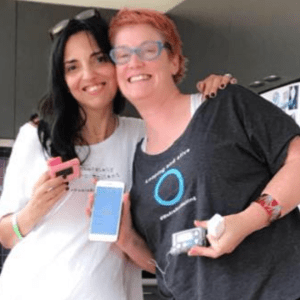
- Even before I began to Loop, the kindness and generosity of people in that community was clear. I took this photo of Dana and Melissa, two women I am now lucky to count amongst my dearest friends, at an event at ADA, just after they had given me a morale boosting pep talk, promising that not only could I build loop for myself, but they would be there to answer any questions I may have. I bet they’re sorry they made that offer!

- Loop’s benefits are far, far beyond just diabetes. Sure, my diabetes is easier to manage, and any clinical measurement will show how much ‘better’ I am doing , but the fact that diabetes intrudes so much less in my life is, for me, the real advantage of using it.
- That, and sleep!
- I get ridiculously excited when other people make the leap to looping! I have watched friends’ loops turn green for the very first time and have wanted to cry with joy because only now will they understand what I’ve been ranting about. And experience the same benefits I keep bleating on about.
- It’s not for everyone. (But then, no one said it was.)
- You get out what you put in. The more effort and time and analysis you put into any aspect of diabetes will yield results. But with Loop, even minimal effort (I call the way I do loop ‘Loop lite’) means far better diabetes management than I could ever achieve without it.
- It took an out of the box solution to do, and excel at, what every piece of commercial diabetes tech promises to do on the box – and almost always falls short.
- It’s amazing how quickly I adapted to walking around all the time with another but of diabetes tech. My trusty pink RL has just been added to the phone/pump/keys/ wallet (and, of course, mask) checklist that runs through my head before I leave the house.
- Travelling with an external pancreas (even one with extra bits) is no big deal.

- I was by no means an early adopter of DIY tech, but I was way ahead pretty much any HCPs (except, of course, those living with diabetes). The first talk I gave about Loop still scars me. But it is pleasing to see that HCPs are becoming much more aware and accepting of the tech, and willing to support PWD who make the choice to use it.
- The lack of understanding about just what this tech does is astonishing. I surprised to still see people claiming that it is dangerous because users are ‘hacking’ devices. Language matters and you bet that this sort of terminology makes us sound like cowboys rather than having been thoughtful and considered before going down the DIY path.
- The lengths detractors (usually HCPs and industry) will go to when trying to discredit DIYAPS shouldn’t, but does, surprise me. The repeated claims that it is not safe and that people using the tech (for themselves or their kids) are being reckless still get my shackles up.
- Perhaps worst of all are those that claim to be on the side of those using tech, but under the guise of playing ‘devil’s advocate’ do more damage than those who outwardly refuse to support the use of the technology.
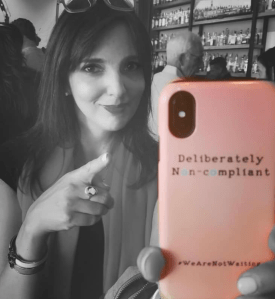
- The irony of being considered deliberately non-compliant when my diabetes is the most compliant it ever has been hurts my pea-sized brain. regularly.
- There is data out there showing the benefits and safety of looping. Hours and hours and hours of it.
- My privilege is on show each and every single time I look at the Loop app on my phone. I am aware every day that the benefits of this sort of technology are not available to most people and that is simply not good enough.
- Despite all the positives, diabetes is still there. And that means that diabetes burnout is still real. But now, I feel guilty when feeling burnt out because honestly, what do I have to complain about?
But perhaps the most startling thing I learnt on this: The most variable – and dangerous – aspect of my diabetes management has always been … me! Loop takes away a lot of what I need to do – and a lot of the mistakes I could, and frequently did, make. Loop for me is safer and so, so much smarter and better at diabetes than I could ever hope to be. I suspect that as better commercial hybrid closed loop systems come onto the market, those who have been wary to try a DIY solution will understand why some people chose to not wait.
And finally, perfect numbers are never going to happen with diabetes. But that’s not the goal, really is it? For me, it’s about diabetes demanding and being given as little physical and emotional time and space in my life. With Loop, sure numbers are better – but not perfect – and I do a lot less to make them that way. It took a system that did more for me, keeps me in range for most of my day, and has reduced the daily impact of diabetes in my life to truly understand that numbers don’t matter.
This blog has been quiet for the last couple of weeks because, honestly, there is nothing that I had to say that was of any value. Instead, I’ve been listening, learning, talking with friends and family, crying with friends, having difficult conversations with people. And feeling uncomfortable. I’m learning to not fight that discomfort, but instead examine it and work out how I can be involved in change.
Today, I’m dipping a toe back in slowly, and sharing this from New Yorker Cartoons (maybe this blog really is going to become nothing more than an appreciation page of New Yorker Cartoons and Effin’ Birds). This cartoon spoke to me. Because: tone policing.

Recent New Yorker Cartoon by Jason Adam Katzenstein. (Click for source)
I write about being tone policed in the healthcare space, and that is what I am writing about today. It’s happened for as long as I’ve spoken up about my experiences of diabetes and my thoughts and ideas about healthcare. I’ve been called aggressive so many times by HCPs who have not liked it when a mere ‘patient’ has suggested that they are being damaging to people with diabetes in the words they are using to talk to and about us.
The bolshie nuns who taught me at secondary school taught me that when women are accused of being aggressive (or strident), it is usually because we are being assertive. I’ve come to learn that it’s not just women. It’s anyone who has, for too long, been expected to just take what is dished up – and to accept it with gratitude.
Being assertive, being aggressive, being challenging and saying enough is enough should not result in being told to tone down. Or to be excluded from discussions unless we agree to be more moderate. Or more respectful. When that respect is truly a two-way street, then let’s talk about that. But for as long as power imbalances are at play, and HCPs insist on speaking on behalf of us, or only agreeing to speak with us if they like what we are going to say; or when HPCs feature more in diabetes campaigns because they insist on centring themselves rather than actual people living with the condition…well, then we don’t have true two-way respect.
Our diabetes community is not immune from tone policing each other. It’s happened to me. I continue to listen to type 2 diabetes voices because I can never expect to understand what they are experiencing in our community unless they tell me. It may be uncomfortable for me to hear – but that discomfort comes from a place of my complicity. It is not my place to tell them to moderate the way they are speaking about their experiences, just because it makes me feel prickly. But it does happen. In the timeline of my involvement in the diabetes world, I know that when I was first diagnosed, I contributed to the stigma many people with type 2 talk about, and then, as I learnt more, I moved to being quiet about it when I saw and heard it – even though I disagreed with it. Now I am trying to be a better ally and calling it out when I see it. And shutting up and listening and accepting what people with type 2 say.
We learn when we listen. We learn when we are open to accepting that we do not have all the answers. We learn when we stop being so centred on our own experience and try to turn the spotlight onto ourselves when instead we should be shining it on others.
We learn when we don’t tell people how they should feel or how they should speak.





 Diabetogenic