
You are currently browsing the category archive for the ‘Community’ category.
I went to my first international diabetes conference back in 2011. It was the IDF World Diabetes Congress in Dubai. In a slightly convoluted way in, I was there as a guest of the City of Melbourne. The next Congress was to be held in my home city, so the tourism arm of our local government attended the conference, talking up all that Melbourne has to offer. I was invited to go and spruik the city I love so much, encourage people to make the (very) long haul trip Down Under… and hand out little clip-on koalas while standing next to giant koalas.

After attending and getting a taste for what was on offer at one of these large-scale conferences, I realised that I wanted to be able to be involved in others moving forward. Undoubtedly, it was great professional development for me – as someone working in advocacy in a diabetes organisation – but it was also a great way to network and meet others in the advocacy space, learn about what they were doing, and work out how we could collaborate. I can’t begin to think of all the terrific projects that started in the corridors, running between sessions! And most importantly, I realised that having PWD at diabetes conferences meant that what was on show was being shared with our peers in a way that made sense.
The struggle, of course, was getting to these conferences. Australia is a long way from anywhere and with that comes expensive travel costs. The organisations I have worked for cover maybe a max of one event per year as part of my professional development, so the rest of the time it was up to me to find a way in. Good thing I know how to hustle! In fact, that’s the way that most other PWD who attend these meetings get there.
My disclosure statements at the end of posts detail the support I’ve received. Sometimes I’m an invited speaker so that makes covering costs easy. In recent years, research projects I’m involved with, or ad boards I’m a member of, often run meetings alongside international conferences, so my travel and some accommodation are covered. I was informed early on by other advocates that there are often satellite events run by device and pharma companies, and I became very good at begging asking for an invitation, and then following that with more begging asking for help to cover accommodation and travel costs. I know that it doesn’t come easy for lots of people to ask for money, especially when most of the time the answer is going to be no, but I’ve developed tough skin in 20 years of advocacy, and can take rejection. It just propels me to the next ask! (For the record, HCPs also do this hustle to help cover their costs. It’s not just advocates!) Another thing that has helped is my growing conviction about how critical it is – and non-negotiable – that people with diabetes are at these meetings. #NothingAboutUsWithoutUs may have started as a whisper, but now it’s a roar that comes with an expectation that we must be there, and we must be supported to get there!
Pretty much every single time I have travelled overseas to one of these meetings, I am out of pocket. Some of the costs are always borne by me. I am fortunate to be able to cover those costs, but I am fully aware that it is one of the many reasons that advocates don’t pursue attending.
I get that there are myriad reasons that getting to these meetings is difficult. It can seem that there is no way in; there are costs to cover; time needs to be taken from work; it means leaving family; getting registration can be difficult for non-healthcare professionals. And for many, they simply have no idea how to actually make the first move to attend. It can seem daunting. I know that it can seem that it’s always the same people at these events, and I think that’s partly because once people have found out the process of getting in, they keep doing it, because they realise it’s not as daunting as they first thought!
And so, that’s why initiatives like #dedoc° voices are so magic. It is an opportunity for all PWD to apply for a scholarship which will offer an access-all-areas pass to professional diabetes meetings. Want more details about this great program from advocacy group #dedoc°? Try here and here. The pilot for this was at ATTD in Madrid, just before the world turned upside down. It was a brilliant showcase of just how an open application process works, breaking down barriers that prevent people from attending.
While the #dedoc° voices at ATTD in Madrid offered travel and accommodation costs, as well as registration to the conference, the other two times the initiative ran (ISPAD and EASD) were virtual events, so only registration was covered.
And that brings us to 2021, and the first global diabetes conference for the year, ATTD, which kicks off next month. Applications for #dedoc° voices is open to PWD from all around the world now, but closes on Friday. It’s been a super short timeframe for this event, but it won’t take you too long to apply. You’ll find all the details right here.
Run don’t walk, and apply now, for your change to not only get to ATTD, but also to meet diabetes advocates from across the globe. It’s your way in. What are you waiting for?

Disclosure
I am an advisor to the #dedoc° voices program. I do not receive any payment for this role.
Today I’m talking menopause, because for fuck’s sake, why don’t we do that more?
Actually, I know why. It’s because it’s considered an exclusively ‘women’s issue’ and has been the butt of jokes from male comedians and talk show hosts, and really, who gives a fuck anyway?
This post is likely to continue being sweary, because as I’ve tried to find information on diabetes and menopause it seems that the road is similar to pretty much any other issue about diabetes and women’s health. Sure, there’s quite a bit out there about pregnancy – and you bet I take some credit for that because back in 2001 when I started working in diabetes organisations the very idea of lived experience-led information about diabetes and pregnancy was not typical at all, but we wrote a resource and it is still (in a very updated format) still available) – but it’s up there with trying to find details about women with diabetes and sexual function and sexual health.
I am literally counting down the days until Dr Jen Gunter’s new book, The Menopause Manifesto, makes its way to our bookshelves, because I know it is going to be an absolute wealth of no-bullshit, evidence-based, straight-talking information. Her previous book, The Vagina Bible, (known in our house as ‘The Vible’) delivered that in spades as it busted myths, is easy to read and matter of fact, and suggested just where Gwyneth Paltrow might like to shove her $300 jade eggs (spoiler: not up her, or anyone else’s vagina). I was so pleased that when she mentioned diabetes a few times in her book, the information was spot on. In fact, I think that her explanation as to why women with diabetes may experience yeast infections more commonly was one of the clearest I’ve ever read.
Now, Jen Gunter has turned her full attention to the issue of menopause. This great piece is an excerpt from the book (due out at the end of the month and available for pre-order now), and the part that stood out for me was the bit where she said that often, menopause gets blamed for everything any time a ‘woman of a certain age’ has symptoms they take to their HCP.
Sounds a little familiar, doesn’t it? I guess I’ll have to add ‘Sometimes it’s not menopause’ to my lexicon, right there alongside ‘Sometimes it’s not diabetes’. How easy, and convenient, it is to simply dismiss someone’s concerns simply because there is something easy (and perhaps obvious) to blame it on.
Of course, with diabetes and menopause, there is the bit I have learnt where some of the symptoms of aspects of menopause look very much like the symptoms of aspects of diabetes. Looking into patenting a game called Hypo or Hot Flush in the coming years. I think it might be popular with PWD of a certain age. The winner gets a cold compress and a jar of jellybeans.
Here’s the thing. I’m not actually menopausal. I don’t even know that I’m necessarily peri-menopausal yet. But in the same way that I wanted to know all there was about diabetes and pregnancy before I was ready to get pregnant, I’m trying to prepare myself as much as possible for the somewhat mythical period of menopause. Forewarned is forearmed or whatever that saying is. The problem with that is that there is so little info out there that arming myself is proving a little difficult. And it appears that I am not alone in my thinking.
In much the same way as speaking about sexual health when I’ve found myself in a room with a few of my female diabetes friends (and wine), it seems that once we hit our mid-40s we start wanting to talk about menopause as well, searching out any titbits of information that may just help us know what we need to get ready for. We’re desperate for tips and tricks and a glimpse into what we have in store. And it seems that very few of us is having these conversations with our healthcare professionals.
Lucky for me, my endo has spoken with me about it a little – after I’ve asked. She tells me that the mean age of the start of menopause is 47 years, which is smack bang my age, so I’m expecting to have some firsthand experience soon. And when it comes to sharing that experience, I am already committed to writing about it in a way that moves from the focus on loss that seems pervasive in most of what I’ve read about it – the loss of fertility, the loss of libido, the loss of vitality. #LanguageMatters in menopause too, and the idea that we are writing off those going through it when it’s possible they still have half their life ahead of them sounds a little grim.
So, my question is, what do people with diabetes need to advance discussions around this? What do we want to know? And when and how to we want that information? Is it a matter of just starting to talk about it more in public forums? Do we routinely start asking our HCPs for information so that slowly (because everything in healthcare takes time) it is on their radar? Do we need more research? (Yes, the answer to that is a resounding yes.) Do we need a snappy hashtag? Is that hashtag #HypoOrHotFlush? (No, I think not.)
If you’d like to join the conversation, please respond to this tweet. Or to this post. Or send me a message privately. And I’ll follow up with another post in a few weeks.
Looking for more?
Great post here by DOC legend, Anne Cooper.
Sarah Gatward has written a terrific series of her experiences of menopause on her blog here.

I want to acknowledge that not only women experience menopause. Thanks to this brilliant website, Queer/LGBTQIA+ Menopause, that I kept referencing today, which provides fantastic advice for how to speak about menopause to capture the experience of people who are not cisgender and/or not heterosexual.
Chances are, Australians with diabetes will know who Stanley Clarke is, especially those who have many years of diabetes under their belt. Pretty much every person with diabetes who checks their glucose levels is benefiting from his legacy.
If you don’t know who he is, or his story, and don’t get Circle, let me give you a little taste of this remarkable man and his contribution to diabetes as we know it today.
I was thrilled to read a beautiful profile of Stanley in this month’s edition of Circle magazine, the quarterly magazine from Diabetes Australia. (And by way of disclosure I am employed for Diabetes Australia, and I write an article for each edition of the mag.)

Stanley and his wife Audrey’s daughter Lisa was diagnosed with diabetes in 1972, aged 5 years. As was the norm at the time, she relied upon the only option for checking glucose levels at the time: using Benedict’s solution, drops of urine and colour charts to provide highly inaccurate and misleading results. That was as good as it got!
Stanley was an electronics engineer, and he knew that there had to be a better way. In fact, he’d seen the better way – machines that were available in hospitals that checked glucose in the blood. But these machines were large, and very expensive and not considered part of routine, daily, at home care for people with diabetes. Stanley set about to change that.
He worked to develop a smaller, portable, battery-operated blood glucose machine and in two weeks had a prototype that he was ready to show his daughter’s paediatric endocrinologist. The endocrinologist, diabetes legend, Martin Silink, was impressed and ordered 30 and then an additional 200 machines to be given to children at the hospital. Apparently, within six months, every child with diabetes at the hospital had a home glucose meter, and monitoring blood glucose levels was part of their routine, changing their diabetes management forever.
Clarke machines were ordered and sent to all corners of the globe as people with diabetes everywhere were keen to be able to access this new technology which improved outcomes and reduced diabetes burden.
The machines were sold for what it cost Stanley to make them. He wasn’t interested in making a profit – only in that the machines were available and accessible to people with diabetes.
I read the beautifully written tribute to Stanley in Circle, getting a bit teary at some of the beautiful stories of people who had benefited from this new technology. And my reading was also tinged with a sense of familiarity. I didn’t have diabetes when his home blood glucose meters became common, but I certainly did benefit from it.
Even more so, I have benefitted from the ingenuity of people directly affected by diabetes. The #WeAreNotWaiting movement is built on the shoulders of people like Stanley and it continues to push boundaries and seek solutions for diabetes problems that we know matter. We know they are problems because we live with the consequences of them every minute of every day. We celebrate when the solutions are presented to us because we know what a difference they will make.
I remember hearing Dana Lewis speak about her work that meant she could actually hear her CGM alarm at a volume that woke her up at night, and understanding why that was something so critical.
I remember hearing about Nightscout for the first time, and how one of the benefits of remote monitoring meant that parents felt more confident allowing their kids to have sleepovers at friends’ houses, and understood just why that made all the difference to kids with diabetes.
I remember hearing someone tell me all about using DIYAPS, and I understood not only why it was a vast improvement on commercial diabetes therapies, but it made me determined to build a system for myself. And how glad I am that I did!
I find it unbelievable, and more than a little tragic, that at the same time that there is this incredible user-led innovation happening, there is also pushback. The opposition takes many forms, but it seems to come back to the same thing, and that is the discomfort of many working in healthcare and their reluctance to trust what people directly affected by diabetes are capable of.
I wrote in this piece a few years ago about the predictable way that many HCPs recoil from new therapies. There are reasons thrown around for that: no money to fund it; no evidence to support it; safety concerns.
But money doesn’t seem to be the driving factor propelling the innovators forward (a nod to Simon Lewinson who has been providing re-batteried CGM transmitters to people in Australia meaning that for them, that therapy is actually affordable). Safety is always the primary concern for those of us using these technologies, and to suggest otherwise is an insult. And the evidence is there, perhaps just not in expensive RCTs, which need to stop being considered as the be all, end all.
Stanley Clarke changed the way that day-to-day diabetes was managed and so have others since then. And all I can think of is that we are so, so fortunate to have innovators like that whose only motivation it seems is to improve a life lived with diabetes. What a truly remarkable goal to have.
There are a lot of words that get thrown around the diabetes space to describe people involved in advocacy and support. These include (patient) leader, influencer, advocate, supporter… the list goes on. Some people prefer certain terms; others don’t. Some people don’t want to be labelled.
I had no idea the word ‘advocate’ was a loaded word in some places. I sprinkle it around like glitter – because I see it as a term that typically describes people doing really great things – and not just in diabetes.
It’s a word I’m comfortable with for myself.
It’s a word that I connected with others when I first started volunteering in diabetes – before I was working in it – because I could see that there were people with diabetes making a real difference to the lives of others with the condition.
It’s a word that I attach to people standing up, showing up and being counted. I asked on my FB page about the word, and someone said they like it because it not only refers to the person, but also the actions they are taking (thanks for that gem, Cathy).
But while it’s a word that I feel relaxed with, it doesn’t seem to be sit all that comfortably with other diabetes folks around the globe. (Which is, of course, fine. We can use whatever words we want to describe ourselves and what we do.)
I’m not sure if it is a cultural thing, or if it is just a preference. I’ve learnt that some languages don’t have a word that literally translates to advocate, but someone from Sweden told me she uses the English word, because it most adequately describes what she does. And in some places, people are very reluctant to use the word to describe themselves. After I asked about it, a number of people contacted me privately to say that they would like to use it for themselves, but they are worried about what others may think. Interestingly, they were all from the same part of the world.
Last month, I was an invited speaker at an event for people with diabetes in South Africa, and I was asked to speak about how the DOC has been a source of support for me in my years with diabetes. The event was titled Diabetes Influencers Summit. Now THAT’S a word I’m NOT comfortable with! I spent the first few minutes of my talk explaining why I’m prickly about the word and how I see what I do as advocacy, not influencing, and that I consider myself an advocate, not an influencer.
In my mind – and of course this is just my own assessment – influencers are building a brand for themselves, while advocates are more focussed on community. There is NOTHING wrong with building a brand – we all do it to a degree. But the advocates that I met and followed when I first started hanging out in the DOC were the ones that were truly all about community. They’re the ones I engage with now.
I don’t know any advocates who have made a squillion from their advocacy work. I don’t do sponsored posts here (or on any other of my socials). If I have been given product and then choose to write about it, I mention that in my wordy disclosure statements at the end of posts (and frequently throughout them as well), but I have never received money for what I have written, even though I am contacted almost daily with offers. I am a freelance writer, so I get paid to write elsewhere, but that’s my side hustle, writing is my job, and I should be paid for that.
No one has to call themselves an advocate – because of course that’s fine! – but I am saddened when those of us who do use the word are criticised, or considered to be ‘above our station’. (Ugh – just writing that makes me feel sick. Aussies baulk at class systems.)
Being an advocate doesn’t mean that I think I speak for others. I have never heard another diabetes advocate share their story with the message that they are representative of everyone. It also doesn’t mean that the issues that are important to me MUST be important to others – or that they’re the most important issues. I like to think that many of those issues that I’ve spent 20 years advocating for – access to healthcare, drugs and technology; PWD being recognised as experts in our care; respect from HCPs; the importance of using language that builds us up, rather than tears us down; working to diminish diabetes stigma; the philosophy of ‘Nothing About Us Without Us’; highlighting the need for more research about women’s health and diabetes – are universally acknowledged as issues that, if addressed and improved, can mean better outcomes for others with diabetes. But, these are my things and #YDA(dvocacy)MV.
Last week, I attended the Shifting Gears Summit which was coordinated and hosted by the Consumers Health Forum of Australia*, and the word ‘patient leader’ was used a lot. I realised that I was bristling with the term leader, not necessarily because I object to it, but more because I know how others would react if we started using it widely. I wonder why I feel that way. I happily and easily acknowledge many diabetes (and other health condition) advocates as leaders in what they do, knowing that they too may cringe with the label.
And yet, others working in the healthcare space are considered leaders – and usually, quite rightly so. We recognise HCPs, policy makers, hospital administrators, researchers and industry representatives as leaders in what they do, however the term seems to not be quite so comfortably applied to those of us with lived experience. But surely our experience and our role should be equal when all stakeholders are engaged. Otherwise, are we just there as window dressing? When an HCP offers their opinion on a diabetes issue, it does not necessarily mirror that of all HCPs, and yet no one questions their right to share that opinion. But despite this, they will be identified as leaders in their field. Why is that not also afforded to diabetes advocates?
It is definitely worth noting that I have rarely, if ever, seen, heard or had pushback from the HCPs I’ve worked with at the term advocate, or even leader. In fact, on a number of occasions I have been horribly embarrassed with the words – the very kind words – that have been used to introduce me. I’m always very touched that they see me in that light, but I am horrified at how other people with diabetes might react to their words. Why do some people with diabetes (myself included) want to distance ourselves from these descriptors?
Is it because in most cases people who are doing the sort of work we do are unpaid volunteers? Or is it because the status of the ‘patient’ is considered below that of others working in the healthcare space? Is it because there is no formal qualification needed to become an advocate?
Whatever it is, I don’t think we do ourselves any favours, or any favours in the endeavour to ensure the lived experience voice is considered as important – if not THE most important – in discussions about diabetes. In fact, that sort of rhetoric does nothing more than keep us in our place – that of a measly patient who can do no more than share their own tales of woe. When we say, or are told, ‘You’re only telling your story’, that devalues the contribution of advocates. It’s already hard enough to be heard, but then to be told that our story doesn’t mean much is offensive and harms us. I would never think to tell another PWD that, and it saddens me that others do.
We don’t have to label ourselves in any way we don’t feel comfortable, and we can describe ourselves and what we do in diabetes how we would like. I’ll keep throwing around the word advocate, and use it to describe myself. And continue to elevate the people with diabetes in the community who I see as being advocates, too.
*DISCLOSURE
I received a scholarship to attend the CHF Shifting Gears Summit after applying through an open submission process. Registration was paid for by CHF. I was not paid to attend.

Last night, I had the honour of speaking at the World Health Organisation Informal Consultation on Diabetes, which is currently taking place as a virtual event. It’s a three night/three day (depending on where you are in the world) event that has brought together people living with diabetes from all corners of the world.
This was a widely advertised event, and anyone could apply. The expression of interest call out was all over Twitter, Facebook and diabetes community groups. Unlike some other initiatives and programs, PWD didn’t need to be nominated by a diabetes organisation or HCP to be part of it. You just needed to fill out the application form (which didn’t take too long), and submit. Clearly a lot of people with diabetes saw it and thought it was something they wanted to be involved in! I’m not sure of the overall numbers, but there is certainly terrific representation from a number of communities.
On my Zoom screen I could see a combination of familiar faces, faces of people I know of but have never met or engaged with, and a whole lot of new faces. Hearing their stories, and reading the discussions that are filling up the chat box are enlightening. And reassuring. Because once again I was struck by how strong, vulnerable, admirable and strong-willed others treading the diabetes path can be. There are striking similarities and glaring differences. But common threads that run through the narratives we heard And mostly? There is support and gratitude to be there and to bear witness to others sharing their stories, ask questions and learn. Not a single snipy comment or passive aggressive remark – not because we all agree or are a homogenous group. But rather because we respect and value and admire the people who have the courage to stand up and be present.

I was invited to speak in a session about diabetes advocacy. The session’s title was ‘Strategic communication in global diabetes advocacy’, and it included Christel Marchand Arpigliano from Beyond Type 1 and Lauren Carters-White, a research fellow from the University of Edinburgh. Christel spoke about how when we tell our diabetes stories, we are translating the language PWD use – language that makes sense to us – into words that reach a broader audience.
Lauren used some terrific examples from around the world to show the impact data and evidence can have in advocacy efforts.
And I rounded out the session by talking about how when we bring the two together, we win the hearts and minds of the people we are trying to influence – decision makers, legislators, policy makers, educators, healthcare professionals and researchers. Because when we have the emotional pull of how diabetes impacts on daily life, combined with the evidence to show what that means, we can’t be ignored! I highlighted how working with healthcare professionals and researchers to further our messages means that our lived experience can’t be dismissed.
I also spoke about how the power of stories is magnified when there are many voices and many different narratives. I have rarely, if ever, heard someone share their diabetes with the pronouncement that they speak for all with diabetes, or that their story is THE story. But they are all experts in their own lived experience and that certainly should be celebrated. And its power should not be underestimated.
I think the thing I have felt most strongly in that Zoom room is the camaraderie and solidarity – again, not because we are all on the same page and all want the same things. But rather, everyone truly supporting each other and bringing others into the conversation has been an overarching quality of the meeting. No one dominates; no one is more important than anyone else; no one claims to be THE advocate. We are all advocates working together, and supporting each other for a bigger cause.
Of course, we want, and expect, to see action come from the three days of meetings and workshops, and I have confidence that will happen. But in the meantime, to have such large group of dynamic people come together whose only agenda is community and to build each other up, rather than tear each other down, reminds me that THIS is what diabetes advocates can do and what the community is mostly about. Those snippy voices who try to minimise people who are truly trying to improve outcomes for people with diabetes aren’t present. Because what a waste of time that would be!
I may have spoken about, and given tips about how to win others’ hearts and minds in my talk, but it’s my own heart and my own mind that have been won over by my peers in this event.
(You can follow along the discussion by using the hashtag: #WHOPLWDs)
Disclosures
None. I am not being paid to attend this event, and have not received payment, honoraria or in kind donations for my presentation, and am attending in my own time. I might need a nap later today though, because the 11pm-3.30am time for Aussies on the east coast is tough going!
Every year on International Women’s Day, I write a post about the incredible women in the diabetes world doing remarkable things for the community. I’m going to link to some of them at the end of today’s post because they highlight some truly brilliant women making a difference in the lives of so many, and their stories should be told, and contributions shared.
But today’s post isn’t about that. Today’s post is more about the way that women in diabetes often get treated. I should point out that a lot of what I’m writing about isn’t unique to diabetes. It’s seen time and time again in healthcare, and in health communities. But my space is the diabetes world, and that’s what I write about, so here goes.
So-called ‘women’s issues’ continue to be under-represented in research. Those issues and concerns are dismissed and ignored, and women are simply told to ‘deal with it’. Sexual function can be as relevant for women as it is for men with diabetes, and yet, do a search using the words ‘sexual dysfunction and diabetes’ and you’ll need to scroll a long way into the 32,000,000 results before women are mentioned.
I have sat on panels and been spoken over, and sat in audiences as I’ve watched women be spoken about and over. Last year, I spoke in a session at an international conference and then was the only PWD in the panel discussion at the end of the presentations and the chair (a male HCP) answered all questions directed at me.
Conference organising committees continue to be majority male, and award lectures seem to be more frequently given by men – and white men at that.
I sat in an online conference last year and was astonished to see that the woman whose contribution to one of the most significant advancements in diabetes tech in recent years was minimised. Thankfully a number of women in the audience corrected the misconception, and then had to deal with having mansplainers tell us all the ways in which we were wrong. (Spoiler: we were not wrong.)
I have heard so many mothers (and sometimes fathers too, but usually mothers) of kids with diabetes tell stories of being dismissed when they took their kid to the GP with symptoms of diabetes. They were told that they were imagining things, and there was no need to investigate further.
Remember the furore we saw when the IDF dared to focus women for WDD a few years ago? So many fragile egos were hurt because the challenges unique to women were centred in this ONE campaign.
I’ve been called a girl in meetings (still, at 47 years old), and seen the same happen to other women – women who are professional, qualified, experienced and absolute leaders in their fields.
And then there are the words used to speak to and about when, because of course, I’m going to talk about language.
I asked about this on my Facebook page the other day and these were some of the words and phrases that women who had called out shitty behaviour from men were called:
Angry. Aggressive. Hysterical. Dramatic. Attention-seeking. Pushy. Loud. Hormonal. Over-sensitive. Too much. Shrill. Strident. Opinionated
We’re told to calm down, moderate our words, and when we dare call out crap, we are gaslit and belittled, and told that we need to chill out.
How often do you see the same language used to describe men when they are calling out crap? It’s more likely they will be identified as brave, assertive, progressive …
In our own diabetes online community, it is fascinating to see how often this happens when women share experiences or lousy experiences, or simply have an opposing view. I have never believed that everyone needs to get along, but look at how comments, subtweets, even direct messages work and you will see the gendered language that is used to scorn and dismiss women. The label of the ‘angry woman’ is alive and well when a woman stands up. For extra credit, the ‘angry old woman’ tag adds some ageism to the sexism.
These words are used to minimise, dismiss and silence our voices. And it works. The number of women I know who have stepped away from support communities because of the way they have been spoken to or about is significant.
I usually like to use this day as a chance to celebrate women, because we deserve to be celebrated. Our contributions to the diabetes world are significant. The diabetes community has been fashioned by amazing women doing amazing things.
But it has also been shaped by women being silenced, reduced and curtailed. And that also needs to be recognised.

Previous International Women’s Day posts:
2020 – Strident women
2019 – Interweb jumble – the IWD edit
2018 – The women
2017 – Hear me roar
2016 – The F word
One evening this week I made pizza scima, a flatbread from Abruzzo.

Baking bread became a pandemic hobby for me. I love it, but the process takes time. Time to knead and time to rise. Time to punch down before the second rise. It’s a slow and calming practice that I have learned to appreciate. Baking bread became abeautiful way to mark the hours of a lockdown afternoon and I delighted in stopping in between work calls to take a peek under the cloth that was covering the dough, as it was snuggled – and getting ever more snuggly – in a bowl by the heater (in winter) or sunny window (in warmer weather). The oven would heat up the kitchen and as we sat down to dinner, a golden, crunchy loaf would emerge, ready to accompany whatever was being served up.
But days are returning to somewhat (new) normal here and there is less time. No lockdown means a different pace during the day, because I now inevitably rush out during lunch hours to run errands or stop off for a quick visit to the fruit and veg market before work gets started. Or I’m slowly venturing back into the office for a day here or there. All this means that those minutes that lent themselves to slow food activities now run into each other again: time is not as leisurely as it was, and suddenly it’s dinner time without time to make a loaf of bread.
But on this day, I wanted bread; fresh, homemade, just out of the oven, bread.
And so, I made pizza scima! It’s a five-minute process where all the ingredients: 00 flour, olive oil, salt, bicarb soda and white wine get tossed into a bowl, mixed together and then flattened on a tray. The dough is scored, and the oven does the rest. No kneading, no proofing, no resting, no rising.
Half an hour later, a stunning crispy on the outside, chewy on the inside flatbread emerged and honestly, it is the best bread hack there is to know. (Plus, the recipe calls for only a little wine in the dough meaning you have something to drink with dinner!) Viva gl’Abruzzesi!
There’s nothing like adding a sneaky little shortcut to your repertoire – whatever that may be. I think that often people with diabetes become super smart at finding these sorts of little techniques that become a snappy solution to a diabetes problem.
Yesterday, I learnt a new diabetes hack thanks to Kelly Kunik, DOC old-timer who writes at Diabetesaliciousness. Here is what she shared via a collaboration with Ascenisa*:

This reminded me of one of the topics for Diabetes Blog Week. For newer folks to the DOC, DBlogWeek was an initiative of Karen Graffeo who used to write at Bitter~Sweet Diabetes (seriously, check out all these people and their blogs). Each year, Karen would coordinate this monster effort, coming up with different writing prompts and then setting up a platform for them to all be collated in one space.
Back in 2014, one of the topics was diabetes hacks and ninety-five diabetes bloggers all wrote posts sharing tips and tricks they have discovered that goes towards making their diabetes a little easier. Here’s what I wrote. I’m so pleased to find that all the other contributions are still all together on this link, and I’ve just spent a delightful hour scrolling through and re-reading some of them, getting a refresher on some super ideas from super people!
Call them hacks, call it inspired improvisation, but MacGyvering the fuck out of diabetes is a talent worth cultivating, because you never know when a diabetes moment will call for it.
DISCLAIMER
I am on the Editorial Board for Ascensia Diabetes. I am paid for the pieces I write that appear on their blog. Kelly is also on the Ed Board. Sharing this for no other reason than it blew my mind!
Here’s some stuff I’ve seen in the diabetes online world that I think is pretty cool. And I also think you might like it too if you’ve missed it.
If nothing else, this serves as a reminder that there are some super talented, smart, funny, productive, and downright awesome folks who are doing some super brilliant things and I am always happy to share that around. (I’m forever grateful when others in the DOC have shared my posts and other work. Building each other up is always a lovely thing to do!)
Vaccine in Australia (finally)
We may be a little behind the curve, but Australia’s COVID-19 vaccine rollout has finally started! Some links that might be useful to folks with diabetes:
- THIS statement from Diabetes Australia (disclaimer: I work there), the Australian Diabetes Society and the Australian Diabetes Educators Association
- THIS piece from Diabetes Mine
- THIS eligibility calculator from the Australian Government which will give you an idea of when you can expect to get your jab.
And THIS message from me (and science):

Diabetes poetry to make you laugh and cry
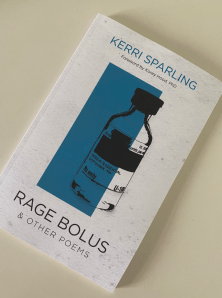
Kerri Sparling has just released her book of diabetes poetry. It’s called Rage Bolus and it is all shades of wonderful. It’s a gorgeous collection of words that will have you nodding, laughing (chortling) and crying, and is a must on the shelves of all folks with diabetes.
You can get your own copy here.
A new diabetes podcast to check out
Chelcie Rice has been around the DOC for a long time now and frequently provides thoughtful commentary on what’s going on in the diabetes world. And so, I’m thrilled to see that he has just launched a new podcast, ‘The Soul of Diabetes’.
The launch episode can be heard here, and then you should subscribe!
Also, Chelcie shared a video of his thoughts on the recent Dexcom Superbowl advertisement and it’s definitely worth a look.
Clare Diabetes Group meeting
More than a little honoured to have been invited to speak at the upcoming meeting of the Clare Diabetes Group in Ireland. You can register here.

Not an easy read…
Phyllisa Deroze remains one of the most incredible voices in the diabetes community. I have been lucky enough to hear her speak (she is such an engaging speaker!), and read everything she writes because I know it will get me thinking. On Valentine’s Day she wrote about her diagnosis story, which is not an easy read, but it is a very important one.
Phyllisa’s blog is called ‘Diagnosed Not Defeated’ and I don’t think that has ever been more accurate or relevant than in this post. Read it here.
CORONADO Study
Just today DiabTribe has published this great piece breaking down the findings from the latest findings of the CORONADO Study which looks at people with diabetes hospitalised with COVID-19 in a number of centres across France.
Read their article here (and there is a link to the full study there).
Totally not relative to anything diabetes wise, but why?
I’m just going to leave this here…
Can you see it??
Check out this advertisement from Bonds Australia for a bit of diabetes technology on show! A little representation can go a long way! (You’ll have to watch carefully…but check out the 36/37 second mark.)
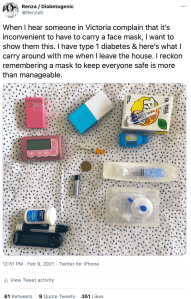
Keep wearing a mask…
…because the science says they work. And share this with anyone without diabetes who is complaining about just how inconvenient it is to have to carry around a bit of fabric with them when they head out to the supermarket!
Spare a Rose final push
And finally, February is dwindling and that means that the 2021 Spare a Rose campaign is coming to its end. So far, an amazing USD$40,000 has come in from the community – that is, donations from people with diabetes and others affected by or associated with diabetes. There will also be corporate donations added to the final tally.
If you’ve not yet donated, or even if you have and would like to donate again, there is still time to make your contribution count towards the final tally. Every single donation makes a difference to the life of a child with diabetes.
Apparently, diabetes blogs are dead. At least, that’s the proclamation that seems to made every month or so. You should very much consider my bias when I say that I don’t agree with that sentiment at all. I mean, I have a shitload of content on this here site – including new and re-visited posts that for me have some relevance to my diabetes life in the moment.
Newer and shinier platforms are here now, so surely that means it’s time to retire WordPress and Blogger. Or is it? Newer and shinier platforms are great, so I’m not here to claim that that they’re a waste of time. Podcasts and vlogs are great tools for sharing diabetes information. YouTube and Reddit are great places to learn. And then there is Tik Tok, but I am too old to be allowed to even log into that platform. (Not true, and I have loved some of what’s been shared there. It can be a brilliant storytelling and info-sharing format!)
I’m here to say that every single platform for sharing a diabetes tale has its place. And blogs are still very relevant: the long-form post is not dead. Not yet anyway.
It is from blogs that I learnt, and continue to learn from others with diabetes. I revisit old posts I’ve read because they remain relevant today, and have many bookmarked and saved because the information shared is so spot on! I use them as research for pieces I’m writing and presentations I’m giving. I send links to old (and new) blog posts to others with diabetes when they ask questions that I know someone has answered so beautifully. And I send posts to HCPs to give them an insight into real life diabetes that they may otherwise have not understood – a glimpse into the things we are hesitant to share with them – and how our interactions with them can leave a lasting impression: both good and bad.
Blogs are also where we hear from those who are adjacent to actually living with diabetes. Reading posts from parents of kids with diabetes and partners of loved ones gives me a perspective that I simply don’t have firsthand.
Advocacy and awareness efforts have been described and fought through blog posts. I’ve used this blog to advocate increased funding for products, research and healthcare. It helps get the message out to people, with simple calls to action so they can get involved too. And the first time I ever heard about Spare a Rose was via this post (the links in the post are not current), and from there so many in the diabetes blogosphere – myself included – jumped on the bandwagon to support this important campaign. We knew that while donating was important, getting the word out was critical too. Since 2013, dozens and dozens of posts have been shared, raising awareness about how this ‘by the community, for the community’ grassroots initiative.
Blogs are where some of those deep and scary issues that we only whisper about or hide away are discussed. It was in blog posts that I first read about just how diabetes impacts on mental health. Experiences about diabetes-related eating disorders were shared without judgement and shame. It was through my writing about infertility and diabetes that I connected with so many other people going through the same thing.
Diabetes blog posts – old and new – are a patchwork quilt of lived experience gold, with the common thread that no one’s diabetes story is more valuable or important, but that everyone has a story to share that is worthwhile.
Some believe that blogs posts are just a way for people to ramble and navel gaze and seek attention. Well to them, I say please enjoy (or don’t) exhibit A – the 1100+ posts here that may be navel gazing to some, but paint a picture of my 22 years of diabetes. It’s not everyone’s experience; it’s not everyone’s cup of tea. And I’m okay with that! If you don’t like the blog format, move on. No one is forcing anyone to read a blog post. Or to get on any other format for that matter. Because, of course, your preferred diabetes info mode may vary (#YPDIMMV).
Someone said to me that reading new blog posts these days is boring because there is nothing new – it’s already been said. And you know what? That could well be true. Diabetes is boring and even though everyone’s diabetes is different, many of us write about similar situations. But actually, that’’s okay. Because for some people, it may be the first time they see or read a post about a particular topic – even if there are five million others! – or perhaps there is a different outlook in there.
I think that people write for different reasons. I write for a creative outlet and writing provides me with a way to explore different ideas about not only my own diabetes, but the diabetes landscape. But mostly, I write to connect with others. I don’t think anything I have to say is particularly erudite or mind blowing. I don’t have any revelations that will help someone else’s diabetes make sense. My own diabetes makes no sense to me, so the chance of it making sense to someone else is very unlikely.
I found most diabetes blogs because their writer shared them on Twitter or on Facebook. Or, others in the community shared them, which is one of the truly wonderful things about the DOC – the way some people elevate others in the community. There used to be an annual event called #DBlogWeek which was a brilliant opportunity to learn about others writing about diabetes. Diabetes Mine’s monthly blogosphere wrap up keeps me updated with some wonderful pieces. (And for German speakers, here you can find a curated collection of blog posts by Bastian from deDOC : I run posts through Google translate to understand them.)
And so, here are some of the brilliant pieces written by PWD I’ve read in recent times. I hope that you enjoy them too.
Corinna Cornejo writes at Type 2 Musings, and is also a contributor to the Ascensia Editorial Board (disclosure: I am too and am paid for my contributions). This great piece about power imbalance in the clinic room.
One of my favourite Aussie bloggers, Frank Sita, wrote this insightful piece about taking a pump break over the festive season:
Diabetes and pregnancy and baby blogs have always been a favourite of mine. I cannot tell you how many I read back when I was at that stage of my life! New mamma Ashley has shared this gorgeous post while (literally) awaiting the arrival of her baby girl.
I loved Dave Sowerby’s 2020 look back in this post.
Kerri Sparling may have retired her blog a couple of years ago, but I was so grateful for this new post on September last year while Melbourne was in the depths of lockdown. I’m sharing it here for others who are locked down at the moment. (And Kerri’s fourteen years of posts are still available at SixUntilMe.com)
Tim Street’s blogs are not for the faint hearted! They are often super technical, but non-techies (my hand is raised) will definitely get a heap out of them. His latest blog post from just a couple of days ago has me thinking about what I need to do to jiggle my basal rates a bit.
I haven’t watched the video that accompanies this blog post from Jen Grieves, but the words expressing how she is feeling in the midst of lockdown resonated so beautifully.
Holly Allen’s post from the end of 2020 about imposter syndrome hit a little too close to for comfort! It’s a recurring theme from some diabetes advocates (and my hand is raised for this one too!)
This from Molly at Hugging the Cactus had me aching as I read it. I miss my diabetes mates so hard and mourn all the opportunities we’ve missed to catch up.
And finally, I’ve not been able to stop thinking about this piece from Cherise Shockley that she wrote for diaTribe recently, and the idea of a carb glass ceiling. I realise that I have a very similar way of thinking when it comes to counting carbs and I love how she has explored the psychology behind why people may think this way.





 Diabetogenic