
You are currently browsing the category archive for the ‘Community’ category.
‘Art is not a mirror held up to society but a hammer with which to shape it’. (A quote usually attributed to German playwright and poet, Bertolt Brecht, but actually first said by Trotsky.)
Using different artforms as advocacy platforms is not new. In my time working in diabetes (18 years), I’ve been lucky to be involved in a number of different initiatives with foundations very much in creativity and the arts. Perhaps my previous life as a musician – and being married to one for over 21 years – means that artistic approaches are always on my mind when looking at how to tell the story of diabetes.
When planning for the IDF Congress last year, a gap came up in our session on advocacy and diabetes awareness initiatives. Our Living with Diabetes stream committee wanted to look outside the box and move away from traditional awareness campaigns. ‘How about we get Appleton in?’ And that’s how we had a street artist from New York appear on the program in Busan last year in a session with the same title as this blog post!
At that time, I’d not met Appleton in person before, but I had come face-to-face with his artwork. (He’s on Insta here.) There is something quite magical when wandering the streets of NY to look up and see a bottle of insulin stuck to the wall of an old building in SoHo, or in Chelsea. I’d snapped photos and shared them to Facebook, wanting to learn more about the artist: Who is he? What is his story? What is the response to his artwork? After meeting him in Busan, and then again at a mutual friend’s place for dinner in NY, Appleton hosted me and my family in his New York studio one rainy afternoon in January and I learnt a lot about his work.
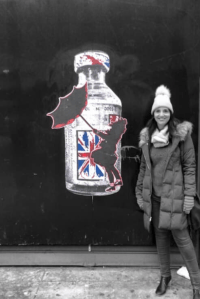
Appleton on W 23rd street.
But even before meeting Appleton, I’d seen the power of how different artforms have the potential to talk diabetes in different ways.
Australian actor and playwright, Alan Hopgood’s play ‘A Pill, a Pump and a Needle’ from a few years ago, told the story of three women living with diabetes. Chatting after a chance encounter in a café over coffee and cake, this was a quintessential Melbourne story! But it was also a great way to start a conversation with those who were lucky enough to see the play. I sat in the audience a number of times, then took to the stage to be part of the panel discussion. Mine was one of the stories that had been brought to life on stage and it was incredible to hear the number of people who watched the play and said that they could see themselves in the women’s stories. ‘Their stories are my stories are their stories,’ I would think to myself.
One year, my team at Diabetes Vic held an art competition for World Diabetes Day, asking children living with diabetes to submit an artwork depicting diabetes. The only requirement for submission was that the artwork needed to somehow incorporate the Blue Circle. I remember the way these pictures offered a most meaningful and impactful representation of life with diabetes – in ways that we’d not seen before. I still have one of those artworks hanging in my office. Its 14-year-old artist managed to perfectly capture the pain of diabetes balanced perfectly with the hope she felt. I’ve been looking at it a lot in the last week, breathing in deeply and letting her feelings of hope wash over me.
A number of years ago, The Diabetes Hands Foundation asked for submissions for an anthology of poems by people with diabetes. Selected poems were compiled in the book ‘No-Sugar Added Poetry’ – a copy of which sits on my bookshelf and is frequently pulled down and perused. In her introduction, Lee Ann Thill says ‘From words, carefully chosen, purposely arranged, emerges a shared experience and mutual understanding’. In other words, peer support through poetry.

And while mentioning Lee Ann… Diabetes Art Day was created by this dynamic advocate and art therapist to encourage people affected by diabetes to use whichever artform they wanted to express diabetes. I remember sitting around the kitchen table with my family, trying to show how we feel about diabetes with coloured paper, glue sticks and rubber letter stamps and ink.

Illustrator, Janina over at Miss Diabetes is absolutely brilliant in her depictions of diabetes. And, of course, comics by Claire Murray are still my favourite diabetes superhero tales. And my friend Weronika at Blue Sugar Cube, creates stunning pieces – her Spare a Rose designs were so gorgeous.
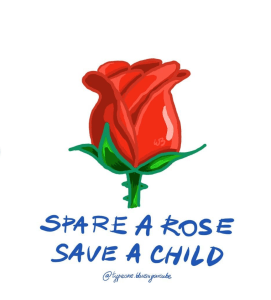
Click to be taken to Weronika’s Insta page.
Australian advocate Jenna’s artwork is nothing short of stunning. I bought one of her beautiful images earlier this year and need to get it framed so I can stare at it endlessly when I should be writing!

Click to be taken to Jenna’s Insta page.
Melissa Lee has combined her beautiful voice, brilliant sense of humour and story-telling powers to sing diabetes in ways that get us thinking, smiling, laughing…and crying.
As for me? Well, I create through baking and have managed to create some pretty damn fun and delicious cookies to mark important days and initiatives in the diabetes calendar.

And of course, storytelling is an artform, and I know that for me personally, that is how I have connected and felt supported by people affected by diabetes from every corner of the globe. Words have a power that can convey the very helplessness, hurt, hope and heartbreak that is real in diabetes, and as I frequently say, the stories people tell have always helped me make sense of my own diabetes.
Art has the power to reach people in ways that other, more traditional methods don’t. Health campaigns are important, but sometimes they seem just one step removed from the reality of real life. Art has the power to bridge that step and bring people together, and provide a fundamental understanding of the story being told, and the people behind those stories.
So back to the quote that opened this post: art can – and does – shape how diabetes is seen within and outside our community; it can influence how people outside the diabetes community understand diabetes, and within the community, offer different ways to think of things. It can start conversations that encourage us to consider others’ ideas; it pushes boundaries and forces us outside our comfort zones; it gives voice to people in the community who don’t necessarily want to use words to express how they feel. Advocacy using art can also cut through the white noise of health campaigns – often they all look and sound so similar that they are easy to ignore. But for me, I think the most powerful thing they give is humanity and hope to a condition that is often so misunderstood.
In a couple of weeks, the diabetes conference juggernaut will descend on Madrid for ATTD.
This one is all about new treatments and technologies in the world of diabetes and, in its thirteenth year, looks to once again be a busy and enlightening meeting.
There is so much on the program that focuses on user-led technologies and initiatives. I think it’s fair to say that PWD have long recognised that technology in diabetes is more than just the devices we wear on our bodies. We have long used technology for support and to connect to others who help us manage the day-to-day life of diabetes, and to learn and share. DIYAPS may be about the systems, but grasping the role of online platforms and support is essential in understanding the #WeAreNotWaiting movement as a whole.
 It’s great that a number of PWD already know that they will be part of ATTD this year, attending satellite events run by different device and drug companies. Some are on the program and some will be there through other opportunities and work.
The more the merrier, I say! Different voices with different experiences sharing and learning is always a great thing. And having the opportunity to meet people in real life after only seeing them online adds another dimension to our peer support networks.
For European diabetes friends yet to secure a place at ATTD, there is another possible avenue in, but you need to be quick. Launching at ATTD is the new #dedoc° voices program. Although #dedoc°has its foundations in Germany it is truly an international community, involving people from all over the world. #docday° events (always a highlight at these conferences) involve diabetes advocates from across Europe and the US, and even the odd Australian, too. It’s great to see this new initiative is helping more advocates get a seat at the diabetes conference table as active participants.
APPLY NOW
If you want to be considered for the #dedoc° voices program, you need apply, which is super simple – just go here, where you will find out all about the program and how to throw your name in the ring! Applications close on Friday, so chop chop!
Successful applicants will have their travel and accommodation costs reimbursed, and will receive full registration to the conference.
Good luck. And hope you see you there.
Disclosure
I am an advisor to the #dedoc° voices program. I do not receive any payment for this role.
I am an invited speaker at ATTD 2020. Lilly Diabetes is covering my travel and part of my accommodation so I can participate in the DOCLab advisory group meeting held during ATTD.
My packing-for-travel routine is pretty relaxed. We left for New York at 8am on Boxing Day and I started packing when we got home from our five millionth family gathering at about 10pm on Xmas night.
Admittedly, my laid back attitude to diabetes-supplies packing could be because I usually spend my time travelling surrounded by other PWD who are far better organised than I could ever hope to be. I know that if I run out of insulin, pack the wrong glucose strips for the meter I’m carrying or forget a charging cable, someone will be able to help me out. (I know this because these things have all happened. More than once. Way more than once.)
Anyway, I thought that I had done a pretty damn good job of throwing everything I needed together for New York, with back up supplies and contingencies. As we headed to the airport bright and early, still full of my mother’s Xmas zippoli, I felt comfortable that diabetes was going to be a relatively easy companion on this trip.
Turned out that I got it mostly right. Just not completely!
Issue one happened when I got a transmitter low battery warning the first week we were in NY. ‘Bugger,’ I thought, remembering back to the last time I recharged my Fenix G5 transmitter*. It was while I was sitting at breakfast one morning in Boston at ISPAD. I recalled that I definitely hadn’t had the transmitter plugged in long enough for a full charge. At the time, I thought I’d charge it fully the next time I did a sensor change…and then promptly forgot.
Of course, I had forgotten to pack the very specific charger required to recharge my Fenix. And I couldn’t for the life of me remember what it was called. ‘It has two little magnetic-y things on the side. And it’s kind of shaped like this,’ I said sketching a rough picture to the people behind the counter in about fifteen electrical stores around the city.
After getting nothing more than blank stares, I went directly to the source – Facebook – and sent a message to a couple of tech friends back home (including the bloke responsible for building the device). I had a response minutes later, placed an Amazon Prime order straight away and two days later my Fenix was charging on the kitchen counter in our apartment.
I had a re-batteried travel transmitter with me that I used in the interim (with layer upon layer upon layer of waterproof tape over the top of it because I had also forgotten to pack the resin needed to finish off that little device…), but as soon as the Fenix was fully charged, I reset it and shoved it back into the still in situ sensor. Crisis mostly averted.
And then there was the run in with Dex sensors. I’d sited a new sensor a day or two before we left and took two spares with me. I usually get three weeks out of a sensor, so thought that if lucky I wouldn’t even need to change one at all during our time away. But if I did, I would be right and have another there … and a spare just in case.
Well, best laid plans and all… the original sensor failed after less than a week. The second sensor did too, and the third sensor was actually faulty – the needle scarily poking out the end as I released it all from the packaging.
I believe the word I used at that point was ‘Fuck’. Loudly. And then turned straight back to Facebook with this:

A few NY friends reached out and shared the post, and within an hour, I had organised to meet up with someone who could help me out. Thanks a million to Stacey for connecting us, and thanks two million to Caroline who rode into Manhattan with her ridiculously beautiful baby to drop off sensors to me and have a coffee. (Off topic, but Caroline and I thought this was our first-time meeting, but we realised later that we had met for dinner one night in New York back in 2011!)
I am forever grateful for the support I receive from my peers online – and being my back up plan because I am so crap at diabetes. I do promise to try to do better when getting myself organised for travel, but I know that I am still likely to get things wrong. Diabetes is a hard task master and demands a lot. Slip ups happen.
But there is always help at hand. I was off Twitter at the time, feeling particularly vulnerable after the brutal time on there at the end of the year. Thankfully I had Facebook to turn to and a huge group of diabetes friends there to help me out. But what if that wasn’t the case? This is why our online spaces must be safe at all times, and why that power imbalance between HCPs and PWD, and how potentially harmful that can be, needs to be recognised. We need to feel safe reaching out wherever our peers are for whatever support we need. I did that and that’s why this blogpost is called ‘Peer support on the road’ rather than ‘Loopless in New York’!

Back to the important things.
* I use a rechargeable G5 transmitter with my Dexcom, built by a very clever bloke in Australia.
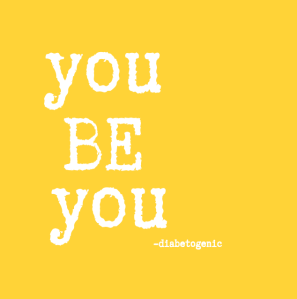
I wrote a post a while ago called ‘You Do You’, (and revisited and expanded on it here). It’s where I wrote about how everyone should have the freedom to do diabetes whichever way they see fit. I’m pro-choice in all aspects of life*, especially when it comes to PWD choosing their own management tools.
And I think that people with diabetes should have the choice to BE the people we need to be. And the people we are. I touched on this on my post on Monday when I spoke about how I felt intimidated online because my opinions and thoughts, and the way I addressed issues, were not everyone’s cup of tea. I felt that I was being called out for being myself. And that wasn’t okay.
No two people with diabetes are the same; no two people with diabetes will have precisely the same management ideas and preferences, and no two people with diabetes will react and respond to situations in exactly the same way.
THAT IS OKAY.
Diabetes is messy, frustrating, weird, annoying, amusing (rarely, but sometimes), scary, boring and a whole lot of other adjectives. And how we react and respond to it is our own business and no one else’s. You BE you, because you have the right to do that.
You have the right to be as loud or as quiet as you want.
You have the right to be as bitter and angry as you need to be in the moment.
You have the right to celebrate and be joyful about your diabetes.
You have the right to call out things that upset you just as much as you have the right to commend the things that make you satisfied.
You have the right to step away from groups, situations, people who upset you.
You have the right to disagree with others. Having an opposing view does not mean that you are attacking another person.
You have the right to have an opinion on what you see in the world of diabetes – even if it is happening on the other side of the world. I was incredulous when it was suggested that I shouldn’t question something happening in a healthcare system of which we are not a part. (I may not use the healthcare system in the US or the UK or Italy or anywhere other than Australia, but I am allowed to comment on what I see being done in those places.)
You have the right to be passionate and not be told that is a character flaw.
You have the right to be emotional because diabetes is real in a way that only makes sense to those of us who are living with it or have a loved one living with it. I don’t know how to take the emotion out of this, so you bet I will be emotional at times. I don’t get to clock off at the end of the work day and not think about it.
You have the right to use the words and language that works for you when talking about your own diabetes and if anyone tells you that #LanguageMatters is actually preventing PWD from doing that, tell them to fuck right off. It’s not. It never was. It never will be, and anyone who says it is has missed the point of the whole movement.
You have the right to use the word ‘fuck’ or whatever else you want to use. Profanity helps some people and we shouldn’t be told to wash out our mouths if others don’t like us using those words. (Sorry, dad.)
You have the right to be the sort of advocate you want to be. Or to not be an advocate.
You have the right to share your experiences – even the ones that don’t shine a particularly positive light on health systems or HCPs. No one – NO ONE – should silence us when we turn to our peers to seek support, or talk about what is going on in our diabetes lives.
You have the freedom to talk about your own diabetes, especially in the diabetes online community which we created for this very reason – to be able to share our experiences, learn from each other, support our peers and build each other up.
So, this? This is me being me. This is me standing up and not going quietly. This is me saying that I will be the person with diabetes I need to be, because it’s the only way I can be true to myself and true to my community.
*Except vaccinations. I don’t believe in choice there.
When the diabetes community comes together, great things happen. And one of the greatest things I’ve ever seen has been Spare A Rose, Save a Child.
Most people now know the origin story of this annual campaign. The short version is that back in 2013, a group of US diabetes advocates came together to do something for the global diabetes community. Using Valentine’s Day to signpost the campaign, the idea was simple: ‘spare’ one rose on Valentine’s Day and donate the saving to Spare A Rose, Save a Child. That one rose saving was enough to provide a month’s insulin to a child in an under-resourced country. All funds raised would go directly to the charity Life for a Child.
It’s really important to understand where Spare A Rose started, and the community aspect of the campaign. This didn’t happen for any other reason than a group of people directly affected by diabetes wanting to help others who needed it: for the community; by the community. No one took credit, no one was the face of Spare a Rose, no one raved about their involvement or contribution. It was about the whole community.
That’s where you step in. Because Spare a Rose is a community campaigned, owned by everyone who has anything to do with diabetes, anyone and everyone can get involved. And there are lots of ways you can do that.
Obviously, you can donate. (Please donate!) That’s the first and most important call to action here! And it’s easy – as easy as 1 – 2 – 3!

But also, we need to get this outside the echo chamber of the DOC.
Change your twitter and Facebook profile pics to highlight Spare A Rose and tell people why you’ve done it – and encourage them to as well. (Twibbon has a super easy way to do that here.)
The Spare A Rose site has lots of different images and messages you can share. Of course, use your social media reach, but also print some out and leave them around your office or local café.
Share, share, share! Amplifying anything and everything you see about Spare a Rose helps get the message out. I make no apologies that my SoMe feeds will be seen as if through rose coloured glasses for the next six or so weeks. Roses are lovely. Spare roses save lives.
Last year was the campaign’s most successful ever, raising a total of USD$56,340 / AUD$79,447 (or 12 months of insulin and education for 939 young people with diabetes). We have a target this year that I’m afraid to say out loud, because it is so audacious, but if there is one thing our diabetes community does, it is come together for those who need it.
So, please, #SpareARose (or two, or a dozen) and save a child. Seems like an awfully good way to start the year.

So, this is 2020? How are you going? I returned from overseas to a country literally burning and choked in smoke; a government that is refusing to accept that climate change is real; and a news organisation making up the narrative to suit themselves (arsonists are everywhere, apparently).
Bet you didn’t expect me to get so political before midday on a Monday!
Today is my first day back at work after three weeks of holidays in New York with my family. We spent the time basically relocating our Melbourne life to New York: finding a favourite café that served decent coffee, drinking great quantities of said coffee, wandering the streets, playing with (other people’s) dogs, warming up in bookstores and catching up with friends. It was the perfect way to farewell 2019 and welcome 2020.
As I have mentioned a million times before, I don’t do resolutions. You may not know this, but I live with diabetes, and that in itself gives me enough reasons to not reach goals and targets. I don’t need to add another list of things of which to fall short.
For the last three years, I’ve chosen a word that I’ve hoped would oversee and direct my way of thinking and acting for the year. As it turns out, that was a load of rubbish. Because each time, as I searched for the word that I wanted to guide me, the one I settled on went against the very grain of who I am.
The words were pause, focus and reset – and behind them was the idea that I would respond in ways that were really out of character; words that would silence or calm my natural responses.
But that’s not me. I walk towards things (usually at pace), I’m impulsive, I’m reactive. Sure, these may not necessarily be the best traits for a mindful, calm existence, and they can be exhausting, but welcome to my life: Hi, I’m Renza.
This year, I’m ditching the word idea, and using a phrase that better suits me, and that phrase is Stand Up.
We are living in a world that does not need people to be silent. Manners are all very important, but it is very possible to have manners and be polite, but still challenge things that we see as not right. We don’t need to be told how to think, how to feel, how to respond to something that upsets us. We don’t need to tone police ourselves – or others. We don’t need to accept what we are given.
And in the diabetes space, we don’t need people to be meek and mild. We need people who are disrupters and who speak their minds and who call out the bullshit. We definitely need to make sure that the voice of PWD is the loudest in the room, and that anyone who tries, even for a second on any platform, to tell us to pipe down is called out for it.
We do not need people to go quietly, and I am somewhat horrified that I did just that at the end of last year when I was feeling intimidated and vulnerable online. If I’m honest, I don’t recognise the person who switched her Twitter to private and wrote this thread to explain it to the people who were asking why.
Being angry is okay because there is a lot to get angry about in diabetes care. Not standing up means that we accept the situation for how it is. We can do it in a way that is nice and friendly, but sometimes it takes more than that. And that is okay.
I have never cared about being popular in the DOC or being considered one of the cool kids. I have never worried about follower numbers. I searched for this community because I needed support and I needed to feel part of something amongst people who were just life me. Other people with diabetes.
When I re-read my twitter thread from before Xmas, my heart broke NOT at what had happened; but at how I felt that the only way for me to stop feeling so unsafe was to turn away from the community – MY community. It was this tweet that set my tears running again:
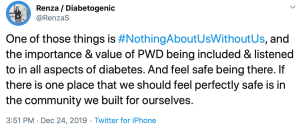
I thought that if I had wandered into the DOC for the first time instead of the welcoming place it was, I saw PWD being challenged, I would have run away. THAT was what broke my heart – the very idea that I would not have discovered people like Kerri, Georgie, Cherise, Melissa, Mike, Dana, Grumps, David, Manny, Jeff, Mel, Frank, Alanna, Kelly, Ashleigh, Scott, Annie, Alecia, Bastian, Daniela and so, so many others. I don’t know how I would have navigated the murky waters of life with diabetes without those people: MY people for whom diabetes actually invades our DNA and the DNA of our loved ones. People there for the right reasons – not for the accolades, not for increasing follower counts. They are community-minded, open to opposing ideas and thoughts, and don’t consider themselves superheroes.
If I had have gone quietly, I would never have learnt from them; never had the support of people who understand; never had people like that at my back when I do stand up.
So, I don’t go quietly ever again. I stand up as I always have. I accept that doing that will send me into periods of advocacy burnout; I’ll deal with that when it happens, surrounded my friends and peers who get it.
So yes, this is 2020. I’m back. It’s really nice to see you here.

A few weeks ago, I saw this tweet:

(click to be taken to original tweet)
Clinical psychologist, Dr Rose Stewart, was giving a presentation where she highlighted that the power imbalance we experience between HCPs and PWD carries through to online spaces. (Thanks to Mark Guyers for live tweeting Rose’s talk.)
The diabetes online community (DOC) was a space created by people with diabetes for people with diabetes. It’s been around for many years. Australian-based site, Reality Check, had an active online forum back in the 1990s. Diabetes blogs led by DOC pioneers such as Kerri Sparling and Scott Johnson (and others) were around in the early 2000s. I wrote a weekly pregnancy blog for a diabetes peer site when I was expecting our kid in 2004 (which I republished a number of years later on Diabetogenic here).
Twitter chats (starting with #DSMA) followed. The chatter of the community goes where the community congregates; different groups use different forums to meet and chat. Kerri wrote this brilliant report on the history of the DOC. It’s a great read to learn from those who were instrumental in bringing together the community online.
I agree with Rose: Our community is better because it includes stakeholders from all corners of the diabetes community including HCPs and researchers. Jane Speight and the ACBRD team; Deb Greenwood, Hope Warsaw and other shining stars from the AADE; and clinicians and researchers from projects such as HypoRESOLVE contribute to DOC discussions and make them far richer and more rounded. That’s just the way it is when we hear the perspectives of all people living with, affected by, working in, and researching diabetes.
Some of the great outputs of these collaborative efforts include research projects, conference presentations and, of course, the development and production of this wonderful #LanguageMatters video.
Our community is not better when PWDs’ personal experiences or feelings are challenged, and unfortunately, that seems to be the default of some non-PWD and HCPs in the community. I’m not for a moment suggesting that PWD don’t challenge each other’s ideas and opinions. (Yes, I’ve read Bernstein. I’m just not that into him, but you do you.) But it is undeniable that there is a difference when it is PWD challenging each other as compared with when HCPs challenge us. There is power at play in the latter. And that is important to remember.
The spectrum of this is from the downright abusive (such as a doctor’s now-deleted response to this twitter thread I shared), to defensive: what I call the ‘Yes, but…’ response. In some ways, it is this particular reaction that is more difficult to deal with.
I find it really problematic when someone speaks about a horrible situation only to be challenged by HCPs. Responses such as ‘Yes, but we’re trying,’ or ‘Yes, but things are better than they used to be,’ or ‘Yes, but we’re not all like that,’ are defensive and don’t acknowledge or respect the experience being shared by the PWD.
When HPCs make these sorts of comments in response to someone sharing their less than ideal experience, it shifts the discussion from the PWD (and that experience) to broader interactions between HCPs and PWD. At its very worst, the discussion moves to how HPCs are challenged by ‘misbehaving PWD’. Live tweeting from the sex and diabetes session at the IDF Congress got messy when it skidded into commentary about how difficult ‘patients’ were and that if only they did what they were told, HCPs would have a much easier job. It was clear from the online commentary that HCPs’ agendas are more important than PWD, and sure, sex and sexual health is one of the things that isn’t addressed, but what of it? HCPs are already too busy doing other things (things, incidentally, that they have deemed important).
So, what happened? Well, in this instance at IDF2019, I shut down and stopped engaging, as did other PWDs. We shouldn’t need to argue and fight to defend what we think is important in diabetes care. And we shouldn’t be made to feel that our thoughts and feelings about diabetes need justifying. Or that we are the problem in a health system at breaking point.
The power imbalance – and yes, that is very, very real, even for bolshy advocates like me – comes to the fore when this sort of thing happens. It can feel as though we are being reprimanded or told off or tone policed for the way we are telling our own story or for daring to suggest that we have experienced troubles and distress in healthcare.
I have recently taken a couple of breaks from SoMe because of this sort of stuff. I don’t feel that I should ever need to rationalise my own experiences or how I feel as a person with diabetes. And yet, there have been numerous times where HCPs have made me feel that I do, or that my thoughts are not as valid or significant as theirs. I’m getting far better dealing with these situations. I’ve started using the unfollow and mute buttons in a way that is constructive and results in a far gentler Twitter feed!
So, back to Rose Stewart’s presentation. She is certainly right. That power imbalance does travel from the clinic environment to the online space and it can be damaging to PWD. HCPs are part of the fabric of the DOC and their contributions are important. But not ever at the expense of the comfort and safety of PWD.
P.S. No, I am not saying PWD get free rein to say and do whatever we want just because the DOC is by and for us. Basic manners don’t get thrown out the window just because it is our space. Being rude, nasty, aggressive, dismissive or impolite to anyone online is not okay. Being angry when we write about crappy situations is not being rude, and it is a perfectly understandable and acceptable response to what we have all faced at one time of another living with diabetes. (And that’s got nothing to do with #LanguageMatters – that’s just basic courtesy that we should all know and understand!)
The IDF Congress proved once again that the power of peer support should never, ever be underestimated. From spending time with the considerable number of diabetes advocates floating around the conference centre, to hearing about their work, to seeing them present their sessions, to speaking with the enthusiastic IDF Young Leaders, there were constant reminders of just how much we value and need contact with those who know diabetes.
Our peers are not only those whose beta cell production is on strike. It’s also the people who cheer and champion us. While I will always shout about how I need to be around others with diabetes – those who intrinsically ‘get it’ – my tribe also includes people affected by diabetes in other ways. Having friends and colleagues Taryn Black and Jane Speight at the Congress was wonderful because they were able to showcase the amazing work they do that champions people with diabetes. (They may not want to be friends anymore after they see this picture…)

When we asked for topic submissions for IDF2019, peer support rang out strongly as a topic for which there was much interest. This has been consistent with all the IDF Congresses I’ve attended. But we wanted to make sure we were considering it lots of different ways and at different stages of a person with diabetes’ life. What were the benefits for younger people with diabetes through their own eyes? We don’t get to hear from them all that frequently. And what about for older people who have lived with diabetes for many years, or who are newly diagnosed with diabetes? And what about people whose diabetes doesn’t neatly fit into the pigeonholes we so like to use in the diabetes landscape?
And so, the program managed to highlights these different aspects of peer support, showing that there are just as many ways we find a way to connect as there are people with diabetes!
So, here are some snapshots from different folks at the Congress to give you an understanding of just how much peer support was all around!
Lydia Parkhurst spoke about how important it was to have met other young people with diabetes as she moved from adolescent to young adulthood. She said: ‘It’s great having the support from my friends and family, but unless you have diabetes yourself, you never truly know.’

Georgie Peters looked at not only the positive aspects of peer support, but also how it may enable damaging behaviours – in this case, referencing recovery from a diabetes-related eating disorder.
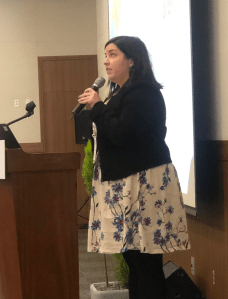
Jane Speight spoke about how peer support may help reduce diabetes distress, and in my N=1 example, I can say that is certainly true.

Bastian Hauck acknowledged the input of peers in the #WeAreNotWaiting movement, explaining how the online support is the best 24 hour customer service hotline imaginable!
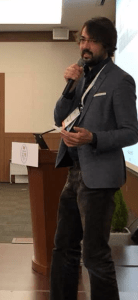
Cheryl Steele echoed Bastian’s comments about the DIYAPS online world in her talk that touched on support as she discussed the ages and stages of type 1 diabetes.

At the Ascensia Social Media Summit, in his opening remarks Joe from Ascensia made the point: ‘Peer support is a really important aspect of living with diabetes.’Ascensia’s commitment to this in their regular summits, as well as their online campaigns is brilliant. At this summit, there were 171 years of diabetes lived experience in the room, and a lot of camaraderie. There were a lot of buzz at this event, with people who had only known each other online suddenly becoming IRL friends.

Friend and fabulous diabetes advocate Phylissa Deroze spoke that not all peer support is right for all people. Finding space when living with type 2 diabetes can be challenging.

And peer support researcher and staunch supporter, Ed Fisher amended his well known ‘Four Key Functions of Peer Support’ by adding a fifth: ‘Being there and shared experience’. How wonderful is it that recognition of that ‘we get it’ aspect of peer support is being acknowledged by researchers?!

Off the program, it was impossible to ignore the power of that shared experience. We heard stories that resonated because they mirror our own. And then we heard those that were not anything like ours, but we wanted to learn more and understand just how they impacted our brothers and sisters with diabetes. When I heard Sana from Pakistan explaining the discrimination and stigma associated with diabetes means that women don’t tell their husbands they are living with diabetes, hiding away the day to day tasks required (if doing them at all), her advocacy efforts became even more remarkable. And when one of the young leaders echoed this story, and went on to share how she wore her pump prominently at an extended family gathering, despite warnings from her parents that it wasn’t a good idea, we couldn’t help but applaud. Feminism and diabetes activism is really tough going, and these were just two women being the change and storming the way through for others.
And, then…then there was Manny.

Manny Hernandez gave the award lecture for the Living with Diabetes Stream. When we were choosing who to acknowledge for this award, Manny stood out for his work in the diabetes community.
Manny was asked to choose his own topic for his talk, and came up with ‘The Importance of Community for People with Diabetes’. He couldn’t have chosen a better subject matter! Manny started by sharing his own story, and how it wasn’t until he met others with diabetes that he felt connected to a community. ‘I learned more in one hour with peers than in the previous four years,’ he commented. And then: ‘There are amazing endocrinologists out there but they can’t know what it’s like to live with diabetes, what the nuances of high and low blood sugar feels like, because they don’t live it.
Manny being Manny didn’t just leave it there. He wanted others to have what he had found, and so he created Tu Diabetes, followed by Es Tu Diabetes and The Diabetes Hands Foundation (DHF). For so many people with diabetes, this was a first foray into peer support. I know that it was a hugely valuable source of information and support for me. And it introduced me to people who have become very, very dear friends. (Massive shout out to Melissa Lee who was interim CEO of DHF after Manny left. I can’t even begin to explain how much I appreciate her warmth, wisdom and wit. And friendship.)
Manny’s award lecture was a love letter to and for all of us who have found that support which makes our lives with diabetes easier, better and more hopeful; for finding out tribes, loving them hard.

It’s no wonder that #PeerSupport was one of the most used hashtags at the Congress. It was recognised by speakers in different sessions as a cornerstone of diabetes management, just as important as other aspects involved in our care.
And so, I guess that this blog isn’t anytime soon going to stop or slow down extolling the benefits and value of peer support. Thanks to all those wonderful peers – friends – at #IDF2019 for making the experience such a rich and supportive one.
DISCLOSURE
I was the Chair of the Living with Diabetes Stream at the IDF Congress in Busan. My flights to Busan were covered by Ascensia Global (in order for me to get to Busan in time to co-facilitate their Social Media Summit). Flights home and accommodation were covered by the IDF.
Busan is a very different city today than it was last week. There won’t be warmly dressed people hurrying into BEXCO with IDF2019 lanyards around their necks, eager to learn about diabetes. The word ‘diabetes’ won’t be uttered in almost every language of the globe. There won’t be Melbourne diabetes people loudly lamenting that Starbucks seems to be the coffee of choice in the city.
And you won’t see groups of people from all around the world standing together talking about what it’s like to live with diabetes. Most of us have gone home to our respective corners of the world, back to our families, back to our jobs, back to our real lives. But we will always have Busan and the incredible week of the IDF Congress.
By the time I arrived in Busan on Monday, the IDF was already a different beast. There was a new President and Board in place and some of the concerns that we’d had about the handover had melted away to nothing. This paved the way for what we really there for: a week of learning, networking, hearing different perspectives and truly uniting for diabetes.
We did that.
Was it a perfect conference? Of course not; they never are. There were hiccoughs and AV fun. There were controversies that played out online very differently to the way they actually happened in real life. There were sessions – critically important and brilliant sessions from all streams– with disappointing turnouts.
But these are all minor concerns that are the reality of every conference I have ever attended. There will be a time for post-mortems and evaluations and planning for improvements to future conferences. That time, however, is not now. Now is the time to celebrate.
IDF 2019 was a brilliant showcase of diabetes from around the globe. As expected, I only attended sessions from the Living with Diabetes stream and every single story was beautifully presented, and enhanced by the professional expertise of the HCPs who shared the stage. Amongst the incredible tales were moments of discomfort. It’s challenging to hear of the struggles many of my sisters and brothers with diabetes face in their day to day lives. I was forced to confront my privilege in a way that demands more than just acknowledging it there.
Also, difficult to accept is realising that sometimes the chasm between what people living with diabetes want and need and what HCPs and researchers think we want is gulf-like. For every HCP who ‘gets us’ and understands the value of lived experience in the healthcare space dialogue, there are many others who just don’t accept it, and, despairingly, don’t want to listen.
But more on that another day. Because for now, I’m focused on the people who did such a stellar job. So here are just some of them!
Two hours after touching down in Busan, and we kicked off the sixth Ascensia Social Media Summit with these gems.
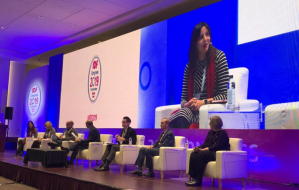
Bright and early on day 1 of IDF2019, and the auditorium was packed to hear about diabetes and tech.
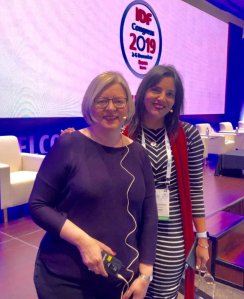
Always, ALWAYS, pleased to share the stage with Jane. Here we are just before the panel session.

Georgie excited to TALK ABOUT HYPOS! (We couldn’t understand why there was an explanation mark at the end of that sentence.)
Manny Hernandez gave the LWD Stream Award Lecture and there is no one more qualified to talk about the importance of diabetes community. How honoured I was to introduce him!

Celebrating Manny! (Photo courtesy of Boudewijn Bertsch)
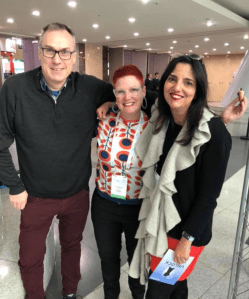
From Melbourne to Busan. Neighbours at IDF2019. Jo was speaking about living with a rare type of diabetes and Andy was there for support (and photos from rooftops).

This woman! Sana, deputy lead of the LWD Stream and a bright, fierce force.
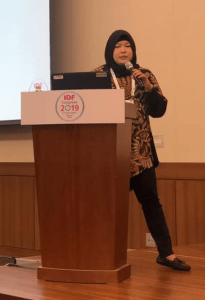
Anita eloquently explaining the challenges of living with diabetes-related complications in Indonesia.
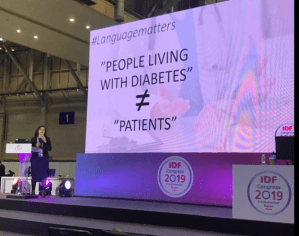
Apoorva highlighting #LanguageMatters in her talk.

Some of the most dynamic young people I have ever met at the Young Leaders in Diabetes Training Summit.

Cherise can always be relied upon to ask thoughtful questions.

I’ve lost count of the cities we’ve done our #DiabetesOnTour this year, but these blokes have made all my travel so much better! Thanks Bastian and Grumps.

My favourite people at IDF2019? The two baristas running this uber-hipster coffee van.

We were all surprised to see the room packed full at 8.30am on the last day of the Congress. Sex sells. Or people just want to talk about it…
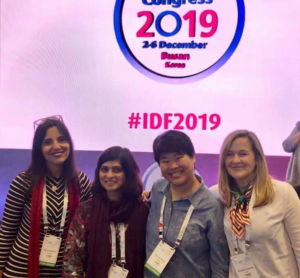
One of the best pieces of advice I was ever give was this: surround yourself with smart women. This is the LWD stream from IDF2019. I truly was surrounded by the smartest of women! Thank you Sana, Pei Yan and Elizabeth.
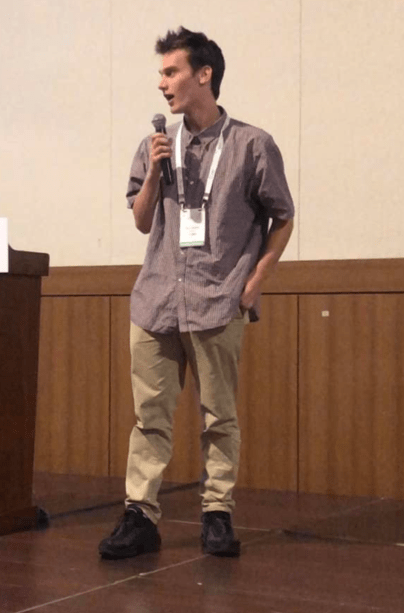
The final session in the LWD and my highlight of the whole congress was my neighbour, Sol, talking about living with MODY 3. We could not have scripted a closing remark better than his: ‘Being at this conference has made me feel part of something and with people that understand.’ Welcome to the world of diabetes peer support, Sol. You are so, so very welcome here.
DISCLOSURE
I was the Chair of the Living with Diabetes Stream at the IDF Congress in Busan. My flights to Busan were covered by Ascensia Global (in order for me to get to Busan in time to co-facilitate their Social Media Summit). Flights home and accommodation were covered by the IDF.





 Diabetogenic