
You are currently browsing the category archive for the ‘Advocacy’ category.
This Friday is World Diabetes Day which is a chance for diabetes to get some much-needed mainstream attention and awareness.
There is an absolute plethora of activity this week in the lead up to the big day and, as usual, there is much online activity. Social media has the potential to reach a lot of people quickly, easily and cheaply. I’ve been involved in several campaigns in recent years and am always keen to see what clever ideas people come up with to raise awareness of diabetes around the world.
 This year, one of my favourites is about access to insulin. The Access Alliance has created a Tumblr to draw attention to the fact that many people do not have easy access to insulin and other management tools, diabetes education and support. It breaks my heart that in 2014, almost 100 years since the discovery of insulin, there are still many, many people who cannot afford the insulin needed to manage their diabetes. This campaign is asking people to remember diabetes is a global issue and for some, accessing the things many of us take for granted – insulin, test strips, BGL meters – is a huge struggle.
I think about this often – in fact, every single time that I walk out of the pharmacy with my 5 x 10ml vials of insulin to load into my insulin pump. For less than $40, I have the next three month’s supply of insulin in my hands to take home, and keep safe and cool in the fridge. I feel guilty when I bitch and moan about the fact that I had to make a phone call to order in the insulin because the pharmacy doesn’t keep it in stock. Really? That’s the burden I deal with when I need insulin? I have to make a phone call and wait 24 hours before popping in to get my prescription filled. 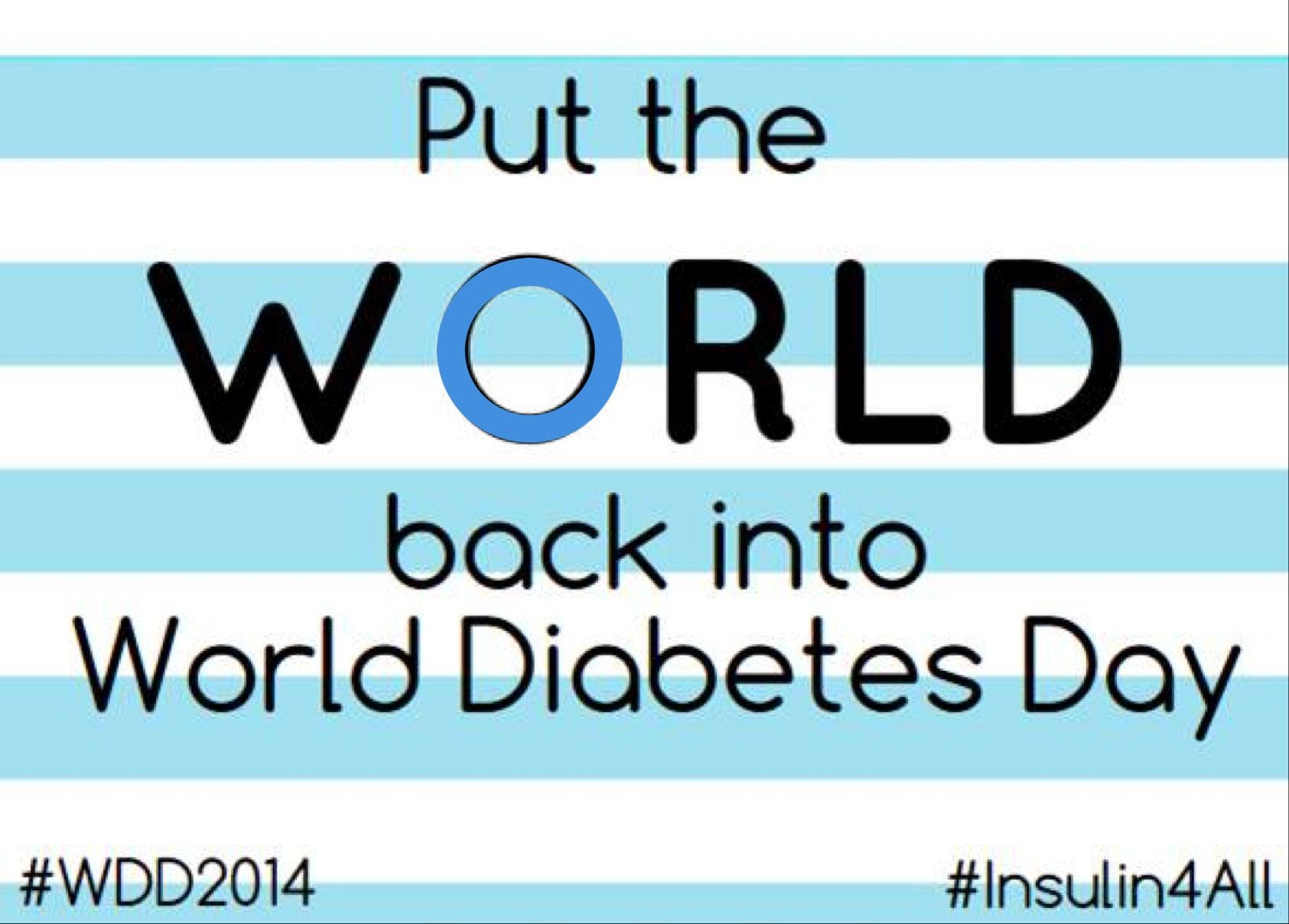
No one in this day and age should find accessing insulin – or any life-saving drug – a struggle.
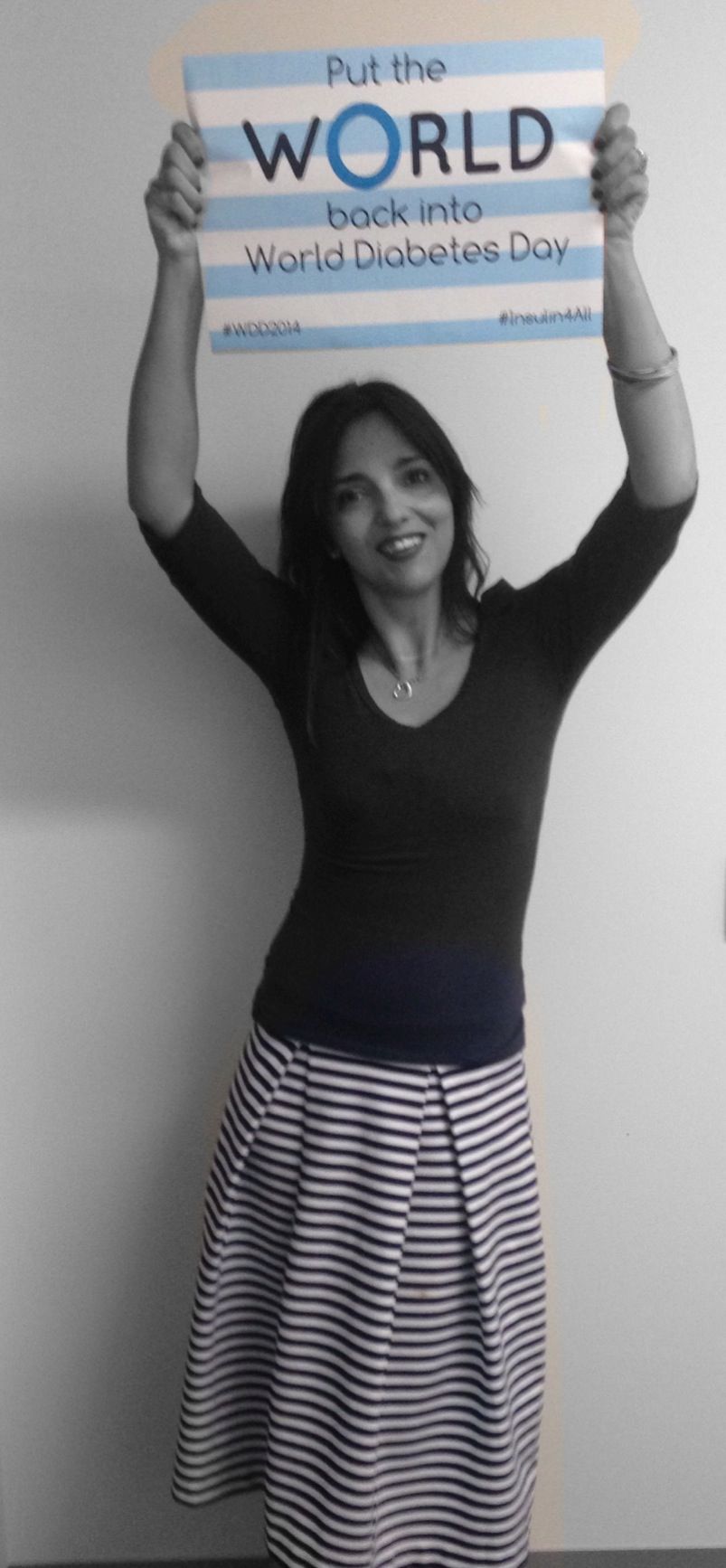
So, get creative and make a poster. Take a photo and upload it to the #Insulin4All Tumblr. And then share it with everyone you know – not just people with diabetes. Preaching to the converted is really important because it strengthens the numbers of people advocating, but reaching out to the general community, making people aware of the issues, getting others angry at the inequity of access to healthcare is important if we are going to make change.
The diabetes online community is a truly global network. We see that every week in tweetchats and anytime we log onto social media. We know that connections are made that are life changing and, (as in the case of my dear friend’s ‘Pumpless in Vienna’ story – to be told here soon), life saving.
For the last three years, I have been privileged to attend the European Bloggers Summit, which is a satellite event run alongside the EASD Scientific Meeting. This event is a chance to really look at ways that consumer advocates can work together and support each other to make significant change to living with diabetes.
It was sobering to be reminded several times yesterday that those of us sitting behind our laptops, participating in the dialogue of the community are already very lucky. We looked at programs out there that are providing insulin to people who would not otherwise have access. Again – life saving.
The beauty of these events is that they are not simply a day or two of navel gazing and patting ourselves on the back for the work we do. We challenge ourselves and each other to do more, do better and reach more people. We plan for what we want to achieve and then hold ourselves accountable for what we have said we want to deliver.
The issues that we have in Australia and that I frequently write about right here are so often universal. Hearing friends from Europe say that the language of diabetes is an issue, or access to technology or medicines is prohibitive for some, reminds me that it is worth continuing to be in this space. When I hear about the frustrations experienced by others when it comes to consumer representation, I know that every time I say ‘nothing about me without me’ it is echoed around the world.
There are some amazing things going on, and over the coming weeks I’m going to write about some of the things I learnt about because I not only want to share this work, I also want to encourage others to get involved.

DISCLAIMER
The 2015 European Bloggers Summit was sponsored by Johnson & Johnson. I was invited by Johnson & Johnson to attend the event and did not receive any funds from Johnson & Johnson to cover travel or accommodation costs to Vienna or to attend the EASD conference. These costs were covered by my employer, Diabetes Australia – Vic.
Yesterday, I sat in meetings, listened to talks and attended press briefings. The EASD conference is shaping up to be a very busy one and I am doing my best to get to as many things as I can whilst still making sure I get to catch up with as many online community people as possible.
And thank goodness for those people; for the people I’ve seen in person at the conference and for being able to sit in for a very short while on this week’s OzDOC tweetchat.
These conferences are critically important for a number of reasons. They bring together the biggest and brightest people who are most admirably working to improve the lives of people living with diabetes. These are minds far smarted than mine – they are amazingly brilliant professionals. I admire them on many, many levels.
But too often I get the feeling that people with diabetes are lost in the messaging and completely forgotten. The language being used has us as passive ‘subjects’ (thank you to Professor Richard Holt (@RichardGHolt) for your tweet, by the way!), not involved in what’s going on. It’s kind of like these conferences are a magical land where diabetes is spoken about as a thing on its own, forgetting that it is always attached to actual real people living actual real lives in the actual real world.
One meeting I sat in today listed ‘key stakeholders’ involved in a new ‘patient’ education program. The glaring omission in this esteemed list was people with diabetes.
In another session, the speaker was complaining about the inability to get accurate data from device companies about ‘patient opinion’ of their products. There seemed to be a complete lack of thought that perhaps people using those devices might be able to provide the information being sought.
In both sessions, I thought about standing up and saying something, but you know what? Sometimes I get sick of the sound of my own voice saying the same things over and over.
This is not where I say that people with diabetes need a seat at the table of organising committees and advisory boards. Because I say that all the time.
No.
This is where I remember that it is up to us to cut through the noise, ignore the fanfare and the superfluous crap (of which there is much) and try to find the things that are actually going to make life with diabetes a little – just a little – bit easier. It’s there – it’s being spoken about and there are glossy brochures promoting it.
It’s just that the wrong people are being spoken to.
I got up close and personal with the new Abbott FreeStyle Libre system today, getting to see it in action on a representative from Abbott. Despite begging, pleading and promising to not tell anyone (except, of course, the pretend people who read this blog), I was unable to get any details about an Australian release date. Social media musings, however, suggest that we are looking at early next year. Watch this space!
Last week, there was a very interesting infographic doing the rounds on social media sites about where people donate as compared with the diseases that kill us.
It looks like this:
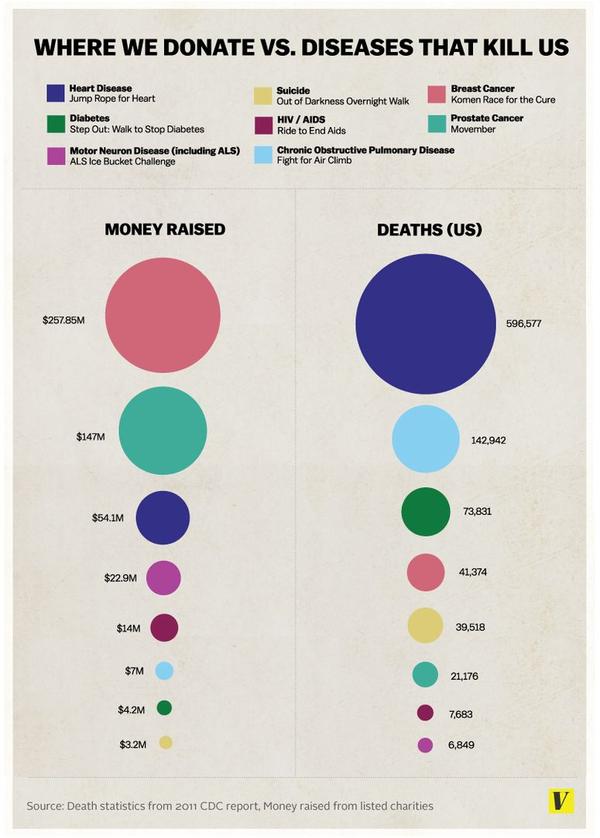
As you can see, diabetes is credited with causing the third most deaths, yet it accounts for relatively little money raised.
Firstly, this isn’t a game of ‘my health condition is worse than yours’. As someone most eloquently wrote on a Facebook status the other day: ‘all diseases suck’. Equally, every single condition is worthy of people’s donations. There simply isn’t enough money to go around to do the research, run the programs and assist people dealing with whatever health condition they have.
But I think unpacking why some conditions attract more donations than others is worthwhile.
Despite being responsible for many, many deaths and affecting millions of people both here in Australia and around the world, diabetes just doesn’t seem to be the ‘disease of choice’ when people reach into their wallets to make a donation.
Why is this? Why is diabetes not at the top of people’s minds when they want to do some good?
I’m just going to say this.
Diabetes isn’t sexy. It’s really not. It’s chronic; there’s no cure; and while there is the cute factor when we’re talking about little kids with type 1 diabetes, they grow up. And then it’s just boring adults with boring diabetes.
But there’s more than that.
The media does a great job of stigmatising this condition. Plus, there’s the ‘you did this to yourself’ misconception that means it’s okay to blame people for developing (type 2) diabetes in the first place and ‘…why the hell should I donate to you. Get off the couch and go for a walk’. Helpful. Really, really helpful.
Diabetes needs a makeover. Plain and simple. We need people in the general community to change the way that they currently think about diabetes so when it’s time for a little generosity, they consider making a donation to diabetes research or consumer organisations.
The neat little packages we seem to have about diabetes are misleading. Tying up type 1 with kids means that adults with type 1 have no voice at all. Blaming all people with type 2 diabetes for ‘doing this to themselves’ completely forgets the facts that genes play a significant role in developing type 2 diabetes. Calling diabetes ‘a touch of sugar’ ignores the seriousness of everyday life with diabetes. In fact, the very idea that this is all about eating sugar results in such misunderstanding about diabetes that people think the solution is as simple as not eating cake. The misconception that insulin is a cure ignores the multitude of factors that are involved with the daily management of this condition. And by thinking it is just about sticking needles into our bodies negates the distress and anxiety life with diabetes can bring.
I don’t know what the answer is. But I do know that what we’re doing at the moment isn’t working. Our messaging is wrong. How do we get it right?
Diabetes MILES Youth
Are you the parent of a child (aged 10 – 19 years) with diabetes? Then we need YOU! And your child with diabetes too.
You may remember that a few years ago now, the Diabetes MILES survey was conducted. Diabetes MILES looked at the psychological health of people living with diabetes, and the survey results continue to be collated and presented.
Now, a new study – Diabetes MILES Youth – is being conducted asking young people about what it’s like to live with diabetes, and how diabetes affects their wellbeing.
And because we all know that diabetes is a ‘family sport’, parents of kids with diabetes are also being asked to complete the survey.
The survey is only open until the end of September, so please take the time (about thirty minutes) to respond. (I know that you would get involved anyway, but as an added incentive, there’s an iPad to be won!)
Diabetes MILES and now Diabetes MILES Youth will actually show just how diabetes affects our lives on a day-to-day basis. The more we can talk about the psychosocial side of diabetes – the more evidence there is to show that diabetes affects our wellbeing – the more that diabetes stops being just a numbers game. (Although, in this case the number of people completing the survey is important, so get clicking!)
DISCLAIMER
Diabetes MILES Youth is part of the NDSS-funded Young People with Diabetes National Development Project of which I am the Project Manager. I’m writing about it here because I think it’s really important for as many people as possible to take part in this survey and have their voice heard.
The survey is being conducted by the Australian Centre for Behavioural Research in Diabetes.
I’m in Canberra today, at Parliament House, for a lunch event focussing on diabetes technology. As usual, I’m surrounded by a group of smart people such as Professor Jane Speight and Professor Alicia Jenkins. Me, in my role as a non-professor, is to provide the consumer perspective about why freedom and choice when it comes to  diabetes technology is something that should be supported by government.
Today, Diabetes Australia is launching an important new report about insulin pump therapy in Australia. It provides recommendations and the case for action, and gives a snapshot of the current situation – not only of pump therapy, but other technologies such as continuous glucose monitors. Pleasingly, and with a nod to the future, emerging technologies such as the ‘bionic pancreas’ are also mentioned.
The report highlights the inequality of current pathways to access pump therapy. If you are unable to afford private health insurance, or not under 18 years of age and meet the eligibility criteria of the Government funded Insulin Pump Program, you are left to self-fund the purchase of a pump. At around $9000 that’s a lot of loose change to have lying around under the sofa cushions.
Sensor technology is not funded at all, leaving people with diabetes to find the dollars themselves. For me – and many others – being able to use a sensor-augmented pump gives incredible peace of mind, and reduces diabetes distress. It is not fair that this technology is out of reach for most people.
I’m really honoured to have been asked to tell my story to the group of MPs who will be at the lunch. In my time doing this job, it has become more and more apparent that having people hear and understand how living with diabetes impacts us on a day to day basis helps to bring the message home about life with a chronic health condition.
Living with diabetes cannot be tied up neatly in a box – it is complex, changes all the time and is different for everyone. Being able to manage our condition should be a matter of choice – not finances. Hopefully today the group of politicians hearing us will understand that a little bit more and start working towards developing an approach to pump therapy (and related technologies) for all Australians with diabetes.
DISCLAIMER
I work for Diabetes Australia – Vic and have been involved in the development of the resource being launched today.
I’ve been at the Australian Diabetes Society-Australian Diabetes Educators Association Annual Scientific Meeting this week. It’s been a big few days with some really interesting sessions, terrific opportunities to catch up with people, trying to avoid (unsuccessfully) Conference Hypo Syndrome, and a gorgeous poodle called Gaby.
Today is the final day of the conference and it’s the first ever Consumer Outreach day. I’m really pleased to be spending the day with some inspiring diabetes consumer advocates who are all about promoting the ‘patient voice’.
I’ll be writing about it next week. But in the meantime, it’s Friday and for some reason I’ve had this Tom Lehrer song going through my head. Enjoy!
Knowing what to expect when it comes to diabetes is tricky. Our day-to-day lives with diabetes can be so varied and unpredictable. The same can be said when it comes to understanding the role our healthcare team play on an ongoing basis in our diabetes management. Given that there is not a one-size-fits-all approach to any area of diabetes, it can be very difficult to quantify just what we can and should expect.
So it’s great when something comes out that can actually provide some guidance as to what to anticipate when navigating the diabetes system.
 The Australian National Adult Insulin Pump Working Group is made up of leading diabetes clinicians from all across Australia. In response to much confusion from people living with diabetes about the initial and ongoing support HCPs provide, the group decided to try to explain what appropriate levels of care may look like, and the role played by different HCPs.
Working with Diabetes Australia, a new information resource has been developed and launched which clearly outlines the care and contact people with diabetes ought to be getting from their HCP team.
Guidelines are always a tricky little monkey. I think that problems can arise when individuals refuse to waver at all from the guidelines, using them as strict ‘rules’ from which to develop management plans. Following guidelines and getting perfect results is just never going to happen – firstly because everyone is different. And secondly because diabetes is different all the time. What works today may not work tomorrow.
Flexibility is necessary, as is the understanding that individualising guidelines is required – and will hopefully then result in people getting what they need.
This resource provides a general idea of what people with diabetes can expect their healthcare team to do for and with them. It provides PWD the understanding that at different points along their pump ‘journey’ they can ask for and expect certain levels of assistance. The resource offers key ‘talking points’ which can assist with the development of a plan that works.
Currently, this information resource can be downloaded here. Have a read and take a copy of it to your next HCP appointment. It may provide an opportunity for new areas of discussions, and open pathways for new treatment choices.
DISCLAIMER
This resource was developed by The Australian National Adult Insulin Pump Working Group in collaboration with Diabetes Australia. I oversaw the contribution from Diabetes Australia. No funding arrangement is in place between the two organisations. Diabetes Australia has funded the printing of limited copies of this resource.
An article appeared in The Conversation last week about how the food industry gets us to buy and eat ‘nutritionally worthless’ foods and drinks. The thing I found most interesting about the piece was when the authors were talking about number of choices we have today when we take a walk down a supermarket aisle as compared with in the 1960s.
Today, supermarkets stock about 30,000 items. That’s a lot of breakfast cereal or yogurt from which to choose. By comparison, anyone doing a weekly shop in the 1960s had between 600 and 800 items on the shelves.
One of the things we complain about in Australia is that we have limited choice when it comes to diabetes devices and management options. This is true when we compare what is available here with the options of those in the USA and Europe. I have seen and held and played with all sorts of devices that I would love to be able to use, but they are not available on our fair shores – and not likely to be launched here either. ‘Market is too small’ is the reason given all the time.
I like choice and as a consumer advocate, I am the first to say that all the options for management of our diabetes should be before us before we make a decision as to what we will use. It frustrates me that I cannot choose to use a T-Slim pump or the OmniPod system.
I’m not sure exactly how many BGL meters are available in Australia, but I know it’s certainly not as many as at any Walmart I’ve popped into when travelling in the US. I’m always astounded at the ‘diabetes aisle’ in these stores.
Do we want that sort of choice when it comes to diabetes management tools? I’m not sure. I guess I like the idea of being able to choose the device best-suited to me. Do I think that we need a choice of two hundred thousand (slight exaggeration) BGL meters that do pretty much the same thing? Maybe not. I actually do think that we have a good selection here from which to choose and don’t really feel we’re missing out.
But it’s a different matter with pumps. There are not really that many pumps on the market to begin with. We have a choice of only four or five here. We don’t have the option of a tubeless pump, which is definitely a point of difference, nor a touch screen pump.
Some may say we shouldn’t complain – that a pump is an insulin delivery device and as long as it does that, everything else is just fancy-pants add-ons that mean nothing.
But surely that same argument can be applied to everything. We don’t need choice in the cars we drive – a car gets us from point A to B – leather seats and auto windscreen wipers are superfluous. Or a phone is a device to call people and chat – cameras, calculators and other applications are unnecessary and bonus extras.
We wouldn’t accept that. We SHOULDN’T accept that.
For me, when it is time to consider a new pump or CGM or BGL meter, the things that are the most important are safety and accuracy. But I do want to be able to line up all the options, look at their particular features and then make an informed decision. It’s my right to choose.
This post was first published in 2011. Sometimes, I think that there is progress being made when it comes to consulting people with diabetes in the development of programs, services and resources for us. Other times, I’m not so sure. Some groups and organisations are incredibly tuned in to people with diabetes (I’m talking about you, Australian Centre for Behavioural Research in Diabetes) and I cannot express enough my gratitude for the high regard of the ideas and thoughts of people with diabetes this group regularly demonstrates.
I stand by what I have written in this post: We are the experts in living with diabetes and we want to work with those who are working to help us. Please, please let us.
——————————
There seem to be a lot of people who like to be the voice of people living with diabetes. Strangely enough, a lot of the time, these voices don’t actually have diabetes themselves.
As far as I am concerned, every single person out there who wants to advocate and support people living with diabetes is terrific. Continue doing it! But make sure that if you are speaking for us you have first heard what we want to say.
Any time an advisory panel or steering committee looking at anything to do with people living with diabetes is formed, the first people invited should be consumers. How can other people possibly advise or steer for us unless they hear what we need and what we want?
If government wants to improve our lot, ask us how to do it.
Experts in diabetes are not the people who care for us. I know how blunt and arrogant that sounds, but it’s true. I have a brilliant team of health professionals around me – I have written of this on several occasions; hell, I even named my daughter after one of them. But these outstanding, talented, exceptionally smart people do not speak for people with diabetes.
I struggle regularly with the way that we are not considered in the planning and development of new resources, activities, devices and technology designed to ‘help us’. When we pipe up and say ‘hey we’re here’, we often get told that we’ll be consulted ‘later’ – often too late when changes cannot, or will not, be made. That sort of consultation is, I’m afraid, tokenistic. It doesn’t count for anything and those doing this shouldn’t get to then say that they did work with the community.
The experts when it comes to making lives better for people with diabetes are us. The people with diabetes. We’re the ones who live with it, love with it, scream at it and want to turn our backs on it in disgust. We’re the ones who agonise, cry, laugh and celebrate it.
Don’t speak for us. Don’t assume. It should always be nothing about me without me. Always. Listen to us. Ask us. Take cues from what we say. Believe me, we’ll tell you what we need.
Am I being too harsh with this? I wonder what others with diabetes have to say and if they feel the same way.





 Diabetogenic