Our Tupperware at home is housed in a large lower drawer in the kitchen, loaded with different sized containers and their corresponding lids. Everything fits in there, but it has to be organised a certain way otherwise it’s just a jumbled mess. There are times that we forget the way it needs to be sorted, or we just don’t have the time or energy to carefully stack the different pieces as they need to be, so random bits of plastic get shoved in there however they fit, and we find ourselves pushing the drawer shut, hoping it closes and doesn’t jam.

And, inevitably then when we get more Tupperware, we need to unpack everything and start again, trying to rearrange the already overflowing drawer, finding room for more, when really, we should think about getting rid of some of it to make way for the new. Or – even better – stop bringing any more plastic into the house.

We do that with life too. We have our family, friends, work, social life and latest Netflix binge and everything else to try to fit into the limited space we have. And those of us living with a chronic health condition have to find room for that too.

The room for my family never gets shifted around because that is what keeps me grounded and anchored and is the most important thing in my life. I probably should find more room for them, and I do when I can. But it never feels enough.

I find room (most willingly) for my peers and the friendships I have formed thanks to diabetes, happy to arrange and move other things around to accommodate these friends because while they may take up room, they actually help reduce the burden and anxiety of diabetes – meaning that burden takes up less room.

The thing is, it’s never about finding room for ‘just diabetes’, because there is always so much around that. I have to find room for all the other bits and pieces I need to do to try to keep demanding diabetes contained. And on top of that, I need to find room for the emotional toll which varies from day to day. Sometimes that needs a lot of room, other times, it can squeeze in between other things.

I need to find room for all the things I have to remember – the doctors’ appointments and those relationships. I find room for the admin of diabetes – prescriptions, supplies, drivers checks, complications screenings…That space is like a filing cabinet – full, overflowing and, most of the time, in need of a good clean out.

I find room for numbers and results, and watch them trickle down into the cracks, filling up the spaces because those numbers connect me to my diabetes management and remind me that I need to do more, or that I am doing enough. I need to find more room for telling myself that I am doing enough – for the positive self-talk rather than the negative.

I’m trying to get better at getting rid of stuff, because not everything I’ve found space for needs to be in there. There are things that were once important that are no longer needed. There are bits and pieces that were once whole, but are now like a Tupperware ‘Heat and Eat’ container without the lid. I should get rid of those, along with the things that I’ve been finding room for that are negative and only serve to cause me hurt, pain or anger. Often they are hard to let go of – I feel a sense of failure because perhaps they didn’t turn out the way I wanted.

Back in January, (that seems like an age ago, right?), I decided my word for the year was going to be ‘reset’. The idea was that I was going to try to be more meaningful in my decision making and in what I spend my time and attention on. I’ve done that to a degree this year. A couple of instances of making conscious decisions to stop and evaluate something and make a decision that has felt deliberate and measured.

It’s felt good. I’ve tried to let go of the guilt that seemed to take up so much room. I am never going to be perfect; my diabetes is never going to be perfect. I am never going to be the perfect anything. And that’s okay. Because no one else is, either. I’m doing my best to stop worrying if others think I have disappointed them, because really, most of the time I am doing the most and the best I can and maybe it’s not really my problem if I don’t measure up. I’ve tried to let go of the ‘what ifs’ that sometimes became the soundtrack to my day. Posing questions about how things could have been different or how things may turn out was pointless. I consciously have thrown out those thoughts.

Metaphorically, I stood back and cleared out some unnecessary Tupperware that was broken and doing nothing for me. It felt good. I should have done it a long time ago. I realised there were things in there that I was holding onto for no good reason. It allowed me to rearrange a few things, refocus and reset.

Trying to fit diabetes into what is already an overcrowded space is really tough. I often wonder how much extra room I would have if so much of my efforts were not taken up by diabetes. What do people without diabetes do with all that room? I think that perhaps my low tolerance of rubbish behaviour is partly due to not having room to deal with it. Or it could just be that I have no patience. That’s probably more like it.

So, something happened to me in Berlin that hasn’t happened for a while. I had a hypo. Actually, I had more than one.

In one of those perfect storm situations where everything that could go wrong did, I found myself with a red Loop, no CGM, and in a pissed off mood. My Dex sensor had died in the morning and I couldn’t restart it because my transmitter died at the same time. I knew this was coming – I’d had the warnings. And I had a plan. I would use the reset app and get the transmitter going again.

Except it didn’t reset. I checked and double checked that I was doing all that I needed to do, but the bloody thing wouldn’t work. I still wasn’t too stressed – I had a back up transmitter with me, plus I was at a tech conference surrounded by DIY tech nerds (I say this with great fondness).

I put it all out of my mind, and focused on DOCDAY, launching our #SpareAFrown stunt and then getting on with the rest of the day.

Three hypos later (thanks conference hypo syndrome, running around Berlin like a headless chook and more activity than normal), I was exhausted at the end of the day.

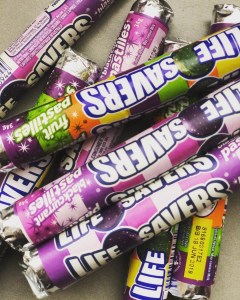
But, as I gorged myself on fruit pastilles I realised a few things. I realised that fruit pastilles really aren’t all the tasty and actually a little gag-y when needing to get them down quickly.

Bleurgh

And I realised that the return of hypos made me very annoyed. ‘Three hypos today,’ I announced. ‘This is lousy.’ I complained to anyone who would listen, and probably stamped my foot a little too.

But there is a silver lining. Kind of. As I whinged and moaned about my day of lows, a friend asked if I had symptoms for my hypos. I stopped and thought about it for a moment. ‘Yes…I felt them all,’ I said. ‘You’ve got your hypo symptoms back,’ he said.

I hadn’t thought about that, but it was true. I had felt the undeniable heightened anxiety that indicated that I was low for each of the three hypos I’d had that day. My heart rate had increased a little – not too much, but enough for me to notice. And that feeling was confirmed with a finger prick check.

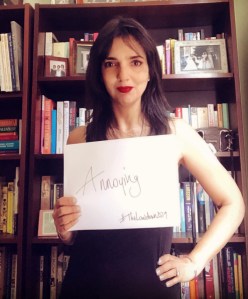
These hypos were relatively easy to manage – a few of the bleurgh fruit pastilles and all was good. If I had to explain them in one word it would be ‘annoying’. But I did feel exhausted and drained. I was more than just jet lag and conference-tired; I was jet lag, conference and hypo-tired.

By the end of the day, I had my back-up transmitter paired and the two hour warm-up passed. I calibrated and my Loop turned green, and said a little prayer of gratitude to the Loop gods. The hypos stopped, and the next day I went back to ticking along as I have become accustomed after eighteen months of Looping.

And that’s where I’ve been since then. Absolutely one of the best things about Loop is the way that it helps me manage lows. I’m not for a moment saying that the system is so perfect that there is no risk of lows. Of course there is. But these days, I get enough warning and the system does its bit so that a mouthful of juice or a couple of jelly beans is all I need to manage any incoming lows.

That day was the most I’ve thought about my own hypos in a long time. Of course, I think about hypos in general a lot. Being on the PAC for HypoResolve means that I talk and think about it a lot. And other initiatives, or talking with friends with diabetes means that it’s never a topic of conversation all that far from mind.

Which brings me to this…

There is a new website being launched by Diabetes Australia about hypoglycaemia. The idea behind it all is to reduce the stigma associated with hypos and also to encourage people with diabetes to share their own experiences of living with lows. Diabetes can be such an isolating condition – we know that. Hypos are part of the deal for so many of us. And yet, many of us are afraid to talk about it too much for fear we’ll be told that we’re not managing our condition properly.

This new project hopes to bring the conversation out into the open a little more and you can get involved.

If you are an adult with type 1 diabetes or type 2 diabetes on insulin, share what hypoglycaemia means to you, or even just share the word you would use to describe hypos. Email a photo and your words to thelowdown@diabetesaustralia.com.auand you could feature on the new website. Or, share a photo holding the word you would use to describe hypos using the hashtag #TheLowdown2019.


We all do a good job at undermining ourselves at times. We use a four letter word that diminishes what we are doing, and limits the value of our experience and expertise. That four letter word is ‘just’.

In diabetes, we hear it all the time: ‘Oh, I just have type 2 diabetes’ as though it is insignificant and doesn’t have any challenges. ‘I’ve lived with diabetes for just a couple of years’ because we think there is only currency in decades of living with the condition, when really any length of time with diabetes is meaningful.

And we are all about minimising our experience when it comes to the treatment of our diabetes. ‘just use diet and exercise to manage my type 2 diabetes’ or ‘I’m just on tablets’ or ‘I’m just on injections twice a day’ or ‘I’m just on MDI’. The list goes on and on. And on.

I realised just how ridiculous we have become with this when I heard myself, during a conversation with a fellow Looper, ‘Oh, I just use Loop’. (More on that later…)

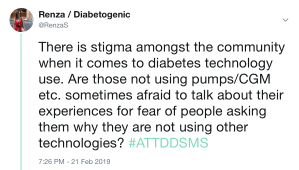
At the Ascensia Social Media Summit at ATTD we spoke about this, specifically how there is almost a stigma within the diabetes for those seen to not be using the shiniest and brightest and newest of technologies. It seems that some people almost feel embarrassed if they are not constantly updating their technology toolkit with the most recently launched product.

The idea that anything that we are using today is ‘yesterday’s technology’ is wrong. Blood glucose monitoring can’t be ‘yesterday’s tech’ if it is what most people are using to track their glucose. And syringes and pens can’t be considered the ‘old way to deliver insulin’ when that is how the vast, vast majority of inulin-requiring people with diabetes get insulin into their bodies. Plus, every single one of us using a pump must be able to deliver insulin this way because machines break.

Somewhere in discussions about our treatment technologies, we seem to have forgotten that, actually, not everyone wants to be using the latest kit. And that is okay. There is a spectrum of diabetes technology, and as long as we are on it somewhere and managing our diabetes the way that works best for us, then elephant stamps all around!

There is clearly an over-representation of people at one end of that spectrum dominating on and off line conversations. Spend a couple of hours in a diabetes Facebook group and it would be a reasonable assumption that most people are wearing pumps and CGM. But that’s not true.

And it could appear that DIYAPS is the way to go for most people with T1D, when the fact is that numbers are relatively low. It’s hard to estimate exactly, but there may be somewhere between 2,000 and 3,000 worldwide how have ‘built their own pancreas’. That is just a drop in the type 1 diabetes ocean.

It’s fantastic for those of us interested in this technology to be able to (virtually) congregate and talk amongst ourselves. I learn so much from my peers in these groups – just as I have with all aspects of life with diabetes. The lived experience continues to trump any other way of learning about diabetes.

Of course, that doesn’t mean that we shouldn’t be talking about technology used by limited numbers. Of course we should. We want others to know about it so they can make an informed choice about whether it may be right for them.  We want our HCPs to know about it and to support those of us using all sorts of technologies and treatments.

Where it becomes problematic is when there is the misconception that this is the norm. Or when those not using the newest technology feel that they are wilfully doing diabetes the ‘old way’. It’s unfair to think for a moment that those who are not using the tech ‘don’t care’ enough about themselves – especially when decisions are made based on a very good understanding of what is available and what they have decided works best for them.

So, back to my ‘Oh, I just use Loop’ comment. It was directed to someone far more technologically advanced than me; someone who runs all sorts of other programs alongside their DIYAPS. They generate lots of reports and make lots of changes and seem to have far more bells and whistles than I even knew were available.

I nodded as they told me all they were doing and then, when they asked me how I manage my diabetes, I answered that I just use Loop. I heard myself saying it and stopped and corrected myself. ‘I meanI use Loop. It works for me. Perfectly.’

We don’t need to make excuses for doing diabetes our own way. If we truly have choice (which I know is not always the case), and we have made the choice based on what we believe to be the best possible treatment and technology for us at that moment, then surely that’s a great thing. We shouldn’t ever be made to feel less committed to our own health and wellbeing. That’s not how it works.

DISLCOSURE

I was invited by Ascensia to co-chair the Diabetes Social Media Summit at ATTD (#ATTDDSMS). I did not receive any payment or in-kind support from them for accepting their invitation. I have co-written a piece for the blog, however this was not edited (apart from inevitable jet-lag-induced typos) and all words are those of mine and the piece’s co-author. You can read that piece here.  

It’s International Women’s Day and while I like to celebrate the incredible women in my life every day, I’m not above using the occasion to showcase some of the womenfolk in diabetes who have such an impact on our community.

So here are just some women working in, with, or around diabetes. This obviously isn’t an exhaustive list. There are so many women I could have mentioned. Please use the comments section below to add anyone I may not have mentioned. These women here have come across my radar on one or many occasions in the last twelve months, which is why  wanted to celebrate them here today. They all have one thing in common: they get stuff done. And they support other women.

Actually they have another thing in common. They’re a little bolshie and sassy. And I love that about all of them!

Kerri Sparling

I met Kerri in a creperie in New York back in 2011. Two weeks prior, we’d just missed each other at a diabetes conference in Dubai, but made up for our lousy timing when we realised that we would be in NY at the same time. As we greeted each other, I had a slightly weird moment of feeling as though a character in a book I had read over and over had come to life because in person she was the same disarming, open and hilarious person she is on the page (or rather, screen).

The impact Kerri’s work has had on women with diabetes is monumental. I can’t count the number of times that I have heard her name when women with diabetes have spoken about their engagement with the DOC. She is one of the first people I direct women to when they are looking for information about anything to do with diabetes.

Last month, Kerri announced that in May she will be updating her SixUntilMe blog for the last time. She is not disappearing from the diabetes world – let’s be clear about that. She’ll still be writing; she’ll still be here. I’m glad that she’ll still be around to share her powerful voice. And cat GIFs. Her cat GIF game is strong.

Read Kerri’s blog here.

Karen Addington

JDRF-UK is blessed with Karen as their CEO. I’ve been fortunate to spend some time with Karen in the last twelve or so months and have loved getting to know her. I’m always impressed with her ability to graciously ensure diabetes is on the agenda, and keep conversations current and relevant. I also love that she knows the value of diabetes peer support and community and the voice of the person living with diabetes. More diabetes organisations could do with leaders like Karen!

Follow Karen on Twitter here.

Cherise Shockley

This whole post could have been about Cherise. She is a shining and guiding light and an example to so many of us. But today, I want to highlight her new podcast ‘Inspiration Exchange: Diabetes Moments’ that will highlight different people affected by diabetes. The idea is that it will feature people in the community and share their experiences.

Cherise is one of the hardest working people know. She shows up – again and again and again – backing that up with continuing to deliver support to anyone who needs it.

More about Cherise’s new podcast here.

Elizabeth Snouffer

Whilst I had heard of Elizabeth, I only really came to know her last year when she joined the organising committee for the LWD stream that I am leading. Elizabeth is the editor of the IDF publication Diabetes Voice, and a journalist and writer.  She is also a vocal advocate for insulin access for people around the world.

I’ve really enjoyed reading Elizabeth’s writing recently, especially what she has written on diabetes distress and health professional engagement.

Follow Elizabeth on Twitter here.

Miss Diabetes

If you’re not following Miss Diabetes on Insta get on it now! It’s the brainchild of New Zealander, Janina, who has lived with type 1 diabetes for over 20 years. Her cartoons are clever, cute and cutting. I’ve found many familiar moments in her creations.

Find Miss Diabetes here.

Jennifer Dyer

I always say that there needs to be more than diabetes as a connection. That certainly is the case with Dr Jennifer Dyer. Jen is a paediatric and adolescent endo and an entrepreneur. She is smart, vocal and open about all sorts of diabetes issues that are often considered taboo. At ATTD last year we had a frank discussion about diabetes and sexual health and I loved her matter-of-fact attitude.

I already would have thought she was pretty great, but it seems we share a love for New York, MAC lipsticks, Audrey Hepburn, oysters and Sophia Loren. I know that if I was diagnosed as a teenager, Jen would have been exactly the endo I would have wanted to see because she knows life is about so much more than diabetes.

Follow Jen on Twitter here.

Weronika Kowlaska

Weronika writes the Blue Sugar Cube blog, started the Connect1ons Campaign which showcases the advocacy efforts of people with diabetes from around the world, is a gifted designer and illustrator and spends a lot of her online attention as part of the #Insulin4All movement.

I recently caught up with Weronika in Brussels where I became almost dizzy hearing about all her different activities, which also include being involved in the International Diabetes Federation.

Check out Weronika on Insta here.

Sana Ajmal

Sana continues to elevate the cause of women with diabetes in her home country, Pakistan and share often heartbreaking stories of discrimination and stigma. She is a writer and speaker, and has joined me on the organising committee for the Living with Diabetes stream at this year’s Diabetes Congress.

Read more about Sana in an interview here.

Alecia Wesner

Guinea pig extraordinaire, Alecia puts her hand (and any other part of her body) up to participate in diabetes research at every opportunity. And then she gets on stage and talks about it to encourage people to donate. She is one of JDRF’s most visible speakers and is an absolute star.

Oh – and she also happens to be a talented artist who designs the most magical lighting, and you should check out her handmade Eye Candy range of jewellery .

Alecia’s Eye Candy can be found here.

Ashley Ng

I’m lucky to frequently catch up over coffee with Ashley to hear what she is up to, and she is always up to a lot! Ash has been a vocal advocate to reduce the stigma associated with diabetes. She set up a Facebook group for young adults with type 2 diabetes, and has made it a safe, friendly place for open discussion. And she is a co-founder of Beta-Change which brings together people with diabetes from around the globe. All this is on top of her real job where she is Dr Ash and a lectured in nutrition. She is busy. Very busy.

Find out about Beta Change here.

Melissa Lee

Diabetes technology can be bloody confusing, but Melissa Lee knows how to explain it so it makes sense to idiots like me. Melissa is the Director of Community Relations for Bigfoot Biomedical, charged with sharing the organisation’s vision and progress. She does it well.

Melissa is an active member of the diabetes online community and I always love the way her comments are clear and direct. Oh, and her D Parodies never fail to amaze.

This D Parody of ‘Seasons of Love’ is magical.

Kim Henshaw

I think of all the women on this list, Kim is the one I’ve known the longest. We were new mums together, and co-founded the #OzDOC weekly tweetchats. And we worked together for a number of years at Diabetes Victoria.

Here’s the thing about working for a diabetes organisation. It’s a tough gig sometimes to have diabetes in your professional as well as personal life. There are days where it can seem that everything is about diabetes. Here’s another thing about working for a diabetes organisation. You can’t make it about yourself, and Kim has always excelled at ensuring that she never has an agenda that is self-serving. These days, her work around families of kids with diabetes is making a difference to so many.

Follow Kim’s occasional tweets here.

Moira McCarthy

I’ve only met Moira once and that is, quite frankly, not good enough. Thankfully, through the magic of Facebook, I get to engage with her and see what she is up to. She is a journalist (writing about incredible travels) and also writes about diabetes.

Moira is also a remarkable fundraiser, having raised millions for JDRF. She does ridiculously demanding bike rides for the organisation, attracting donations from all over the world. (It’s hard to say no to Moira).

Read my favourite ever piece by Moira here.

Dana Lewis

There would be few people who are interested in diabetes technology who would not know Dana. I have had people actually say to me ‘Oh, you’ve met’ her? What’s she really like?’ such is her rockstar status. The answer to that question, by the way, is kind, generous, smart, emphatic and funny. She is who I thank daily for the whole idea of DIY hybrid-closed loop systems. She is also a kids’ book writer, researcher and (when not dealing with broken limbs) runs miles and miles. I’m yet to be convinced there is only one of her because she does so much, but I’ve only ever been in the room with one Dana Lewis at a time.

Read about Dana here.

Daniela D’Onofrio

I have a group of Italian women I see at diabetes conferences in Europe. I adore them and love being welcomed into their crew. I once said to Aaron ‘I hung out with the Italian women again, and jeez – they are loud and bossy. And they don’t shut up.’ He just looked at me before muttering something under his breath that sounded a lot like ‘Welcome to my world,’ but I’m sure I misheard, because where would he know bossy, loud, talkative Italian women?

Anyway, Daniela may be loud and bossy and talk a lot, but she backs it up like you wouldn’t believe. She started Portale Diabete, an online network, after her brother received a kidney pancreas transplant. There are over 25,000 members of the Portale Diabetes Facebook group and the discussions are constant and current. Daniela added a new string to her bow last year when she decided that she’d try her hand at fundraising and naturally that has been a success.

Follow Portale Diabete on Facebook here (fluency in Italian – or Google translate – required).

Jane Speight

When Jane landed in Australia to be the Foundation Director of the ACBRD, there were very few HCPs talking about the behavioural side of diabetes. People with diabetes were talking about it, but that was really where the conversation started and ended.

Jane and her ACBRD team got straight to changing that, and today, she is a permanent fixture in the diabetes landscape both here and around the world. She has spearheaded the diabetes and #LanguageMatters movement in Australia and globally and is a fierce advocate for people with diabetes. How lucky we are!

As well as collaborating with her on a number of projects (where she is always so gracious in the way I bring down the overall tone of any discussion), I also get to call her a friend. She is my constant conference and doughnut-eating companion, and makes the overwhelming and frantic nature of conferences somewhat bearable.

Follow Jane on Twitter here.

Georgie Peters

Georgie put all right in the world by returning from her year in Paris to take up a job teaching French in the next suburb to where I live. Thank goodness, because our late night chats could go on forever! It’s much easier being in the same time zone (and side of the city)!

I know I’ve written about her a number of times, but Georgie’s work in diabetes, eating disorders and body image with Body-Posi-Betes continues to push boundaries. I’m not sorry for sharing again.

Follow Body-Posi-Betes on Insta here.

Stacey Sims

Stacey runs the award winning podcast Diabetes Connections which features prominent diabetes advocates from around the world. Stacey’s son has diabetes and she created the podcast to help reduce the isolation that many people with diabetes face.

Check out (and listen to) Diabetes Connections here.

As I said earlier, this is not an complete list. There are so many other women who also do amazing things in the diabetes space. This list just happens to be some of the women whose work I’ve seen and loved over the last twelve months. And the other thing is that I have seen firsthand how they have supported and lifted up other women. That doesn’t mean that we always need to agree or that we all need to be singing from the same hymn sheet. But it means that we look out for each other, we promote each other, we cheer each other on. These women all do that in spades, and that is one of the most important things to me.

I never thought I’d be one to think about back-up plans the way I do now. A few years ago, I remember being extraordinarily proud of myself as I wrote this post about my diabetes spares bag. And then a couple of years ago, I thought I was remarkable and quite brilliant at being able to easily manage when I got to work and realised my insulin pump hadn’t made it with me. I thought I had every contingency sorted and was fabulously good at diabetes. Give me a medal, please.

But in the last six months or so, I’ve come to see I’m not quite as prepared as I thought. I probably should point the finger right now at David ‘Bionic Wookiee’ Burren for this. He has highlighted holes in what I thought was a well-planned strategy a number of times (‘What’s your RileyLink Bluetooth address, Renza? You don’t know? You should.’), shaming me into wanting to do better, and really making me question all my life choices at the same time.

Back-up planning has been covered in both the Australian and European Social Media Summits hosted by Ascensia (disclosure at the end of this post) and it is interesting to see that the level of organisation and preparation varies so much in those of us living with diabetes.

Some people have thought out every possible contingency and have a plan for each one. Others have a fixed idea about what might go wrong and have made accommodations for those (that’s me). And others figure that it will all work out and the diabetes gods will sort it out.

I guess that personality type comes into how well-equipped we all may be. Some of us have a far more lackadaisical approach to planning for the apocalypse than others. But I do agree that it never hurts to be prepared or to consider things that may never have entered your mind before.

So here are some things that I have learnt in recent times that have completely changed the way that I think about my back-up planning.

It’s not just about kit (1). It’s all very well to have back up for what happens if (for example) your pump dies, but if that means returning to MDI until a replacement can be delivered, actually knowing how to do MDI is important. (Bless my endo who always asks if I need any long acting insulin ‘just in case’. She gave me some in-date long acting insulin and we had a discussion about what doses would look like after I proclaimed ‘It’s been 18 years since I gave myself a dose of long acting insulin. And it was Protophane. I have no idea what I am doing.’Lovely endo didn’t even roll her eyes at me when she walked me through exactly what I’d need to do to ensure my basal dose was right and the timing of the injections.)

It’s not just about kit (2). Look – my back up plan to my pump dying is another pump. I have a couple in the diabetes spares cupboard and always travel with one. But I don’t carry one around with me on a day-to-day basis. If I was a couple of hours from home and my pump died, I’d need to know what to do in the meantime. Again – it’s been 18 years since I was on MDI, but I always have a spare syringe and insulin with me so I can bolus until I get hooked up again to a working pump. My injection technique is scratchy – very scratchy, but in a pinch, I can manage it. There’s nothing wrong with asking for some re-education on something for which you may be a little out of practise.

Apparently my long-held belief that the DOC is my back-up plan is not actually adequate, because who is going to be able to provide me with insulin/pump consumables/spare pump/battery/RileyLink at 3am when things like to go wrong. (This is despite the success of the whole Pumpless in Vienna story.)

Equally, having a neighbour with type 1 diabetes two doors down is great when I need a Dexcom sensor at breakfast time. But it would probably stretch and test the neighbourly spirit if I woke her and her family in the middle of the night because I desperately wanted my loop to turn back to green and needed a sensor to do that.

I need a back-up of EVERYTHING I use if I want to be able to seamlessly manage any issue that comes up. With Loop that means a spare Loopable pump, a spare Riley Link, a spare G5 transmitter as well as all the necessary consumables. That takes expense as well as organisation.

CABLES!! They need to be part of my back up plan. I was at a conference last year somewhere (can’t remember where) and remembered as I was about to sleep that I’d forgotten the charger to my RileyLink. And just last month didn’t charge it overnight, meaning that my Loop turned red while I was at work and I was unable to do anything until I got home. Carrying the right charging equipment for all devices is important.

But! If I don’t have all these things, I need to ensure that I have a suitable, easy and fully ready-to-go option that will get me through until I can assemble all required to return to normal service.

When your back up plan becomes someone else’s back up plan, you need to do something about it. Case in point: at the DOCDAY event at ATTD, a friend leaned across the table and asked me if I had a spare battery for her Loopable pump. Of course I did, because there is always at least one in my spares bag. I handed it to her and made a mental note to pick up some more AAA batteries next time I passed a convenience store. Of course, I forgot all about it until Loop started complaining and that the battery was running low. Down to 4% battery and starting to feel a little nervous, I found a tiny little store in a backstreet in Brussels, crossing my fingers as I walked in that there would be a stash somewhere of what I needed. There was and I changed the battery just as my Loop app was showing 0% battery.

Beating ourselves up about our perceived or real lack of planning is unnecessary. As Sophie, one of the participants at #ATTDDSMS, said: ‘Life gets in the way.’ And it does. I challenge anyone not living with diabetes to do their normal life, live with diabetes and not only think about all the ‘just-in-case’ scenarios, but also prepare for each and every one of them.

But mostly, what I have come to see is that the point of a back-up plan is for it to be smooth and simple, with as little disruption to our day as possible. A plan that requires a cast of thousands, hours of travel, is insanely complex and relies on a number of external factors that are potentially beyond our control is not really going to make executing our plan all that easy, or give us peace of mind. And that’s a big part of what this is all about – feeling confident that we can manage whatever gets thrown at us.

That is, after all, the nature of this condition we live with.

DISLCOSURE

I attended the ATTD conference in Berlin. My (economy) airfare and part of my accommodation was covered by DOCLab (I attended an advisory group meeting for DOCLab), and other nights’ accommodation was covered by Roche Global (I attended the Roche Blogger MeetUp). While my travel and accommodation costs have been covered, my words remain all my own and I have not been asked by DOCLab or Roche Global to write about my attendance at their events or any other aspect of the conference. 

I was invited by Ascensia to co-chair the Diabetes Social Media Summit at ATTD (#ATTDDSMS). I did not receive any payment or in-kind support from them for accepting their invitation. I have co-written a piece for the blog, however this was not edited (apart from inevitable jet-lag-induced typos) and all words are those of mine and the piece’s co-author. You can read that piece here.  

My third ATTD, and as soon as I started reading through the program, flagging the sessions I planned to attend and the technology I was keen to get my hands on and learn more about, a familiar feeling started to settle over me. It was there the first time I attended the conference and again last year.

And that feeling is that this conference, more than any other, reminds me just how unlevel the diabetes landscape is. With the shiniest of the shiny and newest of new technology and the most impressive treatment options available to people with diabetes on show, the vast gap between the haves and have nots is stark.

I was not the only person to acknowledge this. My first full day in Berlin saw me in an advisory committee meeting with diabetes advocates from across Europe, and when asked about the most pressing issues in diabetes, access was at the top of the list for every single one of us. Most (if not all?) of us in that room live in places with outstanding funding and reimbursement programs for diabetes drugs, technology and education – having to go without or ration insulin isn’t something we have ever needed to consider. Even those of us self-funding CGM are in a position of extreme advantage to be able to cover the significant out of pocket expense. But we all know that for millions of people across the world, this is not the case.

And then, later in the week at the Ascensia Diabetes Social Media Summit, another issue that came up again and again was choice. Choice refers to range of factors in diabetes. Choice of the type of technology we use, including the different brands; choice of the healthcare setting we feel best suits our brand of diabetes; choice of the specific healthcare professionals we see. It is also the freedom to be comfortable with our choice of technology, not feeling we need to conform to what others believe is the right thing.

But just how real is the whole idea of choice in diabetes? And when it comes to technology, how much of the decision about what we are using and how we are managing our diabetes is truly our own?

When access to basic education and treatments is severely limited, there is rarely any choice at all. In some places, a diabetes diagnosis is life and death, and surely in those cases all that people are choosing is life. How they manage that is probably not contemplated at all. In countries where diabetes does actually equal a death sentence, no one is debating whether TIR and A1c is how they would like to track their diabetes management.

But we don’t need to look to countries where outcomes are still so desperate to see lack of choice. Just this week, a very distressed mother of a young child with diabetes called me because they had just been told they were not permitted to use the pump they had chosen after careful deliberation and research.

This isn’t uncommon. Diabetes clinics across Australia make it difficult for PWD to be able to use the technology we have decided is the best choice for us. Sometimes that means not being able to use the specific technology we want (i.e. refusing to sign the necessary paperwork for a pump), or it could mean not being given the right to choose the brand of device we prefer.

At ATTD, I frequently heard about how healthcare is being transformed, and that may be true for those of us not disadvantaged by the country where we live and are trying to access care. We should celebrate the advances being made and the better outcomes so many of us have seen. But at the same time, we need to find a way to not get so far ahead of ourselves that we leave the most vulnerable further and further behind.

Click for original tweet.

I have been interested in discussions about time in range (TIR) for some time now. It has become a key way that I assess just how I am tracking with Loop and, as I wrote earlier this year, really the only measure I’m interested in. I like it because it can give me real time information about how I am tracking. It shows that when I am at a conference and not eating properly, but doing more activity than I normally would, my TIR is going to be less than if I was at home in a regular routine. It also shows what happens when I’m not Looping for ten hours (thanks to a variety of factors) my TIR plummets!

At ATTD this year, there was a symposium dedicated to the topic and from the standing-room-only crowding of the hall, it’s clear that a lot of others are interested too. In the few presentations I attended about the Medtronic 670G, TIR was frequently referred to (in one study there was a slight increase in TIR after PWD had been using the device for 8 months, although significantly lower than what people using DIYAPS are reporting.)

Just as I did while live tweeting the session, I have to address the issue of access to the technology. TIR is all very well, but it takes tools, and those tools are prohibitively expensive. Some places have no subsidies available for CGM or Flash, others have limited reimbursement programs. And, of course, there are places around the world where accessing glucose strips is a near impossibility.

TIR is a measure for a very, very privileged few, and as much as it’s held up as the future of diabetes, it is simply incorrect and misleading to suggest even for a moment that most people with diabetes have this data at their fingertips. (They barely have finger prick data at their fingertips.)

But, this is a conferences about the latest in technologies and treatments, so let’s talk time in range…

Dr Irl Hirsch is an MD from University of Washington, Seattle. His session as listed in the program was: ‘Time in Range vs. HbA1c: Are our patients ready to change?’, but he changed it to a far more suitable ‘Time in Range vs. HbA1c: Are our patients and health-care colleagues ready to change?’

Irl’s short talk was an absolute cracker and started by exploring what we already know – A1c is flawed. We’ve known this for years, but it’s taken having easy access to CGM data to truly appreciate just how flawed. The two points he raised to back this up were A1c levels can’t be compared between two people (and yet that happens all the time!); each A1c comprises a wide median glucose range. In other words, A1c sucks (they were his words, not mine!).

And then the talk got fun as the focus shifted to just how ready different groups were to shift from a focus on A1c to TIR. The three groups were: people with diabetes (and their families), endocrinologists and non-endocrinologists. Irl presented the results from a survey of diabetes HCPs asking their thoughts on the readiness of those three groups to embrace TIR. Here are the results:

The HCPs surveyed all believe that PWD are by far the most ready to change from A1c to TIR. At the same time they believed that no non-endo HCPs were ready. We really have a problem.

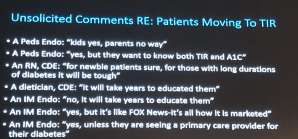
The survey participants offered a lot more than just their assessment of the readiness for this shift. They provided extra comments about some of the barriers to the change. This is how some of the HCPs (all working in diabetes) assessed the inclination for PWD to move to TIR:

But perhaps the most unsettling was what they thought about non-endocrinologists willingness to start to talk TIR. (I think that they were mostly referring to primary care physicians.)

As the list was read out, and the audience responded accordingly, my confidence level about how likely it was that TIR would start to become the norm shrank away. This is despite the way that many PWD have already adopted the measure and use it daily.

In the online groups where I spend a lot of time playing, it is clear that we are already very comfortable and committed to talking TIR. People frequently post their Dexcom Clarity data showing the super-nifty image of how much time they have spent in and out of their self-determined range. This is the language we speak.

But despite my unease about just how quickly the shift will happen, it has definitely begun. The International Consensus on TIR was presented which included targets for people with type 1, type 2 and for women during pregnancy. Plus there was evidence presented that showed TIR can predict the likelihood of diabetes-related complications. With all this, and the demand from PWD, we will be hearing about this more and more in coming years.

Looking for more?  This piece by Irl Hirsh, Jennifer Sherr and Korey Hood was just published in Diabetes Care is a really interesting commentary on the issue.

DISLCOSURE

I attended the ATTD conference in Berlin. My (economy) airfare and part of my accommodation was covered by DOCLab (I attended an advisory group meeting for DOCLab), and other nights’ accommodation was covered by Roche Global (I attended the Roche Blogger MeetUp). While my travel and accommodation costs have been covered, my words remain all my own and I have not been asked by DOCLab or Roche Global to write about my attendance at their events or any other aspect of the conference. 

These days, it’s impossible to be at a diabetes conference and not have at least one conversation somewhere about language. Sometimes there are sessions dedicated to the topic on the program, but that wasn’t the case at ATTD a couple of weeks ago – a conference solely devoted to advancements in diabetes technology and treatments.

But despite there not being a session about language, it was still a hot topic. My eagle eye was trained when walking through the exhibition centre for examples where diabetes is misrepresented or the language used stigmatises people living with the condition. And in sessions, I immediately heard terms that suggested that we are misbehaving because the results of treatments aren’t living up to their promise. (A new one: I heard the statement ‘People with diabetes on <therapy> were not performing as expected’ which now makes me think that we are being trained, watched and judged by pageant mums/moms.)

At the Ascensia Diabetes Social Media Summit (more on that another day), there was a discussion about language and diabetes-related complications. This event was a follow on from the one we had at the Australia Diabetes Social Media Summit, and took the initial conversations and expanded it with a new group of PWDs.

Once again, as the discussion unfolded, it was clear to see that the PWD in the room all had experiences where the language they were faced with had impacted negatively and positively. One person commented that early on in their diagnosis, a health professional had addressed diabetes-related complications by saying ‘If you are diagnosed with a diabetes-related complication it will not have been your fault.’ What an empowering way to begin the discussion about complications, care and risk reduction!

I’ve been talking about language for a number of years. Some may call me a one trick pony and, honestly, that’s fine. My appetite for the subject matter has not diminished one bit despite more than a decade of speaking and writing about why language is so important and holds such power.

Language is not a one dimensional issue. Additionally it does not necessarily have a ‘right way’ to do it – especially when looking at it from the perspective of the person living with diabetes. The work I have been involved in has never been about policing the words used by people with diabetes, but rather how words used by others affect us.

It’s why the piece Grumps and I wrote for BMJ  was important – it targeted healthcare professionals, explaining to them why the words and language used around diabetes-related complications needs to not make us feel hopeless. Because that is what can happen and when we feel that way, it is all too easy for diabetes to seem just too big and too hard and too much.

I have frequently written about how diabetes can become so overwhelming, that it can leave us unable to attend to even the most basic and mundane of diabetes management tasks. I myself have been paralysed by the detail and demands of this health condition. I understand that there are times when a conversation about language is not possible, because, quite frankly, there is a lot more to deal with. I know that there have been moments when even though I can hear judgement and blame in the words being directed at me, all I want to do is find a way out of what feels like a hole. I’ve heard others say that they have felt harshly treated by HCPs, but simply didn’t have the capacity to try to deal with that because there were other things higher up on the list.

And I am sure that there are people who simply wouldn’t even know where to begin if the words and language being directed at them were disempowering and negative.

But that is exactly why language matters. It is for the people in those situations – for me when I was in that situation – that we need to get the way we communicate about diabetes right.

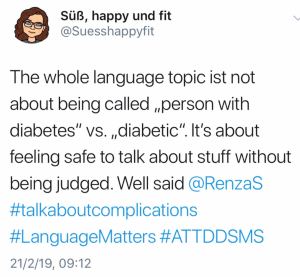
I am so sick of people trying to delegitimise the language discussion, or, even worse, reduce it to something that is insignificant. It frustrates me when the discussion returns again and again and again to the diabetic/PWD debate. As I said at the Ascenisa event at ATTD when we were discussing the annoying way some try to redirect meaningful discussion back to this single issue: ‘You can call me Blossom for all I care, language is about far more than this.’

And I think that while it is critical that we acknowledge that sometimes the language issue isn’t going to be a priority for some (by choice or otherwise), it seems unfair – and a little counter-intuitive – to diminish its importance, or criticise those of us trying to keep it on the agenda and actually do something about it.

(Click for original tweet)

DISLCOSURE

I attended the ATTD conference in Berlin. My (economy) airfare and part of my accommodation was covered by DOCLab (I attended an advisory group meeting for DOCLab), and other nights’ accommodation was covered by Roche Global (I attended the Roche Blogger MeetUp). While my travel and accommodation costs have been covered, my words remain all my own and I have not been asked by DOCLab or Roche Global to write about my attendance at their events or any other aspect of the conference. 

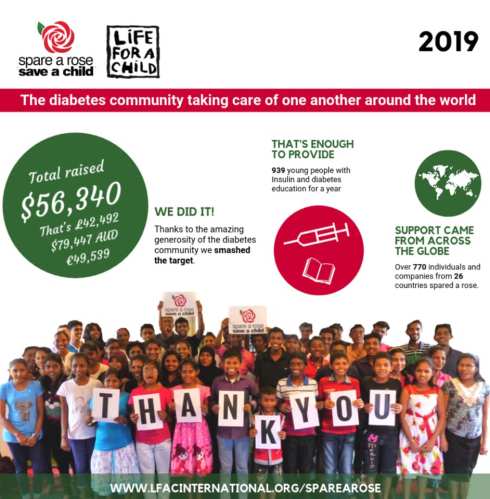
It’s March, which means a few things: It’s now Autumn in Australia; Easter eggs are flooding supermarket shelves; and Spare A Rose is over for another year.

I am very, very rarely lost for words. I usually have a lot to say (even if I’m the only one who want to hear it). I can speak underwater. But throughout this campaign there has been moment after moment where I have been rendered speechless as the generosity of people has been on display. No one has made a big deal about it – they have just wanted to contribute to a campaign because they could and they understood its importance.

This year, we really took Spare A Rose back to the community where it all first began. We wanted to use that grassroots support from people who truly comprehend what it would mean to not be able to easily and affordably access insulin and diabetes care. All funds raised by Spare A Rose – every last cent – goes towards Life for a Child to improve access to young people living in places where it is difficult.

Last week at ATTD, every time someone spoke about #SpareARose, those around them listened and then asked how they could help. Individuals with diabetes, diabetes on- and offline community groups, people from other diabetes organisations and industry stepped up to make donations, share information, spread the word.

Our community was stronger and louder than we’ve ever seen for this campaign and as more people got on board, we kept wondering just how close we’d get to that aspirational target we’d set – $50,000. It seemed impossible when first suggested on a conference call – almost as a whisper because it seemed so audacious.

We shouldn’t have underestimated the diabetes community, because not only did they reach it, they smashed it.

We got a wee bit silly and pulled the #SpareAFrown stunt, hoping to get a little attention and a few donations, but actually it blew up. (I think Grumps is a little scared of what he’ll be asked to do next year to encourage donations. Suggestions welcome. Pink tutus have already been proposed.)

The money raised means that nine hundred and thirty nine young people with diabetes will be provided with life-saving insulin for a whole year. When all is said and done, that is all that matters.

Thank you to everyone who supported #SpareARose in 2019. We will be back in 2020 bigger and better. The plans already being hatched have one goal only: more roses spared; and many, many more lives saved.


Let me tell you what is worse than jet lag. Jet lag combined with food poisoning. These are the two extra circles of hell Dante forgot about.

While I am recovering and trying to get my body to accept coffee again, here are some photos from last week’s ATTD conference which was in equal measure amazing, overwhelming, frustrating, intimidating, brilliant and exhausting. I’ll explain more in coming posts, but for now, enjoy the images.

How to deal with jet lag when arriving in Europe #1: night time walk to major tourist site and be amazed.

How to deal with jet lag when arriving in Europe #2: find (half) decent coffee.

How to deal with jet lag when arriving in Europe #2.1: drink all the coffee.

And then drink some more.

#docday is always a highlight. Little dogs called Jamaica make it even better. (Jamaica on the left; Bastian on the right.)

Hello Solo… New pumps headed our way.

MySugr is ALWAYS on message.

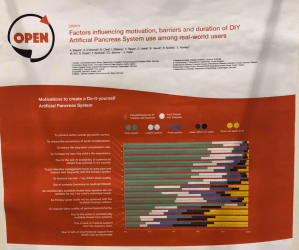
Flavour of the conference #1: DIYAPS

Flavour of the conference #2: Time in Range

Vegetables. I craved them.

Because there were so, so, so many dense carbs!

Not that I was complaining. (Especially when mini doughnuts came in Diabetogenic colours!)

Oh – did I say that #SpareARose was mentioned? A lot?

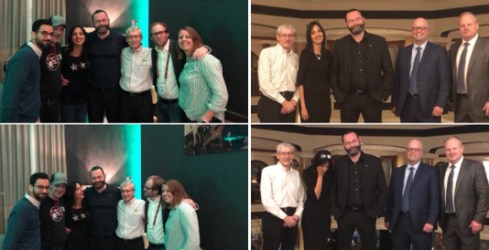
Such as at #docday. (Grumps looking especially grumpy because I’d just announced #SpareAFrown.)

And then? Then there was the smile-a-thon, as we smashed through target after target.

Next week, I’ll go into detail about some of the different sessions, highlights and satellite events I attended. It was a frantic few days – so worthwhile in every possible way. And as always at these conferences, finding those who live diabetes – themselves or with a loved one – provided the necessary grounding throughout the conference. This year, that support was even more pronounced with every single person who was asked to step up to promote #SpareARose doing so in spades. This is all the community. That is what it is all about…

DISLCOSURE

I attended the ATTD conference in Berlin. My (economy) airfare and part of my accommodation was covered by DOCLab (I attended an advisory group meeting for DOCLab), and other nights’ accommodation was covered by Roche Global (I attended the Roche Blogger MeetUp). While my travel and accommodation costs have been covered, my words remain all my own and I have not been asked by DOCLab or Roche Global to write about my attendance at their events or any other aspect of the conference. 

Follow Diabetogenic on WordPress.com

Enter your email address to follow this blog and receive notifications of new posts by email.

Read about Renza

Archives