The IDF Congress proved once again that the power of peer support should never, ever be underestimated. From spending time with the considerable number of diabetes advocates floating around the conference centre, to hearing about their work, to seeing them present their sessions, to speaking with the enthusiastic IDF Young Leaders, there were constant reminders of just how much we value and need contact with those who know diabetes.

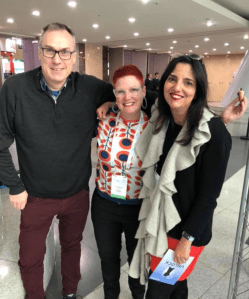
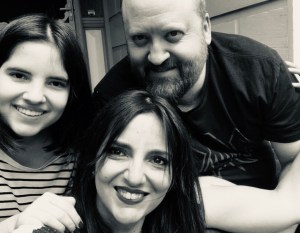
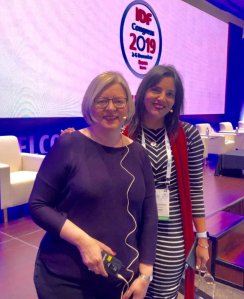
Our peers are not only those whose beta cell production is on strike. It’s also the people who cheer and champion us. While I will always shout about how I need to be around others with diabetes – those who intrinsically ‘get it’ – my tribe also includes people affected by diabetes in other ways. Having friends and colleagues Taryn Black and Jane Speight at the Congress was wonderful because they were able to showcase the amazing work they do that champions people with diabetes. (They may not want to be friends anymore after they see this picture…)

When we asked for topic submissions for IDF2019, peer support rang out strongly as a topic for which there was much interest. This has been consistent with all the IDF Congresses I’ve attended. But we wanted to make sure we were considering it lots of different ways and at different stages of a person with diabetes’ life. What were the benefits for younger people with diabetes through their own eyes? We don’t get to hear from them all that frequently. And what about for older people who have lived with diabetes for many years, or who are newly diagnosed with diabetes? And what about people whose diabetes doesn’t neatly fit into the pigeonholes we so like to use in the diabetes landscape?

And so, the program managed to highlights these different aspects of peer support, showing that there are just as many ways we find a way to connect as there are people with diabetes!

So, here are some snapshots from different folks at the Congress to give you an understanding of just how much peer support was all around!

Lydia Parkhurst spoke about how important it was to have met other young people with diabetes as she moved from adolescent to young adulthood. She said: ‘It’s great having the support from my friends and family, but unless you have diabetes yourself, you never truly know.’

Georgie Peters looked at not only the positive aspects of peer support, but also how it may enable damaging behaviours – in this case, referencing recovery from a diabetes-related eating disorder.
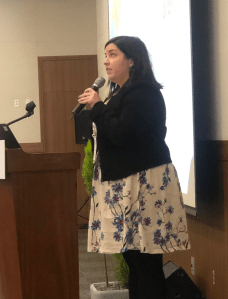
Jane Speight spoke about how peer support may help reduce diabetes distress, and in my N=1 example, I can say that is certainly true.

Bastian Hauck acknowledged the input of peers in the #WeAreNotWaiting movement, explaining how the online support is the best 24 hour customer service hotline imaginable!
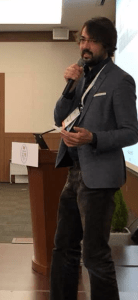
Cheryl Steele echoed Bastian’s comments about the DIYAPS online world in her talk that touched on support as she discussed the ages and stages of type 1 diabetes.

At the Ascensia Social Media Summit, in his opening remarks Joe from Ascensia made the point: ‘Peer support is a really important aspect of living with diabetes.’Ascensia’s commitment to this in their regular summits, as well as their online campaigns is brilliant. At this summit, there were 171 years of diabetes lived experience in the room, and a lot of camaraderie. There were a lot of buzz at this event, with people who had only known each other online suddenly becoming IRL friends.

Friend and fabulous diabetes advocate Phylissa Deroze spoke that not all peer support is right for all people. Finding space when living with type 2 diabetes can be challenging.

And peer support researcher and staunch supporter, Ed Fisher amended his well known ‘Four Key Functions of Peer Support’ by adding a fifth: ‘Being there and shared experience’. How wonderful is it that recognition of that ‘we get it’ aspect of peer support is being acknowledged by researchers?!

Off the program, it was impossible to ignore the power of that shared experience. We heard stories that resonated because they mirror our own. And then we heard those that were not anything like ours, but we wanted to learn more and understand just how they impacted our brothers and sisters with diabetes. When I heard Sana from Pakistan explaining the discrimination and stigma associated with diabetes means that women don’t tell their husbands they are living with diabetes, hiding away the day to day tasks required (if doing them at all), her advocacy efforts became even more remarkable. And when one of the young leaders echoed this story, and went on to share how she wore her pump prominently at an extended family gathering, despite warnings from her parents that it wasn’t a good idea, we couldn’t help but applaud. Feminism and diabetes activism is really tough going, and these were just two women being the change and storming the way through for others.

And, then…then there was Manny.

Manny Hernandez gave the award lecture for the Living with Diabetes Stream. When we were choosing who to acknowledge for this award, Manny stood out for his work in the diabetes community.

Manny was asked to choose his own topic for his talk, and came up with ‘The Importance of Community for People with Diabetes’. He couldn’t have chosen a better subject matter! Manny started by sharing his own story, and how it wasn’t until he met others with diabetes that he felt connected to a community. ‘I learned more in one hour with peers than in the previous four years,’ he commented. And then: ‘There are amazing endocrinologists out there but they can’t know what it’s like to live with diabetes, what the nuances of high and low blood sugar feels like, because they don’t live it.

Manny being Manny didn’t just leave it there. He wanted others to have what he had found, and so he created Tu Diabetes, followed by Es Tu Diabetes and The Diabetes Hands Foundation (DHF). For so many people with diabetes, this was a first foray into peer support. I know that it was a hugely valuable source of information and support for me. And it introduced me to people who have become very, very dear friends. (Massive shout out to Melissa Lee who was interim CEO of DHF after Manny left. I can’t even begin to explain how much I appreciate her warmth, wisdom and wit. And friendship.)

Manny’s award lecture was a love letter to and for all of us who have found that support which makes our lives with diabetes easier, better and more hopeful; for finding out tribes, loving them hard.

It’s no wonder that #PeerSupport was one of the most used hashtags at the Congress. It was recognised by speakers in different sessions as a cornerstone of diabetes management, just as important as other aspects involved in our care.

And so, I guess that this blog isn’t anytime soon going to stop or slow down extolling the benefits and value of peer support. Thanks to all those wonderful peers – friends – at #IDF2019 for making the experience such a rich and supportive one.

DISCLOSURE

I was the Chair of the Living with Diabetes Stream at the IDF Congress in Busan. My flights to Busan were covered by Ascensia Global (in order for me to get to Busan in time to co-facilitate their Social Media Summit). Flights home and accommodation were covered by the IDF.

I’ve got you covered…

Just click here!

On the first day of IDF, a star of the Diabetes Spotlight was Ella Adams. We wanted to hear about how children with diabetes are best supported, what works and what could be improved. In the past, we usually don’t hear directly from the young person themselves. But at the IDF Congress this year, the Living with Diabetes program team was committed to hearing the lived experience as much as possible. Ella’s dad, Jason, gave a brilliant overview of how he and his wife have supported Ella, but then he stepped aside and Ella told her own story. And she did it beautifully.

Ella shared stories about how best laid plans sometimes just go a little haywire. Admirably, she just gets on with things, dealing with her diabetes around whatever situation she is in. She is fiercely independent and is doing such a stellar job of working out she wants to do diabetes in a way that works for her. She has taken on more and more responsibility for her own diabetes, her parents stepping back as she has felt ready to step up.

We had two young people on the program in the Living with Diabetes stream this year and I am so proud that we stayed true to our wishes of handing the microphone as much as possible to people living with diabetes. We saw a different type of program and Ella was very much a part of that.

Jason filmed his daughter’s presentation and shared it on YouTube, and they have given me permission to share it here. So here’s Ella. What an absolute star!

DISCLOSURE

I was the Chair of the Living with Diabetes Stream at the IDF Congress in Busan. My flights to Busan were covered by Ascensia Global (in order for me to get to Busan in time to co-facilitate their Social Media Summit). Flights home and accommodation were covered by the IDF.
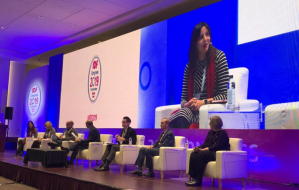
Who wants to get out of a warm hotel bed and wander through the freezing streets of Busan to the BEXCO conference centre on the last day of an exhausting conference to be ready for an 8.30am session on diabetes and sexual health?

As it turns out, a lot of people do (including a few people who may have been doing karaoke until just a few hours earlier).

The symposium was in three parts. I started by talking about the female perspective of diabetes, sex and sexual health, followed by Grumps (Chris Aldred) giving the male perspective. Brilliant physician and academic, Fauzia Moyeen, closed out the session by highlighting current research in this area of diabetes.

Introducing Fauzia Moyeen to the stage.

My session at the IDF Congress focused on the recurring themes I hear from women living with diabetes. These themes were evident in responses to the blog post I wrote a couple of weeks ago asking women to share their experiences, and reinforced the messages I’d received after previous posts I’d published about diabetes, women and sex.

As much as I had wanted to present a variety of different experiences, the messages I heard from women was not especially diverse! Women from countries considered more liberal and open to discussions about sex said exactly the same things as out sisters from countries where you would expect limited information about sex and sexual health.

Over and over and over again, women echoed that they had never spoken about this issue with a healthcare professional, and if they had raised it, they were told diabetes does not impact on sex.

Some of the quotes were absolutely heartbreaking. Women shared stories of how their relationships ended because sex had become so painful and uncomfortable after their diabetes diagnosis and they had not been able to get help. One woman was told ‘…get used to it because that’s how it is’, another was told the pain was not real.

The emotional impact of feeling that yet another part of our bodies is letting us down and not doing what it is meant to is never considered or discussed. We are left to flail around with these intense feelings and concerns. It’s not even a matter of being able to get help – we don’t have anyone signal to us that this could be an issue.

Then there is the mess of adding hypos, or fear of hypos into sexual activity, or trying to be intimate when we’re hyper and our bodies feel leaden and achy. There is so little that is sexy about diabetes, and that may be especially true when we are trying to be our sexiest!

And then there is the whole contemplation of how to introduce a new partner to devices stuck on bodies and scars on skin, and the worry about how that will make them see us.

Discussion after my talk was lively, with HCPs asking some great questions. One wanted to know how to bring up the topic, which is really important. Many people are not comfortable talking about sex and sexual health. Not everyone is happy to share when they are experiencing problems. Cultural considerations come into play here as well. Having a HCP of a different gender speaking about sex makes some people very uncomfortable. One HCP said that when he has raised the topic, he’s been told that it’s none of his business.

I had some suggestions about normalising discussions about sex, while remain sensitive to people with diabetes, allowing them to dictate if this is a topic for discussion.

I believe it is essential that the person with diabetes is the one who decides whether or not sex and sexual health are to be topics of discussion. Now that doesn’t mean HCPs don’t get to ask at all, leaving all responsibility to the PWD. They can provide prompts. Perhaps have some brochures in the waiting room that can be accessed by women. (Yes! There are such things and you can see them here.)

Also, list sexual health and sex as something that may be affected by diabetes in general diabetes discussions. Think about it as a complication of diabetes and address it as you would any other complication. Just mentioning it plants a seed for the PWD to understand that this may be something that needs attention.

I borrowed a suggestion I heard Sarah Le Brocq during her language and obesity talk at the DEEP Summit earlier this year. Sarah shared how one GP practise has a little form for people to fill in before they go to see the doctor. There are a list of different issues and the person can tick the topics they are comfortable having discussed in the appointment. (This, she said, is a brilliant idea for people living with obesity, because often that is the first and only thing the doctor wants to speak about, even if the reason for the appointment is a sore finger or something irrelevant to the person’s weight).

Translated for diabetes, develop a checklist with potential topics, with sex as one of them. If the box had been ticked, that would signpost to the HCP that this was a topic that the person with diabetes wanted to discuss.

Another question came from a doctor who asked how to make discussions about sex a priority when he needs to focus on diabetes-related complications. ‘If a person is dead from a heart attack, sex won’t matter,’he said.

The response from people with diabetes was the same. Consultations need to focus on the issues that matter to people with diabetes, not tick the box exercises so HCPs feel that they are getting in all the things theywant to speak about.

Yesterday, I wrote this in my post:

‘… sometimes the chasm between what people living with diabetes want and need and what HCPs and researchers think we want is gulf-like.’

I felt that keenly after my talk. Women had told me that relationships had ended because of how diabetes had impacted on their sex lives. Others said that the discomfort they felt having sex meant that they just didn’t want to, and it had become a constant source of tension between them and their partner. Other women felt that they were failing themselves and their current or potential partners. One woman said that she refused to have sex because she didn’t want anyone to see how diabetes had marked her body.

To me, these sound like issues that need to be addressed, as much as, if not more so, than trying to adjust basal rates. They are just as important as making sure someone is doing their foot checks. They are far more important than knowing a current A1c. Dismissing the importance of sex in a woman with diabetes’ life as less critical than other aspects of her diabetes care clearly is doing us no favours.

The feedback following the session was really positive and I hope that we start to see similar sessions on programs at other diabetes events. Let’s get the dialogue happening so that women can feel comfortable talking about diabetes and sex. And get the help we may need.

DISCLOSURE

I was the Chair of the Living with Diabetes Stream at the IDF Congress in Busan. My flights to Busan were covered by Ascensia Global (in order for me to get to Busan in time to co-facilitate their Social Media Summit). Flights home and accommodation were covered by the IDF.
Busan is a very different city today than it was last week. There won’t be warmly dressed people hurrying into BEXCO with IDF2019 lanyards around their necks, eager to learn about diabetes. The word ‘diabetes’ won’t be uttered in almost every language of the globe. There won’t be Melbourne diabetes people loudly lamenting that Starbucks seems to be the coffee of choice in the city.

And you won’t see groups of people from all around the world standing together talking about what it’s like to live with diabetes. Most of us have gone home to our respective corners of the world, back to our families, back to our jobs, back to our real lives. But we will always have Busan and the incredible week of the IDF Congress.

By the time I arrived in Busan on Monday, the IDF was already a different beast. There was a new President and Board in place and some of the concerns that we’d had about the handover had melted away to nothing. This paved the way for what we really there for: a week of learning, networking, hearing different perspectives and truly uniting for diabetes.

We did that.

Was it a perfect conference? Of course not; they never are. There were hiccoughs and AV fun. There were controversies that played out online very differently to the way they actually happened in real life. There were sessions – critically important and brilliant sessions from all streams– with disappointing turnouts.

But these are all minor concerns that are the reality of every conference I have ever attended. There will be a time for post-mortems and evaluations and planning for improvements to future conferences. That time, however, is not now. Now is the time to celebrate.

IDF 2019 was a brilliant showcase of diabetes from around the globe. As expected, I only attended sessions from the Living with Diabetes stream and every single story was beautifully presented, and enhanced by the professional expertise of the HCPs who shared the stage. Amongst the incredible tales were moments of discomfort. It’s challenging to hear of the struggles many of my sisters and brothers with diabetes face in their day to day lives. I was forced to confront my privilege in a way that demands more than just acknowledging it there.

Also, difficult to accept is realising that sometimes the chasm between what people living with diabetes want and need and what HCPs and researchers think we want is gulf-like. For every HCP who ‘gets us’ and understands the value of lived experience in the healthcare space dialogue, there are many others who just don’t accept it, and, despairingly, don’t want to listen.

But more on that another day. Because for now, I’m focused on the people who did such a stellar job. So here are just some of them!

Two hours after touching down in Busan, and we kicked off the sixth Ascensia Social Media Summit with these gems.

Bright and early on day 1 of IDF2019, and the auditorium was packed to hear about diabetes and tech.

Always, ALWAYS, pleased to share the stage with Jane. Here we are just before the panel session.

Georgie excited to TALK ABOUT HYPOS! (We couldn’t understand why there was an explanation mark at the end of that sentence.)

Manny Hernandez gave the LWD Stream Award Lecture and there is no one more qualified to talk about the importance of diabetes community. How honoured I was to introduce him!

Celebrating Manny! (Photo courtesy of Boudewijn Bertsch)

From Melbourne to Busan. Neighbours at IDF2019. Jo was speaking about living with a rare type of diabetes and Andy was there for support (and photos from rooftops).

This woman! Sana, deputy lead of the LWD Stream and a bright, fierce force.

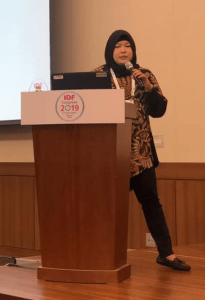
Anita eloquently explaining the challenges of living with diabetes-related complications in Indonesia.

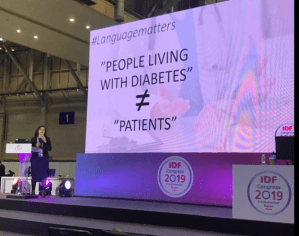
Apoorva highlighting #LanguageMatters in her talk.

Some of the most dynamic young people I have ever met at the Young Leaders in Diabetes Training Summit.

Cherise can always be relied upon to ask thoughtful questions.

I’ve lost count of the cities we’ve done our #DiabetesOnTour this year, but these blokes have made all my travel so much better! Thanks Bastian and Grumps.

My favourite people at IDF2019? The two baristas running this uber-hipster coffee van.

We were all surprised to see the room packed full at 8.30am on the last day of the Congress. Sex sells. Or people just want to talk about it…

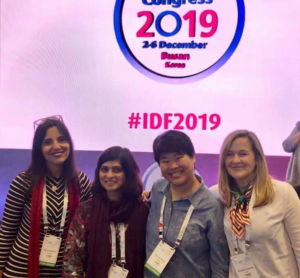
One of the best pieces of advice I was ever give was this: surround yourself with smart women. This is the LWD stream from IDF2019. I truly was surrounded by the smartest of women! Thank you Sana, Pei Yan and Elizabeth. 

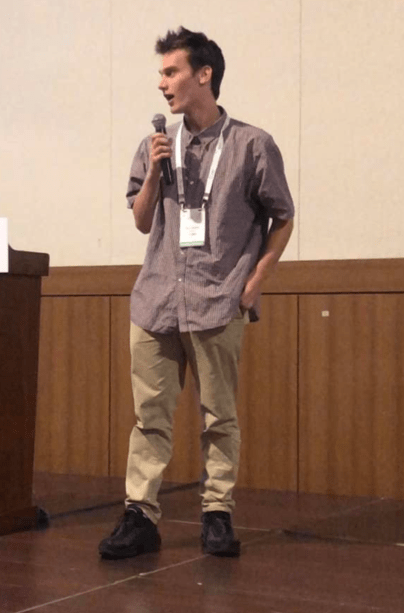
The final session in the LWD and my highlight of the whole congress was my neighbour, Sol, talking about living with MODY 3. We could not have scripted a closing remark better than his: ‘Being at this conference has made me feel part of something and with people that understand.’ Welcome to the world of diabetes peer support, Sol. You are so, so very welcome here.


DISCLOSURE

I was the Chair of the Living with Diabetes Stream at the IDF Congress in Busan. My flights to Busan were covered by Ascensia Global (in order for me to get to Busan in time to co-facilitate their Social Media Summit). Flights home and accommodation were covered by the IDF.


The International Diabetes Federation’s World Congress is on this week and I am en route to Busan, South Korea for a very busy few days.

Two years ago, when I was invited to chair the Living with Diabetes (LWD) stream at the Congress, I said yes without hesitating. I had been deputy Chair for the previous Congress and loved working together with Manny Hernandez who was leading the stream. I hoped that we would be able to put together a programme as strong as we saw in Abu Dhabi in 2017, as well as introducing lots of new speakers, new topics and elevating the voice of people living with diabetes. The LWD organising committee has been a dream to work with, and together with Sana Ajmal, Elizabeth Snouffer and Pei Yan Heng we have brought together a program that I am so proud of.

I would be lying if I said that the problems that have been overshadowing the IDF over the last few years hadn’t been front of mind at times. In fact, I often wondered if we would actually all be congregating in Busan. There were times I expected to wake up in the morning to an email announcing the Congress had been cancelled and that all our hard work had been for nothing.

But, here we are, just 24 hours out from the opening ceremony, and Busan is already starting to fill with diabetes healthcare professionals and researchers. And a whole lot of wonderful diabetes advocates who will be sharing their stories of living with diabetes. I can’t wait to get there and to see and hear just what they have to say on the stage at the BEXCO conference centre.

This Congress is the only international diabetes meeting that has a stream dedicated to the lived experience. We are given equal billing with other streams and the same funding to fly in speakers from around the world. I am thrilled that we have this stream, but my only regret is that there is not more integration of that PWD voice in other streams.

So, here is my hope – and plea – to anyone and everyone at the Congress: Make time to go to hear the speakers in the LWD stream. They are a reminder of why you do what you do. There will be stories of incredible hope, adversity and brilliance. There will be tears, and humour in there too, because sometimes, laughing (along with insulin) really is the best medicine.

Thanks to everyone who has made the long trek to Busan (it’s really not the most direct place to get to!), and prepared to share their story and experiences. There will be opportunities to follow along from home – the hashtag is #IDF2019, and some sessions are likely to be streamed live by those in the audience. Please do participate in the conversation from wherever you are. I’ll see you from Busan!

DISCLOSURE

I am the Chair of the Living with Diabetes Stream at the IDF Congress in Busan. My flights to Busan are covered by Ascensia Global (in order for me to get to Busan in time to co-facilitate their Social Media Summit). Flights home and accommodation are covered by the IDF.

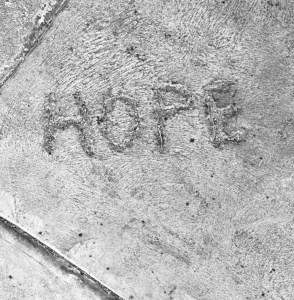
With Diabetes Awareness Month two thirds over, I was thrilled to find just what I needed engraved into the footpath outside my favourite local cafe. It’s what I’m living with and for.

My dear friends with diabetes, let’s be gentle to ourselves. Ten days to go…


Shortbread with Smarties. (Time lapse at end of post.)

Every Sunday, I spend an hour or so doing one of my favourite things. I bake cookies, cakes, brownies or anything else that takes my fancy. I make a time lapse video of it and then share it to my Instagram and Facebook, along with some photos of the delicious finished product and the hashtag #AndOnSundaysWeBake. My friends and family frequently comment on my creations. Some ask for recipes; some ask if they can have some delivered to them; some are perplexed as to why I feel the need to add veggies to my cakes. (The answer is THIS ZUCCHINI BREAD RECIPE!!!!)

The other day, someone who had just started following me on Instagram asked me if these baked goods are my guilty pleasure.

‘Of course not,’ I said to them shaking my head. ‘Why should I feel guilty?’

‘Because they have sugar in them. And butter. Lots of carbs and fat. And you have diabetes. I thought you would steer clear of those kinds of foods.’

I sighed and thought that I could explain how as long as I cover the carbs with insulin, I am dealing with the diabetes side of things. And how I try to eat a balanced diet which mostly is made up of freshly cooked meals containing protein, in season vegetables and some carbs. I thought I could point to how I generally follow a low-ish carb diet because that works for me, and that my weekend (and week day too at times!) baking is a fabulous way for me to de-stress, and feel creative. I was going to point to how there is no such thing as a ‘diabetic diet’ and that people with diabetes can eat whatever we want and that it’s kinda not okay to ask us about what we are eating because it’s none of anyone else’s business. I started to tally up what I’d eaten for the day to highlight just how healthful my day’s food had been (so far) and was going to explain how I would be eating sashimi for lunch, and that has no carbs.

But instead, I just said ‘I don’t do guilty when it comes to food. And I try really hard not to do guilty when it comes to diabetes. Suggesting that we should feel guilty or shame when we eat something delicious that we enjoy – whether or not we’ve made it ourselves – just feeds into bullshit diet culture. My moral value has nothing to do with what I put in my mouth, or restricting food groups, or my weight.

‘So, to answer your question: No. What I bake on Sundays is not my guilty pleasure. But I do take great pleasure in baking and sharing the spoils with friends and family. And eating them. Because I am an amazing baker, and they taste absolutely delicious. Pleasure? You bet. Guilty? No fucking way!’

More?

My go to ‘smash diet culture’ SoMe sites are BodyPosiBetes and Feel Good Eating. Follow them for no-nonsense, no bullshit, no-diet-culture brilliance.

Happy World Diabetes Day to you all. This year, the IDF is building on last year’s theme about diabetes and the family.

I wrote this last year, which explained how my diabetes family extends beyond my immediate family. It includes my friends living with diabetes – the diabetes tribe that I found and love so hard. I know that without them, there is no way that I would be living the diabetes life I have now. This tribe of PWD is spread across the globe, but is literally at my fingertips anytime I need them. A day does not go by when we are not messaging about the saucy goings on in the diabetes world.

Tribe

Everyone’s diabetes family looks different. While for some it is their partner, kids, parents and extended family, for others it may include their friends, healthcare team, local diabetes organisation or next-door neighbour. You do you when finding your tribe! Here’s a collage of just some of the tribe I’ve been lucky enough to see this year.

The greatest thing my own tiny little family unit – Aaron and the kidlet – have done for me with my diabetes is to let me do it my way. Aaron was there the moment I was diagnosed, and not once in the last twenty-one years has he tried to make diabetes about him. He will never know how grateful I am for that. Those middle of the night hypos where he was awake alongside me, toasting bread or pouring juice, or the hospital visits or the days interrupted by misbehaving glucose levels were done with not a single mention of how he has been impacted by my diabetes. I never heard him say how exhausted he was the morning after a particularly wakeful night, or how my diabetes has affected him.

But perhaps the greatest support that my family has given me is never making me feel limited by diabetes. Building independence when living with a chronic health condition isn’t only something that is relevant to children and adolescence. Last night, I slept alone in a hotel room and didn’t for a moment feel fear because of my diabetes. I travel the world alone for work – jump on long haul flights, spend twenty-hour days at conferences and day-long meetings – and I do that with complete and utter confidence that I can manage my diabetes alone.

I hear others with diabetes say that their loved ones are worried and fearful when they are away from them, and that in turn makes them feel nervous. I hear of struggles of how to share CGM data constructively and how much others get to be involved in the PWD’s diabetes life. It’s a delicate dance we do here, and Aaron and the kidlet have always been led by what I need. And what I need is not to feel fragile or as though I could break at any moment if they are not there.

I love that they don’t limit me in any way because of my diabetes. And I love that they trust me enough to know that I will reach out when I need to, and that when they ask and ask and ask, all that does is make me feel like a burden. And I love that they never, ever make diabetes about them.

So, they’re the stories that I’m looking for today – the stories of people with diabetes, showing how they have been supported to do their very best. And at the same time, I’m sending a thank you out to these two for supporting me in exactly the way I need.

My people

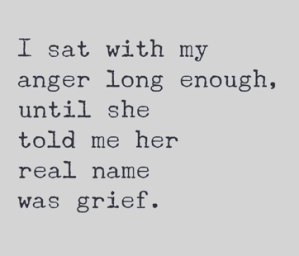
Something flashed across one of my social media feeds the other day, and, had I been in a Looney Tunes cartoon, smoke would have come from my fingers as I screeched to a holt, scrolling back until I found it.

It said this:

Now, I generally hate stupid memes and inspirational quotes. In fact, if it’s not coming from Effin’ Birds, I rarely even pause to read the words.

But this one has had me thinking for a few days, because just a couple of weeks ago, someone on Twitter commented that my tweets were filled with angry emotion and that I should try to fix that. Now, three things: 1. This guy was an anti-vaxxer so he can go get fucked; 2. I wasangry because as well as saying that vaccines are unsafe (lie number 1), he was also claiming that type 1 diabetes doesn’t exist (lie number 2); and 3. I do not take well to being tone policed.

I do come across at times as being angry. But actually, a lot of times there is something more behind my anger. A lot more behind it.

When people see anger, it is the manifestation of 21 years of living with diabetes and 18 years of working in diabetes, and the experiences that have cut to the bone. For me personally, there have been such hurtful and damaging times where the result was for me to head so far underground with my diabetes that I thought I would never recover enough to dare to seek help again. I have heard those experiences mirrored in others’ stories, which we share to gather support and strength from each other. Sometimes, when we speak of our stories, the emotion that comes out appears to be anger. But often, it is actually grief.

When I see HCPs behaving badly online, I think about the times that this happened directly to me and how I felt in the moment, and in the hours and days afterwards. I think about how long it took for me to accept diabetes because it was introduced to me under veils of threats of the horrors I had ahead of me if I dared stray from the demands being placed on me.

All tied up amongst the angry confidence you see is a mess of other emotions, and when I stop and look, which I don’t really like to do, it is undeniable that grief is ever present. I grieve the life I had before diabetes, because even though it was over 21 years ago, I can still remember it. I remember the freedom and spontaneity that came with simply not having to think about glucose levels, carb counts and all the other things that diabetes requires. I grieve the times I didn’t need to think about my mortality. At almost 46, it’s one thing to think about getting older and dying. At twenty-four it was a mind-fuck I didn’t know how to manage.

I grieve the impact diabetes has had on my fertility, which is intrinsically connected to the grief of miscarriages. The anger that I feel about those experiences is especially strong here, but so is the grief, and to be honest, I’m not sure where one stops and the other one starts.

I feel grief for how diabetes has clouded the way my kid has grown up. A mum with diabetes may be the only mum she knows, but she has been forced to understand that sometimes she comes second to diabetes. That grief is tied up with sadness, as well as anger for robbing her of not needing to know what it’s like living alongside diabetes.

Grief is heavy. It weighs me down and has the ability to engulf me in darkness. I feel guilty when it overtakes me, because, didn’t you know, we’re meant to be superheroes. Positive, enthusiastic, shiny superheroes. People with diabetes are football legends, movie stars, marathon runners and we’re not meant to allow it to limit or overwhelm us. I feel guilty for feeling this way when my diabetes life is comparatively easy – access (to care, technology medications), affordability, health literacy are all challenges I don’t have. And yet, I still grieve that it is part of my life.

If I, or other people with diabetes, appear angry, we probably have reason to. But please consider what is behind that anger. I have learnt to sit with my anger comfortably and painfully in equal measure. And I have also come to understand it is rarely there alone.

Follow Diabetogenic on WordPress.com

Enter your email address to follow this blog and receive notifications of new posts by email.

Read about Renza

Archives