Today, Australian actress, comedian and activist, Magda Szubanski wrote a twitter thread that was eloquent, to the point and damning. And heartbreaking. Magda is part of a Victorian Government ad campaign encouraging Victorians to stay home during our COVID-19 second wave. After donating her time to make the ad (the fee she received was donated to the Red Cross Beirut fund which she only pointed out after people were saying she was financially benefitting from pandemic) she has been criticised by people, and that criticism has been nasty, personal and insulting.

Today, her twitter commentary was fair and squarely aimed at Pete Evans who apparently is a health professional, epidemiologist, virologist, public health expert television chef. Evans, in full flight indignation took to his FB page yesterday to exclaim how horrified – HORRIFIED – he is at the TVCs, calling them offensive and disgraceful.

Interestingly, he has not called any of the people making comments on his FB post offensive and disgraceful, despite the way they have been fat shaming Magda, calling her unhealthy and making personal attacks. There was more than one reference to the movie ‘Babe’.

Pete Evans knew what he was doing. He didn’t specifically mention Magda’s weight – in fact he didn’t mention Magda by name. But he did use an image of her from the advertisement in his post. That was enough to summon his flying monkeys to glide in and do his dirty work. Which they sycophantically did, tripping over themselves to be the loudest and most eager to do Evans’ bidding. Anyone who so much as suggested that perhaps the comments about Magda were inappropriate was told to pull their head in.

In true gaslighting form, Pete Evans has claimed that he didn’t in fact fat shame Magda. He followed up his earlier post with another, where he has centred himself as the victim – a martyr if you will – because he is being called out for his prick-ish behaviour.

It is disappointing to see that communities that are built around shonky foundations of wellbeing become nothing more than breeding grounds for hate, shaming and discrimination. Leaders of the groups decide who the latest target will be and then unleash the hounds to do the nastiness. I’ve seen it, had it happen to me first hand, and pushed back on it at every single point I’ve been able to.

This behaviour isn’t new.

I don’t want to give Pete Evans more air. But I will because people like him are dangerous, and his behaviour is nothing short of poisonous. I’m not specifically referring to alternative health lunatics – although they are a particular brand of toxic. Unfortunately, we see it all too frequently these days. These are the methods employed by LCHF bullies. We see it in the diabetes world. It happens when people style themselves as (super)heroes, stopping at nothing to advance their cause, and anyone who dares disagree is shut down.

Today, we saw real ugliness on show from Evans and his supporters. We saw how social media can – and frequently is – used to form a pack mob that unfairly shames and targets people. But we also saw grace from Magda. Which, I hope, is what will be the lasting memory of any scenario like this one.

At the best of times, I’ll celebrate any kind of anniversary, but it seemed even more important to acknowledge my ‘loopiversary’ this year in what can really only be termed as the most fucked of times. Last week, I clicked over three years of looping, a decision that remains the smartest and most sensible I have ever made when it comes to my own diabetes management.

In reflecting just how Loop has affected my diabetes over the last three years, I’ve learnt a few things and here are some of them:

  • The words I wrote in this post not long after I’d started looping are still true today: ‘…this technology has revolutionised every aspect of my diabetes, from the way I sleep, eat and live. I finish [the year] far less burdened by diabetes than I was at the beginning of the year.’
  • The #WeAreNotWaiting community is but one part of the DOC, but it has provided the way forward for a lot of PWD to be able to manage their diabetes in ways we never thought possible.
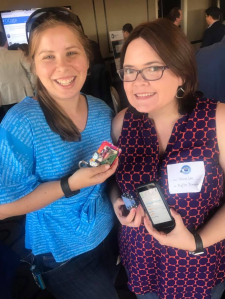
  • Even before I began to Loop, the kindness and generosity of people in that community was clear. I took this photo of Dana and Melissa, two women I am now lucky to count amongst my dearest friends, at an event at ADA, just after they had given me a morale boosting pep talk, promising that not only could I build loop for myself, but they would be there to answer any questions I may have. I bet they’re sorry they made that offer!

  • Loop’s benefits are far, far beyond just diabetes. Sure, my diabetes is easier to manage, and any clinical measurement will show how much ‘better’ I am doing , but the fact that diabetes intrudes so much less in my life is, for me, the real advantage of using it.
  • That, and sleep!
  • I get ridiculously excited when other people make the leap to looping! I have watched friends’ loops turn green for the very first time and have wanted to cry with joy because only now will they understand what I’ve been ranting about. And experience the same benefits I keep bleating on about.

  • It’s not for everyone. (But then, no one said it was.)
  • You get out what you put in. The more effort and time and analysis you put into any aspect of diabetes will yield results. But with Loop, even minimal effort (I call the way I do loop ‘Loop lite’) means far better diabetes management than I could ever achieve without it.
  • It took an out of the box solution to do, and excel at, what every piece of commercial diabetes tech promises to do on the box – and almost always falls short.
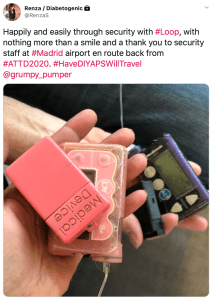
  • It’s amazing how quickly I adapted to walking around all the time with another but of diabetes tech. My trusty pink RL has just been added to the phone/pump/keys/ wallet (and, of course, mask) checklist that runs through my head before I leave the house.
  • Travelling with an external pancreas (even one with extra bits) is no big deal.

  • I was by no means an early adopter of DIY tech, but I was way ahead pretty much any HCPs (except, of course, those living with diabetes). The first talk I gave about Loop still scars me. But it is pleasing to see that HCPs are becoming much more aware and accepting of the tech, and willing to support PWD who make the choice to use it.
  • The lack of understanding about just what this tech does is astonishing. I surprised to still see people claiming that it is dangerous because users are ‘hacking’ devices. Language matters and you bet that this sort of terminology makes us sound like cowboys rather than having been thoughtful and considered before going down the DIY path.
  • The lengths detractors (usually HCPs and industry) will go to when trying to discredit DIYAPS shouldn’t, but does, surprise me. The repeated claims that it is not safe and that people using the tech (for themselves or their kids) are being reckless still get my shackles up.
  • Perhaps worst of all are those that claim to be on the side of those using tech, but under the guise of playing ‘devil’s advocate’ do more damage than those who outwardly refuse to support the use of the technology.
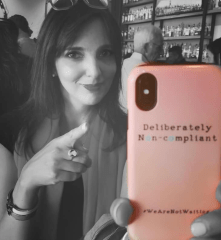
  • The irony of being considered deliberately non-compliant when my diabetes is the most compliant it ever has been hurts my pea-sized brain. regularly.
  • There is data out there showing the benefits and safety of looping. Hours and hours and hours of it.
  • My privilege is on show each and every single time I look at the Loop app on my phone. I am aware every day that the benefits of this sort of technology are not available to most people and that is simply not good enough.
  • Despite all the positives, diabetes is still there. And that means that diabetes burnout is still real. But now, I feel guilty when feeling burnt out because honestly, what do I have to complain about?

But perhaps the most startling thing I learnt on this: The most variable – and dangerous – aspect of my diabetes management has always been … me! Loop takes away a lot of what I need to do – and a lot of the mistakes I could, and frequently did, make. Loop for me is safer and so, so much smarter and better at diabetes than I could ever hope to be. I suspect that as better commercial hybrid closed loop systems come onto the market, those who have been wary to try a DIY solution will understand why some people chose to not wait.

And finally, perfect numbers are never going to happen with diabetes. But that’s not the goal, really is it? For me, it’s about diabetes demanding and being given as little physical and emotional time and space in my life. With Loop, sure numbers are better – but not perfect – and I do a lot less to make them that way. It took a system that did more for me, keeps me in range for most of my day, and has reduced the daily impact of diabetes in my life to truly understand that numbers don’t matter.

Spend enough time trawling through social media posts with a #DOC somewhere in the hashtag, and it is inevitable that you will see photos of people’s CGM graphs. Often, it’s PWD getting excited at their flat line graphs because they have managed to stay within range for a certain period of time. Or perhaps it’s to show shock and utter disbelief at loop systems doing all the work. It can be because we won’t to show how we have managed to nail the timing and amount of a bolus, and that usually-difficult to manage food nemesis (hello, rice!), completely avoiding a spike. Or, it could be just because we feel like sharing.

I don’t share my graphs a heap these days, but have in the past. It’s a personal decision as to whether we want to share their data online, and if you do, knock yourself out. Your data, your rules! I understand why some feel that it can be considered not especially helpful for others, setting us up to feel we are failing if we compare. But the conversation sharing can generate is really useful for a lot of people.

Every now and then, a non-PWD will share their libre or CGM trace to show that even those with a perfectly working pancreases are subject to glucose fluctuations. This is done with the intention of support and encouragement and to show that flat lines really are unrealistic. While I’m sure that those sharing glucose graphs of people without diabetes is never done with any malice – in fact, completely the opposite – I believe it is nonetheless problematic, and misses the point.

I get it. It’s a noble goal to try to make PWD feel less negative when we are unable to manage a perfectly flat line at 4.0mmol/l for hours on end. And to also understand that’s not how the body actually works, even when everything is doing what it should be doing.

But it is totally redundant. And downright annoying. And also, completely inconsiderate.

I live with diabetes and am fixated on trying to limit the variation of my glucose levels because I have to. PWD are told that keeping those numbers between 4mmol/l and 8 mmol/l is the goal. And we’re told that when we go outside of those numbers – especially when we go beyond the upper limit, all manner of nasty things will happen to us. That’s what was told to me the day I was diagnosed with diabetes, and repeatedly what I have seen since.

Showing me your graph that just happens without any effort on your part is not reassuring. It’s pointless. And somewhat heartless. When your level goes up to 12 because you ate a family block of chocolate, it comes back in-range fairly quickly. And not because you had to do any fancy-pants calculations, or micro (or rage) boluses.

When I eat a block of chocolate, whatever happens next is pretty much 100% due to my efforts. I have done some fancy pants calculations. I have had to bolus – maybe once, most likely a number of times – to get my glucose level back in range. And then I sit there and hope that I haven’t over bolused…

Oh – and when you show me that your glucose levels dipped into the low range or sat there for a while, it doesn’t reassure me or make me feel ‘normal’. Because the difference is that when that happens to me, I am doing all I can to make sure that I am okay, that I don’t pass out, that I don’t overtreat (again!), and that I am safe. And then I get to recover from a hypo hangover – something you are fortunate to never experience.

To be honest, I actually find it completely ironic when it is HCPs sharing their data to make me feel better, and a little thoughtless because the reason that I am in constant pursuit of these straight, tightly-in range lines is because it is HCPs that told me in the first place that is where I must stay to ‘prevent’ all.the.nasty.things.

And finally, when this happens, it centres people without diabetes in a conversation that should very much have the spotlight firmly shone on us. Your glucose level data, and the patterns they make are not like ours. They do not represent the blood, sweat and tears, the emotional turmoil, the frustration, the fear that that is somehow reflected in our data.

Perhaps rather than sharing non-PWD data, instead acknowledge just how difficult it is to do diabetes, and commend people with diabetes for showing up, day after day, to do the best we can – regardless the shape of our CGM graph.

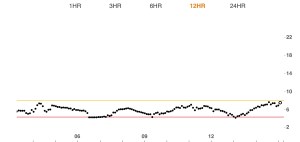
A real-life PWD CGM graph. Mine, from about 10 minutes ago.

I have been fairly quiet on Twitter lately. My blog has been dormant, and I’ve really only been using social media to connect with family and friends. Oh, and sharing recent baking efforts – as evidenced by this Twitter thread last night.

But that doesn’t mean that I have stopped following what is going on. Plus, it’s difficult to ignore stuff when many people start sending DMs wanting to know why I have been silent on an issue about which I am known to be very vocal.

I’m talking about last week’s webinar hosted by Diabetes Victoria, presented by Dr James Muecke.

Firstly – some disclaimers and disclosures. I worked for state-based Diabetes Victoria from 2001 to January 2016. Since then I have been working for Diabetes Australia, which is a national organisation.

James Muecke is the 2020 Australian of the Year. I wrote a little about him in this post which caused a shit storm of its own when a UK HCP tone policed me my writing and said that I was doing a disservice to people with diabetes by writing in the post that there is no need for people to know what type of diabetes they live with. Yeah – I didn’t say that, but anyway…

But the issue was not Muecke’s presentation; it was the title of his presentation: Blinded by Sugar.

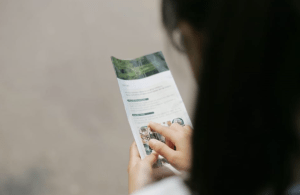
My reaction when I first saw the promotional flyer was horror. And then shock. And then surprise. I was honestly stunned.

And then, once the surprise and confusion subsided, I felt distress. That feeling of dread, and sadness, and anxiety that settles itself in the pit of my stomach. And doesn’t move.

When I talk about language, its power and how it is personal, this is what I mean. Because to me, it’s not just a couple of words in a clumsy, ill-conceived title. Suddenly, it is every single time I sit in the waiting room of my ophthalmologist’s waiting to hear if diabetes has started to affect my vision; it is the flooding back of words from my first endo appointment, where I was told that if I dared let my glucose levels get above 8mmol/l, it would be my fault if I became blind; it is the blame and shame and stigma and finger pointing that we see and hear every time we are told to ‘look after ourselves’ as if we are wilfully ignoring our health and not caring about our wellbeing; it is the guilt that I feel when I eat some cake or a biscuit and the times people have asked ‘should you be eating that?’; it is the feeling of frustration and unfairness of when I can’t work out how my glucose levels could possibly be high after I’ve done everything ‘right’, and the fear of what damage is happening to me at that moment; it is the burnout, the anxiety the days of feeling so overwhelmed because I just.can’t.do.this.anymore, but I have no choice’.

THAT is how I feel when I see words like those in the title of that webinar presentation.

It’s no surprise that this was picked up by some people in the DOC. There are people in the community who are highly attuned to language and diabetes and will call out any example that is doing a disservice to people with diabetes. I am usually one of those people. I’m not proud that I didn’t say anything publicly when this was unfolding over the weekend.

So, what has happened since then, after some of the DOC shared their feedback?

Diabetes Vic CEO, Craig Bennet issued an apology and should be commended on how swiftly he did that. Owning the error and promising to do better is always appreciated.

Today, it seems that the LCHF bullies have now jumped on board, supporting the messaging in the original promotional flyer.

I will say this strongly and without reservation or apology. When you find that you are satisfying this group, you are not helping PWD. It is a person from this group that tweeted this about a group of dietitians. It is this group that fat shamed me after I gave a television interview last year. It is this group that has stigmatised people living with diabetes, claiming they have brought on diabetes-related complications for daring to eat a scoop of ice-cream.

I couldn’t care less about how anyone chooses to eat. I do care a lot when it comes to how certain groups in the community contribute to the already overwhelming stigma faced by people with diabetes.

And finally, everyone makes mistakes. In the last few months, we’ve seen some pretty miserable efforts by diabetes organisations around the world. But the thing that has stuck with me through each of these is how easily they could have been avoided. We do need more engagement with people with diabetes – especially those who can help shape effective communication and messaging.

This blog has been quiet for the last couple of weeks because, honestly, there is nothing that I had to say that was of any value. Instead, I’ve been listening, learning, talking with friends and family, crying with friends, having difficult conversations with people. And feeling uncomfortable. I’m learning to not fight that discomfort, but instead examine it and work out how I can be involved in change.

Today, I’m dipping a toe back in slowly, and sharing this from New Yorker Cartoons (maybe this blog really is going to become nothing more than an appreciation page of New Yorker Cartoons and Effin’ Birds). This cartoon spoke to me. Because: tone policing.

Recent New Yorker Cartoon by Jason Adam Katzenstein. (Click for source)

I write about being tone policed in the healthcare space, and that is what I am writing about today. It’s happened for as long as I’ve spoken up about my experiences of diabetes and my thoughts and ideas about healthcare. I’ve been called aggressive so many times by HCPs who have not liked it when a mere ‘patient’ has suggested that they are being damaging to people with diabetes in the words they are using to talk to and about us.

The bolshie nuns who taught me at secondary school taught me that when women are accused of being aggressive (or strident), it is usually because we are being assertive. I’ve come to learn that it’s not just women. It’s anyone who has, for too long, been expected to just take what is dished up – and to accept it with gratitude.

Being assertive, being aggressive, being challenging and saying enough is enough should not result in being told to tone down. Or to be excluded from discussions unless we agree to be more moderate. Or more respectful. When that respect is truly a two-way street, then let’s talk about that. But for as long as power imbalances are at play, and HCPs insist on speaking on behalf of us, or only agreeing to speak with us if they like what we are going to say; or when HPCs feature more in diabetes campaigns because they insist on centring themselves rather than actual people living with the condition…well, then we don’t have true two-way respect.

Our diabetes community is not immune from tone policing each other. It’s happened to me. I continue to listen to type 2 diabetes voices because I can never expect to understand what they are experiencing in our community unless they tell me. It may be uncomfortable for me to hear – but that discomfort comes from a place of my complicity. It is not my place to tell them to moderate the way they are speaking about their experiences, just because it makes me feel prickly. But it does happen. In the timeline of my involvement in the diabetes world, I know that when I was first diagnosed, I contributed to the stigma many people with type 2 talk about, and then, as I learnt more, I moved to being quiet about it when I saw and heard it – even though I disagreed with it. Now I am trying to be a better ally and calling it out when I see it. And shutting up and listening and accepting what people with type 2 say.

We learn when we listen. We learn when we are open to accepting that we do not have all the answers. We learn when we stop being so centred on our own experience and try to turn the spotlight onto ourselves when instead we should be shining it on others.

We learn when we don’t tell people how they should feel or how they should speak.

I’ve written a few times about my thoughts on the role of psychologists in diabetes care. You can read about it here, and here. Or TL/DR: I believe that every person with diabetes should have access to a psychologist as part of all diabetes multidisciplinary care. Of course, not everyone will want to see a psychologist – and of course, that’s fine – but if they do, it should be easy, accessible and affordable to do so.

Right now, if you are an Australian adult living with diabetes, your input is needed into the development of a new information resource that will provide information on why, when and how to access a psychologist to support people with diabetes. You don’t need to have seen a psychologist before to participate. The resource will be produced by the NDSS, and the survey is being conducted by the ACBRD.

It won’t take you long, and if you participate, you will be reimbursed for your time. You can access all the details, including who to contact if you would like more information, by clicking on the image below.

Click here to participate!

Diabetes is always going to be about the mind as much as it is about the body, and that means we need to be supported by health professionals who understand that. Help to shape the information that might just get people starting to understand just how much #DiabetesPsychologyMatters.

As details of the coronavirus pandemic started to be revealed, the message for people with pre-existing chronic health conditions wasn’t good. It became apparent pretty early on that we were in the ‘at risk’ group. When the ‘only the elderly and those with health conditions need to worry’ lines were trotted out on every forum imaginable, many people with diabetes worried, because we were part of that ‘only’.

And so, people with or affected by diabetes tried to collect the best information about how to keep ourselves safe. One of the most common topics of discussion in diabetes online discussion groups, was about seeing diabetes healthcare professionals. Was it safe? Should we go? What about flu shots? And HbA1c checks? As telehealth services popped up, some were relieved, others were confused. Some people felt they didn’t want to be a burden on their HCP, and indeed the health system that we were told was about to be inundated and overwhelmed. Some diabetes clinics were suspended, only taking appointments for urgent matters.

Last week, Monash University released a report that showed that people with diabetes are not seeing their GP at the same rate as this time last year. The development of diabetes care plans is down my two thirds, and diabetes screening is down by one third.

I was interviewed for a television news story yesterday about these finding. Before agreeing to be the case study, I contacted the reporter to get an idea of just how the story was going to be pitched. ‘We’ll be highlighting the findings of the report, how there are concerns now that there will be an influx of people with diabetes needing to see their doctors in coming months, and how it is understandable that people may be anxious about exposure to coronavirus if they do go to the doctor, and therefore are cancelling, postponing or not making appointments at the moment.’ She paused before finishing with, ‘We’re not blaming people at all.’

They were the magic words I needed to hear and gave her our address, after informing her that the interview would have to take place on the front veranda or in the garden because we were not accepting visitors into our house still.

The under two-minute new story was pretty factual and outlined details of the study. (The grab from me they used had me explaining how I had made the decision to postpone my annual eye screening by a few weeks, rather than the appointments that I had still decided to keep such as my flu jab and telehealth appointments). But overall, it was a good story – factual and definitely not blaming.

Sunday afternoon at the (home) office.

And so, perhaps I was feeling a false sense of safety when I read a newspaper report today that mentioned the study. Speaking about the fallout from people not seeing their GP during the pandemic, a doctor quoted in the story said:

‘The last thing we want is a tsunami of serious health issues and worsening chronic conditions coming after this virus, simply because people have stopped taking care of themselves or consulting their GP.’

I read that, re-read it and then couldn’t get past these nine words:

Simply. Because. People. Have. Stopped. Taking. Care. Of. Themselves.

How could a health professional think this about people living with chronic health conditions at any time, but even more so, how could they think that during the confusion and anxiety of living through a global pandemic where outcomes for those same people are likely to be worse?

People may not be going to see their GP, but it is not in defiance or because they have made the wilful decision to stop taking care of themselves. In fact, I honestly don’t know of anyone who has ever made that decision – pandemic or not.

Delaying my eye appointment isn’t an example of me not looking after myself. It is a reflection of the real anxiety I am feeling about exposure to coronavirus – anxiety that became heightened last week when restrictions were eased, and then only got worse again when I heard the news about deaths of people with diabetes. And I know I am not the only person who is feeling the way I am at this time.

And any other time that I have been accused of ‘not taking care of myself’, I was doing the absolute best I could in that moment, considering all the other things that were going on in my life. And yet, it took me a long time to find a diabetes healthcare professional who acknowledged that when I am not in the right place to be managing my diabetes, we first need to start through those other things first. She never blamed me. She just helped me through.

A health professional making the comment that people not attending appointments are ‘not taking care of themselves’ is actually a much bigger problem than just when looked at in the context of COVID-19. It happens all the time.

Stop blaming people with diabetes. Just stop the blame. Stop blaming people if they don’t get diagnosed early. Stop blaming us if we develop complications. Stop blaming us if we develop complications that didn’t get diagnosed early. Stop blaming us for not caring for ourselves.

But then, I guess, it won’t be quite so easy for HCPs to wash their hands of any responsibility they may have for the health outcomes of people with diabetes if, instead of pointing fingers, they hold a mirror up for a moment.

By the weekend, after last Friday’s post expressing the terror I felt reading headlines regarding death rates, diabetes and COVID-19, I’d moved from scared and sad to angry. Diabetes reports in the media are always fraught, and this was no exception.

I took to Twitter, because it’s as good a place as any to scream into the void and lighten my chest from what was weighing heavily on it. You can read that thread here. Or you can just keep reading this post. I wrote about the processes that I have been involved in for getting a story about research from the lab/researcher’s desk out into the general sphere.

So today, I am going to address a number of different stakeholder groups with some ideas for your consideration.

To communication and media teams writing media releases about diabetes research:

I know that you want your story in the press. Many of you have KPIs to meet, and measures of success are how frequently you get a headline in a well-known publication. I know that you often are the ones trying to make dry numbers and statistics compelling enough to get the attention of health writers and journalists.

But please, please don’t tell half stories. Don’t only present the scary stuff without an explanation of how/what that means. And when you provide explanatory information in the hope that the journo you’re pitching to will pick up your story and run, don’t revert to lazy, over-simplistic explanations that have the potential to stigmatise people with diabetes.

To health writers and journalists:

You have a tough job. I get that. Pages need to be filled, angles found and content that will grab the attention of a news-hungry public must be written. But remember, if you are writing about diabetes, it is highly likely that a lot of people reading what you write are people affected by diabetes. Your words are personal to us. When you talk about ‘diabetics dying’, we see ourselves or our loved ones. Please write with sympathy and consideration. Don’t use language that stigmatises. Don’t use words that make the people you are writing about feel hopeless or expendable. Don’t forget that we are real people and we are scared. Are your words going to scare us more?

To anyone asked to comment from an ‘expert’ perspective. (I am not referring to PWD asked to comment from a lived-experience perspective here, because no one gets to tell you how to talk about how you are feeling. Tone policing PWD is never okay, especially when it comes to having a chance to explain how your emotional wellbeing is going…)

Thank you for trying to break down what it is that is being discussed into a way that makes sense to the masses. If you are asked to be the expert quoted in a media release, ask to see drafts and the final version of the release before it goes out. Consider how your words can be used in an article. It’s unlikely that you will be called for clarification of what you have said, or to elaborate, so be clear, concise, non-stigmatising and factual. Also, and I say this delicately, this isn’t about you. You are providing commentary from a professional perspective on a news story about the people who this IS about . The fallout may be tough, and the topic may be contentious, people may not like what you say, but when that becomes a focus, the story shifts away from the people who really matter here. I am begging you to not do that.

I am frequently asked to provide comment for media releases, sometimes as a spokesperson for the organisation where I work, other times from a lived experience perspective. I always insist on seeing the final draft of the release. And yes, this has been my practise since I was burnt with a quote I’d approved being used out of context and painting my response in a different light to how it was intended. I also insist on seeing the words that will be used to describe me. For me personally, that means no use of the words such as suffered, diabetic, victim, but as PWD we can choose those words to suit ourselves.

I am also more than happy to be the bolshy advocate who clearly lays out my expectations about overall language used. I send out language position statements. I know that comms, media and writers don’t always appreciate this, but I don’t really care. It’s my health condition they are writing about, and the readers will not be as nuanced about those affected with diabetes. If they see something, they take it at face value. I want that value to be accurate and non-judgemental!

And finally, a point on language (because, of course I am going here). Many pieces that have been written in the last week have dehumanised diabetes, and people with diabetes.

Words such as fatalities, patients, sufferers, diabetics, ‘the dead’ have all been used to describe the same thing: people with diabetes who have lost their lives. Break that down even further and more simplistically to this: PEOPLE. People who had friends and family and colleagues and pets. People who had lives and loves and who meant something to others and to themselves.

I refuse to reduce the #LanguageMatters movement to the diabetic/person with diabetes debate, but here…here I think it is actually critical. Because perhaps if ‘people with diabetes’ was used by the media (as language position statements around the world suggest), it might be a little more difficult to divorce from the idea that those numbers, those data, those stats being written about are actually about PEOPLE!  (Of course, PWD – call yourself whatever you want. Because: your diabetes, your rules and #LanguageMatters to us in different ways.)

People. That’s the starting, middle and end point here. Every single person with diabetes deserves to be written and spoken about in a way that is respectful. Those who have lost their lives to this terrible virus shouldn’t be reduced to numbers. Data and statistics are important in helping us understand what is going on and how to shape our response, but not at the expense of the people…

Today, my social media feeds are full of this screaming headline:

(Click for article)

As soon as I saw this, I threw my phone away from me and put my head back under the doona. Aren’t Fridays meant to be about celebrating a week well done and looking forward to the weekend?

Instead, I woke to far too many notifications about diabetes and death – words I really don’t like to see together, especially not so early in the morning.  Fortified with coffee, I took a deep breath and in I went, reading the article from top to bottom.

I’ve had a knot in the pit of my stomach all week. It moved in and made itself comfortable when the Australian PM started talking about easing lockdown restrictions. I’ve spent the last few days trying to work out how I can manage this anxiety in a sensible way, and not do what I really want, which is to build a cellar under our house, stock it with coffee, prosecco and Nutella, and move in there until sometime in 2030.

This article and the subsequent commentary twisted that knot tighter and pushed it in deeper. ‘I live here now,’ it seemed to be saying. And then added, ‘Get better WIFI; it’s patchy in here.’

The fact that the article raises more questions than it actually answers hasn’t helped. More details – details that may help to better understand exactly what is going on – won’t be published until next week. And so, without enough content to provide explanations, advice and information that might help PWD feel that perhaps it’s not all hopeless. Instead, The Guardian offered some throw-away lines about the associations and causes of type 1 and type 2 diabetes:

‘NHS England’s breakdown, published for the first time on Thursday, did not specify how many of the 5,873 diabetics who died had type 1 diabetes, an autoimmune condition not related to lifestyle, and type 2 diabetes, which is closely linked to being overweight. Fuller details will be published in an article in a medical journal next week.’

This just seems like an opportunity for people to appease people with type 1 diabetes, and point the finger and further stigmatise people with type 2 diabetes, instead of acknowledging that people with ALL types of diabetes might possibly find this news confronting. What is the relevance here to being overweight? If there is a correlation, please let us know and does it impact people with type 1 diabetes who are also overweight?

I am not for a moment saying that this sort of information should be hidden away or swept under the carpet. Of course, I want to understand how diabetes and COVID-19 interact. But there has to be a better way to get information to the masses without adding to the anxiety and worry. And definitely in a way that doesn’t sensationalise, point fingers and add to social stigma.

The article goes on to highlight the link between Alzheimer’s disease and deaths due to COVID-19, and as I read the quote from Alzheimer’s Research UK’s director of policy and public affairs, Samantha Benham-Hermetz, I wanted to reach into my MacBook and give her a metaphoric, and therefore socially distant, hug. She said:

‘This shocking news will no doubt bring even more worry and fear to people affected by dementia and their loved ones, during an already challenging time.’

I know that I and so many of my friends living with diabetes, and their loved ones, have been feeling worried and scared since this all started, and this article has the potential to add a lot more. The fact that this response was acknowledged out loud (and I think it’s fair to say that people affected by diabetes would be feeling the same as those affected by dementia) made me feel so grateful and heard.

Statistics are statistics, and data are important; I know that. But sharing data with the masses only works if it is done effectively and communicated in a way that doesn’t leave people feeling hopeless, but rather empowers us to make decisions that contribute to minimising risk.

My heart breaks for my friends with type 2 diabetes, and their families, who not only have to digest this headline and information, but also need to consider how the cavalier and simplistic definition of type 2 diabetes will now be interpreted by the general population who already are so quick to blame and stigmatise.

I live with diabetes, and I understand that I am high risk of complications, and so it seems, death if I get COVID-19. But mostly, more than anything else, I am a person trying to make sense of all of this and stay safe, healthy and sane – just like everyone else.


P.S. Hey – Guardian UK – I fixed this para for you:

‘NHS England’s breakdown, published for the first time on Thursday, did not specify the type of diabetes with which the 5,873 people who died were diagnosed. Fuller details will be published in an article in a medical journal next week.’

Moving forward, this blog will be nothing more than appreciation of New Yorker cartoons describing what is going on in my head.

(Click for source)

Follow Diabetogenic on WordPress.com

Enter your email address to follow this blog and receive notifications of new posts by email.

Read about Renza

Archives