The OPEN Diabetes Project is currently running a survey to look at the impact of do-it-yourself artificial pancreas systems (DIYAPS) on the health and wellbeing of users. There are stories all over the DOC about how people with diabetes (and parents of kids with diabetes) have taken the leap to Loop. These stories provide wonderful anecdotal tales of just why and how this tech has helped people.

The idea behind this new survey from the OPEN Diabetes team is to continue to build evidence about the effectiveness of this technology as well as take a look into the future to see just what this tech could have in store.

And important part of this new study is that it is not only OPEN (see what I did there?) to people who are using DIYAPS. That means anyone with diabetes can participate.

This project is important on a number of levels. It was conceived by people with diabetes and a significant number of the people involved in the project team (and I am one of them) are living with diabetes. We very much live the day-to-day life of diabetes and that certainly does make a difference when thinking about research. Also critically important is the fact that the ACBRD has recently joined the OPEN Project consortium. Having a team of researchers exclusively looking at the behavioural impact of diabetes technology will offer insights that have not necessarily been previously considered in such a robust way.

All the information you need can be found by clicking on the image below – including who to speak with if you are looking for more information. Please share the link to the survey with any of your diabetes networks, healthcare professionals who can help pass on details and anyone else who may be able to help spread the word.

A reminder – this is open to everyone with diabetes – not just people using DIYAPS. (I’m stating that again because it may not be all that clear as you are reading through the material once you click through to the survey.) You do not need to be Looping or ever tried the technology. Anyone with any type of diabetes, or parents/carers of kids with diabetes can be involved.

Click on link to take survey

DISCLSOURE

I am part of the Open Diabetes Project Team.

I am, of course, concerned about privacy. In a world where pretty much everything there is to know about me is contained in a device I hold in my hand, I am well aware that there is a lot of data (diabetes and non-diabetes) available. 

Obviously, I’m not all that concerned. I have my location settings switched on all the time. I check into places I visit – or rather, used to check into places because these days those check ins would be ‘bedroom’, ‘living room’, ‘kitchen’, ‘home office’, ‘garden; and not much else. I use social media extensively, at times offering a pretty intimate picture of my day-to-day activities. I happily installed the COVIDSafe App without a second though to what that would mean in terms of being able to trace where I had visited. I have done so much online shopping in the last few months that Amazon will have a very accurate and specific profile of my buying habits and what the inside of my house looks like. I happily sign up to new apps and websites, and pretty much every non-Murdoch news outlet has my details so I can access the latest in news. I do ridiculous, mindless quizzes on Facebook, signing up to have the privilege of finding out what my birthstone says about me. 

But the thing about it is that I am happy to choose to hand over that info (and yes, I get that I have little idea which third party organisation is then given access to my data, but really, if they want to know ‘what 1970s song’ I am, they are welcome to that information). I also keep an eye on just who I have given access to, and frequently unauthorise apps and subscriptions.

Because I can do that. 

I have the same attitude when it comes to my diabetes data. My personal situation is that I don’t share my data with anyone. I don’t have anyone real time monitoring my CGM. I don’t ever give access to my data to my HCP unless there is a specific issue I need help with and then sharing data is limited and on my terms. To be honest, I haven’t had anything downloaded for a HCP in the whole three years I’ve been Looping. And yet, the medical appointments I’ve had in that time have been the most rewarding, the most satisfying and the most relevant consultations I’ve ever had. I walk out with clear ideas about what I need to do to keep going with my diabetes, and feel so satisfied that the things that I wanted to discuss have been addressed. 

I have recently done a couple of meetings where discussion has been around what is important when it comes to the development of an app or program. One meeting was referring specifically to an app that would be collecting data about day-to-day feelings of wellbeing, the other was about collecting data from a connected device. The meetings included a discussion about who would be able to see the data, and how they would be shared. 

For me, the undeniable most important thing is being able to determine who sees my data, when they see it, how they see it and why they see it. I remember a few years ago, when Cellnovo was launching in Australia, attending a workshop where the inventor of the pump was showing off the fancy data collection app and how it was set up. I was a little astonished when we were told that the default setting for data sharing was up to the HCP. It was automatically turned on, and could be turned off, but that had to be done by the HCP. There were a couple of diabetes advocates in the room that night, and none of us seemed all that impressed about that. 

When asked in these meetings what was important about the set up of these new data collection apps, the first thing I said was the PWD being in absolute control of who they share the data with. In my mind, that is a non-negotiable. 

Last week, I was surprised to hear that some of the meeting participants say that it is a condition of access to diabetes devices that downloads by HCPs are compulsory. I asked for that to be clarified, thinking perhaps I’d misheard, but no, I had heard correctly the first time.  

I have thought about this a lot over the last week. I thought about my ‘old days’ when I used to ‘forget’ to take in BG record books to avoid having to go over them with my HCP, or not have a meter with me in case I was asked for a download. This was, of course, before I realised that I didn’t need to agree to sharing the information on my device. It’s much harder in 2020 when we have our devices literally strapped to our bodies and driven by our phones to make the ‘I left it at home’ claim.

And I’ve also wondered how it is possible that in 2020, the agenda for a diabetes consultation is not being set by the PWD. It seems that data remains king to a lot of HCPs who have made the determination that access to data is not negotiable. I have been on advisory boards here in Australia and know that there is no way that this sort of thing would fly as national policy. Some centres may insist that data be downloaded, but PWD could still push back if they were comfortable doing so. (For the record, there should be no need to do that. Permission should be asked each and every time access to data is requested, and consent should be granted for it to happen. This also refers to the idea of having to be weighed at all appointments as matter of course.)

Obviously, in the true spirit of YDMV, there is no one way to do this and if people are happy to share their data, and for their HCP to have access to it, then brilliant! But that actually isn’t the point of today’s post. It’s not about deciding that you are okay with it. It is about not having a say. It’s about the idea that HCPs consider themselves the gatekeepers of MY data, or that they have a right to it. To me, I don’t think that is okay at all.

Postscript

This post is referring to adults, but if you want to read about my unpopular posts about kids consenting to sharing their data as they get older, try here or here

Yesterday, I gave a talk about language and stigma, and one of the questions I was asked focused on stigma within the diabetes community. I’ve had this post sitting in my ‘unpublished’ folder for months now, and decided that today was the day to publish it. I’m dedicating it to all my friends with type 2 diabetes.

There is a photo of me from 2011. I am standing in my office at work, wearing a bright red t-shirt. I’m staring at the camera, my eyebrows raised, a smirk on my face. My fingers are pointing to the words printed across the front of the t-shirt: Type 1 diabetes. The real diabetes. 

At the time, I was running a program that was exclusively about developing and running programs and activities for people with type 1 diabetes. It remains one of the things I’m most proud about in my career, because at the time, what was available to people living with or affected by type 1 diabetes was really, really limited.

At its peak, our program ran over 20 events across the state in both the city and rural areas, including diabetes technology expos that featured all the latest and greatest in Dtech; a diabetes and pregnancy program; we published a monthly type 1 diabetes-specific e-newsletter; established a program of peer support groups for people affected by type 1 diabetes; and also included in the program were camps for kids with diabetes. We put type 1 diabetes on the map as a program area that needed special attention, resources, funding and acknowledgement. The program was entirely ‘user-led’ meaning that everything we did came from feedback from the community, and many of us in the team were living with diabetes ourselves. Many of the things I see these days in the diabetes community are activities we first did fifteen years ago.

On top of the community engagement and events we were doing, the type 1 focus meant that we were now demanding attention in the policy and advocacy space. The specific needs that were relevant to people with type 1 diabetes were being discussed separately, and that yielded some impressive results – improvements to and extension of the Carer Allowance for parents of kids with type 1 diabetes; funding of pump consumables on the NDSS; pathways to funding of digital technology solutions being on everyone’s radar. We had (and continue to have) wins because of this attention to type 1 diabetes. We started doing this eighteen years ago and are still pushing the agenda.

I have no qualms about the program we started being an exclusively type 1 diabetes program. At the time, the organisation was already doing lots for people with type 2, and my work was addressing a gap in our programs and services. I was employed as a response to feedback from people with type 1 diabetes who felt that the services offered where not relevant to them. So, by working closely with the community, we built something from the ground up that provided people with type 1 diabetes what they wanted.

When the photo I described at the opening of this post was taken, my head was exclusively working on type 1 diabetes activities. I thought the shirt was cute and fun, and that I looked cute and fun wearing it. And I knew that so many of the people with type 1 diabetes that I was working alongside would love it too. The response when I shared the photo on Facebook proved me right. I know how to play to an audience!

Today, I am horribly ashamed and embarrassed that I wore this shirt with such glee, and the attitude that I held towards people with type 2 diabetes. Because while I saw the t-shirt as a just a bit of fun, the truth underlying it was that I did believe that type 1 diabetes was the more serious, the more important, the more misunderstood, the more maligned, the more worthy condition. After all, we couldn’t have done anything to stop our diabetes, could we? We were completely blameless. How horrible I feel today even typing those words.

I deleted the photo from my Facebook a number of years ago, but I still have it saved. Any  time I stumble across it, I feel a rush of shame. I was going to share it with this post, but a wise friend counselled me against that idea, saying that it was likely that somehow it could be used out of context and against me. It will remain hidden for now, bundled up with that shame and disgust I rightfully feel when I see it.

So, when did things change for me?

Of course, it was when I started listening to people with type 2 diabetes. It was hearing about their challenges and the constant stigma they felt. It was hearing how they felt when they were misrepresented in the media, or by others who knew little about type 2. That was when I realised how hurtful the narrative surrounding type 2 diabetes was for many of the people actually living with it.

I’m ashamed to say that harmful narrative that I actually contributed to. I certainly hadn’t always behaved with intent, but some of the time – such as when wearing clothing that suggested that I had the ‘real’ type of diabetes – was deliberate. Calculated or not, my complete lack of knowledge about type 2 diabetes, and the challenges faced by those living with it, meant that I was very often stigmatising.

I knew I needed to change what I was saying. Whilst I still believed in the absolute philosophy of the program I was leading, and the necessity of it having a type 1 focus, I understood that I needed to reframe the way I spoke. And I needed to be accountable to what was going on around me in discussions about all types of diabetes. The commitment I had to calling out misinformation about type 1 diabetes could no longer be at the expense of type 2 diabetes.

I have said this a million times – no one has to advocate for any cause they don’t want to. No one has to take on something that they don’t have the time, energy or inclination to focus on. No one has to be an advocate for all types of diabetes. There are some absolutely brilliant people who hone their energies on issues surrounding only one type of diabetes because that is what they know and what they are passionate about, and all the power to them – especially when they do that by elevating their cause BUT NOT diminishing others.

For me, my focus is on a number of different things and some of them actually do remain specific to type 1 diabetes. Some span all types of diabetes. The difference these days is the way that I do it.

I am sorry to all my friends with type 2 diabetes who I misunderstood, misrepresented and stigmatised. I have no excuse for my behaviour, but I do own it. And I promise I will keep calling out anything that I see contributing to the narrative that I once was part of.

Postscript

I’m writing the next bit in bold, because a while ago I published a post suggesting that when correcting stigmatising comments in the media, we don’t necessarily need to specify type of diabetes, and it was somehow misconstrued to mean things that I did not actually say. The things in bold below? There are dozens of examples of me stating these exact things through my blog, talks I’ve given, other articles I have written. But here they are in one little place just so my position is super-dooper clear.

  • Of course, we need to know what type of diabetes we are living with. We have a right to know and understand our own body and what’s going on with it, and the implications of our type of diabetes. For example, autoimmune diabetes comes with a whole heap of other considerations such as AI clustering and what that can mean to other family members.
  • Of course, we can and should feel free to say ‘I have type x diabetes’ if we want to. We can identify and talk about our own diabetes any way we want to. No one has the right to tell us otherwise. (Now I want to have ‘type x diabetes’ because that sounds all cool and mysterious and as though it could be the starting point of a disaster movie about world domination.)
  • Of course, there are some groups of people who really do need to fully, completely, utterly, absolutely understand the different types of diabetes and what they mean. For example – HCPs should know, policy makers should understand (to name just a couple of groups).
  • Of course, we should know the best management on offer for our own type of diabetes and be clear about what we are doing/using ourselves.
  • Of course, we should know that people diagnosed with type 1 diabetes need insulin and there is no other choice.
  • Of course, we should look at outcomes for all types of diabetes and see what measures need to be taken to improve them – and those measures will most likely be different for different types of diabetes.

Over the weekend, an embargoed press release arrived in my inbox with a few different pieces of research that would be presented in coming days at EASD.

Being registered as press for diabetes conferences means getting an advance peek into some of the big stories that are likely to generate a lot of interest and discussion. This email offered three or four pieces of research, but it was the first one listed in the subject heading that made me catch my breath and hesitate on the button to read the email beyond the header,

Shorter. Life. Expectancy.

The three words ran through my mind over and over before I steeled myself enough to open the email and read the release, then the abstract and finally the full article. As confronting as the email header was, there was nothing in there that I didn’t expect, and nothing really that surprised me. It’s not new news. I remember being told early into my diagnosis that I could expect to live 15 years less because of diabetes; something I casually announced to my sister one night when we were out for dinner. Through tears, she made me promise to never say that again, and I just hope she’s not reading this right now.

But even though there was nothing in there that made me feel especially concerned, I did bristle at the conclusion of the article, in particular this:

‘Linking poor glycaemic control to expected mortality … may incentivise … people with diabetes and poor control to increase their efforts to achieve targets.’

I’m ignoring the language here, because even more problematic than the specific words in here is the sentiment which I read as ‘scare people and threaten them with early death to try harder’. Unsurprisingly, I find that horrendous. Equally horrendous is the assumption that people are not already trying as hard as they possibly can. It’s not possible to increase efforts if someone is already putting in the maximum.

Over the last twenty-two years, my diabetes management has sat at pretty much every single data point along the ‘glycaemic control’ spectrum, from A1Cs in the 4s and 5s all the way up to the mid-teens. There is no way that being told that I was going to die earlier would have made me pull up my socks to do better. In fact, it’s likely that if anyone had, at any point (but especially when I was sitting way above target), told me that I was sending myself to an early grave, all that would have done was send me further into the depressive burnout hole I was already cowering in.

It’s tough going knowing that the health condition that I’m doing everything in my power to manage as best as I possibly can is going to contribute to cutting my life short; that despite those efforts, I am likely to see fewer years of my daughter’s life and be outlived by most of my friends. Placing any of the blame for that on me for that makes me feel even worse.

I’m not here to argue with the article – it was an analysis of an audit of data out of England. I’m not here to say that this sort of information shouldn’t be shared, because of course it should be. Understanding outcomes, what drives them, interventions that can help and any other factor that provides better results for people with diabetes is a brilliant thing. These sorts of results could be used to highlight when and how to intensify and prioritise treatment options.

I do, however, question the way that the information will be used. Also, from the article:

‘Communication of life years lost from now to patients at the time of consultation with healthcare professionals and through messages publicised by advocacy groups … and … national/international patient facing organisations will be of great help in terms of disseminations of the conclusions of this study.’

I would be really dismayed if I saw any diabetes organisation using this information in a comms campaign, as I fear it could add concern and trauma to people living with diabetes. I worry about how it could be interpreted by well-meaning loved ones to say, ‘If you don’t start looking after yourself, you’re going to die,’ or something similar.

For the record, one of the other studies highlighted in the email was about hot baths and diabetes. The lowdown on that is having regular hot baths may improve cardiovascular risk factors in people with type 2 diabetes. I’m going to do an n=1 study to see if that also helps people with diabetes.

This week, it’s EASD. It’s is the first year since 2012 that I have not been in Europe for the meeting. EASD was the first large diabetes professional meeting I had ever been to, and I remember being struck at that very first one in Berlin by the stark absence of people with diabetes on the program and involved in the actual meeting.

My, how things have changed.

Except, of course, they haven’t. Sure, these days you will see growing numbers of PWD wandering the conference centre and attending sessions, but that really is only because we created opportunities for PWD to attend. And once we found a way to get there, we then made sure that we were visible in different ways such as leading social media charges and holding events open to all attendees.

There has been some very well placed and relevant conversation on twitter about the lack of diversity in the EASD organising committee. Too few women; too many white faces. But when we talk about inclusion, surely, surely we need to look at other groups that are significantly and obviously absent. Where are the advocates on there? Where are the BIPOC with diabetes? Where are people living with both diabetes and disabilities? Where is there representation from the diabetes LBGTIQ community? All of these factors impact on diabetes management, so wanting to see presentations that address them makes sense. And where is the lived experience on the program to underline, and provide real relevance, to the work that is being presented by HCPs, researchers and academics?

You bet there should be more women and more BIPOC on the organising committee for EASD. But if those on the committee, those doing the research, those HCPS seeing PWD truly want to beat the ‘person-centred’ drum, PWD need to be part of the group of people putting the conference together, and then strongly represented on the stage too.

#NothingAboutUsWithoutUs seems to STILL be missing from this whole meeting – from the organisation right through to the actual delivery of information. (I suspect that there may be some PWD on the program who are HCPs. While that is terrific, it is very different from having advocates who are not HCPs up on stage.)

So, this week, if you can, please support initiatives that do highlight the people who are actually living with diabetes. Please check and double check the times. I’ve tried to work out the AEST start time for all of the events, but don’t take my word for it! (Disclosure statement at the end of this article.)

#docday°  & #dedoc° voices

This is the eleventh (I think??) #docday° event and I am so proud to say that I have been involved in every single one of these events. The first one was held in the back room of an overheated and overcrowded café in Stockholm five years ago. It feels like yesterday, and a lifetime ago all at once. Organiser, Bastian Hauck, asked me to say a few words, and this is what I wrote in a blog post about the event:

‘I highlighted for me what is the most important thing when we are talking about the DOC: No one owns this community. No one is more important or more relevant or more powerful. Sure, some of us are very fortunate that we get to actually meet IRL and attend conferences, but we do it as part of our jobs – whether it be like me (through my work at a diabetes organisation mixed with my online work) or through independent consulting or other work. But regardless if you are in the room or following along on Twitter, everyone has the same right to be here and to be part of it.’

We have livestreamed #docday° events in recent years, and I have written about most of them, and done all I could to encourage as many people as possible to come along and join in. This year, it will once again be livestreamed from the #dedoc° Facebook page from Tuesday (today) 12pm CET tonight, which is 8pm AEDT.

Also, make sure you keep an eye out for all the terrific advocates who received a scholarship to attend EASD via the #dedoc° voices program. They are sharing what they are seeing at the meeting on a variety of social platforms.

SOLVABLE PROBLEMS IN DIABETES

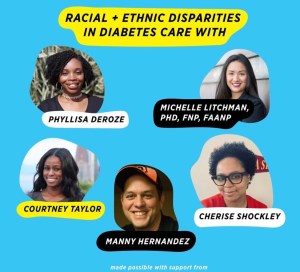
A few hours later, diaTribe will be continuing the Solvable Problems in Diabetes events which have been regular satellite events at European diabetes meetings in recent years. During COVID times, these events have been kicked off with a community focus event, showcasing diabetes advocates, which is a brilliant (and necessary) addition to the HCP discussion that follows. I’m a huge fan of diaTribe, and have been for a long time, but it has been the addition of Cherise Shockley to their team as Community Manager that has seen a wonderful increase in representation of PWD in their activities. But, of course it has. Cherise is all about community and the way she has been able to weave her magic to make diaTribe even more relevant to PWD – and more representative – is what she does best. You’ll need to register for this event (it’s free) here, and it kicks off at Tuesday 11.30am ET, which is (gulp) Wednesday 1.30am AEDT.

SEPTEMBER SESSIONS

While not part of EASD, Beyond Type 1 is hosting the next in their Summer Sessions and this week it’s focusing on racial and ethnic disparities in diabetes care. There is an absolutely stellar line up in this webinar. Please do follow along if you can – this event will also be via Facebook Live over at Beyond Type 1, and is on Wednesday 8pm ET, which is Thursday 10am AEST.

DISCLOSURES

  1. I am ad advisor to the #dedoc° voices program. I do not receive any payment for this role.
  2. I am speaking at the Solvable Problems in Diabetes Community Focus Sessions. I am not receiving any payment for my involvement. I am a regular contributor to diaTribe, and I am paid for commissioned articles.
  3. I am on the Leadership Council for Beyond Type 1. I do not receive any payment for this role.

When people have asked me how I am feeling throughout the COVID-19 pandemic, they will usually receive a reply that varies from ‘All good’, to ‘Pushing through’, to ‘It’s been a tough week’, and everything in between.

What they won’t hear is how I have been feeling alongside these things. I have felt expendable.

It started early on with the first reports of the new virus that we knew nothing about. ‘It only affects people who are older and those who already have a health condition.’

In one of the first posts I wrote about how I was feeling as we entered this new world, I wrote these words ‘…the other day, I found that I was fighting back tears as, yet again, some politician somewhere promised that people who were diagnosed with the virus would most likely be okay – as long as they were not old or chronically ill.’

That was on 13 March. It’s now 11 September. For the last six months, I have continued to fight back tears and deal with lumps in my throat because one of the few constants through all of this is the lack of care and compassion directed at people who are older and those of us living with health conditions It’s a rather laissez-faire attitude: let’s not worry because we are all going to die anyway.

Being made to feel that I don’t matter is grinding. The accompanying stories from places with over-stressed medical departments, which show the people who this was ‘only’ meant to affect are being denied treatment because care and hospital beds are being prioritised for younger, ‘healthier’ people, are heartbreaking (and I’m sure impossible for the HCPs who have to make these decisions).

Add to that the bullshit reporting, manipulating data (and the truth) to suggests that many people who have had their deaths attributed to COVID-19 didn’t actually die FROM the virus, but rather WITH it, as if that makes it all okay and we are all just minutes away from dropping dead anyway, so who cares. It’s fun watching a discussion about how, if I was to get COVID and die, it would be the fault of the condition that I have worked so fucking hard to manage so that I can be healthy and contribute to the world around me, rendering that effort a waste of time.

It is a lot. It feels heavy. It feels that I don’t matter. But I do, don’t I? My friends with diabetes do too, don’t they? My parents and others’ parents and grandparents, and friends and family and colleagues who are older matter, don’t they?

Feeling expendable is a terrible way to feel, but it has been nestled in a corner of me for over six months now. That’s a really long time to feel pretty crappy and I honestly think it’s time to be better about the underlying messages when talking about COVID-19. I really want to stop feeling this way, so please, think about what you are saying when you mention people like me.


For more information (all Australian sites):

http://www.ruok.org.au

http://www.beyondblue.org.au

http://www.lifeline.org.au

(Here it is in pink!)

Diabetes conferences and scientific meetings in 2020 have looked very different than in previous years. It looked as though we were off to a flying start with a successful ATTD in Spain back in February. But not long after all the attendees returned to their corners of the globe, the world turned upside down and decided that, along with everything else, in-person meetings were done.

Major professional conferences such as those run by ADA, DUK, EASD, ISPAD, ADS & ADEA and IDF have all either happened, or will be happening, virtually, with a Zoom (or other) platform being where we meet, rather than a massive conference centre in a major city.

As ever, I search for a silver lining and if there is one it is this: the pivot to virtual conferences means that some of the main barriers in the way preventing PWD attending diabetes conferences are somewhat reduced. With travel, accommodation and a lot of the other expenses out of the way, it may be easier for advocates who would like to attend to find their way in. Let’s look at that as the disruption we needed to have to get PWD flocking to meetings in droves.

There is still the matter of registration passes, and we know that is not always the easiest thing to overcome. The registration fee is significant, and some conferences only allow HCPs and researchers in. Usually, press passes provide a way to get passed security, but they require letters of assignment (sometimes from diabetes organisations who ask PWD to act as ‘on the ground’ reporters), or other criteria be met. And, of course, there are invitations to attend satellite events extended from device and drug companies to some advocates. While there is often criticism at these methods, they have meant that there are PWD at conferences, many of whom provide information back to the community.

At ATTD, there was a new way in. Advocacy group #dedoc° launched a new program, #dedoc° voices, which you can read all about here. For the pilot of the program in Madrid, the diabetes advocates whose applications were successful had access to all parts of the meeting.

#dedoc° voices is happening again for EASD (coming up next month), and it’s not too late to apply. And as an added bonus, successful applicants will also receive registration to the ISPAD conference in October. ISPAD is the International Society for Pediatric and Adolescent Diabetes, so if you are a parent of a kid with diabetes involved in advocacy and peer support, you may be super keen to attend this one.

To apply, go here. #dedoc° voices is open to PWD now, so if you have always wanted to attend a major diabetes conference, there is nothing stopping you from applying, right now. Any one from anywhere around the world can apply – the only consideration is how you’ll manage time zone horrors if you don’t live in the same zone as the conference. (But please don’t come crying to me about that – I’ve spent the last six months settling in for hour long meetings hosted out of Europe of the US which begin long after sunset and involve perky people just waking up while I yawn and struggle not to fall asleep in my Zoom square!)

What are you waiting for? Apply now and come be a part of one of the biggest diabetes meetings in the world. I promise there will be lots of other PWD there for you to (virtually) meet up, and share ideas with. Come say hi!

Disclosure

I am an advisor to the #dedoc° voices program. I do not receive any payment for this role. 


This was one of the first things I saw when I opened my email this morning: the lead article in the latest edition of The Limbic – Subsidised CGM has not improved outcomes in Australian children with T1D’.

I’m relying on the The Limbic’s commentary as the study is not open access (I have requested a copy from one of the authors), and according to the report, the focus of the study was improvements in A1C and reductions in severe hypoglycaemia.

It will come as no surprise to anyone who has read anything I have written about technology or heard me give one of my many, many talks on user experience that I found this report problematic. Screaming that a well-funded and hard-fought for program, providing much needed diabetes technology to children (and adults) is ‘underwhelming’ does not sit well with me at all, especially when the main way the program’s success has been evaluated is a highly flawed clinical measurement.

When I look at the benefits I list when it comes to using any sort of diabetes tech – or other diabetes management, whether that be a drug, an education program or even peer support – changes to my A1C is far down on the list. I understand that for some people, this is certainly a measure of success, but it is not even close to one of the first things I would consider.

My history of using diabetes technology is long and elaborate. Perhaps one of the best examples of just why A1C gives a very incomplete picture of how I measure success is my initial foray into using an insulin pump. It was almost 20 years ago, and I was only three years into living with diabetes. That story is one that could be used as an example of ‘How NOT to do pump therapy’.

I was educated (and I use that term very loosely) by a rep from the pump company. She talked at me for three hours, pressed buttons, loaded some numbers into the device and then stepped out so a dietitian could teach me all I needed to know about carb counting. She was in the room for forty-five minutes. (For context, this was my introduction to carb counting, because my first dietitian encounters were only about low GI, with a general direction of ‘Eat as much as you want of it as long as it is low GI’).

I was released from the hospital with this new device strapped to me, step by step instructions for how to do a cannula change in three days’ time, and absolutely no idea what I was doing.

But here’s what happened: I could sleep in again. I didn’t need to eat unless I really wanted to; eating by the clock became a thing of the past! I could eat brunch out with friends again, without having already had breakfast at 7am. I ate more of the foods I wanted to and stopped stressing out each time I sat down for a meal. I felt more relaxed. My life felt just a little bit more mine, rather than dictated to my a most unwelcome health condition. And sleep! Did I mention sleeping in?

My A1C was the highest it ever was. By all clinical measures, I was absolutely messing this up. But by my measures – which were based on how I was feeling, how emotionally robust I was, how burnt out I felt, how late I could sleep in on the weekend (I see a theme) – I was ticking every single box.

My endocrinologist told me that I was wasting my money (and his time) being on a pump, and nothing I could do to explain that for the first time in three years I felt like myself. Sure, I knew that I had work to do on my A1C, but I finally felt emotionally resilient enough to do that. He just shook his head and sent me on my way…and was promptly sacked.

(Luckily for me, the story ends well because about eight months later, I came across a woman called Cheryl Steele. Suddenly I could use a pump properly. My A1C came down; my quality of life remained elevated.)

My story is not uncommon. I have spoken with dozens and dozens of people who have benefited from the CGM initiate and overwhelmingly, the stories I hear are people who are grateful for the tech for what it has offered them. Interestingly, we rarely talk about those measures that HCPs and researchers seem to think are the best way to gauge the success of any sort of intervention. They talk about those same things I mentioned earlier. When the CGM initiative was first launched, parents of kids with diabetes told me they had slept for more than three hours at a time at night for the first time in years. They told me how they stopped fearing hypoglycaemia so much, because they were being alerted if their kids glucose levels were trending downwards. They told me that their kids were having sleepovers and heading off to school camp for the first time.

A1C? Maybe we would mention that somewhere down the track, but that wasn’t what got us the most excited. That wasn’t the bit we spoke about when we uttered the words ‘life changing’.

Obviously, research is important. Data is essential. It was data that provided the strong case for Diabetes Australia, JDRF, ADS, ADEA and APEG to advocate for CGM funding as part of the NDSS. But the case that was put forward also included research that looked at QoL, because the organisations know that this matters.

Research that focuses on A1C is always going to be problematic in a health condition that will never only be about that number. It’s problematic for a number of reasons – not just because it gets my shackles up before I’ve had my morning coffee. We know the pot of money that goes to supporting and funding initiatives, such as the one in this study, is very limited. Funding authorities don’t have the nuanced understanding of all the different interventions that need funding, so if a study like this comes across their desk, it could raise red flags.

I am not for a moment saying that this sort of research should not be conducted or that negative results should be buried. What I am saying is that any results need to be flagged as only ever presenting part of the issue as a whole.

I am looking forward to reading the whole study – and truly, I’m hoping that this blustering post is all a waste of time because somewhere in there, I will get to see that the researchers spent a fair bit of effort evaluation QoL as well. I’m hoping that the trumpeting heading from The Limbic is nothing more than their typical sensationalism.

My fear, however, is that there won’t be more, and that once again, PWD will have been reduced to nothing more than a flawed metric that shows only one corner of the picture of our lives with diabetes.

I’ll finish with one final thought. I advocate for PWD’s involvement in every single step of diabetes research (not just as participants of studies), and one of the reasons I do that is because when we are at the table when studies are being first mapped out, we are given the chance to remind those conducting the work that the answers they are seeking are coming from people. Real people who will always be far more than their diabetes. And somehow, that needs to be reflected in the study they are doing. It can be done. Unfortunately, this seems to have missed the mark.

Follow Diabetogenic on WordPress.com

Enter your email address to follow this blog and receive notifications of new posts by email.

Read about Renza

Archives