There have been a number of times here on this blog and in other online platforms that I have been critical about the low carb community. Actually, let me be more specific. I have been critical of the response from certain corners of that community, particularly the corners that are free with their fat shaming, and accusing people with diabetes who choose not to eat low carb as not caring about their health, and attacking others for daring to suggest that there could possibly be more than one way to eat. This has come from a long list of incidents I’ve either seen or have been involved in, such as the time I was fat shamed for saying that intermittent fasting is great for some, but not for everyone, and the time that people in the LC community got angry at the idea of saving the lives of children with diabetes from developing countries

I guess I shouldn’t have been surprised really at what happened earlier this week just before I published a post on diabetes and menopause. As I often do, I look to the community for others’ experiences. And so, I tweeted (and shared on Facebook) this:

The responses were many and great. One aspect of the generosity of the DOC is the willingness and openness to share not only experiences, but to offer tips and tricks for what has worked for them. I’ve always found that so amazing, especially when addressing issues that are considered a little taboo. Menopause is one of those issues. But even so, there were so many replies from people who have either gone through menopause, or started to think about it. 

And then, out of the blue, came a reply from a nutritionist. A nutritionist I have never encountered before. I don’t follow him on Twitter, I have no idea who he is. Which is all fine. My Twitter is public and if I ask a question everyone is free to offer their input. Here is his reply:

I replied that I am not a healthcare professional. And then came this:

Followed by this from me:

(I’m not going to share anymore of the tweets in what turned out to be a rather long back and forward thread, but if you click on any of the tweets above you will be able to find the whole mess.)

He kept going, demanding to know why I am critical of low carb diets and health professionals who promote them (which he apparently had deduced from reading through my Twitter feed). I’m not. Which is what I repeatedly tweeted to him in responses to his continued demands that I explain my stance on diets and diabetes, and, as a healthcare professional, I must stop giving ‘personality-driven healthcare advice’. I reminded him that, a) I am not a HCP (which I had already stated), and, b) I share my experiences, not give advice. He helpfully suggested that my blog posts read that way. 

I had asked about menopause. I asked people with diabetes who had either been through menopause, were going through it now, or thinking about going through it. I asked whether it had been a topic of conversation with their HCPs. 

This bloke – who doesn’t have diabetes and has never experienced menopause – had nothing to offer, other than attacking me for my choices. And my choice is that I believe in choice. 

It’s not okay for a healthcare professional to enter into a discussion with a person with diabetes seeking peer support, and telling them what it is that they do and don’t do in that community. I am so over this sort of paternalism in healthcare. I’m over HCPs bullying their way into our community and trying to shape it into what they want. 

I’d also add that a man hijacking a conversation started by a woman about menopause is pretty shitty behaviour. I’m also over misogyny and the way male healthcare professionals centre themselves in discussions that are not about them. It happens all the time. It happened on Monday.

A tweet about menopause. And not even about food and menopause! It sounds somewhat ridiculous really. I don’t look for this sort of reaction, and I certainly have never baited anyone from the LC community. I don’t post photos of high carb meals accompanied by a ‘dare you to say something’ comment. (But I should say, that even if people are doing that, there is still no valid reason to criticise what another person is eating** or criticise the way they choose to eat.)

I understand that there will always be difficult people in any community. Unfortunately, it is people like this who are often the most seen from the LC community. And it’s why I am critical. But be clear – I am not critical for the advice they are giving, or the eating plan they are following. I am critical of, and will continue to call out, this sort of behaviour. 

**Okay, I know that I said that there is no valid reason to criticise what another person is eating. But I am adding a caveat to that because I do (and probably will continue to) criticise anyone who wants to drink flavoured coffee. Or instant coffee. Or coffee from a bag. I fully acknowledge and accept my status as a Melbourne coffee snob and will not be entering into any discussions that caramel, pumpkin spice or unicorn flavourings are okay. They are not. Don’t @ me.

I went to my first international diabetes conference back in 2011. It was the IDF World Diabetes Congress in Dubai. In a slightly convoluted way in, I was there as a guest of the City of Melbourne. The next Congress was to be held in my home city, so the tourism arm of our local government attended the conference, talking up all that Melbourne has to offer. I was invited to go and spruik the city I love so much, encourage people to make the (very) long haul trip Down Under… and hand out little clip-on koalas while standing next to giant koalas.

After attending and getting a taste for what was on offer at one of these large-scale conferences, I realised that I wanted to be able to be involved in others moving forward. Undoubtedly, it was great professional development for me – as someone working in advocacy in a diabetes organisation – but it was also a great way to network and meet others in the advocacy space, learn about what they were doing, and work out how we could collaborate. I can’t begin to think of all the terrific projects that started in the corridors, running between sessions! And most importantly, I realised that having PWD at diabetes conferences meant that what was on show was being shared with our peers in a way that made sense. 

The struggle, of course, was getting to these conferences. Australia is a long way from anywhere and with that comes expensive travel costs. The organisations I have worked for cover maybe a max of one event per year as part of my professional development, so the rest of the time it was up to me to find a way in. Good thing I know how to hustle! In fact, that’s the way that most other PWD who attend these meetings get there. 

My disclosure statements at the end of posts detail the support I’ve received. Sometimes I’m an invited speaker so that makes covering costs easy. In recent years, research projects I’m involved with, or ad boards I’m a member of, often run meetings alongside international conferences, so my travel and some accommodation are covered. I was informed early on by other advocates that there are often satellite events run by device and pharma companies, and I became very good at begging asking for an invitation, and then following that with more begging asking for help to cover accommodation and travel costs. I know that it doesn’t come easy for lots of people to ask for money, especially when most of the time the answer is going to be no, but I’ve developed tough skin in 20 years of advocacy, and can take rejection. It just propels me to the next ask! (For the record, HCPs also do this hustle to help cover their costs. It’s not just advocates!) Another thing that has helped is my growing conviction about how critical it is – and non-negotiable – that people with diabetes are at these meetings. #NothingAboutUsWithoutUs may have started as a whisper, but now it’s a roar that comes with an expectation that we must be there, and we must be supported to get there!

Pretty much every single time I have travelled overseas to one of these meetings, I am out of pocket. Some of the costs are always borne by me. I am fortunate to be able to cover those costs, but I am fully aware that it is one of the many reasons that advocates don’t pursue attending. 

I get that there are myriad reasons that getting to these meetings is difficult. It can seem that there is no way in; there are costs to cover; time needs to be taken from work; it means leaving family; getting registration can be difficult for non-healthcare professionals. And for many, they simply have no idea how to actually make the first move to attend. It can seem daunting. I know that it can seem that it’s always the same people at these events, and I think that’s partly because once people have found out the process of getting in, they keep doing it, because they realise it’s not as daunting as they first thought! 

And so, that’s why initiatives like #dedoc° voices are so magic. It is an opportunity for all PWD to apply for a scholarship which will offer an access-all-areas pass to professional diabetes meetings. Want more details about this great program from advocacy group #dedoc°? Try here and here. The pilot for this was at ATTD in Madrid, just before the world turned upside down. It was a brilliant showcase of just how an open application process works, breaking down barriers that prevent people from attending. 

While the #dedoc° voices at ATTD in Madrid offered travel and accommodation costs, as well as registration to the conference, the other two times the initiative ran (ISPAD and EASD) were virtual events, so only registration was covered. 

And that brings us to 2021, and the first global diabetes conference for the year, ATTD, which kicks off next month. Applications for #dedoc° voices is open to PWD from all around the world now, but closes on Friday. It’s been a super short timeframe for this event, but it won’t take you too long to apply. You’ll find all the details right here

Run don’t walk, and apply now, for your change to not only get to ATTD, but also to meet diabetes advocates from across the globe. It’s your way in. What are you waiting for?

Disclosure

I am an advisor to the #dedoc° voices program. I do not receive any payment for this role. 

Today I’m talking menopause, because for fuck’s sake, why don’t we do that more? 

Actually, I know why. It’s because it’s considered an exclusively ‘women’s issue’ and has been the butt of jokes from male comedians and talk show hosts, and really, who gives a fuck anyway? 

This post is likely to continue being sweary, because as I’ve tried to find information on diabetes and menopause it seems that the road is similar to pretty much any other issue about diabetes and women’s health. Sure, there’s quite a bit out there about pregnancy – and you bet I take some credit for that because back in 2001 when I started working in diabetes organisations the very idea of lived experience-led information about diabetes and pregnancy was not typical at all, but we wrote a resource and it is still (in a very updated format) still available) – but it’s up there with trying to find details about women with diabetes and  sexual function and sexual health. 

I am literally counting down the days until Dr Jen Gunter’s new book, The Menopause Manifesto, makes its way to our bookshelves, because I know it is going to be an absolute wealth of no-bullshit, evidence-based, straight-talking information. Her previous book, The Vagina Bible, (known in our house as ‘The Vible’) delivered that in spades as it busted myths, is easy to read and matter of fact, and suggested just where Gwyneth Paltrow might like to shove her $300 jade eggs (spoiler: not up her, or anyone else’s vagina). I was so pleased that when she mentioned diabetes a few times in her book, the information was spot on. In fact, I think that her explanation as to why women with diabetes may experience yeast infections more commonly was one of the clearest I’ve ever read. 

Now, Jen Gunter has turned her full attention to the issue of menopause. This great piece is an excerpt from the book (due out at the end of the month and available for pre-order now), and the part that stood out for me was the bit where she said that often, menopause gets blamed for everything any time a ‘woman of a certain age’ has symptoms they take to their HCP. 

Sounds a little familiar, doesn’t it? I guess I’ll have to add ‘Sometimes it’s not menopause’ to my lexicon, right there alongside ‘Sometimes it’s not diabetes’. How easy, and convenient, it is to simply dismiss someone’s concerns simply because there is something easy (and perhaps obvious) to blame it on.

Of course, with diabetes and menopause, there is the bit I have learnt where some of the symptoms of aspects of menopause look very much like the symptoms of aspects of diabetes. Looking into patenting a game called Hypo or Hot Flush in the coming years. I think it might be popular with PWD of a certain age. The winner gets a cold compress and a jar of jellybeans. 

Here’s the thing. I’m not actually menopausal. I don’t even know that I’m necessarily peri-menopausal yet. But in the same way that I wanted to know all there was about diabetes and pregnancy before I was ready to get pregnant, I’m trying to prepare myself as much as possible for the somewhat mythical period of menopause. Forewarned is forearmed or whatever that saying is. The problem with that is that there is so little info out there that arming myself is proving a little difficult. And it appears that I am not alone in my thinking.

In much the same way as speaking about sexual health when I’ve found myself in a room with a few of my female diabetes friends (and wine), it seems that once we hit our mid-40s we start wanting to talk about menopause as well, searching out any titbits of information that may just help us know what we need to get ready for. We’re desperate for tips and tricks and a glimpse into what we have in store. And it seems that very few of us is having these conversations with our healthcare professionals. 

Lucky for me, my endo has spoken with me about it a little – after I’ve asked. She tells me that the mean age of the start of menopause is 47 years, which is smack bang my age, so I’m expecting to have some firsthand experience soon. And when it comes to sharing that experience, I am already committed to writing about it in a way that moves from the focus on loss that seems pervasive in most of what I’ve read about it – the loss of fertility, the loss of libido, the loss of vitality. #LanguageMatters in menopause too, and the idea that we are writing off those going through it when it’s possible they still have half their life ahead of them sounds a little grim. 

So, my question is, what do people with diabetes need to advance discussions around this? What do we want to know? And when and how to we want that information? Is it a matter of just starting to talk about it more in public forums? Do we routinely start asking our HCPs for information so that slowly (because everything in healthcare takes time) it is on their radar? Do we need more research? (Yes, the answer to that is a resounding yes.) Do we need a snappy hashtag? Is that hashtag #HypoOrHotFlush? (No, I think not.)

If you’d like to join the conversation, please respond to this tweet. Or to this post. Or send me a message privately. And I’ll follow up with another post in a few weeks. 

Looking for more?

Great post here by DOC legend, Anne Cooper.

Sarah Gatward has written a terrific series of her experiences of menopause on her blog here.

I want to acknowledge that not only women experience menopause. Thanks to this brilliant website, Queer/LGBTQIA+ Menopause, that I kept referencing today, which provides fantastic advice for how to speak about menopause to capture the experience of people who are not cisgender and/or not heterosexual.

Today, there was an article in online publication, The Limbic, which reported on a recent study conducted out of Westmead Hospital Young Adult Diabetes Clinic

The top line news from this research was that there is a high discontinuation rate of CGM in young people (aged 15 to 21 years). 

Let me start by saying I know that CGM is not for everyone. I don’t believe everyone should use it, have to use or even necessarily be encouraged to use it. As with everything, your diabetes technology wishes and dreams may vary (#YDTWADMV really isn’t a catchy hashtag, is it?), and there is a lot to consider, including accessibility and affordability. In Australia, affordability is not such an issue for the age group that was studied in this research. Our NDSS CGM initiative means that access to CGM and Flash is fully taxpayer funded (with no out-of-pocket expenses) for pretty much all kids, adolescents and young people up to the age of 21, provided a healthcare professional fills in the relevant form. 

The top-level findings from this research are that within the first week of starting to use CGM, almost 60% of study participants stopped. The decision to start CGM was made after a one-hour education program that was offered to 151 young people with diabetes, and 44 of them decided to start CGM. Of those 44, 18 young people continued using it. They happened to be the 18 young people who were more connected with their HCP team (i.e., had more frequent clinic appointments) and had a lower A1c, which the researchers suggested meant that they were struggling less with their diabetes management. The 26 young people who chose not to continue cited reasons for stopping such as discomfort, and inconvenience.

I had a lot of questions after I read about this research. (These questions arose after reading the Limbic’s short article and the research abstract. I will follow up and read the whole article when I can get access.)

If the young people who chose to not continue were already struggling with their diabetes management, is adding a noisy, somewhat obvious (as in – it’s stuck to the body 24/7), data-heavy device necessarily a good idea? Was this discussed with them?

Was any psychological support offered to those young people having a tough time with their diabetes? 

Was it explained to the young people how to customise alarms to work for them? If diabetes management was already struggling and resulting in out-of-range numbers, high glucose alarms could have been turned off to begin with. Was this explained?

What education and support had been offered in the immediate period after they commenced CGM therapy? Was there follow up? Was there assistance with doing their first sensor change (which can be daunting for some)? 

In that one-hour education they were offered before deciding to start on a CGM, did they hear from others with diabetes – others their own age (i.e., their peers) – to have conversations about the pros and cons of this therapy, and learn tips and tricks for overcoming some typical concerns and frustrations?

What was in that one-hour education program? Apparently, 151 young people did the program. And only 44 people chose to start CGM. Now, as I’ve already said, I don’t think CGM is for everyone, but 29% seems like a pretty low uptake to me, especially considering there is no cost to use CGM. Did anyone ask if the education program was fit for purpose, or addressed all the issues that this cohort may have? Why did so few young people want to start CGM after doing the program?

Were they using the share function? Did they have the opportunity to turn that off if they felt insecure about others being able to see their glucose data every minute of every day?

What frustrates me so much about this sort of research and the way it is reported is that there is a narrative that the devices are problematic, and that the people who have stopped using them have somehow failed. 

CGM may not be for everyone, but it’s not problematic or terrible technology. I remember how long it took me to learn how to live with CGM and understand the value of it. It took me time and a lot of trial and error. I didn’t want to wear CGM, not because it was lousy tech, or because I was ‘failing’, but because I hadn’t been shown how to get it to work with and for me. I had to work that out myself – with the guidance of others with diabetes who explained that I could change the parameters for the alarms, or turn them off completely.

And these young people are YOUNG PEOPLE – with so much more going on, already struggling with their diabetes management, and not connected with their diabetes healthcare team as much as the young people who continued using CGM. Do we have any information about why they don’t want to connect with healthcare professionals? Could that be part of the reason that they didn’t want to continue using CGM?

I don’t think we should attribute blame in diabetes, but it happens all the time. And when it does, blame is usually targeted at the person with diabetes, but rarely the healthcare professional working in diabetes. If a person with diabetes is not provided adequate, relevant education and support for using a new piece of tech, there should not be any surprise if they make the decision to not keep going with it. 

The positives here is that there is data to show that young people who are already struggling with their diabetes management may need other things before slapping a CGM on them. Cool tech can only do so much; it’s the warm hands of understanding HCPs that might be needed first here. Someone to sit with them and understand what those struggles and challenges are, and find a way to work through them. And if CGM is decided as a way forward, work out a gently, gently approach rather than going from zero to every single bell and whistle switched on. 

I am a huge supporter and believer in research and I am involved in a number of research projects as an associate investigator or advisor. I’m an even bigger supporter in involving people with diabetes as part of research teams to remind other researchers of the real-life implications that could be considered as part of the study, offering a far richer research results. Growing an evidence base about diabetes technologies is how we get to put forward a strong case for funding and reimbursement, increased education programs and more research. But sometimes there seems to be a lot of gaps that need filling before we get a decent idea of what is going on because the findings only tell one very small chapter in the diabetes story.

An old Roz Chast cartoon from the New Yorker 1986. (Click for details)

Wouldn’t it be amazing if on the bookshelf of every single person with diabetes (or on their eBook reader, or audio book collection) there was this book:

And in that book, was a perfectly bespoke guide for each person’s specific brand of diabetes. A guide that was relevant to that moment, to that stage of life, to that particular diabetes experience.

Right now, my Big Book of Diabetes would include information about peri-menopause, DIYAPS, building resilience, and a special section called ‘Getting through today because I have no fucks to give to diabetes’. Tomorrow, that special section will be ‘How to perfectly carb count for the mushroom risotto I’m making for dinner’, and at some point this week, I expect it will be ‘Is that niggling pain in my right foot a diabetes thing, or just because the other night I wore really high heels for the first time in ages?’

Everyone’s Big Book of Diabetes would be just what we need, in a format we love, and use words that speak to us. And it would remind us that we’re enough.

I’d buy that book. And read it each and every day.

Two years ago today, I was at Melbourne airport, getting ready to board a plane to get to Nijmegen, via Amsterdam, for the second AGM for the HypoRESOLVE project. I have been part of the Patient Advisory Committee (PAC) since the project’s start, and am honoured to be included amongst such a terrific and passionate group of people with type 1 and type 2 diabetes to lend the lived experience perspective to the work. (Disclosure statement at the end of today’s post.)

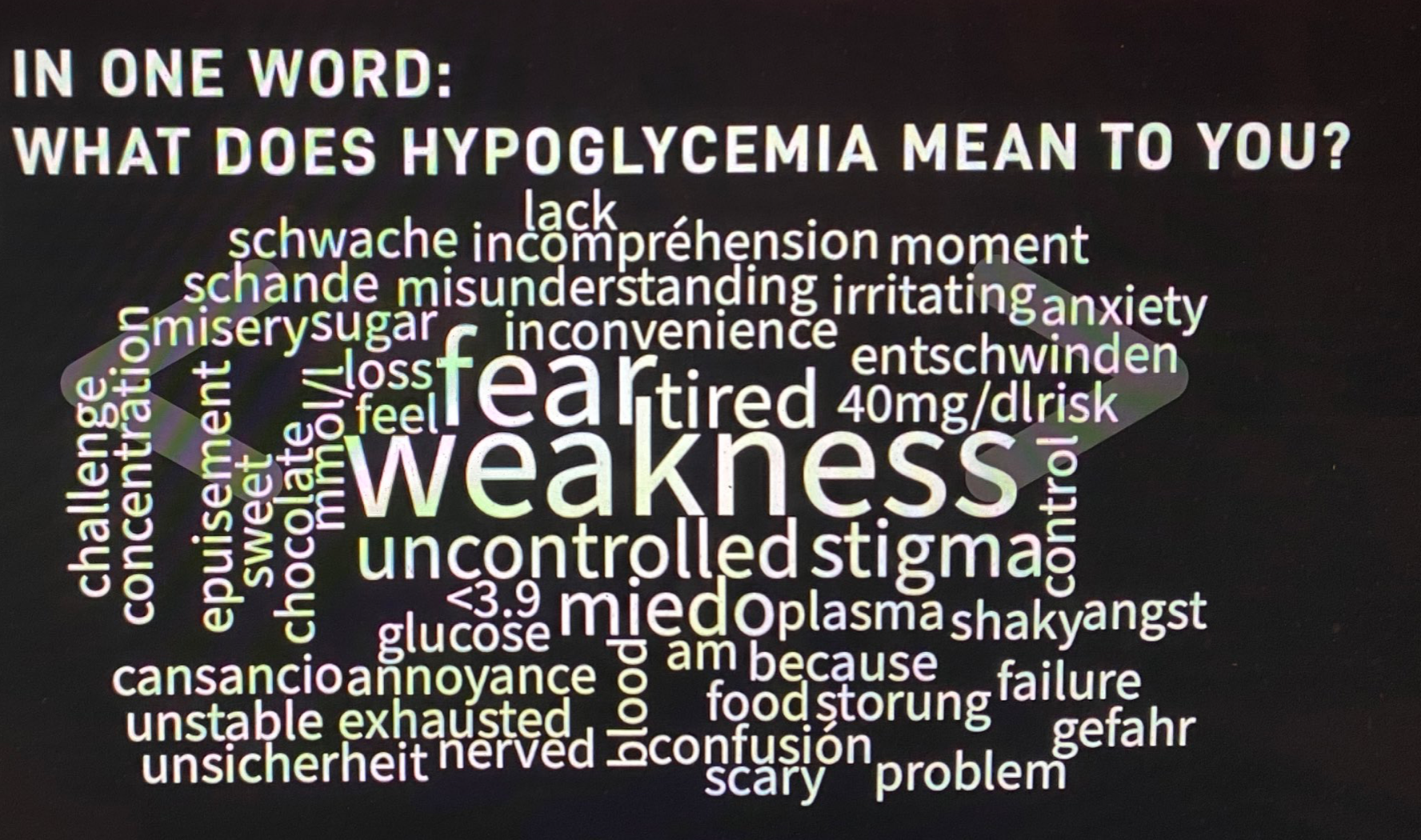
A project this big has a lot of moving parts and there is a constant stream of work being done. Right now, one of the most exciting things that we are seeing is a survey for people with diabetes to share their experiences of how hypos impact the quality of life of people with diabetes and our loved ones.

I love that this project is looking at more than simply the clinical side of hypoglycaemia. I’d like to think that the PAC has been influential in this, however one of the things that made me so keen to get involved in the project was that, from its inception, the psychological burden was an integral part of the research. Work package 6, led by Jane Speight and Frans Pouwer, aims to provide just what the impact of hypos are on the quality of life of PWD and our families. I know that in the presentations I’ve given for this project (including at the launch meeting in May 2018), my focus has certainly been on how hypos make me feel emotionally, rather than physically. (I’ll link to pieces I wrote about these presentations at the end of the post today.) 

Right now, it’s time for more than just the PWD on the PAC to have a say – to have Your SAY – by taking part in this new survey. It takes about 30 mins, although I’m seeing heaps of people saying they’re whizzing through it much quicker than that. To complete the survey, you need to:

  • be 16 years of over
  • be able to complete the survey in English
  • have type 1 diabetes, diagnosed over six months ago
  • have type 2 diabetes, and use insulin
  • live with and be in a relationship with someone with diabetes.

Click below to go to the survey, and to find out more information.

The more people who provide their experiences, the more rounded and richer the research will be. Throughout the project, the PAC has repeatedly advocated for the voices of as many PWD as possible to be included (this certainly isn’t the first time a group extending beyond PAC members has been consulted), so please, if you can, take the time to do the survey.

Hypos are a tricky beast; trying to get a really good picture about how they affect our quality of life is essential in developing treatments to make them more manageable. 

More about HypoRESOLVE?

Here’s the projects website.

This post, explaining all about the project’s launch meeting. 

This post about a talk I gave at a satellite meeting at EASD which addressed the differences between how PWD define hypos and the official categories. 

This post, about the difficulties of defining hypoglycaemia in ways that are meaningful for everyone.

Here’s a little video that we recorded at the kick-off meeting. 

And stay tuned for the podcast!

DISCLOSURE

I have been a member of the HypoRESOLVE PAC since the project started. Until the beginning of this year, PAC members were volunteers on the project, with all flights, accommodation, meals and expenses covered from the project budget. Since the beginning of 2021, PAC members have been paid an honorarium for time worked on the project. I have not been paid to write this post, and my words here have not been approved (or read) by anyone on the project before publication. 

Imagine if the only emotion we felt when we ate something was joy. How different that would be.

A more detailed post about language a food can be found here.

Is it this week’s full moon? Is Mercury in retrograde? (I actually don’t know what that means.) Is it the changing seasons?

I’m not sure the reason, but the last couple of weeks seems to have been especially busy when it comes to annoying people being annoyingly stigmatising on the Twitters.

It’s tiring calling it out. I sometimes do, I sometimes don’t have the mental bandwidth to get into it.

So, for those times that I can’t be bothered doing much, but want to do something, I now have this. And I’ll be sharing and posting and responding to stigmatising tweets with nothing more than a bright red and pink image.

This blog post is dedicated to Alex who has had to deal with some fucking unbelievable stigma today, and C and Mila who are regularly fabulous in the way they brilliantly call out stigma online.

Back when I first started writing and talking about diabetes language matters, it didn’t seem to be all that contentious an issue. I had been following with great interest how this discussion played out among people with diabetes, and it was super clear to me back then that there wasn’t a one size fits all approach or way of thinking. Some people were interested, some couldn’t have cared less. It was accepted that there would be different opinions and attitudes with different people. I know, how completely unexpected, because in every other way, people with diabetes are a tidy, identical, homogenous group who agree on EVERYTHING! #SarcasticFont

Many, many, many years down the track, more and more people are buying into this topic of conversation, which leads me to think that language does, in many ways, matter. To lots of folks.

Which is why it’s frustrating – and problematic – how fixated this discussion can become on specific words. That, I believe, is the problem with #LanguageMatters. 

When I think about why I became so interested in this issue, I’m really clear why it mattered to me. It wasn’t about manners. It certainly wasn’t about suggesting that people with diabetes (that’s my preferred terminology, but you do you!) be told how to speak about the health condition we own. 

To me, it never was about individual words. It was about words, broadly. It was about images used to accompany diabetes discussions. It was about attitudes. It was about behaviour. It was about addressing the image problem that diabetes (still) has. It was about changing the mindset that it’s okay to use diabetes and those of us living with it as a punchline. It was about shifting the public perception about diabetes. It was about people with diabetes not feeling ashamed to do their diabetes tasks in public. It was about elevating our health condition to the same level as other health conditions. It was about people with diabetes being respected. It was about stopping blame and shame and stigma. It was about people with diabetes deciding and directing how their own brand of diabetes would be discussed by those around them. 

It was always about communication as a whole – communicating to and about people with diabetes. 

And yet, with all that in mind, so many online discussions that I see still want to reduce this big body of work to: ‘But I want to call myself a diabetic.’ If someone said that to me, which some people certainly have, my response has been, ‘Okay, cool. You should definitely do that then!’

So why does THIS seem to be the particular tiny, infinitesimal, microscopic, miniscule part of the whole language discussion that some people keep coming back to? 

I’ve started to wonder what are their motives behind focusing on this issue? When I see someone, especially someone who’s been around for a couple of years and who everyone knows has been part of these discussions before, start with the PWD vs diabetic debate, I wonder if they’re trolling. They know it will get a response. They know it’s likely there will be disagreements. There are some super savvy people on social media out there who know that asking this question, or even just mentioning it will get a reaction – every single time – and it might even add to their follower count. I guess that some people think that’s currency. 

But really, all it seems to do is narrow and diminish the broader discussion. These days, when I am asked to give a talk on language and diabetes, I dedicate one slide and about 45 seconds at the beginning of my talk to get the diabetic / PWD issue over and done with, and then focusing on what I want people listening to the presentation to take away with them. 

I don’t know how or when the diabetes #LanguageMatters hashtag started. It wasn’t the name of the first language position statement, but it certainly has been used for a very long time, and been associated with the global movement that has its foundations very firmly rooted in the diabetes community – even before the advent of the DOC, because this discussion has been happening for long before our community moved into online spaces.  

The problem with using #LanguageMatters is that it is too often drawn into being about one tiny part of the whole big issue. But it seems that #LanguageMatters is here to stay with a whole lot of material and dialogue and debate behind it – a lot of which is making a huge difference to the way people feel about their own diabetes. So, what a shame that it so often gets minimised to something that is only one little part of it. What a shame that some people knowingly fuel the fire and the arguments that ensue by bringing up diabetic/PWD again. What a shame that this really important, really BIG issue is reduced to something quite tedious. 

Perhaps we should have gone with #CommunicationMatters to signpost that it wasn’t about specific words. Perhaps we should have gone with #AttitudesMatter to bring in how language adds to attitudes of stigma and blame Perhaps #BehavioursMatters would have addressed how body language and other behaviours can be just as important as verbal language. 

Or perhaps we should have used all of them because, really, #ItAllMatters.

You can read read more on my frustration about this issue in this post (and frequently on my Twitter feed).

Diabetes is an invisible illness. Except, of course, it’s not.

If you look – carefully – around our home you will notice diabetes is everywhere. 

Open the fridge and you will see insulin vials and the paper prescriptions for next time I am running low, housed in a blue box on the lowest shelf. 

The pantry is stacked with juice boxes, fruit pastilles and other easy to digest sources of glucose. 

Tell-tale signs on my bedside table include a jar of jellybeans, a half empty glass of orange juice and a BGL meter.

In the bathroom is the cannula I pulled out this morning before I stepped into the shower – so that I could enjoy the water on my body with one less piece of equipment taped to my skin. 

My bag is a veritable treasure trove – if the treasure you seek is quick-acting glucose, old blood glucose monitoring strips and diabetes supplies…

In the bedroom there are the empty packages from pump lines and cartridges and CGM sensors, waiting to be disposed of appropriately. 

A beautiful old cupboard housed in the corner of that same room look as though it should hold family heirlooms, but instead is dedicated to housing neatly stacked diabetes supplies.

In my study, on the bookshelf, you will see shelves dedicated to diabetes-related titles: books by friends and colleagues about how to live well with diabetes. 

On my desk is a half-empty bottle of glucose tabs and glucose tab dust liberally sprinkled around. 

My phone alarms and warns throughout the day, the volume turned low so as not to startle me while on a Zoom call.

There are pathology slips on the fridge, magnets holding them in place, reminding me to make time to get those checks done. 

There is a pattern of red dots on the bed linen from the ‘splurter’ last night when I calibrated my CGM. Running late this morning I didn’t have time to change the sheets. 

On the kitchen bench, where items for recycling sit before being taken to the bin, you’ll frequently see one, two, three empty juice boxes.

Tied around the rose bushes in the front garden you’ll find used pump lines, holding the branches to the fence.

On the fridge are messages and cards and silly notes from DOC friends from nearby and faraway, reminding me that I have support around the globe.

And everywhere, but everywhere, you’ll see an odd BGL strips, glittering (littering) the ground. 

Diabetes is invisible until you look for it. And when you do – and when you see it – you realise that diabetes lives here.

Follow Diabetogenic on WordPress.com

Enter your email address to follow this blog and receive notifications of new posts by email.

Read about Renza

Archives