This is the tale of the time I took myself of to Accident and Emergency (A&E). This is not a decision I take lightly as there are a million things I’d rather do. Like saw off my own leg, puncture an eardrum or attend a meeting of an anti-vax conspiracy club. But I’m writing about it because it was a crap experience all around and I’m interested to hear how others have dealt with similar situations.

So, here is the good thing about having type 1 diabetes. I walk into a heaving A&E waiting room. There is blood (the guy in the corner holding his head), guts (a woman near the front throwing up hers), tears (the old woman with her daughter) and silence (most of the other people). I tell the triage nurse the situation which sounded something like I have type 1 diabetes, I have been vomiting for the last three hours, I have ketones of 4.8 and my last BGL was 12.8mmol/l. The triage nurse takes one look at me and opens the door to let me in. Like it’s 1991 and I have a gold medallion to the Underground nightclub.  Straight into the VIP room!

Unfortunately, this VIP room is lit with unflattering lighting and instead of comfy lounges I lie on a trolley.  I am seen by a couple of brilliant nurses who put in an IV line and ask sensible questions and say sensible things like ‘Of course you can check your own BGL. Would you mind telling us what it is when you do it?’ I have two new BFFs and I want to take them out for ice cream – perhaps I’ll wait until the ketones have cleared, though. I tell them that, according to my sick day protocol, I have upped the basal rate on my pump and have given myself a correction bolus which is already working as my BGL is now down to a stellar 7.6mmol/l. Brilliant BFF nurse #1 says ‘Well, obviously your protocol is working. Are you happy to check again when the doctor comes in and let him/her know how things are going?’   

Emergency doctor comes in after a mere 25 minutes (seriously VIP) and starts asking me what’s going on. I repeat the story, report that I’ve just checked my BGL again and I’m down to 6.9mmol/l and he starts by asking the usual questions about diabetes starting with ‘How’s your diabetes’. I never know how to answer that question.  ‘Um, good thanks. How’s your father?’

The next thing he says is ‘We are going to need to disconnect your pump’ to which I respond, ‘That’s not going to happen’. He looks surprised and repeats a little louder what he said. This time I answer with ‘Not an option. Come up with another idea’. Now, I know that I am a nightmare patient. I know that at this point in time the doctor was wishing that I was actually unconscious. But I also knew that my pump was working (see: BGL dropping at sensible rate for proof). I also know that I was polite. Assertive; but polite.

It was then I summoned the immortal words of one of the presenters from a Type 1 in the City event and said ‘I would like to see the endocrinology registrar. Now. Please.’ Trump card!  It’s kind of like lawyer-ing up!

The endocrinology registrar has much more of an idea until this question came out ‘What’s your blood sugar usually?’ Huh? Usually when? At what time? When I’ve done what? When I’m feeling how?

How is that a question? There is no answer. My blood sugar is usually variable. That’s called diabetes.

What happened next was me refusing to disconnect my pump (again) followed by a demand (from me) that the registrar contact my endocrinologist, which she really didn’t want to do. I held my ground and promised that I would disconnect my pump if recommended by my endo.

Five minutes later, the registrar returned to my room, muttered that the pump could stay connected and then she left. I didn’t see her again. I fell back against the pillow, exhausted, emotional and, despite getting my own way, I felt defeated.

I am sometimes accused of making diabetes look easy. It’s not. And when something like this happens, it reminds me just how difficult it is. The outcome of my visit was rehydration, blood tests to check all sorts of levels, monitoring of ketones (which were gone in about three hours) and then I was sent home. Mind you – I did tell the endocrine registrar (much to her astonishment) that I was leaving at 6.30pm, so she only had until then to get me sorted. (The reason for this was that I had to emcee a diabetes information session at the hospital’s conference centre.)

So, apart from five hours in A&E, not too much of an inconvenience.

But the aftermath hit me like a lead balloon. Firstly, I rather arrogantly was upset that I had found myself in that position. Gastro leading to ketones and dehydration is not the most unusual thing in the world, so I’m not sure why I should think I’m above it all. I’m not.

The second thing that upset me is this, (and again, I hope this doesn’t make me sound arrogant). If I have to battle so much at a relatively easy visit to A&E – if I have to pull every trick to ensure that I get what I want the way I want it, how do people who don’t have the same understanding of the system manage? The people who don’t know the tricks. Surely being heard is a basic right in circumstances like these.

I need someone to explain to me how it is possible that it’s OK that every minute of every day I am the one who makes all my own diabetes decisions and yet the minute I walk through the doors of a hospital I am not equipped to do so.

Do you have any experiences in A&E that leave you feeling a little cold? How have you dealt with them?
It’s a cold, drizzly night in Melbourne and smart people are curled up at home watching re-runs of Offspring.

But not me. Instead, along with another nine people I’m heading to a restaurant in Carlton to celebrate – #OzDOC style.

In the car, are my colleagues Kim and Kelly and some guy called Simon who we met in person the day before, but prior to that, we’d only ever conversed with on Twitter. And that was pretty much the case with the other people who would be meeting us at the restaurant.

(This is the point where my parents look at me in horror and wonder when I stopped becoming risk-averse. Getting together with people you’ve met online? Surely that’s dangerous.)

The occasion? Well, there wasn’t really one, so we created one. Simon from Adelaide was here on his way back from America. Obviously this is not the most direct route to get to Melbourne from the City of Churches, but then, as we learnt, Simon doesn’t do things the easy way.

I’m not going to tell you Simon’s story – it’s not mine to tell.  But you should look it up. Google #Simonpalooza and let yourself be guided to blogs, vlogs, YouTube and Twitter to let the story unfold. I will give you the dot point version:

  • Simon starts using Twitter
  • Simon is introduced to the DOC (diabetes online community)
  • Simon gets lots of support from said DOC
  • Simon gets on a plane and flies to meet people
  • Something huge happened in Kansas City and then again in NYC

I can boil it down even further. The DOC is amazing.

So last night, we invited some Melbourne DOC members to get together, hear Simon’s story and just hang out. Ten mostly-strangers (NOT mostly-strange) in a restaurant with nothing more than faulty beta cells in common. Coulda been awkward. But it wasn’t. It was inspiring.

There was not a lull in conversation at any time. Diabetes was but one topic of conversation. Others included camels, Shapelle Corby and a debate about whether sugar-coated ibuprofen does in fact make a good hypo treatment. Apparently, it works in Venice.

Today, I am still feeling warm and fuzzy from last night’s gathering. I feel that I have a new group of BFFs and can’t wait to hang out with them more. And I want you to join us!  Our next ‘get together’ is happening on Twitter in a couple of weeks.  Stay tuned for more details.

If you’re afraid of Twitter, please don’t be. Kerri Sparling over at Six Until Me did a great post about Finding Diabetes on Twitter. Have a read – it’s a great overview of the DOC and Twitter and will help you get started.

Our new hashtag will be #OzDOC. If you’re already on Twitter, keep an eye out and use it. And if you’re new to it all, I look forward to meeting you.


It’s National Diabetes Week here in Australia. It’s an important week for diabetes awareness, and any time diabetes is front and centre in the media’s mind, I’m happy. The campaign this year is calling for the federal government to fund a national type 2 diabetes prevention campaign. This is incredibly important – in around 60 per cent of cases, type 2 diabetes CAN be prevented and targeted campaigns which address those at high risk will make a difference.

And yet, I do struggle with this week. As a person who is living with diabetes, the ship has sailed for me – as it has for the 1 million plus people registered on the NDSS. And for people with type 1 diabetes, there is no chance of prevention. There is nothing that we could have done to stop our pancreases taking a very, very long smoko and basically walking off the job for good.

The frustration felt by people with type 1 diabetes is clear – and I am actually quite proud to be part of the movement that is so loud and proud about not only our condition but also, why we have it. We will and do snap at people who say the wrong things about type 1 diabetes and we strive to make sure that our condition is correctly and accurately reported.

 There should be no shame or guilt associated with diabetes. Full stop. It doesn’t matter what type of diabetes we have, the most important thing to remember is that we are living with a chronic health condition that impacts on our lives. Sometimes more significantly than at other times. And if it can be prevented – as is often the case with type 2 diabetes, we should be doing all we can to support initiatives to do just that. The ‘diabetes wars’ of ‘mine is worse than yours’ helps no one. The finger pointing from within the broader diabetes community doesn’t do anyone any good.

So, this week I do call on you to participate in the type 2 prevention campaign. Go to the website and ‘vote’. Have a read of the materials and understand what it is that it’s trying to do.

And at the same time, make sure that people remember those of us who are already living with this condition. Remind them that we too need support and education. We need funding for research and we need programs that help us live well with diabetes.

Follow #NDW12 on Twitter to keep up to date with what’s going on during National Diabetes Week.

I have an aversion to exercise. I know that this aversion is not healthy. I know all about how being physically active is an important part of diabetes management. I. Know.

But for me, it’s more ‘just don’t do it’ rather than ‘just do it’.

I do walk a little. But usually it’s accidental. I have no idea about exercise fads – I loved the idea of boot camp until I realised that it wasn’t about actual boots.

Anyway. Each year, the diabetes organisation where I work participates in Run Melbourne – a fun run (now there are two words that don’t belong in the same sentence) that raises money for charities.

Last year, I took part in the 5 km walk. Apparently, this was considered newsworthy enough to make my local paper.

I’d like to say that participating in last year’s event started me on a path to regular and meaningful exercise, but I’d be lying. Instead, the new blue runners I bought for the event have sat in the back of my cupboard waiting for their second wearing.

That day has come!  I will be walking again on 15 July.

The reason? Because I’m raising much needed funds for camps for kids with diabetes. You can read about the camps here. Lucky for me, I get to see and hear first-hand what the kids get out of going to camp. They have a great time, meet others who are experiencing similar things thanks to diabetes and offer peer support that extends well beyond the few days at camp. The kids’ parents report that their children return with more confidence about managing diabetes.

If you could spare a few dollars to donate to this program, that would be terrific. In Victoria, we offer places for about 250 kids to attend camp each year. But at least that number again are turned away. We would love to be running more camps and offering more children and teens the opportunity to experience ‘independence through adventure’.

You can make a donation here. Thank you!  And the kids who get to go to camp will thank you, too!

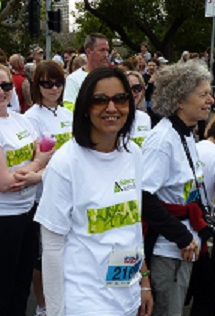
Here I am at the starting line of last year’s Run Melbourne. That’s terror you can see in my face.

I was trying to think of something to write about and was getting a big, blank nothing. Not. A. Thing.

So, I do what all clever writers do when we get the good ol’ block. I turned to Twitter. Currently trending is the following hashtag: #100thingsaboutme

Now, I’m not committed enough to write 100 things about me. Hell, I don’t even think there are 100 things about me that I’d want to share!  But here are a few things:

  • I have watched the West Wing series about 5 times. I love it. It’s my favourite drama of all time. The acting, the humour, the rapid-fire dialogue. Love. It.
  • Collecting collective nouns is one of my favourite nerd behaviours (of which I have many). Some of my favourites includean exaltation of larks, a rhumba of rattlesnakes and a prickle of porcupines. But the most beautiful and my overall favourite – a blessing of unicorns (very apt for the DOC).
  • I am terrified of birds. Seriously. This has arisen from more incidents than I care to share where birds have flown directly at me, terrifying me, drawing blood and making me scream like a baby. In public. They are evil, evil creatures and I believe that there is a conspiracy in the avian world to hurt me. And hurt me good.
  • Despite the last sentence, I am a total and complete word-nerd. Today, I’ve used the words cacophony, whimsical, serendipitous and exaltation in casual conversation. And I swoon when people like Stephen Fry speak because the way they use words is beautiful, clever, structured and sexy.
  • Coffee. I love it.
  • On my iPod right now – Keith Jarrett, the Koln Concert.
  • I’m reading Finn Family Moomintroll to my daughter, which makes me feel warm and safe. I remember the first time my mum read it to me.
  • Ideal Saturday night in – good book, good wine, good food. I’m old and boring in real life.
  • I want to move to New York City for a couple of years.
  • I believe that most people are good and honest. I need to believe that to feel that the world will be OK.
  • When I was in year 12, I missed most of my religion classes because I was either sitting in the laundrette near school pretending I was a Beat poet or at a nearby park playing on the swings with my best friend.
  • I’m starting to feel old. I’m 38 and as I get older I feel less and less connected with younger people. I have no idea what 20 year olds like or want anymore. I don’t think they understand me either.
  • Family is more important to me each and every day. And that family includes my wonderful close friends as well as my real family.
  • My sister is one of the smartest, funniest, most beautiful people I’ve ever known. I hope she knows that I feel that way, but I don’t think she does.
  • I have diabetes. It’s not the most important thing about me. It’s only one of the #100thingsaboutme you should know.

What do you want people to know about you? And where does diabetes feature in that list? Does it feature at all?

You can read all about the Youth Transition Survey Report (what it is, who it’s about, why it’s important) at the Diabetes Australia – Vic blog.

It’s where I recognise that I am not a young adult with diabetes. Or without. And use the word ‘whatevs’. Which in my word-nerd way makes me shudder! (It could have been worse. I could have used ‘totes’…instead of totally, not when describing a bag. Oh, whatevs!).

I live in Melbourne, so I’ve been led to believe that the Holy Grail has something to do with winning this:

However, my limited interest in Aussie Rules football (althoughthis may change by September if the Blues start winning, when I’ll suddenly become a die-hard fan) means that for me, the Holy Grail looks more like this:

 or this:

 Whatever!

When it comes to living with type 1 diabetes, what is the Holy Grail? Many would say it’s a cure. The day when we no longer need to medicate, consider the impact of food on our blood sugar, worry about complications and our future. That could be it.

For me, a cure is actually not my Holy Grail. And I say that because in all honesty, I don’t think that in my lifetime there will be cure for this condition. You may call me negative or a pessimist. I call myself a realist.

Someone asked me the other day if I had to choose, where I would want my research money going. The choices? Dedicated cure-focussed research or management-focussed research. Each and every time I would say the latter. I want lots of money and support directed to the people who are working at making the lives of those of us already living with this condition a little easier! 

Think about it. If this sort of research hadn’t been done in the past there wouldn’t be insulin pumps or long-acting insulins or super-fast, super-small BGL meters. We wouldn’t have drugs that can prevent, reverse or halt the progression of complications. CGMS would not exist and no one would be talking about the need for psychosocial interventions when it comes to living with the chronic condition we call diabetes. (Actually, more needs to be done on that last one, but at least we’re talking about it now. Shout out to the Australian Centre for Behavioural Research in Diabetes team.)

Lucky, it’s not an ‘either/or’ situation. There is research into both finding a cure and improving the lives of us living with the condition. And there’s also work being done looking at preventing type 1 diabetes, too.  But for me, I get excited when new technologies are announced – and even more excited when they are available for use. (Counting down the days until I get my hands on an iBGStar!)

I wonder if this is a preservation tactic on my part. Like many, I was assured at diagnosis that a cure was a mere ’five years away’. Well, it’s been over 14 years. Those five years have lapsed almost three times now. I have friends who have had diabetes for over 25 years and they too were promised a cure. And I know this is the rhetoric continuing to be sprouted. The hope this instils in people worries me. I see parents with a newly diagnosed infant who desperately, urgently hold on to that number, counting down the five years. Waiting for that cure. But it isn’t here. And when we look at what’s being done, a cure – an end to diabetes – is not ‘just around the corner’.

But rather than defeat me, it does give me hope. Because I know how much is being done. And I regularly see new advancements that actually help people who are living with diabetes here and now. Those advancements could be a new drug that reduces the risk of retinopathy, it could be a CGM that accurately and without fail can warn you that you are 10 minutes away from a hypo, so TREAT NOW! It could be each step we get closer to the closed loop.

There’s a lot going on. Put all your eggs into the cure basket and I think that you may be disappointed. Do we deserve a cure? Of course we bloody do!  But I’m really, really glad that as clever people are working towards that particular goal, there are a lot of others working towards improved management.

Holy grail? Here’s a bit of Hunters and Collectors for you! I dare you not to dance along!

Last night, I attended the AGM at my daughter’s primary school. The guest speaker was Anne E Stewart, who is a storyteller; not a writer, but a storyteller in the true sense. She told us a couple of stories – the first a challenging, but thought-provoking story about a young Aboriginal woman, and a Scottish Selkie tale. She was incredibly engaging – I was on the edge of my seat as her stories took twists and turns.

But the most powerful part of the evening was when she went around the room asking people to share their own stories; where their family comes from and asking about family folklore. Out came stories of convict histories, migration from far and wider, and memories of growing up in Australia.

The story I told was about my father’s family moving to Australia. My great-grandfather, Luigi, sailed from Calabria in Italy to Australia in 1927 leaving behind my great-grandmother, Catarina, and their children. Catarina was pregnant at the time with their fifth child. The plan was for my Luigi to work and save enough money to bring his family out to the lucky country.

It took 20 years. In 1947, Luigi’s youngest son was one of the first people to fly from Italy to Australia. It took 13 days and when he arrived he met his father for the first time. Over the next two years, the rest of the family arrived slowly.

In 1949, Catarina boarded a ship with her other now-grown children, one of which was my grandmother, Vincenza. Vincenza was married and had two young children with her; an eight year old daughter and a five year old son – my dad.

Reunited – the family was together once again.

The tragedy in this story – the part that breaks my heart – is that four years later, Catarina died.  The family was all together for only four years.

Our stories shape us, they tell where we’ve come from and where we’re going. They make us feel connected to others; they help us feel like we belong.

I struggled a long time about my family background. As I was growing up, I hated having an odd name, hated having olive skin and dark eyes. I remember quite clearly at the age of seven telling my mother I wished I had blonde hair, blue eyes and was called Cindy. I wanted to distance myself from my history; I was pleased that we didn’t speak Italian at home and that most of our friends were not Italian. Assimilation? That’s what I wanted!

It wasn’t until I visited Italy as an adult that I started to understand why I needed to reclaim this history.  And it wasn’t until I took my daughter to Italy – then four years old – that I understood the way that my grandmothers were with me. I stood in a little street in Venice choking back tears as an old woman showered my daughter with the same terms of endearment that my late grandmothers had used with me, my cousins and my daughter. I felt I belonged.

I feel this same connection with people in the diabetes community. The people I met when I started working in diabetes who continue to be some of my closest friends and those who I continue to meet give me strength. And the wonderful people I have met online and in person from the diabetes online community – their stories and my stories have become intertwined and show us as a strong, powerful voice. They make me feel safe.

I love the stories of others in this community. I’ve stopped feeling startled when I hear a story that is so similar to mine; I’ve started to understand how diabetes ties us together in a mysterious way. Diabetes Blog Week was so terrific because so many more stories were put out there. If you haven’t yet, I really urge you to have a read. Make the connections; read the stories; and please, share your own.

I walked out the front door this morning and stopped.  I felt naked. A quick glance southwards assured me I wasn’t. (Result!) But I couldn’t shake the feeling. So I put down my bag and did the pat-down. The pat-down starts at my hips (nothing found), goes to my lower back (nothing found) and then across the middle of my chest (nothing found). That’s a problem – no pump!  I opened the front door, ran down the corridor, turned off the alarm, and headed into the bathroom where my pump was sitting quietly on the bathroom counter having not been reattached after my shower.

Hooked up again, I turned on the alarm, walked down the corridor, locked the front door and started to walk to my car. And stopped. I still felt naked. Pump attached, CGM all secured. What else? I opened my bag and rummaged through the mess pulling out my phone, my iPad, my wallet, business card holder, pens, mints, loose pieces of paper, loose change, a toy unicorn (no idea, really, but it pleased me greatly!), a notebook and several small packets of jelly beans. Looking….looking……looking. And there it was, at the bottom of my bag, my meter case.

I walked to the car, but couldn’t shake the feeling that something wasn’t right and that I’d forgotten something. What could it be?

I grabbed my meter case out of my bag and peeked inside. All good – meter, lancet and strips. OK. Surely I was good to go now. Key in the ignition, car started. And I stopped. Where was my ‘spares’ bag? (That’s my little bag that holds a spare pump line, cannula and syringe as well as a vial of insulin for those days I ignore the ‘Low Reservoir’ warnings on my pump.) More rummaging through my (totally GIANT, Mary Poppins-esque) bag until I located it.

Satisfied that I had all my dia-gear, I started the car and headed to work, ignoring the unsettled feeling in the pit of my stomach that I’d forgotten something.

This is the thing with diabetes. There is so much stuff. Why, oh why hasn’t someone tried to tie all this together? I’m more than a little excited at the new (not yet available in Australia) meter that attaches itself to a fruit phone. For years I’ve been dreaming of a phone/meter combination. And if someone could work out a way to tie a few other things together, I’d be thrilled!

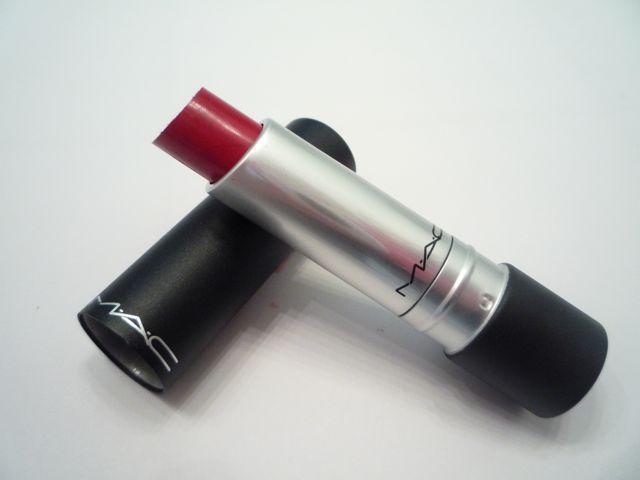
So, now it’s 2.13 and I’m just back from lunch. And I just opened my bag looking for lipstick to apply. I turned my bag upside down looking for my bright red lippy, cursing MAC for packaging their products in boring, sleek black. No luck! That’s what has been missing all day. Not diabetes stuff (although, the pump wasn’t connected this morning, so there’s that), it’s the lippy. I’ve said it before; I’ll say it again. Sometimes it’s not diabetes.

Dear Lovely People at MAC. Could you please make your lipstick case match the bright red colour of my favourite lipstick so I can find it in my bag. When I actually remember to put it in there. Thankyouverymuch, Renza

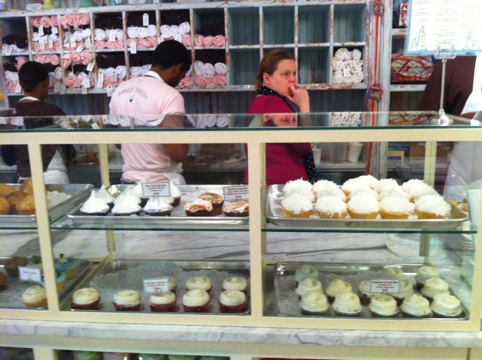
A picture tells a thousand words, but I think the following photos really only say one word: Cupcake.

So why cupcakes? Really – because I can. I have the technology, the sweet tooth and the basic maths to do a little carb counting. With the ‘diabetic diet’ a thing of the past, with insulins that we can better match to the needs of our carbohydrate intake, having a cupcake now and then isn’t a big deal.

Also, this morning over breakfast, I was talking about today’s #DBlogWeek post. I had been thinking along the lines of a photo of my pump, or this morning’s fasting BGL. But as soon as I finished explaining today’s ‘diabetes in a photo’ mission, my husband said ‘cupcake’. So that’s what I did.

Anyone want to ask me if I should be eating that?

20120519-202104.jpg

Magnolia Bakery NYC. We may have visited there once or twice.

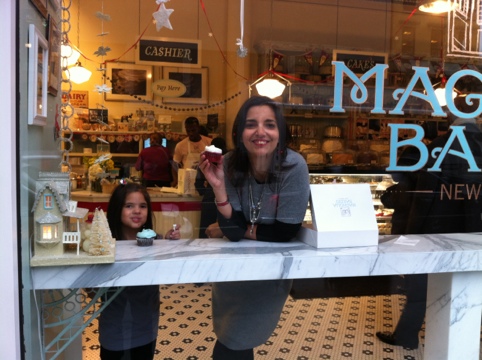
20120519-202222.jpg

Red velvet cupcakes are my favourite things in the whole wide world. And that little kid is pretty damn lovely too!

20120519-202336.jpg

On a cold Tuesday night in NYC, we donned our coats, hats and scarves, walked the four blocks to Magnolia Bakery in Bloomingdales and bought cupcakes. And we weren’t cold anymore.

20120519-202431.jpg

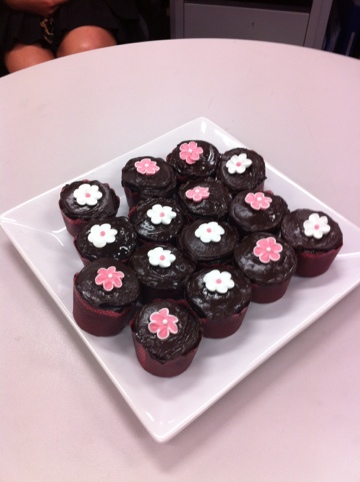
Cupcakes for the team. Because it was Thursday. Which is as good a reason as any to have a mini cupcake or three.

20120519-202514.jpg

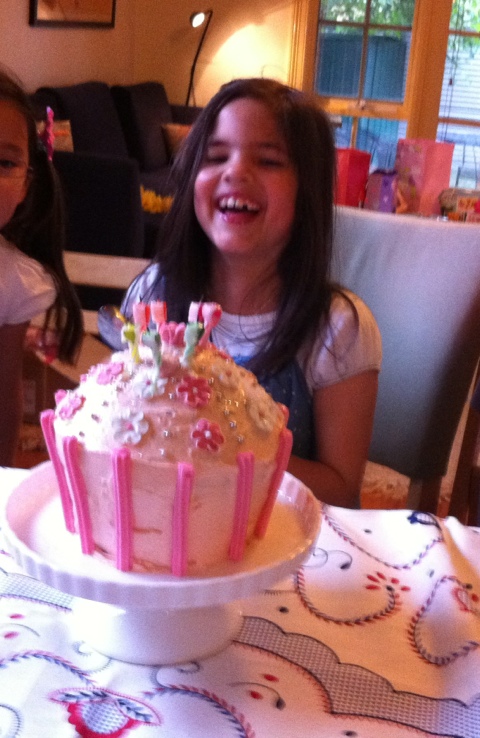
A giant cupcake birthday cake for a big seven year old. Delight.

20120519-202614.jpg

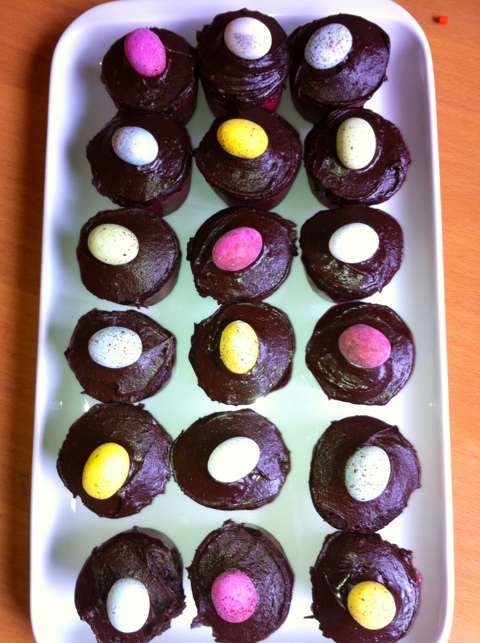
Nothing says Easter like cupcakes. With Easter eggs on top.

20120519-202658.jpg

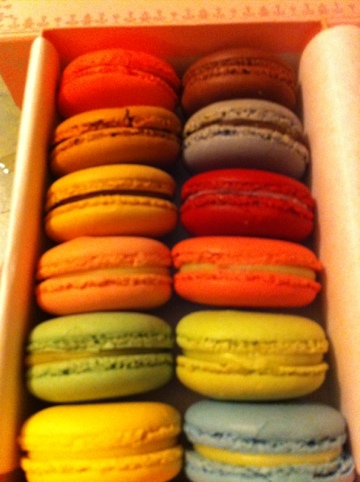
These? Not cupcakes. But beautiful jewel coloured macarons from a dear friend. And they make me smile.


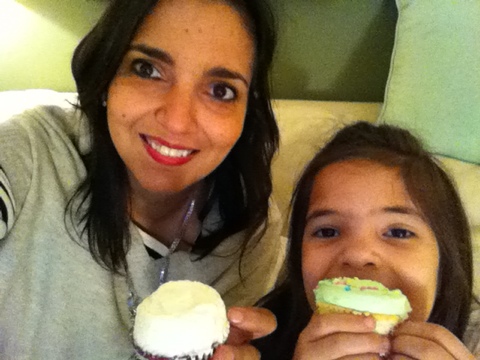
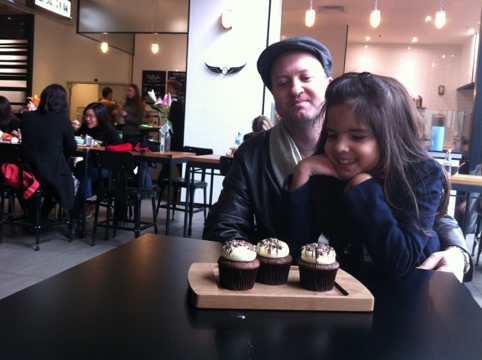
So today, we headed to the city to find some cupcakes to photograph because I didn’t have any pictures already (?!?!?)


20120519-202735.jpg

My beautiful family indulged my silliness by being forced to eat chocolate-malted cupcakes. They’ll do anything for me. I’m a lucky gal!

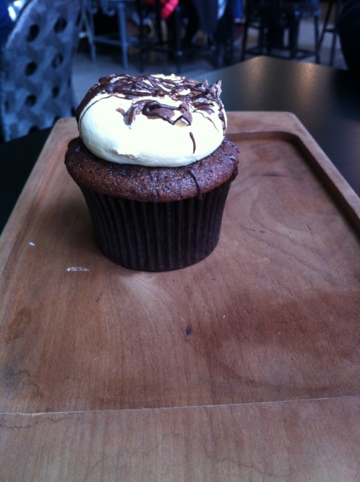
20120519-203017.jpg

A work of art.

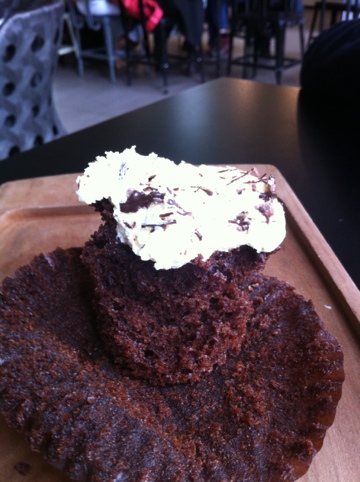
20120519-203110.jpg

A half-eaten work of art.

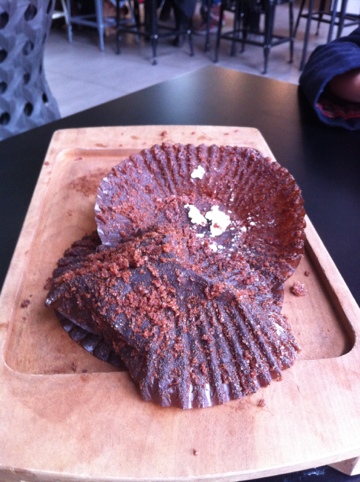
20120519-203137.jpg

All gone. And they were good!

This is my Saturday entry into this year’s Diabetes Blog Week. For information, click here. And I really recommend you do. Over 200 diabetes bloggers from all over the world are participating and it’s a great way to see what others with diabetes are talking about. Come back tomorrow for the final entry.

Follow Diabetogenic on WordPress.com

Enter your email address to follow this blog and receive notifications of new posts by email.

Read about Renza

Archives