This post is my April entry in the DSMA Blog Carnival.  If you’d like to participate too, you can get all of the information here. Here’s this month’s topic:

Does the sunshine and warmth of Spring urge you to change up your exercise routine?  If you don’t have an exercise routine, does it inspire you to start exercising?  And if it’s not Spring in your corner of the world, what season are you heading into and how does it impact your fitness routine?

We’re heading into Winter here. We’re half way through Autumn and until last week, it’s been incredibly mild. Last week’s colder weather has been a shock to pretty much everyone, I think.

Until earlier this year, exercise was something I avoided with great skill and passion. For some ridiculous reason, I started walking and for an even more ridiculous reason, I’ve kept it up. Admittedly, I’m not walking every day as I was over the warmer months. But even now with daylight savings over and the colder evenings setting in, I’ve still managed to go for a walk at least three times a week.

With daylight savings over, it’s dark now by about 5.30pm, so on weekdays it’s impossible for me to walk while it’s still light. I make sure that on weekends I walk early in the day, so it’s not a problem then. The friend I walk with is happy to walk at night and I’ve discovered that the park we walk around is really well lit after dark and there are a lot of people using the track.

Also, and I say this with great trepidation, my walking has become running. And I haven’t fallen over which surely should mean that I qualify for some sort of medal or award. If I’m really honest, I’d tell you that the reason for running is just to get the exercise over and done with faster. I don’t run when I’m with my friend because we have far too much talking to do, but when I’m on my own, I just want it finished so I can go back home and eat Nutella straight from the jar.*

I’m really excited that in six weeks I’m heading to the northern hemisphere for a month and a half. The thought of warmer weather is part of the excitement. Will I be packing my runners so I can build exercise into my day? Absolutely not! But then, I walk a lot when I am travelling. My exercise may be incidental rather than planned, but that’s okay – I prefer it like that anyway!

I can (will) find any excuse possible to not exercise, so I’m pretty sure that as the weather gets even colder and rainier and the appeal of snuggling on the couch with comfort food and a decent DVD gets harder to resist my exercise routine will be tougher and tougher to maintain. But I’m pleased that it’s kept going this long. And it’s going to mean that I’m more than ready for the Run Melbourne in July this year. Stay tuned!

*This is possibly true. #NutellaHeist
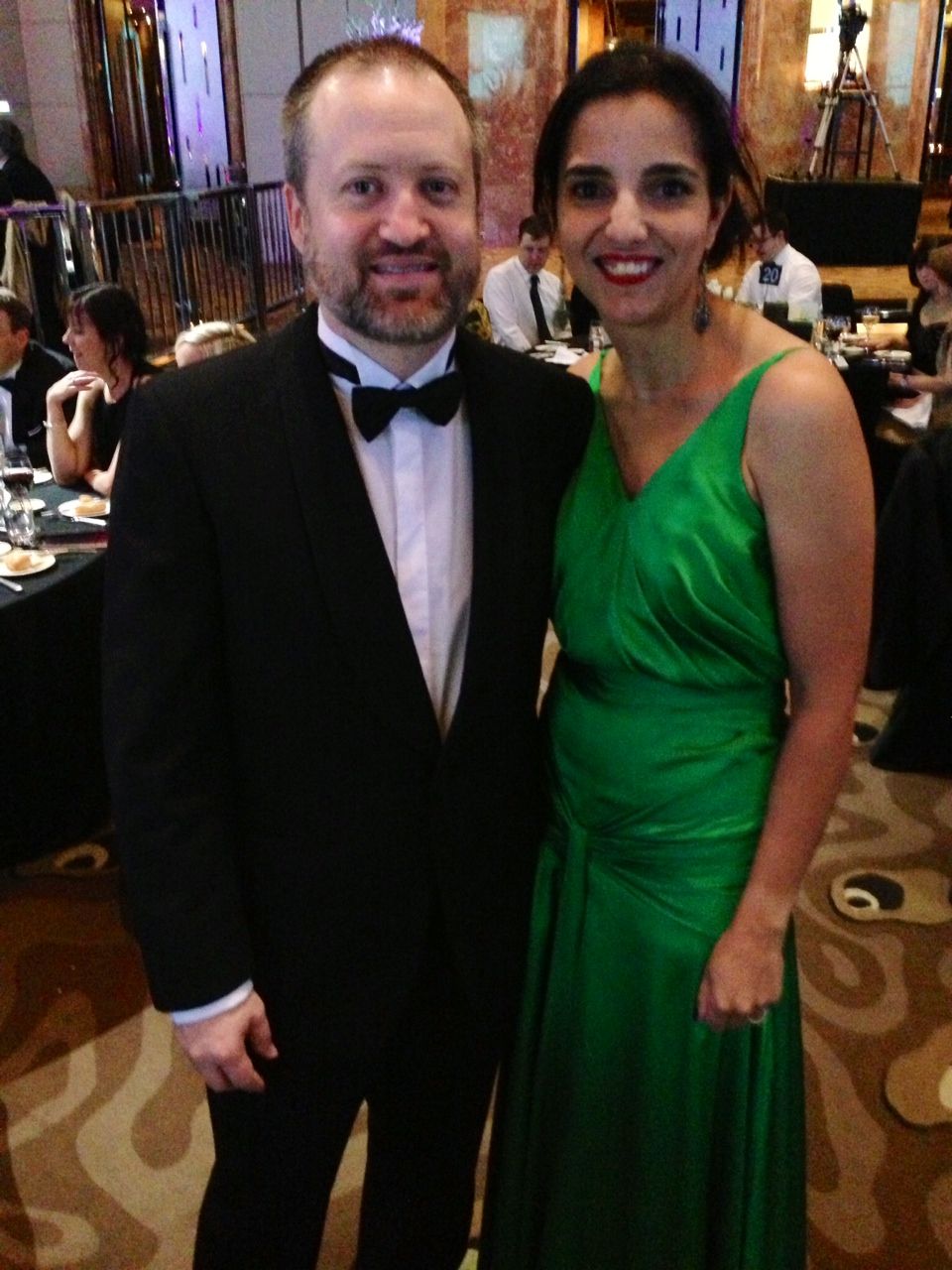
Diabetes is the natural enemy of the frock. Yes, it is!  There are countless discussions on Facebook and other diabetes forums that could all pretty much be headed ‘where the fruitcake do I put my pump?’ I know of pockets sewn into dresses, invisible hooks added to wedding gowns and incredibly-difficult-need-instructions-to-use contraptions whose only purpose is to keep the pump hidden, yet accessible.

This is the dilemma I was faced with the other night as I frocked up for the gala dinner celebrating Diabetes Australia – Vic’s 60th anniversary. Alas, where to put the pump. Due to a very low cut back, the dress had in-built supports as a bra couldn’t be worn. (I could now go into a discussion about how I’ll need therapy for the Hollywood tape I was required to wear, but let’s stay on topic.)

I toyed with the idea of leaving my pump home and using pens for the night, but the thought of calculating basal insulin, then blousing made my head explode a little bit. I thought about not worrying about dealing with basal insulin and doing tiny corrections every hour or so, but I knew that I’d remember for the first hour and then completely forget about it for the rest of the night – or, at least, until I realised I was spending a lot of time running to the loo and chasing down waiters to fill my water glass.

So, I started thinking about a holster for the pump. I used to have one made of stretchy material that was held in place with a Velcro catch. There was a little pouch for the pump and the whole thing was meant to sit snugly on the thigh. And it did…until it started to slide down the leg and I was left doing some sort of weird two-step, trying not to trip over the pump tubing while attempting to reconnect the whole thing. Please, just picture the elegance, if you will.

Despite my husband kinda liking the idea of me wearing a holster, the thigh thing was a failure.

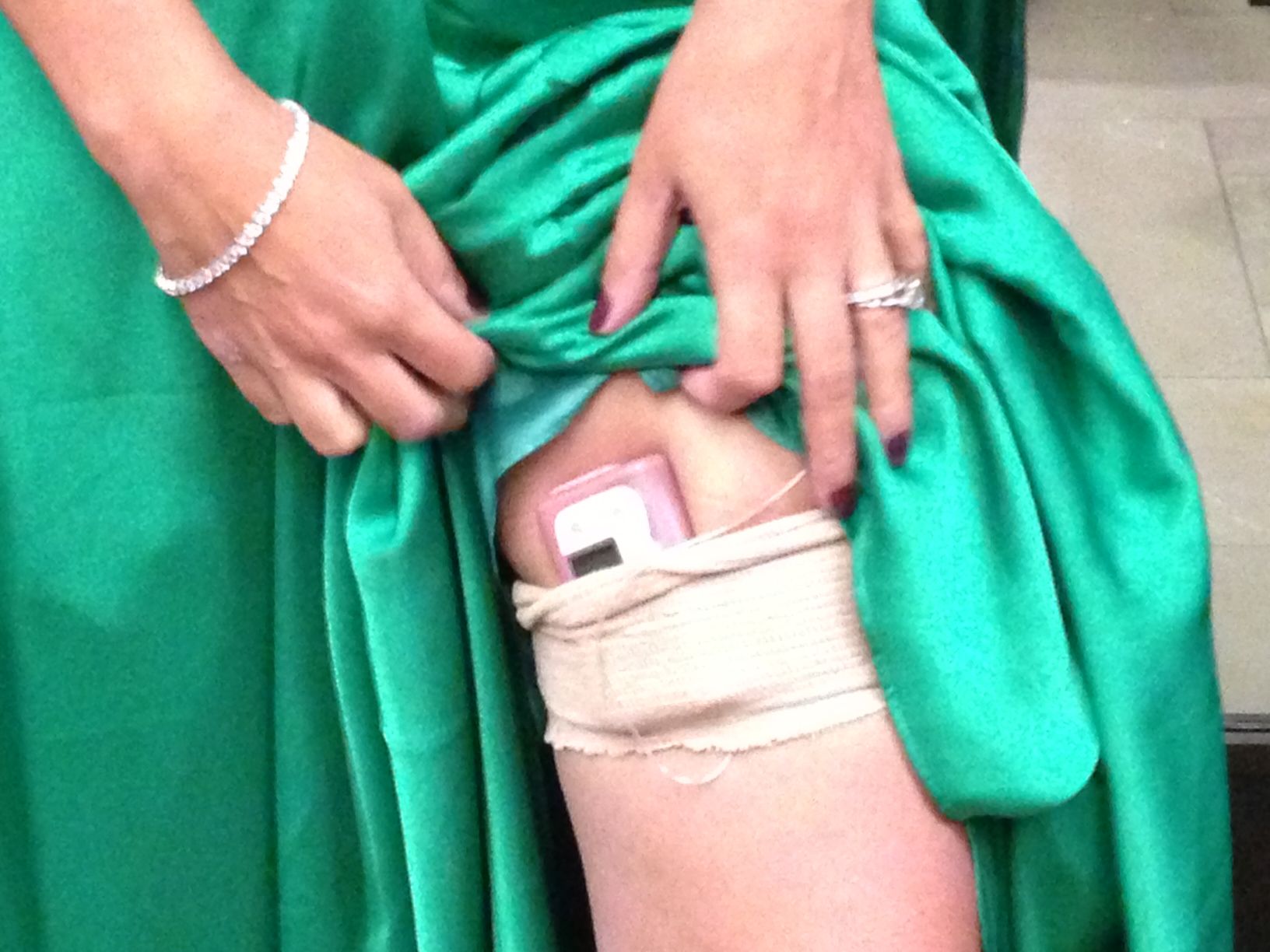
A woman I work with – who for the purposes of this will be known as Brilliant Sue (because she is brilliant and her name is Sue) suggested Tubigrip which is a stretchy, tubular bandage.

It worked a treat. The pump stayed exactly where I wanted it (inner thigh, so no tell-tale ‘pump bump’ showing through the dress, and was easy to access when I needed to bolus or check my CGM.

Unfortunately, the flesh coloured stretchy fabric didn’t look too hot, but given that the only two people who saw it were me and Aaron, it did the trick.

So while to everyone else there, I looked like this…..

gala

…..all I could think about was how diabetes manages to take the glamour of dressing up down a notch, thanks to this:

Pump thigh

But despite the delightful flesh-coloured bandage, I had a great time. And if truth be told, the most traumatic part of the night was the Hollywood tape. Now that is the stuff nightmares are made of!

I hate to jump on any bandwagon, but I’m jumping on this one – boots and all! Some of you may have seen the petition that is going around at the moment about changing the name of diabetes, or rather revising the names of type 1 and type 2 diabetes to better reflect the nature of the conditions.

Yesterday, I read a most thoughtful and well-considered commentary on the issue by Queen of Diabetes Art Lee Ann Thill. (I don’t know Lee Ann personally, but I adore the work she does around Diabetes Art Day and her brilliant project the VIAL Project.)

Lee Ann suggests that changing the name of type 1 diabetes to better distinguish it from type 2 diabetes is not going to do anything when it comes to public understanding of diabetes. She’s right. Stop for a minute and think back (if you can) to a time where diabetes wasn’t part of your life. How much did you truly know about the condition? Did you even know there were different types of diabetes? Could you identify the myriad ways type 1 diabetes is treated?

Did you know that there are four types of multiple sclerosis? No, neither did I until I asked Dr Google. (Although, I did know that there was one called relapsing-remitting MS because that’s what Jed Bartlet had in The West Wing, so naturally, I’m an expert on that!) And is it really important that as a person who has no connection to anyone living with MS that I have an in-depth knowledge about it? Or understand how it impacts on the life of a person with MS? Should I be expected to understand that primary-progressive MS is different to progressive-relapsing MS? My tiny little brain is already pretty full of information I need (location to closest decent coffee shop) and useless info (being able to quote Marx Bros films), so I’m not sure that I have room for minute details about living with MS or any other health condition other than the one I have to deal with daily.

I understand how frustrating it is to have people tell me that they can cure my diabetes if only I’d stand on my left foot under the full moon on a Tuesday in November and lots of other things. But I don’t think that changing the name of diabetes is going to stop people offering these gems.

What we really want to fix are the people who are being stupid and insensitive. And I’m afraid that’s just not going to happen.

Diabetes sucks – I think that’s one thing upon which we can all agree. And there are some really significant and important issues that people living with this condition face on a day-to-day basis. Such as access to healthcare and to technology; inadequate healthcare; kids being safe while at school; discrimination in the workplace; emotional wellbeing;

None of these issues will be solved or made better for people with diabetes by changing the name of the condition. More funding is needed to improve access to technology and increase the number of HCPs (especially in rural and remote areas); better education and training is needed to improve HCPs’ knowledge about diabetes and real-life with diabetes; more training – compulsory training – is needed by the people who are charged with looking after kids in school and out of school hours care; tougher penalties may stop discrimination in the workplace; regular screening is needed to identify the emotional health of people with diabetes.

Surely, but surely we should be directing our energies towards these issues. I have accepted that when it comes to diabetes I am going to spend the rest of my life dealing with ignorant, stupid and insensitive comments from people who could be described using similar adjectives. Changing the names of type 1 and type 2 diabetes won’t magically make people stop being so ignorant. It would simply add another layer to the confusion.

Yesterday, the same question was posed to me twice: ‘How would you like health professionals to deal with people living with diabetes?’

The first time was after a short presentation I gave to a team of physicians visiting Australia from Thailand. I am incredibly privileged in my role at Diabetes Australia – Vic because I get to meet some amazing people from all over the world. The visiting doctors were very interested in our program and asked some great questions about how we run things – especially around the value and importance that we place on peer support and peer networks.

The second time was as part of last night’s OzDOC tweetchat. I was moderating the hour of rapid-fire diabetes cyber-chat, but it was Kim Henshaw who had come up with the ingenious topic of swapping places with our HCPs. Kim had posed some really thoughtful questions about how we would like our HCPs to respond in certain situations. The answers were amazing.

When I was asked the question for the first time -almost as I was walking out of the room after my presentation yesterday – I didn’t hesitate to answer.

‘Without judgement,’ I said. But then I felt that I needed to qualify that with, ‘And for them to realise that I live with this 24/7 without an opportunity for a break. I am doing all I can and there are going to be times that it is just too much.’

‘Thank you,’ the doctor who asked the question said.

‘Oh, and that it’s not all about numbers,’ I added quickly. ‘My A1c, blood pressure, weight, cholesterol – all my numbers – don’t give you anything more than a snapshot of a particular metabolic thing. I am much more than that.’

‘Good – that’s great. Thanks,’ said the doctor

‘And,’ I jumped in (guessing by now he wished he hadn’t asked the question), ‘It’s about more than the clinical side of things. My emotional wellbeing is just as important and if I am feeling burnt out emotionally, it’s highly likely that I’ll be struggling to get the day-to-day physical tasks done.’

‘Right. Thank you. Our next speaker is here,’ he said.

What he didn’t realise was that the next speaker was the fantastic Professor Jane Speight from the Australian Centre for Research in Diabetes. Later on she thanked me for setting the stage for her and what she was about to talk about. I thanked her for so eloquently providing the evidence to support my rantings!

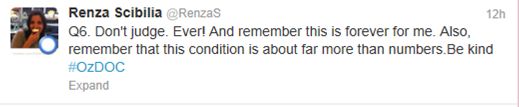
I was more than ready for that question last night at the tweetchat!

tweet

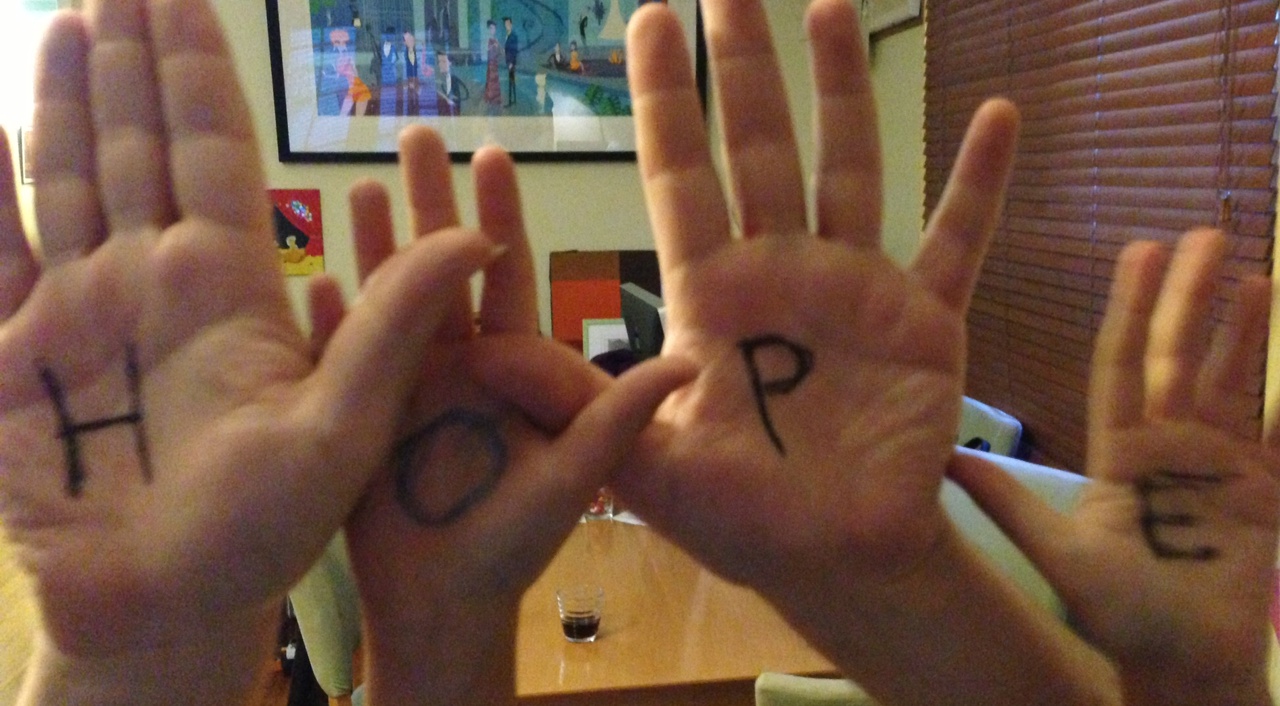
HOPE

Hoping.
My husband and daughter’s hands.

Details of Write HOPE on Your Hands for Diabetes Awareness can be found here.

Recently, I bought my husband a book called Three Wishes – An Intimate Look at Jazz Greats. I was in a local book and music shop looking for a copy of a documentary about the Baroness Pannonica de Koenigswarter who was a fascinating woman. She was a jazz patron and writer who moved to New York in the 1950s. Unfortunately, the DVD wasn’t in stock, but the bookseller suggested this book instead. I’m so glad he did.

The book is gorgeous – beautiful, archival photographs of jazz musicians. And each of them was asked the following question by the Baroness (who also took the photos): ‘If you were given three wishes, to be instantly granted, what would they be?’

How delicious! You can only imagine the responses she received from these great men and women of jazz.

I inscribed the book for Aaron with my three wishes and I’m afraid they weren’t anything ground breaking – health, happiness and something about New York. Quite generic, really. A lot of the responses in the book were about the musicians’ musical hopes, wishes and dreams.

So I decided to reframe the question and ask it in a diabetes context: ‘If you were given three wishes regarding diabetes, to be instantly granted, what would they be?’

Would we need three wishes? Surely for just about all of us, the first wish would be ‘cure diabetes’ and then we could be done with it! No more diabetes, and I’d be writing about cupcakes and coffee. And maybe doughnuts to keep things interesting.

But I think there is more. Because surely, if our first wish is a cure, we need to qualify that – it must be for everyone. It must be achievable, available and affordable. And surely, but surely, we should also be asking for a vaccine so that never again does anyone have to live with this condition. `

Today, there is no cure and, even more, there is no cure just around the corner. So maybe, with this in mind, my wishes would be a little more realistic. Perhaps those three wishes would like this:

  • I wish the technology we have today was available to everyone. I wish every single person who wants access to the latest insulins, devices, treatment options can have it at their fingertips;
  • I wish every person with diabetes could have access to a team of health professionals who are smart, sensitive, non-judgemental and understand what life with a chronic health condition like diabetes is all about. And that mental health screening was available to everyone – with proper follow-up treatment.
  • I wish everyone knew about and had access to the DOC and peer support networks.

Again, maybe not ground breaking. But equality of care? I think that is certainly something worth wishing, hoping, praying, dreaming about.

I put the first question to Thelonious Monk….

“If you were given three wishes, to be instantly granted, what would they be?”

He was pacing back and forth, and he paused for a moment to gaze out across the river at the New York skyline. Then he gave his answer.

  1. To be successful musically
  2. To have a happy family
  3. To have a crazy friend like you

And I said, ‘But Thelonious! You have those already!”

He just smiled and began pacing again.

Three Wishes: An Intimate Look at Jazz Greats


What are your three wishes when it comes to diabetes?

I’m feeling rather drained today after a restless night of little sleep. For once, the reason is not diabetes. Rather, it’s my poor husband and his neck/back/shoulder. He’s been in a world of pain for a couple of weeks now thanks to a middle-of-the night visit from Miss 8-year-old who woke after a nightmare and wanted to cuddle and feel safe. She crawled into our bed without either of us realising and situated herself comfortably right between us – we’re sure in one of these positions. This resulted in me sleeping with one foot on the floor and poor Aaron being scrunched up in a corner. He woke in pain and it’s been getting worse ever since.

She quite often runs into our bedroom in the mornings when Aaron has gotten up to go to the gym or to jump in the shower, and dozes, cuddling up next to me until it’s time for us to get up and face the day. Or on weekends when we’re enjoying a sleep in, she might jump on the bed, promise to be quiet and then wriggle, whisper (LOUDLY) and be very, very rowdy peaceful until we give in and get up.

But this night was different – she was in there for a good part of the night and the result was not a fun morning of cuddles and tickles. Instead, Aaron has been dealing with this horrid pain.

Last night, for the first time, the pain actually woke him from his sleep. And at 4am, his tossing and turning as he tried to find a position that didn’t cause excruciating pain woke me. We got up to find some pain-killers and then I located a heat pad and warmed it up for him to see if it would help with the pain. It didn’t. Neither of us got back to sleep. So today, tiredness is reigning supreme!

I can’t remember the number of times I’ve woken Aaron up in the middle of the night, asking him to grab me some juice or jelly beans to treat a low BGL. Or the times when for some reason (looking at you, dislodged pump lines) my BGL is sky-high and has woken me and we’ve lain there together as I will the nausea to bugger off.

I can’t remember the number of times my CGM alarm has woken him, but not me. Or the number of times a pump alarm has sounded demanding a cartridge to be re-filled or a battery replaced. (Yes; yes I know I should pay more attention to the low battery/cartridge warnings!)

In my experience it’s the night-time diabetes things that impact more on Aaron than the day-time things. Even when I don’t need his help, I do turn lights on, drop things, walk into walls etc. as I stumble from my sleep to deal with the errant low.

So there is absolutely no complaining from me as we get through our day today. Because for once, I was helping him out in the middle of the night. It’s kinda nice to be able to give back even if it was only one night.

I’ve lost a bit of weight over the last three or four months. Not intentionally, just because stuff has been happening and I forgot to eat. The truth is a lot more boring and not relevant to this blog at all, but the easiest way to explain it is that November last year was crazy-busy, stressful and little food was consumed. Whatever.

Apparently, it’s okay to comment on people when they’ve lost weight. And with it comes a lot of praise – as if it’s something of which I should be proud. But I know that the tough few months I’ve had is the reason I look this way, so when I stand in front of the mirror, I don’t see someone who looks good in what she’s wearing, I see someone who is looking tired and a little defeated.

It is another example of just looking at what is in front of us and not trying to work out what is going on behind the scenes.

My HbA1c is sitting in the low 7s at the moment which of course, would have every health professional alive patting me on the head and calling me a ‘good diabetic’. Well, thank you. But the reason for it is a combination of erratic highs and lows, and not eating much which does wonders for keeping a steady line on the CGM.

The truth behind results – whatever those results – can be more than a little deceptive.  And being the person I am, I want people to know the truth. Well sort of. I want people to know that I haven’t been trying to lose weight out of vanity. It metaphorically has fallen off me because I’ve been stressed and busy and barely eating. So the numbers on the scales (if I bothered to weigh myself) wouldn’t be a reflection of effort at all. Equally, my A1c isn’t because of hard work; it’s because the limited food has helped, and the highs and lows have averaged out. I’d feel like a fraud if anyone thought anything else.

It’s all too easy to take what we see at face value and assume that what we see is what is real. But the two are completely different things. I’m never sure how much I should pry into what is really going on in others’ lives and I certainly don’t want a million questions thrown at me. Is a ‘you look good’ comment all that’s warranted when discussing weight loss? And should an in-target HbA1c be taken as an absolute that needs no further investigation? Honestly, I don’t think so.

The devil is in the detail, I guess. But making assumptions and not delving deeper will never get the truth. It will only tell half the story.

At the beginning of this year I started to exercise. (Pause for collective gasp/fits of laughter.) It was kind of an accident. One evening, I decided that I’d like to go for a walk around Princes Park, close to where I live. It’s about 3.4km, so a relatively easy stroll.

Then, the next day, I did again. And again the following day. And it’s become pretty much a regular part of my day.

I don’t know how this happened and to be honest, I don’t really enjoy it. But when I don’t do it, I miss it.  ‘Isn’t it great?’ well meaning, but probably stupid exercise types ask me. ‘The endorphins are amazing, aren’t they?’ say others. I have no idea what an endorphin is and I’m pretty sure it’s a made up word, so I generally answer in the negative.  

Do I feel better? Not really. Do I look better? Well, I’ve lost a bit of weight, but that is more due to stress and minimal eating than exercise. Do I look forward to it? Absolutely not.

Here’s what I do like about it – I’m outside, there are trees and I often go with a friend so we chat for the 30 minutes it takes to do a circuit. And coo at the cute dogs being taken for their evening stroll. And check out the buff footy players training at the park. Really, it’s quite positive.

I have no idea how long this will last. I suspect that colder weather; earlier sunsets and well…my overall aversion to physical activity will result in this being a short-lived fad. But at least my blue runners have had a decent amount of wear.

I will never be an exercise freak, but I have always liked a walk. I drive my family nuts when we are away on holidays because for me, the thought of walking 8 kilometres in a city is a perfectly sensible thing to do. We’ll stop on the way to shop or have coffee, lunch, cupcakes, coffee, doughnuts, cupcakes etc, so really, we’re just walking from one food stop to the next! But to schedule it in with the main purpose being ‘exercise’ as opposed to ‘getting from point A to point C(upcake) is a little alien.

But, I’ve been doing it for a couple of months now. And even though I don’t feel better for doing it, I like the idea that I’m doing it. I get to be supercilious and judgemental at people who don’t do any form of exercise. And I tell myself that it’s good for my health. I’m hoping that I do manage to keep it up for a while, but I’m also realistic. The evening walks around the park are all I’m going for.  There are no plans to run a cheeky half-marathon by the end of the year. Yes, I have known for a long time that a place on any sort of sporting Australian team is out of the question for me. Or at least until air hockey becomes an Olympic Sport. Then I’m in with a chance!

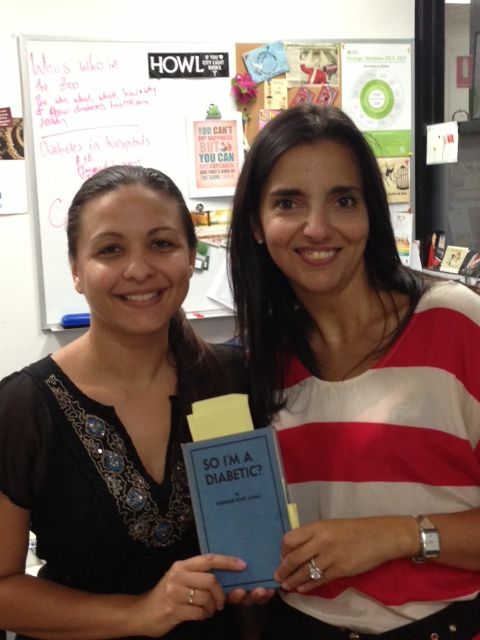
So i'm a diabetic

Circa 1955.
I guess ‘So, I’m a PWD’ isn’t as catchy?

Follow Diabetogenic on WordPress.com

Enter your email address to follow this blog and receive notifications of new posts by email.

Read about Renza

Archives