There is much known about the progression to the development of type 1 diabetes, but a lot still remains a mystery. We are told there is a two-pronged process, which involves genetic predisposition and a trigger.

But what is the trigger?

Some say it was a virus or a period of particular stress. Others believe it’s environmental. For me, I’ve no idea. I wasn’t unwell with a cold or flu or stomach bug. It was a stressful year with planning our wedding, looking for a house to buy and running my own business. But more stressful than usual? I’m not really sure.

We hear the word ‘trigger’ a lot in health. I know that for me there are triggers that can see me in a downwards spiral leading to diabetes distress, and its good mate, diabetes burnout. Others say they can identify the trigger that resulted in their first anxiety attack. There are triggers that result in ‘attacks’ for those living with coeliac disease or triggers that can cause flare-ups for people with lupus or rheumatoid arthritis, or triggers leading to seizures.

I’ve always wondered about the word. It implies a fully loaded gun that is about to go off – quite an appropriate description really. But what happens for the trigger to be pulled?

Is there, in fact, a ‘trigger point’ as such or is it the moment that we stop and acknowledge that there is something that needs attention?

I can rarely signpost the exact moment that results in diabetes distress. It’s never ‘an event’; it sneaks up on me. Sometimes – though not always – I can see that it is approaching. Does this mean I do something to stop it getting to the point where I am so distressed that I stop my diabetes self-care? Ha – no!

While I may have become better at recognizing that I am on the road to diabetes distress, I’m not so good at identifying the things that send me in that direction. Simplistically, I could say it’s just me getting sick and tired of doing this day in day out, and I am sure that is part of it.

But when I am being particular self-aware and intuitive I know that there are other things that contribute. When I wasn’t feeling good about myself earlier this year, diabetes self-care was the last thing on my mind – possibly because it couldn’t fit in there with all the feelings of sadness.

And I wonder how much of it is also about feeling that my broken body doesn’t deserve looking after. ‘My pancreas is hopeless – so the rest of me may as well be too.’

The one thing that does come out of this all for me though is a renewed sense about what living with diabetes is all about. When I start to see the light and start to feel better about myself and, slowly, slowly, start to reintroduce my self-management tasks, I am able to refocus. I remember that the numbers which scared me and pointed to being a failure are just moments in time. I remember why I deserve to be well and look after myself.

Being able to identify triggers and then respond is a really useful tool in managing health conditions. It’s just finding a way to do that. BEFORE the trigger is pulled. Because no matter what John Lennon says, happiness is NOT a warm gun.

I am as guilty as the next person of being judgemental at times. I like to think that I am not, but I’d be lying to myself if I honestly believed that I never uttered a pejorative comment about other people’s choices.

I really, really try to not be judgemental when it comes to how people choose to manage their diabetes. But I know that I am a zealot when it comes to technology and have been very, very guilty in the past of having conversations that sound like this

‘Are you on a pump? Why are you not on a pump? You should be on a pump? Pumps rock! Your life would be so much better if you were on a pump? That’s not a valid reason for not being on a pump. Do you want the details of my pump educator? Here, let me list the million reasons why I love being on a pump. Let me list them in a LOUDER VOICE to convince you. If you’re not on a pump you don’t really care about yourself.’

I know; I’m an absolute joy to be around sometimes.

But I’m trying to not be like this anymore. And to help remind me, I have made a poster of one of the things that has become a bit of a mantra and have it hanging in my office.

my diabetes my rules

Feel free to substitute ‘diabetes’ for any other health condition. Or simply for the word ‘life’.

Because here’s the thing: when you make a decision about how you manage your diabetes, it is about your health. And that is an incredibly personal decision based on your own perspective, circumstances and experience. It’s got nothing to do with anyone else.

There is one caveat to this that I think is really important.

This works and is all fine as long as the decisions that you make as part of your ‘whatever’, (your diabetes, your life etc.) don’t negatively impact on others.

As a result, anti-vaxxers don’t get to claim this as their own. Because their irresponsible actions do affect others.

Same goes for doing anything that emotionally or physically hurts another person, or has the potential to.

Actually, also goes for people who wear leggings as pants. Because, LEGGINGS ARE NOT PANTS and your decision to treat them that way hurts my eyes.

BUT! If you are making decisions that impact on you and you alone, knock yourself out. You don’t owe anyone an explanation or need to justify your choices. Own it.

About two months ago, I realised something. It came as a bit of a shock because I have had some pretty difficult and dark times over the last couple of years.

I realised that I am okay with who I am.

I know that it sounds kinda clichéd and like I’ve been reading a book of inspirational quotes (which I’ve not!) but it was a little of a revelation. Because for some time now, I’d felt like I really didn’t like who I was.

This all happened one afternoon as I listened to my daughter and a couple of her friends playing outside. They were sprawled out on the front veranda, lying on their stomachs, drawing, looking up occasionally to see what our new puppy was up to. In between such busy-ness, they were speaking about what they liked about each other and what they liked about themselves.

I love this about kids. Before they develop the ‘I must hate and criticise myself lest people think I am up myself’ gene, they feel free to say that they are pretty damn great. Because they are.

My daughter is really lovely when people compliment her. She smiles and says ‘thank you’. And sometimes, she says ‘I know’. It’s beautiful and honest.

You’re a great reader,’ I told her the other day when she told me she wanted to read Anna Karenina (seriously – no idea, but she’s six chapters in and loving it). ‘I know. I love to read,’ she answered. She didn’t sound boastful or conceited. She was acknowledging what I said as the truth. Because, it is!

When someone compliments me, I make up every reason to discredit their comment which, when you think about it, is actually very rude.

Having a chronic health condition makes it really easy to think that we are not enough or that we are broken. Add to that any other health concerns and suddenly, we can start to think of ourselves as hopeless. And when we start to add feelings of distress and a significant reduction in our emotional wellbeing, things get worse and worse.

Supplement that with other things that are getting us down and it is only a little hop, step and jump away from feeling hopeless, desperate and desolate. It’s hard to see anything good in ourselves.

The bottom line is that I stopped liking myself. I stopped being able to see the good or the positives and I simply could not be proud of anything that I was doing – even though during that time I knew I was doing some pretty amazing things.

I’m not sure what it was that jolted me out of this. I’d like to think it was ‘bolt-of-lightening’ like, but I don’t think it was. Perhaps it is the robustness that comes with age that reminds us that actually, through the shit, there is good. And a rather Pollyanna-ish attitude that ‘this too will pass’.

I listened to the kidlets and smiled. And then I remember thinking ‘Actually, I’m okay too. I really do like myself. I deserve to have good things happen to me, because I am worthy and good.’

I stopped thinking about my health problems as things that made me fragile and shattered, instead conceding that they are part of the sometimes fragile fabric that when put together makes up me.

I stopped thinking that the things that had been upsetting me where a reflection of the person I was and accepted that many of those particular things were out of my control and had nothing to do with me.

And just like a patchwork quilt, when you look at the pieces alone they don’t make sense and they are not really useful or beautiful or amazing or wonderful.

But when you put them together, they work.

I like myself. And it’s a really, really, really amazing place to be.


We need hope. I know that every day I live in great hope.

  • Hope that I will find the perfect pair of jeans in the perfect blue colour that make my legs look long and slender, my backside look perfect and that fit comfortably around the waist.
  • Hope that I will walk into my office one day to find a Nutella vending machine.
  • Hope that I will never again be served bad coffee.
  • Hope that my daughter will grow up in a world of equality for all.
  • Hope that when I get home today all the washing from our recent overseas trip will have been done, folded and put away.
  • Hope that I will walk into a vintage store and find an original (non-replica) Eames arm chair and ottoman for $150.
  • Hope that the whole cast of West Wing will come together for a movie. Please. Please, please, please, please.
  • And hope that diabetes will be cured.

You may have read over the weekend that type 1 diabetes has been cured. This article irresponsibly said the cure is ‘imminent’

I am possibly the world’s greatest cynic when it comes to reading about cures for diabetes. There is much eye rolling, exasperated sighing and sarcastic comments about being unemployed and shutting down this blog because no one will care about type 1 diabetes anymore because it won’t exist.

I simply don’t believe that the cure is ‘just around the corner’ or ‘five years away’.

But let me be really clear about this. I want a cure. I want diabetes to not be a part of my – or anyone’s – life anymore. And I am really, really pleased and eternally grateful that there are people far, far smarter than I working to find the way to a cure.

Having said that, I get concerned about the false hope that eventuates every time there are reports of research breakthroughs. Blue Circle APP

Feeling hope gives us a reason to believe and sometimes that is all we have to get us through the day.

But equally, I find I can’t put all my faith into believing that there will be a cure for diabetes because if there is not, what happens then?

I understand the need for the hype – it helps with funding and interest and gets people talking. And we need people talking about and funding research into diabetes. More and more and more.

And I do like to hear about the research and breakthroughs that are getting us a step closer to finding a cure.

But I believe that even if we are a step closer, there is still a very long way to go.

So, I take it all with a grain of salt. I read it and file it away. And then I move on. Hopeful. But realistic as well.

‘What’s the hardest thing about living with diabetes?’

I was asked this question the other day by someone who is not in any way connected to diabetes. He does not have it himself, does not have a family member with diabetes and doesn’t work in the area.

‘The fear’. I blurted out. I didn’t think my response through; it just came out.

I backtracked and gave my usual answer, where I become a little glib because I’ve said it and written it down so many times. ‘Oh – and you know – it never ends. It’s there all the time. There is no rule book. It changes for no reason.’

I smiled at him. I was back on message.

But later on that day, I realised my initial reply was true. I am scared. We constantly hear that we shouldn’t take our health for granted. I always did. But diabetes has robbed me of that.

What I am scared about isn’t the day-to-day living with diabetes. As much as I complain about it and feel it is a pain in the arse, the truth is that I actually can deal with it. The infusion set changes and sensor insertions and BGL checks are annoying disturbances. Counting carbs makes my head hurt and scheduling in doctors’ appointments far more than I’d like are all really annoying. But I just do them. Begrudgingly.

But I don’t find these things hard.fear2

I am scared about the stuff I don’t know about. I’m scared about complications developing. I’m scared about what might happen and I am scared that these things are going to happen soon.

I’ve come to realise in recent times that the things I fear are becoming more and more a part of my emotional self. Where they used to be a passing thought that I could dismiss with a flick of mental power, now they appear and are harder to deal with.

I find myself having these thoughts more and more – often completely out of the blue. And I can’t just acknowledge them, tell myself it will be okay and move on. They settle in, get comfortable and are there a lot now.

Overwhelming. Paralysing. Frightening. Today these are words I use when thinking about diabetes.

And I fear that the fear is going to actually become unmanageable. I fear that the fear is going to make me stop doing things and stop wanting to do things. And I fear that the fear is going to change who I am and make diabetes a thing that suddenly has moved from being an inconvenience to something more. To something bigger. To something ugly and shameful and devastating. I. Am. Afraid.

It’s time for me to do something about my internal dialogue about diabetes. I don’t want to be afraid of diabetes because then it wins. And while this is not a competition (because believe me, there really is no winner) I have to find the way back to feeling better about diabetes. And I will. I have to.

I’m enjoying listening to the Original Cast Recording of Once: A New Musical this week. Check it out for your Friday listening pleasure!

Yesterday, a very smart woman announced to me that she believes the greatest advancement in diabetes EVER is the hair straightener. (Yes. I had that look on my face too.)

She went on to explain that the hair straightener meant that the aftermath of night-time hypos was easier to deal with because her hair could be tamed much more easily, making getting to work simpler.

She is totally right.

When I’ve had one of those overnight hypos where I’ve sweated litres, I wake up with hair that looks like one of those troll dolls from the 1980s (perhaps not fluro green, but you get the idea).

Having a hair straightener at the ready means that it’s far easier to pull myself together in my post-hypo stupor. Not needing to wash my hair means one fewer thing to navigate when I am undoubtedly running late and having trouble buttoning up a shirt.

We decided that there should be a national subsidy program to provide straighteners to all people with diabetes experiencing this (yet to be named) complication of overnight hypos.

Clearly, I have been thinking about diabetes advancements in the wrong way. Getting excited about pumps and CGM and the bionic pancreas is directing my energy and attention the wrong way. Sure, they are all lovely and make the diabetes stuff easier to manage.

But my hair straightener makes my life easier to manage. Thank you Messrs Sassoon and GHD.

Right. Grab a coffee. Sit down. Watch. And Read. Go!

THIS. JUST THIS.

There are times that I see something about diabetes online and it stops me dead in my tracks. Kim Vlasnik whose blog Texting My Pancreas is on my must read list, presented last month at the MedX conference at Stanford University. I have seen countless presentations about diabetes. Heck – I’ve given countless presentations about diabetes. But this? This is one of the most beautiful, powerful and graceful things I’ve ever seen. Watch it. Then watch it again. And then send it to every single person you know to give them an idea about real life with diabetes.

Oh. And this too.

And while we’re talking things to watch from superstars, let me introduce you to Krystal Boyea if you don’t already know her. Krystal is the vice-president of the IDF Young Leaders in Diabetes and is awesome. I am lucky to know her, and reconnected with her all-too-briefly at EASD in Vienna a couple of weeks ago. Krystal has done a TEDx Talk which is compulsory viewing.

Sing it girl!

Melissa Baland Lee is one talented woman! Check out the most recent (and final) of her d-parodies here. Believe me, you’ll want to watch them all!

Let’s talk about sex.

This new resource from DA-Vic was launched while I was away. Sexual Health and Contraceptive Choices for Young Women with Type 1 Diabetes is a slick, smart and sassy resource that provides important, valuable and necessary information.

These mums rock!

Earlier this year, the lovely Cath Forbes guest blogged for me about her daughter Carrie’s growing independence and solo trip to Europe. In my opinion, Cath and her husband are doing such an amazing job at getting the balance between supporting and encouraging their daughter’s independence just so perfectly right. My dear friend Annabel writes a beautiful blog about being mum to an incredibly independent ten year old with diabetes, and her recent post about preparing herself – as well as her daughter – for a school camp is wonderful. Annabel’s blog, Understudy Pancreas, is another on my must-read list.

I look to both these women for parenting tips – because the grace, intelligence and dedication they demonstrate as mothers is inspiring to say the least.

Building links: consumers + industry

Tomorrow I am in Sydney presenting at the eyeforpharma conference speaking about online communities, the rising voice of the consumer and how industry and people living with health conditions can co-exist quite happily. They can! I was interviewed by the team a couple of months ago and you can read what I had to say here.

What the….

Totally un-related to diabetes, but I watched this the other night with my cousin. Her teenage daughter and my nine-year-old daughter watched on in absolute horror as the two of us thought it was the funniest thing ever. I can only live in hope that there will be one day where I can utter the words ‘You’re missing the vagician.’

That’s it. Now back to work….


I’m a bit of a fan of the team at NCD Free.  I should put in a little disclaimer here and point out that I’ve known Dr Sandro Demaio and Giuseppe Demaio – the two very clever brothers who started the organisation – since they were wee lads. Well, ragazzi. That’s not why I admire this initiative, however. I love it because it’s bold, out there and addresses the issue of NCDs in a social, honest and innovative way.

NCDs – non-communicable diseases – refer to diabetes, heart disease, and lung diseases, mental illness and cancer. Whilst there’s a focus on prevention – and when it comes to diabetes this refers to type 2 diabetes – type 1 diabetes certainly has a place at this table.

Last week, NCD Free launched a new campaign called #TheFace and it’s something to get excited about because it does what I think is one of the most important things when it comes to talking about life with a health condition. It puts a face to what we’re talking about. It personalises it. It makes it real.

It’s far too easy to talk and think about NCDs as an abstract concept. We throw around numbers that are so huge that they somehow stop meaning anything. The problem seems too big to even contemplate or know where we start. The cost of NCDs is frightening, the numbers terrifying and the global scale seems impossible.

But putting a face to life with an NCD does wonders because it stops being about numbers and statistics and becomes about people. Suddenly, it is real.

You can get behind this campaign by sharing your story, just as I have done.

Get on board. Tell your story. It’s worth sharing.


When you read about travelling and diabetes, you are told about the practicalities:

Pack twice as many diabetes supplies as you think you’ll need.

Carry a letter from your healthcare professional explaining you have diabetes to give to security personnel.

Don’t forget hypo food.

All of this is great advice and definitely things to consider when packing and planning a trip.

The theory of travelling and diabetes is different for every person and every trip. And every trip I learn something new – and not everything I learn is about diabetes!

Hotel cocktail hours are a great way to wind down from a busy day at a conference, read and respond to work emails and write a blog post of the day’s activities. Hotel cocktails are the work of the devil and their contents cannot be measured ensuring effed up BGLs for the remainder of the evening.

Don’t ever assume that people will know what an insulin pump is. We went through seven security checkpoints (Melbourne, Dubai (x2), Vienna, London (x2), and Amsterdam) and at all bar one I set off alarms and was given a pat down. Each time I asked the security attendant if they had seen an insulin pump before and apart from in Melbourne, the answer was no. (For the record, it was Amsterdam airport that didn’t cause any problems. Perhaps not surprisingly….?)

Don’t try to explain an insulin pump to said security guards who have never before seen such a device. Case in point:

DUBAI

Me: I am wearing a medical device here. It is shaped like a box. I can show it to you.

Security attendant (SA): Yes please.

Me: Here it is. It’s an insulin pump.

SA: Is it a pace-maker?

Me: No. An insulin pump. For diabetes.

SA: Oh – a pace maker. For your heart?

Me: No. It gives me insulin…medicine. For diabetes. Diabetes?

SA: Ah – you have a heart problem.

Me: …..Um. Okay. Yes. Yes.  

SA: Thank you. All good. You can go.

The Natural Confectionary Company jelly snakes taste different in London to in Australia. No idea why; they just do.

Jet lag is cruel, evil and soul destroying. I say that as I write this not knowing what day it is; what country I am in, or how to spell my name.

Riding a bike around Amsterdam will cause hypos. Most people who have half a brain and have lived with diabetes for 16 years would know this and therefore make appropriate considerations to the quantity of insulin they give themselves. I am not one of those people.

Smart people know this is hypo-inducing.

On yer bike.

Walking around cities will cause hypos. See above.

Eating Sacher torte for breakfast may not be nutritionally ideal, but it’s fun and delicious and a lovely way to start the day. And if you have it with whipped cream, you’re getting a serve of dairy. #PracticallyHealthFood #OkayThatWasALie

Being prepared for any contingency is a really good and smart and important idea. But it is a bloody pain to have to carry a whole suitcase (of carry-on luggage) with all the spares only to bring most of them home.

It’s possible that while I will tell everyone that seeing Klimt’s ‘The Kiss’, going to the Rijksmuseum, visiting The Anne Frank House and going to see ‘L’elisir D’amore’ at the Vienna Opera House were all amazing and incredibly culturally enriching, the thing that got me most excited was going on the Harry Potter Tour at Warner Bros. Studio and riding a broomstick.

Travelling is fun; attending conferences about diabetes is eye opening; visiting new places is a privilege; catching up with DOC friends in real life is magical. But. Missing our little girl hurts like nothing else, and being greeted by said little girl late at night as the cab pulled up in front of our house is the sweetest thing ever. Coming home? Nothing ever beats that. Not even riding a broomstick.

Community Service Announcement for those in Australia affected by daylight saving which kicked in yesterday making it even harder for me to have any clue what freaking day it is.

You are welcome!

Daylight saving

Stop for a moment and imagine that the cost of buying insulin for a month was financially crippling to you and your family.

IMG_0121.JPG Think about having to make the choice between buying insulin or buying food.

Think about rationing insulin and taking the smallest quantity possible – just so you are taking something, but not what you need.

Think about how terrible you would feel. Think about the thirst and the exhaustion and the fuzziness.

Think.

I don’t do emotive and I don’t do scare campaigns, but this is the reality for many children – and adults – living with insulin-requiring diabetes.

It’s unfair and it’s terrible.

And now think about doing something about it that is actually quite simple.

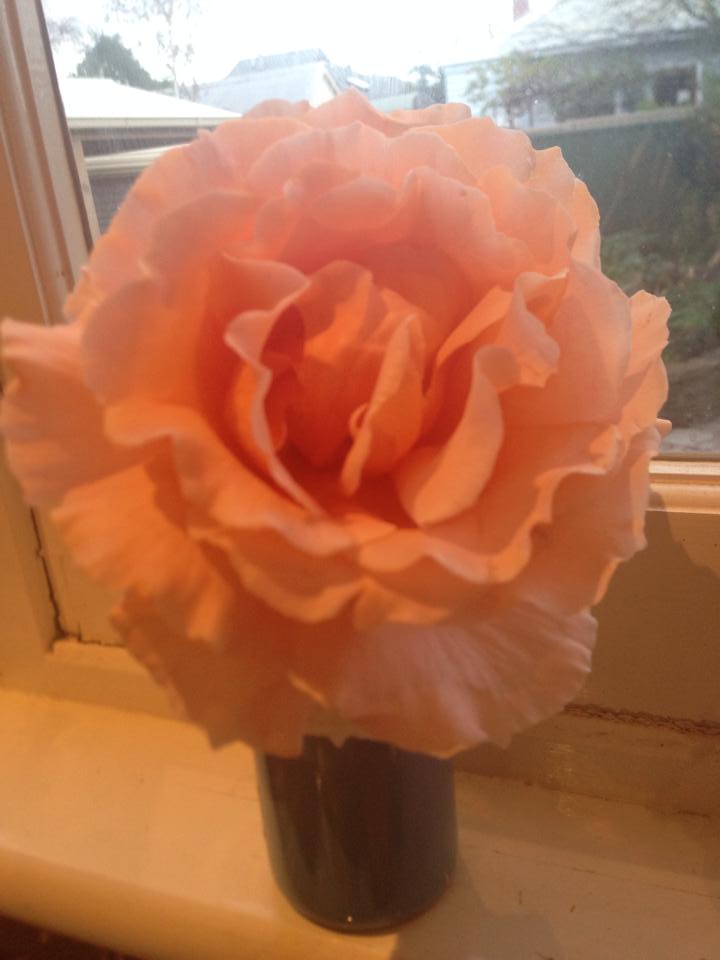
Many of you will be aware of the ‘Spare a Rose, Save a Child’ campaign that has been run over the last two years around St Valentine’s Day. The basics are – instead of sending a dozen roses to your loved one, send eleven. And with the five bucks you’ve saved, make a donation to the International Diabetes Federation’s Life for a Child Program. That fiver has just provided insulin for a month to a child whose family could otherwise not afford it.

There are many, many reasons to love this campaign; but for me, I adore it because it is simple and tangible. One rose = one month of insulin. Two roses = two months of insulin. I’m a simpleton – this sort of maths works for me!

I know that it’s not Valentine’s Day right now, but it will be in a mere 137 days. Which means that you have 137 days to plan to see how you could possibly contribute to this great initiative.

Contributing doesn’t necessarily mean making a donation – although it is wonderful if you can. You can blog about it, spread the word on Facebook and Twitter, ask your workplace or school to get behind it. You can just TALK to people about it.

Oh – by the way, this was set up by a few do-gooders in the DOC. Yep, that’s right, with nothing but the internet, their contacts and 140 characters or less (and some blogs, Facebook pages and other social media things) they managed to get this up and running. The first year, they raised about $3,000. The second year, they made close to $30,000. (You can use this the next time someone tells you that social media is the work of the devil and nothing good will ever come of it!)

The ‘Spare a Rose, Save a Child’ campaign was discussed at the 2014 Euro Bloggers Summit (disclaimer-y bits on this page). Kerri Sparling spoke about how the campaign came about and how people could get involved. One of the aims of the Summit is to share great work being done by people in the diabetes community. If you have something you would like others to know about, pease feel free to comment below.

Follow Diabetogenic on WordPress.com

Enter your email address to follow this blog and receive notifications of new posts by email.

Read about Renza

Archives