Yesterday, a very smart woman announced to me that she believes the greatest advancement in diabetes EVER is the hair straightener. (Yes. I had that look on my face too.)

She went on to explain that the hair straightener meant that the aftermath of night-time hypos was easier to deal with because her hair could be tamed much more easily, making getting to work simpler.

She is totally right.

When I’ve had one of those overnight hypos where I’ve sweated litres, I wake up with hair that looks like one of those troll dolls from the 1980s (perhaps not fluro green, but you get the idea).

Having a hair straightener at the ready means that it’s far easier to pull myself together in my post-hypo stupor. Not needing to wash my hair means one fewer thing to navigate when I am undoubtedly running late and having trouble buttoning up a shirt.

We decided that there should be a national subsidy program to provide straighteners to all people with diabetes experiencing this (yet to be named) complication of overnight hypos.

Clearly, I have been thinking about diabetes advancements in the wrong way. Getting excited about pumps and CGM and the bionic pancreas is directing my energy and attention the wrong way. Sure, they are all lovely and make the diabetes stuff easier to manage.

But my hair straightener makes my life easier to manage. Thank you Messrs Sassoon and GHD.

Right. Grab a coffee. Sit down. Watch. And Read. Go!

THIS. JUST THIS.

There are times that I see something about diabetes online and it stops me dead in my tracks. Kim Vlasnik whose blog Texting My Pancreas is on my must read list, presented last month at the MedX conference at Stanford University. I have seen countless presentations about diabetes. Heck – I’ve given countless presentations about diabetes. But this? This is one of the most beautiful, powerful and graceful things I’ve ever seen. Watch it. Then watch it again. And then send it to every single person you know to give them an idea about real life with diabetes.

Oh. And this too.

And while we’re talking things to watch from superstars, let me introduce you to Krystal Boyea if you don’t already know her. Krystal is the vice-president of the IDF Young Leaders in Diabetes and is awesome. I am lucky to know her, and reconnected with her all-too-briefly at EASD in Vienna a couple of weeks ago. Krystal has done a TEDx Talk which is compulsory viewing.

Sing it girl!

Melissa Baland Lee is one talented woman! Check out the most recent (and final) of her d-parodies here. Believe me, you’ll want to watch them all!

Let’s talk about sex.

This new resource from DA-Vic was launched while I was away. Sexual Health and Contraceptive Choices for Young Women with Type 1 Diabetes is a slick, smart and sassy resource that provides important, valuable and necessary information.

These mums rock!

Earlier this year, the lovely Cath Forbes guest blogged for me about her daughter Carrie’s growing independence and solo trip to Europe. In my opinion, Cath and her husband are doing such an amazing job at getting the balance between supporting and encouraging their daughter’s independence just so perfectly right. My dear friend Annabel writes a beautiful blog about being mum to an incredibly independent ten year old with diabetes, and her recent post about preparing herself – as well as her daughter – for a school camp is wonderful. Annabel’s blog, Understudy Pancreas, is another on my must-read list.

I look to both these women for parenting tips – because the grace, intelligence and dedication they demonstrate as mothers is inspiring to say the least.

Building links: consumers + industry

Tomorrow I am in Sydney presenting at the eyeforpharma conference speaking about online communities, the rising voice of the consumer and how industry and people living with health conditions can co-exist quite happily. They can! I was interviewed by the team a couple of months ago and you can read what I had to say here.

What the….

Totally un-related to diabetes, but I watched this the other night with my cousin. Her teenage daughter and my nine-year-old daughter watched on in absolute horror as the two of us thought it was the funniest thing ever. I can only live in hope that there will be one day where I can utter the words ‘You’re missing the vagician.’

That’s it. Now back to work….


I’m a bit of a fan of the team at NCD Free.  I should put in a little disclaimer here and point out that I’ve known Dr Sandro Demaio and Giuseppe Demaio – the two very clever brothers who started the organisation – since they were wee lads. Well, ragazzi. That’s not why I admire this initiative, however. I love it because it’s bold, out there and addresses the issue of NCDs in a social, honest and innovative way.

NCDs – non-communicable diseases – refer to diabetes, heart disease, and lung diseases, mental illness and cancer. Whilst there’s a focus on prevention – and when it comes to diabetes this refers to type 2 diabetes – type 1 diabetes certainly has a place at this table.

Last week, NCD Free launched a new campaign called #TheFace and it’s something to get excited about because it does what I think is one of the most important things when it comes to talking about life with a health condition. It puts a face to what we’re talking about. It personalises it. It makes it real.

It’s far too easy to talk and think about NCDs as an abstract concept. We throw around numbers that are so huge that they somehow stop meaning anything. The problem seems too big to even contemplate or know where we start. The cost of NCDs is frightening, the numbers terrifying and the global scale seems impossible.

But putting a face to life with an NCD does wonders because it stops being about numbers and statistics and becomes about people. Suddenly, it is real.

You can get behind this campaign by sharing your story, just as I have done.

Get on board. Tell your story. It’s worth sharing.


When you read about travelling and diabetes, you are told about the practicalities:

Pack twice as many diabetes supplies as you think you’ll need.

Carry a letter from your healthcare professional explaining you have diabetes to give to security personnel.

Don’t forget hypo food.

All of this is great advice and definitely things to consider when packing and planning a trip.

The theory of travelling and diabetes is different for every person and every trip. And every trip I learn something new – and not everything I learn is about diabetes!

Hotel cocktail hours are a great way to wind down from a busy day at a conference, read and respond to work emails and write a blog post of the day’s activities. Hotel cocktails are the work of the devil and their contents cannot be measured ensuring effed up BGLs for the remainder of the evening.

Don’t ever assume that people will know what an insulin pump is. We went through seven security checkpoints (Melbourne, Dubai (x2), Vienna, London (x2), and Amsterdam) and at all bar one I set off alarms and was given a pat down. Each time I asked the security attendant if they had seen an insulin pump before and apart from in Melbourne, the answer was no. (For the record, it was Amsterdam airport that didn’t cause any problems. Perhaps not surprisingly….?)

Don’t try to explain an insulin pump to said security guards who have never before seen such a device. Case in point:

DUBAI

Me: I am wearing a medical device here. It is shaped like a box. I can show it to you.

Security attendant (SA): Yes please.

Me: Here it is. It’s an insulin pump.

SA: Is it a pace-maker?

Me: No. An insulin pump. For diabetes.

SA: Oh – a pace maker. For your heart?

Me: No. It gives me insulin…medicine. For diabetes. Diabetes?

SA: Ah – you have a heart problem.

Me: …..Um. Okay. Yes. Yes.  

SA: Thank you. All good. You can go.

The Natural Confectionary Company jelly snakes taste different in London to in Australia. No idea why; they just do.

Jet lag is cruel, evil and soul destroying. I say that as I write this not knowing what day it is; what country I am in, or how to spell my name.

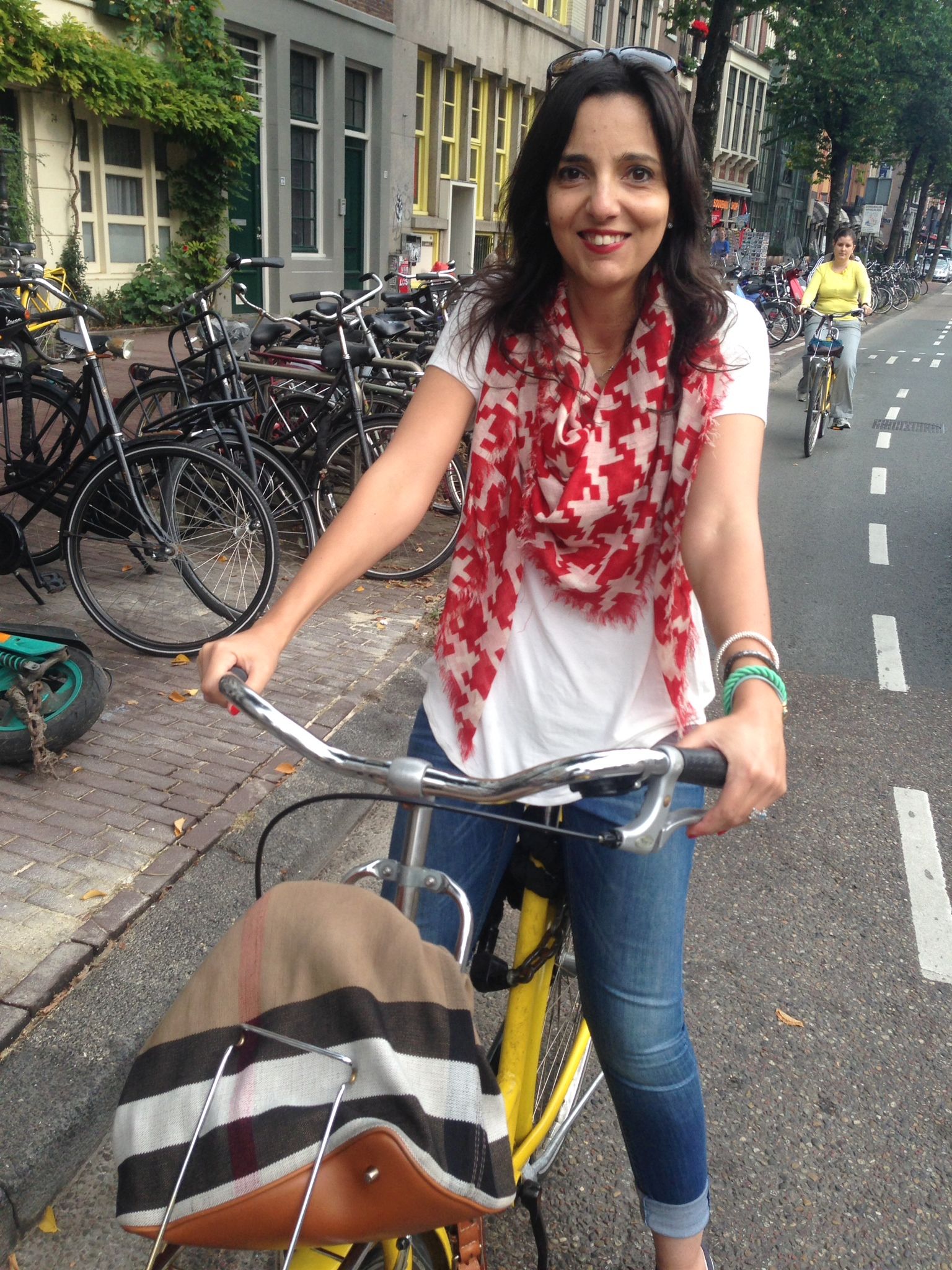
Riding a bike around Amsterdam will cause hypos. Most people who have half a brain and have lived with diabetes for 16 years would know this and therefore make appropriate considerations to the quantity of insulin they give themselves. I am not one of those people.

Smart people know this is hypo-inducing.

On yer bike.

Walking around cities will cause hypos. See above.

Eating Sacher torte for breakfast may not be nutritionally ideal, but it’s fun and delicious and a lovely way to start the day. And if you have it with whipped cream, you’re getting a serve of dairy. #PracticallyHealthFood #OkayThatWasALie

Being prepared for any contingency is a really good and smart and important idea. But it is a bloody pain to have to carry a whole suitcase (of carry-on luggage) with all the spares only to bring most of them home.

It’s possible that while I will tell everyone that seeing Klimt’s ‘The Kiss’, going to the Rijksmuseum, visiting The Anne Frank House and going to see ‘L’elisir D’amore’ at the Vienna Opera House were all amazing and incredibly culturally enriching, the thing that got me most excited was going on the Harry Potter Tour at Warner Bros. Studio and riding a broomstick.

Travelling is fun; attending conferences about diabetes is eye opening; visiting new places is a privilege; catching up with DOC friends in real life is magical. But. Missing our little girl hurts like nothing else, and being greeted by said little girl late at night as the cab pulled up in front of our house is the sweetest thing ever. Coming home? Nothing ever beats that. Not even riding a broomstick.

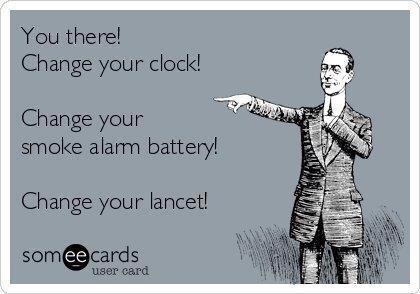
Community Service Announcement for those in Australia affected by daylight saving which kicked in yesterday making it even harder for me to have any clue what freaking day it is.

You are welcome!
Daylight saving

Stop for a moment and imagine that the cost of buying insulin for a month was financially crippling to you and your family.

IMG_0121.JPG Think about having to make the choice between buying insulin or buying food.

Think about rationing insulin and taking the smallest quantity possible – just so you are taking something, but not what you need.

Think about how terrible you would feel. Think about the thirst and the exhaustion and the fuzziness.

Think.

I don’t do emotive and I don’t do scare campaigns, but this is the reality for many children – and adults – living with insulin-requiring diabetes.

It’s unfair and it’s terrible.

And now think about doing something about it that is actually quite simple.

Many of you will be aware of the ‘Spare a Rose, Save a Child’ campaign that has been run over the last two years around St Valentine’s Day. The basics are – instead of sending a dozen roses to your loved one, send eleven. And with the five bucks you’ve saved, make a donation to the International Diabetes Federation’s Life for a Child Program. That fiver has just provided insulin for a month to a child whose family could otherwise not afford it.

There are many, many reasons to love this campaign; but for me, I adore it because it is simple and tangible. One rose = one month of insulin. Two roses = two months of insulin. I’m a simpleton – this sort of maths works for me!

I know that it’s not Valentine’s Day right now, but it will be in a mere 137 days. Which means that you have 137 days to plan to see how you could possibly contribute to this great initiative.

Contributing doesn’t necessarily mean making a donation – although it is wonderful if you can. You can blog about it, spread the word on Facebook and Twitter, ask your workplace or school to get behind it. You can just TALK to people about it.

Oh – by the way, this was set up by a few do-gooders in the DOC. Yep, that’s right, with nothing but the internet, their contacts and 140 characters or less (and some blogs, Facebook pages and other social media things) they managed to get this up and running. The first year, they raised about $3,000. The second year, they made close to $30,000. (You can use this the next time someone tells you that social media is the work of the devil and nothing good will ever come of it!)

The ‘Spare a Rose, Save a Child’ campaign was discussed at the 2014 Euro Bloggers Summit (disclaimer-y bits on this page). Kerri Sparling spoke about how the campaign came about and how people could get involved. One of the aims of the Summit is to share great work being done by people in the diabetes community. If you have something you would like others to know about, pease feel free to comment below.

There are times – frequently – that I really don’t want to have to speak or think about diabetes. But it comes up. Often in the most unlikely places.

Other times, I hope it won’t, but it does.

Such as going through security at airports. As we left Vienna to travel to London, I was stopped after I set off alarms (again). I had already taken off my boots, my necklaces and my bangles, but I was still making the alarm sound.

I was taken to a curtained-off room for a search and when I produced my pump was shocked to hear the lovely woman from security tell me she’d never seen one before. ‘Never?’ I asked. ‘Never,’ she confirmed.

Same thing happened as we headed Amsterdam. More alarms, more searches, more pat downs and a special little swab for my pump.

So far, it was three for three – Dubai, Vienna and now London.

When we landed in the UK and got to the end of the customs queue, we had a most friendly customs agent chat to us about the reason for our stay. ‘Well, I’m doing some work. And I’ve come from a conference in Vienna.’ ‘What do you do?’ He asked. ‘I work for a diabetes organisation in Australia and I’ll be spending some time with diabetes people here. The conference was a diabetes conference.’ And he was off, sharing the he used to work for a health insurance fund and diabetes is a really, really big problem and why don’t people look after themselves and even when you tell people what could happen to them if they don’t start looking after themselves they ignore you and then they get complications and then……’

And then I decided to not listen anymore, smiled blankly and waited for a new stamp to appear in my passport. Because UK Passport Control is not where I look to have a discussion about diabetes.

A visit to the chemist to buy cough mixture came with the question, ‘Do you have diabetes.’ I wish I could lie and just say no, because when I said yes, there was then a big discussion about the sugar free mixture and having to ask the pharmacist ‘can diabetics take this?’

And then there are the times when it is just a pain in the bum and whilst trying to enjoy a stroll, we have to stop so I can replenish my glucose stores.

Hypo-treating on the streets of London.

Hypo-treating on the streets of London.

A couple of weeks ago in Vienna, I was surrounded by members of the diabetes community – many of whom I am lucky to call my friends. We may live with this condition, but it really isn’t what we talk about when we sit together after the official stuff is over. No, we talk about anything but diabetes for most of the time. It’s actually refreshing!

Because so often, it seems that even when I don’t want to have to think about diabetes, I do.

The diabetes online community is a truly global network. We see that every week in tweetchats and anytime we log onto social media. We know that connections are made that are life changing and, (as in the case of my dear friend’s ‘Pumpless in Vienna’ story – to be told here soon), life saving.

For the last three years, I have been privileged to attend the European Bloggers Summit, which is a satellite event run alongside the EASD Scientific Meeting. This event is a chance to really look at ways that consumer advocates can work together and support each other to make significant change to living with diabetes.

It was sobering to be reminded several times yesterday that those of us sitting behind our laptops, participating in the dialogue of the community are already very lucky. We looked at programs out there that are providing insulin to people who would not otherwise have access. Again – life saving.

The beauty of these events is that they are not simply a day or two of navel gazing and patting ourselves on the back for the work we do. We challenge ourselves and each other to do more, do better and reach more people. We plan for what we want to achieve and then hold ourselves accountable for what we have said we want to deliver.

The issues that we have in Australia and that I frequently write about right here are so often universal. Hearing friends from Europe say that the language of diabetes is an issue, or access to technology or medicines is prohibitive for some, reminds me that it is worth continuing to be in this space. When I hear about the frustrations experienced by others when it comes to consumer representation, I know that every time I say ‘nothing about me without me’ it is echoed around the world.

There are some amazing things going on, and over the coming weeks I’m going to write about some of the things I learnt about because I not only want to share this work, I also want to encourage others to get involved.

10426552_10152711439095789_5254355179441910127_n


DISCLAIMER

The 2015 European Bloggers Summit was sponsored by Johnson & Johnson. I was invited by Johnson & Johnson to attend the event and did not receive any funds from Johnson & Johnson to cover travel or accommodation costs to Vienna or to attend the EASD conference. These costs were covered by my employer, Diabetes Australia – Vic.

Yesterday, I sat in meetings, listened to talks and attended press briefings. The EASD conference is shaping up to be a very busy one and I am doing my best to get to as many things as I can whilst still making sure I get to catch up with as many online community people as possible.

And thank goodness for those people; for the people I’ve seen in person at the conference and for being able to sit in for a very short while on this week’s OzDOC tweetchat.

These conferences are critically important for a number of reasons. They bring together the biggest and brightest people who are most admirably working to improve the lives of people living with diabetes. These are minds far smarted than mine – they are amazingly brilliant professionals. I admire them on many, many levels.

But too often I get the feeling that people with diabetes are lost in the messaging and completely forgotten. The language being used has us as passive ‘subjects’ (thank you to Professor Richard Holt (@RichardGHolt) for your tweet, by the way!), not involved in what’s going on. It’s kind of like these conferences are a magical land where diabetes is spoken about as a thing on its own, forgetting that it is always attached to actual real people living actual real lives in the actual real world.

One meeting I sat in today listed ‘key stakeholders’ involved in a new ‘patient’ education program. The glaring omission in this esteemed list was people with diabetes.

In another session, the speaker was complaining about the inability to get accurate data from device companies about ‘patient opinion’ of their products. There seemed to be a complete lack of thought that perhaps people using those devices might be able to provide the information being sought.

In both sessions, I thought about standing up and saying something, but you know what? Sometimes I get sick of the sound of my own voice saying the same things over and over.

This is not where I say that people with diabetes need a seat at the table of organising committees and advisory boards. Because I say that all the time.

No.

This is where I remember that it is up to us to cut through the noise, ignore the fanfare and the superfluous crap (of which there is much) and try to find the things that are actually going to make life with diabetes a little – just a little – bit easier. It’s there – it’s being spoken about and there are glossy brochures promoting it.

It’s just that the wrong people are being spoken to.

Update from yesterday’s post

I got up close and personal with the new Abbott FreeStyle Libre system today, getting to see it in action on a representative from Abbott. Despite begging, pleading and promising to not tell anyone (except, of course, the pretend people who read this blog), I was unable to get any details about an Australian release date. Social media musings, however, suggest that we are looking at early next year. Watch this space!

New technology gets me very, very excited so it was with great interest that I sat through the Abbott symposium showcasing their new FreeStyle Libre glucose monitoring device. Two and a half hours later and I was desperate to get my hands on one of these new devices.

Abbott call this their ‘flash glucose monitoring system’. It’s not continuous glucose monitoring as we know it. There is no integration between pump and sensor device. This is different.

Click here to read about how this device works, but basically, there is a sensor worn under the skin (positioned on the upper arm). The sensor, a white little disc, is about the size of a twenty-cent coin. A ‘reader’ is scanned over the sensor to give a glucose reading. That’s it. And there is no calibration required. The sensor lasts 14 days and Abbott says that this system eliminates the need to do finger prick tests.

That’s right – no more jabbing a lancet into your fingers. No more inserting a strip into a device, taking a blood sample, wiping it on the strip and waiting five seconds for the meter to count down and give you your number. Instead, just a swipe of the reader for an immediate result.

I should point out that the reader does also double as a BGL and ketone meter. At the symposium, it was mentioned that a finger prick test is recommended during periods of high variability.

Okay – so that’s all the good stuff. But I do have a couple of concerns.

First up, let’s talk about how it looks. (Yep, this is where I am being shallow.) There is no doubt that the sensor in this system is small. In fact, it has a tiny profile – only millimeters high. However, it is white and noticeable and has to be worn on the upper arm. I know that if I were wearing it, I’d be spending a lot of time explaining what the little white disc stuck to my arm is all about, and that would start to annoy me pretty quickly. I didn’t get a chance to ask why it couldn’t be worn elsewhere, but plan do to that when I visit the Abbott stand during the conference.

The cost of this device is yet to be announced in Australia. In Europe, the sensors will be around the €60, which, using today’s exchange rate, equals about AUD$86. This is not affordable tech. This is not going to be within the reach of most people. And that means, that once again, we have a situation where people with diabetes don’t have access to the latest, most convenient technology.

Also yet to be announced is the release date for the Libre in Australia – again this is something that I will be asking about later this week, however I suspect that the team here won’t be able to give me much idea about that. I might need to wait until I get home to get a better idea of when it will be available for Aussies. I do want to point out that the Abbott EU team should be commended in having given a sneak preview of the device to a significant number of peer leaders. How fantastic to have people with diabetes talking about this – and talking about the real experience of using the device – rather than us having to rely solely on the glossy collateral and impressions of HCPs.

But despite any concerns, make no mistake – this is a game changer. This tech has the potential to redefine self-monitoring in ways that we’ve not seen yet. For me, the benefit of not having to prick my finger to check my BGL is a huge, huge bonus and I know that there are many people who find this the thing they hate most about diabetes management.

This is exciting. I want it, and, at the risk of sounding like Veruca Salt, I want it now!

DISCLAIMER

The symposium I attended was sponsored by Abbott. I was not paid to attend the Symposium nor to write about this product. Abbott has not supplied me with any products in the FreeStyle Libre range. This blog post is just my impressions based on what I heard at the Symposium I attended and from people with diabetes who have been using the device. 

I sat in the Qantas Club Lounge fighting back tears as the kiddo sent me text messages saying she would miss me. There were tears when I left, but my mum assured me that she was okay within about five minutes. (There’s a double-edged sword for you – happy that she is okay, but, dammit, couldn’t she be upset a little longer?)

I was hoping to drown the sadness of three weeks without my little girl with the excessive food and booze on offer in the lounge, but a stupid BGL of 17.3mmol/l (hello stress) saw me nibble on some nuts, drink half a glass of sparkling wine and avoid the dessert table. Missed opportunity.

By the time I boarded, my CGM was showing a much nicer number and I settled in for the long flight. As usual, I was asleep before we took off and managed to get in five hours of sleep, waking only because my pump was vibrating. (At that point, I felt I needed to explain to the person next to me why the little box in my top was vibrating and what it was for and I have diabetes and it’s telling me that my blood sugar is above it’s high limit because I’m stressed when I’m in transit and I miss my nine year old daughter and I wonder when the wine cart will be around.)

I am not afraid of flying – never have been. But I loath being in transit. It stresses me out and that sends my BGLs soaring. I bolused a little and upped my basal rate a touch.

When food arrived, I took two mouthfuls of the chicken-rice-vegetable combination that seems to make up pretty much every airline meal and held on to the chocolate bar. My CGM graph was pretty stable for the remainder of the first leg.

At Dubai airport, I set of every alarm possible going through security and was escorted to a private room to be patted down by a female attendant.

‘I’m wearing two medical devices – one here (I patted my chest) and one here (this time, I patted my abdomen where my CGM is inserted). I can show you if you’d like.’

After playing diabetes show and tell, I collected my things and moved through the airport, finding somewhere to have a coffee and regroup before the final flight. (And avoid accidentally buying a Hermes bangle.)

A two hour lay-over and I boarded the plane for Vienna. Thirty minutes in and off went my alarm warning me that my BGL was dropping too fast. I treated the impending low and fell asleep for a couple of hours, waking for a meal (another two mouthfuls!) and rounded out the flight with a couple of movies.

Checking into the hotel, I realised it had been 26 hours in transit door to door.

Travelling with diabetes has it’s challenges. I never travel now without wearing CGM because I like being able to pull out my pump and see how I am tracking. I love that I can respond to arrows before the number becomes problematic. This is, of course, the beauty of CGM all the time, but being able to stop having to deal with a nasty hypo while cruising at 35,000 feet in a cramped space is convenient beyond belief. Equally, being warned about the ‘about-to-happen-in-transit-stress-highs’ before they become horrid, socks on teeth, needing to wee every five minutes hypers is fabulous – for me and the person I’d be climbing over to get to the loo!

So, now, I’m in Vienna. The first strudel and schnitzel have been consumed. I’m jet lagged beyond belief. But my BGLs are over their in-transit-stress. Everything is how it should be and I’m ready for EASD!

Follow Diabetogenic on WordPress.com

Enter your email address to follow this blog and receive notifications of new posts by email.

Read about Renza

Archives