You are currently browsing the category archive for the ‘technology’ category.
Let me tell you what is worse than jet lag. Jet lag combined with food poisoning. These are the two extra circles of hell Dante forgot about.
While I am recovering and trying to get my body to accept coffee again, here are some photos from last week’s ATTD conference which was in equal measure amazing, overwhelming, frustrating, intimidating, brilliant and exhausting. I’ll explain more in coming posts, but for now, enjoy the images.
How to deal with jet lag when arriving in Europe #1: night time walk to major tourist site and be amazed.

How to deal with jet lag when arriving in Europe #2: find (half) decent coffee.
How to deal with jet lag when arriving in Europe #2.1: drink all the coffee.

And then drink some more.

#docday is always a highlight. Little dogs called Jamaica make it even better. (Jamaica on the left; Bastian on the right.)

Hello Solo… New pumps headed our way.

MySugr is ALWAYS on message.

Flavour of the conference #1: DIYAPS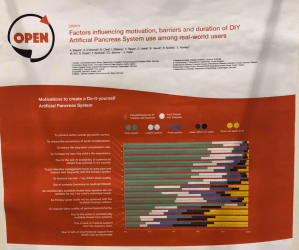
Flavour of the conference #2: Time in Range

Vegetables. I craved them.

Because there were so, so, so many dense carbs!

Not that I was complaining. (Especially when mini doughnuts came in Diabetogenic colours!)

Oh – did I say that #SpareARose was mentioned? A lot?
Such as at #docday. (Grumps looking especially grumpy because I’d just announced #SpareAFrown.)

And then? Then there was the smile-a-thon, as we smashed through target after target.
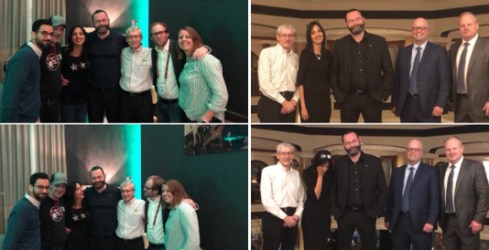
Next week, I’ll go into detail about some of the different sessions, highlights and satellite events I attended. It was a frantic few days – so worthwhile in every possible way. And as always at these conferences, finding those who live diabetes – themselves or with a loved one – provided the necessary grounding throughout the conference. This year, that support was even more pronounced with every single person who was asked to step up to promote #SpareARose doing so in spades. This is all the community. That is what it is all about…
DISLCOSURE
I attended the ATTD conference in Berlin. My (economy) airfare and part of my accommodation was covered by DOCLab (I attended an advisory group meeting for DOCLab), and other nights’ accommodation was covered by Roche Global (I attended the Roche Blogger MeetUp). While my travel and accommodation costs have been covered, my words remain all my own and I have not been asked by DOCLab or Roche Global to write about my attendance at their events or any other aspect of the conference.
I’ve been Looping for about 17 months now. I’m a fan (perhaps you may have picked that up).
The reason I am a fan has nothing to do with my A1c. In fact, right now, I couldn’t tell you what my A1c is (more about that later). I love Looping because it works for me. It takes away a shedload of my diabetes tasks. It helps me sleep better. It gives me more energy. It means I think about diabetes less. It significantly, significantly, significantly reduces the number of hypos I have, and the impact of the almost-hypos that have replaced the doozeys used to have. It means I get to wear cool t-shirts.
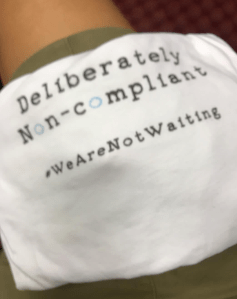
Badge of honour…
Because in exactly the same way as if I have tried a different eating plan it’s never been about numbers on the scale, Loop has never been about A1c.
It’s especially never about a measurement that is so flawed that it really is time to wonder why, for me and those of us who are able to access far more informative and useful data, even bother to have this checked. (Read this piece by Dr Steven Edelman from TCOYD for more on that.)
I have to say that I feel a lot of discomfort when I see A1c as such a focus. Some if it is for the reasons I’ve already stated, but also, it reinforces that we measure our success as PWD and how we are managing with this number. If my A1c went up this time, I really couldn’t care less. I’ve not long come off three weeks of holidays where diabetes barely interrupted the flow of sunshine, sea and sleep. And family, friends and food. I have not had a hypo in months. I have not had days of wanting ‘I hate diabetes’ tattooed across my forehead.
I went to my endo appointment last week still in slight January holiday mode. I completely forgot to call ahead for a pathology request – in fact, I’d forgotten all about the appointment until I was sent the text reminder a few days earlier. I used to think it was a waste of time not showing up without results waiting for me. But I wasn’t really all that concerned this time. I had some other information at hand including how much time I am spending in range. That gave me enough to focus on before I moved onto other things I wanted to talk about: the things that are really important to me with my diabetes.
Living well with diabetes is about so many factors. Those factors will be different for different people (and yes – A1c may be how some people consider living well).
As someone who has had really dark times with diabetes, it’s the light times that demonstrate how well I am doing. Those times may not be the times that I am ticking boxes that we are told gauge our success. They have certainly not been times necessarily marked with a low or in-range A1c. They are the times when the impact of diabetes is lightest. When it dances across my conscious rather than lives there. When it casts a gentle shadow rather than a thunderous cloud. A1c has never had anything to do with that.
It’s Research Wednesday again. Still not a thing, although Jane Speight from the @ACBRD disagreed with me after I said that last time, so maybe it is a thing?
Anyway, here are a few research studies you may be interested in getting involved in. Remember, participating in research is a great way to help contribute to and shape diabetes care, as well as provide insights that only those of us living with (or around) diabetes truly can. Please do consider getting involved if you can.
Women Loopers in Australia – we need you!
The Australian Centre for Behavioural Research in Diabetes is currently recruiting women for a research project on DIYAPS.
This one has been open for a while and for some reason lots of blokes have participated, but we need some women to get involved. Women are a truly significant part of the DIY world. I know that when I want information about DIYAPS, the first person I look to is Dana Lewis. And for Loop specific info, Katie DiSimone. I also know that there are a lot of women loopers in Australia. And we need you!
So – if you are female, living in Australia, aged 18 years or over, have had type 1 diabetes for at least a year, and using Loop, OpenAPS or AndroidAPS , please consider getting involved. This study involves a phone interview which will take 45 to 60 minutes, and you’ll be asked about your looping views and experiences.
CLICK HERE TO CONTACT THE PROJECT MANAGER FOR FURTHER INFORMATION
(Disclosure: I’m involved in this study.)
Loopers everywhere – we need you!
The OPEN project is a collaboration of international patient innovators, clinicians, social and computer scientists and advocacy organisation investigating DIYAPS. The first piece of work from this consortium is called DIWHY (get it?) which is looking to provide a better understanding of the reasons that people with diabetes decide to take the DIYAPS road, as well as examine barriers and motivators to building and using these systems.
You can participate in DIWHY by taking the online survey which is open to adults with diabetes as well as parents/carers of children with diabetes. The survey is available in English and German.
CLICK HERE TO FIND OUT MORE AND DO THE SURVEY
(Disclosure: I’m involved in this one too…)
Social media and diabetes care
Jacqueline, from the University of Hamburg, is currently looking for people to complete an online survey to help with her Masters thesis. She is looking at the importance and use of social media in diabetes.
The survey is anonymous and will take you about ten minutes to complete.
Still open – new mums with diabetes
Women with type 1, type 2 or gestational diabetes who are either pregnant or have been pregnant in the last year are still needed for a survey from the NHMRC Clinical Trials Centre at Sydney Medical School (from the University of Sydney).
This is a twenty minute survey and the aim of the research is to better understand the glucose monitoring preferences and experiences of women with diabetes during (or planning for) pregnancy.
I spent a lot of the weekend feeling a little sentimental. Our beautiful girl turned 14 and as usual, we reminisced, telling the story of the day she was delivered. And I reread my pregnancy diary, the feelings of intense excitement, anxiety, fear and anticipation flooding back. I remembered how, 14 years ago, the only way to check glucose levels was to do blood glucose monitoring. And I was doing that up to twenty times a day. My poor, poor fingers.
While I was remembering all this ever the weekend, I was holding onto an embargoed secret, knowing that an announcement about the expansion of the current NDSS CGM funding program was about to made. In between organising a weekend of birthday celebrations and wrapping gifts, I was also planning for the media announcement which would be taking place early on Sunday morning at a local women’s hospital. I took breaks in preparing food for Sunday’s birthday lunch and read running sheets, familiarised myself with the ‘talent’ who would be explaining what the new funding meant to them, and made sure that I knew where I had to be at 8.30am the following morning.
And amongst all that, I prepared myself for what I knew would be coming: disappointment. There would be a lot of disappointment because the funding package was not going to include everyone, and those who missed out would be upset.
This is my personal blog, and although I work for Diabetes Australia, this is about my own life with diabetes, and to a degree, my life around diabetes. I write a lot about what is going on in the ‘diabetes world’ – both in Australia and more broadly. Sometimes what I write is directly applicable to me; other times, it’s not.
Today, I am writing about the announcement that was made yesterday and I guess that the line between personal and professional is potentially going to get a little murky. Please read my disclosures at the end of this post carefully, because my bias needs to be strongly acknowledged – by anyone reading this piece… and by me while writing it. But I hope that also, people understand that I need to write about this personally too.
In a nutshell, yesterday’s announcement delivered an extra $100 million dollars to fund CGM to women with type 1 diabetes planning for, during and after pregnancy; people aged 21 years and over who hold a concession card (and meet clinical criteria); and children and young people with ‘other insulin-requiring diabetes’ (for example, cystic fibrosis-induced diabetes). This is all on top of the current $54 million funding which provides free CGM products to children and young people up to the age of 21 who meet the clinical criteria. Also, Flash glucose monitoring has been added to the list of products available, meaning more choice for people with diabetes.
This is good news.
And yesterday, as I chatted with women with type 1 diabetes who had just had babies and were planning more, or were currently planning for a pregnancy, I knew just how much of a difference having access to this technology would mean to them.
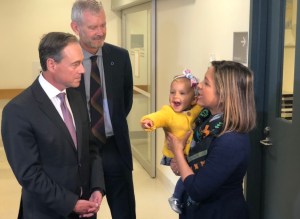
Kelly and baby Grace with Health Minister, Greg Hunt, and CEO of Diabetes Australia, Greg Johnson.
I thought back to when I was pregnant and how it would have been so much easier had CGM been available then.
How wonderful that these women, and thousands of other women like them can breathe just a little easier knowing that they will be supported with this tech while planning and during their pregnancies – and the period afterwards. Oh – and then I remembered breastfeeding hypos, the jars of jelly beans on every flat surface in our house – including the back of the loo – and how, when home alone, I used to feed our baby girl on the floor in case I had a bad low and dropped her. CGM alerts and alarms would have been so brilliant then!
CGM is out of reach for so many people. It is expensive technology and I know there are people making sacrifices to be able to afford to use it. I know what that is like – back before pump consumables were on the NDSS, we had to budget $300 per month for lines and cartridges, tightening our spending on everyday items, forgoing holidays, meals out and other things we wanted to do so that I could continue to drive my pump.
Is it fair that the technology we use to keep us alive means we need to make such sacrifices. It certainly doesn’t seem so. And I know that is how people are feeling after the funding announcement was revealed yesterday.
Am I disappointed? To a degree, yes, I am. I believe that I, and other people with diabetes like me are every bit as worthy as women with T1D planning for to have a baby, and kids and young people with type 1 diabetes, and adults on healthcare cards. I completely disagree that type 1 diabetes is harder for kids than it is for adults, because actually, type 1 is tough at any age, and each age and stage of life has its own particular challenges.
But I refuse to see yesterday’s announcement as anything other than a positive step in the right direction, just as I saw the initial funding for children and young people a good thing.
People have missed out; people who will still not be able to afford CGM; people who desperately need this technology to live the best diabetes lives they possibly can. And that’s why yesterday is not the end to the CGM funding story. In fact, it’s a new beginning.
Also, I think it is important to point this out: An announcement like this does not happen quickly. It comes from years and years and years of work. CGM has been in Australia for over ten years now. Yes – that’s right. Over ten years. So when you hear people referring to this as new or emerging technology, or saying it wasn’t around five or six years ago, that’s rubbish.
I can remember that pretty much as soon as CGM was launched into Australia, Diabetes Australia and JDRF Australia started to fight, lobby and advocate for this to be funded. How do I know this? Because I sat in meetings back then as we tried to nut out just how to approach the government for funding. What would work? What sort of model was achievable? How would the people who were most at need benefit? There are no easy answers to these questions. All we have to rely on is evidence and what the evidence shows is that there are some groups that benefit most from CGM technology.
Diabetes Australia, JDRF Australia, the Australian Diabetes Society (ADS), the Australian Diabetes Educators Association (ADEA), the Australian Paediatric Endocrine Group (APEG), and the Australian Diabetes in Pregnancy Society (ADIPS) have worked together to form an alliance to provide evidence-based submissions and information around CGM technology (amongst other issues). Why is this important? Because bringing together the peak consumer bodies with the peak professional bodies means that all stakeholders are represented, and it’s pretty hard to disagree when we combine PWD sharing our own stories for why this tech matters alongside HCPs talking about the clinical benefits.
At no time has this alliance ever pushed for anything other than funding for those with high clinical need. The idea of an upper age limit was never, ever promoted by this group – we never fought for access to be only for children and young people. Our original funding submission is a matter of public record and can be seen here and you can clearly see that we were advocating for what the evidence pointed to.
I am proud to have been a part of this work – for over ten years now. It is the very definition of ‘slow burn’. This slow burn is not all about being in the public eye and yelling about what we do. In fact, it is all very much out of the public eye. It’s monotonous at times; it can be repetitive and it takes time.
Yesterday we celebrated. Today we’re back at work, looking to how we get the next bit of funding secured.
And finally, we can yell and stamp our feet and say that we should have fully funded CGM for all people with type 1 diabetes. But that is never going to happen. If we look to other countries where there is funding available to people with diabetes of all ages, there is still clinical criteria that must be met in order for people to access reimbursed sensors and/or transmitters. Nowhere has a policy where anyone and everyone with type 1 diabetes can simply show up, put out their hand and be given a CGM. Instead, clinical need is used to determine who has access. I think that we need to be realistic about expectations of what funding will look like in the future.
DISCLOSURES
I have worked for Diabetes Australia since January 2016, and prior to this role, worked at Diabetes Victoria for over fourteen years. I have been involved in CGM funding submissions from Diabetes Australia and the alliance which includes JDRF, ADS, ADEA, APEG and ADIPS. I was also on the Department of Health’s implementation Committee after the initial $54 million CGM funding was announced. I have been involved in writing information and education resources about CGM and hosted a number of national webinars after CGM products were first listed on the NDSS. I have spoken at technology events held at Parliament House, sharing my personal experience of why I use CGM, and, more broadly, why this technology is beneficial to many people living with diabetes.
I use CGM full time. I do not receive any subsidy or discounts for using CGM, and fully fund transmitters and sensors myself. I am fortunate to have friends in Europe who have occasionally provided me with sensors when they have spares, and I am currently using a re-batteried Dexcom G5 transmitter. At the beginning of November, I spoke at a health professionals workshop for ADS where I demonstrated how to use the Dexcom G5, and was provided with one sensor for this demonstration.

The cutest baby ever.
Sometime last week, I marked a year since I started using Loop. Measure for measure my diabetes is a lot nicer to deal with these days and I know that I have settled into the comfort that comes with something that just seems to be working. The predictability of loop seems to fly in the face of all that is diabetes, so I do admit to not getting too comfortable with it all – even after fifty-two weeks of seemingly boring diabetes.
This was startlingly obvious to me when I reflect on my last two very busy weeks. As I ran around the Adelaide Convention Centre last week, not once did I think about Conference Hypo Syndrome. As I flew from Melbourne to Sydney to Adelaide and back home to Melbourne, I didn’t think, even for a moment, about travel lows and highs. And throughout the busy days, and the long busy nights of the two weeks – which involved hours sitting still in sessions and meetings as well as times of a lot more activity – apart from a cursory glance at my Loop app, diabetes didn’t bother me.)
It has been almost 12 months since I first spoke about Loop at a health professional conference, and it’s fair to say that I am still slightly traumatised by the memory of that session. I know that for the vast majority of the people in the room on that rainy day in Sydney, most had never even heard of the world of DIY diabetes, and the idea that a forty-something-year old woman with diabetes was standing before them talking about how I’d built my own pancreas was more than a little terrifying. And they let me know about it.
There was disbelief, horror and alarm that I was telling my story. I repeatedly heard people tell me that this was irresponsible and unsafe. And a number of HCPs were shocked, worried and appalled that the instructions for others to do what I had done were freely, easily and openly available online. (My cheeriness about open source wasn’t mirrored by most at ADATS.)
I’m pleased to say that wasn’t the response last week, during or following the DIYAPS symposium ‘The Brave New World of Diabetes Technology’, which featured me sharing about my own personal experience of why I decided to, and my first year of Loop; David Burren speaking about the technical aspects of the DIY technologies, and Cheryl Steele encouraging HCPs to support people using these technologies. The formal presentations were rounded out with Greg Johnson launching the Diabetes Australia DIY Technologies Position Statement.
It was standing room only, and great (and surprising) to see a number of endocrinologists in an ADEA symposium. We deliberately programmed the session to have a lot of time for questions, because we knew there would be lots! And there were.
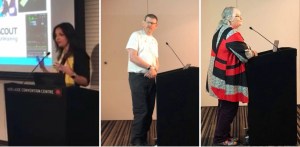
There were a number of questions from the audience about what the role of HCPs is if someone comes to them and says they are, or they want to start, looping, and I think the consensus is that while we don’t necessarily need our HCPs to understand the intricacies of the specific technologies, and we are very clear that we don’t want, expect or need them to be able to help us build our loop, we need them to acknowledge that DIYAPS is a reality for more and more people with diabetes.
The overall feeling in throughout and following our symposium was of interest and curiosity. But even more, a desire to truly learn and understand more about the #WeAreNotWaiting world and where HCPs fit into it all, and how they can support those of us making the choice to loop.
The shift in the attitudes of health professionals is significant and important, and it extends far beyond DIY diabetes technologies. Because it all comes back to the whole idea of choice. There will never be only one right way for all people with diabetes. It doesn’t matter if we are talking about the foods we choose to eat, the technologies we choose to use, where we decide to see how HCPs, our decision to wait or not wait, or the support and services we choose to link in with. We need to have the space to do what is best for our diabetes. We need the freedom to make the choice. And we need our HCPs to support our decisions.
I have already shared this, but in case you missed it, the three presentations from our symposium can be watched here:
DISCLOSURES
My travel and accommodation to ADC was funded as part of my role at Diabetes Australia. Thanks to the ADS and ADEA for providing me with a media pass to attend the Congress.
The day before the Australasian Diabetes Congress (ADC) started, Ascensia Diabetes Care brought together a number of Australian diabetes blogger and advocates for the Australian Diabetes Social Media Summit, #OzDSMS – an event that promised to tackle some interesting and difficult topics in diabetes. The social media component was relevant for a number of reasons: the #TalkAboutComplications initiative that The Grumpy Pumper would be speaking about had been (and continues to be) driven on social media; and we really wanted to share as much as we could from the day on different social media platforms to ensure that those not in the room had a clear picture of what was going on and were able to join the conversation.

This planning for the event happened after one of those brainstorming meetings of minds and chance that sometimes occur at diabetes conference. I caught up with Joe Delahunty, Global Head of Communications at Ascensia at ADA because he wanted to speak with me about the launch of their Contour Next One blood glucose meter into the Australian market. And from there, plans for the social media summit were hatched. Joe isn’t afraid to look outside the box when considering ways to work with PWD, and his idea of a blogger event tied in beautifully with the ADC which would already have a number of diabetes advocates in attendance. We both knew that we needed a drawcard speaker. So he sent us Grumps.
One thing was clear from the beginning of the event’s planning – we wanted this event to tackle some issues that aren’t always readily and keenly discussed at diabetes gatherings. It is often a frustration of mine when following along industry-funded advocate events that the topics can seem a little frivolous, and there is the risk that they can seem a little junket-like because most of what is being shared is selfies from the attendees in exotic locations. (For the record, I am always really proud of the Aussie DX events hosted by Abbott because the programs don’t appear as though we’ve been brought together to do nothing more than celebrate our lack of beta cell function while swanning around Australian capital cities.)
The #OzDSMS program was simple – three talks plus a product plug. The discussion was going to be led and directed by the PWD in the room, but the Ascensia team wanted to be part of that discussion, rather than just sitting and listening.
Grumps led the first session in a discussion about how the whole #TalkAboutComplications thing came about after being diagnosed with a foot ulcer. Although he had prepared a talk and slides, the conversation did keep heading off on very convoluted tangents as people shared their experiences and asked a lot of questions.
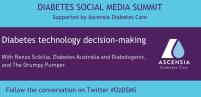 For the second session, Grumps and I drove a discussion focused on decision making and choice when it comes to diabetes technologies, with a strong theme running through that while the people in the room may know (and perhaps even use) the latest and greatest in tech, most people using insulin are still using MDI and BG monitoring as their diabetes tech. (For some perspective: in Australia, there are 120,000 people with type 1 diabetes and about 300,000 insulin-requiring people with type 2 diabetes. Only about 23,000 people use insulin pumps as their insulin delivery method. And there would not be anywhere near that number using CGM.)
This certainly is interesting when we consider that most online discussions about diabetes technology are about the latest devices available. We tried to nut out how to make the discussion about the most commonly-used technologies relevant – and prominent too.
Also in this session was a conversation about back up plans. While this is one of Grumps’ pet topics (he wrote about it in one of his #WWGD posts here), I think he met his match in David Burren, our own Bionic Wookiee. Between the two of them, they have back up plans on top of back up plans on top of back up plans, and over the week came to the rescue of a number of us at ADC who clearly are not as paranoid well organised as them.
Yes, there was talk of product. Ascensia’s Contour Next One meter was being launched at ADC, so there were freebies for all and a short presentation about the meter. (For a super detailed review of the new meter and the app that accompanies it, here’s Bionic Wookiee’s take.)
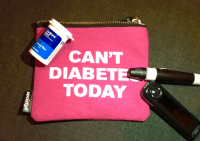
It makes sense that device companies use these sorts of events as an opportunity to spruik product, especially if it’s a new product. I am not naïve enough to ever forget that we’re dealing with the big business of medical tech, shareholders, ROI and a bottom line. But as I have said before, I WANT us to be part of their marketing machine, because the alternative is that we’re not included in the discussion. I’ve not drunk the Kool Aid – I’m fully aware they know that we will have some reach if we write about their product. I’m also fully aware that even though our bias should always be considered, the words remain our own.
I was super pleased that during the small part of the day dedicated to talking about the device, the presentation wasn’t simply about trying to blind us with all the fancy bells and whistles included in the meter. Instead, the focus was on accuracy. As I wrote here, accuracy will always be king to me, because I am dosing a potentially lethal drug based on the numbers this little device shows me. (Well, these days, I need it for when I calibrate my CGM which will then inform Loop to dose that potentially lethal drug.) Accuracy matters. Always and it should be the first thing we are told about when it comes to any diabetes device.
 We moved to the Adelaide Oval for dinner for a final presentation by CDE and fellow PWD, Cheryl Steele, who also spoke about accuracy and why it is critical (this went beyond just talking about the new meter). I walked away considering my lax attitude to CGM calibration…not that I’ve necessarily made any changes to that attitude yet.
It was an exhausting day, but a very satisfying one. There was a lot of chatter – both on- and offline and it felt that this was just the start of something. Ascensia has not run an event like this before and hopefully the lively discussions and engagement encourages them to see the merit in bringing together people with diabetes for frank and open dialogue about some not-so-easy topics. While this event was exclusively for adults with type 1 diabetes, I think people with type 2 diabetes, and other stakeholders such as parents of kids with diabetes, would benefit from coming together to share their particular experiences and thoughts in a similar event setting, and potentially some events which bring different groups together to hear others’ perspectives.
As ever, I felt that this event (and others like it) go a long way towards boosting opportunities between PWD and industry, and I am a firm believer that this is where we need to be positioned. Thanks to Ascensia for allowing that to happen; thanks to others from far and wide who joined in the conversation – we were listening. And mostly, thanks to all the advocates in the room for contributing so meaningfully.

Disclosures
I was involved in the planning for the Ascensia Diabetes Care Social Media Summit and attended and spoke at the events Grumps attended. I did not receive any payment from Ascensia for this involvement or for attending the Summit. They did provide lunch and dinner, and gave me a free Contour Next One blood glucose meter. And an almost endless supply of coffee. Ascensia has not asked me to write about any of the work I’ve done with them. But I will, because I like to share and I know there are people who are desperate to know what was going on while Grumps was here!
Grumps was here as a guest of Ascensia Diabetes Care, who brought him to Australia to be the keynote speaker at the Ascensia Australia Diabetes Social Media Summit and to speak at other events about his #TalkAboutComplications initiative.
My travel and accommodation to ADC was funded as part of my role at Diabetes Australia. I would like to thank the ADS and ADEA for providing me with a media pass to attend the Congress.
In yesterday’s MJA, there was an article about diabetes apps, written by two Australian endocrinologists, Dr Rahul Barmanray and Dr Esther Briganti. The article is a commentary of concerns of current apps in a highly unregulated system. (Read it here; or read the MJA Insight article here.)
There are currently over 1,500 diabetes apps available online. At the World Diabetes Congress back in 2015, Ellie Strock from Voluntis reported there were 800. The growth here is substantial and will only continue.
Most diabetes apps (in fact, most medical apps) are in no way regulated. In Australia, only a very small number have been through the TGA approval process. (Also at WDC in 2015, Ellie Strock said that of the 165,000 mHealth apps that were available at that time, only 103, or 0.06%, had FDA approval.)
I think that the writers are right: we need to be better at gathering and providing some decent evidence about the efficacy and safety of these apps (just as with any diabetes management tool). And it was great that they highlighted privacy issues: apps collect a lot of data (personal as well as medical), and some if this is shared with third parties. People with diabetes should be aware of – and have a right to know – just how our data is being used.
However, I found the article to be sightly alarmist, and somewhat out of touch with aspects of day-to-day diabetes, and what PWD are looking for when it comes to digital solutions.
The realities of diabetes mean that every single day, we are making many, many choices and a lot of those are to do with dosing of insulin. We do this by combining the information we’ve been given by our HCPs, what we have come to learn about our own particular brand of diabetes, what we have learnt from our peers, and the technology we choose to employ to help us deliver that insulin. For me, that technology is a highly sophisticated app that provides me with bolus advice after I tell it how many carbs I’m about to eat. Once it has worked out its calculations (clever Loop!) I either agree and tell it to deliver, or override and put in my own number.
The article states:
‘Although apps increasingly advise on insulin doses, there is minimal published information on safety and efficacy, despite these apps effectively providing drug treatment recommendations without health care professional oversight.’
This sentence made me shake my head in disbelief. ‘Drug treatment without HCP oversight’ is my every day with diabetes. In fact, it’s reality for just about every person I know using insulin. Do HCPs really believe that they, and they alone provide oversight into our insulin doses?
There are a number of things we need to think about here. Firstly, as so often, we need to consider education. Apps should never be considered the ‘set and forget’ way to manage diabetes…but then, neither should any diabetes technology. Actually, neither should one-off diabetes education!
Our day one education when using insulin must start to provide an understanding of how it works, and that education must be refreshed and refreshed and REFRESHED. Even as someone in the ‘hand out all the diabetes technology at diagnosis’ camp, I know it is essential that people with diabetes understand insulin to carb ratios, insulin sensitivity factors and how to calculate our bolus insulin doses.
The thing is – we’re not getting that education a lot of the time. And if we don’t know we need it, we don’t know to ask for it. If we’re turning to apps to help us manage our diabetes, we probably do need some guidance about how to stay safe while using them, especially if PWD are diagnosed today when we expect there to be technology – such as apps – to make things more convenient.
Are the apps any less safe than what people are already doing with the limited education that is on offer for most people? I am astounded at the stories I hear of people diagnosed with diabetes being sent home with a syringe and a bottle of insulin and told to come back in a few days. I hear this repeatedly, so perhaps shouldn’t be too astounded.
We can’t blame the technology for not being accurate or smart enough if we haven’t been given the education to know that! Somewhere in there must be some HCP responsibility to educate PWD on what works and what doesn’t. And part of education these days must be about using technology, safely – with acknowledgment that technology is more than just a blood glucose meter, and does indeed include phone apps.
Apps exist because there is a gap in the market. That gap is that people are looking for ways to help make diabetes a little easier, whether that be prompting us to take our drugs at a certain time of the day, log and analyse our glucose levels, collecting and storing carb and other nutrient values for different foods, or helping us to calculate bolus doses.
We look to technology (including apps) to help us, and to work with and augment what we already know through the education we have received or have learnt from our HCPs – or at least, should have received.
While many of the apps claim that they will help lower A1c, I do wonder if that is the main reason that PWD decide to try a diabetes app. Is it that they are looking for improved diabetes management, or is it really just wanting some help in the constant tasks required to manage diabetes effectively?
As always, I look to my own experience as the only one I truly know and understand, and I can say with great confidence that I have never ever taken on any app with that intent. It’s always been about making things easier and reducing the burden of diabetes. Today, I rely on a highly unregulated app to do a lot of my day to day diabetes management. But because I have been fortunate to have the education I need, I am confident in doing that.
Apps are not evil or dangerous. TECHNOLOGY is not evil or dangerous. The real risks to people with diabetes is not having the right education to make informed, educated, confident decisions and choices about our diabetes; that same education that would help us assess the safety of the apps mentioned in the article.
Look, I am not saying that there shouldn’t be concerns about unregulated apps, or that we shouldn’t be having these conversations. Of course we bloody well should (and should have been for a long time; apps are not new).
But in there with the criticism and concern, there needs to be more acknowledgement of why people are turning to apps. Because otherwise, it looks like just another example of HCPs trying to stifle advancements in diabetes technology.
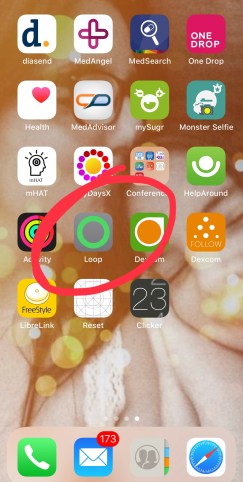
My highly unregulated app of choice, in a highly unregulated world of apps.
I am a master outsourcer. I outsource as much as I possibly can – from cleaning our home, doing our garden, washing the car and grooming our dogs. I used to feel guilty about this. Then I realised that doing these sorts of things make me irritable and bad-tempered, and it’s better for everyone – mostly and especially me – to just get someone in to do them so I don’t need to a) do them myself and b) get shitty because they are not getting done. (I should add that Aaron feels exactly the same way. He has no desire to do any of those things either, so the outsourcing is a joint decision and one that makes for a far more harmonious home.)
The other day, a new outsourcing device made its way into our home. Despite having someone frequently come and give our place a thorough clean, three dogs and a cat make for grotty floors. Most days, the timber floorboards need a quick going over to gather the dust bunnies and pet hair that collects in corners. Not anymore! This little helper is going to take care of that from now on!
Outsourcing makes sense. And as I have become older, wiser – and some may say lazier – I continue to look for ways to help with the more mundane things in life.
Hello, diabetes…
Many years ago when my diabetes – and I – were not in a great place, I mentioned to an endocrinologist (not my current endo), that I was so overwhelmed by, and over diabetes and I wished that there was a way that someone could do it for me for a week or so. ‘You can’t outsource your diabetes to me,’ she snapped. I’d not suggested her being the one to step in and take over, but she was adamant that it wasn’t going to happen – just in case I was considering asking. (She was promptly sacked after that comment.)
I frequently hear people (myself included) say that the most relentless thing about living with diabetes is not being able to take a holiday from it. It’s true. Even if you have someone helping with caring duties, the toll of having this unwelcome visitor using your body as a guesthouse is unyielding. And even when we manage to find a way to share the load, (for example, partners doing night-time glucose checks, or being responsible for keeping hypo stores replenished, or scheduling HCP appointments, or making sure that insulin prescriptions, glucose strips, pump consumables, sensors etc. are all ready and available at home), there is no sharing or removing the load of the emotional toll of having diabetes.
So with all this in mind, I was a little surprised to hear myself say that I had ‘outsourced my diabetes’ when, at a recent presentation I was giving, a HCP asked me about Loop. I’ve been thinking about that comment quite a lot since I made it. Is it really accurate an accurate thing to say.
I guess that to an extent, it is partially true. I spend less time thinking about diabetes and less time ‘doing’ diabetes. Loop takes over a lot of the things I used to do. This was reiterated in Justin Walker’s talk at Diabetes Mine’s DData Exchange event on day one of ADA last week.

Loop doesn’t make diabetes go away. It doesn’t even take away all the tasks – I still am responsible for making sure that my pump cartridge is loaded, cannula is in working order, sensor is reading. But thanks to the automation, it does take away some of the responsibilities. I guess that the reduced burden comes from the positive results I see every time I look at my Loop app – jut knowing that it is doing its thing and will let me know if something is wrong – takes away some of what I once had to do myself.
Outsourcing is about sharing the load. It’s about handballing some of the tasks and responsibilities of life to someone – or something – else. Loop is the very definition of that!
Our home was built in 1913. It’s a beautiful Edwardian house with a ridiculously high peeked roof and gorgeous ornate features.
I love that although the house still has all its beautiful old world character, it has modern touches that make living in it in the 21st century much easier and far more comfortable than when the house was first built.
I have no interest in living the way the original inhabitants of our home lived. I like knowing that when I walk into the house after work today the hydronic heating will have been programmed to have switched on half an hour earlier to take the chill out of the air. I love that the Aga stove is still nestled into a corner of the kitchen, but the fan forced oven on the other side of the room takes no time to heat up for when I want to bake a batch of brownies. (Or these blondies which I made a couple of weeks ago, and are my new favourite 10 minute bake up!) I love that hanging from the pressed metal ceilings are electric lights that switch on and off as needed.
I am more than happy to give a nod to the old, and admire its loveliness. But I don’t want or need to live that way.

Period features galore.
It’s how I feel about diabetes. I can only imagine what diabetes was like many years before I was diagnosed. But I have no desire to sharpen needles, boil syringes or pee on sticks and analyse the colour that appears after ten minutes to give me a not-especially-accurate idea of how much glucose is floating around in there.
And yet, in most cases, people with diabetes are asked to step back in time with older management options before we earn the right to use newer management techniques. We are told this is done so that we understand the basics. Or have a back-up plan if things go wrong. But surely there is a way we can tick those boxes while still being able to utilise the technologies we choose to use – even the newer ones.
If I were newly diagnosed today, I would want to go straight onto an insulin pump and CGM. Obviously, I would need to learn to do blood glucose checks because CGMs in Australia need calibrating. That should simply be part of the training. And yes, I’d need a back-up plan in case my pump stopped working, but again, providing basic information about how to do an injection and insulin doses could also be part of that training – and repeated at follow up visits.
Why should we have to learn how to use old methods of treatment when there are newer methods that might suit us better?
The other day, my daughter asked me how she would manage diabetes if she was diagnosed. (Her question was the prompt for this post.) After I remembered to breathe again, I suggested that it would be up to her and that I’d support whatever she chose. ‘I’d want to Loop,’ she said. ‘I see how you are and I think that’s what I’d want, too.’
I thought about it and realised that most – all? – people who are newly diagnosed are put on MDI and BG monitoring, and I thought that there is no way that I would want that to be the only option offered to my kid if she were diagnosed. It seems archaic to me.
I would want all the options presented to us, including the ones we’re told we have to earn our stripes for before we are allowed to use them.
Now obviously, I’m coming from this with the perspective of someone who is not new to diabetes. Twenty years of living with diabetes under my belt, a job at a diabetes organisation and a career in diabetes activism and advocacy means that I would be far more in the picture than someone who is completely new to diabetes. I totally get that. But I also know that I think everyone diagnosed with diabetes should have access to the latest and greatest if that’s what would be right for them.
But why can’t that initial training be inclusive of back up plans?
Also, I do wonder if we are setting ourselves up and falsely believing that by having our back-up plans we are all sorted in case of emergency. I have not had a pump break in over seventeen years. I guess I’d be fine doing an injection, but apart from probably half a dozen times where I have injected to bring down a stubborn high, I’ve not had to use a syringe or pen. My back-up plan of long-acting insulin frequently is out of date. How confident would I be if my pump died this afternoon and I needed to go back on MDI for a few days? Not especially confident, I have to say, even though I know how to do an injection. (For the record, I have a spare pump. So MDI is actually the back-up plan for my back-up plan.)
This is just another one of those ‘it’s about choice’ situations. At ADA last week, I attended a CGM update. (Two things to note about this session. Firstly, it is held at 5.30am and I was there at kick off. Secondly, the coffee was shit and I was seriously feeling grumpy. But despite that, I managed to pay attention and hear what the speakers had to say.) Viral Shah MD in his presentation encouraged the use of CGM from diagnosis of type 1 diabetes (with a strong caveat of it must be up to the PWD to make that decision).
And one final point: CGM is not new technology. Neither is pump therapy. These are established, well-researched and safe technologies that have been around for a number of years. So why are they not offered as first line treatments?

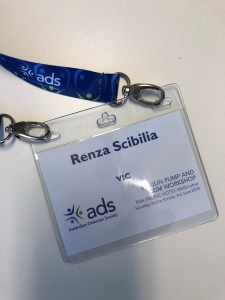
On Saturday, I had the pleasure of attending the Australia Diabetes Society’s (ADS) annual Insulin Pump and CGM Workshop. I’d been invited along another ten or so people with diabetes who already wear CGM or Libre to share our insights into living with and wearing sensing devices.
(Quick shout out to the ADS. For those who don’t know, the ADS is the professional body for endos in Australia. Over the last few years, their leadership team has been absolutely instrumental in finding ways to better include PWD in what they are doing. As an organisation, they have been innovative, and responsible for ground-breaking initiatives such as the Enhancing Consulting Skills resource. We need our professional bodies to be like this. And we need them to work with us so that we can provide our perspective to the work they are doing.)
The idea of the workshop is for endocrinologists to have hands on experience of the technology rather than just what they see and are taught at industry events. (For the record, the industry events are super important because they are an opportunity to learn about the shiny technical side of things. And get branded pens. Pens are awesome.)
Discussion was the focus of this session. There was no long presentation with people taking notes. Instead, we were asked to sit at tables with endocrinologists, and encouraged to share our the real life experience of wearing the technology.
Now, I don’t know about you, but this is always the way I want to learn and to share information. I seem to get annoyed at sessions when I have someone speaking at me for ages, telling me what they think I need to know. I much prefer to have discussions and watch conversations go off on tangents, providing attendees with the details and information that is relevant to them; that they will be able to take home with them and put into practise.
The thing about having PWD in the room is that we have a tendency to hold little back. My friend Jodie and I were at the same table. We both wear Dexcom, but our experiences are quite different. (Or as I put it: ‘She does what she’s meant to. I don’t’.) This was actually a master stroke, because it showed the endos just how varied our experiences can be. And that while what works for one person may not necessarily work for another, there really may not be a ‘right’ way to do things.
Jodie and I demonstrated putting in new sensors so that the endos could see how the actual insertion works. We talked about using an alcohol swab where we were about to site our sensor (in this case, I was the one following the instructions I’d been taught when I first started using CGM. ‘ Yeah…I can’t be bothered,’ said Jodie and I wanted to high five her and welcome her to the dark side of non-compliance.)
There was one endo at our table who was pressing every single one of my ‘OH-YES-LET’S-TALK-ABOUT-THAT’ buttons, and the first thing she said when we removed the sensor from the packaging was ‘Why is there so much waste in there?’
We spoke about the fact that current Dex sensors don’t have reusable inserting devices and that really, the companies could perhaps do a little more to find ways to reduce waste, while continuing to produce a sterile product. (The G6 apparently has addressed this…)
At one point, the Dexcom rep. mentioned the share function on the G5, and as if by magic, my new favourite endo jumped in with ‘Who makes the decision as to whether or not their data is shared.’ I wanted to hug her, but it was the first time we’d met and I thought that might be a little creepy. But yes; oh yes! We were going to talk about consent.
The absolute best thing for me was that not once as I shared by clearly (and absolutely owned) deliberately non-compliant CGM existence, did one of the endos look at me with disdain, shake their head, raise an eyebrow or tut tut. They asked how what I did made things better for me.
Some examples of questions and my answers:
Why do you wear the sensor on your arm and not your stomach?
I find it more comfortable and it reads more accurately. Plus, it lasts longer there than on my tummy.
Why do you restart the sensor?
Because I’m frugal and don’t want to fork out $90 every seven days when I know it works perfectly well for me still at 21 days
Look, the Dex reps should turn away right now, block their ears and pretend that they don’t understand me, because I am going to be really candid about this. Firstly, I am going to say that I adore this product. I would say that no matter who is in the room – I’m not sucking up to the AMSL reps because I’m hoping they’ll throw some free product my way. They don’t and that’s fine. I mean it. This is a brilliant product that I literally trust with my life. But there are some things that piss me off…
Sensors are around the $90 mark. They are approved for use for seven days. But at the end of those seven days, the sensor is still working perfectly. In fact, many people report that it works even better after the first week. Why should I throw out a perfectly good, working product if it is still doing what it says on the box?
I know the risks. I am choosing to do this myself and I am more than happy to own it.
But while we’re on this topic. The transmitter is AUD$540 every three months. That’s right, after three months, it stops working. The batteries are still good to go for a couple of months, but the device is factory set to stop working. Now, this has been done with a whole lot of safety considerations in mind and I understand those. But again, a device that is not rechargeable and still has some use in it has to be thrown out.
So, I don’t really have any qualms about using all sorts of DIY solutions that allow for the transmitter life to be extended.
I’ll say it again – I know the risks. This is about me and no one else. I am happy to take those risks.
So, you don’t calibrate it as recommended. Why?
Because sometimes, stopping whatever I am doing to calibrate is not something I want to do. Plus I’ve been wearing this for over 2 years now and I’ve learnt what to trust and what not to trust and how to use it safely. I have set my own boundaries that I feel are acceptable and perfectly safe.
Do the alarms bother you?
They used to. But now I’ve managed to customise them to a way that works for me. I have all the alarms on now, but in the past, I had all the high alerts and alarms disabled because they pissed me off so much. But the predictability of Loop means that the alarms are rare and I generally I have the headspace to respond to them as they happen. (Although the please calibrate one can drive me nuts sometimes.)
Do you share your CGM data?
I have in the past, but I don’t these days. As an adult with diabetes, I make that decision and there have been times when I’ve liked the idea of someone having my back – usually when I’ve been travelling solo. But since I’ve been looping there has been no need.
What’s Loop?
Um…we’re going to need a longer session… Here’s the address to my blog. Sorry for all the swearing.
After the event, the event organiser sent me a lovely text message, thanking me for my time and for speaking at the Workshop. She said that the CGM session was a highlight for many of the attendees. ‘People with diabetes make the best teachers,’ she added. And she’s right. When we are talking about what it’s like to actually live with these device on our bodies and in our everyday life, we really are the best people to talk about it! HCPs are great at talking about the science and the clinical side of things. But we make diabetes real because we are living it. You can only get that when you go straight to the source. And yes; we’re the source.
Disclosure
The ADS provided me with a $50 gift voucher to thank me for my time on Saturday. I was also given one Dexcom sensor to insert at the Workshop which I am still wearing. (And will do so for the next three weeks or so…)