
You are currently browsing the category archive for the ‘technology’ category.

There are some very clever people in the diabetes world and today I want to write about the incredibly astute and hip crew from mySugr who look for innovative and fun ways to help ‘tame the monster’ that is diabetes.
I met Fredrik Debong from mySugr at the first EASD Blogger Summit where I heard about his diabetes-focused start-up and saw first-hand some of the things they were developing. Fredrik kept saying that we need to bring sexy back to diabetes – he and his team do it incredibly well! (Seriously – have a look at them all!)
Since then, I’ve been fortunate enough to meet others from the team – including Marlis Schosser, (who will forever be known as the saviour in the Pumpless in Vienna story I keep sharing in conference talks), and Ilka Gdanietz who has been at all three Blogger Summits. (Ilka is wonderful for a number of reasons, one of which is she shares my love of Nutella!) This year, Ilka gave us a sneak preview of some of the exciting things happening at mySugr headquarters. mySugr launched in the US last year and the team there is headed up by Kyle Rose and Scott Johnson.
The mySugr Companion app has been around for a few years now and I would really encourage you to have a look at it. As far as a logbook app goes, it is pretty damn perfect, and the version for kids is adorable! I guess that’s what happens when you have real people with diabetes creating tech for real people with diabetes. It just works!
But wait! There’s more.
Just this week, mySugr has launched their new initiative: mySugr Academy. The Academy will offer online training programs for people with diabetes and the curriculum has been developed by healthcare professionals and people with diabetes. The first course to be offered has been designed specifically for people with type 2 diabetes. Have a look at this teaser clip to give you an idea of what to expect.
Coming courses will be for people with type 1 diabetes.
mySugr is all about diabetes education and information, but it does it in an incredibly fun, interesting, accessible and cheeky way. It is groups like this – with a first-hand understanding of real life with diabetes – that make products that I want to use. Great, great stuff!

Monster-taming at mySugr HQ in Vienna.
I got a new car a couple of years ago and in pure German auto-engineering genius, there are alerts and alarms and warnings for absolutely everything! I thought that this was wonderful and a sure sign that I was driving the world’s safest car.
Until the alarms started. The car has front, rear and side sensors. This is ostensibly to assist with parking. Now, I’m a great parker – I’ve lived in inner-Melbourne for a long time. I can negotiate a tight parking space incredibly well and love to prove people wrong when they dismissively pronounce ‘You can’t fit in there.’ ‘Oh yes I can, ye of little faith! Just watch me!’
Despite my superior parking abilities, I was more than happy to have a bit of technology to help out and make things even easier. I got used to the lights that flashed like a Christmas tree when I was getting too close to the car in front and the gentle beeping that became more and more persistent as I approached any object.
After two days of driving, I called the dealer, asked to be put through to their service centre, asked to speak to the senior mechanic and said ‘turn those effing sensors off.’ ‘Ha ha’, he laughed in a German accent. ‘Not possible!’
The problem wasn’t that the sensors weren’t helpful when I was parking; actually, they were great. The problem was that they went off when I didn’t need them to.
Sitting at a red light, the front sensors would sound if someone walked too close to the bonnet of the car. If a bike came too close to the rear or side, the sensors would go off too. Why? If I am stationary and someone is walking too close to my car, surely the alarm should be for them, not me.
It turns out, that there was no way that I was going to be able to have the alerts turned off.
My insulin pump has been designed by someone trained in German auto-engineering sadism genius. Again, there are alerts and alarms for everything. Connect it to my CGM and it makes vibrating sounds all the freaking time. The soundtrack to my life is a buzzing, beeping little box.
Now generally, these alarms are great – especially the ones that alert me to rapidly falling BGLs BEFORE it becomes a hypo problem.
But some of the others drive me nuts.
The YOUR BLOOD SUGAR IS ABOVE 14. DO SOMETHING NOW. DO SOMETHING NOW. DO SOMETHING NOW alarm is unhelpful to say the least. This one comes up when I am entering my BGL meter result into my pump to give myself a correction bolus. This frustrates me no end and usually results in me having this conversation with my pump (we will workshop that last statement another day):
Firstly, I know my BGL is above 14, you judgemental little pump, because I just did a BGL check on my meter and it told me (in a significantly LESS judgemental way). I am entering it into your system, you judgemental little pump, so again, I know what the number is. Also, I am plugging it into your correction bolus wizard so you can do some clever maths and tell my how much insulin I need in order to stop being so high. So quite frankly, you and this particular little alert can shove it up your judgemental little pump-ass.
This alarm cannot be turned off.
The problem with all the alarms and alerts (and bells and whistles) is that we stop responding to them. I know that I almost never wake up anymore when my pump alarms. Sometimes, it’s just telling me that the battery is getting low and I should change it. That’s an alarm that can wait until morning, rather than causing pump-alert-anger in others woken by the incessant noise.
I understand that the main reason for these alarms is safety. I really do get that what the pump company (and car designers) are trying to do is alert to and reduce risky situations.
But when there are so many alerts and alarms and warnings, having to deal with the ones that are less important to us means that we can stop paying attention to all of them – including the really useful ones! I know that’s what I do.
In my perfect world, my perfect pump will be completely customisable and only warn me of things I really need to know. Actually, in my perfect world, I won’t have diabetes. But for the sake of this, in my perfect world, I have perfect diabetes that is managed by my perfect pump. Perfect.
New technology gets me very, very excited so it was with great interest that I sat through the Abbott symposium showcasing their new FreeStyle Libre glucose monitoring device. Two and a half hours later and I was desperate to get my hands on one of these new devices.
Abbott call this their ‘flash glucose monitoring system’. It’s not continuous glucose monitoring as we know it. There is no integration between pump and sensor device. This is different.
Click here to read about how this device works, but basically, there is a sensor worn under the skin (positioned on the upper arm). The sensor, a white little disc, is about the size of a twenty-cent coin. A ‘reader’ is scanned over the sensor to give a glucose reading. That’s it. And there is no calibration required. The sensor lasts 14 days and Abbott says that this system eliminates the need to do finger prick tests.
That’s right – no more jabbing a lancet into your fingers. No more inserting a strip into a device, taking a blood sample, wiping it on the strip and waiting five seconds for the meter to count down and give you your number. Instead, just a swipe of the reader for an immediate result.
I should point out that the reader does also double as a BGL and ketone meter. At the symposium, it was mentioned that a finger prick test is recommended during periods of high variability.
Okay – so that’s all the good stuff. But I do have a couple of concerns.
First up, let’s talk about how it looks. (Yep, this is where I am being shallow.) There is no doubt that the sensor in this system is small. In fact, it has a tiny profile – only millimeters high. However, it is white and noticeable and has to be worn on the upper arm. I know that if I were wearing it, I’d be spending a lot of time explaining what the little white disc stuck to my arm is all about, and that would start to annoy me pretty quickly. I didn’t get a chance to ask why it couldn’t be worn elsewhere, but plan do to that when I visit the Abbott stand during the conference.
The cost of this device is yet to be announced in Australia. In Europe, the sensors will be around the €60, which, using today’s exchange rate, equals about AUD$86. This is not affordable tech. This is not going to be within the reach of most people. And that means, that once again, we have a situation where people with diabetes don’t have access to the latest, most convenient technology.
Also yet to be announced is the release date for the Libre in Australia – again this is something that I will be asking about later this week, however I suspect that the team here won’t be able to give me much idea about that. I might need to wait until I get home to get a better idea of when it will be available for Aussies. I do want to point out that the Abbott EU team should be commended in having given a sneak preview of the device to a significant number of peer leaders. How fantastic to have people with diabetes talking about this – and talking about the real experience of using the device – rather than us having to rely solely on the glossy collateral and impressions of HCPs.
But despite any concerns, make no mistake – this is a game changer. This tech has the potential to redefine self-monitoring in ways that we’ve not seen yet. For me, the benefit of not having to prick my finger to check my BGL is a huge, huge bonus and I know that there are many people who find this the thing they hate most about diabetes management.
This is exciting. I want it, and, at the risk of sounding like Veruca Salt, I want it now!
DISCLAIMER
The symposium I attended was sponsored by Abbott. I was not paid to attend the Symposium nor to write about this product. Abbott has not supplied me with any products in the FreeStyle Libre range. This blog post is just my impressions based on what I heard at the Symposium I attended and from people with diabetes who have been using the device.
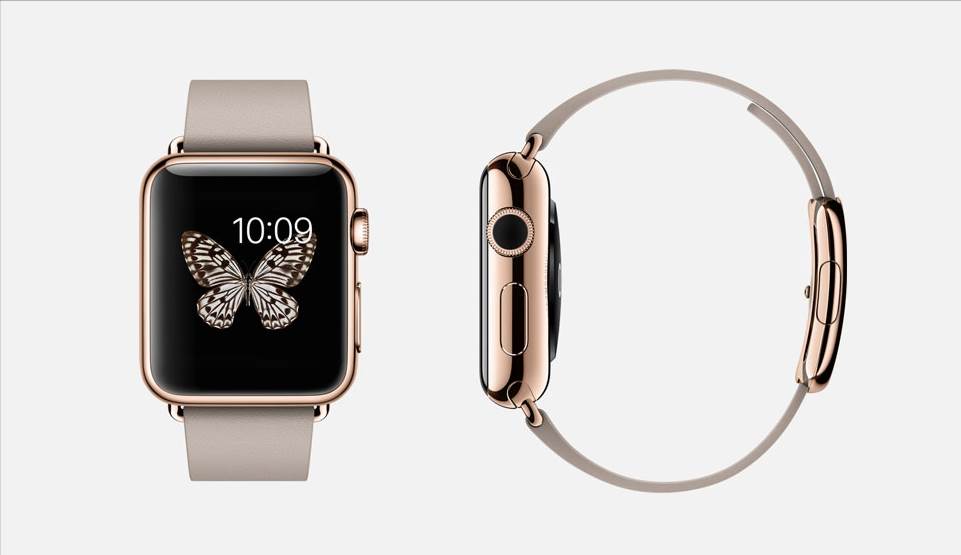
Aussies woke this morning to the news that Apple has launched a smart watch. And I’m a little excited.
iWant
Waking nice and early so I could read all the buzz about Apple’s latest launch and find out if the rumours about the new iPhone were true, I logged on to my iDevice and started reading. All the hype (I just typed hypo there….), all the photos, all the information.
I skimmed over the details of the new iPhone 6 and iPhone 6 Plus (which I will not under any circumstances be referring to as a Phablet), reading about the snazzy new camera and the high-tech, bigger and thinner features. But that wasn’t what I was really interested in. There was something else I was hoping to see. And there it was. The ‘one more thing’. The Apple watch.
Firstly, let me get my shallowness out of the way and admit that the initial thing I wanted to know was how it looked. Would it be something that I wanted to wear on my wrist? The answer is abso-freaking-lutely! And with seemingly a billion ways to customise, there is sure to be something that suits everyone. (Obviously, I’m hoping for a stripy band.)
The thing that is of particular interest to me is how I will be able to use the watch to help manage my diabetes. At this stage, I’m not sure that it is particularly revolutionary here.
This is Apple’s first venture into the smart watch market and as a first generation device, it won’t do everything that I would truly love a smart watch to do. As a health tracker, it will currently monitor blood pressure, heart rate and, through whichever app you choose, can be used as an activity tracker.
The dream device, of course, would incorporate some sort of non-invasive, real-time glucose sensor. We’re not there yet. But in a couple of years, I certainly hope that this will be part of the smart watch suite of applications. (Of course, with a cure a mere five years away, this technology will never be needed.)
Call it a gimmick if you’d like, or get on the Apple-bashing bandwagon (there are heaps of people on there already!). But wearable technology like this is going to be how we track, collate and communicate our medical information. People with diabetes are already used to wearing our tech – many of us have insulin pumps hanging from our bodies, tucked away, and glucose sensors taped to our skin. This is already how we roll. Some of us currently use apps on our phones to track our BGLs and keep records.
This is the next step in streamlining our information and data gathering. It’s exciting. It has the potential now (and future generations even more so) to make our lives with diabetes easier. This is all good news.
Plus…it comes in rose gold!
I’m in Canberra today, at Parliament House, for a lunch event focussing on diabetes technology. As usual, I’m surrounded by a group of smart people such as Professor Jane Speight and Professor Alicia Jenkins. Me, in my role as a non-professor, is to provide the consumer perspective about why freedom and choice when it comes to  diabetes technology is something that should be supported by government.
Today, Diabetes Australia is launching an important new report about insulin pump therapy in Australia. It provides recommendations and the case for action, and gives a snapshot of the current situation – not only of pump therapy, but other technologies such as continuous glucose monitors. Pleasingly, and with a nod to the future, emerging technologies such as the ‘bionic pancreas’ are also mentioned.
The report highlights the inequality of current pathways to access pump therapy. If you are unable to afford private health insurance, or not under 18 years of age and meet the eligibility criteria of the Government funded Insulin Pump Program, you are left to self-fund the purchase of a pump. At around $9000 that’s a lot of loose change to have lying around under the sofa cushions.
Sensor technology is not funded at all, leaving people with diabetes to find the dollars themselves. For me – and many others – being able to use a sensor-augmented pump gives incredible peace of mind, and reduces diabetes distress. It is not fair that this technology is out of reach for most people.
I’m really honoured to have been asked to tell my story to the group of MPs who will be at the lunch. In my time doing this job, it has become more and more apparent that having people hear and understand how living with diabetes impacts us on a day to day basis helps to bring the message home about life with a chronic health condition.
Living with diabetes cannot be tied up neatly in a box – it is complex, changes all the time and is different for everyone. Being able to manage our condition should be a matter of choice – not finances. Hopefully today the group of politicians hearing us will understand that a little bit more and start working towards developing an approach to pump therapy (and related technologies) for all Australians with diabetes.
DISCLAIMER
I work for Diabetes Australia – Vic and have been involved in the development of the resource being launched today.
Last week, I spent three days attending and giving presentations at the annual Australian Diabetes Society-Australian Diabetes Educators Association (ADS-ADEA) Scientific Meeting, here in sunny Melbourne. It was a huge week with record attendance and the conference ‘felt’ big. I’m being a little lazy here, but I think that the best way to capture everything I want to share is to use dot points. Here goes:
- Congratulations to the ACBRD team for their symposium on day 1 – Diabetes Distress and Depression – Facing Challenges, Bringing Solutions. Special shouts out to Professor Jane Speight and Dr Christel Hendrieckx who were able to really focus on the ‘solutions’ part of this session.
- Overall, it was really pleasing to see an increased focus on mental health and behavioural research at the conference. Finally, the message that diabetes is absolutely not just about numbers seems to be getting through.
- And for that reason, it’s terrific to see presenters giving really practical advice about how to address mental health issues. Huge, huge points to Christel (again), Jane (again) and Dr Carol Silberberg for not only stating what the issues are, but actually providing take-home tips for clinicians to actually use. Mental health can be a tough topic to broach – especially if HCPs feel they don’t have the tools to deal with it – but thanks to presentations by these three, there was some really hands-on advice that has the potential to help HCPs change their practise.
- I called it when it was launched, and I’ll say it again: The Enhancing Your Consulting Skills resource developed by ADS is going to change the face of educating HCPs (endocrinology trainees) about diabetes. The ADS Symposium on the Thursday morning highlighted again just how valuable this resource will be. I was honoured to be invited to present at this session, and once again would like to thank the team responsible for considering the ‘consumer perspective’ throughout the development of the resource, and continuing to do so.
- Further to that, I hope I wasn’t too rude to the GP who informed the panel that we had forgotten ‘the most important person in the team – the GP’. I was trying to be respectful when I reminded him that actually that title goes to the person with diabetes. I may have failed.
- We need to talk about Dr Silberberg’s slides about clinicians not liking their patients. It was so, so interesting and gave such an insight into the clinicians’ minds. But that’s a whole other blog post! (Stay tuned…..)

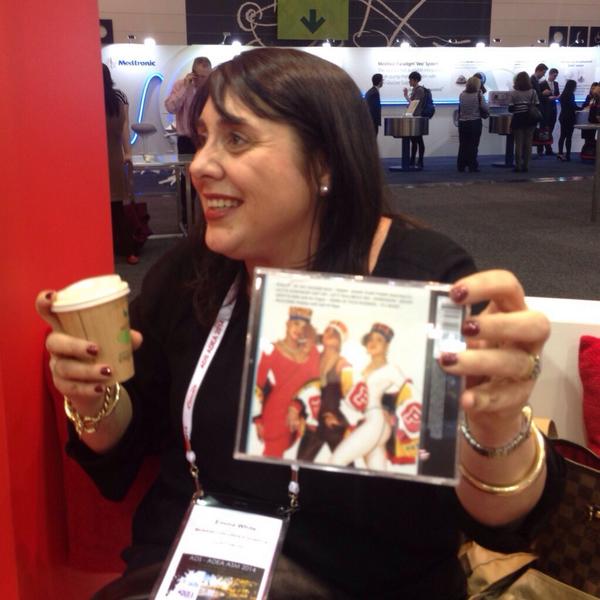
- Great presentation from Emma White and Jesuina Noronha from Monash Children’s about some research they’ve conducted on sexual health knowledge, attitudes and beliefs in adolescents and young adults with type 1 diabetes. Some very interesting findings were presented. And Emma finished off with a bit of Salt n Pepa’s Let’s Talk About Sex. That girl rocks.
- I was a little disappointed that at the Technology 101 session on the final day, there was not a single consumer presenting. I understand the importance of discussing how HCPs use technology in their practice and applications for e-health. But many consumers are way ahead of the curve here and could have provided some very interesting insights about how technology can be used to connect (with other PWD as well as our HCPs), communicate, and gather, collate and share information.
- Even though the Consumer Outreach day was held on the final day of the conference, this is really the first time that I have felt that there has been a real consumer presence for the entire conference.
- While we’re on this topic, a special shout out to OzDOC guru Kim Henshaw for her outstanding tweeting throughout the conference. I was unable to get to nearly as many sessions as I would have liked due to meetings, but following her tweets gave me a pretty good insight into what was going on in the sessions I missed.
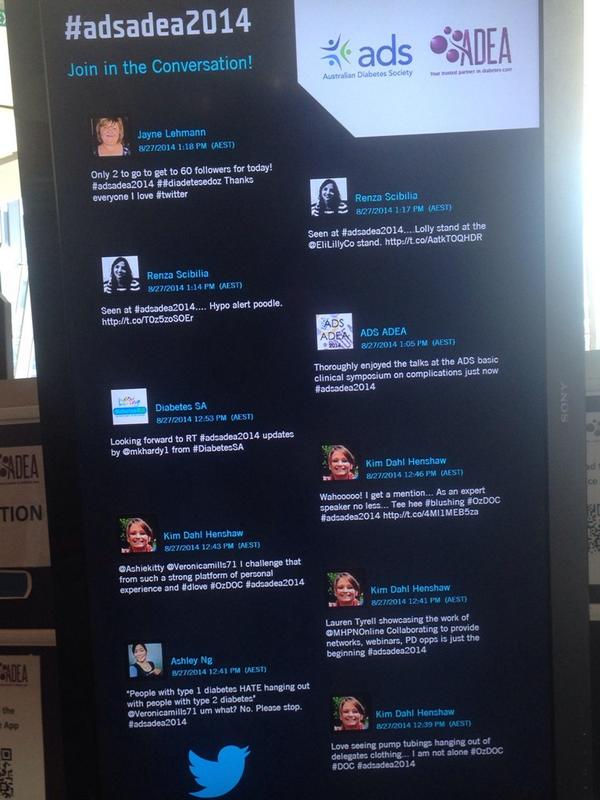
- Congrats to the organising team for stepping up this year with social media exposure. It was great that in the lead up to the event, there was a section on the website about using SoMe at the conference, a dedicated hashtag that was promoted throughout and twitter walls around the conference facilities (usually showing the faces of the consumer advocates in attendance who were busy tweeting).
- It would, however, be great to see more HCPs tweeting. Most came from consumer advocates and the ACBRD team. Perhaps a couple of ‘tweeting 101’ sessions over lunchtime would work to get some more people on board?
- Why is this important? Because the reality is, if it wasn’t for the few of us tweeting at the conference, most people would not have a clue about the sessions. How many people with diabetes have time in their appointment to ask if their HCP attended the conference – and what they learnt?
- A tiny suggestion to the organising team that they look at programming. Frequently, there were two or three sessions on at the same time that I would have loved to attend, and then sessions where there was nothing of particular interest. I heard this complaint from quite a few people (so it’s not just me!!). Perhaps some more consideration about spacing of sessions and spreading out the topics of interest to attendees.

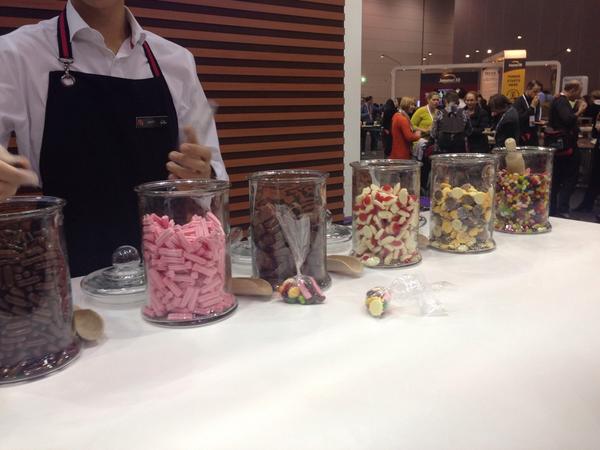
- The Exhibition Hall at conferences is always a treat. This year, the battle for most enticing exhibit (in my books, anyway) went to the Lilly team who not only had the best (free) coffee, but also a sweets stand where they were dishing out little cups of lollies to attendees who stopped by. Very useful for those of us experiencing Conference Hypo Syndrome.
- Also seen in the Expo hall were people handing out nuts . They got angry at me when I said I wouldn’t write about their product. ‘But they’re just nuts’, one of their reps said to me. Indeed they were.

- But the bestest thing of all in that hall was not the free coffee or free lollies. No. It was a French poodle called Gabrielle who was there with the Paws for Diabetics team. More on that to come too.
- Weirdly, on the first day I found myself in the wrong Expo hall looking at tractors. Not relevant at all; just weird.

Well. that’s ADS-ADEA for another year. I’m going to finish up with this slide that Dr Jennifer Conn used in her presentation during the Type 1 Diabetes Consulting Skills symposium where she used this perfect quote from Elliot Joslin.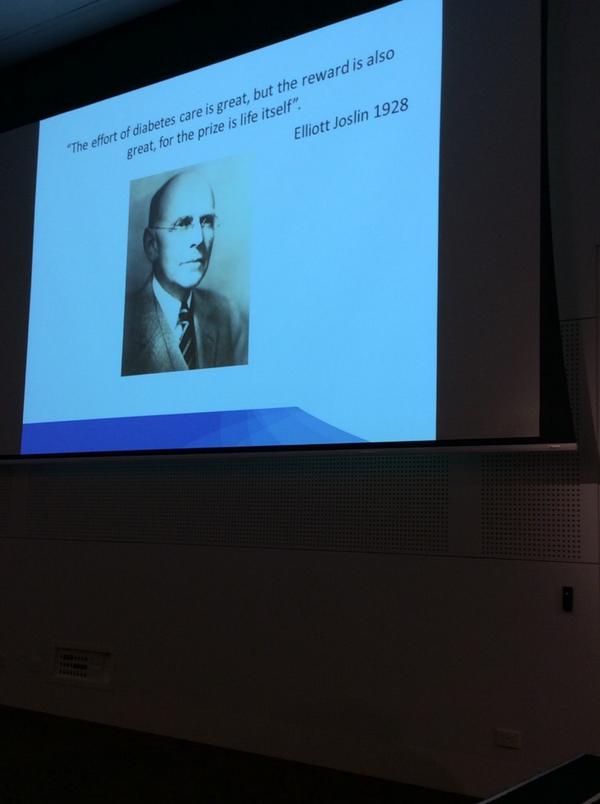
If you jump on Twitter and search #ADSADEA2014 you’ll find all the tweets from the conference. GO!
Knowing what to expect when it comes to diabetes is tricky. Our day-to-day lives with diabetes can be so varied and unpredictable. The same can be said when it comes to understanding the role our healthcare team play on an ongoing basis in our diabetes management. Given that there is not a one-size-fits-all approach to any area of diabetes, it can be very difficult to quantify just what we can and should expect.
So it’s great when something comes out that can actually provide some guidance as to what to anticipate when navigating the diabetes system.
 The Australian National Adult Insulin Pump Working Group is made up of leading diabetes clinicians from all across Australia. In response to much confusion from people living with diabetes about the initial and ongoing support HCPs provide, the group decided to try to explain what appropriate levels of care may look like, and the role played by different HCPs.
Working with Diabetes Australia, a new information resource has been developed and launched which clearly outlines the care and contact people with diabetes ought to be getting from their HCP team.
Guidelines are always a tricky little monkey. I think that problems can arise when individuals refuse to waver at all from the guidelines, using them as strict ‘rules’ from which to develop management plans. Following guidelines and getting perfect results is just never going to happen – firstly because everyone is different. And secondly because diabetes is different all the time. What works today may not work tomorrow.
Flexibility is necessary, as is the understanding that individualising guidelines is required – and will hopefully then result in people getting what they need.
This resource provides a general idea of what people with diabetes can expect their healthcare team to do for and with them. It provides PWD the understanding that at different points along their pump ‘journey’ they can ask for and expect certain levels of assistance. The resource offers key ‘talking points’ which can assist with the development of a plan that works.
Currently, this information resource can be downloaded here. Have a read and take a copy of it to your next HCP appointment. It may provide an opportunity for new areas of discussions, and open pathways for new treatment choices.
DISCLAIMER
This resource was developed by The Australian National Adult Insulin Pump Working Group in collaboration with Diabetes Australia. I oversaw the contribution from Diabetes Australia. No funding arrangement is in place between the two organisations. Diabetes Australia has funded the printing of limited copies of this resource.
An article appeared in The Conversation last week about how the food industry gets us to buy and eat ‘nutritionally worthless’ foods and drinks. The thing I found most interesting about the piece was when the authors were talking about number of choices we have today when we take a walk down a supermarket aisle as compared with in the 1960s.
Today, supermarkets stock about 30,000 items. That’s a lot of breakfast cereal or yogurt from which to choose. By comparison, anyone doing a weekly shop in the 1960s had between 600 and 800 items on the shelves.
One of the things we complain about in Australia is that we have limited choice when it comes to diabetes devices and management options. This is true when we compare what is available here with the options of those in the USA and Europe. I have seen and held and played with all sorts of devices that I would love to be able to use, but they are not available on our fair shores – and not likely to be launched here either. ‘Market is too small’ is the reason given all the time.
I like choice and as a consumer advocate, I am the first to say that all the options for management of our diabetes should be before us before we make a decision as to what we will use. It frustrates me that I cannot choose to use a T-Slim pump or the OmniPod system.
I’m not sure exactly how many BGL meters are available in Australia, but I know it’s certainly not as many as at any Walmart I’ve popped into when travelling in the US. I’m always astounded at the ‘diabetes aisle’ in these stores.
Do we want that sort of choice when it comes to diabetes management tools? I’m not sure. I guess I like the idea of being able to choose the device best-suited to me. Do I think that we need a choice of two hundred thousand (slight exaggeration) BGL meters that do pretty much the same thing? Maybe not. I actually do think that we have a good selection here from which to choose and don’t really feel we’re missing out.
But it’s a different matter with pumps. There are not really that many pumps on the market to begin with. We have a choice of only four or five here. We don’t have the option of a tubeless pump, which is definitely a point of difference, nor a touch screen pump.
Some may say we shouldn’t complain – that a pump is an insulin delivery device and as long as it does that, everything else is just fancy-pants add-ons that mean nothing.
But surely that same argument can be applied to everything. We don’t need choice in the cars we drive – a car gets us from point A to B – leather seats and auto windscreen wipers are superfluous. Or a phone is a device to call people and chat – cameras, calculators and other applications are unnecessary and bonus extras.
We wouldn’t accept that. We SHOULDN’T accept that.
For me, when it is time to consider a new pump or CGM or BGL meter, the things that are the most important are safety and accuracy. But I do want to be able to line up all the options, look at their particular features and then make an informed decision. It’s my right to choose.
My insulin pump, CGM and BGL meter all talk to me. (I just reread that statement and realised how weird it sounded. Thankfully – hopefully? – this is an audience that understands I’m not hearing voices and having conversations with devices.) They alarm and alert and let me know when they feel they need some attention.
And then last week, out of nowhere, my mobile phone got in on the act. I started receiving alerts at 11am each day, providing little reminders and prompts to help me live better with diabetes. At least that was what it was promising.
Somewhere, I must have signed up for this. As smart as my phone may be, it’s not likely that it signed up itself. Nor that my smart pump or smart meter made a call and hooked up with my phone. On one of the health apps or websites I use, I must have ticked the box that said ‘please send me annoying updates. At 11am. When I want to eat a doughnut. Telling me to NOT eat a doughnut. Which just makes me want a doughnut more. Now, where do I find a doughnut?’
The first day I received my 11am alert, I was a little surprised. It was a lovely, gentle ‘you’re-a-ok’ kinda message that made me feel quite loved, really.
The second day, it reminded me that breakfast was the most important meal of the day and linked to some ideas to start my day right. Disappointingly, my breakfast of nothing with a coffee chaser was not on the list.
The third day, it reminded me that checking my BGLs two hours after eating would allow me to correct any high BGL following the healthy breakfast (from the previous day’s list) I would have eaten that day.
The fourth day, it reminded me that carbohydrates are an important way to get energy, but not all carbs are created equal, and linked to a table that showed the best carbs to eat. Once again, I was disappointed. My favourite carbs (Nutella, anything containing Nutella and doughnuts. Filled with Nutella) were not on the list.
The fifth day, it reminded me that regular visits to my HCP and complications screening are important.
We ended our relationship that day. I don’t need an 11am complications screening reminder. Ever.
I found the healthy living (the diabetes healthy living) messages intrusive. Rarely at the moment I received the alert would I be thinking of diabetes. Instead, I’d be in the middle of something at work and suddenly I was torn away and reminded that a lot of my choices are not really healthy. I felt guilty. Guilty that I hadn’t eaten breakfast (except for a milky coffee), hadn’t eaten any carbs of value in the last 48 hours, hadn’t been checking post-prandial BGLs and that I was a couple of months late with my comps screening.
But more than that, it didn’t make me want to make any changes. It just added to the alerts and alarms and white noise. It was distracting and not actually achieving anything. So I stopped it. Most of the time, diabetes intrusions can’t be stopped or turned off. But this one can. The best thing to have come out of this little exercise was how I felt when I unsubscribed. I felt in control.

I like THIS white noise.