
You are currently browsing the category archive for the ‘Stigma’ category.
It’s day three of the eighth annual #DBlogWeek, created by Karen from Bittersweet Diabetes. This is the sixth year I’ve taken part and it’s a great opportunity to not only write about some truly interesting topics, but also a chance to read some blogs you may not otherwise. Here are the links to today’s posts.

Today’s prompt: Having diabetes often makes a visit to the doctor a dreaded experience, as there is invariably bad news of one kind or another. And sometimes the way the doctor talks to you can leave you feeling like you’re at fault. Or maybe you have a fantastic healthcare team, but have experienced blame and judgement from someone else in your life – friend, loved one, complete stranger. Think about a particularly bad instance, how that person talked to you, the words they used and the conversation you had. Now, the game part. Let’s turn this around. If you could turn that person into a puppet, what would you have them say that would leave you feeling empowered and good about yourself? Let’s help teach people how to support us, rather than blame us!
I’ve written before about difficult encounters with HCPs. There was this time and this time. And this time where it wasn’t even me who the HCPs were speaking poorly about!
So, instead of doing that today, I’m going to talk (as in actually speak) about the the overall issue of blame and diabetes, and what can be said to address the blame game. (Apologies for the speed talking and hand waving.)
The other day, I walked into my local NDSS pharmacy and collected four boxes pump consumables and a couple of boxes of blood glucose strips.
I have a lovely pharmacist. She’s friendly and chatty and every time I visit, we catch up about how our kids are going and she comments on how I seem to spend a lot of time on aeroplanes and that I need to look after myself better. (She’s also my parents’ pharmacist, so I suspect that my dad asks her to say that to me.)
While we were talking, she was packaging up my supplies and came out from behind the counter to hand me a black bag. As I was paying for them, I had a really strong flashback to the days that I worked in a local pharmacy.
I was a pharmacy shop girl from when I was 15 until I was about 20. It was a convenient part-time job – a few hours on Saturdays and Sundays, and extra hours in the lead up to Xmas – and a great way to earn a little spending money.
I remembered that there was a customer who came in about once a month and that when he walked in, the pharmacist would step down from his little ‘stage’ with all the medications and bring out the customer’s order, wrapped up in a couple of paper bags. I had no idea what was inside them, and it took me a couple of years of wondering before I finally asked the pharmacist.
‘He has diabetes. It’s insulin and other things he needs for his diabetes,’ was the answer. ‘He doesn’t like to see the different products, so I wrap them up when I order them in for him and just pass them to him. That way, no one knows what’s in the bag.’
I knew nothing about diabetes back then. I just acknowledged what the pharmacist said with a nod of my head, and the next time I saw that customer, I handed him his package without a word.
I wasn’t working at the pharmacy anymore when I was diagnosed with diabetes, but it is where I picked up my first insulin prescription. I have never, ever thought to ask for my insulin to be hidden away, in fact, the only discussion I have is lying about promising that I am going straight home and don’t need a cool bag for the drugs. Pharmacists seem to worry that the hour or so the insulin is out of the fridge while I pop into a café to grab a coffee is going to send it sour.
But apparently the attitude of the customer at the pharmacy I worked at isn’t all that uncommon. Until the change in ordering from the NDSS, I used to collect my supplies from the NDSS shop downstairs at Diabetes Victoria. This was always fabulously convenient for me, considering I worked just upstairs. The products were always loaded into an opaque, black plastic bag. I remember someone saying those bags were used because a lot of people didn’t want others to know what was inside.
All mail being sent out by the diabetes organisation I worked at was sent in unbranded, plain envelopes. Apparently some people didn’t want their neighbours – or postie – knowing they were receiving mail about diabetes-related matters.
I’ve heard countless stories of people going to great lengths to hide their diabetes. I remember a case where a house was over-crowded with sharps and diabetes waste because the people in the house refused to throw out any packaging that might suggest someone living there had diabetes. They didn’t use sharps containers because they didn’t want to go to their local council for a free one because it might mean having to identify themselves as having diabetes. And they didn’t pay for a sharps container, because depositing it at a sharps collection point would also mean saying they had diabetes.
Another time, someone called me to complain because a letter sent out by the team I managed had slipped inside the plane envelope and the logo identifying the diabetes organisation was visible through the window. ‘I don’t want people knowing I have diabetes,’ I was told angrily.
This reluctance to let others know could be a matter of people simply not wanting to share their personal health with others, which is, of course, fine. But I suspect that it is more than just that. I think that in a lot of cases there is shame involved too. For every one of us who claims to be out, loud and proud about our diabetes, there are others who still want it hidden away – people who feel ashamed, and shamed, by their condition so much so that they don’t want others to know they are affected by diabetes.
I wear my diabetes very visibly and have never thought not to. I don’t feel shame about it at all. Diabetes is tough enough as it is without trying to conceal it from everyone as well. I just don’t have the headspace to think about how to hide it away.
It’s day four of holidays for me. Already lazy mornings, easy days and gentle plans to meet up with friends and family are clearing my mind, and I can feel the backlog of stress and exhaustion – the things that are part of everyday life – start to make way for sharp thinking and smarter decision making.
And in terms of diabetes this means more attention paid to alarms and alerts on my various devices: the calibration alert on my phone for my CGM gets attended to immediately, the low cartridge reminder on my pump is heeded at the first warning. I stop and think before blindly acting, and calmly troubleshoot as I go along.
My head is clearing. I am starting to think about diabetes the way I like, at a level that feels safe and sensible and manageable. I make rational decisions; I take the time to fine tune what I am doing. Diabetes has a place that is comfortable, I feel better overall and far more capable of ‘doing diabetes’.
 Earlier this week, the findings from the Diabetes MILES-2 study were launched. (Quick catch-up: MILES stands for Management and Impact for Long-term Empowerment and Success and is the work of the Australian Centre for Behavioural Research in Diabetes (ACBRD). The first MILES survey was conducted back in 2011, with over 3,300 Australians with diabetes taking part. The MILES Youth Report was launched in 2015, reporting the experiences of 781 young people with type 1 diabetes and 826 of their parents. This study formed part of the NDSS Young People with Diabetes Project for which I am the National Program Manager.)
The MILES reboot (Diabetes MILES-2) once again provides a snapshot of the emotional wellbeing and psychosocial needs of Australian adults living with diabetes. Over 2,300 people participated in this study and the results are comparable to those from the first MILES study. The Diabetes MILES-2 survey included the addition of some issues that had not been investigated in MILES, such as diabetes stigma.
Some key findings from the report include:
- 17% of survey respondents had been diagnosed with a mental health problem at some point of their life
- The respondents most likely to experience moderate-to-severe depression and anxiety were those with insulin treated type 2 diabetes
- The respondents most likely to experience severe diabetes distress were those with type 1 diabetes
- The aspects of life reported by all respondents as being negatively impacted by diabetes included emotional well-being (for those with type 1 diabetes) and dietary freedom (for those with type 2 diabetes)
- More stigma was experienced by people with type 2 diabetes using insulin as compared with people with type 2 diabetes not using insulin
Anyone affected by diabetes knows that the psychological and emotional side of diabetes is as much a part of the game as the clinical tasks. In fact, for me, it is the most difficult to deal with. What’s going on in my head directly affects how the I am able to manage the practical side of the condition.
When my head is clear – the way it is slowly, but surely becoming as I settle into holiday mode – and I have time and space to rationally think about, and focus on diabetes, the routine tasks seem manageable. The numbers present as nothing more than pieces of information: they allow me to make decisions, act, or not act. I am able to be practical and seem to have my act far more together.
But for the most part, diabetes is not like that for me. I don’t manage my diabetes the way I want and that is mostly because I am simply unable to due to the distress and anxiety I feel about living with a chronic health condition that terrifies me a lot of the time. I feel overwhelmed and, in the mess of life, diabetes becomes impossible. I am not proud of this – but I am honest about it.
If I am perfectly truthful, there is nothing in this report that surprises me. But it does provide validation for how I am feeling – and how many others with diabetes are feeling too. And I am so pleased that there is evidence to support what so many of us who live with diabetes feel.
It’s no secret that I am a very big fan of the ACBRD’s work. Diabetes MILES-2 once again shines a light on the ‘other side’ of diabetes and serves as a reminder that unless the psychosocial side of living with this condition is addressed, we simply can’t manage well the physical side. And it forces those who want to believe that diabetes is a matter of nothing more than numbers and mathematical equations to consider the emotional wellbeing of those of us living with diabetes each and every day.
The MILES 2 report can be read online here.
So many things on my radar at the moment. Here is just a taste!
Gila Monster and diabetes
Over the weekend, federal health minister, Sussan Ley announced the drug Bydureon would be listed on the PBS from 1 September 2016. Bydureon is a once-weekly injection used in conjunction with oral medications for people with type 2 diabetes.
Fun fact: Bydureon is the brand name for exenatide, which is a synthetic form of a substance found in the saliva of a lizard – the Gila Monster. (Please can we talk about how someone worked out that this would be a good treatment for diabetes?)
News from ACBRD
The team from the Australian Centre for Behavioural Research in Diabetes don’t sleep. At least, I am pretty sure they don’t. My office is on the same floor as them and I can tell you that I’ve never seen any of them asleep at their desk. Instead, they work really hard and produce things like these:
Centre Foundation Director, Professor Jane Speight, is straight talking at the best of times, and her commissioned article published on Monday in the Medical Journal of Australia pulls no punches in putting forward a strong case highlighting the need for behavioural innovation in the treatment of type 2 diabetes.
Dr Jessica Browne from the Centre has been leading work on diabetes and stigma, and this piece published recently in Diabetes Care is about the development of the Type 2 Diabetes Stigma Assessment Scale.
Over-achievers the lot of them. And how grateful I am! (If any of you are reading this, stop it now and get back to work!)
AADE / DSMA / diaTribe / Language
I cannot even begin to express how excited I was last week to see so much focus on and discussion about diabetes and language at last week’s American Association of Diabetes Educators conference.
I sat in my office in Melbourne last Friday morning in tears as on the other side of the world in San Diego (where it was Thursday evening) Cherise Shockley directed a tweet chat about language and diabetes. (And a huge thanks to Cherise for reaching out before the chat!)
In this piece from diaTribe, Kelly Close also wrote about language. Check out this BRILLIANT ‘Diabetes: Starting the Conversation’ infographic. I love this SO much!!

Rachel Soong – Diabetes Infographic @DiaTriibeNews
Molly’s blog
I am always on the lookout for diabetes blogs to read and share and this one is just brilliant! Molly Schreiber’s blog, And Then You’re at Jax, is about living with not only type 1 diabetes, but also rheumatoid arthritis. (Another one of us who collects autoimmune conditions…)
For beautiful, sensitive and honest writing, this is where it’s at! Check it out here.
ADS ADEA next week
Next week is the Australian Diabetes Society – Australian Diabetes Educators Association Annual Scientific Meeting on the Gold Coast. Program is live here.
I’ll be writing and tweeting from there for a couple of days next week. Keep an eye out on the #adsadea2016 hashtag to follow along!
New resources for young people from the NDSS
There is little more satisfying that seeing the end result of something that has taken a lot of effort, time and expertise. I am thrilled to show off these beautiful resources that have been produced out of the NDSS Young People with Diabetes Program that I manage as part of my day job.
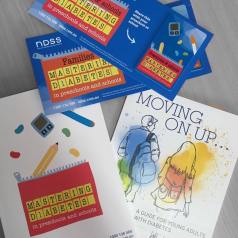
They look beautiful (the graphic designer is an absolute gem!) but even more importantly, they are full of important and useful information
An online version of Mastering Diabetes can be found here.
And an online version of Moving On Up can be found here.
More about the inclusiveness of the DOC…
My post about the DOC from earlier in the week has generated a lot of really interesting and valuable comment, both on this blog, on Twitter and Facebook and with many messages sent to me privately. Thanks to everyone who has contributed and, mostly, thanks to everyone for being so positive and respectful in their comments.
The purpose for writing was to try to encourage a discussion about how and why some people feel more included than others. I know this is not the first time this has come up and I doubt it will be the last.
I have noticed some common themes in how people feel and am trying to write something about that, but keep feeling clumsy and inarticulate. I’ll keep trying and see if I can make sense of anything – mostly in my head!
Banjos, banjos, banjos
Last week I went to two concerts at the stunning Melbourne Recital Centre. Both showcased banjo players and both were brilliant. One of the concerts was TWO banjo players and nothing more. I don’t know who I am anymore…
But I can’t stop listening to this at work.

The Melbourne Recital Centre stage ready for Punch Brothers.
My head is full of lists:
- Packing list
- Travel checklist
- Work to do list
- Hug-the-kidlet-a-million-times-before-we-leave-her-for-three-weeks list
- Diabetes-supplies-for-three-weeks-away list
And a list of great things I’ve seen online lately…
PLAID
Do you read PLAID – a research journal with a focus on people living with and inspired by diabetes? If not, you should. Why? Because it’s awesome!
Here’s the link to the latest edition. I’m really proud to have contributed to it because it is (as already mentioned) awesome, and this edition is all about the patient perspective. I sit very comfortable in there!
Unspeakably Wonderful
A new movie about Banting and Best and the discovery of insulin is hoping to be made by UK production company AngryMan Pictures. Details for how you can contribute to their crowd funding campaign are here.
Diabetic Living online
The Australian edition of Diabetic Living magazine has relaunched its website with a gorgeous new look. Check it out!
Totally (dia)badass

Take 5 minutes…
…and read these great blog posts that have been recently published:
- Anyone thinking of starting on an insulin pump and wanting a front seat view into what it’s all about should jump on board Type 1 Writes. Frank is a couple of weeks into his pump start and is sharing lots about what he is learning. I’ve been pumping for over 15 years now so have completely forgotten about dealing the challenges and successes of starting pump therapy.
- Lots of posts coming in from people who were at #DXSydney, sharing their experiences of using Libre. This post listed all the people who attended with links to their blogs. Have a read and share your experiences too.
- The Grumpy Pumper is a man of few smiles and, it would appear, few blog posts. Here is his first blog for the year. Pop by and leave a comment suggesting he blog more. Then it won’t just be me nagging him!
- Awesome pics in this blog from Scott from Rolling in the D. He hacked his Dexcom and this is what it looks like on the inside!
- Why do we need online communities? Anna from Glu gives some reasons here. And she’s right on every count!
- Also from Anna, this profoundly moving and brave post about her recent pregnancy loss. These stories need to be told. Thank you, Anna, for sharing yours. I am so, so sorry for your loss.
- This one is not a blog post, but a podcast. Stacey Simms produces some awesome podcasts over at Diabetes Connections. Do check them out!
Finally, if you’re looking for some more diabetes blogs to read, healthcare social media guru, Marie Ennis-O’Connor, has curated this list for you. There are 50 blogs to choose from. Get comfortable. Get reading!
Myths be gone
Team Novo Nordisk are doing awesome things to dispel myths about diabetes and address the issue of stigma. This latest video is terrific. Watch. And share. Share. Share.
Off to NOLA
It’s that time of year again. The American Diabetes Association Annual Meeting kicks off in New Orleans at the end of this week. I’ll be there, frantically tweeting.
I hit the road – well, air – tomorrow, so I’ll be out of touch for a bit as I embark on the nightmare transit. But I’ll be mainlining iced-coffee and beignets to keep awake and get in with it all.
Follow along at #2016ADA for the latest happenings in the world of diabetes.
New Orleans = Dr John. So here you go!

I don’t get to take part in the OzDoc tweet chats as frequently as I would like to anymore, but when I do, I know that I am guaranteed an hour of thoughtful and engaging discussion about real life with diabetes.
This week, I popped in a little late, but in plenty of time to catch a terrific chat a out diabetes stigma – from both within and outside the diabetes community.
Diabetes stigma is real. Have I experienced it? You bet.
Stigma is unsettling, and it comes from a place of ignorance. Is there any real animosity or vitriol? I like to think no, but it pains me that when there have been times of nastiness, it has come from within the community.
I can honestly say that I have never been stigmatised about my diabetes from anyone inside the diabetes community. But then, I have the type of diabetes that I didn’t cause myself. You know, the one that has nothing to do with the sorts of foods that I ate. The one that has nothing to do with me being overweight or inactive or lazy. I have the one that cute kids get – kids who are innocent and have done nothing to ask for this. And I have the tough one – the one that is the worst, the one that can cause death in an instant, the one that no one understands.
These are words that people from within the diabetes community have used when talking about type 2 diabetes. That’s right – by others living with (or living with a child with) diabetes. Perhaps it was in a discussion about the hopeless and insensitive comments made by some silly comedian; or perhaps in response to a diabetes report that doesn’t separate type 1 and type 2 diabetes.
And I am not the only one to have noticed this. The Walk With D campaign was set up because there was a need to acknowledge that … ‘Even within the diabetes community, there are levels of misunderstanding, misrepresentation, and mistaken messaging, often creating a divide where there should be a bridge.’
There have been some studies that also reinforce the idea that there certainly is stigma from within the community.
The ACBRD has been researching diabetes stigma for a couple of years now, starting with a project looking at the stigma experienced by people with type 2 diabetes and following up with a similar study about people with type 1 diabetes.
The second study discussed the perpetuation of type 2 diabetes stigma by people with type 1 diabetes and it’s interesting reading. You can read the full article here, but here are just some of the findings:
- In general, participants expressed somewhat negative attitudes towards, and beliefs about, people with T2DM. This included stereotypes such as ‘lazy’, ‘fat’, ‘over-consume’, ‘sedentary’, ‘unfit’ and judgment about the intelligence and character of people with T2DM, and blame for ‘bringing it on themselves’.
- These attitudes and beliefs served to perpetuate, and give voice to, the stigma surrounding T2DM and drove an in-group/out-group (or ‘us vs them’) mentality.
- It was also evident that there was resentment among people with T1DM toward those with T2DM, which stemmed from two main factors: (1) the perception that people with T2DM are responsible for many of the negative connotations that surround diabetes, and (2) the perception that T2DM, as a largely preventable condition, attracts more attention and therefore gets more resources and support than T1DM.
- Some participants believed that T1DM was the ‘real’ or ‘serious’ type of diabetes, and was more worthy of research attention and investment of societal resources than T2DM.
That sounds pretty stigmatising to me.
Let me be clear about my position here – there are different types of diabetes and people living with each of those types of diabetes has the right to find support and healthcare that is relevant and specific to their diabetes. A young person living with type 1 diabetes is, of course, going to have different needs to an older adult living with type 2 diabetes.
There are many times that we need to clearly define the different types of diabetes as this is important when it comes to getting the right treatment, seeing the right HCPs and ensuring the person living with diabetes has the right information.
I am not saying that there shouldn’t be specialised and tailored services and activities available to people depending on what they need, or relevant to the type of diabetes they have. I built a program from the ground up that was very specific and targeted in its approach to being only about and for people with type 1 diabetes. I get it!
And you absolute bet that people with type 1 diabetes should have access to support and peer opportunities that are specific. I know that for me the sense of ‘me too’ comes most strongly when I am speaking with other people with T1, usually women around the same age, who are working and have the same sort of technology, caffeine and boot addiction as I do – sometimes there does need to be a ‘sacred space’ for us to discuss the issues that are particular to the challenges presented by our brand of diabetes. And finding the perfect pair of knee-highs.
What I am saying is that I know that the stigma comes from a variety of places. And I believe that we should be advocating for diabetes messaging to be positive and beneficial to people living with diabetes. The challenge of getting that message across to people in the general community who have no idea about diabetes is difficult to manage and sometimes it has not been executed particularly elegantly.
But I am a firm believer in the strength of community and the support that it can offer. And to me, the diabetes community means everyone affected by diabetes – everyone. Stigmatising anyone inside that community does a great disservice to us all.
DISCLAIMERS ALL OVER THE PLACE!!
The ACBRD is a partnership between Diabetes Victoria and Deakin University and until very recently, Diabetes Victoria employed me. Since the ACBRD was established (6 years ago) I have worked with foundation director, Professor Jane Speight and her team on a number of different projects.
I have not received any funding from the ACBRD for my work with them. I just like to write about them because the work they do is very important and is changing the way that diabetes is perceived. And their work in diabetes and stigma is ground breaking. (Really! The Washington Post published this article in 2014, quoting Dr Jessica Browne from the ACBRD.)
Now, I just happen to share an office with the ACBRD. And this is on my office wall. I have found myself reading it quite a lot this week!
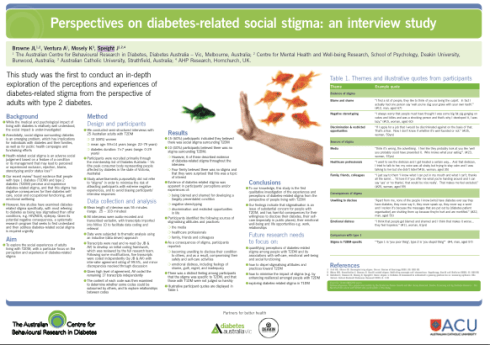
Click for larger image

It’s Diabetes Blog Week! Thanks to Karen from Bitter~Sweet Diabetes for coming up with and coordinating this exciting annual event. It’s a great chance to discover other diabetes bloggers from around the world. Here’s my fourth entry for the week!
Welcome to Diabetogenic Live! Here is my first ever (and possibly/probably last ever) vlog. I’m talking about the changes I’d like see in the Land of Diabetes (which is nowhere near as much fund as the Land of Goodies or the Land of Birthdays or the Land of Do-As-You-Please).
A few words of warning before we start:
- I speak really fast.
- And I wave my hands around a lot.
- I speak really fast.
 Last night, I had the privilege of attending the fifth anniversary celebrations for the Australian Centre for Behavioural Research in Diabetes. The event was held at my favourite Melbourne building – the State Library – so I was able to get my geek girl on and wander the stacks before heading to the reception.
I have written frequently about the ACBRD because I am a huge fan and supporter of their work. Before the Centre was established, there was very limited attention being given to the psychosocial impacts of living with diabetes. Diabetes was presented as a numbers game. People with diabetes were talking about what living with diabetes actually meant – we understand the day-to-day implications and the distress and the burnout and the fear and the anxiety. But there was no one dedicated to researching these things.
Much work has been completed since the Centre started. All of it is of great value, but there are certainly some stand-out pieces for me:
- The Diabetes Australia Language Position Statement, led by the ACBRD, which was launched back in 2011, is a much-needed ‘guide’ to assist journalists and HCP understand how to speak about and to people with diabetes. I can’t think of the number of times I have emailed, tweeted, handed-out a copy of this report to someone who has referred to PWD as non-compliant, a ‘diabetes sufferer’ or something equally damaging!
- Dr Jessica Browne, Research Fellow, has been leading a world-first program researching the social stigma of diabetes. Reaching far and wide (Washington Post, anyone?) it is so wonderful to have evidence supporting what we have heard from PWD for so long – diabetes is stigmatising and that we often feel blamed and judged for having this condition. I’ve said it a million times and I will continue to say it until the stigma stops – ‘No one asks to get diabetes.’
- The Diabetes MILES report still remains an important body of work. It was the first time that the psychological wellbeing of people with diabetes was investigated and the results confirmed what people living with diabetes already knew – emotional problems associated with living with diabetes are common, considerable and a very real part of living with diabetes.
The thing I love about the Centre is that in addition to conducting research and publishing articles, they actually provide practical tips and advice to HCPs about how to address these issues and concerns. And most pleasingly, they speak directly to and consult with people with diabetes.
As I explained in my talk last night, I have been lucky enough to present alongside Foundation Director Jane Speight on numerous occasions. The way this works is that I get up, rant, rave, wave my hands around and talk about the ‘living with it’ experience and then Jane gets up, speaks incredibly eloquently and provides the evidence to support what I have said. (So, thanks for making me look good, Jane!)

The always eloquent Professor Jane Speight. And me. Waving my arms around.
It was an honour to be able to celebrate the Centre’s first five years’ successes last night. Congratulations to all the ACBRD staff. Looking forward to seeing what you all do next!
I like to think that I am not one of those parents who is always banging on about how perfect their little precious is. My kid, love her as we do, can be a little devil. She is wonderful and gorgeous and clever and kind. But she is not perfect.
However, one of the things that I am incredibly proud of – and brag about like one of those parents – is her good manners. Aaron and I have had a no tolerance policy since before she could speak about the importance of saying please and thank you. She knows to say excuse me (as in: ‘Excuse me, can I please pat your dog?’ – the words she has possibly uttered more than any others in her ten short years) and she knows how to behave in a café, (as in: don’t speak to mummy until she is at least half way through her first coffee).
She doesn’t get it right one hundred per cent of the time, but she is pulled up every time she forgets.
The thing that amazes me is how frequently she is commended on being polite, just because she has said please or thank you. Surely this is simply something that people just do, but I am assured by many that hearing a young child using her manners is not a given.
I probably shouldn’t be surprised by this. Each day on my Facebook feed, there are articles such as ‘Things not to say to a pregnant woman’ or ‘Five questions to never ask someone in a wheelchair’. Apparently, people still need to be reminded to never ask a woman if she is pregnant. (Here’s an easy rule for that one: Do you see a baby coming out of the woman’s vagina? No? Is there a surgical team performing a C-section removing a baby from the woman’s uterus? No? Then do not ask. You’re welcome.)
There are about a trillion blog posts about the frustrating things that we get asked about living with diabetes.
We need these things to be written, because people seem to have bad manners. That is what it all comes down to.
We can say this is ignorance and that people need to be reminded that there are some issues that are a little sensitive. But I don’t think that is the case.
I think it is just bad manners.
I would never begrudge anyone for not understanding what life with diabetes is about. Unless they are living with it themselves, why would they know?
But asking inappropriate questions or saying silly things is not excused by a lack of understanding. It is explained by a lack of manners though.
Asking someone ‘should you be eating that?’ is just plain rude. And thinking that sharing the story of someone you know who has died a painful, horrific death because of diabetes is not a bonding exercise. It is scary and nasty. Just don’t do it.
Now, I don’t want to be all negative Nancy. No; I’m all about solutions! If you have a friend or loved one with diabetes and want to make conversation about their diabetes, here are some ideas to demonstrate your exceptionally good manners and show how much you understand:
Replace ‘Should you be eating that cupcake?’ with ‘Oh, there’s a Nutella cupcake over there. Can I get you one?’
Replace ‘Does giving yourself a needle hurt?’ with ‘Oh, there’s a Nutella cupcake over there. Can I get you one?’
Replace ‘I once knew someone who died because of diabetes. It was terrible. Are you scared that will happen to you?’ with ‘Oh, there’s a Nutella cupcake over there. Can I get you one?’
Replace ‘I could never give myself a needle.’ with ‘Oh, there’s a Nutella cupcake over there. Can I get you one?’
Replace ‘Did you eat too much sugar as a kid? Is that why you have diabetes?’ with ‘Oh, there’s a Nutella cupcake over there. Can I get you one?’
Replace ‘I saw on A Current Affair last week that if you drink a kale smoothie for breakfast every day, you could cure your diabetes. Have you tried that?’ with ‘Oh, there’s a Nutella cupcake over there. Can I get you one?’
Replace ‘Cinnamon. Cinnamon cures diabetes. Did you know that?’ with …. Actually, this is acceptable as long as you accompany the question with a cinnamon-infused baked good.
There you go. Not too hard at all. And that ends today’s lesson of Manners with Renza.
I read this piece by Mike Hoskins (mate, fellow coffee addict, all ‘round good guy) over at Diabetes Mine yesterday where he looked at the use of the word ‘diabetic’. The piece is actually from December last year, but I missed it in the excitement that was New York in December.
I don’t use it. I don’t refer to myself as ‘diabetic’ or ‘a diabetic’. I am a person with diabetes. As far as economy of language goes, it’s a pain, especially when you only have 140 characters to play with. But PWD seems to be pretty widely recognised in my circles.
Perhaps it’s been drummed into me at work, perhaps it’s political correctness gone mad. Regardless, you will not read or hear me use the word diabetic as a label for myself or others with diabetes.
Mike’s article was quite timely as last week I had a little incident that got me more than a little heated.
I was on the phone with VicRoads. This was not an enjoyable experience by any means. I was cut off four times; the four people who answered my call(s) gave me incorrect information and then, when I asked to speak with a medical review case worker, I had someone return my call who was incredibly rude, aggressive and disrespectful. She constantly interrupted me and refused to answer my questions. And gave me the wrong information.
(For context – I was trying to get some clarification as to why I was required to submit an eye exam report along with my medical review.)
‘I was wondering why I am required to submit an eye exam report,’ I explained as the reason for my call.
‘Insulin-dependent diabetics have to must submit a biennial eye exam,’ was the response.
I asked where this is stated in the Guidelines. She would not (could not?) answer this question. She just kept saying (very aggressively) ‘It is a requirement for all insulin-dependent diabetics.’
Now, I am willing to concede that I was pissed off and that if I didn’t have my back up I probably would have let things slide and been happy to continue the discussion about our differing interpretations of the Guidelines.
But I was pissed off. I was annoyed that the medical officer was being rude and patronising and not being helpful. And I was annoyed that she was giving out false information – information that if people didn’t know better could cost a lot of time and (potentially) money for no reason.
So I stopped her.
‘Excuse me,’ I said (and I promise I was being polite and not patronising). ‘Please don’t use the term diabetic. I don’t like it. I would prefer if you used person with diabetes.’
Yes, okay. I know how prissy this sounds. I know how pedantic and, quite frankly, nit-picky I was being. I really do.
But she was being rude and she was spitting out the word as though it was something dirty – that there was something wrong with me.
Without missing a beat, she replied with ‘But you are. You are a diabetic.’ She almost yelled it at me.
The conversation didn’t get any better.
I have diabetes. I own it. I am out, loud and proud about it. But it’s my diabetes and my rules. And my rules include how people speak about me and about my diabetes. They do it with respect, they do it politely and they show courtesy. None of these things were demonstrated. The word ‘diabetic’ was being used here spitefully, and as a label that I felt diminished me.
I don’t care if people with diabetes refer to themselves as (a) diabetic. And I don’t even really mind when other people with diabetes refer to me as (a) diabetic. But it is never done with any judgement. It never pigeon holes someone. And it is never done disrespectfully.
Words matter. I say it all the time and I realise it more and more each day. While it’s a highly personal choice as to the words we each use to describe our ‘diabetes-selves’, using language that is accepted by everyone – and doesn’t have the potential to insult – is clearly a better way.
And here it is. Again. The Diabetes Australia Language Position Statement. And yes, I sent a copy of this to VicRoads as soon as I got off the phone.





 Diabetogenic