You are currently browsing the category archive for the ‘Mental health’ category.
Last year, a lot of the work I did centred around mental health and diabetes. It’s funny how things happen – we had always planned for it to be the focus for our National Diabetes Week campaign at Diabetes Australia (disclosure: I work there), and then COVID-19 happened, and it seemed all the more important to make sure that we were flagging just how much people with diabetes’ mental health was being impacted by the pandemic. Spoiler alert – the answer was, and still is, a lot.
Last year also happened to be the year that my own anxiety went from being something I’d dealt with mostly in the past to something that became very much in the present and a bigger issue for me than living with diabetes. I had a few panic attacks that terrified me and had the domino effect of adding to my anxiety as I’d wait for the next one to strike. But it wasn’t just those acute moments that made me feel anxious. It was a low-grade hum that became the soundtrack to every waking moment, sometimes exploding into a roar.
Of course, COVID-19 contributed to it all, because how could it not? But I also knew that these feelings of disquiet and unease had started well before the pandemic was firmly on my radar, before our first lockdown, and before Melbourne’s second lockdown – the longest and strictest is the world.
Trying to keep it all in check was tough but at the time I thought that the fact that there was just so much going on with work was a good thing. I simply couldn’t examine too closely what was going on with my mental health because work was just so, so intense, and anyway, of course I was feeling fretful and anxious because who wasn’t?! Hindsight, of course, suggests that it probably would have been better to stop for a moment and address that hum rather than try to explain it away or drown it out with more and more noise that actually only made it worse.
And so, I started putting words to what I was feeling because that was a first step to acknowledging that I needed to do something. And that I needed help. I started to check in on my anxiety levels each morning. Or when something significant, (or even not all that significant) happened, I’d stop and ask myself how anxious I felt. Starting to be able to name how I was feeling, and rate it, meant I could do something about it.
I had occasional telehealth appointments with a psychologist, to work through and to help develop strategies for coping. And to spend time working out where this anxiety had stemmed from. This is something that has always been important for me to do. When I have had periods of extreme anxiety before, there has been no coming out of it without being able to pinpoint where, when and how it started.
Sometimes that’s not all that easy to do, other times it’s glaringly obvious. When diabetes has been acknowledged as the cause of my increased anxiety, it’s never enough to just say ‘diabetes’ – it’s usually something more nuanced and specific. And so down the rabbit hole I go as I try to pinpoint exactly what I need to work through to start feel better.
But this time, it was clear. It wasn’t having diabetes; it was being in diabetes. I know that sounds ridiculous, but it makes sense to anyone who has ever worked in a diabetes-related job, or spent a lot of time in the diabetes community. It was the latter that was making me very, very anxious. I’d already been aware that I was experiencing diabetes advocacy burnout, but anxiety is different to burnout. It was more than just the sense of feeling overwhelmed and nervous every time I raised my head above the parapet (which is a lot because of my job and advocacy work). So, I had a head start on what needed attention even before speaking with the psychologist, but we did work at narrowing down just what the triggers were for me that increased my anxiety levels, how to avoid them and how to cope if I couldn’t.
I learnt to ‘catch the fall’. That’s why checking in became important to me. When I could start to verbalise how I was feeling, and isolate when anxiety levels were increasing, I could do something. Breathing exercises, grabbing a book – any book – from the bookshelf and focusing on a page of words, going for a walk around the old laneways of our old neighbourhood. These all acted as circuit breakers, allowing me to catch the fall before I started to feel really, really anxious. And managed to catch most panic attacks. In fact, the rare times I actually did have something resembling a panic attack was a trigger that hit me in the face without warning. It happens – those triggers pop up despite best efforts to avoid them.
I’ve just returned to work from almost five weeks of holidays. It had been twelve months since I’d taken any time off, and (again: hindsight) I should have been smarter and taken a break when my anxiety was really starting to affect my day-to-day existence. Because right now, of course I feel like I can breathe freely and as though my head is clear. The dread I’d wake up with – a pressing down feeling that came at me from every angle – slowly lifted. It wasn’t just work that I took the break from. I removed myself from social media completely. Actually, that’s a lie. I doom scrolled my way through Twitter for about two weeks following what was going on in the US, but I had every single diabetes term, hashtag and phrase muted.
I am still anxious. I still do my regular check ins to see just how anxious I am feeling about different situations (the one I did yesterday morning where I asked myself I how I was feeling about actually going into my office for the first time in almost a year resulted in tears, so I rated that as ‘quite anxious’, but I was easily about to understand where that was coming from! COVID-19 is still here, even in Melbourne.)
Unsurprisingly for me, the most anxious I felt (rating: really, really, really anxious right now and can I please crawl under a blanket on the sofa with a doggo at my feet) was when I checked in after spending an hour on Twitter after unmuting the word diabetes. I muted it again, because baby steps and still steps.
And so, this rambling, messy post exploring just how I’ve been feeling in my head has no answers or solutions or ideas. Except I know that 2020 was tough. And I know that I am not alone in having felt that way. I also know that in the scheme of things, despite anxiety, despite COVID-19 and despite…well…everything, I’m mostly okay. And I’m starting 2021 in a place of some clarity and freshness, which I hope means that if that anxiety hum starts to get louder again, I’ll be able to hear that happen. And catch the fall before it’s too late.

Diabetes Awareness Month has come to a close and with it the blue that has washed over my social media feeds will dim a little. I had a quiet month, spending most of my time following others rather than sharing my own content. It seems to have been representative of my year in diabetes advocacy, really.
I’ve been quiet. It wasn’t planned, but it has been deliberate. And it hasn’t gone unnoticed. I’ve started and stopped and started and stopped this post for a while to answer the messages from people who have so kindly asked if I am okay. Let’s see if this is the one that sticks…
Earlier this year, I wrote about having a panic attack while on a plane after landing back in Melbourne from ATTD in Madrid. You can sort of read about it here, although I was pretty vague about what actually happened saying little more than that I turned on my phone to a million Twitter notifications about a blog post that some people had assumed was written about me and then subsequent comments. I was surprised, horrified and more than a little confused.
This came hot on the heels of a couple of other tricky situations. There was the run in with the diabetes HCP who told me to tone down (after they completely misrepresented what I had written about). And then there was another HCP rallying troops to call me out (that caused me to lock my twitter for the first time ever at the end of last year).
Anyway…the culmination of all these things resulted in the realisation that this year was going to be a lot different for me. I was going to take a massive step back from much of the work I did that was public facing. I felt that I simply couldn’t take the scrutiny that was coming my way.
Even before the panic attack on the plane incident, I was feeling unsettled. I was unspeakably nervous about the presentation I had been invited to give at the conference in Madrid. This was a completely alien feeling to me. I have been speaking publicly for decades, and for twenty years, comfortably stood on stage playing the flute for anyone who would listen. Standing in front of an audience doesn’t make me nervous. It doesn’t make me sweaty and scared. And yet, here I was wondering whether I should not go to Madrid at all to stand up on that stage. But after some ridiculous bravado as seen in this post, I decided that I had to go.
As I sat on that plane, desperately trying to recover from the panic attack that was making it difficult for me to breathe and hiding my tears from the other passengers, I had a fleeting thought that I probably should have gone with my gut feeling and stayed home!
And so, I felt that there was only one thing I could do. Forget the whole stand up thing and instead step back. I wasn’t necessarily sure what that would look like. I couldn’t stop attending and being part of diabetes meetings and conferences because that is part of my job, but I could turn down speaking engagements or anything that put me in a position where I was sharing my personal, lived experience that others might find challenging, or at odds with their own. I needed to deal with the diabetes burnout that was so, so heavy and weighing me down.
COVID-19 certainly helped with that. As the world got turned upside down, a lot of the things that I was worried about simply didn’t happen. It became easier for me to limit my interactions with people and hide away a bit more.
The feelings of burnout and anxiety about being part of the community didn’t disappear, but they seemed less urgent.
And with that came the realisation that the burnout I was feeling because of diabetes actually was not because of my diabetes at all.
Diabetes burnout has always happened to me when those constant diabetes tasks became too overwhelming; when just the thought of opening up a meter bag, or checking my CGM trace was too much to even contemplate. Burnout meant that every single number became a measure of my value and worth. I’d lose all perspective and lose all confidence of my abilities to actually do what I needed to do.
The burnout I felt now was the effort of being a diabetes advocate IN the diabetes community. It was fearing that I was being seen in ways that actually were completely inaccurate – in fact at complete odds with everything I have ever stood for – and that led me to second guess everything I said, fearing that I would be misunderstood. It was feeling vulnerable and scared and exposed in the community that was meant to support me.
I received an email from someone in the DOC who has been around for many years, and I have known (on Twitter only) who told me that because I am confident in my communication, am comfortable challenging ideas different to mine and share opinions that not everyone agrees with it, I leave myself open to criticism. And that criticism and the dialogue that follows resulted in their corner of the diabetes community being less enjoyable to him and others. All while suggesting that, unlike he, who has never deliberately set out to disagree with anyone – I seem to revel in it.
Interesting take. I don’t seek to disagree with people. But if anyone is saying something that I believe is stigmatising to PWD or minimising our experiences, I will call it out. It’s been my MO for almost twenty years.
I never replied to the person who sent me that email. I cried about it for days, however, and have it filed away and occasionally return to the half-written response that I keep meaning to finish so I can hit send on my reply. I feel it’s quite impolite that I’ve not replied to someone who took the time to write to me… But, truthfully, I am too tired, and that so-called confidence has abandoned me.
Diabetogenic is the least active it’s been since I started it close to ten years ago. That’s not because I have nothing more to write – I still write every single day, I just squirrel things away now, too afraid to share them, sticking to safer topics – research call outs, fundraising initiatives, commenting on things that aren’t controversial or taboo topics.
I started this blog because it was the space for me connect with others – not only people who were walking the same diabetes path as me, but also those who were doing things very differently. Because often, they are the people I learn most from.
It became a place I could write about those issues that were tough – the mental health challenges of diabetes, the frustrations and desperation I felt about the health system, trying to navigate through health professionals who refused to acknowledge that PWD belong everywhere and anywhere diabetes is spoken about. And it was a place that my split-apart heart was able to open up and share the unspeakable sadness that I felt as fertility issues became part of my life. I am so grateful that I was able to do that and receive the support that I so desperately needed from people who understood how the impact of diabetes on those fragile, and so, so hard parts of life shattered me into a million broken pieces. Because it was those people who helped glue me back together.
Wanting and needing that support and connection hasn’t stopped. I still seek it. I’m just a little more cautious about how I go about it these days sticking with friends and others I feel safe with rather than the wider community that doesn’t feel safe. I know where to go to get what I need.
I don’t really know what to do with this blog anymore. Feeling unable to share a lot of what I want to say is alien to me. But for now, this doesn’t seem to be the place to do it. I guess I continue as I have been – hitting publish when I feel I can, and for the next month, anyone popping by will see a lot of pleas to donate to Insulin for Life.
And I guess that will have to be enough for now.

For more information (all Australian sites):
I’ve written a few times about my thoughts on the role of psychologists in diabetes care. You can read about it here, and here. Or TL/DR: I believe that every person with diabetes should have access to a psychologist as part of all diabetes multidisciplinary care. Of course, not everyone will want to see a psychologist – and of course, that’s fine – but if they do, it should be easy, accessible and affordable to do so.
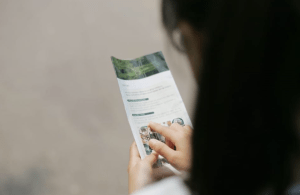
Right now, if you are an Australian adult living with diabetes, your input is needed into the development of a new information resource that will provide information on why, when and how to access a psychologist to support people with diabetes. You don’t need to have seen a psychologist before to participate. The resource will be produced by the NDSS, and the survey is being conducted by the ACBRD.
It won’t take you long, and if you participate, you will be reimbursed for your time. You can access all the details, including who to contact if you would like more information, by clicking on the image below.
Click here to participate!
Diabetes is always going to be about the mind as much as it is about the body, and that means we need to be supported by health professionals who understand that. Help to shape the information that might just get people starting to understand just how much #DiabetesPsychologyMatters.
So, today I had a moment and completely lost it. Tears – big, fat tears – sobbing and ugly, snotty crying. I didn’t even try to hide it, which is what I would usually do. There’s no hiding anymore now that we are all living in confined spaces and pretty much on top of each other all the time. (Sorry to the neighbours if they heard too. Inner-city living means not much space between house boundaries…)
I felt a lot better afterwards. Lighter and less overwhelmed. I realised that being all peppy and positive was weighing me down – perhaps that annoying Pollyanna-ish exterior was becoming like an armour.
I really try to not do the whole ‘what if’ stuff. This was something that I worked on for a long time with my psychologist. Catastrophising diabetes isn’t a great idea at the best of times. Adding a pandemic to the ruinous thinking isn’t especially fun.
It’s not surprising that people with diabetes are talking more about how our mental health is faring in the current situation. Living with a life-long condition that is so demanding and has the ability to mess with our minds in the most insidious way already makes us susceptible to feeling distressed. Now, it feels like that has been turned up to eleven.
I’m trying to remember how I learnt to move from thinking ‘what if <insert whichever scenario was terrifying me at that moment>’ to ‘what if it never happens’. It took me a long time to understand how to do that, with varying levels of success. There were always scenarios that made me feel extra level anxious, and it was a struggle to try to be rational. I found that by allowing myself to think about the most worrying, scary and uncertain things for a set amount of time – giving permission, I guess, to the worry and concern – I could then move on.
It turns out that pandemics bring out the catastrophising. The end-of-days thinking is not especially good for one’s already stressed mental health. Thinking about the things that are happening or that could happen is hard. Hard and scary and terrifying.
This week, I’ve kept coming back to how the Diabetes MILES study showed that the number one problem area for people who participated in the study was worrying about the future and development of diabetes-related complications. There is so much fear of the unknown in diabetes. We just don’t know how it will all play out. We do what we can, we assess and try to minimise risk, we do the best we can with the situation we are in. But we don’t really know what is around the corner.
COVID-19 is that all over again. But with diabetes thrown in for good measure.
Today, I gave permission for the worry and concern to come out because pushing it away wasn’t working. It flooded over me and weighed me down. And then I allowed the tears and the sobs. I didn’t try to stop it, I didn’t try to hide it away. And then…then I could breathe again, and work on the things that help me feel lighter.
So, I’m breathing so deeply. I’m standing in the sunshine. I’m watching our littlest dog run around in circles because she (still) hasn’t realised that she’s not a new puppy anymore. I’m listening to my husband play music. I’m listening to my kid’s laughter because it’s my favourite sound.
And I’m still muttering to myself that this too shall pass. Not yet, and maybe not for some time, but it will. This. Too. Shall. Pass.
Burnout. It’s absolutely on my mind at the moment. I am burnt out with diabetes; I’m burnt out with advocacy. And I am burnt out with coronavirus – especially the bit where everything I see and read keeps mentioning that it’s all really just mild…except for elderly people and those with chronic health conditions.
Oh yeah – that’s me. The chronic health condition bit, although I am feeling old – so old – at the moment, too.
(I’m also burnt out at my husband breaking into song every time he hears the words ‘COVID-19’, and if I never hear the song Come On Eileen again it will be too soon. But I digress…)
I’m not afraid of coronavirus. I’m taking the precautions that have been recommended. I’ve not panicked or stockpiled anything, and I’m still going into work. Probably the way I have been most impacted is that I will be in Melbourne next week instead of Berlin, and again at the beginning of April when I was meant to be in Copenhagen. As with most people, I’ve been grounded and probably won’t be seeing the inside of an airport for a few months. It’s a small price to pay to stop the virus’ spread. (Alas, reaching Qantas Platinum One status will remain elusive for another year.)
All in all, I’m pretty calm and rational about what I need to do personally and understand how our own personal actions can and will contribute to the wellbeing of others. At least, I have been feeling calm and rational…
In the last couple of days, I’ve noticed that I am starting to tense up whenever coronavirus is mentioned, and I know that I have moved from just taking any information in, to feeling increasing levels of concern. I get that my anxiety has been heightened lately – due to completely unrelated reasons – and that is now being reflected in how I am responding to coronavirus. I am tangibly feeling upset when I hear stories of people with chronic health conditions being diagnosed with it, and the other day, I found that I was fighting back tears as, yet again, some politician somewhere promised that people who were diagnosed with the virus would most likely be okay – as long as they were not old or chronically ill.
I don’t like diabetes making me feel defenceless, and yet, here I am, feeling highly exposed and vulnerable.
Thankfully, reporting has seemed to be a little more sensitive in recent days and I’m feeling less disposable, or perhaps I was just getting better at avoiding anything that was making me seem that way. At least, that was the case until I started reading accounts out of Italy about how overwhelmed their health system has become. I can’t even begin to imagine the distress HCPs must be feeling at needing to determine who gets treatment and who doesn’t – in many cases deciding who lives and dies. If the situation in Italy was to happen here, would I be one of those left to die because of my diabetes?
These thoughts are starting to keep me awake at night.
So today, I’m thinking about my mental health and how I can better look after it in light of the way I am starting to feel. The last thing I want is to become completely overwhelmed. I need to keep being rational and calm and sensible – not panicky and unable to think straight.
I’m being very selective about what I am reading. I don’t watch or read tabloid news ever, and I’ve actually blocked accounts on my socials so that I don’t accidentally see their scaremongering on my feeds. The balance between informing and alarming people seems to be a fine line that many don’t seem to understand.
Instead, I’m looking at the sensible and smart advice, where evidence is king, and content is based on fact. Diabetes Australia (disclosure: I work there) has been providing regular updates for Aussies with diabetes, including information from the Department of Health which reassuringly confirmed that there are no shortages or supply issues with insulin, diabetes drugs or NDSS supplies. (If you’re elsewhere, check local diabetes org sites and if there is nothing there, reach out and ask them to get onto it!)
Children with Diabetes, Diatribe and Beyond Type 1 have been doing a stellar job providing smart information and avoided any panic and alarm. I am so grateful that when I see a post from one of them on my feed because they calm, rather than distress. I also love how they are acknowledging that this is tough for those of us with diabetes and that feeling overwhelmed is understandable. I’m holding on to that.
I’m also doing a lot of risk assessment. We’re not in lockdown here in Australia, so I am still going into work for the main part. Perhaps if I didn’t drive in or have my own office once I get there, I’d reconsider working from home for the next couple of weeks, but honestly, being around people is therapeutic sometimes and keeps those dark thoughts at bay.
As ever, trying to find a balance is essential and I think about that whenever I am about to walk out the door. Minimising contact with the outside world is hard and as social isolation is one of the things being recommended, I think about friends and family living alone. Online communities work to reduce isolation, and I hope that people who need to connect with others are able to do so.
These are difficult times and finding a way through will be different for everyone. As much as I don’t understand people stockpiling loo paper (really, I’m confused), I don’t want to blame or judge anyone who is doing whatever they can to try to feel some control over a situation with so much that is unknown.
Living with diabetes means we do have extra things to think about and they can make us feel overcome: this is perfectly normal and okay (as is feeling completely relaxed about everything, by the way!). I seem to be muttering to myself ‘This too shall pass’ a lot. Because it will.
But in the meantime, to my friends and peers with diabetes, be kind and gentle to yourself and each other. That always goes a long way to helping with emotional wellbeing.
Diabetes burnout is real, and it takes many different forms. In the past, I have been burnt out to the point of a complete inability to do any sort of diabetes task. Other times, I have just muddled along with low-level haziness and apathy with and at my diabetes. Sometime burnout has been caused by such a deep hatred of diabetes that the very idea of actually managing it is impossible. Focusing on diabetes after a miscarriage ridiculously felt like a betrayal to the baby I’d been unable to keep. My broken body had not been able to carry a baby, and there I was still tending to it – to the very part of it that I held responsible for the loss.
Today, I am burnt out but in ways that are different and if there was such a thing as a burnout spectrum, I wouldn’t think that I am at the really serious pointy end. I suspect part of that is that those diabetes tasks that once seemed impossible during periods of debilitating burnout are far fewer these days. Having to refill a cartridge and change a canula every three days, calibrate a CGM occasionally, and change a sensor even less occasionally is manageable for me even while I am feeling the way I am right now.
The bottom line is that at the moment, I don’t want to do diabetes and that is a big shift from where I have been since using Loop. It is also a big shift from where I usually am after attending a diabetes conferences and being surrounded by friends. This usually gives me a kick of motivation and focus, allowing me to put in a little more effort which generally yields pleasing results.
Instead, I am a mere 48 hours back from one of those occasions of peer support and I am staring at diabetes with that deep-seated hatred that feels unfamiliar these days. This has not sprung on me all of a sudden. It’s been brewing and fermenting over the last few months. It’s a combination of diabetes being diabetes and some advocacy burnout that has hurt me in ways I never imagined possible. I’ve not felt comfortable mentioning it because what the hell do I have to be burnt out from? My automated insulin delivery device that does most of the heavy lifting for me? The CGM on my arm that barely beeps at me? The support of friends and family? The ease of access to any sort of health professional I need? My diabetes isn’t first world diabetes, it’s first class diabetes so why would I possible be feeling crap about it all? (Oh good, let’s add some guilt to the way I’m feeling too then, shall we?)
And I’ve not felt comfortable mentioning it because, apparently, I am so self-confident and resilient that these things aren’t meant to happen to me. Or rather, that is the perception that a number of people have felt the need to share they have of me. (If anyone can locate that resilience, I’d really like some of it back. It is AWOL in the same way my beta cells are, and I am finding this all rather inconvenient.)
This brand of burnout has been joined by something new. I have had a couple of panic attacks over the last few weeks and the repercussion of those has been to suddenly feel very wary about my ability to make decisions about diabetes – my own and how I read things in the wider diabetes world. I am back to second guessing myself – a behaviour that I really had managed to positively change thanks to devices that I trust implicitly. As it turns out, those devices are smarter than me and as much as I was a maths whizz at school, I am no match for an algorithm that knows my diabetes better than I do.
But the bits I need to do? I’m misfiring left, right and centre.
I stared at a low glucose level on my Loop for two hours yesterday, unable to process exactly what I needed to do to deal with it. The low was entirely my fault. I’d forgotten to change the time on my pump when I arrived back into Melbourne because I was dealing with a more pressing matter – namely, staying out of quarantine. (Airport panic attack led to me trying to remember how to breathe properly rather than making that time zone change. I felt it better I focus my efforts on minimising the effects of said panic attack in an endeavour to keep away staff on heightened alert because of a global respiratory virus epidemic.)
I did a sensor change yesterday morning and it bled all over the place and felt terribly painful, and instead of just ripping it out and starting again, I wept – at the blood, the waste of a thrown-out sensor. And having read not long ago someone refer to CGMs as non-invasive.
So here I am. Burnt out, overwhelmed and feeling broken into little pieces. Oh, and terrified to write about it because I am finding corners of the world that I usually turn to when I am feeling like this not especially kind at the moment. (Unlike other times when my tribe has been amazing as I’ve navigated the tricky waters of the burnout continuum.) But I’m sharing anyway, because it’s what I do, and my mess is my mess and this blog is my blog and so somehow this feels the right place to dump the chaos and clutter I am trying to tidy up and make sense of.
Burnout is real. This feels hard and sad and more than a little scary. And it’s a reminder that no matter how well we think we are doing with diabetes – and no matter how we seem to be on top of things to others – there is always the chance that it overcomes us. That seems just so terribly, terribly unfair.

What would you change about your diabetes diagnosis?
Mine was almost 22 years ago, but much is still fresh in my mind. While there is a lot I am eternally grateful for, such as the speed and accuracy of diagnosis, and the way I was easily able to access specialist care, there are things that I wish were different.
One of those things is the line-up of HCPs that was offered to me. Making sure I knew the basics of daily diabetes management, the importance of knowing how many carbs I was eating, and the impact of activity, were, of course, critically important to learn before I was sent on my way. But diabetes was presented to me with this very one-dimensional approach. It was all about the magic carb/insulin/activity equation. Get that right and all would be relatively simple.
I had the relevant HCPs that could help me get that equation right – the endocrinologist, the diabetes educator and the dietitian. This was the holy trinity of diabetes care, I was told. This was the team that had diabetes knowledge to share.
And perhaps, if I’d been able to keep diabetes all about numbers, that trio would have been enough. Alas, it didn’t take long for this new-to-me medical condition to move to my head. No one mentioned the anxiety and fear that started to accompany the distress that was due to not being able to meet any of the targets I’d been set, and feeling overwhelmed by just how much diabetes there was to do. Or the disordered eating that may creep into my thinking because of this sudden focus on food in a different way. Or the crippling fear of complications that was keeping me awake at night.
I wish a version of these words had been said to me: ‘Diabetes is not easy. You can do this, but it is not easy. But we are here to help you. And endocrinologist and educator can help you with the practical side of diabetes. Food questions can go through your dietitian. We have an arsenal of allied health professionals to think about when it comes to doing all we can to reduce the risk of diabetes-related complications. And if you ever feel that you are becoming overwhelmed or anxious or distressed, if you ever want someone to talk with someone about how you are feeling to work through what’s going on outside the clinical aspects of diabetes, we have someone here for that too. It is perfectly, perfectly normal for you to feel all of those things. It is also perfectly normal for you to not feel them! We can help with whatever you need.’
Planting that seed would have made those first few years – those years before I found an endocrinologist who did say those words to me – so very, very different. I may not have understood why I might need, or rather want, to see a psychologist straight away – I didn’t understand what diabetes was, let alone how it was going to impact on my emotional wellbeing – but I wish that I had known from the very beginning that I had easy access to a one if and when I needed it. And that it was perfectly understandable if I did.
While I believe that GPs, endocrinologists and educators all have a role to play in talking about emotional wellbeing, they are not experts in this area. Having our diabetes HCPs acknowledge the high mental burden diabetes places on us is reassuring, but they may not be equipped with the strategies to help us lighten that load. But a psychologist can – especially one that works with people living with diabetes or other chronic health conditions. Plus, I repeatedly see HCPs say that they don’t have time as it is to ask about mental wellbeing, because there is already so much to do in the allotted appointment time.
Here’s the thing: so, so many people with diabetes are not reaching targets. Now, while I don’t agree with measuring diabetes success on numbers, that is still the way that it is done in many settings. And with that in mind, so many of us are above recommended glucose levels and our A1cs don’t even closely resemble what guidelines tell us to aim for. Clearly what we are doing now isn’t working, in fact, I’ll be so bold as to suggest that the current standard HCP line up is not necessarily best for PWD. Would adding a psychologist to the mix help? Would the expertise a psychologist can offer to help us learn how to address behaviour change, distress, anxiety result in not only feeling better about diabetes overall, but also improve those other measures?
I am not for a second suggesting that everyone with diabetes should have to see a psychologist. I don’t think that PWD should have to see any HCP they don’t believe is helping. But I do believe that we should be able to access a psychologist as easily and readily as we can any other diabetes HCP. Psychologists should be integral in multidisciplinary teams in diabetes clinics in the same way that educators, dietitians and endocrinologists are.
In my experience, it wasn’t until I started working with a psychologist that I got any benefit from seeing the rest of the diabetes team. Go check out the hashtag #DiabetesPsychologyMatters for some more commentary on this from PWD, psychologists and clinicians. It’s already gaining momentum, but I think it’s time that it really took off…
Busan is a very different city today than it was last week. There won’t be warmly dressed people hurrying into BEXCO with IDF2019 lanyards around their necks, eager to learn about diabetes. The word ‘diabetes’ won’t be uttered in almost every language of the globe. There won’t be Melbourne diabetes people loudly lamenting that Starbucks seems to be the coffee of choice in the city.
And you won’t see groups of people from all around the world standing together talking about what it’s like to live with diabetes. Most of us have gone home to our respective corners of the world, back to our families, back to our jobs, back to our real lives. But we will always have Busan and the incredible week of the IDF Congress.
By the time I arrived in Busan on Monday, the IDF was already a different beast. There was a new President and Board in place and some of the concerns that we’d had about the handover had melted away to nothing. This paved the way for what we really there for: a week of learning, networking, hearing different perspectives and truly uniting for diabetes.
We did that.
Was it a perfect conference? Of course not; they never are. There were hiccoughs and AV fun. There were controversies that played out online very differently to the way they actually happened in real life. There were sessions – critically important and brilliant sessions from all streams– with disappointing turnouts.
But these are all minor concerns that are the reality of every conference I have ever attended. There will be a time for post-mortems and evaluations and planning for improvements to future conferences. That time, however, is not now. Now is the time to celebrate.
IDF 2019 was a brilliant showcase of diabetes from around the globe. As expected, I only attended sessions from the Living with Diabetes stream and every single story was beautifully presented, and enhanced by the professional expertise of the HCPs who shared the stage. Amongst the incredible tales were moments of discomfort. It’s challenging to hear of the struggles many of my sisters and brothers with diabetes face in their day to day lives. I was forced to confront my privilege in a way that demands more than just acknowledging it there.
Also, difficult to accept is realising that sometimes the chasm between what people living with diabetes want and need and what HCPs and researchers think we want is gulf-like. For every HCP who ‘gets us’ and understands the value of lived experience in the healthcare space dialogue, there are many others who just don’t accept it, and, despairingly, don’t want to listen.
But more on that another day. Because for now, I’m focused on the people who did such a stellar job. So here are just some of them!
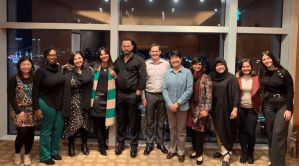
Two hours after touching down in Busan, and we kicked off the sixth Ascensia Social Media Summit with these gems.
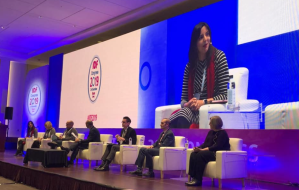
Bright and early on day 1 of IDF2019, and the auditorium was packed to hear about diabetes and tech.

Always, ALWAYS, pleased to share the stage with Jane. Here we are just before the panel session.

Georgie excited to TALK ABOUT HYPOS! (We couldn’t understand why there was an explanation mark at the end of that sentence.)
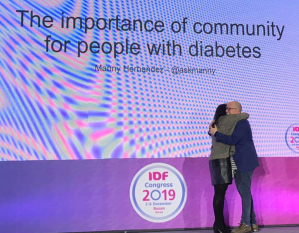
Manny Hernandez gave the LWD Stream Award Lecture and there is no one more qualified to talk about the importance of diabetes community. How honoured I was to introduce him!

Celebrating Manny! (Photo courtesy of Boudewijn Bertsch)

From Melbourne to Busan. Neighbours at IDF2019. Jo was speaking about living with a rare type of diabetes and Andy was there for support (and photos from rooftops).

This woman! Sana, deputy lead of the LWD Stream and a bright, fierce force.

Anita eloquently explaining the challenges of living with diabetes-related complications in Indonesia.

Apoorva highlighting #LanguageMatters in her talk.
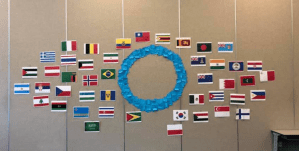
Some of the most dynamic young people I have ever met at the Young Leaders in Diabetes Training Summit.

Cherise can always be relied upon to ask thoughtful questions.

I’ve lost count of the cities we’ve done our #DiabetesOnTour this year, but these blokes have made all my travel so much better! Thanks Bastian and Grumps.

My favourite people at IDF2019? The two baristas running this uber-hipster coffee van.

We were all surprised to see the room packed full at 8.30am on the last day of the Congress. Sex sells. Or people just want to talk about it…
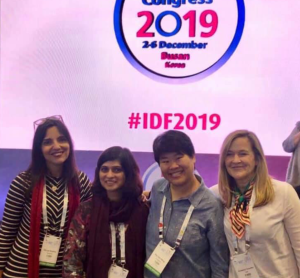
One of the best pieces of advice I was ever give was this: surround yourself with smart women. This is the LWD stream from IDF2019. I truly was surrounded by the smartest of women! Thank you Sana, Pei Yan and Elizabeth.

The final session in the LWD and my highlight of the whole congress was my neighbour, Sol, talking about living with MODY 3. We could not have scripted a closing remark better than his: ‘Being at this conference has made me feel part of something and with people that understand.’ Welcome to the world of diabetes peer support, Sol. You are so, so very welcome here.
DISCLOSURE
I was the Chair of the Living with Diabetes Stream at the IDF Congress in Busan. My flights to Busan were covered by Ascensia Global (in order for me to get to Busan in time to co-facilitate their Social Media Summit). Flights home and accommodation were covered by the IDF.




 Diabetogenic