
You are currently browsing the category archive for the ‘DOC’ category.
This morning, I sat in a restaurant in New Orleans with three of my favourite people and diabetes advocates. If anyone could bottle the tenacity, passion, determination, guts and cheekiness of these three women, they would make a fortune and be able to solve all the problems of the world.
I listened to Anna, Christel and Melissa – who I am lucky enough to call friends – talk about their work and we discussed the US health system which made me shake my head in disbelief and confusion. I don’t understand it; I doubt I ever will. But these three not only navigate the system themselves, they are doing it for others as well as they trying to improve things.
All week I have been around people who are involved in important and life-changing work in diabetes care. From those who are developing smarter devices, using data better, improving access and doing reseach, the dedication and commitment to improving the lives of people with diabetes has been very visibly on show at this conference.
And I have been reminded that at a conference where there are ground breaking announcements made and new and exciting tools launched, it is not the flashy conference centre and the lights of the Exhibit Hall that tell any of the story. It is years and years and years of work, of people plugging away and just doing what needs to be done, until the excitement of telling the world.
This morning, I walked around New Orleans with a delicious, embargoed secret in my head that I was bursting to shout from the rooftops. Some of the exciting work I have been involved in over the last few years has started seeing results and today’s announcement from ALP health spokesperson, Catherine King (no longer under embargo, hence me writing about it….and shouting it from the rooftops) is an example of what happens when people do the hard yards.
Australians now have bipartisan support for CGM funding. The ALP pledge goes further than the Coalition’s, with access under its scheme being based on clinical need – not just age. This mirrors the submission made by Diabetes Australia, JDRF, ADS, ADEA and APEG in our joint proposal. (Disclosure: I worked on the this submission as an employee of (initally Diabetes Victoria and) Diabetes Australia and am acting as spokesperson for Diabetes Australia in any media.)
Today, there will be press and a media launch and lights and excitement as there should be. This is worth celebrating! And as I sit in my hotel room 33 levels above Canal Street in New Orleans, speaking with Australian news radio staff about the announcmenet and I am incredibly proud of what we have managed to achieve in Australia. This is a slow burn. It takes time, it takes commitment and it takes dedication. I love being surrounded by people who have it in spades.
More?
My head is full of lists:
- Packing list
- Travel checklist
- Work to do list
- Hug-the-kidlet-a-million-times-before-we-leave-her-for-three-weeks list
- Diabetes-supplies-for-three-weeks-away list
And a list of great things I’ve seen online lately…
PLAID
Do you read PLAID – a research journal with a focus on people living with and inspired by diabetes? If not, you should. Why? Because it’s awesome!
Here’s the link to the latest edition. I’m really proud to have contributed to it because it is (as already mentioned) awesome, and this edition is all about the patient perspective. I sit very comfortable in there!
Unspeakably Wonderful
A new movie about Banting and Best and the discovery of insulin is hoping to be made by UK production company AngryMan Pictures. Details for how you can contribute to their crowd funding campaign are here.
Diabetic Living online
The Australian edition of Diabetic Living magazine has relaunched its website with a gorgeous new look. Check it out!
Totally (dia)badass

Take 5 minutes…
…and read these great blog posts that have been recently published:
- Anyone thinking of starting on an insulin pump and wanting a front seat view into what it’s all about should jump on board Type 1 Writes. Frank is a couple of weeks into his pump start and is sharing lots about what he is learning. I’ve been pumping for over 15 years now so have completely forgotten about dealing the challenges and successes of starting pump therapy.
- Lots of posts coming in from people who were at #DXSydney, sharing their experiences of using Libre. This post listed all the people who attended with links to their blogs. Have a read and share your experiences too.
- The Grumpy Pumper is a man of few smiles and, it would appear, few blog posts. Here is his first blog for the year. Pop by and leave a comment suggesting he blog more. Then it won’t just be me nagging him!
- Awesome pics in this blog from Scott from Rolling in the D. He hacked his Dexcom and this is what it looks like on the inside!
- Why do we need online communities? Anna from Glu gives some reasons here. And she’s right on every count!
- Also from Anna, this profoundly moving and brave post about her recent pregnancy loss. These stories need to be told. Thank you, Anna, for sharing yours. I am so, so sorry for your loss.
- This one is not a blog post, but a podcast. Stacey Simms produces some awesome podcasts over at Diabetes Connections. Do check them out!
Finally, if you’re looking for some more diabetes blogs to read, healthcare social media guru, Marie Ennis-O’Connor, has curated this list for you. There are 50 blogs to choose from. Get comfortable. Get reading!
Myths be gone
Team Novo Nordisk are doing awesome things to dispel myths about diabetes and address the issue of stigma. This latest video is terrific. Watch. And share. Share. Share.
Off to NOLA
It’s that time of year again. The American Diabetes Association Annual Meeting kicks off in New Orleans at the end of this week. I’ll be there, frantically tweeting.
I hit the road – well, air – tomorrow, so I’ll be out of touch for a bit as I embark on the nightmare transit. But I’ll be mainlining iced-coffee and beignets to keep awake and get in with it all.
Follow along at #2016ADA for the latest happenings in the world of diabetes.
New Orleans = Dr John. So here you go!
Twitter is a great source of discussion and yesterday this tweet from a diabetes consultant in the UK certainly did start an interesting conversation that had me thinking.
I should point out a couple of things before going any further. The tweet, asking if lack of guidance in social media is a concern, was in response to a tweet from someone else who shared a post from a Facebook page about insulin omission for weight loss. This is a very serious issue – one that I have written about here, (and elsewhere), and worked on a lot in the last decade or so.
Also, the consultant was absolutely not suggesting that social media is a ‘bad’ thing, and he is actually an advocate and user of online platforms, so this is not about the individual. It is about the issue at large.
Obviously, I am a huge fan of social media. Apart from finding online – and more broadly, peer – support an important part of my own personal diabetes management, I have built a significant part of my career extolling the benefits of online connections and the value of sourcing information and support from others living with diabetes.
The changing landscape of diabetes information and support over the last ten or so years has been significant. With more and more available online, and more and more people being online, there has been a real shift from healthcare professionals being the keepers of information and deciding what people with diabetes SHOULD know to a more egalitarian framework from which to source what we need.
While some may believe this to be the end of civilisation as we know it, (dramatic, I know), I consider this change terrific, because instead of having very controlled and conservative information on offer, there is now a veritable smorgasbord of material – and knowledge – from which consumers can pick and choose. Personally – I love being able to do that. Hearing personal experiences and picking up tips and tricks about day-to-day life with diabetes contribute to me making decisions about how to manage my own condition.
One of the suggestions frequently made about how to safely use SoMe is for it to be better moderated. My argument is that the power and value of SoMe platforms is that it is not moderated. Being free to share my ideas and experiences without fear (or perhaps care?) of judgement is not only useful, but also cathartic. And getting feedback from my peers often provides a different lens through which I can view a situation. Much of what I have learnt would not be found in the pages of a textbook, or offered in the office of a HCP. And that’s fine – there are other very valuable and important considerations that are shared in that context.
The idea of moderating online support – or any peer support, actually – is about control. It can be packaged up into a nice parcel of ‘protecting’ the person seeking the information, but that is not only patronising, but also incredibly demeaning. There is enough of that going on in more traditional settings – peer support is where there is freedom from that control – and a freedom to explore different ideas.
For me, peer support has always been about finding my tribe and learning from them. It has been about finding a source of sustenance and care that makes me feel better about my situation. It’s never been about replacing or substituting what I get from my HCPs.
So what is the role of HCPs in our support space? My belief is that it is a place for them to learn. There are times that it may be appropriate – and even encouraged – for HCPs to step in and share. On Facebook, one of Australia’s leading CDEs frequently comments and adds to conversations in closed diabetes groups. Her professional advice is always spot on – never judgemental – and her personal perspective (she has diabetes herself) shows just how it is possible to blend the ‘What-I’m-told-I-should-do’ with the ‘And-this-is-what-works-in-real-life’.
But not everyone who wants to be involved in this space has diabetes, nor should we expect them to. But I think for me, I have a very clear understanding of online and peer support works – and what everyone’s role is. When this works well, it works because it is being led by PWD; they (we!) are the ones driving the discussion and the focus. It’s not dangerous. We don’t need guidance. Because it is our space and we own it.

What peer support means to me,
Day two of #Dx2Sydney is about to kick off. Yesterday was about getting to know just who is in the room, as well as getting an idea about the product and yes, we all did get to trial it last night and most of us are now sporting little white discs on our arms. I am slowly, but surely, making my transition to droid with three medical devices stuck on my body.
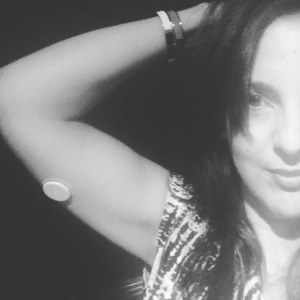
The droid you’ve been looking for…
Some of us have been commenting on our SoMe feeds already about the event, so I thought I’d quickly put together a list of who is here so you can follow along. There are eight Australian bloggers here and I’d encourage you to support our local talent and have a read (not only about this event – which they may or may not write about).
Ashley at Bittersweet Diagnosis
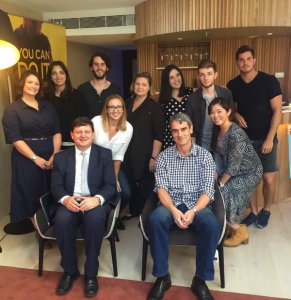
There have been a fair bit of tweeting throughout the couple of days, so you might want to jump on Twitter and check out #DX2Sydney.
Also, lots of people are asking about launch details (including costs) of the Freestyle Libre. The Abbott website has all the information you need.
DISCLOSURES
As explained in yesterday’s post, travel, accommodation, meals and transfer costs have been covered by Abbott. And all attendees have also been given two Freestyle Libre sensors and the reader.
I may write about my thoughts of using the Libre device after I’ve trialled it for a while. I might not. Abbott have no input to the words I may write.
 I’m in Sydney for the next couple of days for the Diabetes Exchange (DX) program hosted by Abbott Diabetes Care. The event which runs over two days is part of Abbott’s global DX initiative which aims to bring together diabetes bloggers from all over the world. The Sydney event follows on from the initial meeting in Berlin, and next month, there will be an EU event, this time in Stockholm. (How’s your French? Google translate may be able to help you with this wrap up of the Berlin event from my dear friend Andrea.)
I am terribly excited about the Sydney event for a few reasons. Firstly, it’s all about the tech. Make no mistake, we’re here to talk about the Abbott Freestyle Libre monitoring device which (finally) received TGA approval earlier this year and will be launched into the Aussie market in the very near future. It’s exciting technology – and how clever are Abbott in bringing together a group of bloggers who may just share their experience (of both the event and the device) with others?
I am also excited because I will be surrounded by my peers – others who also live with diabetes. I will be with old friends, others that I only know in the 140-characters-or-fewer world of Twitter and others that I have never met (in real like or online) before. I am especially excited that it is an Australian event because it is always fascinating to see and hear the close-to-home perspective and just how different it can be even though we are accessing the same health system while living with same health condition. (I’m also thrilled to be in a room full of Aussies because it means I won’t spend a significant part of the day asking ‘Does that translate?’ as I try to explain something that makes absolutely no sense to anyone from Europe, the US or the UK.)
I have been very fortunate to sit around tables around the world at similar events and the power and value is not because we all agree with each other. In fact, the real magic happens when there is respectful and robust discussion where everyone is given the opportunity to safely share their experience and perspective. I so hope that is the outcome of the DX2Sydney meeting.
I am facilitating DX2Sydney, which is terrific because it means I don’t have to say much. I mainly get to listen and hear others’ thoughts. The agenda is packed full of interesting topics and there is plenty of time for tangents and questions. Well done to Abbott for bringing us all together. This is a terrific opportunity for us as bloggers, but it is also such a brilliant opportunity for Abbott to get some valuable insight into working with PWD. We have a place at this table; there is no issue with industry and PWD talking, engaging and sharing. I’m so pleased to be here to do that!
Our Aussie blogging community may be small – and this may be only the second time that a group of Aussie diabetes social media influencers have been allowed in a room at the same time (the first time being Diabetes Victoria’s innovative Diabetes SoMe Summit back in 2012), but I am so pleased that we are being given the opportunity to lend our voice to the global DX initiative.
You can follow along on Twitter at #DX2Sydney. And I’ll be linking to any blogs or commentary from the other attendees in later posts.
DISCLOSURE
DX2Sydney is being coordinated and run by Abbott Diabetes Care. The costs for me to attend the two day event (travel, accommodation, meals and transfers) have been covered by Abbott. All attendees will also receive Freestyle Libre product so we can trial the new device.
There is no expectation that I will write about the event or my thoughts of the device. Abbott may have paid for me to attend, but they have not paid for my words on this blog, social media activity or anywhere else. I do, however, promise to try to keep myself nice and not swear. (But that could go pear-shaped any moment!)

DX2Sydney is being held in the ACDC suite of the hotel. Who said diabetes isn’t rock ‘n’ roll?
The DOC is a moveable feast. I thought about this the other night during the OzDOC tweetchat, when Frank directed us through a series of prompts about what the community offers us.
When I first dipped my toe into the world of DOC, I was cautious. What was this world and who were the people who populated it? As it turned out these were ‘my people’ in that they understood the daily challenges of living with diabetes. Most of the online discussion was diabetes and I lapped it up.
I jumped in – completely and unashamedly – a short time later, desperate to connect with as many people as possible and hear as many stories as possible. I participated in tweetchats every week, I read blogs and commented on them, and, if the opportunity presented itself, I met up with people that I only knew from a small avatar and their Twitter handle.
Before long, I had a huge network of new friends who were, in some ways, living parallel lives, faced the same challenges and frustrations and wanted to celebrate the same victories.
I’ve been part of this world now for a few years and have always been grateful for the support and love that I receive. After yesterday’s post, so many people reached out to check that I was okay, offer their support and even ask if there was something they could do.
But the way I interact does change at times. Sometimes, I am more diligent about participating and encouraging dialogue. Other times, I just put things out there and leave them, not really wanting to engage in discussion.
As much as the online world is wonderful, it can be overwhelming. A need to pay forward – and pay back – the love and support is compelling. I feel guilty when I don’t respond to comments on my blog, reply to tweets or answer Facebook messages or emails. But there are times that I simply cannot interact as much as I would like to. And that is okay.
I have come to realise that my online world is similar to my in real life world where I have started to consolidate the people I regularly see and hold near and dear. As I have gotten older, I have realised the importance of having a few really close and trusted friends rather than a huge number of more casual friends.
One of my best friends is on secondment in France at the moment and I feel a huge and sometimes aching gap because she is so far away, even though we message frequently and I bullied her into joining Instagram so I could see what she was up to. That’s the way it is when you tighten the network of people who know everything – losing one (even just for a few months; even in digital times) is very noticeable.
Sometimes, the two worlds (the online and the IRL) cross over. Some of my nearest friends – the ones I need like I need air – are DOC friends. We may have met on Twitter, but after a few, or even just a couple, of face-to-face catch ups, their friendships are invaluable. I cannot imagine a week where Annie and I are not messaging furiously, or Cherise doesn’t send me some random photo and a quirky comment, or Kerri doesn’t reply to a rant of mine with #RageRenza. Grumpy’s irreverent comments occur most days making me laugh, and Alecia’s messages make we want to start a countdown to the next time I’m in NYC so we can hang out together, drink orange flavoured drinks and take photos with shaggy-haired jazz musicians.
These women (and Grumps) are flung far and wide. We may have been connected by diabetes, but that is certainly not why I consider them friends. Diabetes was the catalyst, but I know that if that were the only commonality, the friendships would have fizzled out by now.
This exchange with the wonderful (and offline as much as online friend) Georgie explains it (with a complete lack of eloquence from me, of course)…

I realised the other night in the tweetchat that after throwing myself into the DOC, I have backed off a bit. I don’t join into every discussion as I once would have; I still read lots of blogs, but don’t comment much anymore; I don’t ask all that many questions anymore; I really only to the #OzDOC chat, and I sometimes go weeks without popping in to say hi. This may be temporary – it may be just where I am at the moment. But I am getting what I need. And I am lucky the community allows for that.
If you are part of the Diabetes Online Community, you probably would know that 20 April was the second annual #IWishPeopleKnewThatDiabetes Day. I wrote about the first event last year and you can read all about it here.
I am a little late writing about it, because truly – what more can I offer to the discussion? If you want to experience the power of the day, search on Twitter (or, to a lesser degree, Facebook or Instagram).
For me, there are two real benefits to #IWishPeopleKnewThatDiabetes. For people with diabetes, it is a chance to have many of our feelings and experiences validated. We see other people communicating the same successes and frustrations; the same victories and disappointments; we see humour in what is often a sea of doom and gloom, and we feel less alone and part of a tribe.
The other benefit is how #IWishPeopleKnewThatDiabetes has the ability to go beyond the DOC. People from outside ‘our world’ can catch incredible insight into all those aspects of diabetes they would never ever otherwise see if their only reference points were the six pm news or a tabloid story in a local newspaper. They would be able to see beyond the numbers – the statistics that are huge and incomprehensible – to the individual and the day-to-day impact.
I loved that there was such a strong focus on the issues of accessibility from people all over the globe. (Go Diabetes Kenya, by the way, for your awesome tweeting!)
It was terrific to see diabetes organisations getting into the mix and contributing to the day. Special shouts out to Diabetes UK, Diabetes Kenya (again), Diabetes Canada and American Diabetes Association for strong shows. And I was so proud to see Diabetes Australia (disclosure – I work for them, but none of the IWPKTD tweets were from me – kudos to Jenelle) and some of the local diabetes organisations including Diabetes NSW, Diabetes QLD, Diabetes WA and Diabetes TAS for getting involved and tweeting and retweeting throughout the day.
After days of these sorts of awareness days, I feel a little emotional. I have gone back and re-read some of the tweets and am struck by how similar – and how different – we feel about living with diabetes. My feelings run the gauntlet from anger and frustration through to hope and inspiration. Mostly though, I feel connected and supported.
#IWishPeopleKnewThatDiabetes doesn’t end today. There is a website and a blog, and you can sign up for updates. A huge thank you to Kelly Kunik (AKA Diabetesalicious) for coming up with idea and running with it. And a huge thank you to everyone for sharing your thoughts.
The world is bathed in purple today with the death of Prince. I have had this clip on repeat all day.
Collective nouns are one of my most favourite things.
I was given a gorgeous book as a birthday present a couple of years back and love flipping through the pages, remembering the collective nouns and admiring the stunning illustrations.

From ‘A Compendium of Collective Nouns’ from Woop Studios. Click for more!
Today, I thought I would throw it out there and start to collect some diabetes collective nouns. (I only wish I could draw so they could be accompanied by images…)
A BRILLIANCE of PWD
A POSSE of PWD (at a diabetes conference)
A HUSTLE of PWD (meeting for a drink)
A DEFIANCE of PWD (when asked ‘should you be eating that?’)
A SADNESS of diabetes diagnoses
A KINDRED of DOC folk who are more than just diabetes peeps.
A BAZILLION of BGL strips
A SUPPORT of family
A SPLURT of bloods
A HAPPINESS of Nutella jars

Source
A FAILURE of kinked pump lines
An EXPENSE of sensors
A JUDGEMENT of HCPs
A ROBOTIC of CGM users
A DELIVERY of insulin pumps
A HOPELESSNESS of NPH insulin
A BEEPING of BGL meters.
A SAVIOUR of dirt-covered-jellybeans-discovered-at-the-bottom-of-one’s-handbag-(or-in-one’s-car-glove-box)-when-there-are-no-other-hypo-treatments-around.
A FRUSTRATION of consistently high BGLs
An INTELLIGENCE of diabetes blogs
A CERULEAN of Blue Fridays
A BINGE of hypos
And finally my favourite diabetes-related collective noun. I was thrilled when I discovered the unofficial mascot of the DOC already has a collective noun and it is so fitting:
A BLESSING of unicorns.


I don’t get to take part in the OzDoc tweet chats as frequently as I would like to anymore, but when I do, I know that I am guaranteed an hour of thoughtful and engaging discussion about real life with diabetes.
This week, I popped in a little late, but in plenty of time to catch a terrific chat a out diabetes stigma – from both within and outside the diabetes community.
Diabetes stigma is real. Have I experienced it? You bet.
Stigma is unsettling, and it comes from a place of ignorance. Is there any real animosity or vitriol? I like to think no, but it pains me that when there have been times of nastiness, it has come from within the community.
I can honestly say that I have never been stigmatised about my diabetes from anyone inside the diabetes community. But then, I have the type of diabetes that I didn’t cause myself. You know, the one that has nothing to do with the sorts of foods that I ate. The one that has nothing to do with me being overweight or inactive or lazy. I have the one that cute kids get – kids who are innocent and have done nothing to ask for this. And I have the tough one – the one that is the worst, the one that can cause death in an instant, the one that no one understands.
These are words that people from within the diabetes community have used when talking about type 2 diabetes. That’s right – by others living with (or living with a child with) diabetes. Perhaps it was in a discussion about the hopeless and insensitive comments made by some silly comedian; or perhaps in response to a diabetes report that doesn’t separate type 1 and type 2 diabetes.
And I am not the only one to have noticed this. The Walk With D campaign was set up because there was a need to acknowledge that … ‘Even within the diabetes community, there are levels of misunderstanding, misrepresentation, and mistaken messaging, often creating a divide where there should be a bridge.’
There have been some studies that also reinforce the idea that there certainly is stigma from within the community.
The ACBRD has been researching diabetes stigma for a couple of years now, starting with a project looking at the stigma experienced by people with type 2 diabetes and following up with a similar study about people with type 1 diabetes.
The second study discussed the perpetuation of type 2 diabetes stigma by people with type 1 diabetes and it’s interesting reading. You can read the full article here, but here are just some of the findings:
- In general, participants expressed somewhat negative attitudes towards, and beliefs about, people with T2DM. This included stereotypes such as ‘lazy’, ‘fat’, ‘over-consume’, ‘sedentary’, ‘unfit’ and judgment about the intelligence and character of people with T2DM, and blame for ‘bringing it on themselves’.
- These attitudes and beliefs served to perpetuate, and give voice to, the stigma surrounding T2DM and drove an in-group/out-group (or ‘us vs them’) mentality.
- It was also evident that there was resentment among people with T1DM toward those with T2DM, which stemmed from two main factors: (1) the perception that people with T2DM are responsible for many of the negative connotations that surround diabetes, and (2) the perception that T2DM, as a largely preventable condition, attracts more attention and therefore gets more resources and support than T1DM.
- Some participants believed that T1DM was the ‘real’ or ‘serious’ type of diabetes, and was more worthy of research attention and investment of societal resources than T2DM.
That sounds pretty stigmatising to me.
Let me be clear about my position here – there are different types of diabetes and people living with each of those types of diabetes has the right to find support and healthcare that is relevant and specific to their diabetes. A young person living with type 1 diabetes is, of course, going to have different needs to an older adult living with type 2 diabetes.
There are many times that we need to clearly define the different types of diabetes as this is important when it comes to getting the right treatment, seeing the right HCPs and ensuring the person living with diabetes has the right information.
I am not saying that there shouldn’t be specialised and tailored services and activities available to people depending on what they need, or relevant to the type of diabetes they have. I built a program from the ground up that was very specific and targeted in its approach to being only about and for people with type 1 diabetes. I get it!
And you absolute bet that people with type 1 diabetes should have access to support and peer opportunities that are specific. I know that for me the sense of ‘me too’ comes most strongly when I am speaking with other people with T1, usually women around the same age, who are working and have the same sort of technology, caffeine and boot addiction as I do – sometimes there does need to be a ‘sacred space’ for us to discuss the issues that are particular to the challenges presented by our brand of diabetes. And finding the perfect pair of knee-highs.
What I am saying is that I know that the stigma comes from a variety of places. And I believe that we should be advocating for diabetes messaging to be positive and beneficial to people living with diabetes. The challenge of getting that message across to people in the general community who have no idea about diabetes is difficult to manage and sometimes it has not been executed particularly elegantly.
But I am a firm believer in the strength of community and the support that it can offer. And to me, the diabetes community means everyone affected by diabetes – everyone. Stigmatising anyone inside that community does a great disservice to us all.
DISCLAIMERS ALL OVER THE PLACE!!
The ACBRD is a partnership between Diabetes Victoria and Deakin University and until very recently, Diabetes Victoria employed me. Since the ACBRD was established (6 years ago) I have worked with foundation director, Professor Jane Speight and her team on a number of different projects.
I have not received any funding from the ACBRD for my work with them. I just like to write about them because the work they do is very important and is changing the way that diabetes is perceived. And their work in diabetes and stigma is ground breaking. (Really! The Washington Post published this article in 2014, quoting Dr Jessica Browne from the ACBRD.)
Now, I just happen to share an office with the ACBRD. And this is on my office wall. I have found myself reading it quite a lot this week!
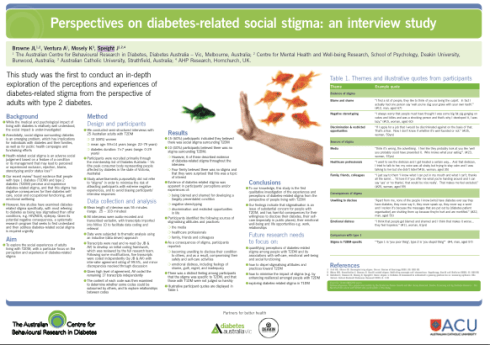
Click for larger image




 Diabetogenic