
You are currently browsing the category archive for the ‘Diabetes’ category.
A couple of weeks ago, I spent a very uncomfortable hour talking to someone who was telling me that the very idea of sending any sort of health aid to another country was horrendous because the situation here in Australia is so dire. They went on to say that the refused to support programs helping people in other countries access insulin and diabetes supplies because that was the responsibility of the government of that country.
I’ve thought about the conversation a lot. And then today, on my TimeHop app, this post from last year came up. I wish I had remembered these words then because I sat there mute after trying to explain why it’s important that we help others who are not as fortunate as we are here in Australia and being cut off and told I didn’t know what I was talking about. I decided that there was simply no point in trying to argue.
So today, I thought I’d share the post. Remembering to look outside our own bubble is always important, And today -especially today – it seems even more critical.
_____________________________________________________________________________________
I speak a lot about the challenges of living with diabetes. Sometimes, the challenges don’t directly relate to me, but I can still see and understand that the diabetes experience is different to anyone and one person’s easy-peasy-lemon-squeezy is another person’s anxiety- and stress-inducing concern.
One of the things that perplexes and annoys me is people who are unable to see diabetes outside of their own bubble. Frequently these people fail to see that just because they don’t need information about <insert topic here> that doesn’t mean everyone has access to or an understanding of it.
Sometimes, when I was involved in running an activity or speaking about a topic at an event, people say that they have never had any problems with that, so why would we speak about it – completely ignoring the fact that for lots of people living with diabetes this is an issue that is of concern.
I ‘work in diabetes’ (which sounds ridiculous, but you know what I mean) and the last person’s diabetes that gets considered when I am at work and thinking of developing programs is my own. If I thought, for one minute, that my experience of living with diabetes mirrors most others, then I’d be utterly naïve and not doing my job. That’s why working and engaging with, and listening to as wide a range of people affected by diabetes as possible is critical to delivering services that are of use.
(Because, let’s be honest, if it really were all about me, I’d spend lots of time and effort working with the leather crafters at Hermes to help me design a perfect diabetes bag. Because: shallow. And lots of stuff.)
And you know if you just rolled your eyes at that last comment because you have found (or designed) the perfect bag and think it is waste of time to speak about it because it doesn’t affect you, then a) stop it, and b) can you tell me where to get one? Thanks.
With World Diabetes Day next week, it’s a great time to think about how others deal with diabetes, what they know, what they don’t, what their concerns may be.
If I only cared about what was going on in my diabetes bubble, I wouldn’t write so much about campaigns like #Insulin4All. You can read all about the campaign here, and my post about it during the lead up to 2014’s WDD.
I have never had trouble accessing insulin. But that doesn’t mean that I don’t care about those who do.
Yesterday, I had my annual eye screening. In an endeavour to calm me as much as possible from the anxiety I feel about this annual check-up, I made plans so that it would be the same as my check every year. My dad drove me there, sitting in the waiting room while I faced my fears in the doctor’s office.
I have been going to the same eye specialist centre for 15 years. I’ve seen the same ophthalmologist the whole time and his orthoptist has been the same absolutely delightful woman. She does a super job of calming me down, checking my vision and eye pressure and popping in the dilating drops. And then she sends me off to see her boss so he can have a look at the back of my eyes.
‘The main event’ part of my appointment is always fairly similar and I am fine with that. I know what to expect, I know the order of things and I know that I will have an opportunity to talk about anything concerning me.
We start with my ophthalmologist asking me how I have been and what has changed in my life over the last 12 months. I mentioned that I had changed jobs and we had a chat about that for a moment.
Then he asks if there have been any changes with my diabetes in that period and is always pleased (as am I!) when I report on the mostly boring nature of my diabetes. At this point, he usually asks about my family and any recent travels.
And then, the eye exam. The lights go out, I rest my chin on the contraption and he spends a good 10 to 15 minutes having a look at my eyes, explaining what he is looking at, what he is looking for and, most importantly to me, what he can see.
Or – what he can’t see. I am always hoping that he can’t see any diabetes-related eye disease.
‘Remind me how old you are, Renza,’ he said as he turned the lights back on.
‘I’m turning 43 at the end of the month,’ I said, blinking furiously as my dilated pupils tried to get used to the suddenly bright overhead lights.
‘And you’ve had diabetes for 18 years, right?’ he asked.
‘Eighteen and a half…,’ I said.
‘There is absolutely no diabetes-related anything going on in your eyes, Renza. It is all good news from me. You should be really pleased.’
‘I am,’ I said, nodding. I could feel my breathing starting to return to normal, unaware until that moment that I’d been holding my breath.
‘Okay. So…I’ll see you in a year. Of course, come back sooner if there are any changes. But first, is there anything else you wanted to mention?’
‘Oh – yes!’ I suddenly remembered that I had written myself a note in my phone. ‘I have noticed that my eyes have been really watery lately – maybe in the last couple of months. I can’t go outside without tears streaming down my face. It’s a little better if I am wearing sunglasses, but not always.’
‘Let’s have a look,’ he said. ‘It could be a blocked tear duct.’
‘Wait – what are you going to do…?’ Panic was setting in again!
‘Just tilt your head back for a second and I’ll pop some drops in first. And then I’ll do what I need to do.’
I knew that it was not the moment to ask exactly what was going on. I also knew that he has been my eye specialist for 15 years and knows me and my anxieties. And I also know that I trust him completely! I could hear paper rustling – the sound of something sterile being freed from its package.
‘Renza, I want you to look right up over your head for a second.’ At that point, I saw the syringe. ‘Okay – in a second, you are going to feel some saline running down the back of your throat. Nothing to worry about.’
And at the moment I tasted the salt I realised that THERE WAS A NEEDLE IN MY EYE. AND I WAS AWAKE. And I was not screaming. Or in any pain.
‘That one is fine,’ he said. ‘Let me check the other one.’ And he repeated the procedure, again announcing all to be okay. ‘It’s all fine – nothing to worry about at all.’
‘Great,’ I said. ‘Um…did you just stick a needle in my eye?’
‘I will never say,’ he said, smiling at me.
‘I think we need to acknowledge this new phase of our relationship. I feel I have really grown as an eye patient.’ I said as I gathered up my bag. I thanked him for his time – but really I was thanking him for the awesome ‘report’ and the lovely way he deals with me.
‘I’ll see you next time, Renza. Everything is looking really good.’
I walked out of the room. My dad looked up from the magazine he was reading and stood up. ‘All okay?’ he asked. I nooded. ‘Told you!’ he said – just like he always does.
I smiled. ‘Guess what? I just had a needle stuck IN MY EYE.’ I told him. ‘Did you hear me? A NEEDLE STUCK IN MY EYE.’
I settled the account and made an appointment for the end of next year at the front desk and we got into the elevator. ‘I just had a needle in my eye,’ I said, this time quietly and mostly to myself.
‘And my eyes are all clear.’
We walked to the car. All done for another year.
Pupil still slightly dilated. But an all-clear from the ophthalmologist.
Fade in to bedroom in middle of the night…
Diabetes: Helllloooooo! It’s me; Diabetes!
Me: Piss off!
Diabetes: Rude! You don’t like me very much, do you?
Me: Um…no…It is 3am and you have just woken me up. I guess you’re okay. I mean…I guess.
Diabetes: Pfft. You’re a lousy liar. I hear the words you use when talking about me. We should discuss your language. You swear like a trucker a lot of the time.
Me: My language? You want to talk about my language? It’s 3am. I’ll tell you what you can do with my fucking lang….
Diabetes: Yeah – that’s what I’m talking about…
Me: Well this has been fun. I might go back to sleep now.
Diabetes: Oh – I’m not done yet. We have so much to catch up on. Let’s talk.
Me: About what…?
Diabetes: I was wondering… Do you think there is any way that you could like me? Any way at all? What would I have to do?
Me: Is leaving me alone and finding a way for my beta cells to start working again an option? Could you do that for me?
Diabetes: Not so much.
Me: Okay. Is just being in the background and not bothering me and responding the same way to the same things each time an option?
Diabetes: No. Not really.
Me: Um…is never again waking me in the middle of the night a possibility?
Diabetes: Again, no – I get lonely and it’s fun to have you around when it is dark outside.
Me: Okay. Then to answer your question: no. I don’t believe there is any possible way that I could like you. In fact, I think that I will pretty much dislike you for the rest of my life. Which I hope to be a very long one. We have nothing in common and you have no redeeming qualities. So…
Diabetes: I’m sad to hear that, my friend…
Me: I am not your friend.
Diabetes: Whatevs.
Me: That is not a word.
Diabetes: Totes is.
Me: It is not. And neither is ‘totes’ unless you are referring to a bag.
Diabetes: You know; you’re actually kind of annoying.
Me: Pot. Kettle. Black.
Diabetes: Use verbs!
Me: I had no idea that my diabetes was so into grammar and language.
Diabetes: Yeah – I love it. And punctuation.
Me: You do?
Diabetes: Yep. I do.
Me: Wow. That’s kind of interesting…
Diabetes: It is, isn’t it?
Me: I love punctuation, too.
Diabetes: I know. I can’t decide if my favourite punctuation symbol is the interrobang or acclamation point.
Me: Oh – they are two of my favourites as well! … So, what else do you want to say to me?
Diabetes: Oh – just this…You’re low and probably should do something about it.
Me: What the fuck‽
Diabetes: Renza! Language! Drink some juice. (But excellent use of an interrobang!) … Also, if you find yourself talking weird punctuation marks with your chronic autoimmune health condition – I’d suggest that you think about what could be going on with your glucose level. And then do something about it.
Renza: Do you know what this punctuation mark is:

Diabetes: No. What is it?
Renza: It’s a sarc mark. And this one? This one is a snarc mark.
 Renza: You should consider pretty much everything I ever say to you to conclude with one of those – take your pick.
Diabetes: That’s not very nice.
Renza: Neither are you.
Diabetes: Drink some juice, you moron.
Renza: Don’t tell me what to do! Great; now I’m wide awake.
Diabetes: And it would appear my work here is done. See ya…
Fade out to sound of expletives, all punctuated with a certitude point.

It’s day four of Diabetes Awareness Month and I am feeling a little burnt out. Already.
My social media feeds have been washed in blue; it’s Friday and I am in head-to-toe blue, and my kid went off to school today wearing blue pom poms in her hair and a blue circle pinned to her school shirt.
My inbox is full of requests to promote a new awareness initiative or to fund a new campaign, and I am preparing for talks I am giving throughout the month where I will be speaking about real life with diabetes, or the importance of including people with diabetes in the development and running of programs and services for us.
Buildings will be lit up in blue, the media will be (mis)reporting diabetes and there will be blue everywhere. Blue. Blue. Blue.
Yeah. It’s Diabetes Awareness Month.
I’ve been thinking back to my diagnosis and how I thought my life with diabetes was going to turn out. I was promised a cure when I was diagnosed eighteen and a half years ago: ‘There will be a cure in five years – ten at the most.’ I believed it. I really believed it. And I figured that I could manage this diabetes palaver for five years – ten at the most.
Where is my cure?
I write about progress and my excitement at diabetes technology and how it has absolutely changed my life. In my (relatively short) time with diabetes I have been the beneficiary of these new technologies, of better insulins, of smart devices, of support programs, of outstanding education. I am one of the lucky ones.
And yet my cure seems as elusive today as it did when I was diagnosed – in fact more so, because now…now I don’t believe it will be here in five years – ten at the most.
I feel ungrateful even asking for it – I have access to everything I need to manage my condition. My life with diabetes is good. I even had a kid with this stupid condition doing everything in its power to stop that happening. And, let’s be honest, I’ve made a career out of it too.
I write here about the trials and tribulations of this condition, but I know that I am mostly preaching to the converted – those who know what I mean when I write words of daily frustrations, celebrations, victories and annoyances. And that’s okay. You are my tribe and I love you hard – I really do.
But those outside our world don’t know it, and they see me and think it is all okay.
It’s not. It’s not okay for me in my ridiculously privileged diabetes world. And, even more so, it is not okay for people who die because they can’t access insulin. It is not okay for people who struggle so much with the daily tasks of this condition that they can barely raise their head from the pillow. It is not okay for those who feel so stigmatised by diabetes that they refuse to tell anyone about it for fear of retribution and shame. It is not okay that diabetes is a punchline for every piss-poor comedian.
And it’s not okay that there is no cure. I can close my eyes and instantly be transported back to the room where I had my first insulin injection, and I can see the endocrinologist and hear his voice and the words I no longer believe. ‘There will be a cure in five years – ten at the most.’ No. No there won’t.
I have written (frequently) before about T1 International and I am going to do it again this Diabetes Awareness Month.
Because the team at T1International have a new initiative: they are urging people to sign their Type 1 Diabetes Access Charter which outlines five rights that all people with diabetes should have:
- The right to insulin
- The right to manage your blood sugar
- The right to diabetes education
- The right to healthcare
- The right to live free from discrimination
None of these things are luxuries. These are basic human rights that should be afforded to every single person diagnosed with diabetes – not just those of us lucky to be born in a country such as Australia. Insulin is not a new-fangled, fancy drug. It has been around for 95 years. When talking about the right to the tools required to manage bloody sugar, we are not talking latest technology such as continuous or flash glucose monitoring or hybrid-closed loop systems that are entering the market. We are talking about basic blood glucose meters and strips.
The reality is that around the world, many people cannot access or afford insulin or diabetes supplies. Education is sporadic at best. People with diabetes are being forced to choose between buying insulin and buying food or other essentials. How do you make the decision between putting food on the table or buying the life-saving drug you – or your loved one – needs to stay alive? It’s a decision that most of us in Australia never have to even contemplate, but it is a reality for many, many people around the world.
I messaged T1 International founder, Elizabeth Rowley, yesterday to let her know I would be writing about the charter today, but I also wanted to comment on a Facebook post she had just shared.
Elizabeth had used the JDRF diabetes stats calculator (as discussed in yesterday’s post) and shared her results. She had a very different take to how many others responded.
She reminded us that she is the one of the lucky ones because in her almost 25 years as a PWD, she has been able to access whatever she has needed to manage her condition.
When I did my diabetes numbers, I looked at the terrifying number of BGL checks I have done over the last 18 years: 34,749 (although Aaron did suggest that during pregnancy alone I would have done that many!). Not once have I ever had to wonder from where I would be getting my next box of strips. Not once have I thought about rationing strips or pump consumables for fear that I could not afford more when I ran out. Not once have I had to consider taking less insulin that I need.
The scary thing about the numbers generated by the JDRF calculator is not the huge numbers many of us are seeing tallied up. In fact, it is actually the small numbers in those people with diabetes who can’t access what they need to manage their diabetes.
T1 International is doing some amazing things – just as they have done since they started a yea few years ago. Please check out their website, click below to sign the charter and get your friends and family to sign too, and if you can, make a donation to this really important cause.

November is a big month in diabetes. For those of us living in Australia, the main event is World Diabetes Day on 14 November, but I’m certainly happy to be swept up in the USA’s Diabetes Awareness Month.
For the next four weeks, there will be a lot of diabetes awareness about and it’s a great opportunity to speak about real life with diabetes, dispel some myths and set the record straight when someone tells you to increase your cinnamon consumption to cure your diabetes.
Get your blue on…
Blue is the colour of diabetes and, this month, it’s my colour of choice! (Including this potentially misguided nail colour. My manicurist actually said ‘Are you sure?’ when I picked it our yesterday.)
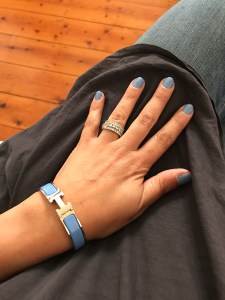
I’m stuck with these nails for a couple of weeks now, but plan to accessorise with a lot more blue (including the blue mascara and eye liner I bring out just for November!)
And a throwback to 2011 (seriously!) when Cherise got a few DOC folk together to make this video. Wear blue!
Diabetes is not about numbers. Until it is.
JDRF has this nifty calculator on their website that (somewhat scarily) adds up the numbers to show just how many diabetes tasks we’ve undertaken in our diabetes lives. Here’s mine (as of yesterday).
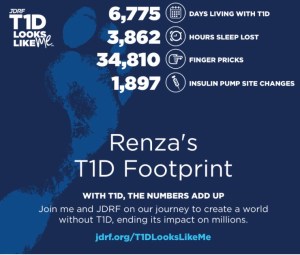
I am the first to say that diabetes is not all about numbers, but I do love this because it shows the magnitude of this condition and its relentlessness. You can get yours here.
(And JDRF UK has their own here.)
What is diabetes awareness month all about anyway?
In fact, what are ALL awareness months about? This beautiful and throughtful post from Jessica Apple from A Sweet Life (online magazine) is definitely worth a read.
And this take from a Diabetes Dad…
And Tom Karla (AKA Diabetes Dad) has this to say about just who this whole month is for. (Spoiler: it’s not for those of us already living with diabetes!) As I said on Twitter yesterday – I spend a week every July (during National Diabetes Week in Australia) trying to explain this. Will be forwarding Tom’s post far and wide from now on!
7 day online peer support…
Did you know that there is a free online Peer Diabetes Mentoring Summit running right now (until 7 November). Diabetes Dominator, Daniele Hargenrader, has coordinated this fab event and you can claim your free ticket here. So many terrific sessions with great speakers to follow!
Photo challenge
There’s a fun photo challenge for the month from Project Blue November. Using the prompts they’ve provided, post a photo each day to your SoMe feeds to share your life with diabetes, tagging the pic with #ProjectBlueNovember. Here are the prompts:

What I’d tell myself at diagnosis..
Lovely piece from the team at Diabetes Forecast where some PWD share the wisdom they would give their newly diagnosed self. Read it here.
And here’s the letter I wrote to my newly diagnosed self a few years ago. It still holds pretty true!
Circled
The International Diabetes Federation’s WDD selfie app (download for free at the app store) allows you to add a blue circle – the international symbol for diabetes – to any photo you’d like.

Big Blue Test
And of course, November means that it is time once again for the Big Blue Test, brought to us by Diabetes Hands Foundation. Over 125,000 BBTs have been logged since the program started in 2010. Easy peasy lemon squeezy instructions are:
 Get logging for good karma. There’s even an app you can use to make it super easy. (And yes – I’ll be logging before and after I take the pups for a walk!)
Keep in perspective.
It’s really easy to get overwhelmed by everything diabetes that’s going on this month. If your SoMe feeds are anything like mine, they will be overtaken by diabetes and there really does seem to be no escape.
Which is why it’s important to remember that we are about so much more than diabetes and find time in the month to do things that remind us of that. We have a couple of birthdays to plan and an upcoming trip to New York to think about – all things that will hopefully keep the whole month in perspective. Plus there is always baking…maybe some cookies…

Our kidlet is starting secondary (high) school next year. Her parents are totally in denial about this – we keep looking at photos of her from five or six years ago, pretending she is only in her first years of primary school. This works perfectly until we actually look at her today – tall and lanky and tweenager-y – and realise that denial can only take us so far!
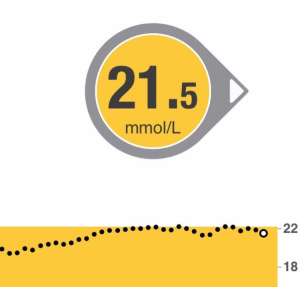
The other night, we attended an orientation evening at her new school. As we were rushing about getting ourselves organised and out the door to get there on time, I was mainlining water and continuing to rage bolus my way through awfully high glucose levels. The throat infection I’ve had for a couple of weeks seemed worse and was absolutely kicking my arse. Apart from a milky coffee in the morning, I’d had no carbs all day, and yet each time I looked at my iPhone for my CGM number I was furious.
At one point, I blinked away tears as I saw another number in the high teens and a stubborn, perfectly-straight CGM trace that was stuck in the yellow zone of the graph.
My mantra of ‘it’s just a number’ wasn’t cutting it. The razor-blades in my throat were agonising and my legs and arms were achy – a combination of a low-grade fever and high-grade molasses pulsing through my veins. I threw back a couple of Nurofen, chugged a large glass of water and we piled out the door and into the car.
We got to the school and the kidlet found one of her friends and we all settled in the beautiful school library, waiting to hear about the school’s transition program and what our kids could expect as Year 7 students next year.
The move to this new environment is made as smooth as possible for the students, however there was a lot of acknowledgement from the Principal and the year level coordinator that it would be different and challenging time, as well as a chance for some terrific opportunities.
The Principal said some really soothing and encouraging words – for the benefit of both the new students and their equally (perhaps more?) anxious parents. It was lovely to hear about the supportive and inclusive environment on which the school prides itself, and the initiatives and activities they undertake to help the students become part of the school community.
But the words that struck me most and made me think that we had made a really good decision about this particular school came when he was speaking about exams, tests and assessments.
He acknowledged that getting results for assessments can be a little nerve-wracking at times and that it is perfectly normal to feel some level of anxiety. And then he said ‘But a result is just a snapshot in time. It does not determine where you are going.’
I looked over at our girl then and saw her listening intently. She has heard us say similar things before in relation to school tests and she has heard me say it a lot of times in relation to diabetes numbers.
As the Principal continued talked about the school, I stole a look at my phone for my CGM and saw the number 19.6 looking at me. I recognised the anxiety I had been feeling earlier was two-fold: anger at being high and the lousy feeling that comes with it. But also the fear of high numbers as a long term problem. Subconsciously, the inextricable link between high numbers and complications lurks, littering my mind with fear.
It doesn’t matter how much I know about complications and improvements in management, that fear is always there. I know about how much better the outcomes related to complications are these days for people with diabetes when compared with ten, twenty, forty, fifty years ago – I still am terrified. And never more so than when I am high.
I took a deep breath and returned my phone to my handbag. In my head I repeated the words the Principal had just said a few moments earlier and felt myself breathing easier. ‘It’s just a snapshot in time. It does not determine where I am going.’ I said it again. And again. And again. Until I almost started to believe it. Almost.
Unpleasant
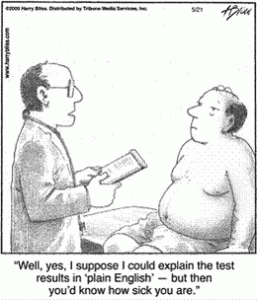
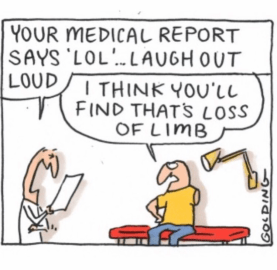
It’s Drop the Jargon Day. Here’s one I prepared earlier about this very topic.
So today, I am taking extra care about the words I use and the things I say and write when talking diabetes.
I know I am guilty of being very lingo-istic at times. I read through this blog and see the jargon sprinkled through posts, abbreviations and slang terms littered everywhere. (Huge thanks to someone who commented on one of my posts last week about how I need to not use anagrams so much!)
I catch myself in meetings using shorthand that makes sense to me, and correct myself by explaining terms may be like a second language to those of us required to speak it fluently, but a foreign language to those who don’t.
So today, I am going to use pictures to illustrate this issue. Because a picture tells a thousand words. And a cartoonist is far more amusing that I could ever hope to be! (Click on images for source.)
Take the pledge to Drop the Jargon here.


‘Oi!!!!’
‘Hey!! Hey!! Oi!!’
I have a particular look that I reserve for men who yell at me from passing cars. Admittedly, this look is employed far less frequently than when I was a younger lass, but occasionally, it still does need to be used.
And today, the thunderous look of complete and utter disdain was on my face, and the choice words I was going to use to accompany it were forming on my lips as I turned to the person who was shouting at me from their car which was actually stopped at a set of lights as I crossed the road in front of it.
It took me a moment to realise what was going on, but there was a man, half leaning out the window of the passenger side of the car, flailing his arms around and, once he had my attention, yelling ‘Look!!! Look!!!’
I looked.
And there, on his arm, he was sporting a CGM. Just like me – mine circled by a dark blue RockaDex patch; his with a bright green one.
I jumped up and down (by this time I had safely crossed the road) and yelled back. ‘Oh my god!!!! Hey!!! Hey!!! We are totally best friends now!!!’ I was waving my arms around as well, absolutely not caring how ridiculous I looked.
The lights changed and the car took off. He gave me a last smile and yelled good bye. And I waved at the car, standing there on the side of the road, laughing out loud.

Today is day 6,761 of living with type 1 diabetes. I don’t know why I did the calculations (by ‘did the calculations’ I mean, used timeanddate.com and put in the dates. I didn’t do it myself in my head; that would be weird and impressive), but I did and now I know. My counter is still weighted in favour of days without diabetes, but the difference is slowly but surely eroding.
 In the last ten days, I’ve visited houses from my childhood. By some weird coincidence, the house I grew up and lived in until I moved out at 21, and the house my dad grew up in and I spent countless Sunday afternoons with my extended family are both up for sale. I walked through the houses and memories flew around me, launching me back years.
Each day, I drive past the warehouse Aaron and I moved into as students and where we lived for three years, celebrating our independence with a constant flow of friends and dinner parties. Right now, it’s literally a façade and nothing more as it has fallen victim city-fringe developers. No doubt, the eight apartments that were there will be turned into a 15-storey monstrosity with nothing more than the heritage-listed façade to remind us what was once there.
These places are not about diabetes because for all or most of my time there, I did not have diabetes. The 6,761 day counter started after we moved out of our warehouse; I lived in my childhood home for only ten months with diabetes, (when diagnosed, I had moved back home, saving money to buy a house before we got married), and my grandparents’ house also only saw a few years of me living with diabetes. Their day count is heavily balanced in favour of days without diabetes.
And so, these homes are not houses of diabetes. Our apartment never saw a rogue BGL strip on the floor, insulin in the fridge, or a cupboard full of diabetes supplies. There were not huge jars of jellybeans scattered around the house, or empty juice boxes on the bedside table.
The two homes we have owned accommodated diabetes from day one. When we moved into our ‘new’ place three years ago, diabetes moved in too and was given its own space. Just as it has found a pocket of space at my parents’ house now where I open the fridge and see the exact juice box that I use to treat a low in bulk supply (that’s not because I have a billion lows; my parents have always shopped for the apocalypse!).
 It settled into my in-laws’ house in the country. We’d arrive at the farm in need of a cup of tea after a long drive and I’d open the fridge for milk to find insulin staring at me. And I’d sigh, slightly startled, as I checked to make sure it was still in date, replacing it with fresh vials from my bag if not.
For 6,761 days, diabetes has moved in with me wherever I live, taking up cupboard space that, let’s be honest, could be far better put to use by housing cashmere sweaters or striped t-shirts. It’s invaded the butter compartment of the fridge which I would prefer to be overflowing with salted Danish butter. It’s littered the floor with BGL strips, the benches with spent pump lines and the rubbish bins with the waste of diabetes consumables.
I wandered around the houses of my childhood and instead of remembering diabetes, I remembered games, and play-dates and hiding places and loud laughter around the table – and stomping, moody teenage years. It’s getting harder and harder to remember the days before diabetes, but as I stood in my old bedroom, I saw the days before the last 6,761, remembering them clearly. And at the same time, not remembering them at all.





 Diabetogenic