
You are currently browsing the category archive for the ‘Conferences’ category.
Busan is a very different city today than it was last week. There won’t be warmly dressed people hurrying into BEXCO with IDF2019 lanyards around their necks, eager to learn about diabetes. The word ‘diabetes’ won’t be uttered in almost every language of the globe. There won’t be Melbourne diabetes people loudly lamenting that Starbucks seems to be the coffee of choice in the city.
And you won’t see groups of people from all around the world standing together talking about what it’s like to live with diabetes. Most of us have gone home to our respective corners of the world, back to our families, back to our jobs, back to our real lives. But we will always have Busan and the incredible week of the IDF Congress.
By the time I arrived in Busan on Monday, the IDF was already a different beast. There was a new President and Board in place and some of the concerns that we’d had about the handover had melted away to nothing. This paved the way for what we really there for: a week of learning, networking, hearing different perspectives and truly uniting for diabetes.
We did that.
Was it a perfect conference? Of course not; they never are. There were hiccoughs and AV fun. There were controversies that played out online very differently to the way they actually happened in real life. There were sessions – critically important and brilliant sessions from all streams– with disappointing turnouts.
But these are all minor concerns that are the reality of every conference I have ever attended. There will be a time for post-mortems and evaluations and planning for improvements to future conferences. That time, however, is not now. Now is the time to celebrate.
IDF 2019 was a brilliant showcase of diabetes from around the globe. As expected, I only attended sessions from the Living with Diabetes stream and every single story was beautifully presented, and enhanced by the professional expertise of the HCPs who shared the stage. Amongst the incredible tales were moments of discomfort. It’s challenging to hear of the struggles many of my sisters and brothers with diabetes face in their day to day lives. I was forced to confront my privilege in a way that demands more than just acknowledging it there.
Also, difficult to accept is realising that sometimes the chasm between what people living with diabetes want and need and what HCPs and researchers think we want is gulf-like. For every HCP who ‘gets us’ and understands the value of lived experience in the healthcare space dialogue, there are many others who just don’t accept it, and, despairingly, don’t want to listen.
But more on that another day. Because for now, I’m focused on the people who did such a stellar job. So here are just some of them!

Two hours after touching down in Busan, and we kicked off the sixth Ascensia Social Media Summit with these gems.
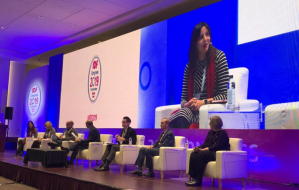
Bright and early on day 1 of IDF2019, and the auditorium was packed to hear about diabetes and tech.
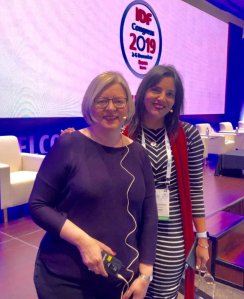
Always, ALWAYS, pleased to share the stage with Jane. Here we are just before the panel session.

Georgie excited to TALK ABOUT HYPOS! (We couldn’t understand why there was an explanation mark at the end of that sentence.)

Manny Hernandez gave the LWD Stream Award Lecture and there is no one more qualified to talk about the importance of diabetes community. How honoured I was to introduce him!

Celebrating Manny! (Photo courtesy of Boudewijn Bertsch)
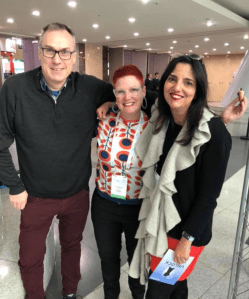
From Melbourne to Busan. Neighbours at IDF2019. Jo was speaking about living with a rare type of diabetes and Andy was there for support (and photos from rooftops).

This woman! Sana, deputy lead of the LWD Stream and a bright, fierce force.
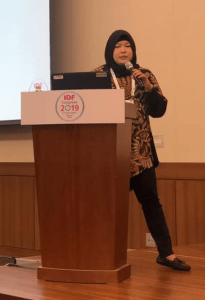
Anita eloquently explaining the challenges of living with diabetes-related complications in Indonesia.
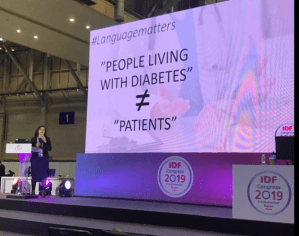
Apoorva highlighting #LanguageMatters in her talk.

Some of the most dynamic young people I have ever met at the Young Leaders in Diabetes Training Summit.

Cherise can always be relied upon to ask thoughtful questions.

I’ve lost count of the cities we’ve done our #DiabetesOnTour this year, but these blokes have made all my travel so much better! Thanks Bastian and Grumps.

My favourite people at IDF2019? The two baristas running this uber-hipster coffee van.

We were all surprised to see the room packed full at 8.30am on the last day of the Congress. Sex sells. Or people just want to talk about it…
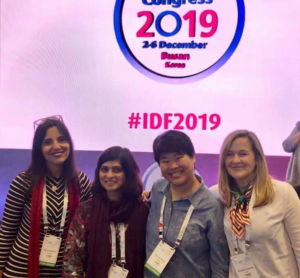
One of the best pieces of advice I was ever give was this: surround yourself with smart women. This is the LWD stream from IDF2019. I truly was surrounded by the smartest of women! Thank you Sana, Pei Yan and Elizabeth.
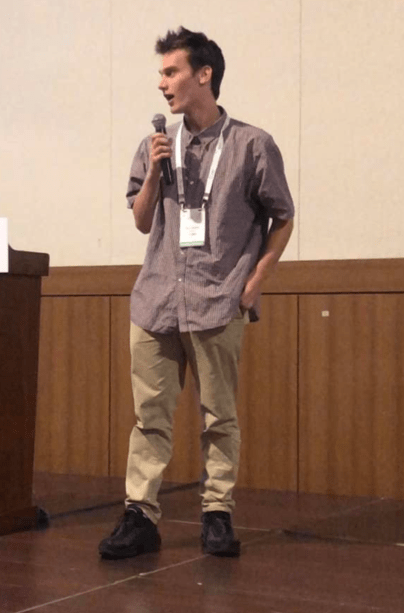
The final session in the LWD and my highlight of the whole congress was my neighbour, Sol, talking about living with MODY 3. We could not have scripted a closing remark better than his: ‘Being at this conference has made me feel part of something and with people that understand.’ Welcome to the world of diabetes peer support, Sol. You are so, so very welcome here.
DISCLOSURE
I was the Chair of the Living with Diabetes Stream at the IDF Congress in Busan. My flights to Busan were covered by Ascensia Global (in order for me to get to Busan in time to co-facilitate their Social Media Summit). Flights home and accommodation were covered by the IDF.
The International Diabetes Federation’s World Congress is on this week and I am en route to Busan, South Korea for a very busy few days.
Two years ago, when I was invited to chair the Living with Diabetes (LWD) stream at the Congress, I said yes without hesitating. I had been deputy Chair for the previous Congress and loved working together with Manny Hernandez who was leading the stream. I hoped that we would be able to put together a programme as strong as we saw in Abu Dhabi in 2017, as well as introducing lots of new speakers, new topics and elevating the voice of people living with diabetes. The LWD organising committee has been a dream to work with, and together with Sana Ajmal, Elizabeth Snouffer and Pei Yan Heng we have brought together a program that I am so proud of.
I would be lying if I said that the problems that have been overshadowing the IDF over the last few years hadn’t been front of mind at times. In fact, I often wondered if we would actually all be congregating in Busan. There were times I expected to wake up in the morning to an email announcing the Congress had been cancelled and that all our hard work had been for nothing.
But, here we are, just 24 hours out from the opening ceremony, and Busan is already starting to fill with diabetes healthcare professionals and researchers. And a whole lot of wonderful diabetes advocates who will be sharing their stories of living with diabetes. I can’t wait to get there and to see and hear just what they have to say on the stage at the BEXCO conference centre.
This Congress is the only international diabetes meeting that has a stream dedicated to the lived experience. We are given equal billing with other streams and the same funding to fly in speakers from around the world. I am thrilled that we have this stream, but my only regret is that there is not more integration of that PWD voice in other streams.
So, here is my hope – and plea – to anyone and everyone at the Congress: Make time to go to hear the speakers in the LWD stream. They are a reminder of why you do what you do. There will be stories of incredible hope, adversity and brilliance. There will be tears, and humour in there too, because sometimes, laughing (along with insulin) really is the best medicine.
Thanks to everyone who has made the long trek to Busan (it’s really not the most direct place to get to!), and prepared to share their story and experiences. There will be opportunities to follow along from home – the hashtag is #IDF2019, and some sessions are likely to be streamed live by those in the audience. Please do participate in the conversation from wherever you are. I’ll see you from Busan!
DISCLOSURE
I am the Chair of the Living with Diabetes Stream at the IDF Congress in Busan. My flights to Busan are covered by Ascensia Global (in order for me to get to Busan in time to co-facilitate their Social Media Summit). Flights home and accommodation are covered by the IDF.
Next month, I’m rounding out what has been a really busy year of conferences at the IDF World Diabetes Congress. One of the talks I’m giving is on the experiences of women with diabetes when it comes to sex. (*I was going to call this post ‘Sex on stage’, but then wisely thought better of it.)
The symposium will include a session about men with diabetes and their experiences, and a talk given by a healthcare professional highlighting some research in the area. (Spoiler alert: there is not much research when it comes to women, sex and diabetes.)
For my talk, I want to not only draw on my own experiences, but also bring together what I’ve heard from other women living with diabetes. Whenever I’ve written here about this issue, (including here and here and here) I’ve received lots and lots of private messages as well as some post comments – women want to talk about it!
The main themes that seem to resonate time and time again are:
- There is very limited education and information when it comes to women with diabetes and sex, sexual function and sexual health
- Many (most?) women with diabetes have never had a HCP talk to them, or ask them questions about their sexual health – other than contraception and the importance of planning for pregnancy
- Many (most?) women believe that diabetes does impact on their sexual function, and those diagnosed after they were already sexually active report that diabetes absolutely does impact on sex
- Lots of women say that the visibility of diabetes (devices on bodies, scarring etc) makes them feel self-conscious and impacts how they feel about themselves and about sex.
I know that when I spend time with my good women friends with diabetes, talk about sex and how we feel about it, and our bodies, comes up. It used to take a couple of glasses of wine to get us comfortable enough to start the conversation, but these days, we launch straight in. Are we all chronic over-sharers, or are we just desperate to connect with others who get it and might have some tips and tricks to share? I think it’s the latter…although I think sometimes the former, too!
So, now is where you come in! If you are a woman living with diabetes (ANY type and duration of diabetes, any age), I would love to hear your experiences, including about discussions you’ve had with your HCP team about this issue. I’m also interested in any advice or information women have found useful. And if you are one of the women who has never had a conversation about it, or been told that diabetes does not impact on women’s sexual function, I want to hear from you too. Oh, and if you have any great resources, articles, blog posts or anything else you’d like women to know about, please share in the comments section.
You can comment on this post and use a pseudonym if you’d prefer to remain anonymous, or send me a private message here. If you could include your age and how long you’ve had diabetes, that would be great. I will be using quotes in my talk, but no names will be shared (unless you would like me to).
I was really pleased to see that this was a topic suggestion by a few people for the Living with Diabetes stream at the IDF Congress, because I truly believe we need to talk about diabetes and sex a whole lot more. It shouldn’t be a taboo subject, or one that people are embarrassed to discuss. And women need to be taken seriously when we say that diabetes does impact our sex lives.
Please help out – the more voices, the merrier. And I’ll do what I can to have the session live streamed so that we can continue the discussion beyond what happens in the Congress conference centre.

DISCLOSURE
I am the Chair of the Living with Diabetes Stream at the International Diabetes Federation’s World Diabetes Congress which will be held in Busan in December 2019. My flights and accommodation, and conference registration have been paid for by the IDF. I am not receiving any payment to speak at the conference, or for my role as stream Chair.
Two years ago, I walked off the stage at the inaugural ADATS event feeling very shaken. I’m an experienced speaker, and regularly have presented topics that make the audience feel a little uncomfortable. I challenge the status quo and ask people to not accept the idea that something must be right just because ‘that’s how it’s always been done’. Pushing the envelope is something that I am more than happy to do.
But after that very brief talk I gave back in 2017, a mere three months after I started Looping, I swore I would never speak in front of a healthcare professional audience again.
That lasted all of about two months.
In hindsight, I was more than a little naïve at how my enthusiasm about user-led technologies would be received. I can still remember the look of outright horror on the face of one endo when I cheerfully confirmed:‘Yes! Any PWD can access the open source information about how to build their very own system. And isn’t that brilliant?!
Fast forward to last Friday, and what a different two years makes! The level of discomfort was far less, partly because more than just a couple of people in the room knew about DIYAPS. In the intervening years, there have been more talks, interviews and articles about this tech, and I suspect that a number of HCPs now have actually met real-life-walking-talking loopers. Plus, Diabetes Australia launched a position statement over a year ago, which I know has helped shape discussions between HCPs and PWDs.
I’ve gotten smarter too. I have rejigged the words I use, because apparently, #LanguageMatters (who knew?!), and the word ‘hack’ scares the shit out of people, so I don’t use it anymore. (Plus, it’s not really accurate.) And, to protect myself, I’ve added a disclaimer at the beginning of my talk – a slide to reinforce the sentiment that I always express when giving a talk about my own life with diabetes, accentuating that I am speaking about my own personal experiences only and that I don’t in any way, shape or form recommend this for anyone else. (And neither does my employer!)
I framed my talk this time – which had the fabulously alliterative title ‘Benefits, Barriers and Burdens of Diabetes Tech’ by explaining how I had wanted to provide more than just my own perspective of the ‘three B’s’. I am but one voice, so I’d crowd sourced on SoMe for some ideas to accompany my own. Here’s just some of the responses.
 (Click to enlarge)
And this:

One of the recurring themes was people’s frustrations at having to wade through the options, keep up with the tech and customise (as much as possible) systems to work. And that is different for all of us. One person’s burden is another person’s benefit. For every person who reported information overload, another celebrated the data.
What’s just right for me is not going to be just right for the next person with diabetes. So, I used this slide:
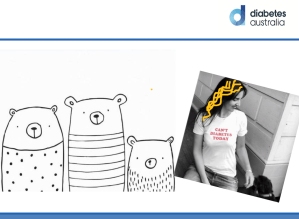
I felt that the story of Goldilocks and the Three Bears was actually a really great analogy for diabetes tech. Unfortunately, my locks are anything but golden, so I needed a little (basic and pathetic) Photoshop help with that.
In this fairy tale, Goldilocks is presented with things that are meant to help her: porridge for her hunger, a seat to relieve her aching legs and then a bed to rest her head after her busy day. But she has to work through options, dealing with things that are not what she wants, until she finds the one that is just right.
Welcome to diabetes technology.
On top of working out what is just right for us, we have to contend with promises on the box that are rarely what is delivered to us. Hence, this slide:

Apart from the Dex add circled in red, all the other offerings are ‘perfect’ numbers, smack bang in the middle of that 4-8 target that we are urged to stay between. These perfect numbers, obviously belonging to perfect PWD with their perfect BGLs, were always completely alien to me.
A selection of my own glucose levels showed my reality.
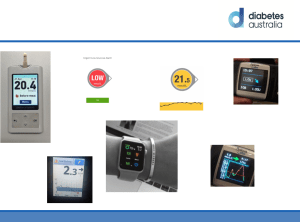
I explained that in my search for finding what was ‘just right’, I had to actually look outside the box. In fact, for me to get those numbers promised on the box, I had to build something that didn’t come in one. (Hashtag: irony)
Welcome to Loop! And my next slide.

And that brings us back to two years ago and the first time I spoke about my Looping experience in front of healthcare professionals. It was after that talk, during a debrief with some of my favourite people, that this term was coined:

Funny thing is, that I am now actually the very definition of a ‘compliant’ PWD. I attend all my medical visits; I have an in-range A1c with hardly any hypos; I am not burnt out. And I have adopted a Goldilocks approach in the way I do diabetes: not too much (lest I be called obsessive) and not too little (lest I be called disengaged), but just right.
It turns out that for me to meet all those expectations placed on us by guidelines and our HCPs, I had to do it by moving right away from the things there meant to help us. The best thing I ever did was start Loop. And I will continue to wear my deliberate non-compliance as a badge of honour and explain how it is absolutely just right for me!
One of the many highlights for me at last week’s EASD meeting was the satellite event about DIYAPS. It was a Hacking Health event, co-organised by the OPEN Project consortium and promised to highlight the perspective of the #WeAreNotWaiting movement through the eyes of people with diabetes, researchers and clinicians.
It was standing room only, with the event having sold out a few days earlier. I was a little late (I had to present at an event involving early researchers and PWD) so unfortunately missed the always brilliant Dana Lewis kick off the event.
If you ever need someone to warm up an audience and set the scene about the DIYAPS movement, Dana is your person! I have seen her present a number of times now, and always pity anyone who shares the stage with her. Her presentations are always enthusiastic, articulate and engaging, and leave the audience wanting more.
I followed her talk on Twitter as I was in the cab from the EASD conference centre to the Centre Cívic Sagrada Família (bonus of offsite events is actually seeing some of the tourist attractions the city has to offer!) and could see that the audience was enchanted and galvanised with her talk.
The program was packed – and provided a balanced view of not only people using the tech (because honestly, sometimes it can sound like we have all drunk the Kool-Aid!), but also about DIYAPS in clinical practice, and research settings, as well as a session on medical ethics.
There were many stand out moments for me, but perhaps the one that stands out the most was from paediatric endo, and fellow Looper, Katarina Braune where she was able to distil DIYAPS into this single sentence (as tweeted by another Looper, Andrea Limbourg):
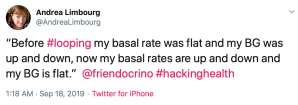
Perfect, perfect summary of looping!
We also heard from Roman Hovorka who presented on the experience of developing the Cambridge closed loop system (CamAPS). Anyone who has been following artificial pancreas technologies and research would know of Roman. I’ve heard him speak a number of times at conferences around the world and have always been grateful for his passion and dedication to advancing technologies to benefit people living with diabetes. So, it was a little surprising that I found his talk a little challenging.
One of the things that I have always admired about the DIYAPS movement is that there is a strong sense that our chosen DIY path sits neatly alongside commercial systems and regulatory bodies. While we may not choose or want to use a commercial system (and, of course, are not waiting for them), that doesn’t mean that there is disdain or derision of other options. In fact, there is admiration and gratitude for industry working to provide this technology to a broader audience. We know that not everyone wants to build their own system, and many ARE happy to wait for a system that will be in warranty, and comes straight out of a box, rather than cobbled together.
I say this knowing that same courtesy is not always afforded to the DIY world from industry, and I can point to every single time someone from a company developing a commercial automated system claims their systems are safe – implying that those of us in the #WeAreNotWaiting world are all cowboys not concerned with safety.
I would so have loved to have heard Roman really highlight all that his system has to offer, and what sets it apart from DIY systems, and how it is one more choice that will be available to PWD, rather than put down the DIY movement. I am all – ALL – about choice and love the idea that with this choice comes a better chance for us to find the tech that works best for our personal circumstances.
We don’t need to be defensive about ‘the other’ in diabetes technology. We need to acknowledge that there is no one right, perfect choice. DIY is certainly one of those choices, and as we heard sprinkled throughout the day, has been life changing for many people. But it is not the only option out there, and few people in the DIYAPS world would even suggest that it is. I guess perhaps that is what challenged me about Roman’s talk – he did seem to throw DIYAPS under the bus a little when it would have been far better to suggest it was just another bus route people may like to take.
So how could this event have been better? Well, I wish it had been part of the official EASD program. There is a lot of opportunity for HCPs to learn from the user-led tech community, and this extends to technologies and treatment options beyond DIYAPS. Reinforcing what is an overarching fact of life with diabetes – that all diabetes is DIY – is important for all working in diabetes to remember.
While DIYAPS technology may be at a far spectrum of the whole DIY diabetes idea, having HCPs and researchers listen to just how diabetes impacts on daily life, and the decisions we need to make is critical in their approach working with us.

Panel session to finish the day.
DISCLOSURES
My airfare and part of my accommodation to attend EASD was covered by Lilly Diabetes so that I could participate in the DOCLab advisory group meeting which took place all of Monday. Another night’s accommodation was covered by Novo Nordisk as I attended their advocate meeting on Digital Health Technologies.
I am part of the OPEN Project Consortium. I did not receive payment for my involvement in the Hacking Health event.
While my travel and some of my accommodation costs have been covered, my words remain all my own and I have not been asked to write or speak about any of the activities I attended, or anything I have seen at the conference. As ever, profanities are also all mine.
It’s day one of the Australasian Diabetes Congress (#19ADC) which is being held in beautifully sunny and shiny Sydney over the rest of this week. Once again Diabetes Australia has brought together a team of diabetes advocates and bloggers to provide real time, on the ground updates from the Congress, which is a brilliant way for people with diabetes not here to keep updated on the sessions, latest research and new tech that is on display.
I have spent a lot of my advocacy life talking about the value of having people with diabetes at this sorts of healthcare professional events. I’ve defended our right to be here until I have turned blue in the face. I have said the words ‘Nothing about us without us’ so frequently that people have asked me if I coined the phrase (of course I didn’t – others have been saying this for years longer than I have). I have challenged people who have said that this conferences are a safe place for HCPs to talk amongst each other without concern that PWD might misinterpret what they are saying. We belong here – it is as much a place for those of us living with diabetes as it is for those working in diabetes.
Yesterday I was involved in two events – I gave a talk with Grumps at the Roche Educators Day (#RED2019), and then we co-facilitated the Ascensia Social Media Summit (#OzDSMS) – and there was a lot of talk about the importance of people with diabetes at events like this. I’ll be writing about both these sessions later on, but for now, I want to share a comment that came out of the Ascensia event when we were talking about what advocacy means and why we need to be present in all diabetes discussions. Kim Henshaw spoke about the importance of PWD being advocates and I think this just nails it.
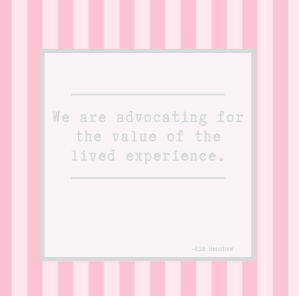
The lived experience is critical for people to understand what diabetes is all about. It was so refreshing to hear Diabetes Australia CEO, Greg Johnson, say ‘I’m a real believer in the power of the person with diabetes telling their story. It’s not just about organisations doing it, it’s about individuals doing it in all sorts of ways.’
This is why it makes sense to have us at these conferences. Our insights, ideas, thoughts and knowledge and expertise is valuable. That’s why we’re here.
Disclosures
My flights to attend ADC were covered by Roche Diabetes Care Australia. Thanks to the Australian Diabetes Society and the Australian Diabetes Educators Association for providing me (and the other #DAPeoplesVoices) with a complimentary press pass. My accommodation and all other costs have been covered by Diabetes Australia (which is where I work). My words here and in all my tweets and other social media activity are mine and mine alone. I’m trying really hard to not be sweary and these efforts should be rewarded with chocolate.
The longest queue in the exhibition hall at ADA was not people waiting to see an exciting new therapy breakthrough in diabetes. It was not interest in the latest shiny and bright new device. It was not even a line for free coffee.
 No. The longest queue was for on the spot A1c checks. Two booths were doing them – Abbott and A1cNow Systems. Abbott had run out after a couple of days, but the A1cNow folks managed to keep up with the demand at their booth.
A couple of my mates with diabetes and I had commented at the never-ending line of HCPs so eager to know their A1c. Why was this the attraction of the exhibition hall?
On the final day the exhibition hall was open, I was doing a last wander around. End of conference fatigue was clearly settling in – the reps on the stands were a little less enthusiastic about approaching people walking by, and conference delegates had lost the pep in their step and seemed to be drifting a little aimlessly. Or maybe people just needed more coffee. But despite the reduced buzz, I saw that yet again (or maybe still) there was still a queue snaking its way around the A1cNow stand.
‘I need to try to understand why they are doing this,’ I said to the friend I was wandering around with. ‘Let’s go and ask them.’
So, we introduced ourselves to a few of the people standing in line. They were health professionals and were happy to chat.
‘So,’ I started. ‘I guess I’m trying to understand just why you are wanting to get your A1c checked. Do any of you have diabetes?’
They all shook their heads. Their responses ranged from ‘I’m just curious’ to ‘It’s free and I many as well have it done.’ One person said, ‘I have a family history of diabetes.’
One of them asked me why I was asking. ‘I’m really understand to know why there seems to be such a keen desire to know what your A1c is when it kind of doesn’t really matter. I generally avoid getting mine done and I am meant to have it checked every three months. I know people with diabetes who have gone years not having theirs checked. For us there is a lot tied up in it. We feel judged by it. It’s often presented as a way to measure our success as a person with diabetes. We are told we are ‘good’ or ‘bad’ depending on that number. I don’t know too many people with diabetes who would voluntarily line up to get it done really.’
Back home, and I was talking about this with my gorgeous neighbour.‘It was the longest queue at the conference. More people wanted their A1c than to get a coffee!’ (Admittedly, this could have something to do with the state of coffee in the US, but maybe not.)
My neighbour rolled her eyes. ‘It’s like at parties when someone sees you do a blood sugar check and wants theirs done. You know – they get all excited and hold out their hands ‘Do me. Do me!’and then you do and it’s four or five and then you do it again and it’s still four or five, and they’re all excited and ask, ‘That’s good, right.’ And then yell out to everyone about how ‘good’ their number is and then they see the 14 on the meter when you do yours and shake their heads and tell everyone how crap that is.’
She’s right. That’s EXACTLY how it happens!
But returning to ADA… I thanked the HCPs waiting patiently in line and walked away, sighing. I wasn’t getting my A1c checked, there was no need for me to be there. Because getting that done takes the right mindset, and a strength that I just wasn’t feeling at that point. I hadn’t psyched myself up and given myself the pep talk I need before having that measurement handed to me.
And then, it all circled around to another example of ‘doing diabetes’ at different conferences, and my similar annoyance at the long lines for hypo simulators. Or my outright displeasure at people whacking diabetes devices on their bodies to learn what living with diabetes is all about.
Setting aside the very high likelihood that I am turning into a grouchy old woman, I really think that these sorts of exercises are problematic for PWD. No one in that A1c queue was feeling any anxiety about the number the machine was going to spit out. I asked if they were worried and they all shook their heads. It was just a thing to do at a diabetes conference for them. Most likely, they were going to come out with an in range number that they would forget as soon as they walked to the next stand.
Hypo simulators make people feel a little wonky for about five minutes after they get out of them and then they are back on solid ground, not thinking about what is really going on with their glucose levels and how they will affect them for the remainder of the day.
And after wearing a pump or a CGM for a week, it can be returned and never thought of again.
I have been criticised when I have said that it is only people with diabetes who truly understand the impact of diabetes on our lives. I’m willing to wear and own the comments I make. I say this without malice or by trying to limit or minimise the experiences of those living around us. I just don’t understand why there is this idea that by ‘doing diabetes’ or rather doing some of things we have to do as part of our diabetes is really useful.
I would love it that if of HCPs lining up to have a pointless A1c check done, they had sessions in the booth given by PWD where we had a chance to speak about why some of us are so anxious when it comes time to having ours checked. We could offer suggestions about how to talk about results in a way that makes us not feel measured or judged.
And instead of hypo simulators, how about a panel of people with diabetes explaining just how we feel about hypos and how they affect us. When I did this at HypoRESOLVE, the researchers and clinicians were astounded and surprised at what I had to say.
There are a lot of ways that people not living with diabetes, but living around it, or working in it can get a better understanding of how we truly feel about having diabetes in our lives. I just don’t think that a one minute, five minute or even weeklong exercise is the right way to get that insight. The best way is to listen to us.
The day before ADA kicked off, I managed to catch a glimpse – my only glimpse this visit to San Francisco – of the Golden Gate Bridge from the back of an Uber on the way to the Diabetes Mine Summer DData Exchange (#DData19).
This is the third DData I’ve attended, and it always delivers. The speakers are brilliant and the topics on the agenda push some of the boundaries we’re used to seeing as part of the ADA conference that runs alongside. Amy Tenderich expertly emceed the day, and Mike Hoskins’ rapid fire tweeting made sure that those not in attendance had a birds eye view of the event.
This year, there was one session that really stood out for me and it was a panel session moderated by Adam Browne from diaTribe and included JDRF International CEO, Aaron Kowalksi and Alain Silk from the FDA.
For some time now, there have been efforts to move away from the idea of HbA1c being the be all and end when it comes to assessing the outcomes of diabetes management.
This doesn’t only mean in terms of the way we measure our own personal diabetes management, or the success or effectiveness of the devices, drugs or treatments on offer, it also is directed to researchers, clinicians and regulators who continue to use A1c as THE measure to determine the value of whatever they are talking about.
The push has been towards time in range (TIR) because with tools such as CGM and Flash glucose monitoring, this is something that can be easily measured and demonstrated.
The A1c is flawed – we all know that. Anyone with diabetes will have tales of A1cs going down, despite their diabetes management being more erratic, or conversely, their A1c increasing despite having fewer roller-coaster episodes. As a one-off number, it tells very little.
But while TIR is certainly one different way of having a look at just how we are tracking, with so few people actually using CGM or Flash (due to access and affordibilty), we can’t throw out other options. The A1c is not dead yet (just ask the queues of HCPs in the Exhibition hall at ADA waiting to get theirs done. Another blog post for another time…)
Also, TIR cannot be the only other measure we look towards as a substitute for A1c, and this session at DData explored more than the idea of a simple like for like between the two.
Aaron Kowalski highlighted how one of the first things people speak about when using an automated insulin delivery device is how their sleep improves. It was indeed the first thing that I noticed, and it was life changing for me. I noted that I slept like I did before diabetes!
Yet, this is not considered as part of regulatory decisions. Neither is how our diabetes experiences can be transformed. Aaron told the story of a young woman who rarely attended to diabetes tasks when around friends because she didn’t want to pull out her pump to check her CGM trace, or bolus insulin. She didn’t want to draw attention to herself or her diabetes. But being able to do those tasks by simply looking at her phone, or her smart watch meant that she felt so much better – and she did what she needed to do when she needed to do it. How are those improved experiences being documented and considered as part of why something is valuable?
In his earlier talk, Alain Silk from the FDA noted that one of the challenges when it comes to technology regulation is too much regulatory and contractual burden and not enough innovative devices getting into the hands of people with diabetes. The DIY movement manages to sidestep that first part and that means that we do have get to have those devices – those transformative devices – in our hands a lot sooner. Our experiences – which all seem to be positive – and our diabetes outcomes – which all seem to report improvements – really should count for something.
Surely one of the goals we are all seeking (and when I say all, I mean everyone involved in any aspect of diabetes) is to increase the time we DO NOT spend on diabetes anymore. At DData last year, DIY-er Justin Walker said that he believes he has gained back an hour a day since using an automated system. That’s seven hours a week. Over a year, that’s more than a total of fifteen days we get back from diabetes. Add that up over a lifetime of diabetes. It’s significant.
Aaron said that one of his goals as CEO of JDRF is to ‘…take diabetes out of our lives as much as is humanly possible.’ When devices allow us to do that – even if it’s just one little bit – that should be assessed as meaningful.
I have been thinking about this session a lot. In fact, anyone who has asked me about ADA has received a lecture on it. My poor boss got an earful when I returned to work on Monday. I’m pretty sure he regretted asking how I’d gone in San Francisco after I launched into a tirade about how we are simply not listening enough to people with diabetes when it comes to just what we are measuring as being valuable to us.
The problem with adding TIR to A1c as a way to assess devices, drugs or other therapies is that we still are focusing on nothing more than numbers. Sure TIR may be more robust and not simply a snapshot average, but it still attributes our success to a number.
When I talk about why Loop has been so transformative to me, I do mention TIR. But the biggest bangs for my buck – the things that really ring true – is not how much time I spend between two number goal posts.
No.
It’s about how much better I feel about my diabetes. It’s about how much less time, less worry, less stress I am forced to dedicate to diabetes. It’s about how the hypos I have these days take three minutes to deal with rather than three hours. It’s about how less stubborn, and how less frequent those highs are. It’s about the much lighter shadow diabetes casts over my family. It’s about sleep – oh dear god, it’s about sleep! It’s about how easy it is to carry out those required tasks and how little they interfere with my day. And it’s about the time I have been able to claim back as my own.
The footprint of diabetes is so far smaller these days than ever before. THAT is what is meaningful. THAT is what I measure. THAT is what it means to truly go beyond A1c.

DISLCOSURES
I attended ADA as part of my role at Diabetes Australia. My economy flights and accommodation have been covered by the organisation.
Thanks to the team at Diabetes Mine, who kindly provide diabetes advocates with the opportunity to attend their DData Exchange at a significantly reduce cost.
Spending time surrounded by diabetes can be overwhelming and that is never more so than at a conference like ADA. It is huge – there are thousands and thousands of people, an exhibition hall with stands from device and pharma companies that messages about diabetes that are all tied up in statistics and words (and not really about people), and for every talk that shares hope and promise, others that focus on despair.
But it’s easy to step away from that – even if just for a moment – and turn to a member of your tribe. Because then…
…not once did I feel despair.
…not once did anyone pass judgement about another’s diabetes.
…not once did anyone make me feel afraid.
…not once did anyone attribute blame or shame.
…not once was anyone expected to explain themselves.
…not once did I feel stigma.
…not once were the words spoken anything other than real and authentic.
…not once did someone ask another person about their glucose level or A1c.
…not once did someone suggest that anything to do with diabetes was someone’s fault.
…not once did I feel overwhelmed or overcome.
…not once did someone make me feel that I was not enough.
…not once did someone look at another PWD to suggest that they were failing.
…not once was fear used as a motivator.
…not once were we made to feel sorry for ourselves.
…not once did my life feel like it should be measured in nothing more than numbers.
…not once did we call each other inspirational for just living with diabetes.
…not once did anyone do anything other than cheer another’s efforts.
…not once did anyone overreact if they noticed another PWD was low.
…not one did I feel that I was a burden.
…not once did I feel that I had to be a superhero.
…not once did I feel alone.
…not once did anyone demand that their way of doing diabetes was the better way.
…not once was diabetes the overall focus.
There are times that diabetes does its best to make me feel a burden, or that I am simply not enough. But not once – not ever – when I am around people like this do I feel anything other than whole.

Find your tribe
Find your tribe…





 Diabetogenic