
You are currently browsing the category archive for the ‘Awareness’ category.
One of my favourite memes on social media is the response to people who tell the world they’re taking a break from or leaving social media groups or platforms: ‘This is not an airport. There is no need to announce departures.’ (Aussie airports at the moment are full of cancelled flights, so departure announcements seem to be few and far between, but I digress.)
And so, I didn’t announce that I was taking a little break from the online world. It wasn’t really planned. But it has coincided with a couple of weeks break from work and it’s been nice to step away a little and just be. Plus, it’s given me a lot of time to write and write and write and smash deadlines for some of the freelance work I never seem to have enough time to get done. (My submission emails inevitably start with ‘I’m so sorry for the delay in getting this to you…’) But here on Diabetogenic, I’m the editor, so delays are only holding me up and it would be weird to apologise to myself for repeatedly missing deadlines, especially when I don’t even have deadlines (mostly because I don’t set them because I know I’d never meet them) and there I go digressing again and is it any wonder I get nothing done?!
Having said that, I’ve received dozens of emails from people asking when to expect a new post, so to everyone who has messaged or wondered: ‘I’m so sorry for the delay in getting this to you…’.
But here I am back again, with a heap of great things I’ve seen recently and I want to share them here in a bit of an interweb jumble!
I’m writing
Yes, I know it’s weird to share my own writing on my own blog, but whatever! Plus,, there is nothing wrong with a bit of self-promotion. I’m back writing for diaTribe and absolutely delighted to have had these two pieces published recently.
This one is about how it’s important to tell stories of people with diabetes who choose to not run marathons or climb mountains in amongst stories of those who do.
And this one is about a new type 1 diabetes screening program for Australian children. I write about the reservations I had about having my daughter screened when she was little, but how things might be very different with research like this. The response to this article has been lovely and a lot of parents with diabetes have reached out to say that they have had similar concerns and feelings to those I articulate in the post.
Advocacy through art
I’m a huge fan of Jenna Cantamessa’s artwork, and this beautiful image and accompanying post is one of the reasons why! Click on the artwork to be taken to the TypeOneVibes Instagram account to read Jenna’s words.

Stripped Supply
I’m always happy to promote smart women doing smart things and so let me introduce you to Ashley from Stripped Safely.
When Ashley’s boyfriend was diagnosed with type 1 diabetes, she realised there was a gap in the market when it comes to mail ordering NDSS supplies. Remember the old days when we used to be able to easily place an order online and have our pump lines or BGL strips delivered straight to our front door? Well, Ashley is making that happen again. It’s a subscription service and is super easy to use. Details about how to use Stripped Supply here.
Gong
You bet I’m proud to share this! Diabetes Australia’s Heads Up on Diabetes campaign recently received an award from the Australian Patients Association. The campaign was recognised as the Best Patients’ Campaign and how wonderful that shining a spotlight on diabetes and mental in such a powerful way has been awarded.
I’ll just say that while it is truly amazing to be acknowledged in this way, the real measure for me of the success of a campaign is how the diabetes community responds and it was clear from year one of this three-year campaign that people with diabetes from across the world absolutely loved it, as evidenced by the number of times the campaign videos were shared online. Oh, and there’s something quite incredible about sitting in a conference room and seeing our work played back to us by someone from outside the organisation. Yeah – that’s happened a number of times!
The Human Trial
So much buzz in the diabetes world at the moment about the incredible documentary out of the US, The Human Trial. Until 9 September, you can stream the film for free by going to this link. You will be prompted to make a donation if you can. All funds raised go to diabetes research.
More about this documentary soon.
Advocacy through poetry 1
At the recent Australian Diabetes Congress, I had the honour and pleasure of chairing a session with an brilliant array of diabetes advocates from Australia and across the world. One of the speakers was Ash Byrne who began her presentation with an incredibly powerful poem and then went on to speak about the mental health burdens of diabetes. You can see Ash readying her poem, Invisible, at this Facebook link.
Advocacy through poetry 2
Aussie diabetes advocate and #dedoc° voice, Leon Tribe shared this poem on Twitter earlier this week which beautifully explains the power of language and communication between people with diabetes and our healthcare professionals. (You may need to click on the image to read the poem more easily.)

Stigma – diabetes and beyond
‘I have a new thing, and I didn’t want to talk about it. In part, because of stigma. Mostly, because of stigma.’
This is the start of a powerful post from Dana Lewis where she shares how the stigma that comes with diabetes has influenced how she feels about being diagnosed with another autoimmune disease. Read it here.
TEDx does diabetes advocacy
I’ve been a long-time fan of Grainne Flynn’s advocacy work and have shared her posts here before. Recently, she did a TED Talk about grassroots advocacy. It is all shades of brilliant and an absolute joy to watch. So… watch!
#dedoc° is busy!
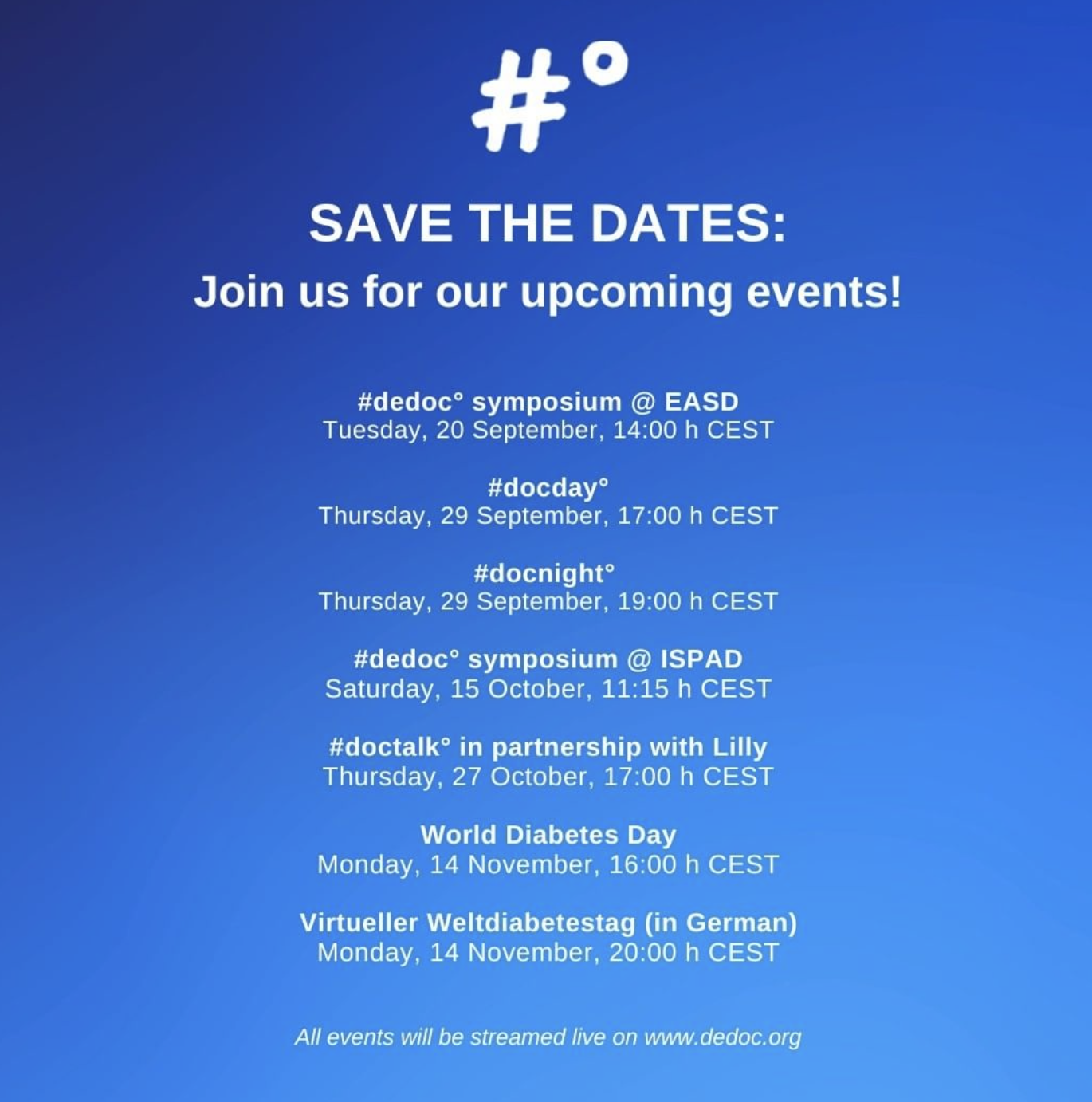
There is a lot going on in the world of #dedoc°! Here’s just a taste of upcoming events that everyone can get involved in. Plus, the #dedoc° voices program will be kicking off again later this month at EASD with a cohort of new voices and alumni on the ground in Stockholm as well as following along virtually.
I’m so excited to be part of the #dedoc° symposium at EASD! Delivering a community led and focused symposium as part of the scientific program at a professional is a Big.Deal. We’re continuing to live and breathe #NothingAboutUsWithoutUs in the most impressive ways!
Disclosures
As always, I am thrilled to share things that I’ve found interesting, but disclosures are important. I’ve not been asked to share anything you see here, but figure if I find something interesting (or feel like doing same shameless self-promotion) you might too. I also figure that being transparent is important as is reminding you to consider my bias when sharing things.
- I am a paid contributor to diaTribe
- I am the Head of Communities & International Affairs at Diabetes Australia
- I am the Global Head of Advocacy at #dedoc°
This year’s eye screening appointment had aspects that were comfortingly familiar, and anxiously new. And I’ve come home with a very different feeling to the way I usual feel.
I’ve been going to the same private eye clinic for twenty years. I usually see the same orthoptist and always see the same ophthalmologist. This year, I saw a (new for me) orthoptist who opened with the clanger ‘Do you check your glucose levels?’ (I wasn’t aware it was a choice…) and followed up with ‘What is your glucose level usually?’. (This is not a question.) The rest of that appointment was comfortingly familiar – no changes in what I can read on the eye chart, excellent eye pressure and no vision changes. She put in drops and sent me to the next waiting room to wait to see my dreamy ophthalmologist.
And he is dreamy. I adore him. I mean, I hate seeing him and I tell him that each year. Then he laughs and thinks I’m neurotic, because I am neurotic, and that is how pretty much each and every year’s appointment starts. Comfortingly familiar.
This year was no different. He always asks how I am, how my family is, how work is going, what’s going on with my diabetes and other friendly chatter to settle me in and get an idea of what is going on in my world. He asked if I’d had much of a chance to travel and how I was dealing with COVID times, or, as I now think of it, normal life. Comfortingly familiar.
As was the way he shone the Very.Bright.Light in my eyes, made reassuring ‘hmmm’ noises and told me that there was absolutely no hint of any diabetes-related eye stuff going on in my eyes and that was truly great after twenty-four years of diabetes. I always do appreciate the way that he is such a great cheerleader for diabetes longevity and acknowledges what a slog it can be. Comfortingly familiar.
‘So,’ he said. ‘It’s all great news again from a diabetes perspective. However…’
Huh? ‘However…’? We don’t do ‘However…’. We do me standing up and promising to return the following year. Not ‘However…’ Yet, here we were. The anxiously new part.
‘…However, I can see really early age-related macular degeneration in one eye. Really early. There’s nothing to worry about at all.’ He looked at me. ‘You don’t need to worry.’
And then I laughed, and he laughed because the idea of me not worrying is hilarious, and I had already jumped beyond worried and landed somewhere near stressed, anxious and ready to burst into tears. (I at least managed to wait until I got home for the last part.)
I had questions and he patiently answered all of them. We spoke about family history. Apparently if a parent has AMD, their kids have a 50% chance of developing it. (Looking at this as a positive because it means that my sister might be right. Happy to take this one for the team, Toots!) He then spoke to me about things to do at this stage that help. The first is to not smoke. I’ve never been a smoker, so that’s an easy one. Then he asked, ‘Do you eat well?’ My heart sank. Another food-related thing? Turns out that eating leafy greens is protective which is fine because I love vegetables and it’s mandated in the hipster suburb where we live to eat three serves of kale a day. And finally, keeping up with regular appointments. Annual visits are still final.
‘So, Renza, It’s not diabetes. This is because of your age. After all, you’re 50 next year.’
‘Settle down!’ I said and suggested he dial things back a little. ‘I’m not even 49 yet.’ He looked at my chart again and needlessly pointed out that regardless of my current age, I am still turning 50 next year. (I’ll just point out that this was also comfortingly familiar because he frequently mentions that I am getting older.)
I sighed. And got into the car with my dad and told him my news, opening with the comfortingly familiar and then moving onto the anxiously new. We went for a coffee, and I tried to focus on the positives. And then I got home and had a little cry.
Because here’s the thing. I expect things to break. I’ve been told that things are going to break thanks to diabetes since the day I was diagnosed. And so, whenever something doesn’t break, it comes as a huge surprise. I’ve been holding my breath all week in anticipation of today’s appointment. I know that this is just a tiny hairline crack at this point, but it still has triggered a lot of stuff in my head right now. Sure, this may not be a catastrophe and sure, there is enough rational thinking to know that it’s early, I’m linked in with great healthcare professionals, and we know what to look for. But still. It’s another thing. Another worry. Another concern. Another part of my body not working completely properly, or at least indicating that it’s not going to work properly in the future.
And so, I’m home now with a very different feeling to the way I usually feel after my annual eye screening. I’m already turning to the community to see who I can find there who might have some advice and understanding. I’m involved in a European ad board which relates to AMD and DME, so know that there is a whole network there who I can talk to. And I’m writing here to see if anyone out there has an experience to share. Because that’s what I do. Turn to community. I have the HCP stuff sorted. Now I’m looking for my people in the real world…
More about eyes
How having a brilliantly kind ophthalmologist means I never miss an eye screening.
A chance encounter with an optometrist friend.
The comfort of knowing how eye screening appointments go.
The time I had a needle in my eye.
Always a worrier when it comes to eye screening.
All about my first cataract surgery. And after my second surgery.
What my dad has to do with my annual eye screening.
Psst…forgotten something?
If you’re in the northern hemisphere right now, you’re possibly all caught up in the sunshine, splashing around at the beach or spending time off work just taking time out. If you’re from the southern hemisphere, you’re either smart and have taken a holiday to Europe because EVERYONE.IS.IN.EUROPE.RIGHT.NOW, or under fifteen quilts in front of a roaring fire, counting down the days until it gets warmer. Sadly, I’m in the latter group.
I get it. Things slip by either way.
But! You only have a few days left to make sure you don’t miss out on applying for a #dedoc° voices scholarship. Wherever you are, a scholarship means you have something to look forward to in a couple of months’ time and the absolute thrill of either virtually or in-person attending a global diabetes conference or two. That’s right – TWO! EASD (European diabetes conference) and ISPAD (paediatric diabetes conference) are the next international conferences on the diabetes conference calendar. Both will be hybrid, with the in-person locations being Stockholm and Abu Dhabi respectively.
We’re well over two years into the #dedoc° voices program now, and the awesome thing about it is that it’s not just about the few days of the conference where you get to learn from incredible researchers and clinicians, while waving the lived experience flag and being surrounded by others with diabetes. I mean, that is all pretty great. But being a #dedoc° voice goes way beyond that! Once you receive a scholarship you are part of a network of remarkable diabetes advocates from across the world, and this network is the most supportive, encouraging, brilliant group of people, always ready to help. Every single week, I see people reaching out for support and advice and the responses are swift and many. I’ve not seen a single example of anything other than support, and have watched advocates truly flourish as they have worked with others, developed mentoring relationships and been supported to do brilliant things.
Unless you’re part of the program, you wouldn’t know this. And here’s the deal: anyone can become part of it. The #dedoc° voices program is open to people from across the world and everyone is in with an equal chance. You just need to spend some time completing an application. It is a competitive process, and places are limited. The people who get accepted are the ones who have taken some time with their application and really been able to demonstrate just how they are going to #PayItForward to their diabetes community if successful. No one is a shoe in; having a high follower count on socials means nothing if your application is sub-par. We take people who are new to the diabetes advocacy space, and are looking for a hand carving out their space, as well as seasoned advocates who are keen to work with others and become part of a global network, outside their own country.
So, get on it! Click on the image below, fill in the form and join us! You get to work on your advocacy while giving back to the community, all while wearing the #NothingAboutUsWithoutUs badge. How amazing is that?!

More on #diabetogenic about the #dedoc° voices program:
#dedoc° voices helping people with diabetes get into professional conferences
How #dedoc° voices supported people with diabetes in Ukraine
More on why to apply to join the #dedoc voices program
Disclosure
I have been an advisor for a number of years, and am now working with them as Head of Advocacy.
How are two separate Twitter incidents in the DOC related when one was started after someone without diabetes made some pretty horrid comments about diabetes and the other was a conversation diminishing the whole language matters movement to something far less significant and important than what it is truly about.
Let’s examine the two.
EXHIBIT A
Sometime over the weekend, someone I’d never heard of came out with some pretty stigmatising commentary about diabetes. This person doesn’t have diabetes. But hey – joking about diabetes is perfectly okay because, why not? Everyone else does it. Jump on the bandwagon!
She deleted her original tweet after several folks with diabetes pointed out just how and why she was wrong. And also, how stigmatising she was being.
In lands where all is good and happy, that would have been the end of it. We would have moved on, lived happily for a bit, until the next person decided to use diabetes as a punchline.
But no. She decided to double down and keep going. It was all bizarre and so out of touch with what the reality of diabetes is, but perhaps the most bizarre and startling of all was her declaration that there is no stigma associated with diabetes. Well, knock me down with a feather because I’m pretty sure that not only is diabetes stigma very real, but I’ve been working on different projects addressing this stigma for well over a decade now.
EXHIBIT B
At the same time this mess was happening, there was a discussion by others in the DOC about being called a person with diabetes versus being called (a) diabetic. I’m pretty sure it was a new conversation, but it may have been the same one that played out last month. And the month before that, and a dozen times last year. Honestly, to me, this conversation is the very definition of bashing my head against a brick wall. If you’ve played in the DOC Twitter playground you would have seen it. It goes something like this:
‘I want to be called diabetic.’
‘I don’t care what others say, I like person with diabetes.’
‘Why should I be told what to call myself?’
‘I am more than my diabetes which is why I like PWD.’
‘My diabetes does define me in some ways, which is why I like diabetic.’
(And a million variations on this. Rinse. Repeat.)
I have no idea why it keeps happening, because I’m pretty sure that at no time has anyone said that people with diabetes should align their language with guidance or position statements to do with language. I’m also pretty sure that at no point in those statements does it say that people with diabetes/diabetics (whatever floats your boat) must refer to themselves in a certain way. And it’s always been pretty clear that those adjacent to (but not living with) diabetes should be guided by what those with lived experience want.
AND it’s also been pointed out countless times that it’s not about single words. It’s about changing attitudes and behaviours and addressing the misconceptions about diabetes. And yet, for some, it keeps coming back to this binary discussion that fails to advance any thinking, or change anything at all.
Is there a great discussion to be had about person-first versus identity-first language? Absolutely. And looking at long-term discussions in the community there are some truly fascinating insights about how language has changed and how people have changed with it. But does it serve anyone to continue with the untrue rhetoric that people interested in language are forcing people with diabetes / diabetics (your choice!) to think one way? Nope. Not at all. It’s untrue, and completely disingenuous.
These two seemingly separate situations are connected. And that is completely apparent to people who are able to step back and step above the PWD / diabetic thing. People who know nothing about diabetes keep punching down because they think diabetes is fair game. And people with diabetes are the ones who are left to deal with these stigmatising and nasty attitudes.
I woke this morning to this tweet from Partha Kar.

I was grateful for the tag here because the frustration Partha has expressed mirrors the frustration I am feeling on the other side of the world.
I don’t know why this keeps coming up, I really don’t. I honestly do think that most people understand that we talk language in relation to stigma and to discrimination and to access. That was how it was addressed at the WHO diabetes focus groups earlier this year. That is how it was addressed at the #dedoc° symposium at ATTD. It is how the discussion flowed in last year’s Global Diabetes Language Matters Summit. Most understand that these issues are far more pressing.
If people want to keep banging a drum about the diabetes versus diabetic thing, that’s fine. But I reckon that many of us have moved well beyond that now as we seek to address ways to change the way people think and behave about diabetes so that we stop being the butt of jokes or collateral of people punching down on Twitter.
One of the real pleasures of working in the health sector has been learning from people outside the diabetes space. So much of my work is contained to the goings on in the World of Diabetes, but it is always fascinating to hear from people who are dealing with different health conditions.
And so, it is no wonder that I was enthralled during an event I was involved in for APPA a few months ago. One of the things I really appreciated about this webinar was APPA bringing in discussions about person-centred care, person-centricity, and the role of lived experience in medical affairs. It’s a tricky area thanks to obstructive codes that often act as a barrier to real engagement and involvement from those of us with lived experience.
I was thrilled to hear from Richard Vines, Founder and CEO of Rare Cancers Australia, especially his thoughts about the role of people with lived experience of rare cancers in his organisation’s advocacy efforts.
Richard spoke about how active and involved families of people with lived experience of rare cancers are in their advocacy efforts. He told a lovely tale of the myriad notes and small gifts in the (now previous) health minister’s office that had been sent to him from families who he’d met through the organisation’s lobbying and advocacy campaigns, thanking him for increasing funding and helping raise awareness of rare cancers and the challenges faced by people diagnosed with one. Richard shared that involving and including those people in all their activities was key to his charity’s success. It didn’t surprise me one bit that his attitudes closely mirrored the ‘Nothing About Us Without Us’ calls that form part of my daily advocacy.
The APPA event was back in March, and it coincided with the handing down of the Australian Federal Budget. I, along with many other people with diabetes, were devastated to learn that there was no funding allocated to broadening access to the NDSS CGM initiative. That, of course, came a month later as an election promise, but at the time, we didn’t know that.
Before that bipartisan election promise, many people with diabetes had dual frustrations of being blocked from affordable access while at the same time knowing that there have been Living Evidence Guidelines for type 1 diabetes technology for over a year now that clearly state that CGM is recommended for all adults with T1D (over BGL monitoring).
It makes no sense that professional and lived experience bodies have taken the latest and best evidence to provide guidelines for the best use of technology in the management of type 1 diabetes only to have limited funding to make it a reality. But I wondered just how many people the health minister had heard from – really heard from – to understand that. I wonder if he has letters of thanks from people with diabetes in his office.
The message that came home loud and strong from Richard Vines was that advocacy success is more likely when there is strong representation from those with lived experience to round out the story provided by evidence and guidelines. Hearts and minds. Minds and hearts.
We need more ‘hearts stuff’ from those that generally use evidence to support their case, and more ‘mind stuff’ from those who generally use lived experience to support theirs. And the lived experience must come – it can only come – from those with real skin in the game, not those adjunct to it, or claiming to speak for it.
Disclosure
I was invited to be a panellist for this Australian Pharmaceutical Professionals Association webinar and volunteered my time.
Diabetes and menopause – there are two things that have an image problem! Diabetes’ image problem has been discussed a bazillion times on here and is well documented by others.
And menopause? Menopause is middle-aged women; women who are past their prime and ready to settle down with a pair of slippers and a good book. Women who are a hot mess rather than just hot. Angry old women who are, at best, easily ignored, at worst, are given labels such as the incredibly sexist and derogatory ‘Karen’ thrown at us, especially if we dare demand attention for issues that are important to us. Oh, and we are invisible, apparently.
Well, fuck that. I am none of those things. I am as loud and out there and determined as I have always been. Sure, I like the idea of settling in for the night with a good book and a cup of tea, but I’ve been like that since I was in my twenties. And the anger isn’t new. Being radicalised as a kid does that to you, and I fairly, squarely, and gratefully credit my mother for it.
Turns out that my attention now is being turned to an issue that is one of too little research, too little attention, and too little available information that is relevant, evidence-based and engaging. And that is diabetes and menopause, and perimenopause.
Yes, I’ve written before about before. Missed it? Well, here you go: This time; this time and this time.
If you jump on Twitter now and search the words ‘diabetes’ and ‘menopause’ you’ll find a number of discussions which have been started by people with diabetes who are desperately looking for information to do with the intersection of these two topics. As well as information, people are asking to be pointed to examples of others who have been through it and are willing to share their stories. At the recent #docday° event, the inimitable Dawn Adams from IRDOC gave a rousing talk about why we need to focus more on this issue. (Follow Dawn on Twitter here.)
Here’s the thing: I still get diabetes and pregnancy reminders from my HCPs despite being 48 years old and very clear that having a baby right now (or ever again) is not on my to-do list. Been there, done that, bought the t-shirt and have an almost fully formed adult to show for it!
And yet despite that, I still get reminders about how important it is to plan for a pregnancy, take birth control to prevent it, and make sure that I take folate. Cool. That’s really important information. For women planning to get pregnant (and the birth control bit is important for women looking to avoid it).
But more relevant; more targeted; more person-centred for me is information about perimenopause and menopause.
Just over twenty years ago, when I was looking for information about diabetes and pregnancy, there wasn’t a heap of it. There was, however, a lot of research about it. What we really needed were resources for people with diabetes who wanted information that didn’t look as though it had been written and illustrated in the 1980s. We wanted the evidence-based materials that didn’t scare us. And so, working with other women with diabetes who were the same age as me, and looking for the same sort of information, we made it happen. The diary I published online when I was pregnant added to other stories that were already there. It was hugely reassuring to know that I could find others who were sharing stories that either mirrored my own or suggested the path that mine might follow.
These days, it’s super easy to find stories about pregnancy and diabetes. You don’t need to search too hard to find and follow diabetes pregnancies on Instagram, from pregnancy announcements through to delivery announcements and every twinge, craving and diabetes concern in between.
Less so menopause. Look, I get it. What’s the cute, good news story here? With pregnancy stories, there is a baby at the end – a gorgeous, cooing baby! There is nothing like that with menopause. Despite that, I think there are stories to tell and share. And a community to provide support and lived experience advice.
Right now, there is a chorus of people in the diabetes community who are calling out for this information and talking about the topic. I’m willing to bet that a lot of us were the ones who, twenty years ago, were calling out for decent diabetes and pregnancy info.
I’m not a clinician and I’m not a researcher. I don’t write grants for studies about menopause and diabetes that suddenly put this topic on the research agenda and start to help grow an evidence base. But what I can do is generate discussion and create a space for people to share their stories, or ask for information in the hope that others will answer the call.
The ‘The Diabetes Menopause Project’ isn’t really a thing. It’s a community cry to generate that discussion and some lived experience content. There are some great pieces already out there and I can’t tell you how many times I’ve pointed people to those blog posts and articles. But there needs to be more, and they need to be easier to find.
And so, to start with, here is what I do know is out there. If I’ve missed something, please let me know and I’ll add to it. At least then there is an easy one stop place to find the limited information that is out there. Get in touch if you have something to share.
The Big M – More Taboo Subjects, from Anne Cooper.
Type 1 and the Big-M – a five-part series from Sarah Gatward about her personal experiences of type 1 diabetes and menopause from Sarah Gatward
Managing Menopause and Type 1 Diabetes – also from Sarah Garward, published by JDRF-UK
Menopause + Type 1 Diabetes – Ginger Viera’s writing for Beyond T1
I hosted a Facebook live with endocrinologist, Dr Sarah Price where, amongst other issues, we discussed diabetes and menopause
Research!! This journal article looks at the age menopause occurs in people with type 1 diabetes
I don’t know what I was expecting, but I was thinking that diabetes conferences in the time of COVID would be different to pre-COVID times. But really, apart from some people wearing masks, less kissing the cheeks of strangers and sharing vaccination status (‘How many times have you been boosted?’), there wasn’t all that much the differed from the last face-to-face conference back in February 2020.
I realised that on day 2 as I walked through the barely light streets of Barcelona from my hotel to the conference centre that the idea and demands of ‘conferencing hard’ hadn’t changed. The 6.30am breakfast was still alive and well, scheduled so that there was time for another morning session before the actual sessions started. It makes for a very long morning which is what I said walking out of my fourth meeting for the day and seeing it was still only 10.30am.
Also the same is the way conference session timetablers still manage to clump all the sessions I want to go to in the same time block! I barely made it to any sessions anyway, (project and collaboration meetings made it difficult), but when I did have a spare half hour there were always several concurrent sessions I wanted to be in.
And in the same way, there is a magical equation applied to room allocation that results in the most popular sessions being given the smallest rooms, so that people are crowded in and then overflowing – something that has always been a problem but seems even more of an issue in COVID times.
The Exhibition Hall remained a playroom for HCPs with ever brighter and flashier booths all vying for attention. In what is starting to resemble a Las Vegas casino room, blinking lights, interactive boards, and promising giveaways keep attendees away from sessions and focused on shiny work of overpaid marketing and PR firms. They earn their coin – There were queues outside the Exhibition Hall each morning, and the booths were jam packed throughout each day.
I had one of the most confusing and weird experiences ever in this Exhibition Hall at the Abbott stand. I’d been given a heads up that they were giving away dummy Libre 3 sensors on the stand, so I wandered over to see what the buzz was all about. All around the massive booth that had prime position right at the entrance of the hall were giant interactive screens. Attendees were invited to work their way through a six-question survey to test their knowledge on Freestyle Libre 3.
After I got my score, I walked up to one of the Abbott staff and we had this encounter:
Me: ‘Hi, I’ve just done the survey and I was wondering if I could get a dummy sensor, please.’
Abbott staff: ‘I’m sorry?’
Me: ‘Oh, um… a demo sensor?’
Abbott staff: ‘We don’t give away demonstration sensors. Health professionals can register to have one sent to them.’ (She was eyeing the N/P label on my badge.)
Me: ‘Okay, well we can talk about that another time, but for now, what is the sensor that is being offered to people finishing the survey thing? A dummy sensor?’
Abbott staff: ‘Oh no. we don’t have dummy sensors. We have … (pause for effect) … glamour sensors.’ She wandered off to get me one while I stood there stunned at what I had just heard.
Look, I know I spend a lot of time working in the space of diabetes and language, but this one had be absolutely floored. Glamour sensor? I turned to my friend Andrea who had watched this entire encounter and we both mouthed in astonishment ‘Glamour sensor?’
The Abbott rep returned and handed me a box that looked suspiciously like it contained an engagement ring, which I thought was lovely if not a little forward considering we’d only said half a dozen sentences to each other.
I thanked her and opened it and there inside was this:

I sighed. There was my glamour sensor. A fun little token of love from the device company that makes a bloody good product…that is unaffordable to the vast majority of people with diabetes who could benefit from it. I get the excitement though. It is very sexy. It’s tiny and obviously I desperately want it to come to Australia NOW so that we can have access to it. Thank you and please. But is the fanfare and theatre around it at a diabetes conference all that necessary?
Which brings me to another thing that is exactly the same. As I get swept up in the excitement of new technology much like anyone else, I have another focus. And that focus is horribly annoying for whichever rep asks if they can help me when the see me lurking with intent at their booth. ‘Nice kit,’ I say to lull them into a false sense of security, letting them think I am just like any other admiring punter wandering around. And then: ‘When is it coming to Australia?’ The answers are always the same – no matter who I am speaking to and no matter which company they are from. It’s a variation on ‘No idea; maybe I do know, but I can’t tell you; you’re a long way away; there aren’t many of you; stop asking me.’
Also slightly gimmicky, but absolutely for the right reasons, was the demo Omnipod give away at the Insulet stand. Here, anyone could simply head up to the stand and ask for one, and Insulet would make a €5 donation to Spare a Rose for Ukraine. I can’t really complain about this seeming like a stunt when it’s going to a cause very, very close to my heart…!!
One of my favourite things that was a throwback from pre-COVID conferences was seeing groups of people with diabetes – many there as part of #dedoc° voices – wandering around together in packs, comparing notes, and supporting each other. That is something that certainly hasn’t changed, other than for those packs to be more recognisable and more welcome. Definitely a good thing! And something that I hope to see a lot more of in coming meetings.
DISCLOSURE
My flights and accommodation have been covered by #dedoc°, where I have been an advisor for a number of years, and am now working with them as Head of Advocacy.
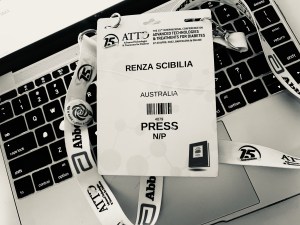
Thanks to ATTD for providing me with a press pass to attend the conference.
Throughout ATTD I got to repeatedly tell an origin story that led us to this year’s #dedoc° symposium. I’ve told the story here before, but I’m going to again for anyone new, or anyone who is after a refresher.
It’s 2015 and EASD in Stockholm. A group of people with diabetes are crowded together in the overheated backroom of a cafe in the centre of the city. Organising and leading this catch up is Bastian Hauck who, just a few years earlier, brought people from the german-based diabetes community together online (in tweet chats) and for in person events. His idea here was that anyone with diabetes, or connected to the conference, from anywhere in the world, could pop in and share what they were up to that was benefitting their corner of the diabetes world. I’ll add that this was a slightly turbulent time in some parts of the DOC in Europe. Local online communities were feeling the effects of some bitter rifts. #docday° wasn’t about that, and it wasn’t about where you were from either. It was about providing a platform for people with diabetes to network and share and give and get support.
And that’s exactly what happened. Honestly, I can’t remember all that much of what was spoken about. I do remember diabetes advocate from Sweden, Josephine, unabashedly stripping down to her underwear to show off the latest AnnaPS designs – a range of clothing created especially to comfortably and conveniently house diabetes devices. It won’t come as a surprise to many people that I spoke about language and communication, and the work Diabetes Australia was doing in this space and how it was the diabetes community that was helping spread the word.
I also remember the cardamom buns speckled with sugar pearls, but this is not relevant to the story, and purely serving as a reminder to find a recipe and make some.
So there we were, far away from the actual conference (because most of the advocates who were there didn’t have registration badges to get in), and very separate from where the HCPs were talking about … well … talking about us.
Twelve months later EASD moved to Munich. This time, Bastian had managed to negotiate with the event organisers for a room at the conference centre. Most of the advocates who were there for other satellite events had secured registrations badges, and could easily access all spaces. Now, instead of needing to schlep across town to meet, we had a dedicated space for a couple of hours. It also means that HCPs could pop into the event in between sessions. And a few did!
This has been the model for #docday° at EASD and, more recently, ATTD as well. The meetups were held at the conference centre and each time the number of HCPs would grow. It worked! Until, of course COVID threw a spanner in all the diabetes conference works. And so, we moved online to virtual gatherings which turned out to be quite amazing as it opened up the floor to a lot of advocates who ordinarily might not be able to access the meetings in Europe.
And that brings us to this year. The first large international diabetes conference was back on – after a couple of reschedules and location changes. And with it would, of course, be the global #dedoc° community, but this time, rather than a satellite or adjacent session, it would be part of the scientific program. There on the website was the first ever #dedoc° symposium. This was (is!) HUGE! It marks a real change in how and where people with diabetes, our stories and our position is considered at what has in the past been the domain of health professionals and researchers.
When you live by the motto ‘Nothing about us without us’ this is a very comfortable place to be. Bastian and the #dedoc° team and supporters had moved the needle, and shown that people with diabetes can be incorporated into these conferences with ease. The program for the session was determined by what have been key discussions in the diabetes community for some time: access, stigma and DIY technologies. And guess what? Those very topics were also mentioned by HCPs in other sessions.
There have been well over a dozen #docday° events now. There has been conversation after conversation after conversation about how to better include people with diabetes in these sorts of events in a meaningful way. There has been community working together to make it happen. And here we are.
For the record, the room was full to overflowing. And the vast majority of the people there were not people with diabetes. Healthcare professionals and researchers made the conscious decision to walk into Hall 118 at 3pm on Wednesday 27 April to hear from the diabetes community; to learn from the diabetes community.
If you missed it, here it is! The other amazing thing about this Symposium was that, unlike all other sessions, it wasn’t only open to people who had registered for ATTD. It was live streamed across #dedoc° socials and is available now for anyone to watch on demand. So, watch now! It was such an honour to be asked to moderate this session and to be able to present the three incredibly speakers from the diabetes community. Right where they – where we – belong.
DISCLOSURE
My flights and accommodation have been covered by #dedoc°, where I have been an advisor for a number of years, and am now working with them as Head of Advocacy.
Thanks to ATTD for providing me with a press pass to attend the conference.
I’ve always thought that being pushed out of my comfort zone is a good thing. There’s something to be said about feeling uncomfortable and being stretched outside the boundaries of familiarity.
And so, with that in mind, I jumped on a plane and flew to Barcelona for ATTD. If you read my last post, you’ll know it was nowhere near as easy and flippant as that last sentence sounds.
A lot of the stresses I had before I left ended up amounting to nothing. There were no endless queues at the airport, or crowds who didn’t understand keeping 1.5 metres apart. Almost everyone was wearing a mask. Security was even more of a breeze than usual (apparently laptops and other devices don’t need to be removed from carry-on luggage anymore), and, requesting a pat down rather than walking through the full body scanner was met with a nod and a smile.
Everyone wore masks boarding the plane and most seemed to leave them on throughout the flight. This isn’t something to treat lightly. The first flight alone was almost 15 hours long! My mask was removed only while drinking and eating, staying on snugly while I slept.
While there were no formal requirements for a supervised COVID test to enter Spain or return to Australia, my daily tests did cause 15 mins of countdown anxiety. One evening, someone messaged me to tell me that she had tested positive. We’d had a breakfast meeting the previous morning. I calmed my initial response (which was to freak out and burst into tears) by remembering that we’d all been masked up apart from the minutes we were eating.
When I arrived in Barcelona, I had been cautioned of convoluted arrival procedures and extra queues to check health and vaccination status. Before leaving, I’d had warnings and reminders from the airline and friends already there to make sure I’d completed my online Spain Travel Pass because the QR code would be needed. Except, it wasn’t. Passport control took under than 90 seconds. And my code wouldn’t scan for the woman checking my pass. ‘Where are you from,’ she asked me. When I said Australia, she laughed and told me just to go get my bag. (Clearly, she wasn’t up to date with our COVID numbers…)
Luckily, the people I spent most of my time with were all on the same page as me when it came to masking. We were not the norm. Most people were not masked up. I realised that when I walked into a hotel restaurant to meet someone a couple of hours after I arrived, and again as I walked into the conference centre on the Wednesday afternoon. As I stood on the stage to welcome everyone to the #dedoc° symposium, I was grateful to be greeted by a sea of masks with fewer than ten people in the packed crowd choosing to not wear one. And a couple of them searched in their bags for one after I and first speaker, Dana Lewis, thanked people for masking up.
I have to say it did surprise me to see so few healthcare professionals wearing masks, and eagerly reaching out to hug or shake hands when we met. I actually was okay with giving people I know a hug, but we always asked first. I adopted a weird kind of hopping around to avoid people I don’t know too well as they approached, instead extending my elbow.
I went into last week with a very clear idea of how I was going to, at all costs, avoid people. I’ve held tightly onto health measures (masking, distance, lots of hand washing, meeting people outdoors) since the pandemic began, and there was no way I was going to be partying like it was Feb 2020 just because I was back in Spain.
But there was a moment that I did throw a little caution to the wind. The evening I arrived, after my first meeting, I got in the elevator to the rooftop of the hotel where I was staying. It was the same place all the #dedoc° voices were, and they were having an informal meet up on the roof. I walked out, and a few of them – the ones I know well – screamed and charged at me. And instead of freezing and freaking out, I teared up and was happy to just be enveloped by them all. I was wearing a mask and, in that moment, that as enough.
Since I have returned home, I’ve been asked dozens of times what it’s like travelling and being at a conference again and how I coped. The answer isn’t straight forward.
Travelling again was terrifying. I didn’t enjoy being in transit at all. I struggled with there being so many people around me. And I was uncomfortable with the unpredictability of the whole situation. But I focused on the bits I could control and did my best to just deal with it.
Being at a face-to-face diabetes conference was in equal measure exhilarating and difficult. Being able to have in real life conversations with people about their advocacy and how they have been going is different to messaging or Zooming – it just is. Bumping into people in conference centre hallways starts conversations that absolutely wouldn’t have happened otherwise. And it’s those conversations that often lead to collaborations and new projects. I predicted in my last post that the muscle memory of a real-life conference would return without much effort, and I was right.
The equation for me is this: the good outweighed the bad. The moments of joy and delight dwarfed the moments of terror. The feeling of being part of something – that truly global diabetes community of truly incredible diabetes advocates and healthcare professionals and researchers – returned with a fierceness I wasn’t expecting. I felt at home and where I belonged, and the moments of anxiety – sometimes almost paralysing – were overcome by knowing that. And the peer support was immense. I didn’t realise just how much I needed that contact again.
I’m not going to be rushing back to the same conference and travel schedule I had built in 2019 – it’s not sustainable in so many ways. And there is a lot of risk assessment going on. I won’t be at ADA this year, but EASD is on the cards. Carefully chosen meetings with clear goals and plans are worthwhile.
The world is definitely a different place. But within those differences is the comfort of knowing that the diabetes world – the diabetes advocacy community – has absolutely not stopped doing what it does best. As I stood in corridors speaking with people and plotting and planning, or took the stage to chair a session, or caught up with people after hours on rooftops, I realised that it’s going to take a lot more than a global pandemic to stop the passion and dedication and determination of those who have one thing in mind and one thing in common: improving lives of people with diabetes.
DISCLOSURE
My flights and accommodation have been covered by #dedoc°, where I have been an advisor for a number of years, and am no working with them as Head of Advocacy.
Thanks to ATTD for providing me with a press pass to attend the conference.
I frequently say that these days, I do hardly anything when it comes to diabetes. I credit the technology behind LOOP for making the last four-and-a-half years of diabetes a lot less labour intensive and emotionally draining than the nineteen-and-a-half years that came before.
It’s true. Justin Walker’s assessment that his DIYAPS has given him back an hour a day rings true. (He said that in a presentation at Diabetes Mine’s DData back in 2018.)
The risk that comes with speaking about the benefits of amazing newer tech or drugs is that we, unintentionally, start to minimise what we still must do. I think in our eagerness to talk about how much better things are – and they often are markedly better – we lose the thread of the work we still put in. But our personal stories are just that, and we should speak about our experiences and the direct effect tech has in a way that feels authentic and true to us.
And that’s why accuracy in reporting beyond those personal accounts is important. Critical even.
Yesterday, the inimitable Jacq Allen (if you are not following her on Twitter, please start now), tweeted a fabulous thread about the importance of getting terminology right when reporting diabetes tech.
She was referring to a tweet sharing a BBC news article which repeatedly labelled a hybrid-closed loop system as an ‘artificial pancreas’. Jacq eloquently pointed out that the label was incorrect, and that even with this technology, the wearer still is required to put in a significant amount of work. She said: ‘…Calling it an ‘artificial pancreas’ makes it sound like a cure, like a plug and play, it makes diabetes sound easy, and while this makes diabetes less dangerous for me, adopting a term that makes it sound like it can magically emulate a WHOLE ORGAN is disingenuous and minimises the amount of time and effort it still takes to keep yourself well and safe.’
Jacq’s right. And after reading her thread, I started to think about the time and effort I had dedicated to diabetes over the previous week.
This weekend, I spent time dealing with all the different components of Loop. For some reason my Dexcom was being a shit and all of a sudden decided to throw out the ‘signal loss’ alert. After doing all the trouble shooting things, I ended up deleting the app and reinstalling it, which necessitated having to pair the transmitter with the app. This happened twice. I also decided it would be a good time to recharge my Fenix (Dexcom G5 transmitter) and reset it.
I ran out of insulin while at a family lunch, necessitating some pretty nifty calculations about how much IOB was floating around, and what that meant in terms of what I could eat from the table laden with an incredible spread of Italian food.
Saturday night, Aaron surprised me with tickets to the Melbourne Theatre Company and in our usual shambolic fashion, we were running late, which meant a little jog (don’t laugh) from the car park to the theatre. I was in high-heeled boots and a skirt that scraped the ground. The degree of difficulty WITHOUT diabetes was high. As I less-than-daintily plunked myself in my seat, I looked at my CGM trace, trying to decide if the 5.5mmol/l with a straight arrow was perfect or perilous, and did a bit of advanced calculus to work out if the audience would be serenaded by the Dexcom alarm at some point in during the 90-minute performance. I snuck in a couple of fruit pastilles under my mask, and surreptitiously glanced down at my watch every ten minutes or so to see if further action was needed. It was. Because that straight arrow turned into double arrows up towards the end of the play.
I spent two hours out of my day off last week for a HCP appointment, as well as several hours dispersed throughout the week trying to work out if there would be any way at all that I might be able to access a fourth COVID boosted prior to flying to Barcelona at the end of the month.
And that doesn’t include the time spent on daily calibrations required because I’m still using up G5 sensors, the pump lines that need replacing every three days (and checked on other days), reservoirs that need refilling (when I remember…) and batteries that need replacing. Or the time set allocated to daily games of ‘Where is my Orange Link’. And the brain power needed to guess calculate carbs in whatever I am eating. (And you bet there are clever people who no longer need to ‘announce’ carbs on the systems they’re using, but the other tasks still have to happen.) It doesn’t include the time out I had to take for a couple of so-called mild hypos that still necessitated time and effort to manage.
Short of a cure, the holy grail for me in diabetes is each and every incremental step we take that means diabetes intrudes less in my life. I will acknowledge with gratitude and amazement and relief at how much less disturbance and interruption there is today, thanks to LOOP, but it would be misleading for me to say that diabetes doesn’t still interfere and take time.
Plus, I’ve not even started to mention the emotional labour involved in living with diabetes. It is constant, it is more intense some days. There are moments of deep and dark despair that terrify me. It is exhausting, and no amount of tech has eliminated it for me.
The risk we face when there is exaggeration about the functionality and cleverness of diabetes tech is that those not directly affected by diabetes start to think that it’s easy. In the same way that insulin is not a cure, diabetes tech is not a panacea. Setting aside the critical issue about access, availability, and affordability, even those of us who are privileged to be able to use what we need, still probably find a significant burden placed on us by diabetes.
This isn’t new. Back in 2015 when Australia was the launch market for Medtronic’s 640G, it was touted as an artificial pancreas, and I wrote about how troubling it was. I stand by what I wrote then:
‘Whilst this technology is a step in the right direction, it is not an artificial pancreas. It is not the holy grail.
Diabetes still needs attention, still needs research, still needs funding, still needs donations. We are not there yet, and any report that even suggests that is, I believe, detrimental to continued efforts looking to further improve diabetes management.
All of us who are communicating in any way about diabetes have a responsibility to be truthful, honest and, as much as possible, devoid of sensationalism.’
It’s why I frequently plead that anyone who refers to CGM or Flash GM as ‘non-invasive’ stops and stops now. There is nothing non-invasive about a sensor being permanently under my skin and being placed there by a large introducer needle. Tech advances may mean we don’t see those needles anymore, and we may even feel them less, but they are still there!
We still need further advancements. We still need research dollars. We still need politicians to fight for policy reform to ensure access is easy and fast and broad. We still need healthcare professionals to understand the failings of technology, so they don’t think that we are failing when we don’t reach arbitrary targets.
We still need the public to understand how serious diabetes is and that even with the cool tech, we need warm hands to help us through. We still need the media to report accurately. And we still need whoever is writing media releases to be honest in their assessments of just what it is they are writing about.
Keep it real. That’s all I am asking. Because overstating diabetes technology understates the efforts of people with diabetes. And that is never, ever a good thing.




 Diabetogenic