
You are currently browsing the category archive for the ‘Awareness’ category.
As if to prove the point of yesterday’s post, I’ve received dozens of lovely messages from people about how supportive they’ve found others with diabetes, and how building each other up is a cornerstone of the work they are involved in.
And as someone said to me today when I told them how many people had reached out: ‘I’m not surprised …’
Neither am I. That community support is on show everywhere you look right now. And no more so than with community efforts to support our diabetes brothers and sisters affected by the war in Ukraine.

#SpareaRose for Ukraine has now been running for about two and a half weeks. Over $115,000 has been raised in community donations, plus another $80,000 or so in corporate matching. Just a reminder: this is a community initiative. There are four people doing a few things behind the scenes, but really, it’s the community that drives this campaign each and every year – BY the community, FOR the community.
The Dedoc voices community, a group of people with diabetes, has been instrumental in sharing details of #SpareARose for Ukraine once it had been launched. They have also been sharing other extraordinary efforts they’ve been involved in, and here are just some of them.
Meet: Dawn
Dedoc voice from Northern Ireland, and diabetes advocate extraordinaire, Dawn has been working with a group of people in NI, collecting support and supplies from the community to be packaged up and sent on to people with diabetes affected by the war.
We have been given disposable and reusable pens, more than 5000 units of insulin in cartridges and vials, glucometers, test strips, glucagon, hypo treats, pen needles, pump supplies for Medtronic and AccuChek pumps, and lancets galore.
We’ve also had a donation of disposable pens from women with GDM who have had their babies. The support and generosity has been truly phenomenal. Two of us took the items we had to a diabuddy for collection by Ukrainian Doctors. These Doctors have also been given an ambulance to take into Poland and were also guaranteed transport for supplies by RyanAir into Poland more details about the medical team can be found here
If you would like to help, there is a go fund me page which you can access by clicking here.
(I can only imagine the supply of lancets are for a joke?)
Meet: Weronika
You may know Weronika better as Blue Sugar Cube on Insta and Twitter and seen her gorgeous artwork. She is a dedoc voice and an advocate from Poland, living in Belgium.
Weronika shared with me what she has been doing in what can only be described as a community AND family effort!
Together with Polish Diabetes Association, I organized a collection of diabetes supplies in Belgium for Ukrainian PWD.
Of course, the diabetes community didn’t disappoint, and many people instantly wanted to help. It took only 5 days to fill two huge boxes of glucose meters, test strips, insulin pens and needles, insulin pump equipment, sensors, and hypo snacks!
My dear husband helped me sort and pack everything. We already sent the two boxes to Poland via a driver who was so noble to take them to Poland for free.
All diabetes articles will be delivered to the Headquarters of the Polish Diabetes Association in Warsaw (with the help of my in-laws) from where they will be distributed as needed.
Packages are still arriving, and we are organizing the next shipment soon…
Meet: Caro
Caro has been a dedoc voice at a number of conferences now, and is a terrific advocate for technology use for people with diabetes. Here is what she has been doing in Germany.
At our looper meet up with PWD from around the city of Cologne, we collected supplies for people in Ukraine. As we have a Russian member who has Ukrainian friends, the motivation to support was even bigger. These personal contacts and their reports about the situation in Ukraine make us sad and stunned.
Another member of our group had connections to an organisation from Düsseldorf – they get trucks to Ukraine (even equipped with a fridge and able to cool insulin and other medical equipment).
Third way we support the Ukraine was to send insulin to the country via the organisation ‘Insulin zum Leben’ (the German Insulin for Life affiliate) which we are supporting already for many years.
At this meet up we collected all stuff we knew that could be needed, sorted it, labelled and packed it. Insulin, test trips, cannulas, USB charger, Hypo snacks, dressing materials, painkiller etc. We all know, supporting via the official organisations is the best way to support – and we do that.
Meet: Ineska
As well as being involved in dedoc voices, Ineska from Croatia is an IDF YLD and part of the Type1EU community. Together with the Zagreb Diabetes Association she has alerted Croatian Red Cross, Ukraine embassy in Zagreb and pharmacies across Croatia to reach out of people from Ukraine who had come into Croatia, so they can be provided with help.
Ineska shared some examples of the help that’s been requested:
Firstly, we got a call from Croatian policeman who was going to pick some kids and mothers on a border of Ukraine. He told us that he got a request from the Red for diabetes equipment of any kind, but specially insulin. We collected supplies within 3 hours with our diabuddies!
Then yesterday we got a call from Croatian Red Cross that they have a girl with diabetes, and she needs pump materials.
Also, we got a call from pharmacy that someone from Ukraine is asking to buy diabetes equipment, also for pump, but they can’t give it to them, because they need to have a prescription.
So, at the end we got so many calls, and this is only in ‘small’ country of Croatia. We are so glad, that with this one step we could help so much.
There are others in the dedoc voices chat that are sharing their stories of community efforts they are involved in. Leon from Australia is providing frequent updates from Medicines Sans Frontieres and sharing relevant links to different aid groups. Others are asking for contacts in different countries to pass on urgent messages. As always, the group is coming together to support each other with the aim of helping others with diabetes who are facing impossible challenges right now.
In yesterday’s post, I wrote about the community supports and looks out for each other. Spare a Rose is a great example of that. For ten years, people from all corners of the diabetes community have made it their own. It’s not about supporting the volunteers behind the scenes. It’s about doing a huge thing and supporting others with diabetes. Together. Because that’s what a community does.
You can still apply for to join the #dedoc° voices program at the upcoming ATTD conference. But be quick as applications close on 20 March. Click on the image below to be taken to the application form.

Disclaimer
I am an advisor to the #dedoc° voices program. I do not receive any payment for this role.
Sometimes it takes me a couple of days after a big diabetes meeting or event to work out my main takeaways. I think about it and throw things around, reliving certain aspects, considering what was discussed, carefully thinking about all possible interpretations to make sure that I am clear about what people were saying
I didn’t need time after last week’s World Health Organisation Focus Group on Advancing the Lived Experience of People Living with Diabetes because the takeaways were there straight away, loud and clear.
There were three things for me:
- The acknowledgement about the importance of language and communication. I wrote about that the other day.
- Barriers to access include far more than affordability. Affordability is absolutely a cornerstone of being able to get the best care, take the right meds and use the right technology, but there are a lot of other obstacles and blocks that impact on outcomes. More on this another time.
- But, for me, THE biggest take away was the support that was overflowing from most people in attendance, and they way they were looking out for each other, looking to each other, and looking for ways to remain connected to support the astonishing work being done in the community – from grassroots initiatives, right through to involvement in political campaigns at the highest organisation level.
I have been so lucky to be the recipient of that sort of support from other people with diabetes over the years. Whether it’s invitations to be involved in their projects, or having an EOI flyer flicked my way, or being recommended for something, the love and generosity of others with diabetes has certainly opened up a lot of advocacy opportunities. I have tried to pay it back, and, (to use a #dedoc° voices motto), #PayItForward as well. A benefit of working for a diabetes organisation has meant that I have been able to co-design and develop programs to involve others. Initiatives like the #DAPeopleVoice and countless speaking occasions, and nominating people for initiatives such as the IDF YLD have opened the door for others with diabetes to step through and find a platform for their own advocacy.
One of the things that I learnt early on is that there is a lot of stuff to go around. If people want to get involved, there are always ways in. Chelcie Rice’s ‘If they don’t have a chair for you, bring your own’ words ring in my ears a lot when I think about making sure PWD have a seat at the table, and I’ve extended that to ‘And make sure you bring a chair for someone else, or give yours up for them’. Increasingly, I’ve done more of the latter.
Also early on I learnt to ignore the people who did nothing more than complain about who gets invited where, instead understanding my own value and reason for being involved, while also making sure to find a way to bring along those who genuinely were interested in being included and were willing to work to make it happen. (The incredible responses to this tweet show how people got a break in diabetes advocacy and what it’s taken to keep going.)
Supporting others is as easy as sharing someone’s blog or social media posts, linking to them here in my own writing or to their Twitter handle when I mention them, celebrating their work to others and applauding their wins.
Attitudes of support were demonstrated in spades last week. I had direct messages from dozens of attendees, some reaching out for the first time, that were just so damn encouraging and kind.
At the same time, I was frantically messaging others to ask about their work and if there was anything I could do to promote it. I sent the #dedoc° voices application link to a number of people who were at their first advocacy meet, and hoped to do more.
One of the nicest messages I received was from someone I’ve known for years on Twitter, but never actually been at the same event or involved in the same project. We exchanged some lovely messages, acknowledging how terrific it was to finally find ourselves in the same Zoom room, and a hope that it would continue.
The overwhelming openness, kindness and consideration of others was disarming. There wasn’t a sense of competition or resentment for anyone doing other things. There was appreciation and respect of others’ efforts. And that led to meetings being set up, collaborations taking shape, and a list of exciting new things to check out and share.
Look, if this seems all a little utopian, maybe it is, and maybe I sound annoyingly Pollyanna-ish. I’m sure that there were some folks there who walked away with a very different vibe. And that’s fine. Not everything floats everyone’s boat. Perhaps not everyone connected with others the same way I did. Perhaps they weren’t as comfortable reaching out to others to offer their support, or maybe they didn’t see or hear anything they thought worth supporting. As always, diabetes experiences – whether in a clinic appointment or an advocacy event – will be different for different people.
For me, I started from a place of wanting to be there and wanting to connect with others. When I think about it, there is an element of selfishness in my advocacy work, as it’s allowed me to always find a way to connect with others with diabetes, to learn from them, to work together, to jointly elevate our place in the diabetes healthcare space. It’s served me well. And it’s given me the change to receive and give support to others, too. It’s a good place to start. And it’s a good thing to keep doing.

DISCLOSURE
I was invited by the WHO Global Diabetes Compact team to be part of the facilitators at the Focus Group on Advancing the Lived Experience of People Living with Diabetes. I happily volunteered my time.
Advocacy is a slow burn. I say those words every day. Usually multiple times. I say it to people with diabetes who are interested in getting into advocacy, not to scare them off, but so they understand that things take time. I say it to established advocates. I say it to people I work with. I say it to people in the diabetes world who want to know why it takes so long for change to happen. I say it to healthcare professionals I’m working with to change policy. I mutter it to myself as a mantra.
Slow. Burn.
But then, there are moments where there is an ignition, and you realise that the slow burn is moving from being nothing more than smouldering embers into something more. And when that happens I can’t wipe the smile of my face and I start jumping up and down. Which is what I was doing in my study at home at 2am, desperately trying to make as little noise as possible so as not to wake my husband and daughter who were sounds asleep in other rooms off the corridor.
The World Health Organisation conducted the first of its two focus group sessions for people with diabetes yesterday (or rather for me, early this morning), and I was honoured to be part of the facilitating team for this event. In the planning for the questions that would be discussed in the small break out groups, the WHO team had gone to great pains to workshop the language in the questions so they were presented in a way that would encourage the most discussion possible. That was the start of those embers being stoked.
I think that the attention to how we framed the discussion points meant that people thought about their responses differently.
The topics last night were about barriers to access of essential diabetes drugs, healthcare and technology. Of course, issues including affordability, health professional workforce, ongoing training and education were highlighted. These are often the most significant barrier that needs to be addressed.
But the discussion went beyond this, and time and time again, people identified stigma and misconceptions about diabetes as a significant barrier to people not being able to get the best for their diabetes. It certainly wasn’t me who mentioned language (at least not first), but communication and language were highlighted as points contributing to that stigma.
This recurring theme came from people from across the globe. It was mentioned as a reason for social exclusion as well as workplace discrimination. There was acknowledgement that perceptions of diabetes as being all about personal responsibility has affected how policy makers as well as community responds to diabetes – how serious they see the condition.
In the discussion about diabetes-related complications, the overall language had been changed from ‘prevention’ to ‘risk reduction’ and this was recognised in many of the discussions as a far better way to frame conversations and education about complications. This isn’t new – it was a recurring theme when a focus in the DOC was the hashtag #TalkAboutComplications. I wrote and co-wrote several articles about it, including this piece I co-authored with the Grumpy Pumper for BMJ.
The direction the discussions took were a revelation. No. It was a revolution!
So often at other events and in online debates when language and communication has been raised, conversation has been stalled by people pushing agendas about wanting to be called ‘diabetic’, as if this is the first and only issue that needs to be resolved. That didn’t even come up last night because the people who were highlighting the implications of language understood that when you look at the issues strategically and at a higher level, those details are not what matters.
What matters is looking at Communication with a capital C and understanding its influence. It elevated the discussion so far above the ‘it’s political correctness and nothing more’ that it would have been ridiculous to drag the discussion back to that level.
For years, there has been push back regarding communication because people have not stood back and looked at impact. That has changed.
When I wrote this four years ago highlighting that diabetes’ image problem diabetes – all those misconceptions and wrong ideas about the condition – has led to fewer research dollars, less understanding and compassion from the community, more blame and shame levelled at individuals … it was to emphasise that the repercussions have been significant.
Thankfully as more people started stepping back and considering big picture – health systems, policy, community education – I could see that there were shifts as some people stopped talking about political correctness and started asking what needed to be done to really move the needle. It seems that’s where the very, vast majority of people were during the WHO focus group
This diabetes #LanguageMatters movement stands on the shoulders not of the people who have elevated the issue in the last ten years (although those contributions have been massive!) or the position papers and guidelines that have been published (although those have certainly aided the discussion in research and HCP spaces), but rather, the people in the diabetes community who, for years, knew that language and communication was a driving factor in our care. People like those in the (Zoom) room yesterday.

Looking for more on #LanguageMatters
Click here for a collection of posts on Diabetogenic.
The Diabetes Australia Language Position Statement (Disclosure: I work at Diabetes Australia and am a co-author on this statement.)
The Diabetes Language Matters website which brings together much of the work that has been done globally on this issue. (Shout out to diabetes advocate Jazz Sethi for her work on this.)
DISCLOSURE
I was invited by the WHO Global Diabetes Compact team to be part of the facilitators at the Focus Group on Advancing the Lived Experience of People Living with Diabetes. I am happily volunteering my time.
It’s International Women’s Day and I want to it yell from the rooftops and celebrate the incredible women diabetes advocates who continue to lead and chart paths that are pioneering and innovative. But in equal measure, I want to crawl into a cave and return out of it once the performative platitudes are over.
And yet, I can’t go without acknowledging it, because there is literally one day a year when women are centred and even then, we must defend our right to a day that highlights the centuries of systematic inequality that entrenched misogyny has afforded us, and answer the inevitable question: ‘WhY iSn’T thErE an InTerNaTiOnaL Men’S DaY?’ (There is. It’s in November. Put on your own morning tea.)
We’re seeing more and more women talk about how they feel targeted and unsafe in all spaces – on- and off- line. It’s not because this is suddenly ‘a thing’. Rather it’s becoming more acceptable to talk about it and to call it out.
Which is what I do.
Last year, I wrote about an event I’d facilitated women and diabetes. When I linked to the post on twitter, I was accosted for my take which dared to suggest that misogyny contributes to so many women’s health issues being under researched and rarely discussed. And then I was told off for not crediting the men who had discovered insulin.
Getting #NotAllMen’d and attempting to centre men on a post about the prejudice women experience in healthcare did drive home my point, but really, it was completely unnecessary. And downright exhausting too.
Also last year, in preparation for a presentation about diabetes and menopause, I asked the DOC if they routinely had discussions with healthcare professionals about menopause and diabetes. I had naively thought that it would start a conversation with women in the community. Instead, I had some bloke have a go at me for not promoting low carb diets and topped it all off with a demand that I don’t talk with my peers about menopause because I have no health professional training.
Again, exhausting. But also, it’s just what women have come to expect. Being mansplained menopause or told that my own analysis of entrenched misogyny is wrong is simply part and parcel of being a woman who dares speak up.
Most recently, I’ve been dealing with some pretty damn pathetic anonymous trolling which is hurtful and ludicrous. Someone is so unimpressed with me they have felt the need to repeatedly let me know and inform me it’s why they refuse to support Spare a Rose, and that I need to stop suggesting that it is the only way the diabetes community can help people with diabetes in Ukraine. I’ve checked. I’ve not said that. Not once. So I’m not sure why anyone is going out of the way to deliberately highlight that no one must support the campaign. It’s not lost on me that of the coordinating group of this community initiative, I am both the only woman and the only one being targeted.
There is more to those messages though. There is also this: ‘You do nothing other than self-promote … and amplify yourself.’ I wonder how many men who share their work, tweet what they’re up to, feel proud of what they have achieved are accused of this. Because it has been a recurring theme throughout my career. That and being called words like strident, and being told that I should be reined in.
I don’t feel special here. There are many women who have had similar experiences. I could have just ignored those messages, or stewed away quietly. But I have chosen to share them and I do so knowing there is a snowball effect in play. Undeniably, it’s easier to pop your head above the parapet when you know there are others out there too. When we recognise our own difficult experiences bravely shared by others, we find it easier to bravely step up too.
I know this, because I spend a lot of time reaching out to thank women who have shared their story. And every single time I’ve ventured to share the gendered crap I’ve dealt with, I’ve had dozens of women send me a DM to tell me their experience is similar. Sometimes, we privately share who is the behind our experience, and it is remarkable just how often the same names come up. And it is also remarkable just how often those men claim to be allies. Those same men who can’t help but refer to people like me as angry women. Is it important for them to point out my gender when they’re having a go? Apparently, yes.
I am more than happy to be called an angry woman, a strident woman, an irate feminist. I will wear those labels as badges of honour. Because I know this: If you see and hear woman calling out the crap and respond by calling us angry women, you have played your cards and they show us that you are a misogynist. You are showing how you can’t handle strong women. And you are speaking when you should be listening.

There are some far more celebratory IWD posts on diabetogenic, and I encourage you to read them because the women acknowledged deserve the recognition.
Usually, as February comes to a close, there is a flurry of excitement in the diabetes online community as the final tally for the annual #SpareARose campaign is announced.
This year is different. With war breaking out in Ukraine, it didn’t make sense to end the campaign at the exact moment that many in the diabetes community were wondering how to help our brothers and sisters affected by the war.
And so, after a frantic 24 hours of emails, text messages, phone calls and people doing things, #SpareARose for Ukraine was launched.

It’s live. Right now. And you can be part of it.
The colours may have changed a little, but the campaign remains that same: a donation – not matter how big or small – will help people with diabetes living in challenging situations. All funds are donated directly to Insulin for Life, a charity that has years of experience working providing insulin and diabetes supplies to under-resourced countries and responding to emergencies. This is an emergency.
Insulin for Life will be earmarking funds donated in March for their efforts supporting people with diabetes affected by the war in Ukraine. They are part of an international consortium, with partners in Ukraine, and they have supplies ready to go if, when and where they are needed.
You can help by sharing details of how to donate to #SpareARose for Ukraine with your networks. Speak with your workplace to see if they will support the campaign by matching employee donations. You can connect with the campaign online (Twitter, Facebook, Instagram) and share what we’re posting. Remember to share outside as well as within the DOC to reach as big an audience as possible.
And, of you can, you can donate.
#SpareARose for Ukraine builds on what has always been a community campaign. It was started by diabetes advocates, it continues to be coordinated by diabetes advocates, all on a volunteer basis. It is underpinned by the philosophy ‘BY the community, FOR the community’. Please support any way you can.

Gosh, it’s been a hot minute since I last did one of these. The whole point of Interweb Jumble posts on Diabetogenic is to highlight anything that has caught my interest in the online diabetes world, write about initiatives I’ve been involved in, and, most importantly, to elevate the great work being done by others living with diabetes. Building folks up and promoting their amazing efforts has been at the heart of what I do, so I’m always happy to share what others are doing.
Grab a coffee, tea or shandy, (Don’t. Don’t grab a shandy), and read on.
Diabetes Chat
YES!! There is a new place to congregate online, in a different format, and with this one, you get to hear people’s voices. (Sorry to everyone who had to endure my 7am Aussie accent last Tuesday!). This is a new initiative that’s been set up by three DOC folks – Tom from the UK, and Chris and Sarah from the US, utilising a new feature on Twitter called Spaces. It’s a terrific way to host an online peer meeting, creating yet another time and place that is BY people with diabetes, FOR people with diabetes. There is a weekly guest who gets put through their paces with terrific questions from the hosts and those listening in, and an open mic chat time as well.
It’s super impressive to see people from all over the globe participating. It reminds me a little of the DSMA tweetchats which are very welcoming and open to all, regardless of where you live around the world.
Search #DiabetesChat on Twitter for more.
dStigmatize
The team at diaTribe has once again tapped into one of the important issues, and much spoken about topics in the diabetes community and developed a terrific new website addressing diabetes stigma. It’s called dStigmatize and you can find it here.
I’m delighted to see Diabetes Australia’s work on stigma and language highlighted so prominently on the site (disclosure: I work at Diabetes Australia and have been involved in this work), including the videos from last year’s Australian National Diabetes Week campaign, which have been viewed hundreds of thousands of times.

Seasons of…diagnosis
New research out of Finland asked if more people were diagnosed with type 1 diabetes during colder months. You can read the paper here.
And a discussion on Twitter about it here.
HypoRESOLVE podcast
The HypoRESOLVE comms team created a new podcast to showcase the incredible work of this researchers involved in the project, with a strong emphasis on how people with diabetes are involved in the project. I was delighted to host this podcast and speak with some truly remarkable clinicians and researchers as well as other people with diabetes who are on the projects Patient Advisory Committee. (Disclosure – I am on the HypoRESOLVE PAC. PAC members are now paid an honorarium for our time working on this project, however we were not at the time of recording or working on this podcast.)
Here is the most recent episode (on Spotify).
Better engagement with PWD = better services
Great paper from a team out of the UK looking at how connecting with the lived experience expertise of people with diabetes, health professionals and diabetes health services can improve service delivery.
One of the co-authors is one of the GBdoc OG, Laura (@Ninjabetic1 on Twitter), and it’s great to see her name back in the diabetes world, contributing to this important discussion.
And the DDA podcast…
The Danish Diabetes Academy developed a podcast out of their Winter School that featured Postdocs who had participated in the academy speaking with others in the diabetes world to discuss who academic researchers work to ensure their research reaches and benefits those they are researching. I was so honoured to be invited to be interviewed for their first episode and answered questions about how communication is important when engaging people with diabetes to be part of the research process. You can listen here.
Language Matters for Portuguese speaking friends with diabetes!
The latest in the Diabetes #LanguageMatters stable is this document out of Brazil. Always terrific to see more and more statements coming out, highlighting the importance of language and communication in diabetes.
Thinking of starting on an insulin pump?
If so, the awesome Grainne at Blood Sugar Trampoline has you covered with this post. It is truly one of the most measured pieces I’ve read about things to consider if you are on the path to starting an insulin pump. The gushiness and superlatives that many of us resort to when banging on about how much we love our pumps are replaced with sensible, and practical advice and suggestions. If this is where you’re thinking of taking your diabetes management, Grainne’s piece is a must read.
Who doesn’t want to come to ATTD!?
#dedoc° voices is back and heading to ATTD in April this year, and applications are still open if you would like to be considered as part of the program. Successful applicants will be granted access to the entire ATTD program, giving them an opportunity to share what they see and learn with their networks. Make your submission count – this is a competitive process and success is more likely for those who take the time to provide details of how they will be involved in the program. Details here.
(Disclosure: I am an advisor to the #dedoc° voices program. I do not receive any payment for this role.)
World Health Organisation
In March, the World Health Organisation, through the Global Diabetes Compact, is hosting a two-day focus group for people with lived experience of diabetes. If you’re interested in getting involved, there is an expression of interest process you can complete here.
Also from WHO is this survey which is asking people with diabetes how to improve messaging and communication. You only have until 28 Feb, so get onto it now! (Disclosure: I was a volunteer consultant in the development of this survey)
Massive kudos to the Global Diabetes Compact team who are doing an absolutely stellar job engaging with the community. Always so terrific to see!
A diabetes sea shanty…
You’re welcome.
(Follow @TypeWonDiabetes on Instagram here.)
People with diabetes and their involvement in research
An end of year delight was this article that I co-authored making it to publication. The article is about how to better involve people with health conditions in research (which really seems to be something I’ve been very focussed on recently!).
Spare a Rose – last push
February still has a last few days which means that Spare a Rose isn’t over yet. You can still donate and contribute to this year’s total and support people with diabetes in under-resourced countries through the Insulin for Life program.

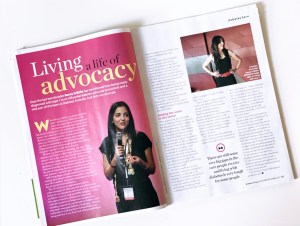
I was interviewed for an article last year and loved the copy they came up with, but it was the heading that got me. ‘Living a Life of Advocacy’ it screamed at me bold text, perfectly popping out from the hot pink background of the photo they’d selected to accompany the article.
The photo is from a while ago now. It was 2013, and I was on a stage in Paris where I’d been invited to give a keynote at Doctors 2.0 – a digital health conference that brought together people using, developing and constantly thinking about digital health solutions. I look at that photo and love the action shot of me mid-sentence, one hand holding a microphone, the other waving, because of course.
But I also know that at the time I was about 10 weeks pregnant and behind the confidence I projected on that stage, I was terrified and anxious. It was a terrifying time as I balanced wanting to be the best advocate I could while also wanting to bunker down back home, wrap myself in cotton wool and do nothing but protect the baby I was growing.
As I spoke about how digital solutions bring together a diabetes community from across the globe, I didn’t know that a mere four weeks later, while in New York, I would miscarry my much-wanted baby. I didn’t know that I was about to face the most challenging and emotionally traumatic period of my life. I didn’t know that, because all I thought about in that moment as I was on that stage with the hot pink background, was how important being there was – people with diabetes on stages as equals with health professionals, disrupters and industry. It was big!
Living a life of advocacy. All while almost being afraid to breathe because I was worried that every jolt, every movement, and the active way I present was endangering the baby. No one else would have known that was going on. There was one person, and one person only, at the conference who knew I was pregnant, and she was sitting next to me on that stage. I figured that I needed a friend with me if something went wrong. No one else was knew, and no one – no one – knew how afraid I was.
In a recent podcast interview, I was asked where this advocacy drive came from. Without missing a beat, I answered that it was in my bones. Because it is. My mum, the trade unionist, had me at protests while I was still in a pram. I went to university to study music, but it makes perfect sense to me and those who know me that I’ve wound up doing what I do, being who I am, advocating my way through my days. In my bones.
But that doesn’t make it easy. It doesn’t stop the burnout from it, or from feeling overwhelmed. And when it’s diabetes that is the focus of those advocacy efforts, while at the same time, I spend so much time focusing on living with diabetes, there’s a weight that seems compounded. It is heavy.
Last year, almost 12 months ago to the day, someone decided to email me about Spare a Rose, reaching out through my blog and, with nothing better to do, thought they should let me know that no one cares about the campaign, and that I should understand what people think about me (which wasn’t much, apparently). It was shitty, it was unnecessary. It was unnerving. After the third or fourth one of those emails, I decided to share one on Twitter. I had no idea who it had come from, but I figured that whoever it was would see my tweets and understand just how upsetting it all was.
It did the trick because it was the last time I heard from my anonymous critic. At least, for the 2021 campaign.
Alas, a week into February 2022, old mate was back, this time with a comment on my blog post about Spare a Rose. I’m guessing it’s old mate – I could be wrong, because who knows when people won’t put their names to things, but the sentiment was the same. It has the same hits as last year. It’s cruel and unnecessary and, once again, has completely rattled me.
It confuses me beyond belief that of all the advocacy issues I’m involved in, it’s the one that literally is saving the lives of other people with diabetes that was the reason someone thought they would take the time to message me. I mean, I get my fair share of criticisms about language, and other topics that are not everyone’s cup of tea. But surely if there is one thing we can all agree on, it’s that a campaign that is saving the lives of people with diabetes in under-resourced countries is not controversial.
Surely.
It all feels so, so heavy.
I know I’m not alone. I know it is a side effect of advocacy. I look to advocates in the diabetes world and I am in awe of what they do.
I am in awe of people advocating to healthcare professionals to be more mindful and thoughtful of the way they interact with people with diabetes.
I am in awe of people who work in industry, invading that space, gaining employment and while they are there, building a career that is forged in advocating to create devices, and device adjacent materials to make diabetes better, easier – and those devices more relevant.
I am in awe of people advocating about the injustices of insulin pricing and access, because they want to change the paradigm that means that some people simply cannot access the very drug they need to stay alive.
I am in awe of people who advocate quietly for years, and make big change by doing small things, over and over and over again.
I am in awe of advocates who have not waited, and instead, built solutions to make their lives easier and less burdensome and then – once they had worked it all out – made it free and available to anyone else who wants to benefit, and then remain there to support them.
I am in awe of creative people who use art, poetry, drama, comedy, music, as advocacy tools to show people how diabetes impacts everyday life and to change how the world sees those of us living lives of diabetes.
I am in awe of the work all these advocates do, and I wonder if they’re also feeling that physical weight that comes from their advocacy.
Do they feel that pressure coming from all different directions, weighing them down from above while also feeling as though it is crushing them from the sides? Do they feel overwhelmed?
I do. And it really, really is heavy.
February 1 and Spare a Rose. The two go hand in hand in my mind. It’s when the diabetes community comes together to support a campaign that gives back in the most fabulous way. For anyone who is new here, or who isn’t sure why the DOC takes on a fetching red hue for the month of February, let me explain.
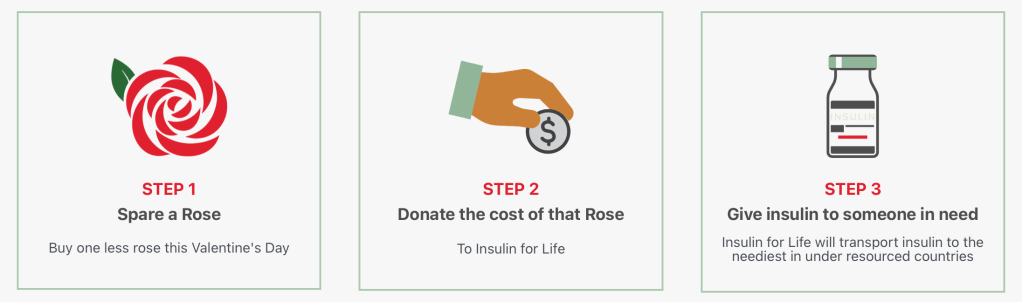
#SpareARose is a beautifully simple idea that asks people to forgo one rose in the bouquet to their love on Valentine’s Day, and instead, donate the saving from that one rose to a charity that supports people with diabetes in under-resourced countries. That one rose (about $5/£5/€5) covers the monthly cost of insulin.
Since 2013, the campaign has been known as Spare a Rose, Save a Child, and the charity that has received all donations has been Life for a Child. Over those nine years, the diabetes community – people with diabetes, people affected by diabetes, diabetes organisations and diabetes industry – has raised close to US$400,000, providing months and months of insulin to children in under-resourced countries. Plus, it’s raised the profile of the charity. Back when it started, very few people in the diabetes community knew about Life for a Child. Now, it’s supported financially by many, and recognised by even more.
For 2022, the campaign is doing something different and broadening its outlook to support people with diabetes diagnosed as adults, or who ‘age out’ of programs that have an upper age limit. Life for a Child supports people up to the age of 26 years. But of course, type 1 diabetes is for life, as is the need for insulin, diabetes supplies and healthcare.
With this in mind, #SpareARose has changed to Spare a Rose, Save a LIFE to recognise how the campaign will be helping adults with diabetes now, and the new charity partner – Insulin for Life.
Insulin for Life is a global charity and supports people with diabetes in many of the same countries supported by Spare a Rose. It’s so wonderful to know that these people will continue to receive insulin and other diabetes supplies, even once they hit 26 years of age, and beyond. You can read more about the important work done by Insulin for Life here.
Despite these changes, the campaign remains the same. One rose = one month of life. It’s a fabulously simple equation. What also remains the same is that it is a campaign BY the community, FOR the community. Every single person in the Diabetes Online Community can be a part of #SpareARose. We’ve seen tweetchats hosted by people across the world, we’ve seen fun challenges on twitter (remember #SpareAFrown?), we’ve seen videos and vlogs and lots and lots of blog posts. #SpareARose is on Twitter, Facebook and Instagram.
Of course, it’s not just financial contributions that make #SpareARose the success it is. It’s also about the community raising its voice to a veritable roar, and elevating the campaign and its charity partner. If you can donate, please do. If you can share, please do. Every time you share, someone might be click on the donate button, or the share button.
#SpareARose to Save a Life. Is there a more meaningful gift to make in the name of a loved one, a friend, a colleague, or in your own name? I really don’t think so.
DISCLOSURE
I’m so honoured that I get to be involved in this campaign by sharing and promoting it as widely as I possibly can. I have spoken about #SpareARose across the globe and written dozens of pieces to raise awareness of this fabulous grassroots campaign, and anyone and everyone can do the same thing. Really, I have no disclosure. I volunteer my time, along with a number of other diabetes advocates from around the world who drive socials to talk up #SpareARose. We also work with diabetes organisations and industry to encourage donations. If you would like to get involved, please reach out. The more the merrier!
Last year, facing the first Christmas in the times of COVID meant that for many people, celebrations were very different to other years. Our huge Italian family gatherings were put on hold because the idea of sharing food around a table, sitting in close proximity, and basically bringing together thirty or so loud Aussie-Italians, all shouting, because we all believe we need to be heard over everyone else, was considered not especially COVID-safe. Instead, we met in parks for catch ups, physically distanced and masked up.
We also waived gift giving for the year. Instead, I made donations in the names of all my cousins’ kids, and for the Secret Santa gifts we (thankfully) didn’t have to buy. (I remain especially Grinch-like about this particular Christmas activity and you can read all about why here.)
Charities are continuing to do it tough. Not only are fewer people able to donate, but more and more people are relying on their services to get through.
Insulin for Life is once again running its Secret Santa campaign and what a great way to share some love this festive season! All donations make a difference, but to give you an idea, if you can spare $5, you’ll be providing a week worth of diabetes supplies – insulin, syringes, and glucose strips – to someone with diabetes in an under-resourced country.
There’s lots of information available on the Insulin for Life website, but this one statement certainly brings home just how dire the situation is for so many of our diabetes brothers and sisters around the globe: For every two people alive with type 1 diabetes, one person has died prematurely due to lack of basic care.
Let me just share that again: For every two people alive with type 1 diabetes, one person has died prematurely due to lack of basic care.
Even though I have been volunteering for years now for different diabetes-related charities that support people with diabetes in under-resourced countries, I haven’t become immune to feeling shock when I see the stark truth written out in such simple terms.
Every single person can make a difference and improve the situation for people with diabetes in these situations. Donating is not possible for everyone, but there are other ways to help. If you are on social media, you can amplify the cause and share this blog post, or the donation link with a few words explaining how impactful donations can be (use the hashtag #IFLSecretSanta). You can organise a fundraiser at work, school or with friends – doing the legwork to make things like that happen are important and make a huge difference too. You could do a Facebook or Instagram fundraiser. You can pass a hat around at Christmas drinks and ask people to throw in any loose change they have. No amount is too small. Every contribution matters.
I was just chatting with some of the amazing people from the Insulin for Life team, and I was thrilled to hear donations are already coming in from the community. Of course, I’m not surprised. The diabetes community has always been amazing at giving back, as evidenced by the amazing efforts seen over the years with Spare a Rose.
Insulin for Life’s Secret Santa campaign is just getting started. Last year was the first year, and the community stepped up. And in 2021, even after the absolutely horrendous year so many have had, there are people in the DOC showing up to support the campaign once again. That’s what this is all about. It’s what it’s always about.

Why does everyone want to cure diabetes? I mean, I think it would be GREAT if someone truly managed to cure it PROPERLY. But in lieu of that, everyone with internet access, a Canva account, and their finger on the pulse of the latest superfood (which, when said superfood is a legume it actually is a pulse), is out there busily curing diabetes with whatever snake oil concoction they can come up with. (At this point in time, I am going to take a MASSIVE diversion and say that Snake Oil is a thing and it is sold by a woman named Caroline Calloway who is a scammer and all that is wrong with the idea that we need ‘influencers’ in our life, and I would urge you to NOT pop her name into a Google search right now, lest you want to lose the next five hours of your life, and destroy a few brain cells while you are at it.)
Anyway, where was I? Yes, scam diabetes cures. Scamabetes cures.
Lucky for me, I get at least half a dozen diabetes cures delivered directly to my inbox each week. By lucky, I mean, I wish the fuckers would all leave me alone, but that’s not happening.
On days where I don’t get cures in my inbox, I get invitations to conferences that aren’t real, or asked to write for imaginary medical journals. The positive is that it makes me feel as though I am highly sought after, and people desperately want to hear from me. The negative is that they’re all a con, and that rather than thinking I’m somewhat brilliant, these scammers are hoping that I’m somewhat gullible.
The scamming is real in the cure diabetes world, and it never ends. Just at the point where you think it’s been rather quiet in the dodgy-cure entrepreneur corner of the globe, there is suddenly a concerted effort to get you to drop some coin on a turmeric and kale chai teatox for the low monthly price of $39.99 plus tax. What have you got to lose?
How the fuck are we meant to navigate our way through it? Twenty-three years in and being a sceptic with a healthy dose of mistrust in strangers approaching me online asking for money and promising me the world has served me well. I start from a position of disbelieving pretty much everything, which has been super useful in the last two years if you think about the rubbish that people (looking at you Clive Palmer) have claimed to be cure-alls. When future Lin-Manuel Miranda writes a musical about the COVID years, there will be a song dedicated to Ivermectin, drinking bleach, and that weird light thing that Pete Evans was trying to sell us for a cool $15K, and a story of vax-crossed lovers where an AZ and Pfizer jabbed couple try to overcome their differences, succeeding only when they are both boosted with Moderna.
Promises of diabetes cures prey on the vulnerable and the scared. It’s abusive and mean. If diabetes could easily be cured, WE ALL WOULD BE CURED, because I’m yet to meet anyone who wants to live with a lifelong chronic health condition, no matter how much they seem to have their shit together.
If it were as simple as eating a cucumber (looking at you, whichever Kardashian made that outrageous claim), I’d be living on cucumber granola for breakfast, cucumber sandwiches for lunch and having a liquid dinner of cucumber mojitos, and snacking on cucumber dipped into tzatziki. All. Day. Long. And I bet everyone else with diabetes would be too, because even if we all got sick and tired of cucumbers by day three, it would still be a shedload better than dealing with diabetes. Wouldn’t it? Yes. Yes, it would.
In times where it is so easy to spread misinformation as gospel, people with diabetes are taxed with even more. On top of doing the task of one of our organs, do impressive maths calculations throughout the day, act as a multidisciplinary medical team for ourselves, employ some damn impressive detective techniques, and be the most efficient executive assistance in the known universe (all before lunchtime), we also need to sort through the constant stream of information, picking out the trash, and staying on heightened alert. Even though we would probably really like some of those pseudo-science promises to work…even just a little bit.
As I was writing this today, my email pinged and there waiting for me was some ‘research’ (a term here used to mean ‘made up stuff’) suggesting that my diabetes could be cured by taking a daily supplement in a convenient, once-a-day tablet. But wait! There’s more. I could take advantage of the cyber-Monday special and get an extra 23% (random number) discount, if I locked in a twelve-month subscription contract. For the record, even with the discount, I’d be out of pocket for this scam product USD$647 per year. Each ‘film-coated’ tablet contains, cinnamomum cassia, garcinia gummi-gutta, chromium hexahydrate, zinc citrate, glutamine, gymnema sylvestre and citrus extract.
I hit the unsubscribe button, blocked the sender. And instead of ordering that veritable shit salad of ingredients, decided that a better way to ingest citrus extract would be to make some lemon bars, and cinnamon via an apple cake. The rest of the stuff sounds made up and absolutely not likely to make my beta cells start making insulin again.
And so, I donated some of the USD$647 I just saved my not getting swept up in this scam to Insulin for Life. Because you know what? The stuff IFL is giving to people with diabetes in under-resourced countries is something that really works and is really essential. And absolutely, completely and utterly not a scam.





 Diabetogenic