
You are currently browsing the category archive for the ‘Awareness’ category.
As always, the internet is a trove of …well, cat pictures, naked photos of celebrities and silly cures for diabetes. But there is also some other stuff. You’ve just gotta look.
A Case for Action
As mentioned, I was in Canberra on Wednesday for the launch of a new Diabetes Australia report on insulin pump therapy. You can read Insulin Pump Therapy; A Case for Action here.
ADEA Video wrap-up
The people from online magazine Diabetes Educators Update have put together a short video wrap up of last week’s ADS-ADEA conference. It was nice to be asked about whether HCPs need to consider the consumer perspective.
Try to overlook the questionable language – (diabetes sufferers’???) – I’ll be sending them a copy of the DA Language Position Statement soon.
Use words wisely
While we’re talking language, this tweet from Kim at www.txtingmypancreas.com really resonated:

It’s why I don’t say I’m ‘battling’ diabetes. I’m living with it. We co-exist (not always happily). There is no fighting; there is just learning to get along.
On yer bike!
Have you been following Team BG doing the mHealth Grand Tour? They have been making their way from Barcelona to Vienna. On bikes. Because they’re slightly crazy. The photos are gorgeous and I have to admit I’m a little in awe of their sportiness. Go team! I’ll see you in Vienna.
Let it go ON!
We need to talk about Frozen because pretty much everyone else on the DOC has been. This week in the US, a documentary about the making of Frozen was screened. As it turns out executive producer John Lasseter based much of the character of Queen Elsa on his kid with type 1 diabetes. I love this character for so many reasons and now, I have another one. I’m not sure that we’ve had many ‘Let it Go’ free days in our house since we first saw the film, and now I don’t care if it’s played every single day for the rest of my life! Here’s what John Lassiter had to say:
Not our turn
‘We need an ice bucket challenge for diabetes’. I’ve heard this said so many times over the last few weeks from people affected by diabetes. It’s not a sentiment I share, because this particular social media-driven stunt doesn’t belong to us. Moira McCarthy has a daughter with type 1 diabetes and wrote this incredibly eloquent piece about how the diabetes community should be able to celebrate this for the ALS/MND community.
Moira wrote in the piece that her daughter with type 1 asked this question: “Why can’t our community be thankful another community is having success? Why isn’t that enough?”
Our turn will come. But for now, I think we should step back, support this community and this campaign however we see fit and be pleased for their success. (For the record, you can just donate – you don’t need to pour ice over your head; it’s bloody freezing still in Melbourne!).
MedX
The Medicine X (MedX) Conference for 2014 has kicked off at Stanford University. This conference is all about the future of medicine and healthcare and there is considerable consumer (patient) involvement. There are some familiar faces in the speakers’ gallery. Follow along on Twitter here.
Noodle
We have a new puppy. And she is the cutest thing ever!

Happy Friday! It’s Fathers’ Day on Sunday. This is for the three men for whom I get to celebrate this day.
Diabetes MILES Youth
Are you the parent of a child (aged 10 – 19 years) with diabetes? Then we need YOU! And your child with diabetes too.
You may remember that a few years ago now, the Diabetes MILES survey was conducted. Diabetes MILES looked at the psychological health of people living with diabetes, and the survey results continue to be collated and presented.
Now, a new study – Diabetes MILES Youth – is being conducted asking young people about what it’s like to live with diabetes, and how diabetes affects their wellbeing.
And because we all know that diabetes is a ‘family sport’, parents of kids with diabetes are also being asked to complete the survey.
The survey is only open until the end of September, so please take the time (about thirty minutes) to respond. (I know that you would get involved anyway, but as an added incentive, there’s an iPad to be won!)
Diabetes MILES and now Diabetes MILES Youth will actually show just how diabetes affects our lives on a day-to-day basis. The more we can talk about the psychosocial side of diabetes – the more evidence there is to show that diabetes affects our wellbeing – the more that diabetes stops being just a numbers game. (Although, in this case the number of people completing the survey is important, so get clicking!)
DISCLAIMER
Diabetes MILES Youth is part of the NDSS-funded Young People with Diabetes National Development Project of which I am the Project Manager. I’m writing about it here because I think it’s really important for as many people as possible to take part in this survey and have their voice heard.
The survey is being conducted by the Australian Centre for Behavioural Research in Diabetes.
If you’re on social media, you’ll be more than familiar with the ridiculous clickbait style articles that tell you about ‘things you should know’. These lists are often targeted to specific age groups (20 things all women in their twenties should know), gender (5 things men should do on a date) or include things to make you feel like you’re falling behind (23 things your daughter should know by the times she’s 13 years – subtext: and if she doesn’t, you’re a lousy parent).
The aim of these articles is to make the reader feel inadequate and feel that they are failing at things because they are 34 years old and haven’t worked out the 10 things every woman should know about orgasms.
I steer clear of any of these lists and simply don’t give in to the desire to click. So, here’s my list of 16 things every person with diabetes should know:
- Diabetes sucks.
- Diabetes can also be interesting and eye opening.
- Finding a healthcare professional who understands you and what you need will make navigating the system easier. And it’s perfectly okay if you want someone to ‘tell you what to do’ rather than someone who is more consultative. Horses for courses.
- Cinnamon doesn’t cure diabetes and anyone who says it does is a big lying liar. And possibly a bit simple.
- There is no unsuitable response to the question ‘should you be eating that’. Gentle violence is acceptable, as are tongue lashings, death stares and bursting into tears.
- Further to number 5 – yes, you can eat that.
- Cupcakes with sprinkles make as suitable a lunch for a person with diabetes as a person without diabetes.
- It’s perfectly okay to squeal when you see another person pulling out an insulin pump, giving themselves a shot of insulin, or checking their BGL. Even if you don’t know them.
- You do not need to explain your diabetes to anyone. That includes how you choose to manage it, how you feel about it, what you say about it. Your diabetes; your rules.
- I’ll just say that again: Your diabetes; your rules.
- There is no room for judgement. From anyone about anyone. (Except for people who wear leggings as pants. I’m all for judging them. And the Kardashians.)
- Unicorns are real – I rode mine to work this morning.
- Feeling sad or happy or down or ecstatic or miserable or pissed off about diabetes are all reasonable emotions – even within the same five minute period.
- It’s okay to grieve. Life with diabetes is different.
- There is no substitute for a friend with diabetes saying ‘I get it’.
- Lists about diabetes are stupid
Last month, I wrote a piece for Mamamia’s health and beauty sister site, The Glow. I wrote about how diabetes is sometimes referred to as an invisible illness because often there are no obvious, outward signs that say ‘I live with diabetes’.
This week, there’s been a lot of talk about another invisible illness – depression. I don’t even know where to begin writing about mental health. But I should be – we all should be. And we should be talking about it. A lot.
Not everyone is comfortable talking about their health conditions – whether it is diabetes, cancer, MS or depression. Perhaps there is more ‘acceptance’ of some conditions when compared with others. I know that when it comes to diabetes, the stigma and judgement can be exhausting. I expect that for those living with depression or other mental health conditions, the experience would be similar.
The invisibility of conditions like diabetes or depression is perhaps what terrifies me the most. Being able to conceal what is going on means not getting the support that may be needed. Not everyone knows how to ask for help. Not everyone wants to ask for help.
I am more than happy to talk about my experiences. Many others are too. And when I write about things that I am finding difficult, I feel enveloped with care, support and love. But what about those who don’t? What about those who are keeping things hidden from their loved ones and friends and colleagues?
Should we be more worried about the person who is getting up every morning, going to work and interacting with their colleagues, but has not shared their struggles? Last year, when I wrote about RUOK day, a very clever person (who may or may not be my sister) commented that it’s important to remember those who may appear ‘fine’. She’s right. We don’t think about those people enough.
I don’t have answers for any of this. The death of the magnificent Robin Williams has people talking. How do we keep the discussion going? How do we give people who need help the avenues to ask for it without feeling they will be judged? How do we stop people from taking their lives because they see no other way out? How do I say ‘how can I help’? How can I help?
“Depression is the most unpleasant thing I have ever experienced. . . . It is that absence of being able to envisage that you will ever be cheerful again. The absence of hope. That very deadened feeling, which is so very different from feeling sad. Sad hurts but it’s a healthy feeling. It is a necessary thing to feel. Depression is very different.”
-J.K. Rowling
It’s Friday and I could only think of this clip for this week.
‘You have brittle diabetes,’ the diabetes educator told me, regret in her voice.
Brittle. It’s such a sharp sounding word – all edges to cut yourself upon.
I first heard the term ‘brittle diabetes’ about three years after I was diagnosed. It was handed to me as a grave diagnosis within a diagnosis. Not just diabetes for me. I had brittle diabetes. I heard it, thought about it, said the words a few time together, jarring at the sound.
I was given this ‘diagnosis’ during a really rough period. My diabetes was all over the place thanks to a totally unrelated stomach issue. There were thoughts it may have been gastroparesis or, for a moment there, thanks to the significant weight loss I was experiencing, an eating disorder.
I became terrified to eat because every time I did, I was in extreme pain. At times I threw up everything I ate, other times I didn’t. My blood sugars were all over the place and the delightful insulin regimen which at the time involved Protophane was incredibly hopeless at doing anything other than send me plummeting low, or sky-rocketing high. It was a very tough few months.
I was seeing doctor after doctor after doctor. And all anyone could think about was my diabetes. My brittle diabetes. I was told: ‘This is what your diabetes is like. Sometimes there are no answers and we can do nothing to better manage things. This is it for you.’ There was an undertone of ‘get used to it, love’.
I wasn’t prepared to just accept it though. I wanted to have a baby and I knew that there was no way that I could even consider going down that path while my health was all over the place.
I finally sacked all the health professionals I was working with and sought out someone – something – else. I refused to believe that this was how I was going to be forever. I knew there were answers; I just didn’t know how to find them.
I found a new endo and when I walked in I told her that I had brittle diabetes. ‘I can’t be fixed, apparently. Give me everything you’ve got!’ I thought silently.
‘I don’t like that term,’ she told me gently. She wasn’t rude about it; she just explained that she thought we could work out why things weren’t going so well. And then, she went about finding answers. And we found them.
It took time and it took a lot of thinking outside of the square. It took putting diabetes to the side and not thinking that it was the only reason for all my health problems. Once I got sorted and my stomach was sorted and I spent some time talking things through, my diabetes was much easier to manage. I know that a big part of getting through was not only addressing the physical side of things. There were mental health issues I needed to address, mostly dealing with the grief I was experiencing about having to let go of my life before diabetes.
I too came to not like the term ‘brittle diabetes’. When I hear it now, I want to ask what else is going on. And I can’t help wonder where I would be now if I had just accepted that as my lot in diabetes.
Want more? Mike Hoskins wrote this interesting post on Diabetes Mine last year.
So much going on. So much to do. So much to plan. So many presentations to write.
So….naturally, I’m surfing!
BIONIC
I’m still really excited about the Bionic Pancreas. I know that when we hear of new research it’s often about mice, labs, five years’ time etc. So hearing and reading about the ‘real-life’ applications of this technology has been so very exciting. And hopeful. I interviewed someone who participated in the Melbourne trials (you can read about it in the next edition of Conquest). And for another beautiful, goose bump-inducing read about it, here’s what Kerri wrote at Six Until Me.
BLUE CIRLCE APP
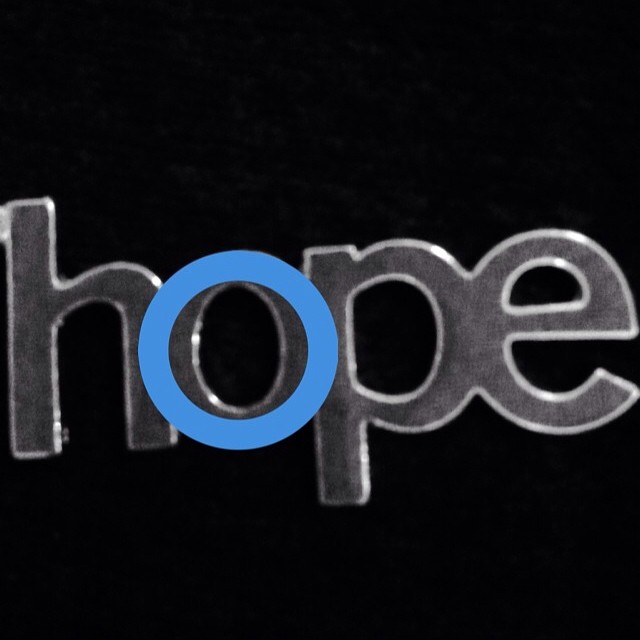
A couple of months ago, the IDF launched a new photo app to help raise awareness of diabetes. You can add a blue circle to any photo and then share on social media. Here’s my latest masterpiece:
ZOE BOWIE SINGS
Earlier this year, I sat on a Google Hangout panel with Jamie Tripp Utitis who recently presented at the Doctors 2.0 and You conference in Paris about her beautiful new book ‘Zoe Bowie Sings, Despite All Sad Things’. Jamie wrote this book for kids with a parent with MS. Jamie writes an awesome blog of her life with MS. You can read it here.
WHERE ARE THE PEOPLE?
I threw a huge tantrum let out a huge sigh of defeat when this appeared in my (virtual and real) inbox today. It’s the promotion of a conference in Melbourne later this year about the future of primary care. One of the focuses is patient outcomes. Looking through the myriad speakers what do I find? Not. A. Single. Patient. In. Sight.
SCRIBBLES
Mike Lawson (who I was lucky enough to meet briefly at year’s ADA conference) recently started ‘Scribbling My Life Away’, a blog of his drawings. It’s not really, diabetes-related (although there is the occasional diabetes reference) but nonetheless very cool. (And, Mike, if you’re reading this, can you please do me a scribble of a jar of Nutella and a big spoon. I’d like to put it up in my office?)
SWEET PRETTY THINGS
Totally, completely and utterly not diabetes-related, but I can’t stop looking at the gorgeous artwork of Aussie Illustrator Kerri Hess. I am trying to work out how I could commission a life-size piece that would fit perfectly on a big blank wall in our bedroom.
MEOW
In other news, a cat café opened in Melbourne this week.
CRAZY BIKE RIDING TYPE 1 PEOPLE HEADING TO VIENNA
Last year a group of mad folk with type 1 diabetes rode from Brussels to Barcelona as part of the mHealth Grand Tour. Not content with this achievement, the group known as Team BG, will be doing it all again, kicking off in Barcelona and heading to the location of this year’s EASD conference, Vienna, where I intend to greet them and call them all crazy. I might then buy them a beer.
HAVE YOU REGISTERED YET?
A reminder that TODAY IS THE LAST DAY to get the early bird rate to attend the first ever ADS-ADEA Consumer Outreach program. Book now!
How often do you think about diabetes in a day? In an hour?
On those days that I think of diabetes about once an hour (when awake), I know that I’m doing okay. That may seem a lot, but it could be because I’m checking my BGL, bolusing for something I’m eating, doing a line change, thinking about eating something, making something to eat, about to drink a coffee with added sugar. It could be when I am getting dressed in the morning and remembering to reconnect my pump or pulling my pump out from my bra to check my CGM.
Sometimes they are passive thoughts, other times deliberate and actioned.
When this is my activity level, I know that I’m tracking okay.
But when I go for a few (say 4 or 5) hours or even a whole day without thinking about diabetes, I know I’m not tracking quite so well. On those days, I don’t check my BGLs, I don’t check what my CGM is telling me (maybe because I’ve not got a sensor in, maybe because I just can’t be bothered), I may not be eating particularly well or at all, so don’t bother bolusing. Sure, I passively thought about diabetes when I stepped out of the shower that morning and reconnected my pump, and perhaps I blind bolused for the sushi roll that made up lunch, but that could be my entire day of diabetes ‘chores’.
And equally, if I’m thinking about it more than once an hour, I know that something is not quite right. It could be that I’m high and trying to manage that by checking my BGL every 10 minutes hoping for a drop – even a teeny tiny drop – in numbers. At the same time, I’m anxiously trying to walk the tightrope that is enough insulin to bring me down from the hyper ledge, but not rage bolus and send me crashing. I’ll probably be starving, so I’ll be thinking about food and calculating carbs and making deals with myself as to what my BGL has to get to before I can eat.
Or, I could be low and trying to deal with the pounding heart rate that is a doof-doof reminder of my hypo-state. Probably over-eating, I’ll be checking my BGL every five minutes, looking for an upward trend in my numbers.
Either way – high or low – I’ll be thinking food, numbers, hoping for balance, worrying about over-treating, over-medicating.
It’s such a fine line.
Too much…
Too little…
Just right.
This post was first published in 2011. Sometimes, I think that there is progress being made when it comes to consulting people with diabetes in the development of programs, services and resources for us. Other times, I’m not so sure. Some groups and organisations are incredibly tuned in to people with diabetes (I’m talking about you, Australian Centre for Behavioural Research in Diabetes) and I cannot express enough my gratitude for the high regard of the ideas and thoughts of people with diabetes this group regularly demonstrates.
I stand by what I have written in this post: We are the experts in living with diabetes and we want to work with those who are working to help us. Please, please let us.
——————————
There seem to be a lot of people who like to be the voice of people living with diabetes. Strangely enough, a lot of the time, these voices don’t actually have diabetes themselves.
As far as I am concerned, every single person out there who wants to advocate and support people living with diabetes is terrific. Continue doing it! But make sure that if you are speaking for us you have first heard what we want to say.
Any time an advisory panel or steering committee looking at anything to do with people living with diabetes is formed, the first people invited should be consumers. How can other people possibly advise or steer for us unless they hear what we need and what we want?
If government wants to improve our lot, ask us how to do it.
Experts in diabetes are not the people who care for us. I know how blunt and arrogant that sounds, but it’s true. I have a brilliant team of health professionals around me – I have written of this on several occasions; hell, I even named my daughter after one of them. But these outstanding, talented, exceptionally smart people do not speak for people with diabetes.
I struggle regularly with the way that we are not considered in the planning and development of new resources, activities, devices and technology designed to ‘help us’. When we pipe up and say ‘hey we’re here’, we often get told that we’ll be consulted ‘later’ – often too late when changes cannot, or will not, be made. That sort of consultation is, I’m afraid, tokenistic. It doesn’t count for anything and those doing this shouldn’t get to then say that they did work with the community.
The experts when it comes to making lives better for people with diabetes are us. The people with diabetes. We’re the ones who live with it, love with it, scream at it and want to turn our backs on it in disgust. We’re the ones who agonise, cry, laugh and celebrate it.
Don’t speak for us. Don’t assume. It should always be nothing about me without me. Always. Listen to us. Ask us. Take cues from what we say. Believe me, we’ll tell you what we need.
Am I being too harsh with this? I wonder what others with diabetes have to say and if they feel the same way.
A few years ago, when the Diabetes Australia Language Position Statement was released, I wrote a post about why words used to describe people matter. At the time, I asked people around me to pick a noun or two that they would use to describe me. The polite suggestions made it on the list which looked like this:

These terms are all still correct. Actually, that’s not true. I’d probably replace ‘Twitter novice’ with ‘Twitter enthusiast’, but the rest are all true. Although, having said that, there have been (brief) periods in the intervening years where things have changed a little. I point specifically to the short-lived-but-still-boasted-about walking period. But that’s over now, so what-the-hey! What you see up there still describes me perfectly.
Many of these words are consistent with what I use for my author profile when I write for another site, or speaker bios when I present at conferences. When I have three or four short sentences, I want to convey the things that are the most important in my life – the focus.
Generally, all bios start with the same thing: ‘diabetes consumer advocate’. This is the bit that is particularly relevant to my work and what it is that I am writing or presenting about. But then there are other things that try to give a fuller representation of who I am. My Twitter profile has ‘wearer of stripes’. A recent bio noted my love of New York. Another pointed to my boot collection. In this blog’s bio, the pets get a mention.
And there, along with explaining where I live and with whom, you will find out that I have diabetes, but this is simply wrapped up in the other things that make me part of who I am.
Why is all this important? Because the things that make me who I am shape my thoughts and experiences of living with diabetes. The inner-city dwelling bit is important because when I write about ‘interviewing health care professionals’ it makes sense. I wouldn’t have this privilege if I was living in a remote area serviced by a single GP.
The scarf collector comment above along with the mentions of striped clothing and boots help explain the sartorial importance of diabetes paraphernalia. (Or I could just be shallow – you decide!)
And if I am talking at a conference about how I use social media for peer support, you can understand my love (and use) of Twitter or Facebook as a means of connecting with people.
Telling you that I am a mum to a gorgeous nine year old goes towards explaining the anxiety I feel when thinking of the genetics of type 1 diabetes. And when I write about how worried I am about how diabetes impacts on those around me, you can appreciate why I’d feel that way because I’ve briefly mentioned my immediate and extended family.
Even if we say – and truly want to believe – that diabetes doesn’t shape us, the truth of the matter is – it does. Of course it does. How can a condition that is so present, sends out reminders constantly, requires so much time and attention not feature in who we are? If it were not for diabetes, my life would be significantly different today.
I’ve no idea what I would be doing had my beta cells not taken early retirement, but I doubt it would involve being an advocate for a condition about which I know nothing (which is precisely how much I knew about diabetes before my diagnosis). But here’s the thing. All of those other things – the family, the love of travel, the addiction to coffee, the preoccupation with words and punctuation, being drawn to stripy clothes and loving cupcakes – those things would still be the same. All of them. It’s the diabetes that would be different. It just wouldn’t be there.
Today is #dblogcheck day. The idea is to ‘check in’ by commenting on any diabetes blogs you read today. The hope is that by commenting, you’ll be reminding people that they are not alone. I love this idea! Thanks to Christopher Snider (@iam_spartacus). Look for the #dblogcheck tag to find some #dblogs to read. You may find a new favourite!
I make dozens of diabetes choices every day. From what I will eat, to the dose of insulin I take, to how many times I’ll check my BGLs, these are all choices that I make. Sometimes they are made with careful consideration. Other times, I barely give them a second thought.
But regardless, I stand by these decisions and their consequences – good or bad. Generally, the outcomes impact me and me alone: too little insulin, a BGL of 20mmol/l means I guzzle water, rage bolus and feel like crap until I get back in range; too much insulin, a low that is usually managed with a juice or a handful of jelly beans. Most of time, I manage to ‘fix the damage’ and move on without involvement of anyone else.
But sometimes, that’s not how it pans out.
One of the burdens of diabetes is how it affects those around us. On the rare occasions I need assistance I experience incredible guilt afterwards. I know I shouldn’t, and I’m never made to feel guilty, but it is how I feel.
I have never heard anyone in my family complain or even comment on their role in my diabetes. I know that doesn’t mean that they don’t get pissed off by my AWOL beta cells (being woken up in the middle of the night and then having to get up to grab me a juice or put on some toast is, whilst a rare occurrence, certainly not fun for my husband), but I never hear complaining.
To date, my daughter’s involvement has been minimal. There have been a handful of times, perhaps, when I have asked her to grab me my lolly jar. For her, I suspect the biggest inconvenience is having to explain to her friends why said lolly jar is out of bounds for their grabby (grubby?) fingers, and the times where we’ve had to briefly postpone whatever we’re about to do as I wait for my BGLs to come up to a safer level.
Last year, when a friend needed to call an ambulance after a particularly nasty hypo, I worried for a long time (I still do!) about how she would feel about my diabetes. For a while, it felt that she was watching me very closely every time we went out to make sure that I wasn’t going to collapse on her again.
I can’t imagine how scary it would have been to have me suddenly pass out. She did such a sterling job of managing this situation (right down to warning the paramedic that I was going to be seriously annoyed when I ‘came to’ and start asking a million questions), and I couldn’t have asked for a more sensible or thoughtful person to have around for this. But still – I worry that it was a choice I made (or didn’t) that resulted in her having to take an active role in dealing with my diabetes. She didn’t sign up for that when she and I became friends back when we were teenagers.
While I try to make choices that yield results that impact me and me alone, I think a lot about how others feel about my diabetes. What I want those around me to know is that I’m sorry when they have to get involved. But also, I’m so grateful.





