
You are currently browsing the category archive for the ‘Advocacy’ category.
Do a Google search of the term ‘empowered patient’ and you will be inundated with thousands and thousands of links defining the empowered patient, instructing how to be an empowered patient or advising how to deal with an empowered patient (run for the hills and refer them on to another HCP). Health conferences have sessions dedicated to patient empowerment, there are countless social media sites and blogs on the topic, and there are many journal articles – written from the perspective of both the patient and HCPs about what patient empowerment means in healthcare. It could be considered a buzz term, even though it’s been around for some time.
Health organisations for conditions from diabetes to Sjögren’s syndrome(look it up!) dedicate pages of their websites, events and resources to guiding people to become empowered and ‘own’ their condition. It’s not a new thing, and while embraced my many, is still treated with some scepticism and nervousness by some and dismissed by others.
I am what I (and most) would call an ‘empowered patient’. Whilst, I acknowledge that the term is widely understood, I’m not sure that it really is a term with which I’m comfortable. Perhaps because the empowered patient can be considered difficult and annoying – a know-it-all who is there to try to take over the expertise of their HCP. That’s absolutely not what I am trying to do with my healthcare. When it comes to diabetes, I am the first to say I know nothing about diabetes – that’s why I see an incredible endo. But MY diabetes? I am the Universe’s leading expert in that!
For me, being an empowered patient simply means that I am in the driving seat as well as being navigator of my health issues– primarily diabetes, but also other things as well. (Last year, I demanded that I have a D&C following a miscarriage despite the OB wanting to just ‘wait and see’. Waiting and seeing for me would involve horrible pain; excessive bleeding and dealing with the miscarriage whilst on a long haul flight back home from NYC. Previous experience told me that. So I made sure that my wishes were not only known, but also carried out.)
In sixteen years managing diabetes there have been very few instances where I have blindly followed medical advice without asking questions, weighing up all possibilities and talking with others about their experiences.
But I wonder how much being empowered about my health condition and active in decision making is simply because that’s the sort of person I am. When planning for anything, I am organised and informed. I seek out the right people to speak with, I consider options, I ask a lot of questions. I make decisions based on what I have learnt and what I think will be best for me. Whether it is planning a holiday, choosing a contractor or looking after my health, I empower, educate myself. It’s my personality; it’s how I roll.
So does it mean that people who are not naturally like this miss out on the choices and options afforded to people who seek them? Does it mean that if someone is unable to empower themselves (perhaps because of language or cultural barriers, their personality or a lack of understanding of, or an inability to navigate the system) they wind up with substandard care?
Being an empowered patient isn’t at the expense of the expertise and knowledge of the HCP experts we’re working with. It helps form a partnership. I honestly do believe that it is because of our empowerment – our demands and expectations – that we receive better care, better options and, possible, achieve better outcomes. We make our HCPs accountable and answerable, but more than that, we make ourselves accountable and answerable. Sharing in the decision making means we also have to take responsibility when a medical treatment doesn’t necessarily work out the way we hoped. But I’m willing to take on that responsibility.
This week in the UK, it’s Diabetes Week. I’m always interested to see the focus of campaigns for awareness weeks and this has to be one of my favourites!
Having lived first hand through diabetes weeks that have involved ticking time bombs and threats of every single diabetes complication under the sun, I wish I could give a proverbial hug to the team at Diabetes UK who have put together an empowering, positive campaign. In lieu of that, I sent a tweet.
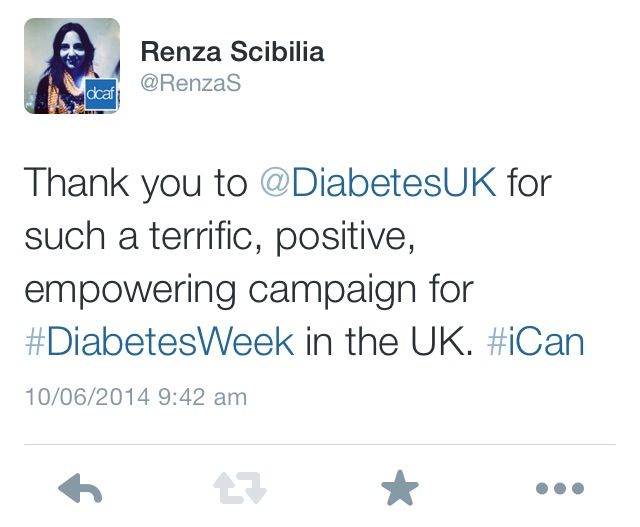
Using the slogan ‘I Can’ the campaign acknowledges the difficulties people with diabetes may experience, but wants to focus on the things that we CAN do. I love this!
I’ll be keeping an eye on this week’s campaign. I’m interested to see and hear the stories of people living with diabetes and how they have managed to face challenges.
I hope that this year’s initiative is a positive one for Diabetes UK and we see more of these kinds of campaigns in the future.
Check out the Diabetes UK Diabetes Week campaign here.
And follow the #iCan tag on Twitter.

I was recently sent an article from Medscape that was written by Svetlana Katsnelson MD, endocrinology fellow at Stony Brook University Medical Center in New York.
The gist of the piece is that for a week as part of her endocrine fellowship training, Dr Katsnelson wore an insulin pump and checked her BGLs, and now believes she knows about living with diabetes. She also considers herself non-compliant because she didn’t bolus for an apple.
This may be oversimplifying the article a little and I honestly do believe that the intention here is good. But a little perspective is needed, I think. It was this comment that really upset me:
‘The experience provided me with a better understanding of how to use the devices that many of our patients use every day, but it gave me much more than that. I truly began to understand how difficult it is to live with diabetes.’
No, Dr Katsnelson, no. You do not truly understand how difficult it is to live with diabetes.
What you have is an idea of what it is like to walk around with a device delivering non-life saving saline into your system. You also have an idea of how it sometimes hurts when a sharp object pierces the skin on your finger. You probably could have deduced that anyway because, you know, sharp object, skin, nerve endings etc. You know how the buttons of these devices feel under your fingers and the weight of the devices in your hands.
You may have an idea of how tricky it can be to accommodate a pager-like device if you are wearing a pretty, flowing dress to work (if that is your want). You may now understand how annoying it is to have to stop what you are doing because it’s time to do a BGL check.
But what you don’t understand is that diabetes is about so very much more than that.
Here is what you don’t have any idea about.
You don’t understand the feeling of ‘this is forever’ or ‘I never get a holiday from this crap’. I know that this was acknowledged in the article, but really, you don’t know how it feels to never be able to escape diabetes.
You have no concept of the boredom of living with a chronic health condition, or the monotony of doing the same tasks each and every day over and over and over again!
You don’t understand the fear that overtakes your whole being as you imagine all the terrible complications that have been threatened and promised as result of diabetes.
You have no notion of the frustration of living with a condition that doesn’t have a rule book – and in fact changes the rules all the time!
You haven’t any perception of the fear I sometimes feel that I’ve passed my faulty genetic matter onto my beautiful daughter; or that I am a burden to my family and friends.
You will never feel the judgement from healthcare professionals because numbers are too high or too low – or that there are not enough of them.
You will never be called non-compliant by a doctor or made to feel guilty because you are eating a cupcake – all because your beta cells decided to go AWOL.
While I really do commend the notion of HCPs trying the ‘day in the life’ (or ‘week in the life’) idea, I think that being realistic about what this experience provides is important. It does not give any insight into the emotional aspects of living with a chronic health condition. It doesn’t explain the dark place we sometimes go when we are feeling particularly vulnerable or ‘over it’.
I have to say that all in all, this article left a sour taste in my mouth and I don’t like to feel that way because it sounds like I am being Grouchy McGrouch. I’m not. And as I said, I think that the intention here is good.
I just don’t want Dr Katsnelson to think that she now knows what is going on in my head when I wake up at 4am and every terrible scenario plays out leaves me feeling a pressure on my chest and a blackness in my mind that threatens to overtake me.
But I also want Dr Katsnelson to know that I really don’t expect healthcare professionals to know and understand all of these things. I expect them to treat me with respect and dignity. If this exercise has helped that, then great, but please, call it for what it is.
The article discussed in this post (Svetlana Katsnelson. Becoming the Patient: Not as Easy as It Looks. Medscape. May 12, 2014.) can be accessed here by first creating a free login.
Last Friday I attended a couple of sessions of the Health Professional Symposium coordinated by Diabetes Australia – Vic and Baker IDI. The packed program covered a variety of topics including cognitive function in children with type 1 diabetes,musculoskeletal complications of diabetes and a panel discussion about whether lifestyle interventions are an effective approach in diabetes management.
The two sessions of particular interest to me were around diabetes in the hospital setting. The first, from DNE Sue Wyatt (Alfred Hospital), focussed on improving diabetes management in hospitals (including discussions about outcomes, policies and procedures) and the second was from dietitian Anita Wilton who discussed food services in hospitals.
To me, both sessions highlighted the problems faced by many people with diabetes when we are admitted to hospital – whether it be for a planned stay or emergency visit. The outlined policies and procedures do not take into account that people with diabetes have different levels of understanding, knowledge and self-management, and the ‘one-size-fits-all’ approach is, I believe, actually detrimental to diabetes care (indeed, diabetes self-care), emphasising the artificial environment experienced when in a hospital setting.
There needs to be a balance between what we as people living with diabetes need when we are in hospital and how we fit into the ‘rules’ and regulations enforced in hospital.
And one issue of particular concern is what happens to our insulin (and other medications), delivery devices and other management tools (BGL meters etc.). At the Alfred Hospital, insulin and delivery devices are taken from the patient. Obviously, this isn’t the case with pumps, but pens and syringes are removed from the person with diabetes and locked away. This is the policy and according to Sue Wyatt, in only one case has this been challenged to the point where the patient was allowed to hold on to their medications.
Unsurprisingly, this doesn’t sit well with me at all.
I raised my hand during question time to ask about how we manage the different needs of the person living with diabetes and hospital policies and procedures that, in this case, go against everything I believe in when it comes to patient empowerment. The answer I received was all about protecting the nurses in the hospital setting and whilst I completely understand and respect the need for that, where was the discussion about protecting the rights of the patient? At no point, when I am a patient, do I give up those rights. I understand that there will be times that people with diabetes are unable to administer their own insulin, but for many, that is not the case. As they are recovering from surgery or sitting in A&E dealing with whatever they are dealing with, managing their own medication is not only possible, but frequently the best option.
In my case, I have never been an inpatient and unable to administer insulin (after calculating doses and entering the correct information into my pump). Being able to address high BGLs and correct accordingly, bolus at the exact time I am eating or treat a low immediately have actually meant smoother management whilst in the hospital setting rather than relying on an already-far-too-busy nurse.
Obviously, it is essential that hospitals have policies and procedures in place, but at the same time, the primary concern should be what is best for the patient. If the talk around patient-centred care is to be taken seriously (and not just perfunctory jargon to make people believe they are talking the politically correct language and saying the right things) then we need to make sure that the patient and their best interests are actually being contemplated.
At no time are my best interests being considered if I am asked to hand over all the things that I need to manage my condition, whatever the setting.
I am employed by Diabetes Australia – Vic. I was not involved in the planning or presenting of any sessions at this event.
I’m tired.
Today, I woke in a great mood after a good night’s sleep. The weekend had been relaxing and lovely – family, friends, food and gorgeous weather on top of it all. Plus, I bought a new necklace with a pineapple on it. It was a good couple of days!
I was standing at my favourite café near work, waiting for a takeaway coffee and thinking that the barista was a magician as I watched his choreographed movements, filling takeaway cups with perfectly brewed caffeine.
‘This good day is about to get better,’ I naively thought, the taste of that first sip of coffee so close.
And then, I checked my email and ‘bam’. There it was.
A discussion about not distinguishing between type 1 and type 2 diabetes in a setting where it really is not relevant. I sighed.
And realised how tired I am.
Nearly thirteen years ago, I was employed to run a very small and, at the time, somewhat tokenistic type 1 diabetes program for a diabetes organisation. Thanks to a very supportive CEO and me being a pushy little thing, the program grew and grew and now, incorporates a dedicated team doing some incredibly good work for people living with type 1 diabetes.
One of the reasons for the program’s success is that we have been very clear about defining it as a program for people with type 1 diabetes, making sure the information we provide is targeted and relevant to the people we are trying to reach. We acknowledge each and every day that people with type 1 diabetes have specific information requirements and then we go about providing that information in the way people want.
In exactly the same way, a couple of years ago, we realised that the information for people with type 2 diabetes was completely forgetting the changing face of the type 2 diabetes community. There are more and more younger people being diagnosed with type 2 diabetes and the information we had was very much for an older audience. Hence, Generation T2 – a new program for 18 to 39 year olds with type 2 diabetes.
There are times that it is important to distinguish between the diabetes and there is no louder advocate for that than me.
But there are times that it is irrelevant. Yet, people still get angry – even when it really doesn’t matter if the type of diabetes is defined.
I am tired.
I am over this argument and this discussion.
Last week, the government handed down a budget that is going to hit the hip pockets of people with diabetes like never before. All people with diabetes will be affected – regardless of type.
During the World Diabetes Congress we heard of places around the world where the cost of insulin is so prohibitive that there are people dying because they cannot afford to buy the drug they need to stay alive. Slow, painful, horrible deaths because they cannot afford to buy insulin. Just think about that for a moment.
Here in Australia, there are people who cannot afford to use an insulin pump despite desperately wanting to because they cannot afford private health insurance or qualify for the Insulin Pump Program to assist with cost of purchasing the $9,000 (plus) device.
These are the issues that we should be fighting for and getting angry about. These are the issues that are important. Access to healthcare – a basic human right for all people – ALL people with diabetes – is what the topic should be; not whether or not the Channel 10 news forgot to say type 1 (or 2) before the word diabetes.
I am a card carrying member of the diabetes community. I am proud of this community and I am pleased to have a voice within it.
But we need to stop the finger pointing and the name calling and the blaming. How can we expect people outside of our community to get it right if we can’t? Why is it more important for people to understand the how and why we got this condition as compared with the how and why we’re trying to live and manage with it?
I am proud of the Australian diabetes community, but it is here that I hear this attitude more than anywhere else in the world. This discrimination is not helping us – it is harming us. Does it matter if people don’t really understand the different types of diabetes? I get it. It’s annoying, it’s frustrating; it’s constant. But really; does it matter?
This is a first world – a first class – problem.
And I am tired. I am saying it’s time to stop. Enough!

It’s the fifth annual Diabetes Blog Week, with thanks to the lovely Karen Graffeo from Bitter~Sweet Diabetes. The first topic for the week asks us about the diabetes causes and issues that really get us fired up. Here’s what I have to say! Come back tomorrow for the next instalment, and in the meantime, check out #DBlogWeek and follow along!
I am not in any way foolish enough to believe that what I write on this here little blog or the work I do as a diabetes consumer (patient) advocate has the ability to change the world.
But I am confident enough to believe that my messaging is strong and that I generally stay on topic.
There are many things that I feel passionate about when it comes to being a diabetes advocate, but nothing more so than who is in charge of driving the diabetes bus. And that is the person with diabetes.
There is so much written about patient-centred care. Google it and you’ll come up with a…well a google of links. But despite much of it talking the talk, I’m not sure that it really walks the walk. The idea of patient-centred care is often at odds with policies and procedures of healthcare settings making it difficult for the person with diabetes (or other medical condition) to really be in the driver’s seat.
For the person with diabetes to be truly in control (and I’m not talking control in the sense of their BGLs, I mean in the sense of decision making) everyone needs to really subscribe to the model where the patient is smack bang in the middle of the picture, directing traffic, and making the ultimate decisions.
This doesn’t mean that it is done in isolation. No. It’s the exact opposite really.
It means that with support from HCPs, from diabetes organisations, from peer groups and from the health system, the person with diabetes is armed with all the information needed, given the right guidance, shown all the choices. And then, with all of this, they make a decision as to what they believe is the best thing for them. Nothing is withheld, everything is discussed, all options are in the table and considered.
I have too often had the options taken away from me. While I am pretty good at standing up for myself, it is exhausting at times to have to fight for my care to be the way I want it to be. And it’s frequently when we are at our most vulnerable that we have to fight the hardest. Hospital admissions (planned or emergency), times of extreme diabetes burnout or when we’re struggling to stay on track are the times that we often need to stand up for ourselves…even if we don’t have the energy, the inclination or the desire to.
When push comes to shove if I am charged with dealing with this condition 8,736 hours a year, then I AM driving this bus. The role of the support team around me is to give me suggestions and options about how to navigate, but then let me decide if I’ll turn left or right. And come along for the ride – even if they don’t necessarily agree with the road I’ve chosen.
Today, I’ve also written a post at the Diabetes Australia – Vic blog about another cause close to my heart – The Diabetes Stigma Project. Have a read!
How do you describe diabetes? I vary from ‘an inconvenience’ to ‘an effing pain in the arse’ and lots in between.
I’m all about words. Language is very important to me and I spent a lot of time crafting messages about living with diabetes that balances the ‘this is shit’ component with the ‘this is just life’ side of things.
One of the reasons that getting the language right is actually not so much for the people living with diabetes – we know the details and we know the words we choose to describe it. No; it’s for others. Because when we get the language wrong, we start to open ourselves up. To discrimination, stigmatisation, misinformation and negative perceptions.
It’s for this reason that I refuse to use the word ‘disability’ when talking about MY diabetes. There is much written about and debating ‘is diabetes a disability’ and I am definitely not qualified to really enter this discussion in any other capacity other than ‘this is my opinion’. And my opinion is coming from someone who has 16 years of diabetes under her belt with no significant physical or mental complications because of diabetes.
However, my beautiful, gorgeous friend and neighbour Jo is an expert here, so I called her and yelled ‘help me understand this!’ Jo has type 1 diabetes (believe me – there is a blog somewhere about two people with type 1 living two doors down from each other….) and is a speech pathologist who has worked in the area of disability for a long time. She’s clever, compassionate, direct and doesn’t mess around with words. Jo will hate me for saying this, she has recently been recognised with a nomination for a life-time award for working in the field of disability. She’s more than kind of awesome.
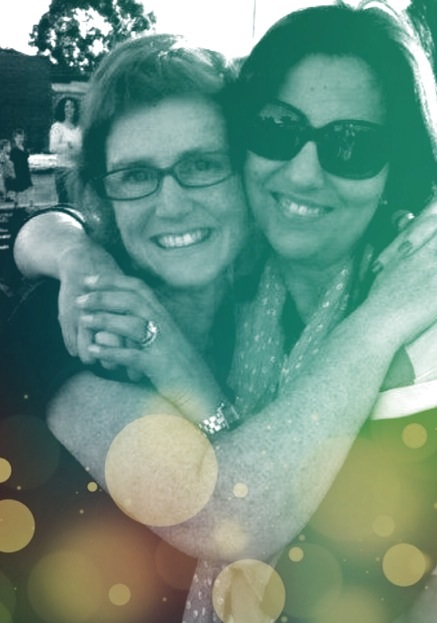
Jo suggested I start by having a look at the World Health Organisation’s definition of disability. This sent me into a world of pain because there were words I simply didn’t understand when put with other words and you know, comprehension.
So, I yelled at her some more (it’s what people do when they don’t understand) and here’s what Jo said that made sense to a fool like me:
JO: Renza (you stupid chicken who may make decent brownies but you’re pretty bloody simple, really). What I’m trying to say is that the social model of disability says the disability doesn’t belong to the person with the condition (that would be considered the disability) – let’s say someone with cerebral palsy, for example. It belongs to the environment. The environment doesn’t allow for the disability to be accommodated. People with diabetes can accommodate themselves – carry or buy sugar if they are low is a basic example of accommodation.
RENZA: So, is it like this? The environment accommodates my particular needs. If I was sitting an exam, I could take time to check my BGL or treat a low or take an extra loo break if necessary. But if I had a condition that didn’t allow me to physically or mentally sit for the three hours required to do the exam or have the capacity to understand the questions being asked then I’d be considered as having a disability?
JO: You’re simple, but yes. Now go make me some brownies.
Of course, diabetes throws all sorts of things into the mix including complications that may result in disability. But for me as diabetes affects me now, there is no reason that I consider the fact that my beta cells decided to shut up shop and move to the tropics as a disability.
I see diabetes as a ‘delayer’ at times. There are times that RIGHT NOW it stops me doing what I want, but this is generally remedied quickly (sometimes, not-so-quickly) and I can do whatever it is I planned to do.
The reality of life is that people face challenges of varying degrees. I’m leaving the last word to the clever Jo who says: Some people have challenges that can relatively easily be overcome and others (perhaps someone with a profound and multiple physical and intellectual disability), can’t live, without considerable effort from their environment to keep them alive, and if they are lucky have some kind of quality of life. It’s all relative!
I’m very interested to hear what others think about this. Where do you stand? Do you have an opinion? Do you consider or refer to your diabetes as a disability?
Yesterday’s post about waiting to see my GP for 90 minutes past my scheduled appointment received some interesting comments and feedback both here on the blog and on Facebook and Twitter. Most people seemed to agree that the GP clinic displayed a lack of courtesy in not calling to let me know of the significant delay I was about to experience because my doctor was running so behind schedule. There is a great comment from a doctor providing the ‘other side’ of the story which makes for some interesting reading.
When I eventually was seen by my doctor, he apologised for the wait. He was incredibly sincere and said that it was ‘just one of those days’. I asked him what was the clinic’s policy when doctors were running considerably behind and he said that reception staff should call patients to let them know that there would be a wait, and inform the patient of the time they should show up to avoid sitting in the waiting room for too long.
He was upset – and very apologetic – that this had not happened in my case, and said that, quite simply, it was not good enough to expect people to wait for so long. He followed it up with the reception staff after my visit. And I spoke with the receptionist too as I was settling my bill. She said that they had been calling some doctors’ patients that morning, but not my GP’s. She also apologised.
So the wash up in all of this isn’t really that I had to sit around for 90 minutes. It’s that as a person who, unfortunately, has to spend far more time than I’d like to scheduling and attending doctors’ appointments, I do all I can to streamline the process as much as possible. I also understand the system – just like many other high-users do and try to manage it as best I can.
I was more than satisfied by how my GP dealt with the situation yesterday. There is a great comment on the blog from Rosie Walker who said if ….everyone’s time is considered equally valuable…. there will be acknowledgement, explanation and apology for people who are waiting and effort made to try to address the situation, invite suggestions or comment on how things could be improved. Really, that is all that I am asking for.





 Diabetogenic