On Monday evening, diabetes got a mention on the ABC’s Q&A program. Read all about it over at the Diabetes Victoria blog today.

After writing on Monday about the confusion I feel when I complain about the lack of CGM subsidies in Australia and my out of pocket expenses when considered against countries where insulin is out of reach of many people with diabetes, this piece is about changing the landscape here in Australia. Write a letter, make an appointment to see your local MP, tell your story.

And if, just like me, you feel conflicted about the inequality of health care around the globe, think about making a monthly donation to the Spare a Rose, Save a Child campaign, raising money for Life for a Child. I just did it now – incredibly easy to do.

Also, read about T1 International’s efforts and take part in their We Are The WORLD in World Diabetes Day campaign.


Around $80 bucks. That’s how much it costs for a CGM sensor in Australia. It’s expensive and it is completely out of reach of most people living with type 1 diabetes. There is no subsidy: you want it, you pay for it yourself.

I have been wearing a sensor on and off for the last eight or so years, as long as CGM technology has been available in Australia. In the last two and a half years, it’s been on more than off. And recently, I have found myself feeling completely lost without it.

I know how fortunate I am to be able to afford it, I really do. And yet, after I called the company to make my last order, and read out my credit card details, I heard myself complaining about the cost – to pretty much anyone who would listen.

And there, in my world, seemingly oblivious to anyone living outside it, my indignation at having to fork over well-over $300 to pay for the device that I need/isn’t a privilege/keeps me alive/keeps me out of hospital/is necessary for me to be well/helps my quality of life/reassures me/reassures my family (or whatever lame-ass reason I was sprouting) was being repeated ad nauseam.

But sometimes, this privilege is brought home in ways that make me feel shamed and ashamed.

At ISPAD + APEG last week, I attended the IDF Life for a Child update.  I make sure that I go to all the sessions run by the LFAC team at any conference I go to because I want to support the program in any way I can.

Many people will have heard of the Life for a Child program. I’ve written about it before – specifically when promoting the very valuable Spare a Rose, Save a Child campaign.

17,000 children from 47 countries benefit from the program. The focus and vision of LFAC have shifted slightly in recent years. It has moved from keeping children and young adults alive to improving health outcomes and quality of life.

The education and training initiatives developed by LFAC are making sure that there is sustainable impact being made to the lives of people living with type 1 diabetes. Much of this work is done through strengthening existing centres, which means more money going towards actually helping people, rather than the establishment of new institutions.

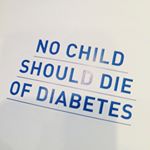
No child should die of diabetesEach time I hear about LFAC, I walk away with a mixture of feelings – most of them associated with guilt.

I feel guilty at what I have, when so many have so little. But more so, I feel bad complaining about what I have. Feeling like a spoiled ‘but-I-want-a-pony’ kid is pretty confronting. And disgusting!

I feel inspired by the kids benefitting from the program. I hear their stories and I can’t help it but feel inspired.  And then I hear Stella Young’s word in my head and know that they are not there to inspire me. They are just living. And then I don’t know what to do or how to feel. (And while Stella Young may have been referring to images of people with a disability when she coined the brilliant term ‘inspiration porn’, it works just as well when referring to these kids with diabetes.)

I don’t know how I go about acknowledging my privilege and not feeling guilty about it. I don’t know how to complain about some if the things that piss me off about diabetes without thinking ‘but it could be worse’.

I get mighty peeved when I hear people say ‘At least it’s not cancer’ because it starts to make different health conditions a competition. So is it okay to say ‘stop complainingat least you don’t live in <insert country name> where you wouldn’t even have insulin and would be dead in a year’?

Diabetes is crap – it is a terrible condition, there is no doubting that. And I think it is fair to say that for some people, it is more difficult and it is more unfair. The things that make it harder for some are so beyond anyone’s control, which probably makes it even more difficult. But is acknowledging that enough?

‘So, how many of you have patients who make treatment decisions based on their CGM?’

This was the question posed by one of the healthcare professionals speaking at this afternoon’s Dexcom symposium at ISPAD.

A few hands were raised. Not many; only a few in the packed room. Two of the hands that shot up the fastest belonged to a colleague and me, both of us referring to ourselves as the ‘patients’ – or perhaps each other.

We looked at each other and half smiled, shaking our heads. We knew the answer – we knew what the truth was. The response in my head was ‘Of course we do. Of course. I treat based on arrows telling me I am heading for a low without checking my BGL – I did it just before walking into the session.’

The question came after the announcement that treatment decisions could be made based on sensor readings from the new (yet to be released in Australia, but launched already in the US and in some European markets) Dexcom G5 CGM.

There has been much excitement from HCPs presenting about this new development in CGM – both at this conference and at EASD. It has huge implications because essentially, it is removing the need to do finger prick BGL checks, apart from the required twice-daily calibrations.

But it has been presented as if people using this technology have never, ever thought before to treat based on what their CGM data is displaying.

I doubt that any person using CGM has found this announcement particularly startling or surprising in any way.

But this is often the case. The release of new evidence or new guidelines or new data heralds a shift in ‘approved’ diabetes management or techniques and suddenly, there it is on all the shiny brochures and in all the shiny presentations.

And the people with diabetes who have been doing this, or have known this or understood it to be true from some time, look at each other slightly puzzled at what all the excitement is about.

I understand the importance of a strong evidence base. And I understand the need to be safe – especially as part of regulatory and approval processes. But sometimes, I can’t help but wonder why it takes so long for the evidence to catch up with what is already known, and match the anecdotal experiences that we hear and share.

It was great to have the speaker acknowledge that the show of hands after her question was probably not accurate of what was really happening.

‘You know your patients are probably doing it and just not telling you, right? They don’t want to be reprimanded for not doing what they are supposed to, but they probably are making treatment decisions based on their CGM data.’

It was probably the most frank thing we heard in that session – the twofold acknowledgement that PWD are already doing something that works but is ‘off label’, but are afraid to tell our HCPs about it, lest we get told off.

This time, when my colleague and I looked at each, we smiled widely. And we nodded. Because we knew it to be true.

Dear people who speak to (or about) people with diabetes

Hello! I write and speak a lot about language – see here and here for starters. I see people’s eyes roll and hear them sigh when I get back on my bandwagon. But it is an important issue, so please allow me to once again ask you to consider the words you use, the tone you employ and the message you are trying to get across. I am doing this having just returned from one international conference – EASD – and about to head to another – ISPAD – tomorrow.

Diabetes conferences can be a minefield when it comes to language. I can still feel my indignant response to a healthcare professional when, in his conference presentation, he repeatedly referred to the people who attend his clinic as ‘non-compliant diabetics’.

Language matters. It really does. You may think the words you use do not really matter and that once they are out of your mouth they are done and gone.

But that is not the case. Words last a very long time. They hang around for years and years. Don’t believe me? I am seventeen years into my diabetes journey (stupid word – is there a diabetes destination?) and I can remember things that were said to me at the start line.

I can remember the exact words muttered by my GP when she diagnosed my type 1 diabetes.

I can remember the fear my very first endo instilled when he (I am sure – I hope – unintentionally) scared the bejeezus out of me, with words of threat, warning what would happen if I did.not.look.after.my.diabetes.

I can feel the judgement in the words used by a nurse when she asked me why my blood sugar was so high as I was admitted to hospital with a frightful case of gastro.

I can remember choosing my words so carefully when I saw a diabetes educator so as to hide what was really going on because the words I wanted to use were so raw – I did not want to feel vulnerable in front of her and I did not want her to judge any of my diabetes management, or life, decisions.

I can remember zoning out when a healthcare professional was lecturing me about what I was doing wrong. Her words were making me start to second guess things that I knew were making some improvements to my diabetes management – mostly because they were making me feel better about myself, and making me feel okay about having diabetes.

But also…

I can remember the relief I felt at the kindness of the words used by my current endo when I first met with her.

I can remember the concern and genuine desire to help from the diabetes educator who found me crying in a stairwell the day after my diagnosis, and being so appreciative of her kindness.

I can remember a psychologist inviting me to tell my story by being open and non-judgemental, and then just listening. It made me feel validated and understand that saying ‘diabetes sucks’ is okay.

I can remember the cheeky – but incredibly respectful – humour used by a podiatrist when we spoke about my need to wear sky-high heels. And being thankful when she said that I didn’t need to throw out my boot collection!

I can still remember how pleased I was when a dietitian didn’t tell me off – in fact laughed with me – when I admitted that my breakfast that day had included two coffees and a doughnut.

Words have power. And they have staying power. You may not know that when you are in the middle of a conversation, or even afterward, but believe me when I say that they do hang around.

I can remember what people have said, the way they have said it, and the way I have felt about that throughout the last seventeen years, and some of those things still cause me to shudder. I know others feel the same way.

I am sure that you never, ever want to inflict any sort of pain from the words you use. But be aware that there is the potential for that to happen.

Choose your words wisely. Once they are said, they cannot be taken back.

Best,

Renza signature

Clearly, jet lag, daylight saving and time zone confusions have meant that any creativity left in my pea-sized brain has been zapped to non-existence. As has the ability to order the million things that I have read in the last couple of days.

So, with a slight inability to organise my thoughts clearly, here are some things on my mind today.

Stephanie Rice is not a medical professional (that piece of information is more for her than anyone else)

Yes, another C grade celebrity has been at it again: providing medical advice and pretending to be an expert of everything. Aussie Olympic swimmer, Stephanie Rice, has come under fire for starting a Q&A style section on her Facebook page, where readers could seek medical advice.

Now, part of me wants to say that if you think that asking an Olympic swimmer for anything other than advice about, I don’t know, swimming, you get what you get and you don’t get upset. But this isn’t really about Rice’s readers. This is about the arrogance that she is demonstrating in thinking that she actually has anything to offer here.

I was talking about this yesterday with someone and she looked a little surprised at how annoyed I sounded. ‘But isn’t that kind of what you do on your blog,’ I she asked.

I would like credit here for the incredible restraint I demonstrated in not stabbing her with a (blunt) lancet. I would also like credit for speaking to her with respect as I pointed out that no, this is no what I do here.

What I do here is talk about my experiences (such as my experience of getting annoyed at swimmers who think that you shouldn’t have a medically-prescribed MRI because ‘there is so much radiation’), but never, ever telling people what they should do (such as suggesting that you shouldn’t have a medically-prescribed MRO because ‘there is so much radiation).

Of course, Rice responded with an ‘I’m hurt – I’m only trying to share what I have learnt and how much I now know’ post that is defensive and naïve.

Also, it is where she has it wrong. And it’s where Sarah Wilson and her ‘I-live-with-autoimmune-disease-(as if it is a singular thing)-and-therefore-can-give-medical-advice’ also gets it wrong.

Your advice is worthless. You have no qualifications in medicine, so stop giving medical counsel.

What does have some worth, however, is sharing your story. People connect with that. They hear what you are going through and feel supported. It makes them feel less alone. It is not your job – any more than it is my job – to provide medical information to people.

So stop it. Just stop it.

Live longer

Yesterday, MJA (The Medical Journal of Australia) published an article – Recent advances in type 1 diabetes – authored by some of Australia’s leading clinical experts in type 1 diabetes.

There were some really interesting points mentioned including that, in Australia, the incidence of type 1 diabetes has doubled over the past 20 years.

But for me, the most interesting and hopeful point (which was also the focus of the media release) was the following statement:

Although T1D is still associated with considerable premature mortality, recent findings show that a significant improvement in life expectancy has occurred.

I have always had in the back of my head that my life expectancy will be shortened by fifteen years due to my diagnosis of type 1 diabetes. It’s not all roses and I am not in denial that there will be challenges as my diabetes – and I – get older. But there is some good news in here. And for that, I do have some hope.

Do this survey

Abbott Australia has a series of surveys live at the moment for adults with type 1 and insulin-using type 2 diabetes.

YourSAY (Self-management And You) asks what it is like to live with diabetes each day, specifically looking at the behaviours and attitudes to diabetes self-management and glucose monitoring.

The survey takes about twenty minutes to complete and is open to anyone who meets the following criteria:

  • Live in Australia
  • Be aged 18-70 years.
  • Have been diagnosed with type 1 or type 2 diabetes
  • Be currently using insulin injections or an insulin pump
  • Not currently be using a continuous glucose monitor (CGM)

Sound like you? Then hop to it by clicking here.

New look

Go check out The Parents’ Voice. Here, you’ll find the new name and new look of The Parents’ Jury. And while you’re there, considering signing up and becoming a member. The Parents’ Voice is all about improving the food and activity environments of Australian children.

#DOCtober

Grab your phone – or, if you’re old school, a camera – and join this month’s #DOCtober photo challenge. Kerri Sparling is documenting the month in photos on Instagram and on her blog and is asking you to join in. The idea is to find something diabetes-related and post it in social media land for all to see.

I’ve been pretty lax…as in have not posted a single thing…but here is my contribution for today. This is my desk at work with all the found objects from EASD.

DOCtober

Things I’m missing about Scandinavia

Cinnamon buns. Recipe found; baking planned. As soon as the weather cools down and I can consider turning on the oven!

Tick tock

As I’ve mentioned before, I often use the stat that we spend approximately six hours a year with HCPs working on managing our diabetes. It works out to about 0.07% of the year.

On his blog, Manny Hernadez has broken it down and  wrote this great piece. He reckons that it is even less, with his calculations coming in at 0.007% of the year.

Whichever what you look at it, it’s not much time at all! And, it serves as a reminder of just how much little time we have professional assistance when dealing with diabetes.

So, remind me again who the expert is?

That’s cruel

I wore a green dress yesterday.

NotARealGreenDressThatsCruel

So have been listening to the Bare Naked Ladies ever since.

I’m back!

Yes – three weeks of conferencing and travelling and walking and eating and doing not much – and yet so much – have come to a jet-lagged conclusion and I find myself back writing, back at work and, most importantly, back with the kidlet. Which means all is wonderful and I am happy.

So, some diabetes highlights/lowlights from my travels.

This at Dubai airport. Double arrows down, a shitload of insulin on board and a grumpy face. Cleary, a lowlight!

Low in Dubai airport

And because I am #NotGoodAtDiabetes, I did it again in Copenhagen:

Low in Copenhagen

And in Stockholm.

Low in Stockholm

Stopping in my tracks (and employing the brilliance of Google Translate) after seeing this newspaper on our last night in Stockholm.

diabetes newspaper in Stockholm

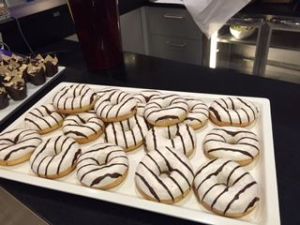
Being so grateful for this sight in the press room at EASD in Stockholm…

Doughnuts at EASD

… because I was low with #ConferenceHypoSyndrome.

Conference hypo syndrome

Days doing this:

30 thousand steps

Which meant crazy days of barely needing to bolus as we walked, walked, walked and walked all over cities.

And days of walking meant carb stops of cinnamon buns flecked with cardamom and sprinkled with sugar in Stockholm. And in Copenhagen, no cardamom, but icing drizzled over their tops. And then, once in Paris, flaky, buttery pastries that left tell-tale crumbs down our shirts.

pastry

And coffee. Coffee. Coffee. Coffee.

Coffee coffee

And ice cream because when in Paris, one must Berthillon!

Berthillon

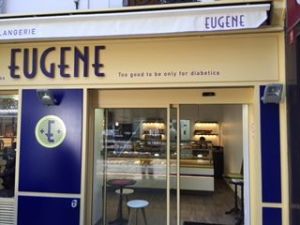
In Paris, I came to an abrupt stop when I saw this:

Eugenes

I went in and spoke to the baker who told me that all the pastries were made using low sugar and low fat recipes. ‘Why?’ I asked him. ‘Why did you start this bakery?’ ‘My father has diabetes. And I do too.‘ He said. ‘And so do I,‘ I told him. We bought a croissant and I was expecting something dry and without the wonderful full flavour of a pastry whose main ingredient is butter and was surprised. It tasted delicious. He knew what he was doing! (Questionable marketing aside!)

There was the crappy night where I realised that my pump was out of insulin and, in my handbag changeover, I had forgotten to throw in my ‘spares bag’, so we needed to leave the jazz gig we had travelled halfway across Copenhagen to hear – before it even began – so that we could get back to the hotel and replenish my insulin stores. A complete #EffingDiabetes moment.

On our way from Copenhagen to Paris, I set off every possible alarm at security and was directed to a security officer. ‘I am wearing a medical device,’ I began, expecting the questions and the confusion and the necessary explanations. ‘An insulin pump? You have diabetes?’ was the reply.  My stunned look was met with, ‘My husband wears one.’ And she smiled and sent me on my way.

But then in Dubai, as I was escorted to a sparse,  windowless room, my ‘I have diabetes, I am wearing a medical device,’ was met with confusion and questions and the need to find a supervisor and, for the first time ever, a request for the letter from my doctor.

But here’s the thing. When I look back at this time away, it won’t be the hypos or the highs or the diabetes that I remember. It won’t be the times I had to stop to guzzle juice, or check my BGL. It won’t be the numbers or the alarms, warning me to eat something.

It will be the days spent catching up with DOC friends. It will be remembering how, with some of these friends, we made ‘riding the worm’ a thing in Sweden. It will be visiting the ABBA museum, and wandering around cemeteries. It will be afternoons being reacquainted with friends who live half a world away. It will be lounging on the grass at Place des Vosges, and sitting in cafes that we have visited before. It will be thinking about the amazing food – like the incredible beef tartar in Stockholm, and Berthillon’s blood orange sorbet. It will be about the waiter at a local café near our apartment in the Marais who didn’t so much as walk as shimmy and sing our breakfast order back to us. In French.

It will be about all those things. It will never, ever be the diabetes. Ever. And that is just the way it should be.

I had a lovely message today asking me if I was okay. I haven’t posted for a few days and they were wondering if all was fine. Thank you for checking in, J! All IS fine. After EASD I have taken a little break and am spending some time in Europe. We’re in Paris,  heading back home later this week. 

And I’ll be back blogging soon, writing up lots about my time at EASD and the Euro Bloggers Summit. And talking about the food I’ve eaten. And the coffee and wine. And the wonderful DOC friends I’ve seen. And how my diabetes has been behaving. Or otherwise. 

See you soon. 

‘Oh, it’s beautiful.’ These were the words the followed the sharp intake of breath as I saw the Kaleido pump stand at EASD last week. I didn’t say it to anyone in particular – I was wandering the expansive expo hall alone at the time. It was completely involuntary. The stand was a rainbow – I may have said to someone that it looked like a unicorn had thrown up in there.

IMG_1800

You can read all about the Kaleido here. This is where you get to read about the specs and the details all tied up in the usual marketing spin that is inevitable when it comes to diabetes devices.

IMG_2010My take on it – after a long chat with one of the developers – is that this is a nifty little pump. It is simple – really simple – with far fewer bells and whistles than available on other pumps. There is no CGM compatibility. At this point there is no bolus wizard calculator, however, following feedback from customers, the company is developing one.

The simplicity is actually part of the beauty in a lot of ways. Those of us experiencing data burnout might find some relief in a pump that is loud and proud in its claims to be a delivery device. Full stop.

IMG_1802Enough about all that. What I want to talk about is how it looks. This could be because I am shallow – let’s start with that – but I think there is more to explore in here.

There was a lot of excitement from diabetes people at the event. There were a number of times that in conversations with fellow PWDs the Kaleido came up. Photos were instagrammed and tweeted, with a lot of attention being given to the gorgeous design and kaleidoscope of colours available. (Get it? Kaleidoscope…)

And inevitably, there were comments from people asking if colour is really something to be getting so excited about.

My answer to that is: actually yes.

At the moment, there are people around the world deciding what colour their next iPhone will be. Apple recently announced a rose gold case to accompany the grey and gold already available. People make decisions based on how it looks, the emotional pull, how it will look with what they are wearing.

IMG_1799So why is it perfectly acceptable for decisions about other tech to be about how it looks and how it makes us feel, but it’s not okay for us to take this into consideration when thinking about which insulin pump we want to use?

Obviously, we need to feel confident that it will deliver insulin accurately, that it won’t malfunction if you look at it the wrong way, or that, if something does go wrong, there is good customer service. Of course all of these things are important.

But if we can assume that it will pass the accuracy test (approval processes are tough!) and that, being a new company, they will be doing their utmost to get their customer service game right, then how it looks and makes us feel is an absolutely reasonable and rational thing for us to consider when making a decision.

The first time I went to EASD (back in 2012), I met Fredrik Debong from MySugr and he said we need to make diabetes sexy. I agree. This is a condition with a serious image problem. MySugr is all about injecting some appeal and fun into diabetes, while producing a product (a kickass app) that people love and use because the functionality is brilliant.

Funking it up a little is a good thing. And this little pump is a step in the right direction!

No – I am not funded by Kaleido. No I did not receive any product. Yes, I did ask when it is coming to the Australian market. There is no official word on that yet, but we are certainly in their plan. The launch markets will be in Europe.

IMG_1805

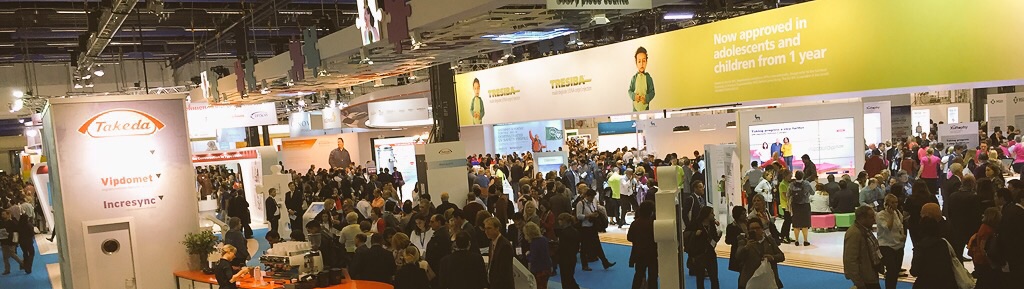
It’s day two of the 2015 EASD conference in Stockholm. Sunday and Monday showcased some impressive symposia – including industry announcements – and yesterday the official opening ceremony started the conference proper.

We arrived in Stockholm around midday on Sunday after 26 hours in transit, so the afternoon was spent settling into our hotel which, bizarrely, has only round windows giving the odd sense that we are in a boat. Seventeen floors above ground level. In the sky. Weird, but gives an incredible view of each morning’s sunrise!

In keeping with EASD tradition, the conference is very science-y. There is little about the psychosocial aspects of diabetes and minimal input from people with diabetes. I have developed a twitch in my right eye because I keep hearing the word ‘diabetic’ and as much as I try to tell myself to get over it, it just doesn’t sit right with me coming out of the mouths of clinicians.

There is much mention of the ‘patient perspective’ and on Monday there was an entire symposium dedicated to it. Unfortunately, there wasn’t an actual ‘patient’ on the panel, which surely is weird. It is, right?

But despite the limited presence of PWD in the official programme, there are a lot of satellite events and activities taking place.

IMG_8265Yesterday was #DOCDAY, an event organised by Bastian Haulk from he German online community. He had hired a space in downtown Stockholm and invited bloggers, advocates and others with diabetes to come along, network, chat, and talk about what we are all doing in our different communities and the larger DOC. Bastian asked me to say a few words at the introduction and I highlighted for me what is the most important thing when we are talking about the DOC: No one owns this community. No one is more important or more relevant or more powerful.
Sure, some of us are very fortunate that we get to actually meet IRL and attend conferences, but we do it as part of our jobs – whether it be like me (through my work at a diabetes organisation mixed with my online work) or through independent consulting or other work.

But regardless if you are in the room or following along on Twitter, everyone has the same right to be here and to be part of it.

Two separate blogger summits have been organised by industry – I will be attending the Johnson and Johnson DOC Exchange event tomorrow and Friday. These activities showcase just how smooth PWD and industry can work together – disclaimers and all that sort of stuff out in full view!

image

The Exhibition Hall here is, as expected, huge. Whilst the usual suspects are all here in force, there are also a few new faces on the scene. The Keleido pump is something to watch – if, for no other reason, than the gorgeous colour spectrum!  More in coming days!

IMG_1200-0While we’re talking new stuff, check out this gorgeous range of clothing from Anna PS (Scandinavia). Anna is delightful and started this company to address a gap in the market, producing high quality t-shirts, bathers, underwear and more to accommodate diabetes devices such as pumps, CGM receivers, pens etc. The clothing is of the most beautiful designs – the fabrics are divine. (And yes, she ships to Australia!)

There is a lot on show and a lot being presented and as in previous years, I have found this conference a lot more daunting than other meetings like ADA or our own ADS-ADEA. but there is plenty to write about and share. More in coming days.

The noise in the café was overwhelming, yet just a few minutes earlier it was quiet. I couldn’t hear Aaron who was sitting next to me or my friend, S, who was sitting opposite me. Their words were foggy and unclear. Something clattered to the ground and the noise startled me. I threw back what was left of my coffee.

All of a sudden, one of the café staff was standing next to me, leaning over saying something.

What?’ I said, sounding irritated. I stopped myself, realising what was going on. ‘Sorry. My blood sugar is low. I need… Do you have…? Could I have…?’

She looked at me and stood up straight. ‘What can I get you? Juice? Sugar?’

Um…yes.’ I said

I heard her call into the kitchen, ‘I’m putting an orange juice through the register, but I need it now. Like right now.’

Within a minute, she had gone into the kitchen and gently placed a large freshly-squeezed orange juice on the table. ‘I’ll be back in a sec.’

And she was. As soon as I had downed the juice. ‘Are you okay? Can I get you something else. I know. I have some cookies.’ And she walked to the counter

The room was still foggy and my brain felt like it was wrapped in cotton wool. Aaron and S were talking to each other, but keeping an eye on me at the same time.

My new friend was back with a small plate of the cafe’s delicious peanut butter choc chip cookies that come on the side of all coffees.

I smiled at her. ‘Thank you. Really. Thanks.’ She brushed my gratitude aside.

We finished up. ‘Feeling okay?’ asked Aaron. I nodded, and stood up, making my way to the counter to pay.

Thanks again,’ I said to the waitress.

Do you have diabetes?’ she asked.

Yes. How did you know?’

‘My dad has diabetes. I could tell straight away. You had the same look he does when he needs sugar. But anyone would know, right.’

‘Ah, no. Most people wouldn’t have a clue. Thanks so much for being so great. I really appreciate it.’

I paid the bill and left a decent tip in the tip jar and we walked out of the cafe. ‘Put it on your blog,’ said my friend. ‘Oh, I will,’ I said. ‘I will.’

image

Stockholm next week. Here’s some ABBA.

Follow Diabetogenic on WordPress.com

Enter your email address to follow this blog and receive notifications of new posts by email.

Read about Renza

Archives