It’s beginning to look a lot like World Diabetes Day. Facebook pages are being turned blue, people are asking is to wear blue and blue circles are appearing everywhere. How November 14 has come around again is beyond me.

So with lots happening this week, here is a quick look at a few things I’ve been seeing in the diabetes interwebs.

The bit where I am ashamed to be an Australian

Yesterday, I read a piece in The Guardian that made my heart break and my brain explode in equal measure.

A woman with diabetes being held in a detention centre on Narau is currently 40 weeks pregnant. Doctors on the island have urged that she be moved to the mainland to receive the care that is required of what is considered a high-risk pregnancy however the ‘medical officials’ (whoever they are) are refusing to do so.

Pregnancy with diabetes can cause problems for both the mother and baby if specialist care is not given. Babies frequently need to spend some time in the special care nursery as they are born with (or develop shortly after birth) low blood glucose which requires monitoring. Mothers often require extra care at the end of the pregnancy, with healthcare professionals keeping a very close eye on the placenta.

Our immigration minister, Peter Dutton, calls this a ‘racket’ and is refusing the doctors’ calls to move her. My heart breaks for the mother and baby. And for Australia. What sort of country am I living in?

Rolling my eyes at concerned healthcare professionals

On page two of today’s Endocrinology Specialist Update with a story about has come out with a story about hacking diabetes devices. Of course, the article highlights how ‘… some doctors and health experts are cautious about the idea of patients taking matters into their own hands’, a comment that made my morning coffee spurt out of my nose.

The president of the RACGP believes that the dangers of such practises would outweigh the ‘perceived’ benefits. He also encourages that ’ … It is important for patients to have a conversation with their GP about any patient-led monitoring system or treatments they use’.  

Not sure about any of you, but my GP – and remember, he’s a good one who understands diabetes – would have the first clue about what CGM is all about, let along how it can be hacked to share my information with friends and family.

Great work RACGP and other HCPs in catching up on this. Nightscout (CGM in the Cloud) has been around for a while now, so this really isn’t new information. Its (closed group) Facebook page has almost 15,000 members. This is just another example of healthcare professionals being clearly out of touch with PWD and what we are doing to live as best we can with this stupid condition.  Also, #WeAreNotWaiting for device companies or healthcare professionals to do this for us. Because if we did, it would never happen.

Melissa Lee uses words that make sense

Every word of this brilliant piece by Melissa Lee is important where she writes about diabetes being a punchline. This is such a balanced post (published on diabetes magazine, A Sweet Life) and I urge you to read it and forward it on.

From now on, along with sending copies of the Diabetes Australia Language Position Statement to anyone who writes something careless about diabetes, I think I’ll link this too. Thanks, Mel. (The only thing that could make this better is if you were to sing it. Could you do that?)

You want some hope?

Here you go. Read this update from Kerri Sparling about the iLet Bionic Pancreas.

In Melbourne? Want to do something for World Diabetes Day?

Come to this on Saturday and celebrate WDD with other people with type 1 diabetes.

Wear Blue

I was reminded of this fun little video that Cherise Shockley made a few years ago. So get your blue on and raise some awareness about diabetes this week and for the rest of the month.

IMG_0220

I’ve spent the day in our nation’s capital for a meeting. And here are two things.

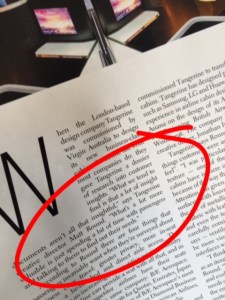
This one made me smile. Because whether it be designing seats on planes or health services, consumer engagement is key.

image

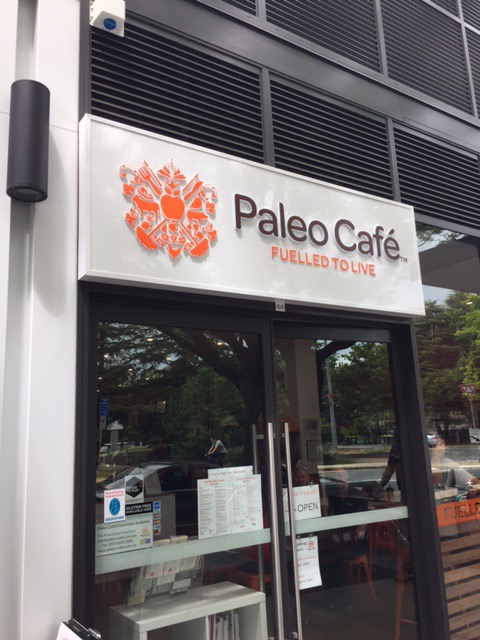
And then this. Which made me cringe.

IMG_1268

Why, Canberra, why?

Have a great weekend!

I was pulled up yesterday for getting things wrong about the discovery of insulin. We were asked in a meeting why World Diabetes Day is celebrated on 14 November, and like the nerdy-goody-two-shoes I am, my hand shot in the air and I was called on.  It was like being in year 8 again.

‘It’s Frederick Banting’s birthday.  Banting, along with Charles Best, is credited with discovering insulin.’

‘Stop,’ I was told. ‘Before you keep getting things wrong.’

I was then given a history lesson and told that while Banting and Best were responsible for isolating insulin, it was actually Edward Albert Schafer who discovered it.

So have Banting and Best been heralded all along for something they didn’t deserve? Was it in fact Schafer who should be credited? Well, no. Not really.

It is true; Schafer – actually Edward Albert Sharpey-Schafer – did have a role in the story of insulin. But so did others. Many, many others.

I couldn’t sleep last night, so searched on our bookshelves for my copy of The Discovery of Insulin. I remember reading it years ago and found the history of the little hormone that could absolutely fascinating. As with many discoveries, it was a combination of years of work by many researchers and also, some luck thrown in!  

It was German medical student, Paul Langerhans, who first identified the clusters of cells – islets – in the pancreas, however could not determine their function.  This was in 1869.

A French physician, Etienne Lancereaux confirmed through his research that the cause of diabetes was something to do with the pancreas – in fact, he published a paper coining the term diabète pancréatique (published in 1877). It is Lancereaux who defined two forms of diabetes.

In 1889, two German scientists found that if the pancreas was removed from dogs, the animals developed symptoms of diabetes – excessive thirst, increased urination, weight loss – and died before long. However, these researches – Oskar Minkowski and Josef von Mering – were unable to find the specific chemical responsible for the elevated glucose levels.

This is where Edward Sharpey-Schafer joins the story. Schafer’s experiments – from as early as 1894 – identified that in people with diabetes there was one chemical missing from the pancreas. In lectures at Stanford University in 1913, he named this chemical ‘insuline‘ taken from the Latin word for island ‘insula‘. (Langerhans, in his 1969 dissertation, had referred to the islets in the pancreas as ‘islands of clear cells’.)

However, someone had already beaten Schafer to it. Belgian clinician and physiologist Jean De Meyer is actually credited with coining the term ‘insulin’ in 1909 where he noted: ‘the internal secretion of the pancreas (not as yet named) and which, if derived, as we believe, from the islets of Langerhans, could be called insulin’. Schafer denied any knowledge of de Meyer’s earlier work.

This was all before Banting and Best, in their experiments, discovered exactly what insulin did and how to isolate the hormone. This was in 1921 and it was this work that led to injecting insulin into dogs with diabetes, and in January 1922, the first insulin injection was given to a person with diabetes.

It is Banting and Best’s work that is responsible for me being alive today.

As with any good story, there is controversy and intrigue. Nicolae Paulescu, a Romanian physiologist, is thought by some to have been the real hero in the discovery of insulin. In his experiments, Paulescu showed that a chemical he called ‘pancreine’ clearly lowered blood glucose levels in animals. However, in 1916 when Bucharest was occupied, his experiments were abruptly stopped and he was unable to publish the results of his experiments until August 1921.

I am Australian, but that doesn’t mean I think it’s okay to discriminate against people from other countries.

I am a woman, but that doesn’t mean that I think it is okay to be sexist to men.

I am of no particular faith, but that doesn’t mean that I go around discriminating against people who are.

I am a mother, but that doesn’t mean I think it’s okay to be nasty to women who are not.

I am a straight woman, but that doesn’t mean I discriminate against anyone who is of a different sexual orientation.

I have type 1 diabetes, but that doesn’t mean I stigmatise those with type 2 diabetes.  

So when I saw this initiative from JDRF, I immediately ‘blue-ified’ a photo and stuck in on Twitter and Facebook and Instagram. Because it’s true. T1D DOES look like me.

And then I was kinda baffled at the storm that started brewing because this campaign was considered to be dividing the community.

I had to stop and think about that for a moment. As someone who is rather vocal about how destructive the ‘type wars’ can be, I wondered if this campaign was also contributing to the ‘us and them’ rhetoric.

But I really, really struggled to understand why there was the angst.

There are differences between the diverse types of diabetes. But that absolutely does not mean one is better or worse than the other. It doesn’t mean that one is more serious than the other. It doesn’t mean that one is more deserving of sympathy, or research funds, or attention.

Diabetes awareness is important for us all. And this campaign is brilliant in showing that type 1 diabetes doesn’t have a ‘look’ or a poster child. In fact, it shows that type 1 diabetes is not all about children, which is often how it seems. It presents the diversity of the community and it shows that assuming everyone is the same is a mistake.

T1D looks like me. And like 118,000 other people around Australia and a hell of a lot more around the world.

t1d looks like me

I’m in the middle of a lovely four day long weekend. Because of a horse race. Thanks, Melbourne!


See you on Wednesday!

We have a taqueria just around the corner from our place. As is the norm in our suburb, it’s very hipster – staffed by people far-cooler-than-I’ve-ever-been with bemusing facial hair that I understand to be ironic, but in my mind just reminds me of either a lumberjack, Salvador Dali or someone from a barber shop quartet.

But I can overlook all the posing, because they serve a kick-ass mojito and awesome tacos. Plus, it really is a three minute walk from our place.

We went there the other night. We were kid free (yay for camp!) and within minutes of jumping out of the cab after getting home from Brisbane, we were making our way there. I had been low for much of the two hour flight, my CGM emitting a piercing ‘You’re low, treat it’ alarm and me hissing ‘Shhh. Pay attention to the jelly beans I’ve just eaten’ at it, making me appear a slightly crazed women muttering to a box down her shirt. I also set a temp basal rate, certain that I’d regret it later and would be high as a kite by the time the plane landed. I was wrong.

I was still eating jelly beans in the cab, but at least my CGM line was steady and by the time I paid the driver, it was sitting at 3.9mmol/l and the arrow was straight across. So when we were walking to the restaurant and I could feel the low alarm continuing to vibrate, I was pretty confident that the sugar would kick in soon (like, now!) and all would be right. And the temp basal rate was still active, so not only didn’t I have any insulin on board, but I’d had hardly any basal insulin delivered for two hours.

Tequila soupWe threw our things down at a table and went to the bar to order. Thinking it better to be safe than sorry, I ordered an orange juice alongside my mojito and drank it quickly as soon as it was placed in front of me. I swilled the ice around, making sure I got every last bit of the available sugar.
I could sense that I was really low again, but even through the fog, I knew that a lot of glucose had been consumed in the last hour or so. I subconsciously reached under my top and disconnected my pump, and could feel my skin was slick with sweat.

At this point, I was feeling a little confused because at what I thought was the middle of a conversation, Aaron stood up and walked away from the table to the bar. I couldn’t work out what he was doing (my vision at this stage was unreliable at best). Eventually, he returned with another glass of juice – this time, no ice – and gently put it in front of me.

I drank it in one slurp (graceful) and sat back, reaching into my top to silence the alarm, which was helpfully telling me that I was still low. My mouth was buzzing, my lips and tongue feeling slightly numb.

You were really low,’ Aaron said to me later on.

Really? How could you tell?’’ I honestly thought that I was doing a perfectly good impersonation of carrying on a conversation, and the hypo was not on show for all to see.

‘You started a sentence five times. And never finished it. You just sat there in silence after saying a few words. And eventually would start another sentence. Or the same one. And not finish it.’

I had no idea.

I can’t pin point why I was so hypo. I didn’t ignore the impending low – as soon as my pump alarmed to suggest I was at the low limit (which is set above hypo level so that I do something before actually being low) I started treating. I continued to treat and monitor. I set a temp basal rate. I did everything by the book.

But still, it was a sticky low that wouldn’t quit. There was no shocking rebound – I reconnected my line when we left the restaurant and my CGM was reading 7mmol/l, and the next morning, I woke up feeling fine.

And when I think back to it now – and when I reviewed the CGM graph the next day – I am reminded just how crap diabetes can be at times. It’s certainly not the worst low I’ve ever had, but it was awful.

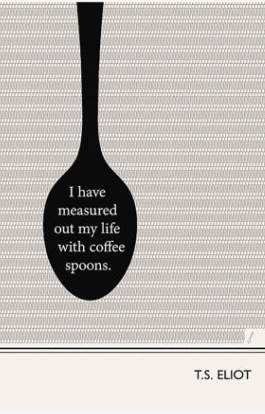
T.S. Eliot, in a poem, once wrote:

i have measured

While this could also be true for me, it could also be said that I measure out my life in glasses of juice. Lots of juice.

Unfortunately, I couldn’t find any lovely literary quotes to accompany this sentiment. Except this.

Drink juice shelby

Yesterday, I wrote about a Facebook post that I came across which I felt was powerful and showed the value of social media and support. I shared that post here.

And yet, with one hand, Facebook giveth; and the other it taketh away.

Because then I came across an article about diabetes that make my blood boil. I clicked on the link (which I reluctantly share here) as I stood waiting to board my flight to Brisbane and actually said ‘Oh, for f*ck’s sake’ out loud, impressing the guy in front of me and earning me a dirty look from the woman standing next to me.

The article is actually from the beginning of the year, however, thankfully, I have somehow managed to avoid it for the last 10 months. But yesterday, there it was. Sprouting misinformation about the health condition I live, most reluctantly, alongside.

I only have myself to blame. What did I expect reading the Daily Mail? Certainly not anything resembling decent journalism. And certainly not something based in fact.

The title of the article was the first thing that had me scoffing: I’m scared to go to sleep’: Mother’s 24/7 struggle to keep her daughter alive as they battle form of diabetes that could kill the 15 year-old in minutes.’ (Emphasis all mine.)

Now I am the first person to say that I certainly don’t know everything about diabetes. I’ve never ever claimed to, but I am pretty sure that there is no form of diabetes that can kill someone in 15 minutes. And yet, according to the article, Grace, the fifteen year old in the article, ‘could die within minutes without insulin injections.’

Again, I am no expert. But I know that fifteen minutes without insulin isn’t going to kill me. Or anyone. Even if I ate a whole pavlova washed down with a bottle of full-strength Coke.

But there was the Daily Mail claiming that death would eventuate if there was a quarter of an hour delay in insulin administration. (This bodes most poorly for me and my ‘shit-I-forgot-to-bolus’ days that seem to plague me when there is something more interesting than pinging insulin into my body.)

Apparently, this form of diabetes was caused when …’the disease caused her immune system to eat her own pancreas…’

I understand the need to use language that makes sense to people when it comes to describing what diabetes is all about. But suggesting that diabetes causes our body to ‘eat’ vital organs is the stuff of horror movies, not autoimmune conditions. Surely, the general public can understand the explanation that ‘type 1 diabetes means the pancreas is no longer able to produce insulin’, or something similar that doesn’t suggest some sort of extraterrestrial being has moved in and is feasting on our insides.

I find articles like this frustrating on a number of levels. It is such a melodramatic and false description of type 1 diabetes that it amazes me that anyone could consider this enlightening or educational in any way whatsoever.

This is a perfect example of misreporting of type 1 diabetes, but the voices of OUTRAGE that accompany the potential confusion of type 1 and type 2 diabetes, or the ‘people don’t understand what it is like’ are missing here, instead many are saying that it is a good representation of what it’s really like. And this confuses me greatly.

Because all I see us an article with a lot of incorrect information.

How anyone could consider this article as anything other than disempowering, stigmatising and downright damaging to those of us living with diabetes is beyond me.

Over the weekend, my Facebook friend, Brad Slaight, shared a story that got me thinking. He summed up perfectly the power of connections and the value of speaking with others sharing our experiences.

I’ve not met Brad. We know each other only through social media. He is a funny guy – in fact pretty much all of his posts make me laugh out loud. You can read all about him, and the ‘Diabetes Hero Squad’ here.

I have read this piece several times and each time I am struck by just how the family in is story would have walked away from their encounter with Brad feeling relief, support, less isolated and less alone. It is how I feel whenever I connect with others living with diabetes.

Brad has kindly given me permission to publish his post here. Thanks, Brad!


I’m always interested in meeting another person with diabetes and after the secret handshake I enjoy listening to their story, their struggles, and their methods of control. Even with strangers it is always an immediate bonding because we are conjoined by a common life threatening, daily maintaining condition that cuts through the awkward veil of trust.

But tonight it was different. I went to a party at a beautiful home in the Pacific Palisades. An upscale community near the ocean with homes that in the Midwest would be expensive, but here in Los Angeles you have to be in the top 1% to own. This party was catered, valeted, and lavish.

I never feel out of place at these kinds of things even though my socio-economic status is not quite on the same level with the majority of the other guests. But since I am in the entertainment business I usually fit right in and can charm my way past any portfolio flaws. Money and power does not always mean personality. I’m pretty gregarious and make friends easily and tonight was no different. Flitting around from one group to another I came upon a stunning couple who looked like they just stepped from the pages of Forbes Magazine. Young Republicans I thought. Well groomed. Fashionable. Rich.
I planned on walking right past them because I saw nothing in common. And then, the woman grabbed my arm.

You’re Brad, right?” She asked. A wave of paranoia came over me. What had I done? How did she know me? What did she want? I made some lame joke about not being Brad Pitt and she forced a laugh but I could see some unexpected pain in her eyes.

I don’t mean to be forward,” she continued. (Forward? Who fucking talks like that, I thought to myself) “Shannon told me you have diabetes.”

Oh my God, I’ve been outed. As if I really care. But why was she asking me this? I would have preferred that she said something like, “You’re a comedian, right?” or “I recognize you from TV” or anything else that would be complimentary. I don’t mind people knowing I have diabetes, but it’s not really what I want to be known for?

The next thing that happened completely took me by surprise. She told me that their 7 year old son was diagnosed with Type 1 diabetes two weeks ago. This was the first time they had been out of the house at night since then. And they had to force themselves to come to the party even though they wanted to stay home and hover. Immediately they were one of us. Diabetes – the great unifier! They were in the club. I understood their pain and at that moment I also felt it because it hit me in the gut. Seven? Fuck. I was fortunate enough to get it when I was already an adult. Seven!

We talked for the next hour and a half. The rest of the party became an oblivious blur. They listened to me as if I were Yoda as I told them my story and stories of others who I have known from the D.O.C. They hungered for knowledge about diabetes. Where do they go? What do they do? Why did it happen to their precious boy? When will it be cured? How will he deal with this horrible disease? The same questions we all have had, and many that we still do.

I told them about the usual links and sites they should explore. The JDRF, the ADA, TuDiabetes, and others. But what they wanted to hear most was how I’ve survived for 30 years with diabetes. What do I do? How do I manage? Have I gotten any of the terrible complications they’ve been told about? And it was then that I realized how important all of the diabetes online community has been for me. How important it is to not feel so alone. So isolated. And how terrifying this disease is for those who are newly diagnosed and the people who love them, because it changes their life as well. I told them what I could but made sure to remind them that, even though we all share the same disease, we are all different and finding a good endo is key.

Most of all I told them how important it is that they were scared because that means their boy has great parents who will make sure he gets the best care possible. The fear will lead to knowledge, which will lead to the best kind of advocacy of all. And I told them that they need to seek out other parents who have CWD because they too need to understand they do not have to face this all by themselves.

Next week I am going to have dinner at their house and meet their little boy. I won’t tell him about all the technical stuff. In time, he will learn all that for himself, because he will have to. No, what I will talk to him about is that there are many of us. He is not alone. And I will give him an autographed picture of The Diabetes Hero Squad. I will tell him that he is a diabetes superhero. And I will make sure I don’t cry until after I leave.

I went to a party. I found out about another one of us. He’s seven.

We need to find a cure!


With the weather changing, I find myself starting to rethink what we are eating at home. The delicious and warming braises and casseroles that have been a staple of the cooler months are replaced with lighter options such as salads and grilled chicken or steak. The oven is rarely turned on – instead we need to think about buying a barbeque for the back garden so we can grill and eat outside.

My trusted and well used Le Creuset heavy-based casseroles seldom come out from their cupboard. But large salad bowls and platters are on frequent rotation, piled high with lighter food.

Fruit is no longer stewed, instead cut up and eaten fresh. The selection in the fruit bowl and in the fridge moves from mostly citrus and apples and pears, to stone fruits – nectarines, peaches, mangoes. Grapes get popped in the freezer; melons are cut up in Tupperware in the fridge for easy-reach snacks and we start to count down until cherry season hits.

And fruit is also thrown into salads – mango mixed with chicken, avocado, walnuts and rocket; white nectarines sliced and sprinkled over platters of cooled freekah, fresh tomatoes, herbs, artichoke hearts and prosciutto.

If only I had a green thumb, I’d get into planting vegies too. Alas, an overflowing pot of basil is usually all I can manage – meaning an easy meal of fresh pesto stirred through pasta is never more than 10 minutes away!

Mimicking the change of seasons with a change of our menu is one of the most wonderful things about food. It reinvigorates meal planning which can get in a rut and helps keep things interesting. And it’s easy for me – with easy access to farmers’ markets, fresh food stores and the Queen Victoria Market just across the road from work.

I’ve been thinking about this a lot recently because, as many of you may know, the IDF’s campaign for World Diabetes Day this year centres on healthy eating and, more specifically, access to fresh and healthy foods.

Because the food we eat does impact on the ability to manage our health. And diabetes is part of our health.

Some people with type 1 diabetes are a little pissed off at this message. They are banging the ‘type-1-has-nothing-to-do-with-what-you-eat-and-this-is-mixing-up-the-messages-and-what-I-ate-had-nothing-to-do-with-why-I (-my-child) –got-type-1’ drum and have been annoyed that the IDF is daring to suggest that there is a link between food and the wellbeing of people with type 1 diabetes.

But the food we eat does impact on our diabetes management, something that sometimes does get lost in our ‘but-I-can-eat-anything’ protestations.

Of course we can eat anything. We have tools to help us to do that and to do it safely. We can bolus for the doughnut we choose to eat for lunch, just as easily as we can bolus for the sandwich we eat.

But that’s not the point. No one is saying that.  What this campaign is about is how the food we eat contributes to healthy living. We need insulin to survive, tools to manage our BGLs and access to food to treat lows, sustain energy and be healthy.

In just the same way that there are people in some parts of the world who do not have access to insulin or diabetes consumables, there are places where there is no access to affordable, fresh, healthy food. Of course all of this impacts on a person’s ability to live well with diabetes. It impacts on their ability to live well. Full stop.

The IDF is strongly suggesting that healthy eating is a right, not a privilege. And no one can disagree with that.  Surely.

Last night – as a last hurrah to pie weather (and the need to use up the leftovers from a roast chook) a final pie was baked. With a little maths-nerd humour thrown in for fun.

Last night – as a last hurrah to pie weather (and the need to use up the leftovers from a roast chook) a final pie was baked. With a little maths-nerd humour thrown in for fun.

Follow Diabetogenic on WordPress.com

Enter your email address to follow this blog and receive notifications of new posts by email.

Read about Renza

Archives